
This article discusses psychoactive substances intended for adults (18+). If you have a health condition or take medication, consult a doctor before use. Our age policy
Feminized vs Regular vs Autoflower Seeds: Compared
Definition
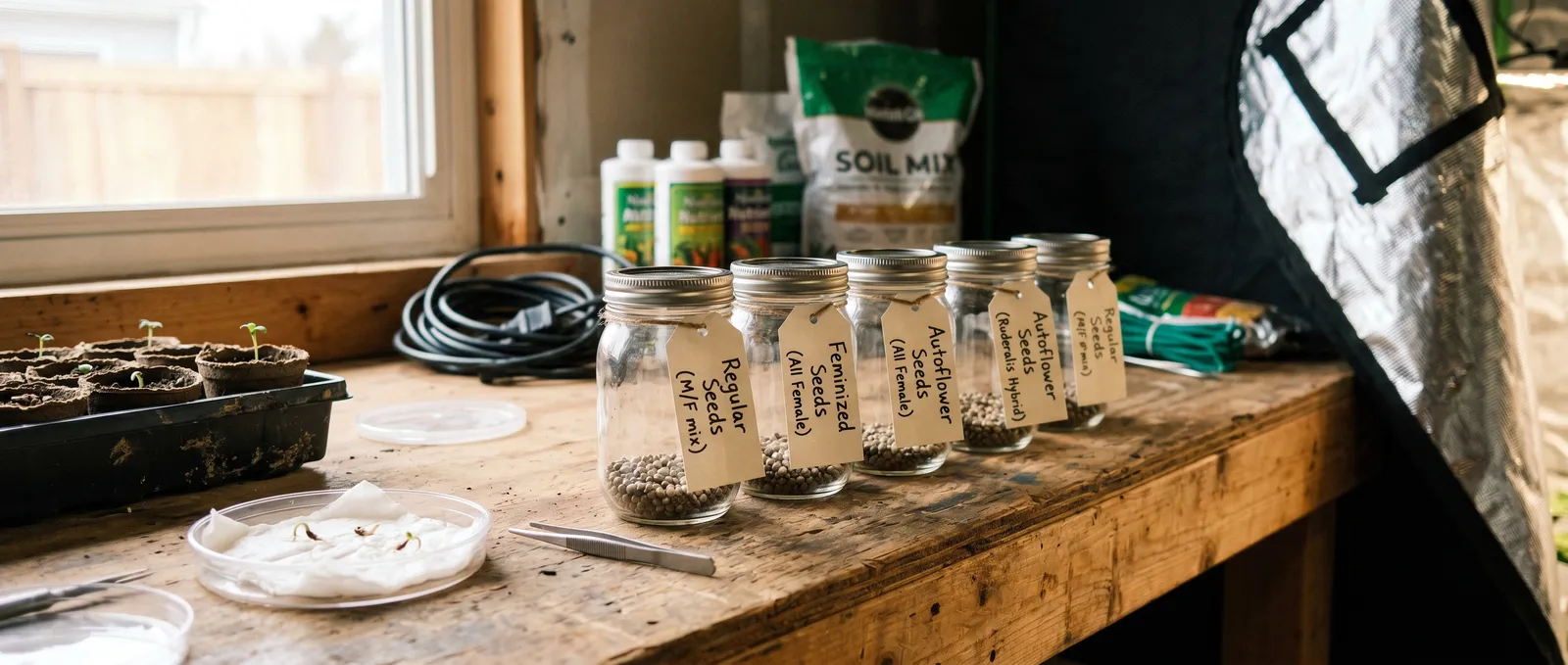
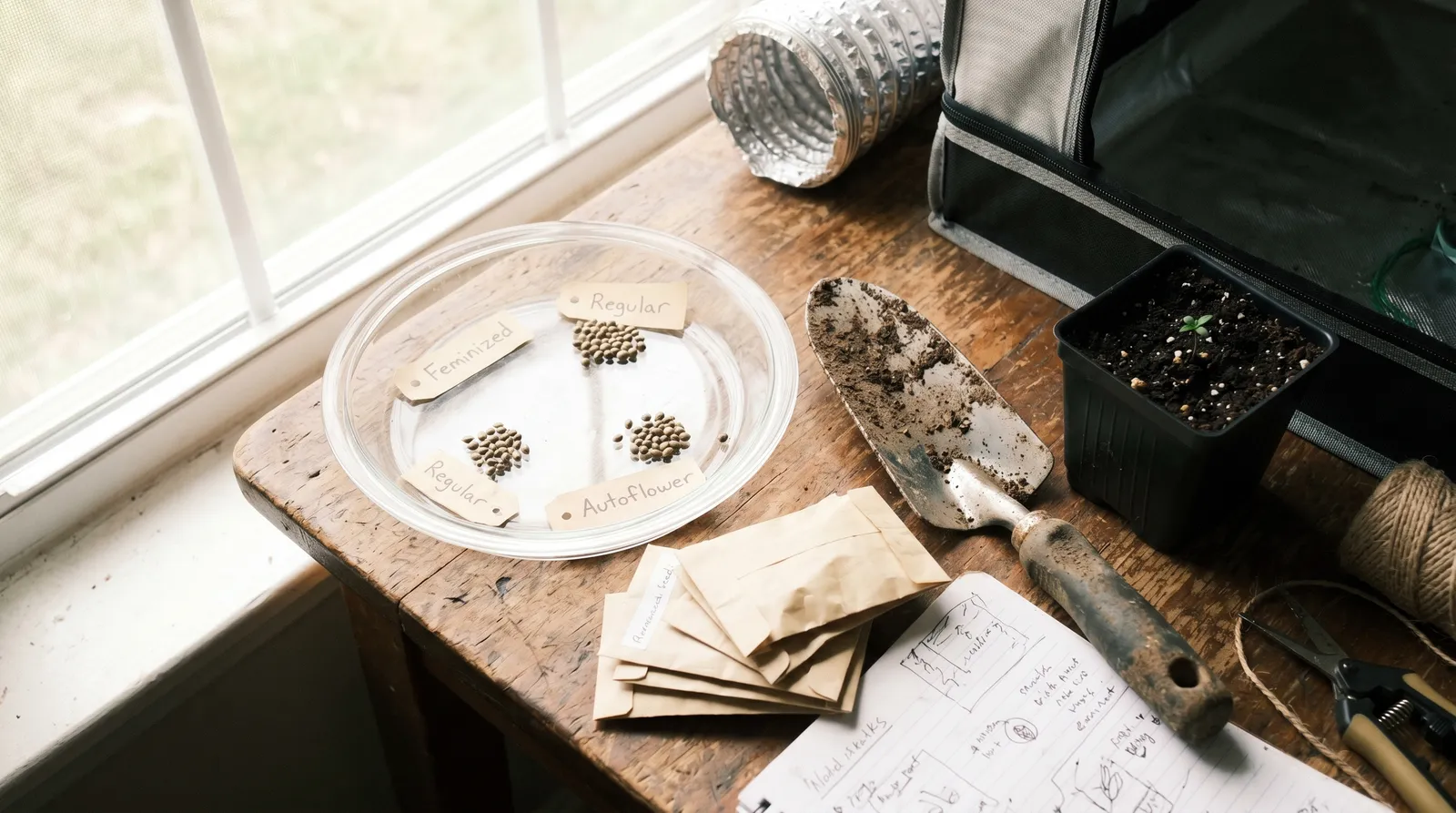
Feminized vs regular vs autoflower seeds is the three-way choice among cannabis seed categories. Feminised produce nearly all females; regular are ~50/50 male/female; autoflowers flower by age rather than light cycle thanks to Cannabis ruderalis heritage (Small, 2015). Each suits a different grower, space, and season.
Feminized vs regular vs autoflower seeds is the three-way choice that shapes every cannabis grow — tent size, light cycle, veg length, and how forgiving the setup is of mistakes. This guide is written for adults choosing between feminised, regular, and autoflower seeds before they buy their first pack. The three types aren't ranked; they solve different problems. Below is the quick comparison, then the reasoning behind each column.
This guide is educational and reflects horticultural practice. Cannabis cultivation rules vary by country and region and change frequently (EMCDDA, 2023). Verify current rules for your specific jurisdiction before you order seeds or start a grow. Azarius does not provide formal advice.
The three seed types at a glance
Feminised seeds produce almost exclusively female plants (typically >99% per major breeder documentation). Regular seeds are the unmodified baseline — roughly 50/50 male to female. Autoflowers flower by age rather than light cycle, thanks to Cannabis ruderalis genetics in the lineage. Each has a distinct timeline, skill requirement, and best use case.
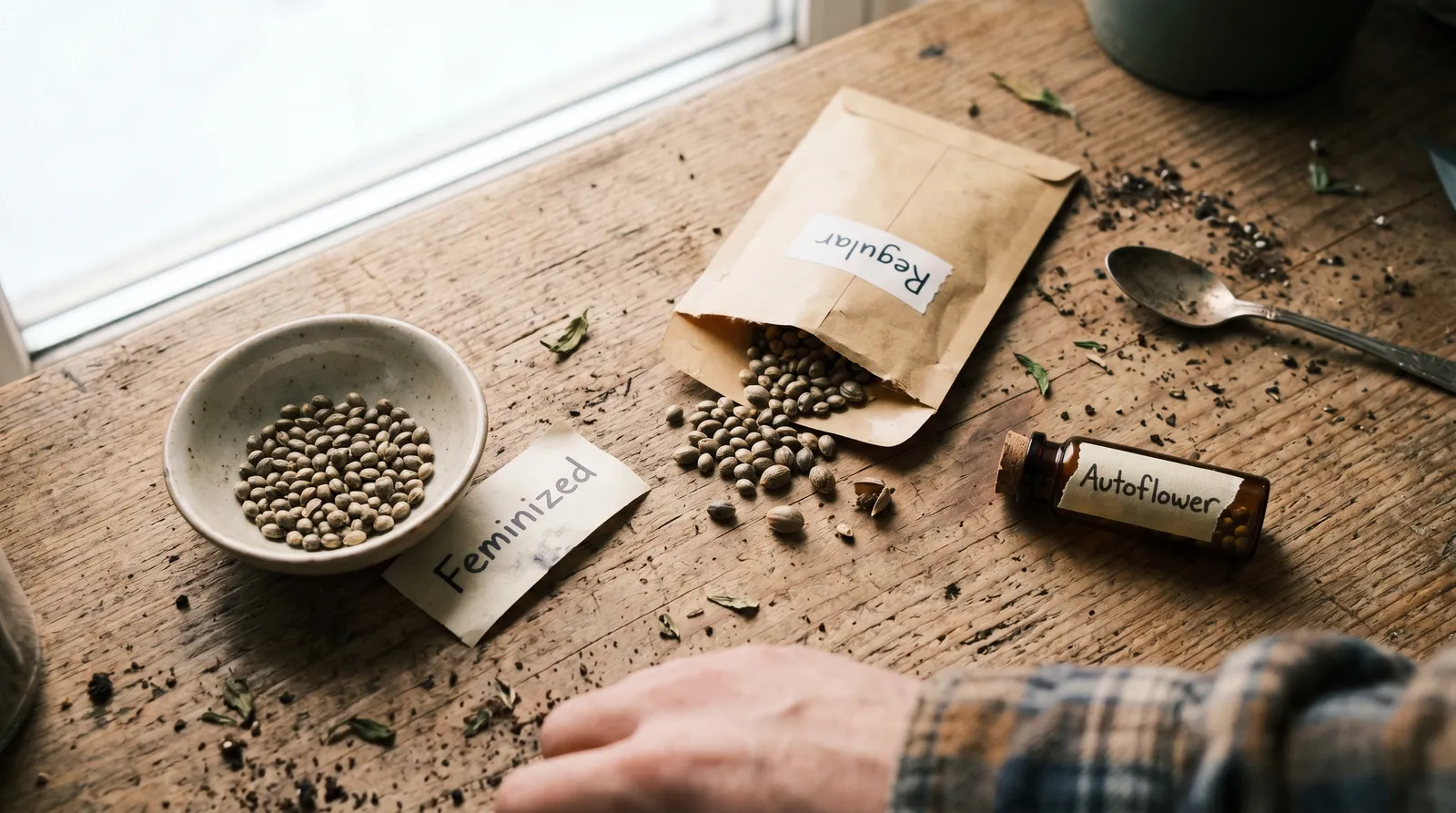
| Trait | Feminised (photoperiod) | Regular (photoperiod) | Autoflower |
|---|---|---|---|
| Genetics base | C. sativa / C. indica, silver-induced female pollen | C. sativa / C. indica, open pollination | Photoperiod hybrid × C. ruderalis |
| Sex outcome | ~99%+ female | ~50% female, ~50% male | ~99%+ female (most are sold feminised) |
| Flowering trigger | 12/12 light cycle | 12/12 light cycle | Age (typically 3–5 weeks from sprout) |
| Seed to harvest | 12–20 weeks | 12–20 weeks | 9–11 weeks |
| Veg control | Full — grower decides when to flip | Full — grower decides when to flip | None — plant decides |
| Training tolerance | High (topping, SCROG, main-lining) | High | Low — LST only, no heavy topping after week 3 |
| Typical yield per plant | Varies widely with light and training | Varies; ~half the plants are male and culled | Generally lower per plant than photoperiod equivalents |
| Best for | Most indoor home growers | Breeders, phenohunters, seed savers | Beginners, short seasons, stealth grows |
What feminised seeds actually are
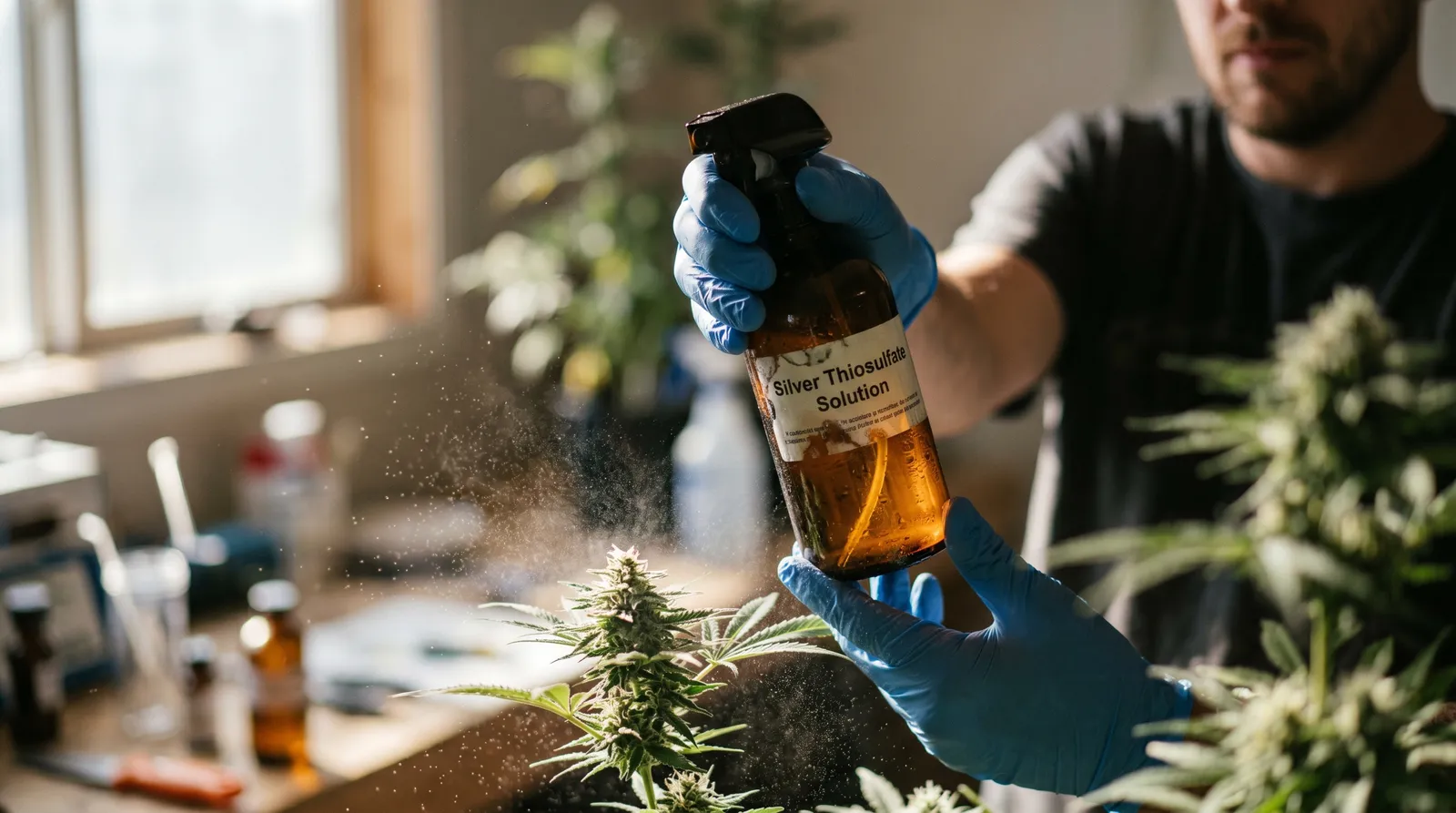
Feminised seeds are produced by stressing a female plant — usually with colloidal silver or silver thiosulfate (STS) — so she produces pollen sacs instead of calyxes (Lubell & Brand, 2018). That pollen carries only X chromosomes. Cross it onto another female and the resulting seeds are female at rates breeders typically report above 99% (Lubell & Brand, 2018, HortScience, on induced male flowers in dioecious cannabis).
For an indoor grower on a 12/12 flip, feminized vs regular vs autoflower seeds choice usually lands on feminised as the obvious default. Every seed you pop becomes a bud-producing plant. You're not burning tent space on something you'll chop at week 4 because it grew pollen sacs. Most modern genetics — Royal Queen Seeds, Dutch Passion, Barney's Farm, Sensi Seeds, Paradise Seeds — are sold primarily as feminised for exactly this reason, and growers who buy a single pack typically get a uniform, bud-only canopy.
The trade-off: you can't breed with feminised stock without quickly narrowing your gene pool, and some growers argue (without strong published data) that feminised lines can be slightly more prone to hermaphroditism under heavy stress. In our own tent testing over a decade, a well-dialled environment — VPD 1.0–1.3 kPa in flower, stable photoperiod with zero light leaks — is vastly more predictive of hermi rates than the seed type itself.
Why regular seeds still exist
Regular seeds are the unmanipulated baseline: open-pollinated, roughly 50/50 male to female, the way cannabis reproduces in the wild (Small, 2015). For most home growers this sounds like a bad deal — pop ten seeds, cull five males at week 4 of flower, finish with five females you've already paid light and water costs on.
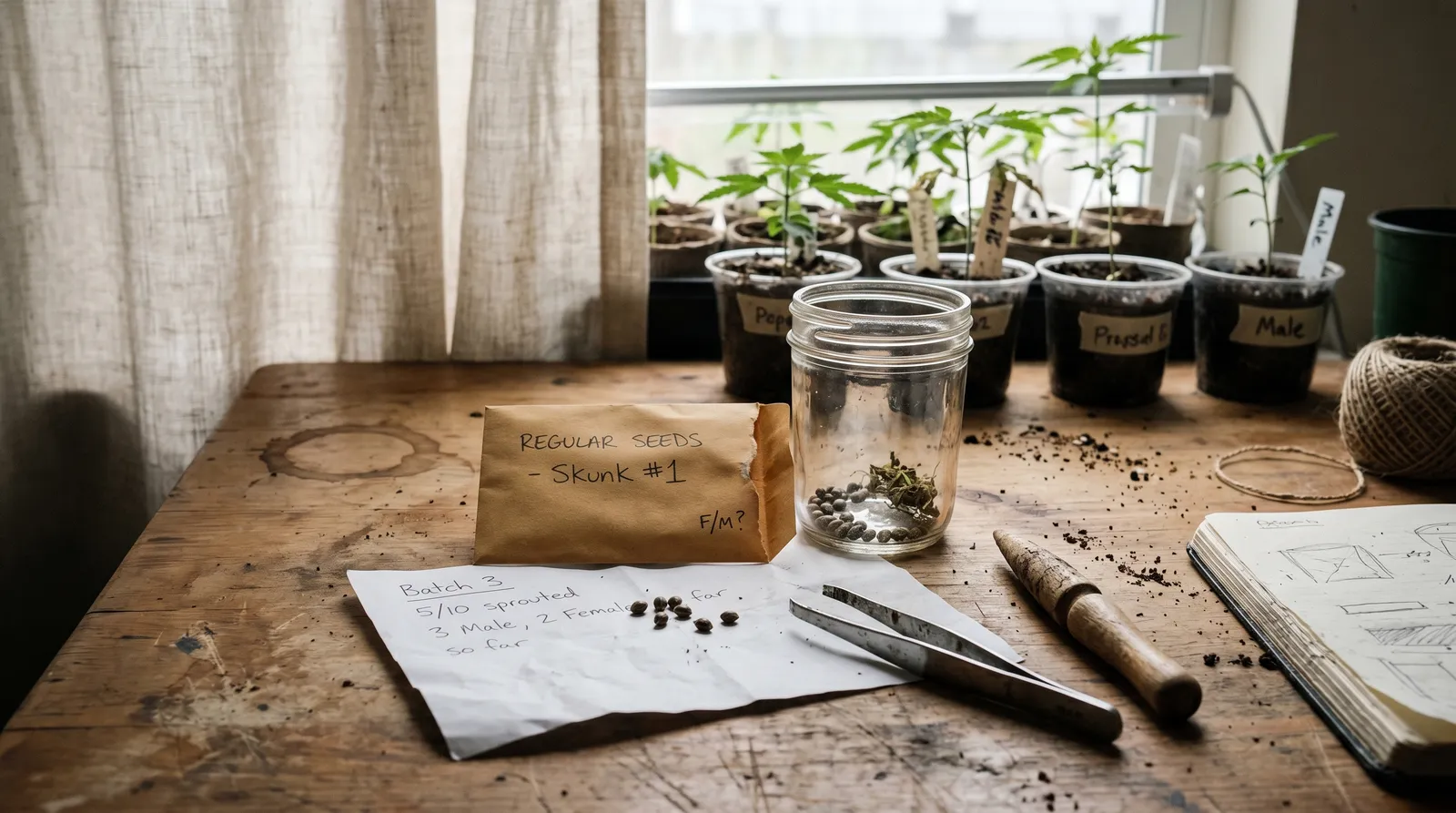
But regular seeds are the foundation of breeding. If you want to make your own crosses, preserve a landrace, or phenohunt for a specific expression, you need males. Feminised pollen is a workaround; regular males give you the full genetic picture. Breeders working with heirloom C. sativa lines from Durban, Colombia, or Thailand almost always order regulars.
They also appeal to growers who like the old-school process: sexing plants by pre-flowers around week 5–6 of veg, making clones from confirmed females before flipping, running mothers for years. It's more work. If that's the hobby for you, it's the right tool.
Autoflowers and the ruderalis question
Autoflowers are photoperiod hybrids crossed with Cannabis ruderalis, a short, hardy subspecies from Central Asia and Russia that flowers based on age rather than day length (Small, 2015) — an evolutionary response to summers where the photoperiod never shortens enough to cue flowering reliably. Cross ruderalis into a photoperiod strain and you inherit that auto-flowering trait, plus a compressed lifecycle.
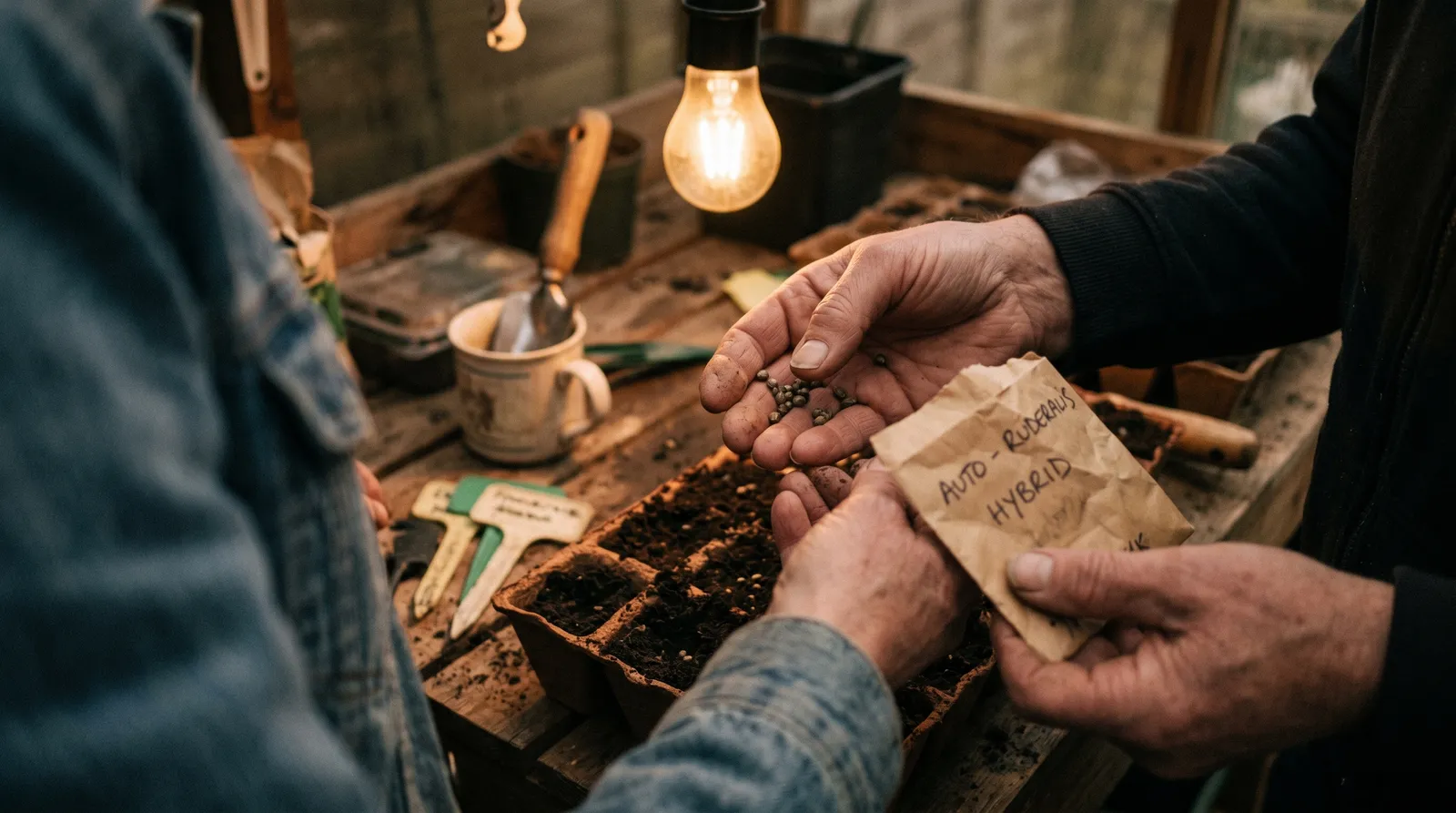
A typical autoflower germinates, vegs for 3–5 weeks, and flowers for another 6–8 weeks regardless of light schedule. Most growers run 18/6 or even 20/4 from seed to harvest — more light hours means more photosynthesis (Fluence, 2021), and there's no flip to worry about. Published PPFD targets still apply: 400–600 µmol/m²/s during the short veg phase, 600–900 in flower (Magagnini et al., 2018), keeping VPD around 0.8–1.1 kPa early and 1.0–1.3 kPa later (Chandra et al., 2017).
The catch is that autoflowers punish mistakes. A photoperiod plant with a nutrient burn in week 2 of veg has six weeks to recover; an autoflower has maybe ten days before it's stretching into flower. Heavy training — topping, FIMing, aggressive defoliation — cuts into a timeline that can't be extended by keeping the lights on longer. Low-stress training (LST) and light defoliation work; the rest is best kept for photoperiod stock.
Matching the seed type to the grow
The right seed type follows from four things: how much time you have, how much control you want, how big your space is, and whether you're growing indoors, outdoors, or in a greenhouse.
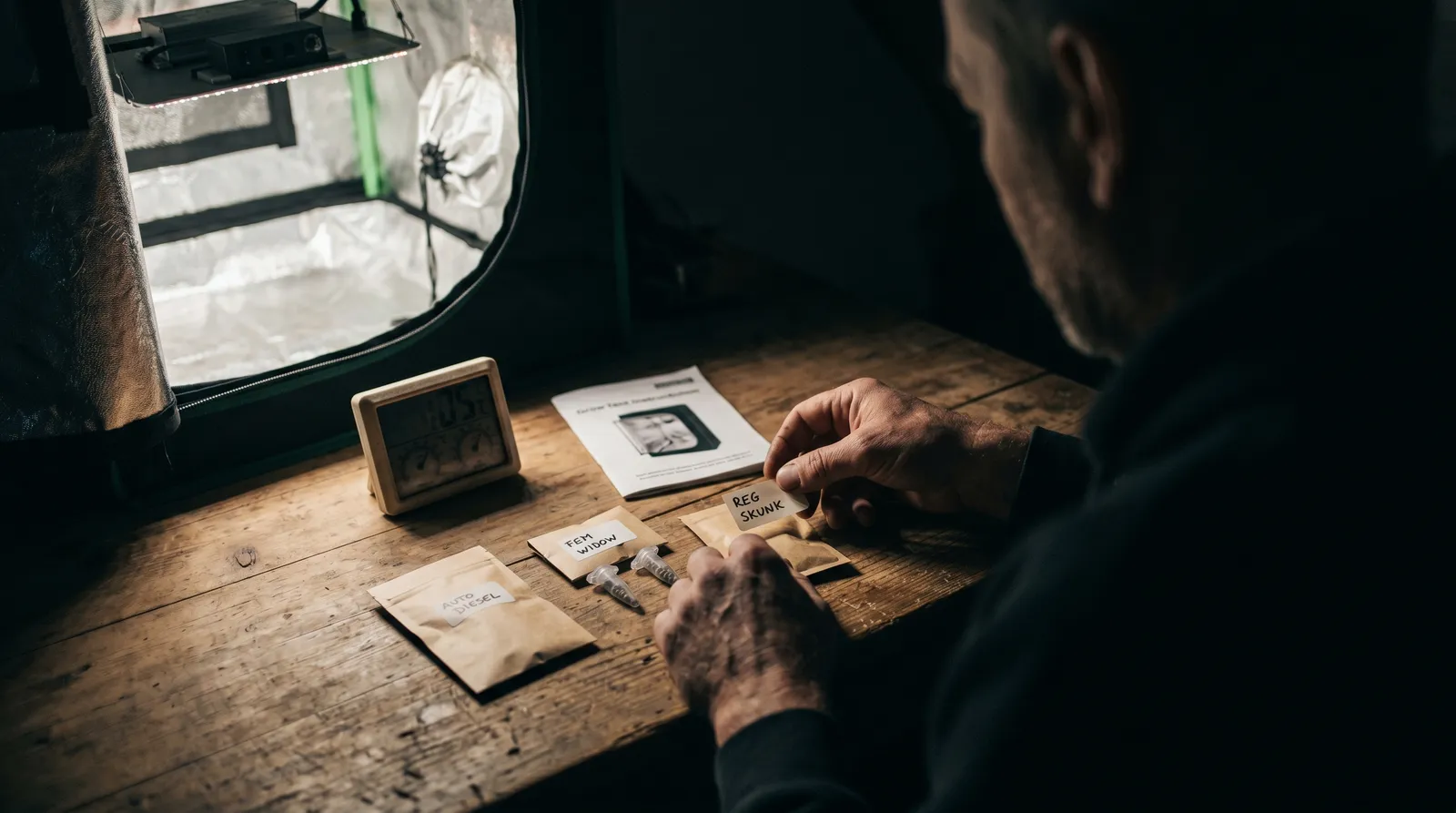
Small indoor tent (60×60 or 80×80), no breeding ambitions: feminised photoperiod. You control veg length to match the tent height, SCROG or main-line to fill the canopy, and harvest a uniform crop. This is the single most common home setup in the Netherlands and Germany, and it's the default for good reason.
Short outdoor season — Northern Europe, balcony, or guerrilla: autoflower. In Amsterdam or Berlin, a photoperiod plant started outdoors in May won't flower until August and won't finish until October, when botrytis risk is high. An autoflower started the same week finishes in mid-to-late July, well before the autumn rain arrives. Dutch Passion's Auto Blackberry Kush and Royal Queen Seeds' Northern Light Automatic are examples of lines bred specifically for this climate window.
Breeding, phenohunting, or preserving genetics: regular. Accept the 50% male cull, get a proper seed collection, and run the long game.
Stealth or perpetual harvest: autoflower. Because they flower by age, you can stagger plantings every 2–3 weeks under a single light schedule and harvest something continuously. With photoperiod plants you'd need a separate veg tent and clone management.
Medium and lighting don't care what seed type you use
The seed type doesn't change the underlying cultivation science — one point that gets muddled in online debates. Coco coir still wants pH 5.8–6.2 and daily feeds at EC 1.2–1.8 during flower (Chandra et al., 2017). Soil still wants pH 6.2–6.8 and a less aggressive feeding schedule. Hydroponics still wants dissolved oxygen, tight pH control, and a root-zone temp around 18–20°C.
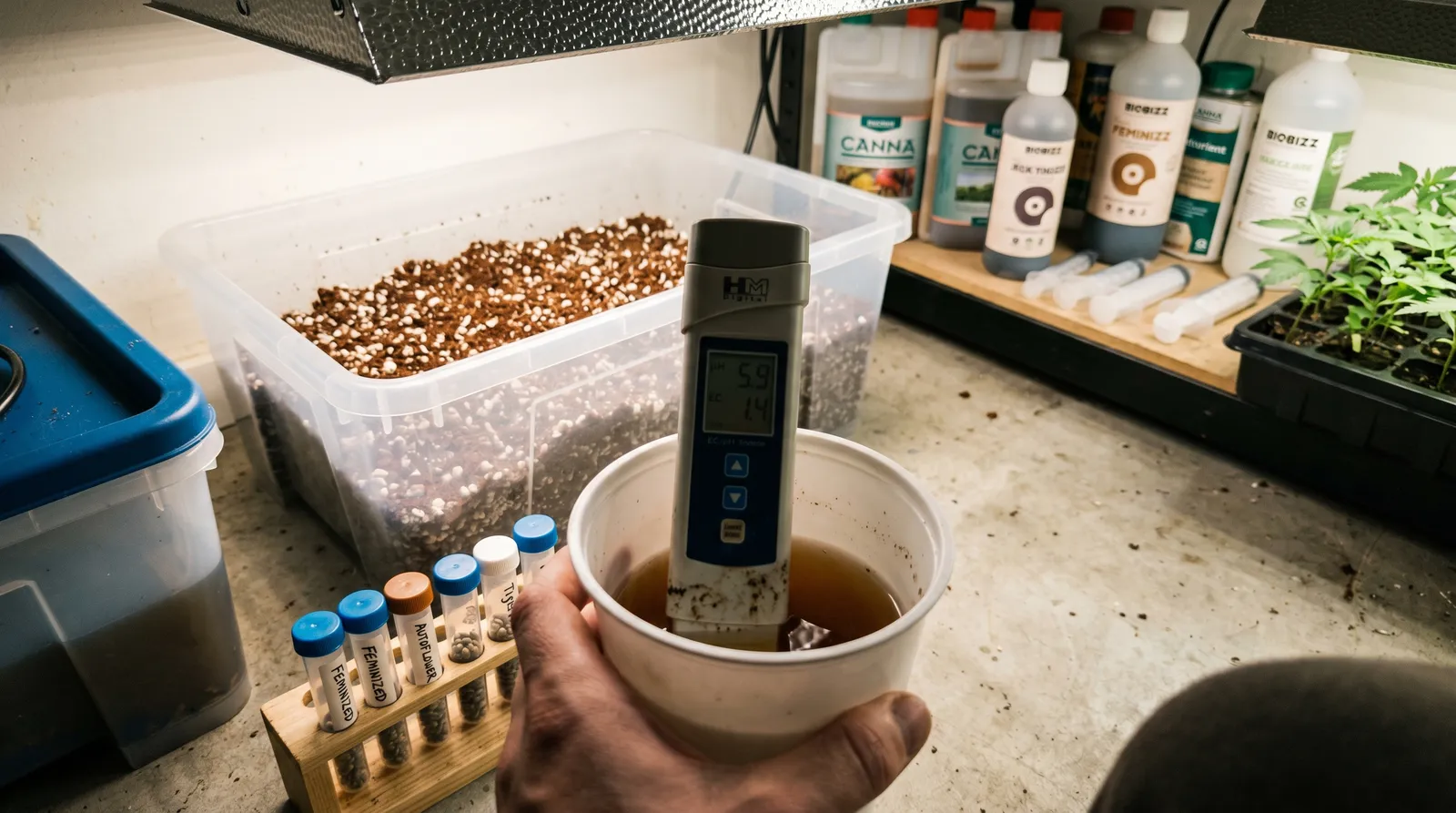
What does shift is schedule intensity. Autoflowers in coco often run at slightly lower EC (1.0–1.4 in flower) because they're smaller plants with less biomass to feed (Caplan et al., 2017). Photoperiod plants in a long veg can push higher EC once the root system is developed (Saloner & Bernstein, 2020). These are nuances, not separate disciplines — if you can grow one well, you can grow the others.
The short verdict
Most home growers in Europe should buy feminised photoperiod seeds and start in soil or coco, a 80×80 tent, a ~150W LED, and a carbon filter. It's the setup with the widest margin for error and the broadest genetic catalogue. Get autoflowers if your season is short or your space is tight. Order regular seeds when you want to breed. None of the three is "better" in isolation — the right answer is the one that fits your tent, your timeline, and what you want out of the hobby. Honest limitation: yield and hermaphrodite-rate numbers in this guide are ranges, not guarantees — individual results depend on environment and grower skill more than on the seed category.
Legal notice: Cannabis cultivation laws vary by country and region and change frequently. This guide is educational. Before growing, verify current laws for your specific jurisdiction. Azarius does not provide legal advice.
Azarius cannabis seeds
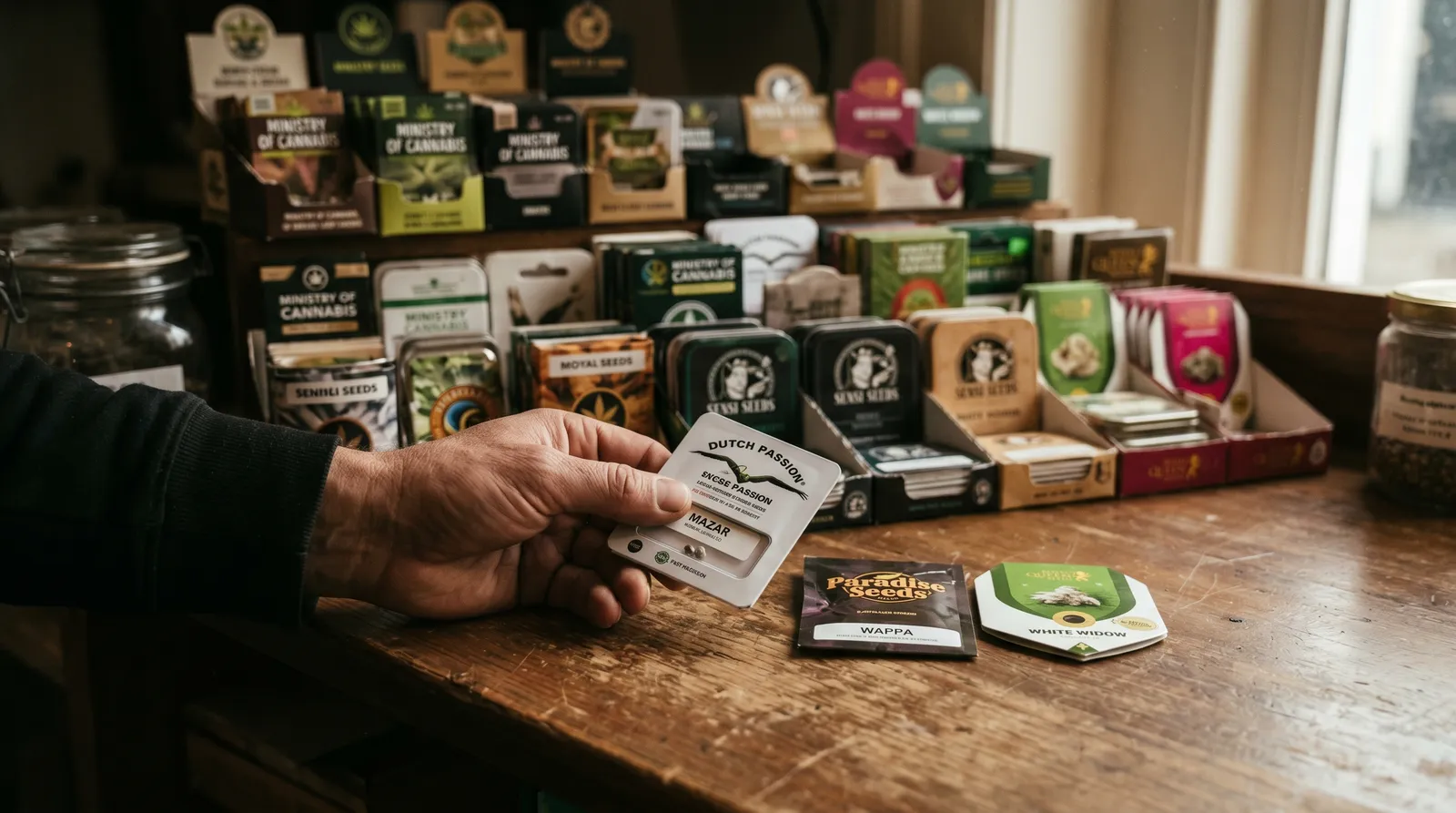
Azarius has stocked cannabis seeds since 1999. The catalogue covers feminised, regular, and autoflower lines from Ministry of Cannabis, Dutch Passion, Paradise Seeds, Royal Queen Seeds, Sensi Seeds, and Barney's Farm. If you're unsure which type fits your setup before you buy, the breeder pages list flowering time, height range, and indoor/outdoor suitability for each variety.
Last updated: April 2026
Frequently Asked Questions
8 questionsAre autoflower seeds always feminised?
Do autoflowers yield less than photoperiod plants?
Can you clone autoflower plants?
Are feminised seeds genetically modified?
Which seed type is best for a first-time grower?
Do feminised seeds produce hermaphrodites more often?
Can you switch from a 18/6 to 12/12 light cycle with autoflower seeds?
Can you make your own seeds from feminised plants?
About this article


Luke Sholl has been writing about cannabis, cannabinoids, and the broader benefits of nature since 2011, and has personally grown cannabis in home grow tents for more than a decade. That first-hand cultivation experience
This wiki article was drafted with AI assistance and reviewed by Luke Sholl, External contributor since 2026. Editorial oversight by Adam Parsons.
Medical disclaimer. This content is for informational purposes only and does not constitute medical advice. Consult a qualified healthcare provider before use of any substance.
Last reviewed April 24, 2026
References (8)
- [1]Lubell, J. D., & Brand, M. H. (2018). Foliar sprays of silver thiosulfate produce male flowers on female hemp plants. HortTechnology, 28(6), 743-747. DOI: 10.21273/HORTTECH04188-18
- [2]Small, E. (2015). Evolution and classification of Cannabis sativa (marijuana, hemp) in relation to human utilization. The Botanical Review, 81(3), 189-294. DOI: 10.1007/s12229-015-9157-3
- [3]Magagnini, G., Grassi, G., & Kotiranta, S. (2018). The effect of light spectrum on the morphology and cannabinoid content of Cannabis sativa L.. Medical Cannabis and Cannabinoids, 1(1), 19-27. DOI: 10.1159/000489030
- [4]Chandra, S., Lata, H., Khan, I. A., & ElSohly, M. A. (2017). Cannabis cultivation: Methodological issues for obtaining medical-grade product. Epilepsy & Behavior, 70, 302-312. DOI: 10.1016/j.yebeh.2016.11.029
- [5]Caplan, D., Dixon, M., & Zheng, Y. (2017). Optimal rate of organic fertilizer during the vegetative-stage for cannabis grown in two coir-based substrates. HortScience, 52(9), 1307-1312. DOI: 10.21273/HORTSCI11903-17
- [6]Fluence Bioengineering (2021). Cannabis cultivation guide: Optimizing photosynthetic photon flux density. Fluence White Paper. Source
- [7]Saloner, A., & Bernstein, N. (2020). Response of medical cannabis (Cannabis sativa L.) to nitrogen supply under long photoperiod. Frontiers in Plant Science, 11, 572293. DOI: 10.3389/fpls.2020.572293
- [8]European Monitoring Centre for Drugs and Drug Addiction (2023). Cannabis policy: status and recent developments. EMCDDA Report. Source
Related Articles
Cannabis Hermaphrodite: Identify, Prevent, Act
A cannabis hermaphrodite is a female plant that develops male pollen sacs or banana-shaped anthers (nanners), self-pollinating and seeding your harvest.
DIY Cannabis Fertilizer: Homemade Nutrient Guide
DIY cannabis fertilizer guide: compost, teas, banana ferments and feed schedules, with safety notes and cited research for home growers.
What To Do With Male Cannabis Plants: 6 Practical Uses
What to do with male cannabis plants: identify, isolate, breed, extract, or compost. A practical 6-step guide with sourcing and safety notes.
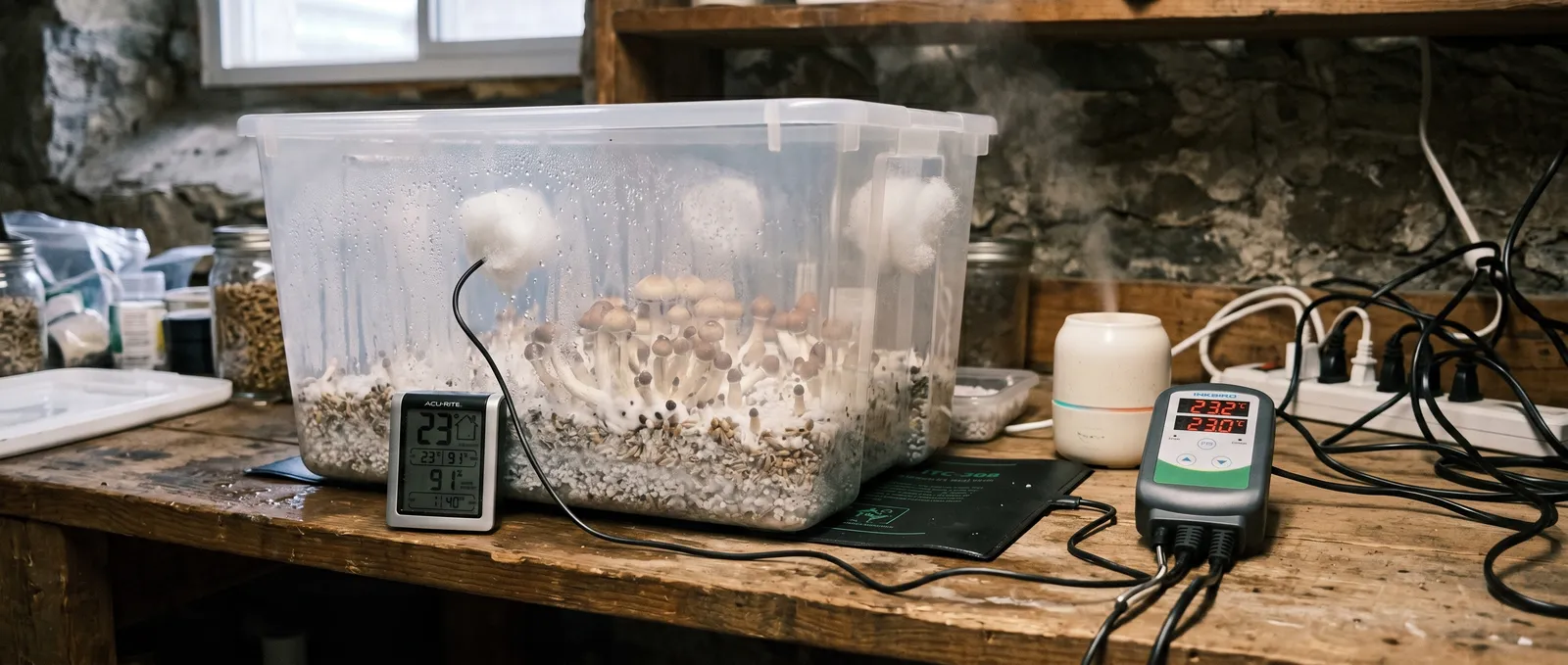
Mushroom Grow Kit Temperature & Humidity: Full Setup Guide
A temperature humidity control grow kit is the small set of climate tools — hygrometer, heat mat, humidifier or perlite tray — that keeps a mushroom fruiting…
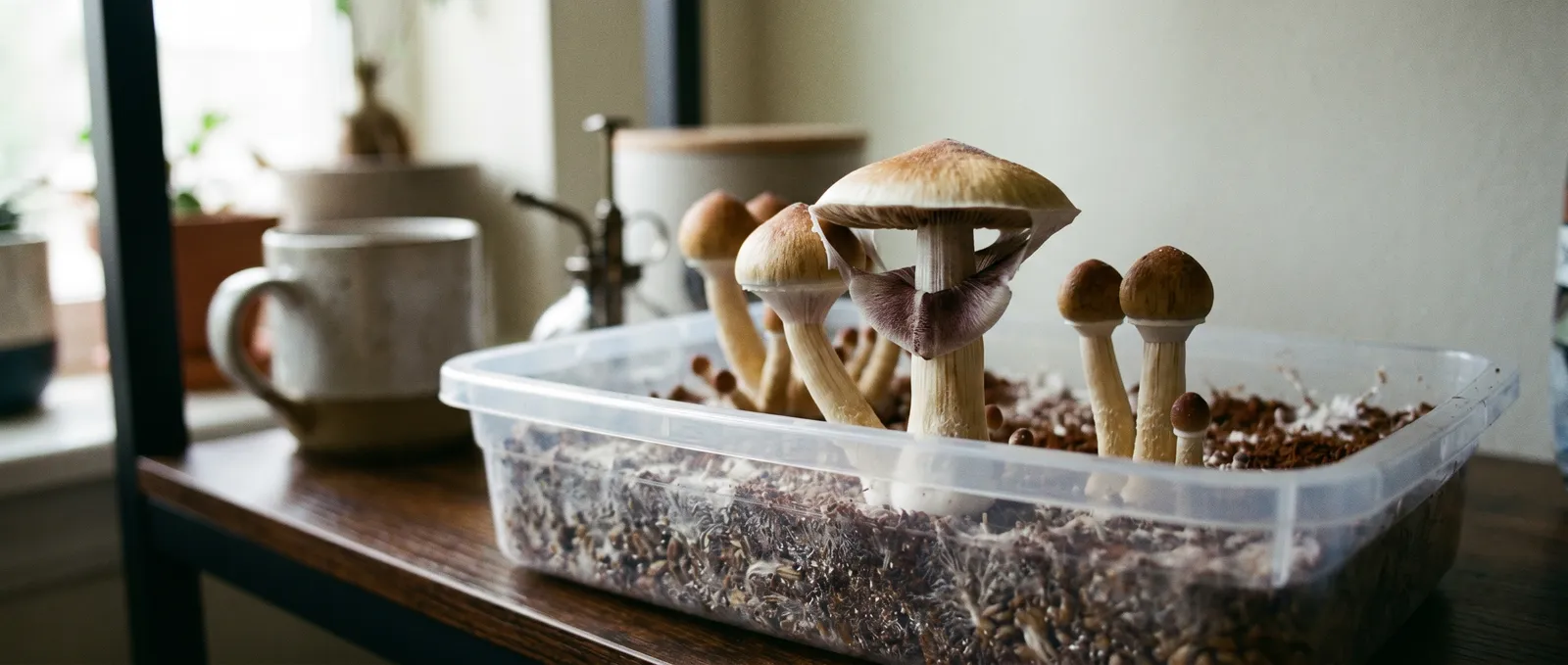
When to Harvest Mushrooms: Veil Break Timing Explained
Harvest timing veil break is a cultivation technique that uses the tearing of the partial veil on maturing Psilocybe cubensis to mark peak alkaloid content.
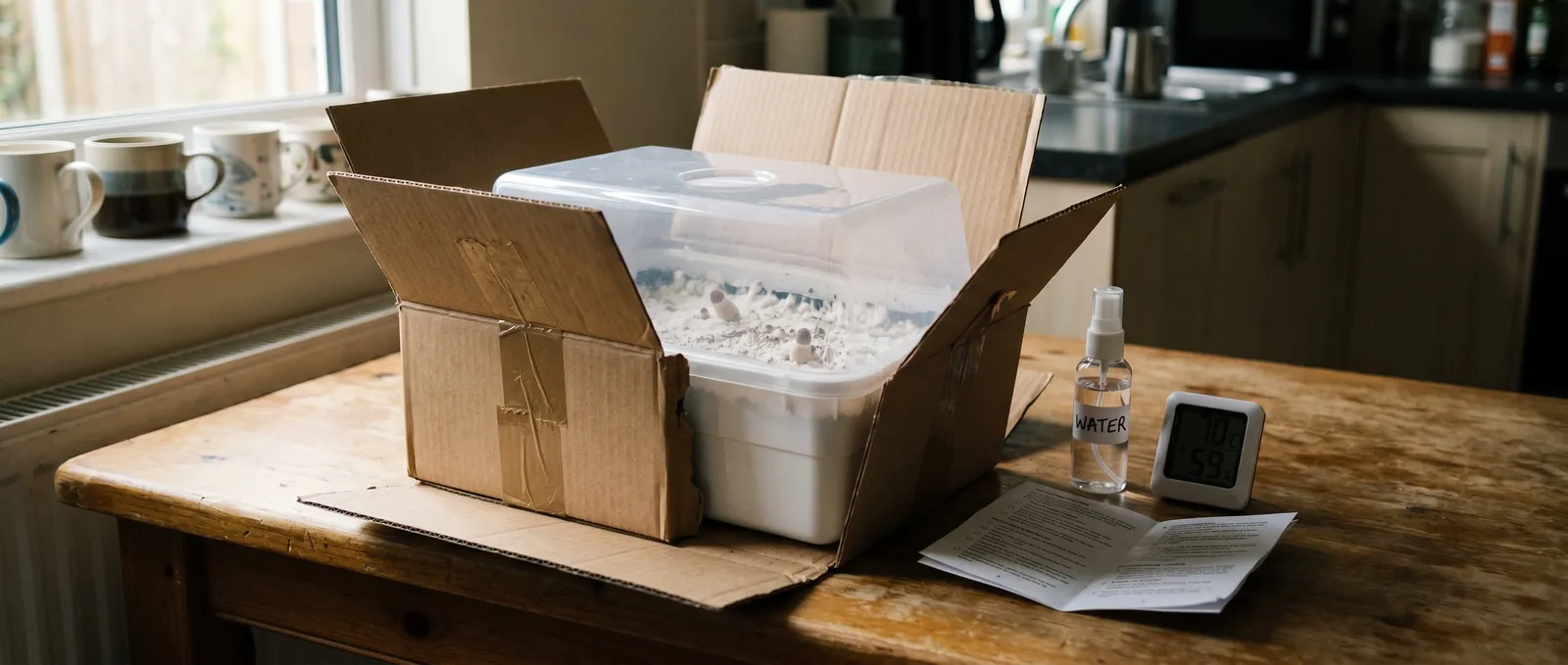
First Grow Checklist: What You Need for Mushroom Kits
A first grow checklist is the short list of supplies and environmental conditions needed to run a home psilocybin mushroom kit from inoculated substrate to…
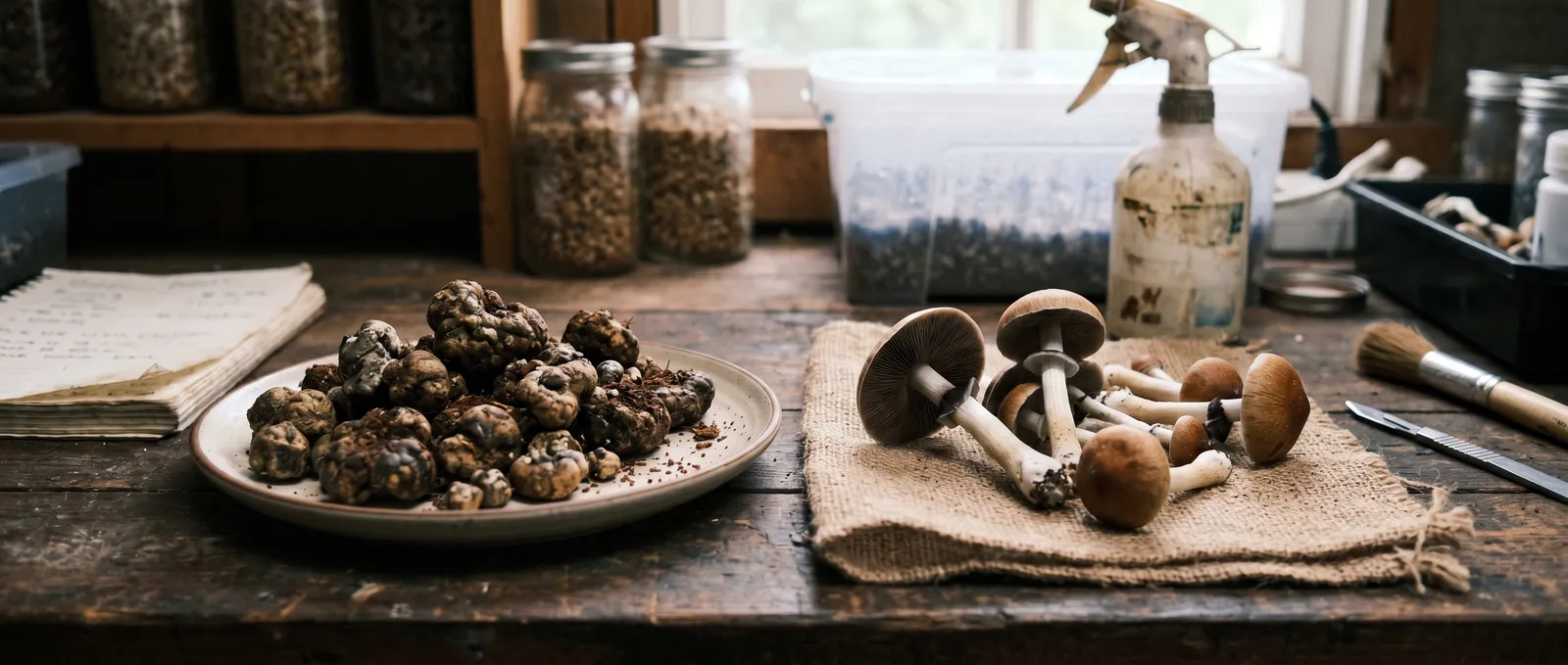
Sclerotia vs Fruit Bodies: Cultivation Comparison
Sclerotia and fruit bodies are two different life stages of Psilocybe fungi: sclerotia are hardened underground mycelial storage bodies (the 'magic…
Storing Dried Mushrooms Long Term: Full Guide
Storing dried mushrooms long term means keeping well-dried Psilocybe fruit bodies in airtight, opaque containers with desiccant, cool and dark, to slow…
Drying Mushrooms Air Desiccant Oven: Methods Compared
Drying mushrooms air desiccant oven refers to the three home methods for reducing fresh fruit bodies from ~90% water to cracker-dry (<5%). Gotvaldová et al.