
This article discusses psychoactive substances intended for adults (18+). If you have a health condition or take medication, consult a doctor before use. Our age policy
Cannabis Nutrients NPK Guide: Ratios by Stage
Definition
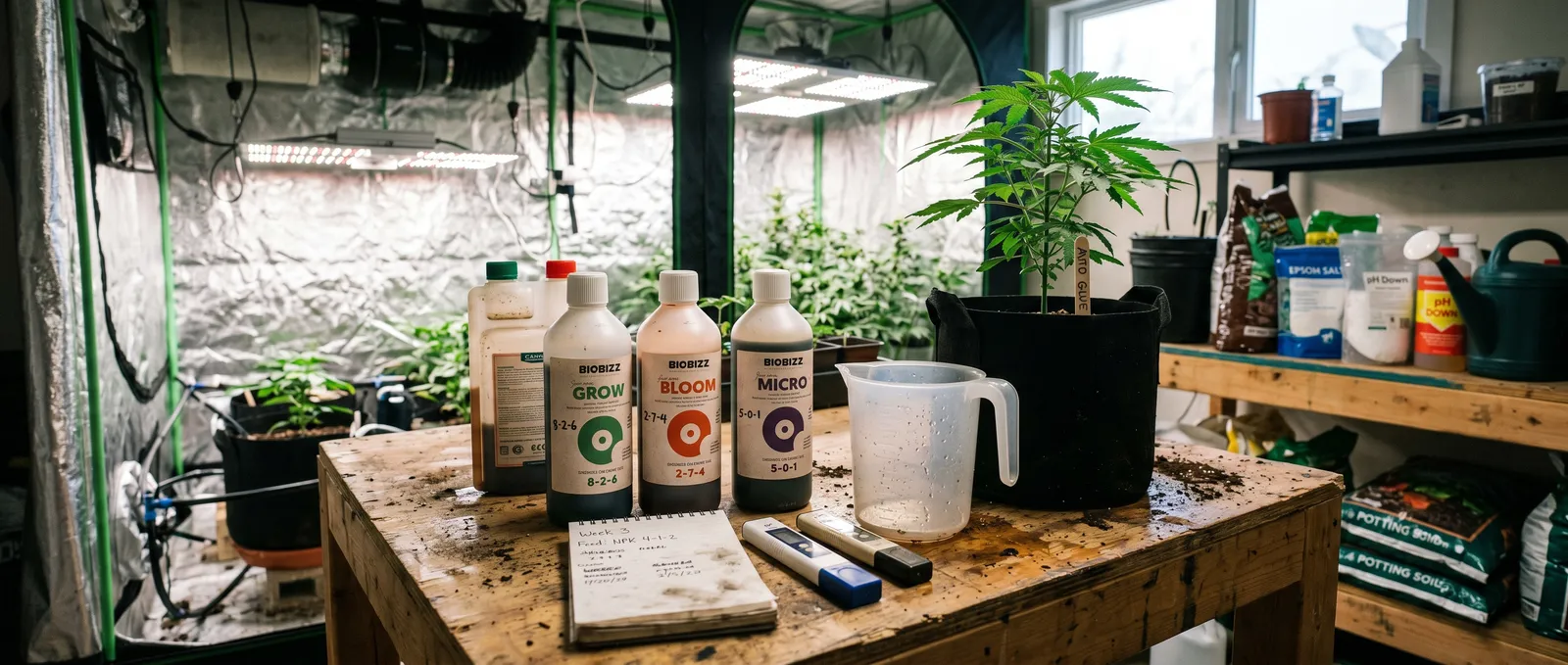
A cannabis nutrients NPK guide is a feeding framework that matches nitrogen, phosphorus, and potassium ratios to each growth stage. Ratios shift from nitrogen-heavy in veg (around 3-1-2) to phosphorus- and potassium-heavy in flower (around 1-3-4), with uptake also governed by pH and EC (Saloner & Bernstein, 2021).
This guide is written for adults and is educational in nature. Azarius does not provide formal advice.
Step 1: Understand what NPK actually does in a cannabis plant
A cannabis nutrients NPK guide is a feeding framework that matches nitrogen, phosphorus, and potassium ratios to each growth stage so plants build structure in veg and fatten buds in flower. Nitrogen builds leaves and stems (it's the backbone of chlorophyll and amino acids). Phosphorus drives root development and flower formation (it powers the ATP your plant uses to move energy around). Potassium regulates water balance, enzyme function, and the plant's general stress response — think of it as the manager that keeps the other two working.
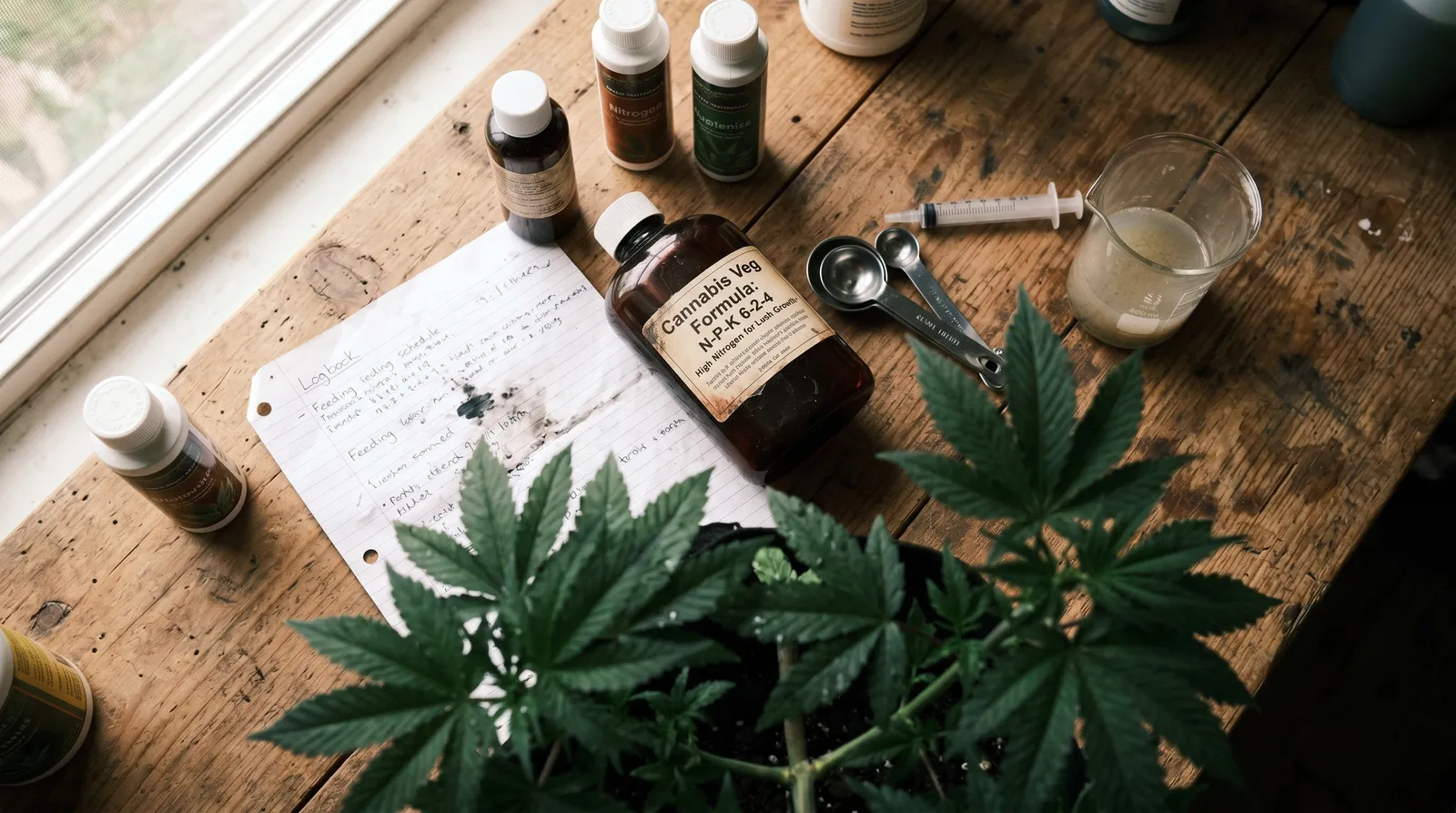
A 2021 review in Frontiers in Plant Science (Saloner & Bernstein, 2021) confirmed what growers have seen in tents for decades: cannabis is a heavy nitrogen feeder in veg and pivots hard toward potassium and phosphorus once flowering kicks in. Get the ratio wrong for the stage, and you either stunt growth or waste fat buds.
Beyond the big three, cannabis pulls on calcium, magnesium, sulphur (the secondary macros), plus iron, manganese, zinc, boron, copper, and molybdenum in tiny amounts. Most decent bottled lines cover these. If you're running RO water or coco, you'll want to get a dedicated CalMag supplement — we'll come back to that. Compared to tomato feeding charts, a cannabis nutrients NPK guide tilts harder toward potassium in late flower and is less tolerant of nitrogen carryover.
Step 2: Match your NPK strategy to your medium
Soil, coco coir, and hydro behave like completely different animals when it comes to feeding. Generic "feed weekly" advice fails because of this.
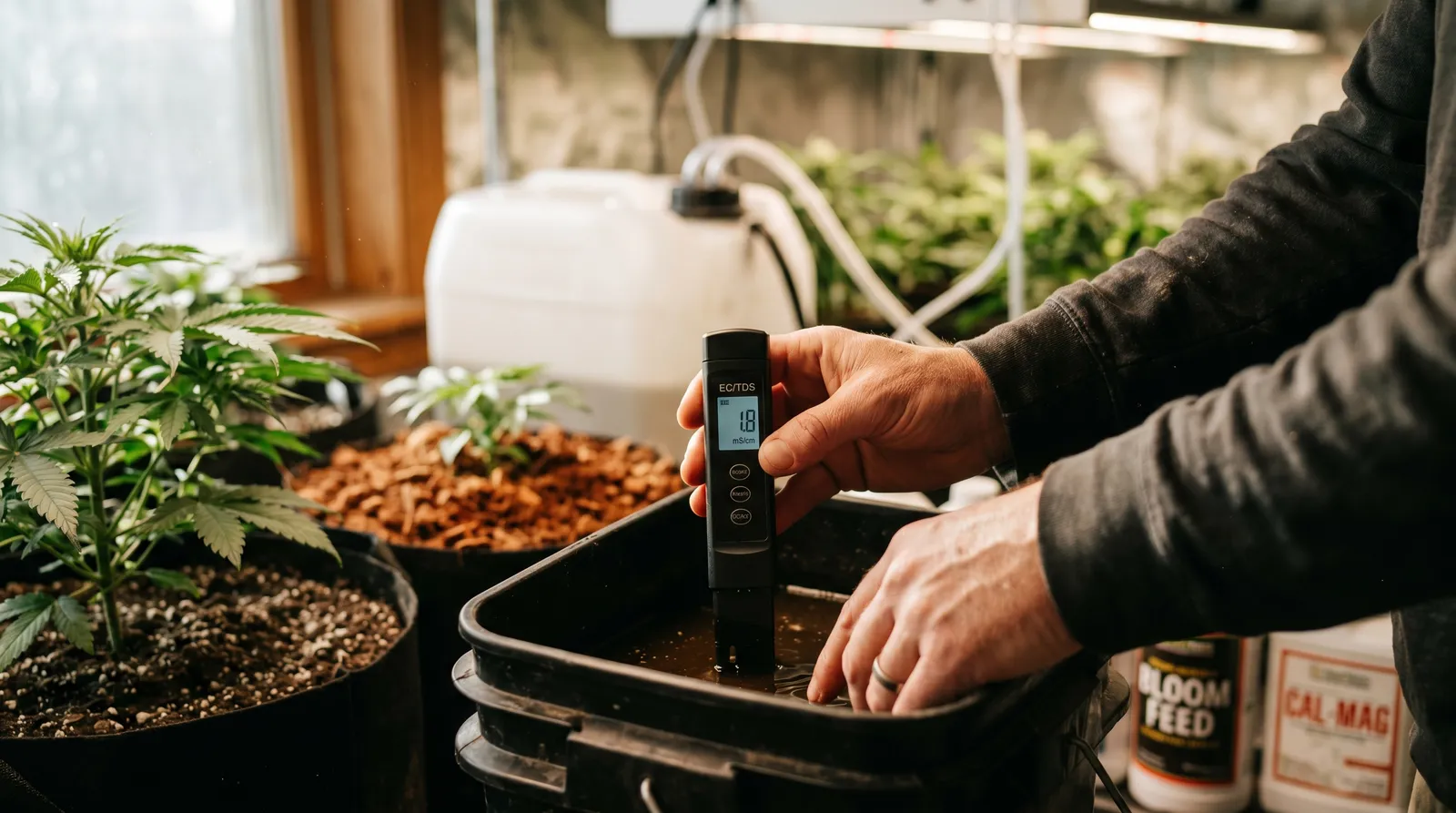
| Medium | pH target | EC range | Feed frequency | CalMag needed? |
|---|---|---|---|---|
| Soil (pre-amended) | 6.2–6.8 | 0.8–1.8 | Every 2–3 waterings | Rarely |
| Coco coir | 5.8–6.2 | 1.0–2.2 | Every watering | Almost always |
| Hydro (DWC/NFT/ebb) | 5.5–6.0 | 1.2–2.0 | Continuous reservoir | With RO water |
- Soil (pre-amended living/organic mix): the soil holds and buffers nutrients. You feed less often — sometimes just water for the first 3–4 weeks if the mix is hot enough. Nitrogen mineralises slowly from organic sources (worm castings, bat guano, blood meal).
- Coco coir: coco is inert — you feed every watering, or at least every other. Coco also binds calcium and potassium, so a CalMag top-up is near-mandatory.
- Hydro (DWC, NFT, ebb/flow): the plant gets exactly what's in the reservoir, so balance is unforgiving. Small mistakes compound fast.
Whichever you pick, a cheap pH pen and an EC/TDS meter are non-negotiable. Before you buy nutrients, order the meters — feeding without measuring is guessing with expensive fertiliser.
Step 3: Feed seedlings almost nothing (weeks 1–2)
Seedlings need essentially no added nutrients for the first one to two weeks because the cotyledons and starter medium already carry enough stored energy. Hammering a seedling with full-strength feed is the fastest way to burn it.
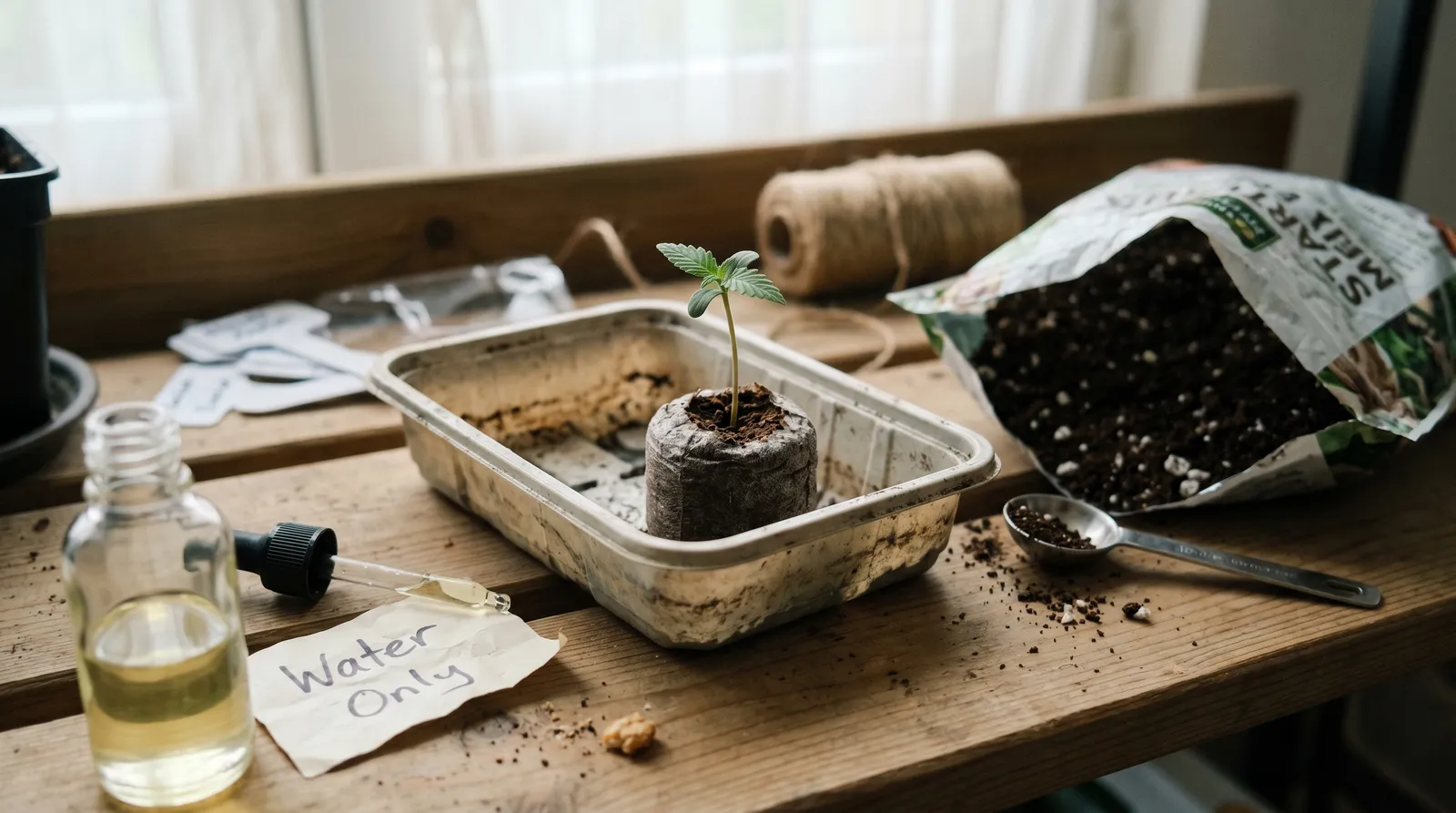
Practical targets for the first 10–14 days:
- Soil: plain pH'd water. Nothing else. If leaves start paling by day 14, add nutrients at ¼ strength.
- Coco: ¼-strength veg nutrients from around day 7, EC 0.4–0.8, pH 5.8.
- Hydro: EC 0.4–0.6, pH 5.8, using a light veg formula (roughly 2-1-2 NPK).
Autoflower genetics compress this phase — they'll often be showing the first signs of pre-flower by week 3, so you don't have as much runway to recover from a feeding mistake. Photoperiod plants are more forgiving; they stay in veg until you flip the light cycle.
Step 4: Ramp up nitrogen through vegetative growth (weeks 2–6+)
Vegetative cannabis wants heavy nitrogen feeding, typically NPK ratios around 3-1-2 or 4-2-3. Vegetative plants are building the structural frame that will hold flowers later, and nitrogen is the headline nutrient — nitrogen-dominant blends with enough phosphorus and potassium to support root and stem development.
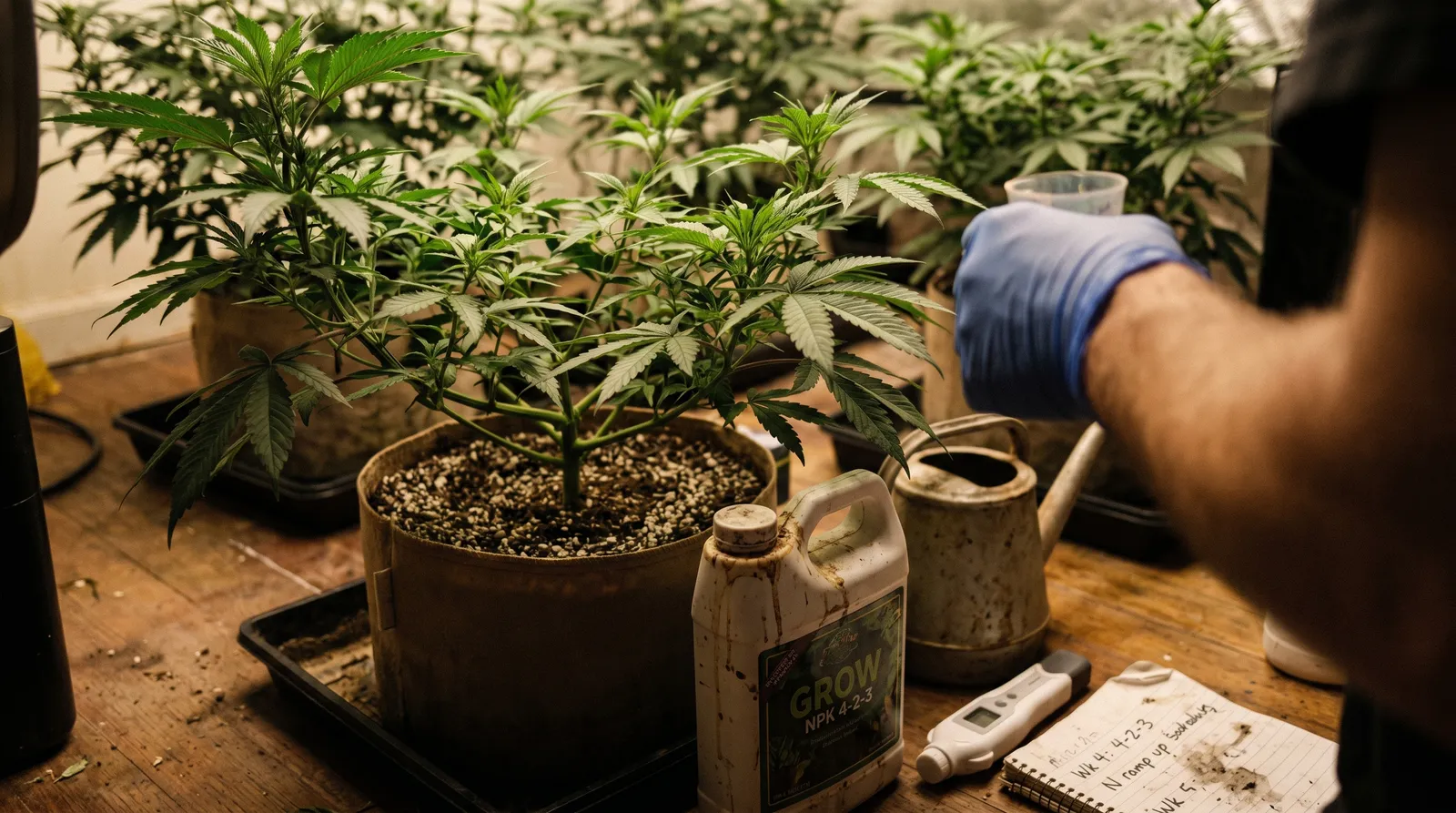
Target ranges across the veg phase:
- EC (coco/hydro): 1.0 early veg, climbing to 1.8–2.0 by late veg.
- pH: 5.8–6.2 in coco/hydro, 6.2–6.8 in soil.
- Feed frequency: every watering in coco, every 2–3 waterings in soil, continuous in hydro reservoirs (check and adjust every 2–3 days).
Watch the lower leaves. Deep, even green says you're dialled in. Clawing tips curling downward, dark green leaves with a glossy "lacquered" look — that's nitrogen toxicity, ease the feed back. Yellowing from the bottom up? Nitrogen deficiency, push feed strength up a notch.
Honest limits of this guide
No feed chart survives contact with your actual tent. Genetics, light spectrum and intensity, pot size, root-zone temperature, and water source all shift the numbers. Treat every EC and NPK figure here as a starting hypothesis — not a recipe. If a ratio that worked for someone on a forum fails in your room, that doesn't mean either of you is wrong; it means the variables differ. Compared to tomatoes, cannabis is actually less sensitive to moderate over-feeding in veg but far more sensitive in late flower.
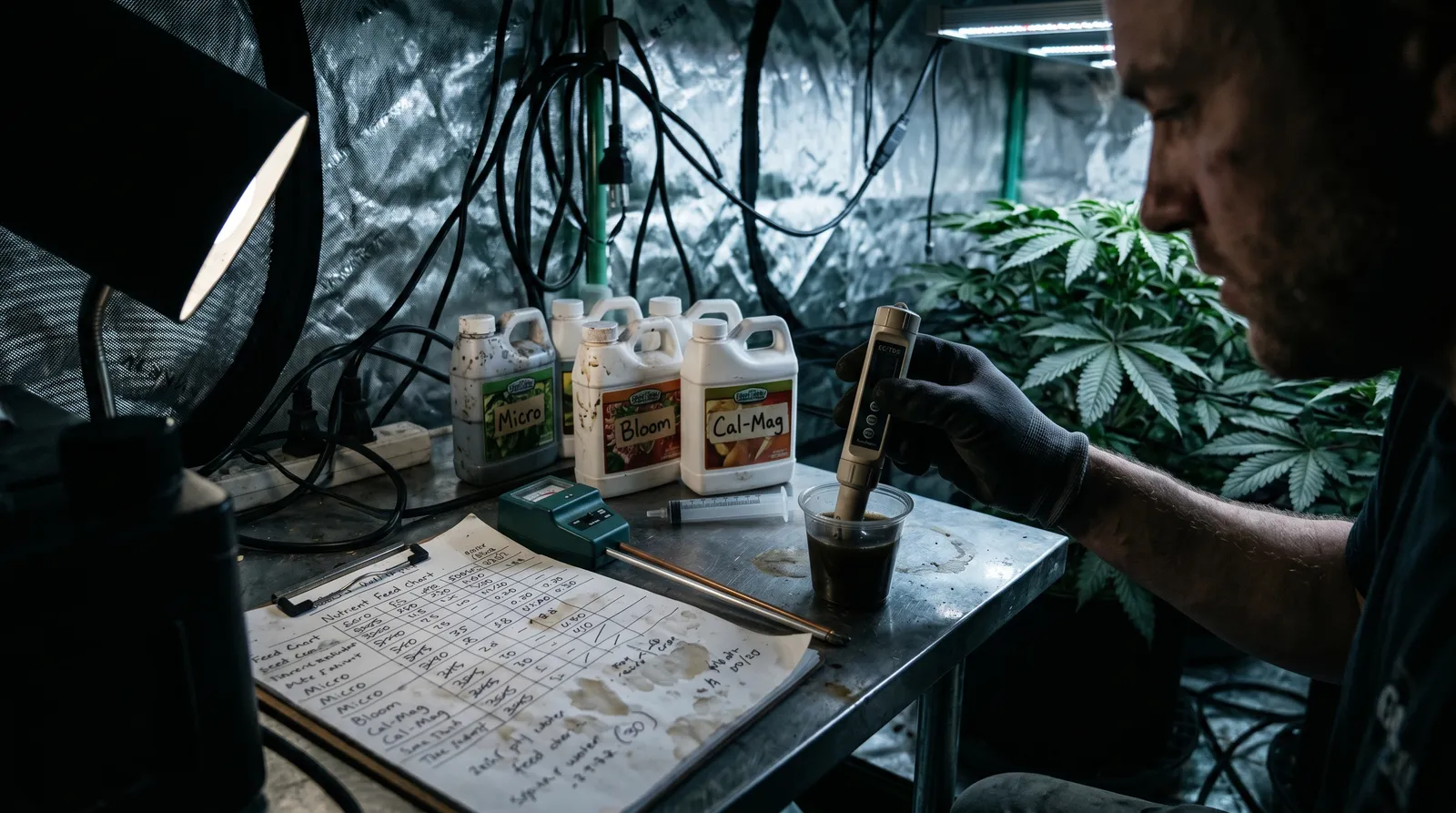
Step 5: Transition feed during the stretch (first 2–3 weeks of flower)
Transition feeding means easing the NPK ratio toward phosphorus and potassium as the stretch begins, roughly a 2-2-3 balance. Photoperiod plants stretch hard after the 12/12 flip — often doubling or tripling in height over the first fortnight. Autoflowers stretch during weeks 4–6 from seed. Either way, the plant is still laying down structure but starting to signal for flowering metabolism.
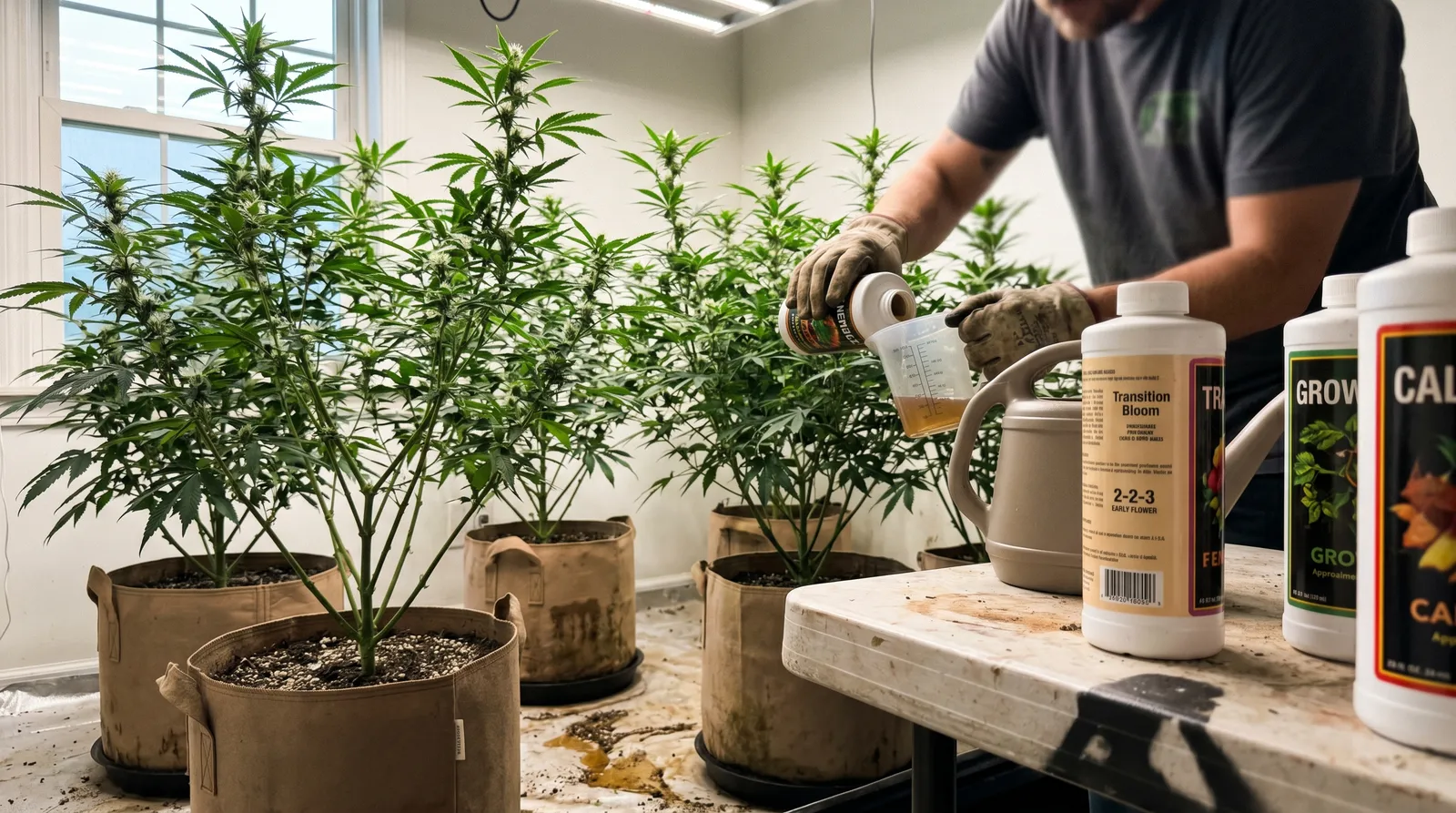
If your line has a "transition" or "early bloom" bottle, this is its moment. If not, run veg at 75% strength and start adding bloom at 25%, gradually inverting the mix over 10–14 days.
Don't crash nitrogen to zero — the plant is still producing leaves to support the buds that are about to form. Pale, yellowing upper growth mid-stretch usually means you pulled nitrogen too fast.
Step 6: Shift hard to P and K in mid-to-late flower (weeks 3–7 of flower)
Mid-to-late flower calls for bloom-specific NPK ratios around 1-3-4 or 2-4-6, with potassium driving bud density and weight. Once the stretch finishes and bud sites start plumping, phosphorus and potassium take over.
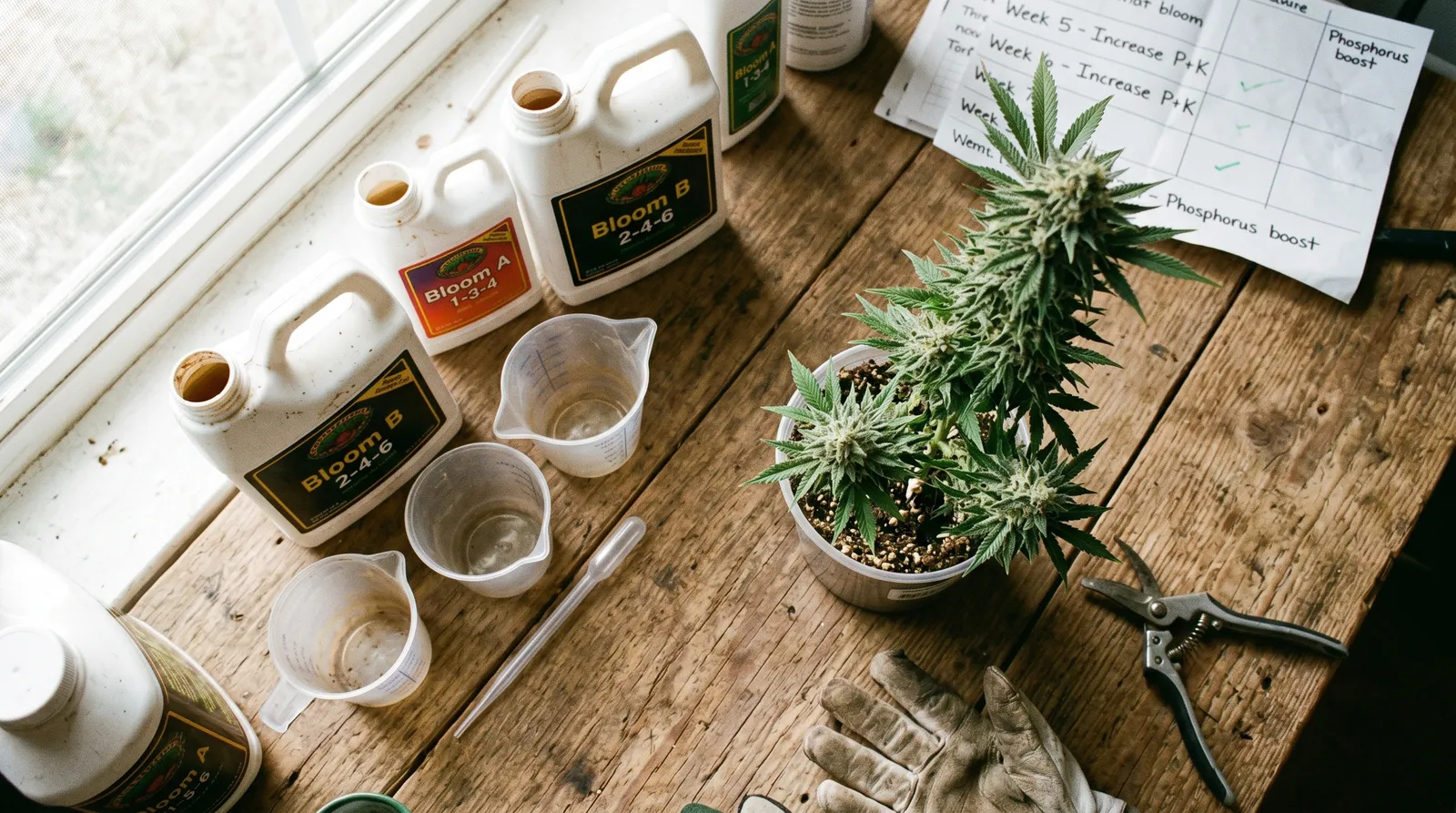
Targets:
- EC (coco/hydro): 1.8–2.2 at peak bloom. Some heavy feeders (think OG Kush–dominant genetics) will take 2.4 without complaint; others (sensitive sativas, some autos) tap out at 1.6.
- pH: slight drift toward 6.0–6.3 in soil improves P and K uptake; coco/hydro stays 5.8–6.0.
- Supplements worth considering: a PK booster around week 4–5 of flower (roughly 0-9-18 or similar) used for a short window, not the whole cycle. Silica for stem strength. CalMag if you see rust-spotting on fan leaves.
The contested territory here: "bloom boosters" as a class. Some of them are just repackaged mono-potassium phosphate at a premium markup. A 2018 Agronomy study (Bernstein et al., 2019) found that excessive phosphorus past a certain threshold produced no yield benefit — and sometimes locked out other nutrients. More isn't more. If you want to buy a bloom booster, pick one where the label actually lists its PK percentages rather than hiding behind branded jargon.
Step 7: Consider (or skip) the final flush (last 7–14 days)
The final flush is optional and evidence for its benefit is thin. The traditional approach: plain pH'd water for a week or two before harvest, theoretically pulling stored nutrients out of the plant for a smoother cure. The counter-position: a healthy plant translocates nutrients from leaves into flowers naturally as it ripens, and flushing just stresses it.
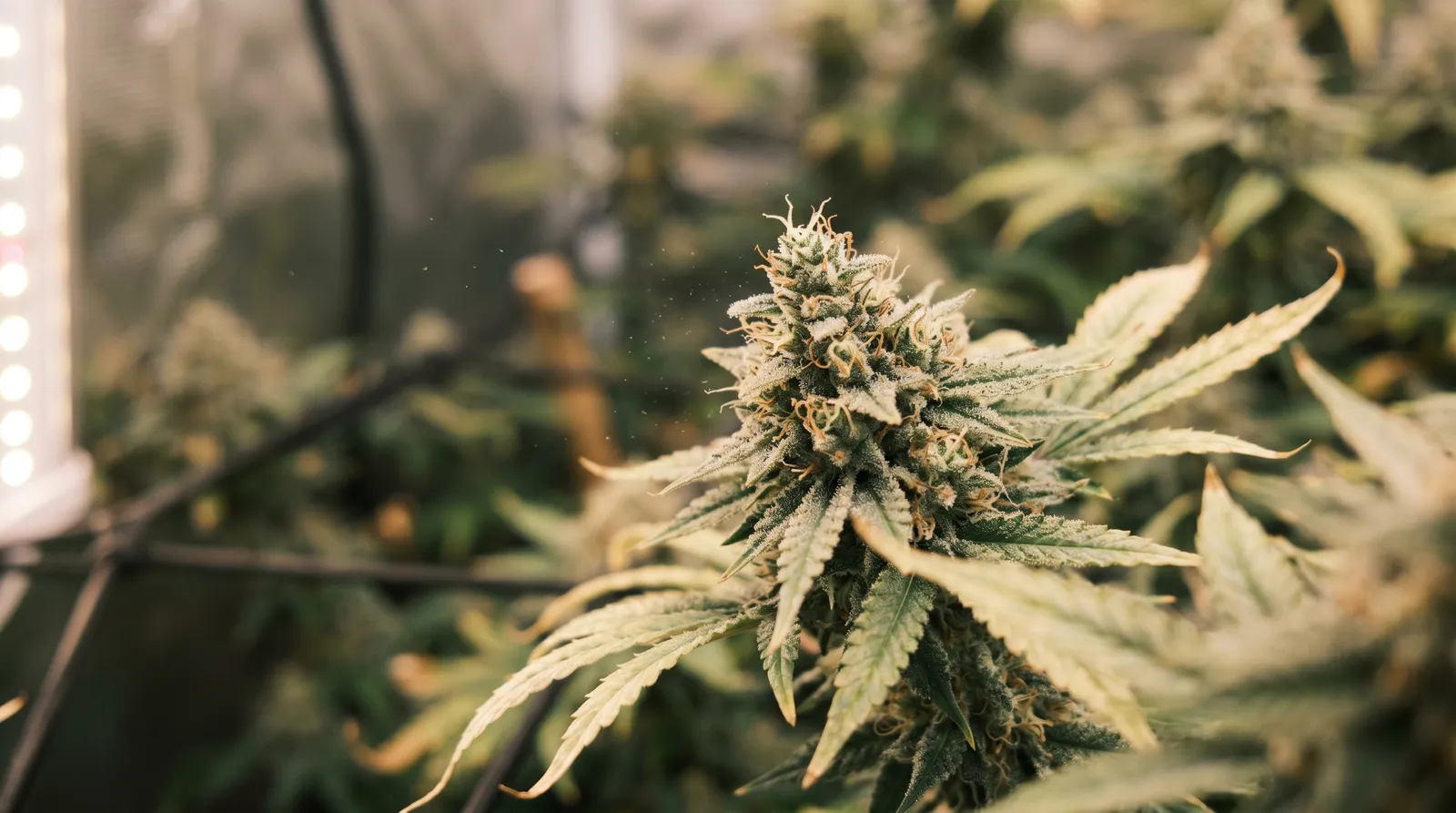
A 2021 Rx Green Technologies study on flushing duration (0, 7, 10, 14 days) found no meaningful difference in terpene content, potency, or ash colour across treatments. Anecdotally, organic/soil growers often skip it entirely because the soil food web handles the job; coco and hydro growers tend to flush because salt buildup is a real phenomenon in inert media.
What's more important than flushing itself: not overfeeding through the last month. If your EC has been sensible, your flush (or lack of one) becomes a minor variable.
Common problems and how to read them
Most cannabis feeding problems trace back to four root causes: EC too high, pH out of range, a specific micronutrient lockout, or cold roots. Read the leaves in this order:

- Tip burn (brown crispy leaf tips): EC too high. Reduce feed strength, flush with pH'd water at 1.5x pot volume.
- Yellowing from bottom up, even pattern: nitrogen deficiency (veg) or natural senescence (late flower).
- Yellowing between veins on newer growth: iron or magnesium issue — check pH first, not nutrient strength. Cannabis at pH 7.2 can sit in a nutrient-rich mix and starve because it can't uptake what's there.
- Purple/red stems with stunted growth: phosphorus deficiency, often caused by cold root zones (below 18°C) rather than lack of P in the feed.
- Rust spots on fan leaves in flower: calcium deficiency, very common in coco. Add CalMag.
- Dark green clawed leaves: nitrogen toxicity. Flush, reduce feed.
A note on handling: cannabis nutrient concentrates can irritate skin and eyes — wear gloves when mixing, store bottles out of reach of children, and keep them separate from food storage.
How to read a nutrient manufacturer's feed chart
Manufacturer feed charts are a starting hypothesis, not a prescription, and almost always overstate dosage. Every bottled line — Advanced Nutrients, Canna, House & Garden, BioBizz, Athena, GHE/Terra Aquatica — publishes a chart, and they sell nutrients, so their suggested doses trend high.
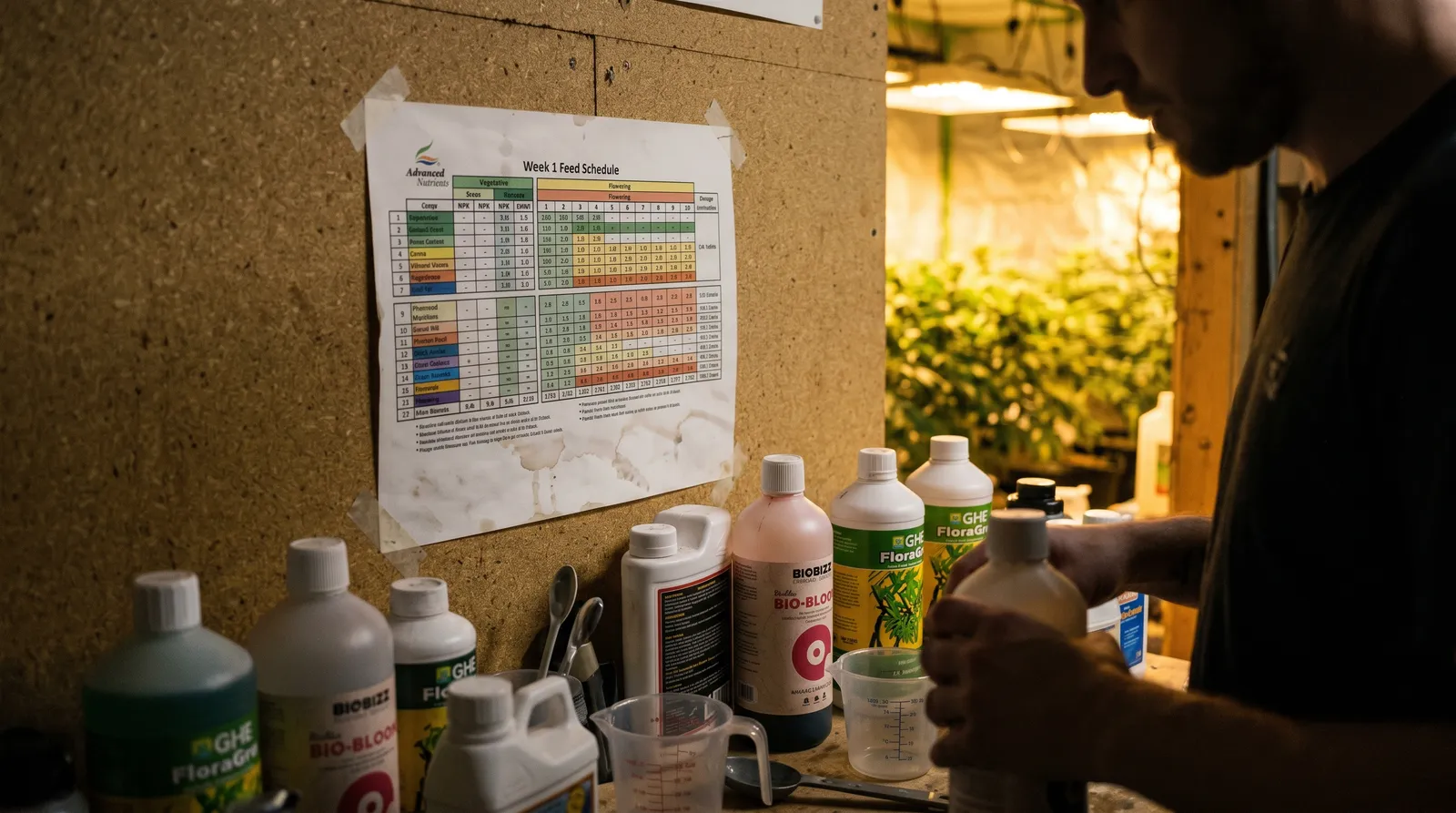
Practical rule: when you buy a new line, start lower than the published dose, measure EC at the root zone (runoff in coco/soil, reservoir in hydro), and adjust based on what the plant actually tells you. Your genetics, light intensity, and environment all shift the target. If you order a full A/B set online, get a small bottle of CalMag at the same time — you'll almost certainly need it before the box is finished.
Legal notice: Cannabis cultivation laws vary by country and region and change frequently. This guide is educational. Before growing, verify current laws for your specific jurisdiction. Azarius does not provide legal advice.
Last updated: April 2026
Frequently Asked Questions
8 questionsWhat is the best NPK ratio for cannabis in flowering?
Do cannabis seedlings need NPK nutrients?
How do I know if I'm overfeeding my cannabis plants?
Does cannabis need different nutrients in soil versus coco versus hydro?
Is flushing cannabis before harvest actually necessary?
What causes nutrient lockout in cannabis?
What pH range should I maintain for optimal NPK uptake in cannabis?
Do I need CalMag when growing cannabis in coco coir?
About this article


Luke Sholl has been writing about cannabis, cannabinoids, and the broader benefits of nature since 2011, and has personally grown cannabis in home grow tents for more than a decade. That first-hand cultivation experience
This wiki article was drafted with AI assistance and reviewed by Luke Sholl, External contributor since 2026. Editorial oversight by Adam Parsons.
Medical disclaimer. This content is for informational purposes only and does not constitute medical advice. Consult a qualified healthcare provider before use of any substance.
Last reviewed April 24, 2026
References (5)
- [1]Saloner, A., & Bernstein, N. (2021). Nitrogen supply affects cannabinoid and terpenoid profile in medical cannabis (Cannabis sativa L.). Frontiers in Plant Science, 12.
- [2]Bernstein, N., Gorelick, J., Zerahia, R., & Koch, S. (2019). Impact of N, P, K and humic acids supplementation on the chemical profile of medical cannabis. Agronomy, 9(11), 736.
- [3]Rx Green Technologies (2021). The effect of flushing on cannabis quality. Independent cultivation study.
- [4]Cervantes, J. (2015). The Cannabis Encyclopedia. Van Patten Publishing — chapter on plant nutrition.
- [5]EMCDDA (European Monitoring Centre for Drugs and Drug Addiction). Cannabis production and cultivation reports.
Related Articles
Cannabis Hermaphrodite: Identify, Prevent, Act
A cannabis hermaphrodite is a female plant that develops male pollen sacs or banana-shaped anthers (nanners), self-pollinating and seeding your harvest.
DIY Cannabis Fertilizer: Homemade Nutrient Guide
DIY cannabis fertilizer guide: compost, teas, banana ferments and feed schedules, with safety notes and cited research for home growers.
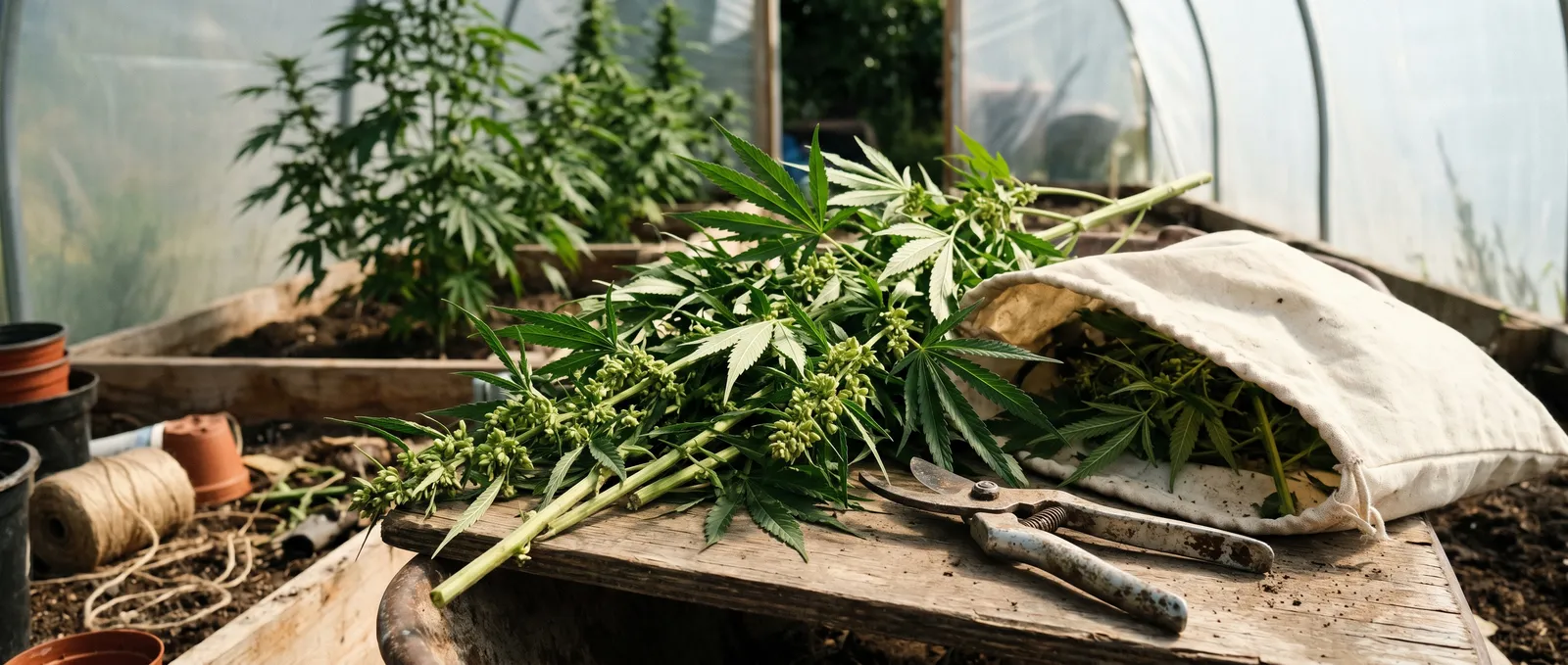
What To Do With Male Cannabis Plants: 6 Practical Uses
What to do with male cannabis plants: identify, isolate, breed, extract, or compost. A practical 6-step guide with sourcing and safety notes.
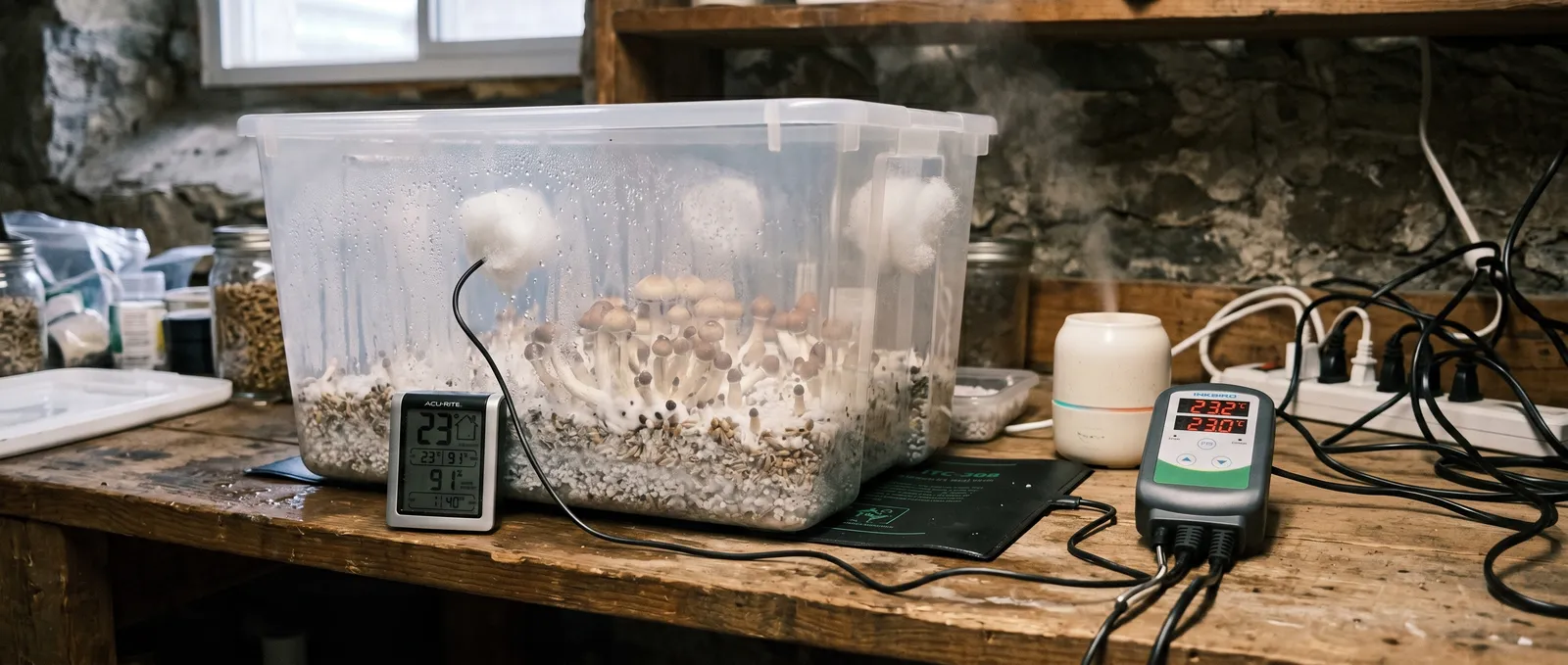
Mushroom Grow Kit Temperature & Humidity: Full Setup Guide
A temperature humidity control grow kit is the small set of climate tools — hygrometer, heat mat, humidifier or perlite tray — that keeps a mushroom fruiting…
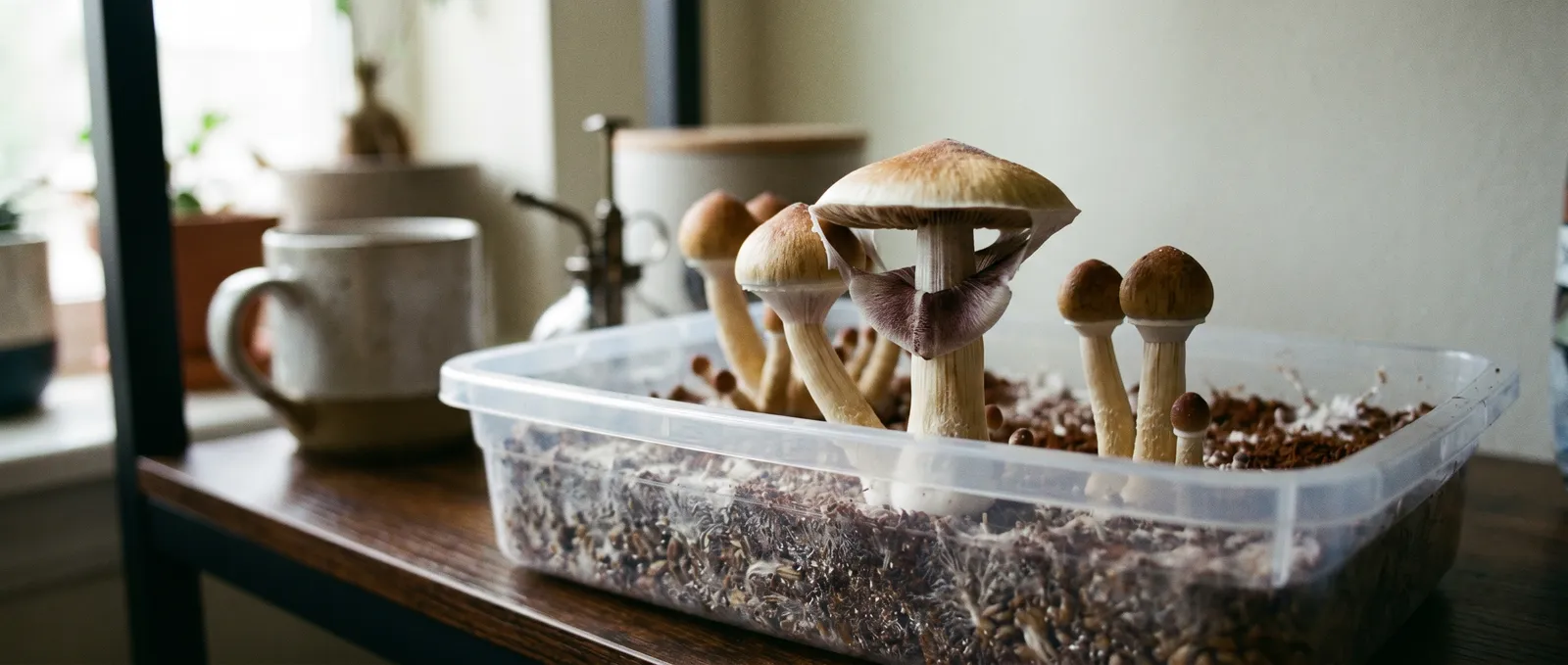
When to Harvest Mushrooms: Veil Break Timing Explained
Harvest timing veil break is a cultivation technique that uses the tearing of the partial veil on maturing Psilocybe cubensis to mark peak alkaloid content.

First Grow Checklist: What You Need for Mushroom Kits
A first grow checklist is the short list of supplies and environmental conditions needed to run a home psilocybin mushroom kit from inoculated substrate to…
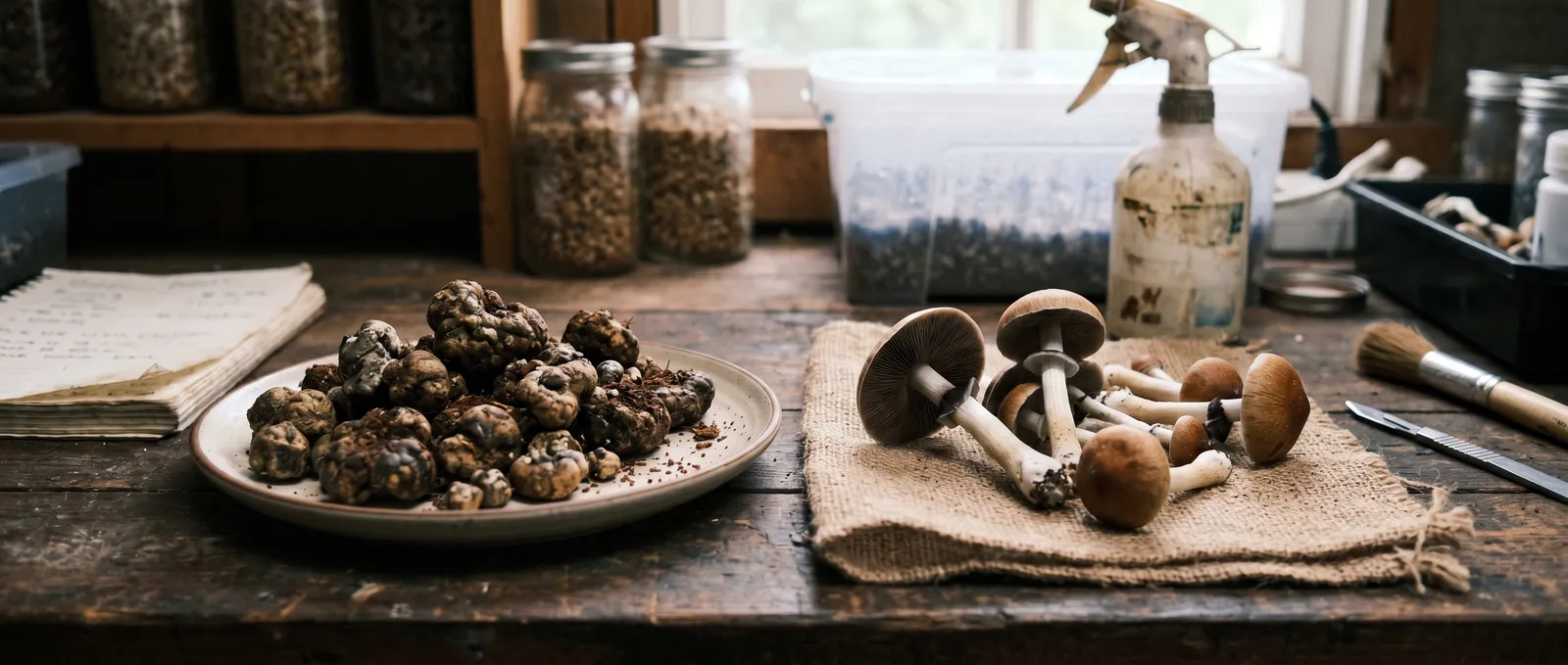
Sclerotia vs Fruit Bodies: Cultivation Comparison
Sclerotia and fruit bodies are two different life stages of Psilocybe fungi: sclerotia are hardened underground mycelial storage bodies (the 'magic…
Storing Dried Mushrooms Long Term: Full Guide
Storing dried mushrooms long term means keeping well-dried Psilocybe fruit bodies in airtight, opaque containers with desiccant, cool and dark, to slow…
Drying Mushrooms Air Desiccant Oven: Methods Compared
Drying mushrooms air desiccant oven refers to the three home methods for reducing fresh fruit bodies from ~90% water to cracker-dry (<5%). Gotvaldová et al.