
This article discusses psychoactive substances intended for adults (18+). If you have a health condition or take medication, consult a doctor before use. Our age policy
Budget Cannabis Grow Setup 300 Euro: What Actually Works
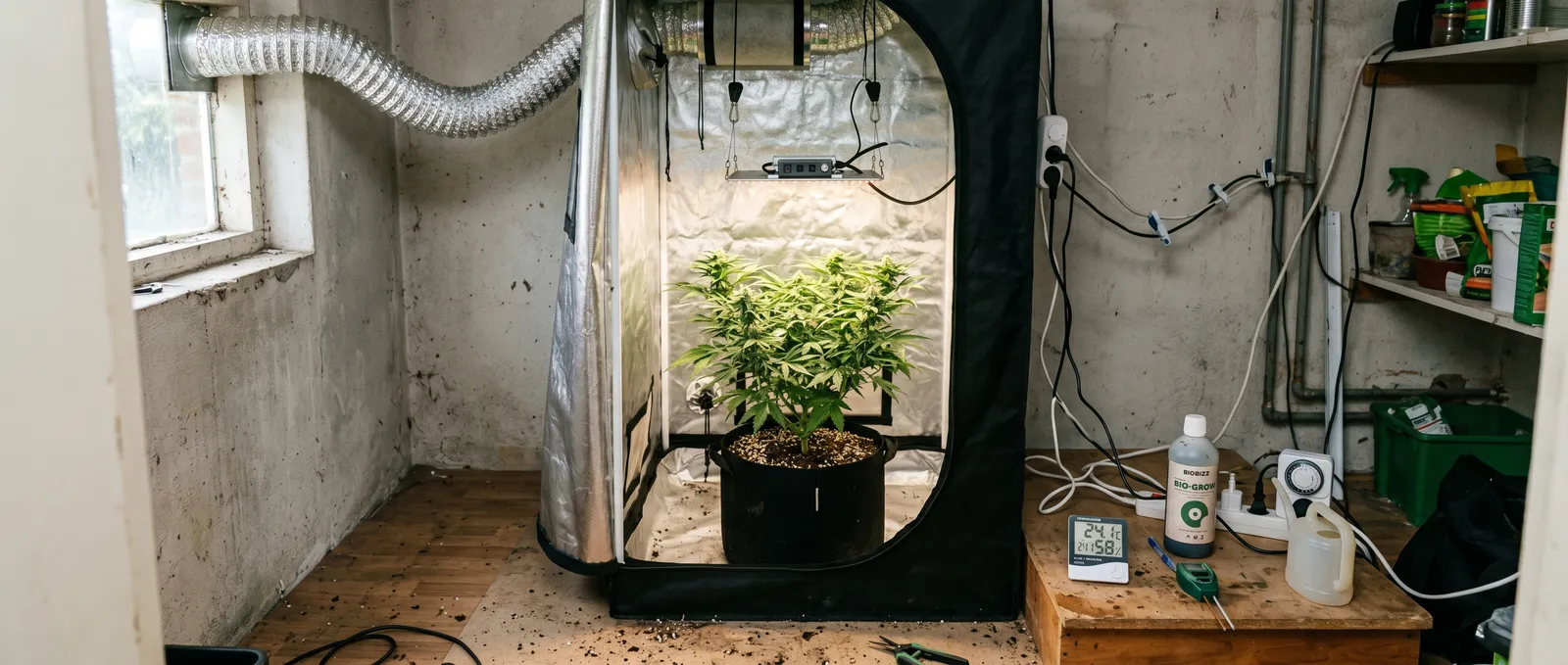
Definition
A budget cannabis grow setup 300 euro is a first-cycle indoor build centred on an 80×80 tent, a 100–150W LED, basic ventilation, soil, and autoflower genetics. Rodriguez-Morrison et al. (2021) showed LED light intensity is the dominant yield driver — which is where most of the budget goes.
A budget cannabis grow setup 300 euro is a first-cycle indoor build that delivers a genuine small harvest without the premium kit — centred on an 80×80 tent, a 100–150W LED, basic ventilation, soil, and autoflower genetics. If you want to buy smart and get a working tent running on the first try, this guide walks you through what to order, in what sequence, and where to cut corners safely.
What €300 actually buys you
A budget cannabis grow setup 300 euro is tight but workable — if you're honest about what you're trying to do. You're not building a perpetual harvest room. You're building one tent, one light, one fan, and running one cycle of a small number of plants to learn the craft. With that framing, €300 gets you genuinely decent kit in 2026, largely because small-form LED prices have dropped considerably since 2020 (DLC QPL listings tracked by horticultural integrators show sub-€150 boards hitting 2.7+ µmol/J efficacy) (Desaulniers Brousseau et al., 2021). What €300 does not buy: a 120×120 cm tent, a 600W fixture, a separate veg room, a full nutrient line, and pH/EC meters. Pick your battles.
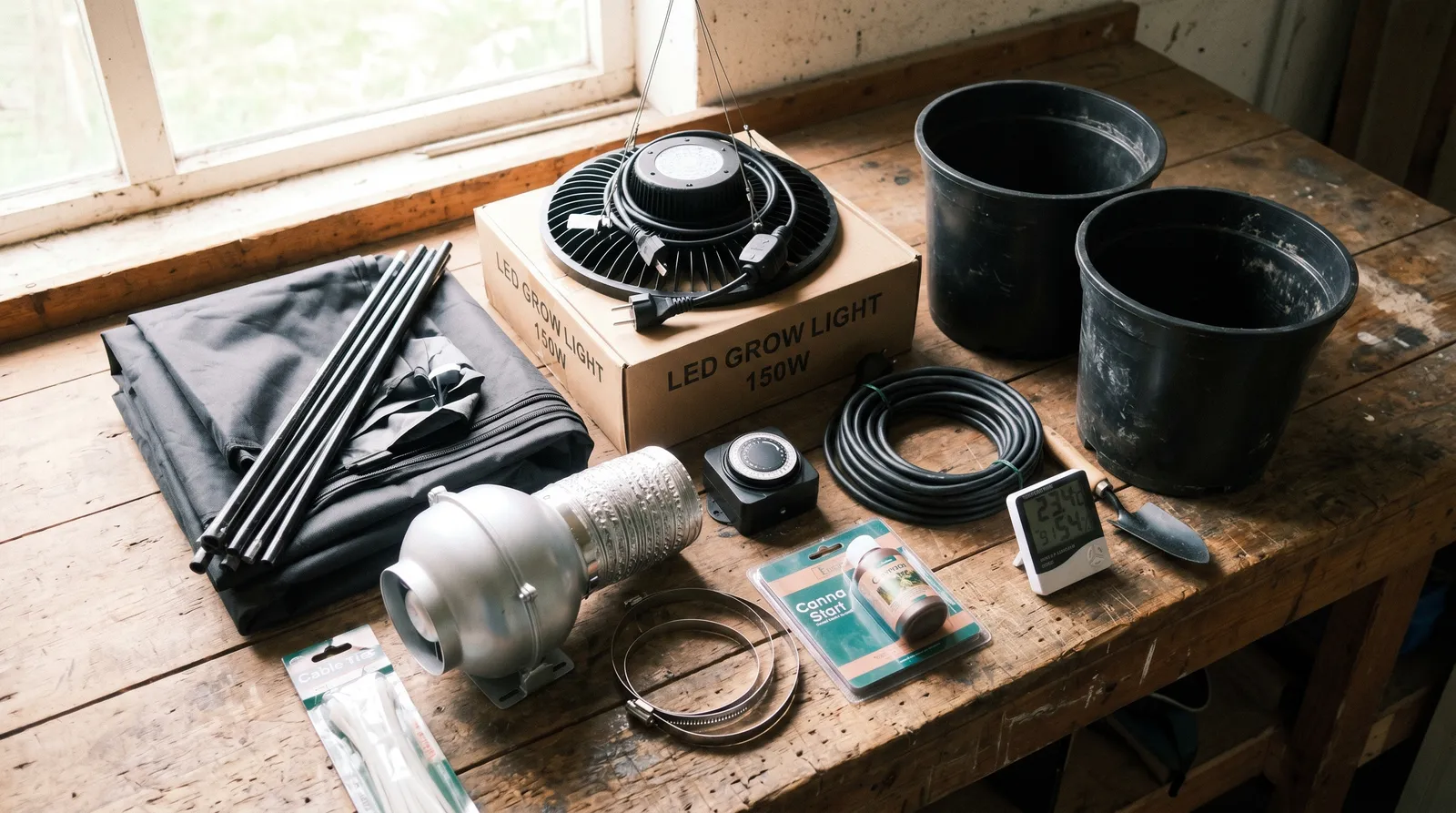
Before you spend a cent, note the structural choice that shapes everything else: autoflower vs photoperiod. Autoflowers flower based on age (roughly 9–11 weeks seed-to-harvest, no light-cycle flip needed, smaller plants) (Burgel et al., 2020), so you run a single 18/6 or 20/4 schedule start to finish. Photoperiods need a 12/12 flip to flower, produce bigger plants, and take 12–16 weeks total. On a 300-euro budget with an 80×80 tent, autoflowers are usually the saner choice — less training, less height anxiety, faster feedback.
Step 1: The tent (€60–80)
Direct answer: an 80×80×160 cm tent is the sweet spot for a first grow on this budget. A 60×60 technically fits two small autos, but you'll bang your head on height issues the first time a plant stretches. A 100×100 eats too much of your light budget.
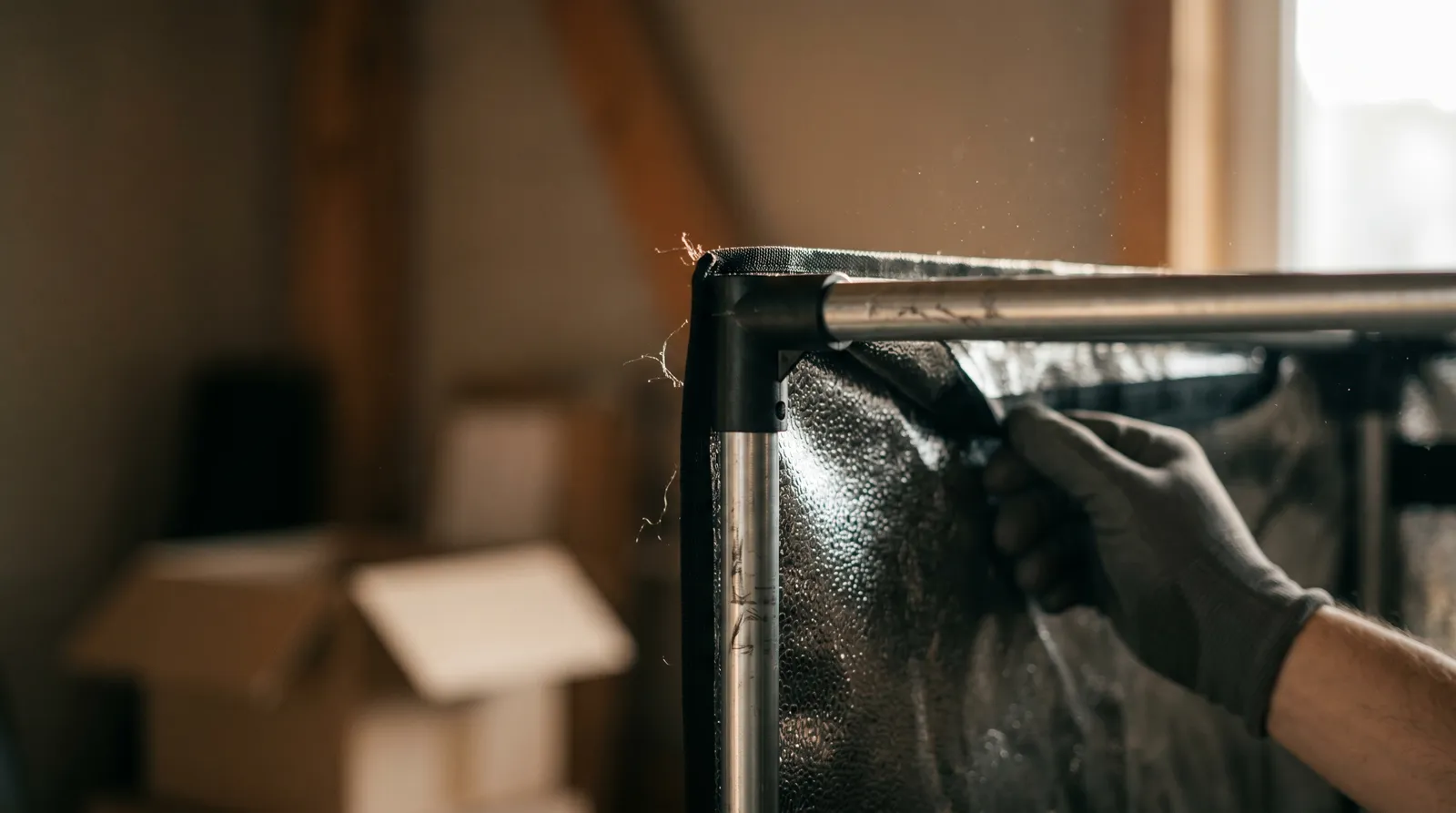
What to look for when you buy: 600D Oxford fabric minimum, double-stitched seams, metal corner connectors (not plastic), and at least two duct ports near the top. Mars Hydro, Secret Jardin, Spider Farmer, and BloomRoom all sell 80×80 tents in the €60–90 range. The cheapest no-brand tents on marketplaces often have light leaks at the zipper and thin 210D walls — you'll smell your grow from across the room and your light readings will bounce around.
Step 2: The light (€100–140)
Direct answer: a 100–150W full-spectrum LED quantum board, DLC-listed, with Samsung LM301B/H or equivalent diodes. This is the biggest single cost and the biggest single determinant of yield (Eaves et al., 2020).
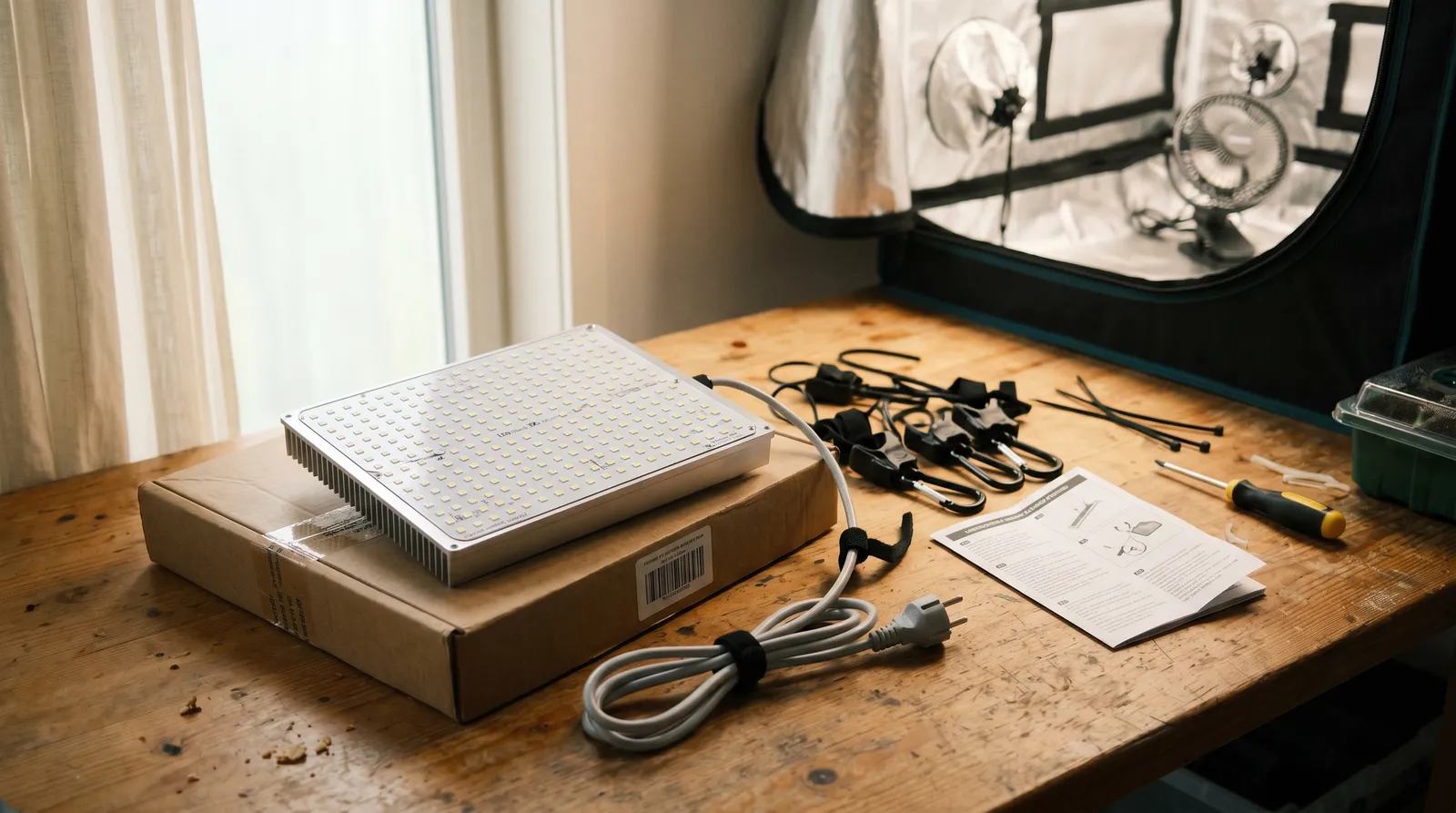
For an 80×80 footprint you want a fixture pulling ~150W at the wall that delivers 400–600 PPFD in veg and 600–900 PPFD in flower at canopy height (Westmoreland et al., 2021) — measured, not marketing. Mars Hydro TS1000, Spider Farmer SF1000, and Viparspectra P1000 all sit around €100–130 and actually hit those numbers in an 80×80 when hung correctly (usually 30–45 cm above canopy in flower). Avoid "blurple" diode-board lights and anything listing only "equivalent to 1000W HPS" — that's wattage theatre, not horticultural spec.
Skip HPS on a budget build. A 250W HPS plus ballast, reflector, and the ventilation to deal with its heat output will blow past €300 on its own.
Step 3: Ventilation and odour (€50–70)
Direct answer: one 4-inch (100mm) inline fan rated around 180–200 m³/h, paired with a matching carbon filter, plus a small clip-on oscillating fan for canopy airflow.
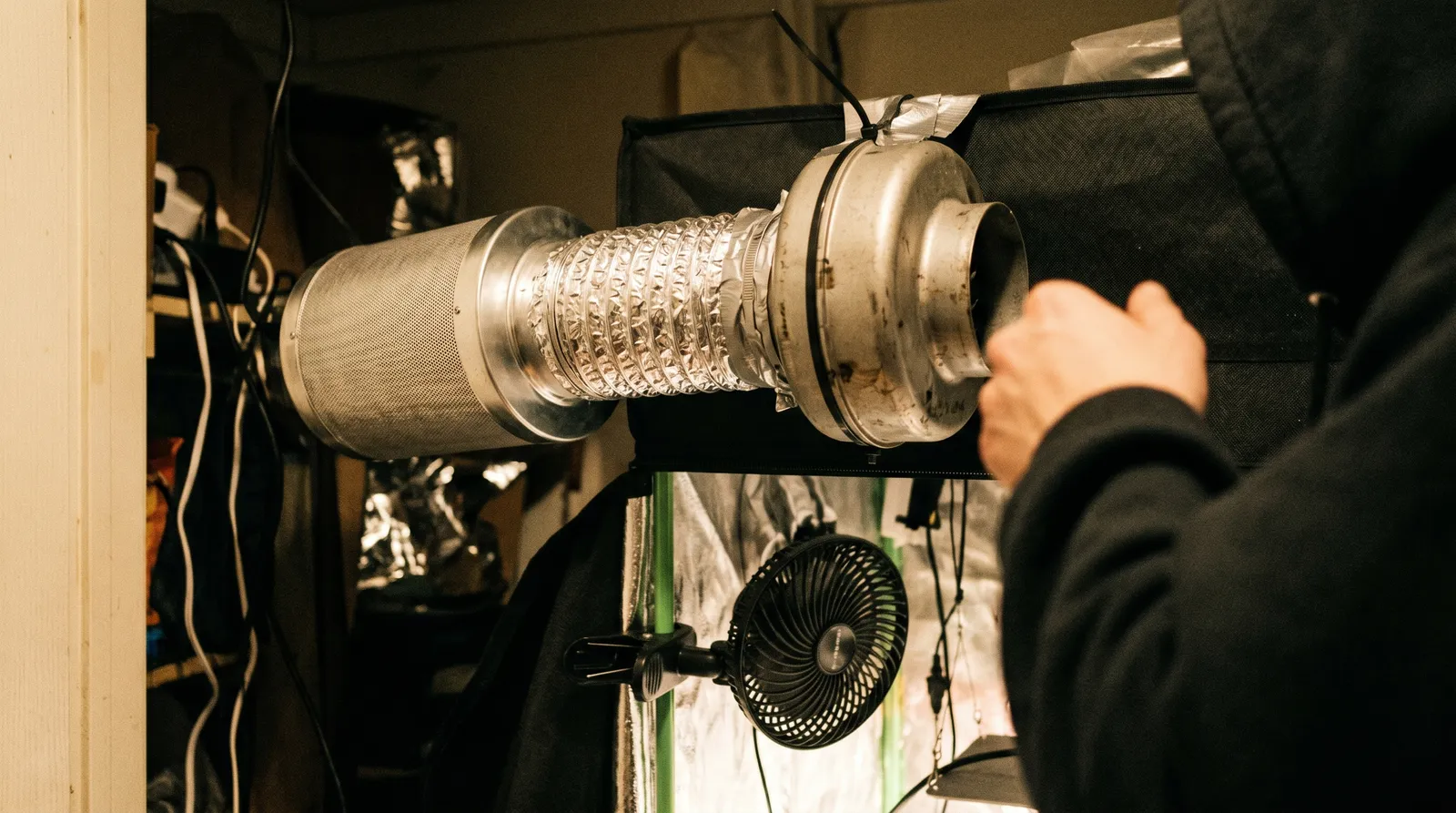
The extraction fan pulls hot air out the top of the tent and drags fresh air in through the bottom vents. The carbon filter sits inline and handles odour — without one, your neighbours will know by week 4 of flower. A 4-inch RAM or AC Infinity combo runs €45–65. The AC Infinity T4 is quieter and has a built-in speed controller, which matters more than you'd think when you're trying to sleep next to the tent.
The clip-on oscillating fan (€10–15) sits inside the tent, moving air across leaves. This is non-negotiable — stagnant air is how you get powdery mildew and botrytis (Punja, 2021), and it weakens stems that never had to fight a breeze.
Step 4: Medium and pots (€15–25)
Direct answer: a 50L bag of quality pre-fertilised soil (Plagron Light-Mix, BioBizz Light-Mix, or similar) and three 11–15L fabric pots.
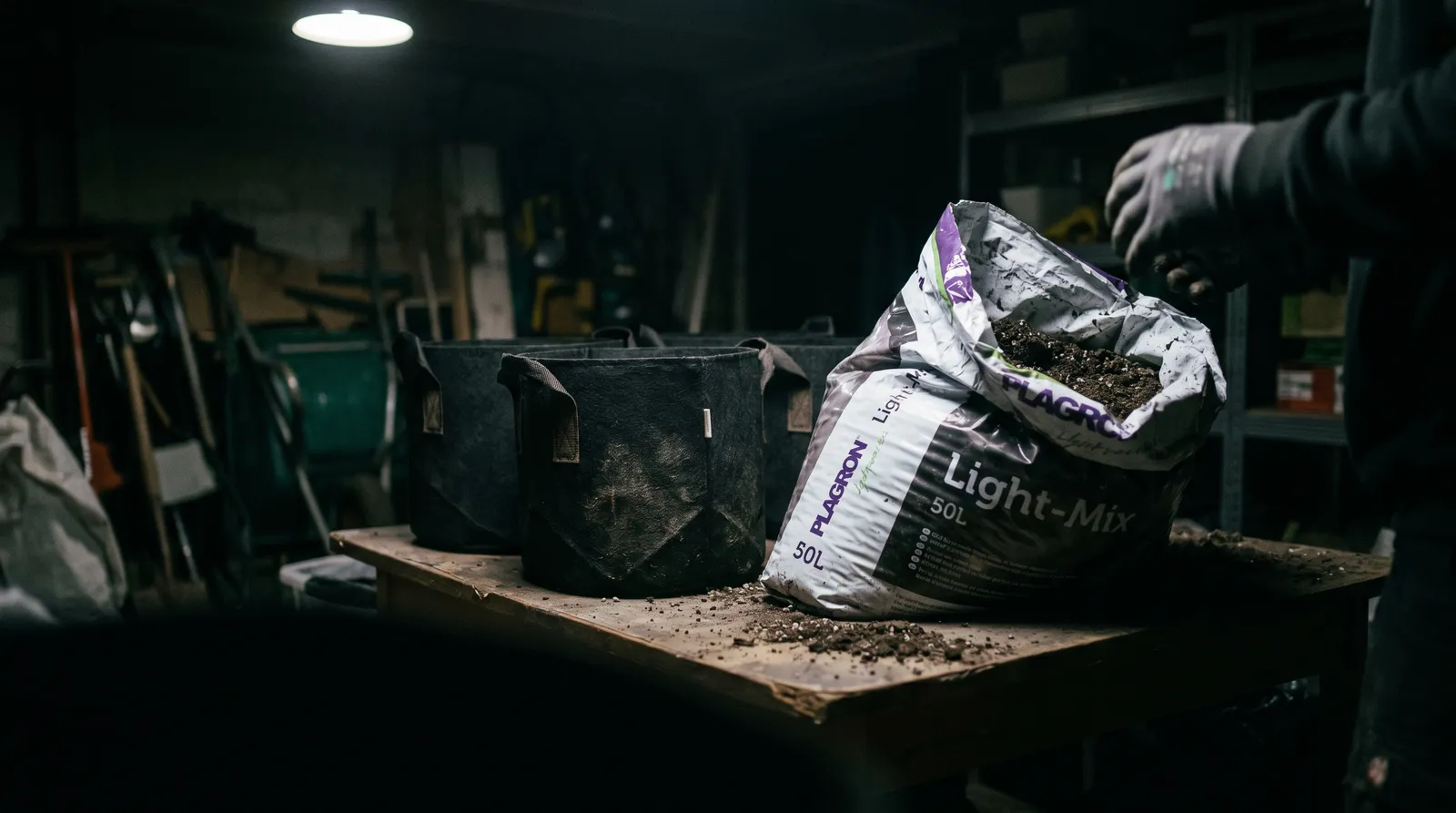
Soil is the budget grower's friend. Unlike coco coir — which is technically inert and demands a full feeding schedule from day one — a pre-fertilised soil carries the plant through the first 3–4 weeks with just pH-adjusted water (Caplan et al., 2017). You'll still need to feed in flower, but the learning curve is gentler. Target pH in soil: 6.2–6.8 (Saloner & Bernstein, 2020). In coco: 5.8–6.2. Get those numbers wrong and nothing else matters (Saloner & Bernstein, 2020).
Fabric pots out-perform plastic on this budget — better root aeration, natural air-pruning, and they're reusable. Three 11L pots in an 80×80 tent gives each autoflower room to breathe without overcrowding.
Budget breakdown at a glance
Direct answer: here's where every euro goes in a typical build, and which items are non-negotiable.
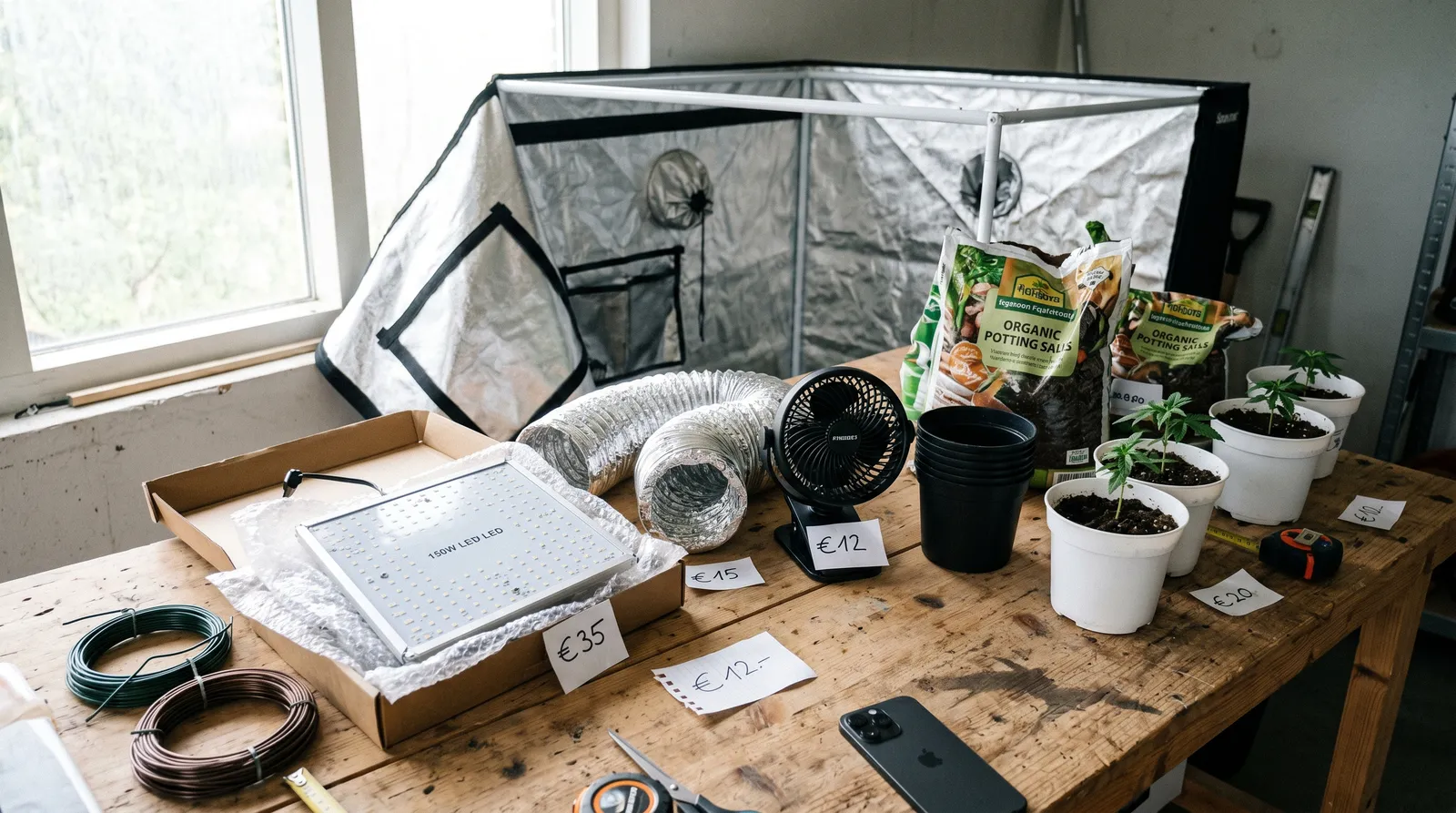
| Item | Typical cost | Priority |
|---|---|---|
| 80×80×160 tent | €60–80 | Essential |
| 100–150W LED (Samsung diodes) | €100–140 | Essential |
| 4" inline fan + carbon filter | €45–65 | Essential |
| Clip-on oscillating fan | €10–15 | Strongly advised |
| Soil + 3× fabric pots | €15–25 | Essential |
| Nutrient starter pack | €30–35 | Essential |
| Digital pH pen + pH Down | €18–25 | Essential |
| 3–5 feminised autoflower seeds | €20–40 | Essential |
Step 5: Nutrients and monitoring (€40–50)
Direct answer: a starter pack with Grow, Bloom, and a root stimulator, plus a cheap pH meter and pH Down solution.
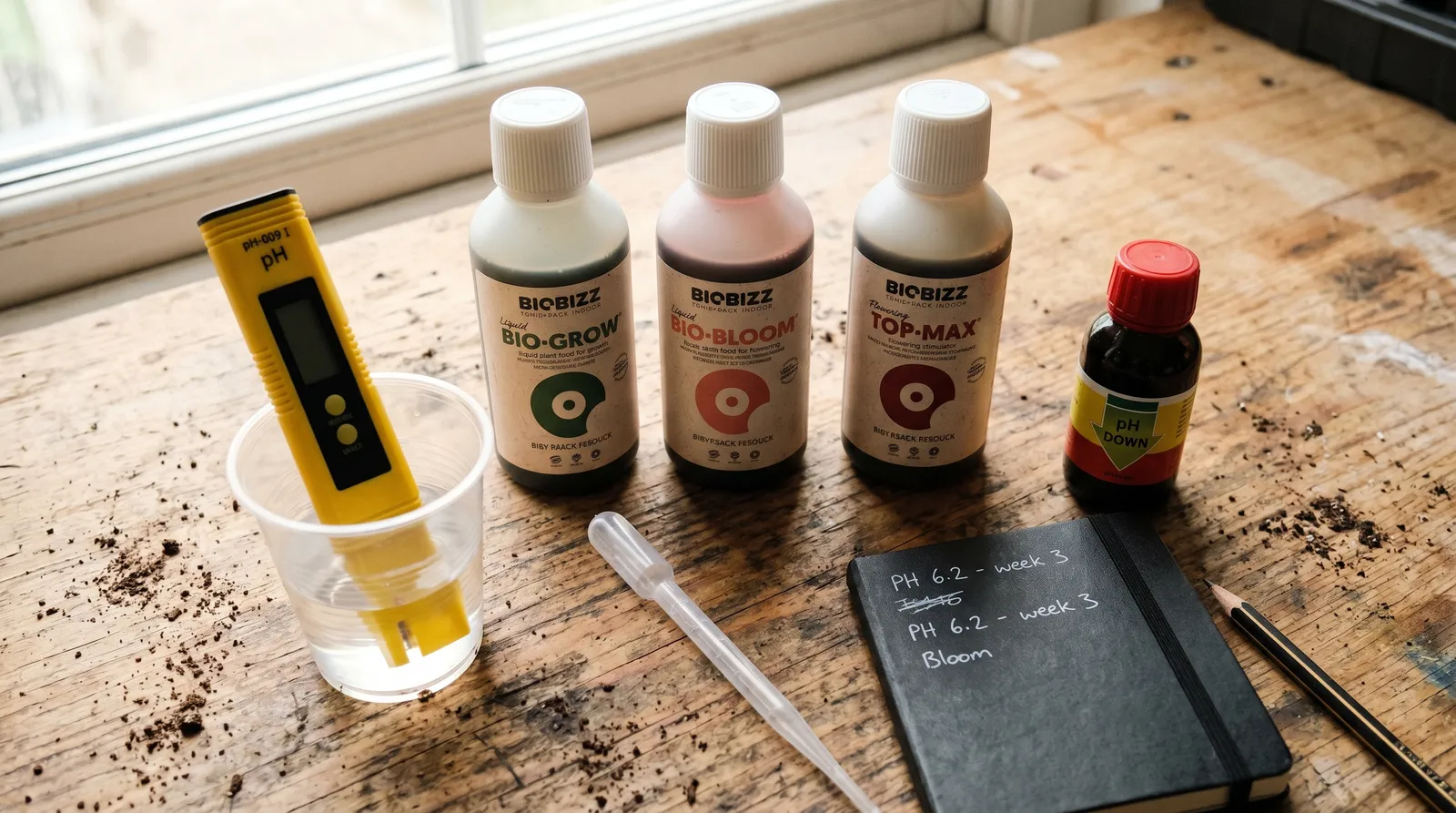
BioBizz Try-Pack Indoor (€30–35) covers an entire cycle for a small grow. Plagron's starter range is comparable. Skip the 12-bottle "full line" — on a first grow, the marginal gains from cal-mag boosters, silica, PK spikes, and enzyme teas are smaller than the gains from just getting your pH and watering right.
A digital pH pen (€15–20 for something like an Apera PH20 or a calibrated generic) is where the hobbyists separate from the people who post why are my leaves yellow on forums. You can grow without an EC meter on a first cycle. You cannot grow well without knowing your pH.
Honest limitations of a 300-euro build
Direct answer: a €300 budget forces real compromises, and pretending otherwise sets you up to feel cheated. Compared with a €600 build, you give up: canopy uniformity (a single 150W board has edge drop-off a dual-bar fixture doesn't), climate control (no dehumidifier means you're at the mercy of your room's ambient RH), and flexibility (one tent means one strain at one stage). A €300 kit is a teaching kit. A €600 kit is a production kit. Neither is wrong — they answer different questions.
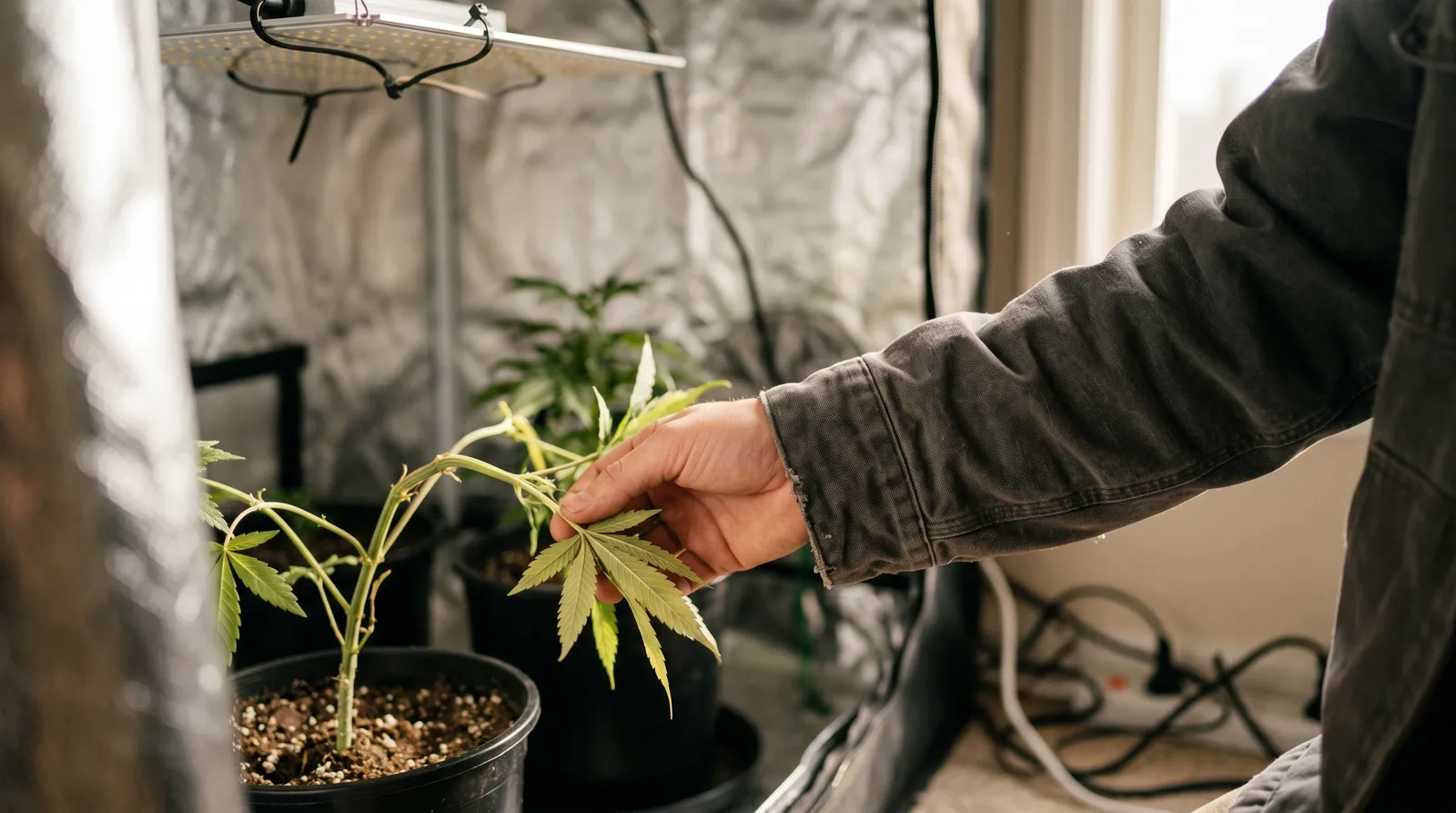
Step 6: Seeds (€20–40)
Direct answer: three to five feminised autoflower seeds from a breeder with published genetics — not bulk seed-bank unbranded stock.
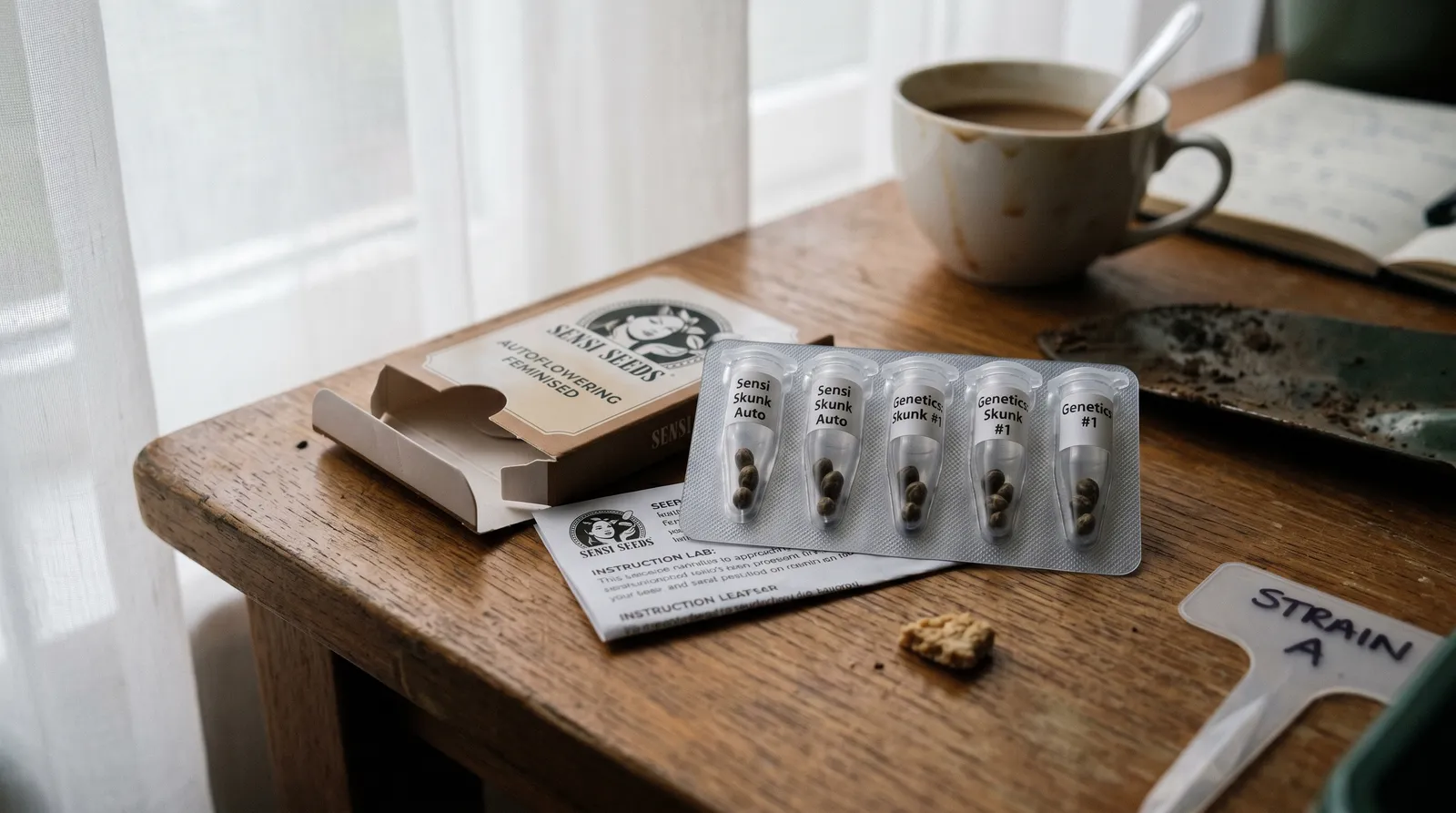
Autoflowers make sense on this budget for the reasons in the opening: shorter cycles, forgiving of light-schedule mistakes, smaller plants that fit an 80×80 comfortably. Beginner-friendly options with good breeder documentation include the Royal Queen Seeds Northern Light Auto, the Dutch Passion Auto Blackberry Kush, and the Paradise Seeds Auto Wappa. Stick to published breeder info on cycle length; ignore Reddit yield claims for any specific variety.
Feminised seeds produce effectively all female plants, which is what you want — only females produce the flowers you're growing for. Regular seeds are for breeders and experienced growers with space to cull males.
The math, and what's missing
Rough tally: tent €70, light €120, fan+filter €55, clip fan €12, soil+pots €20, nutrients €32, pH pen €18, seeds €25 = €352. You're €52 over.
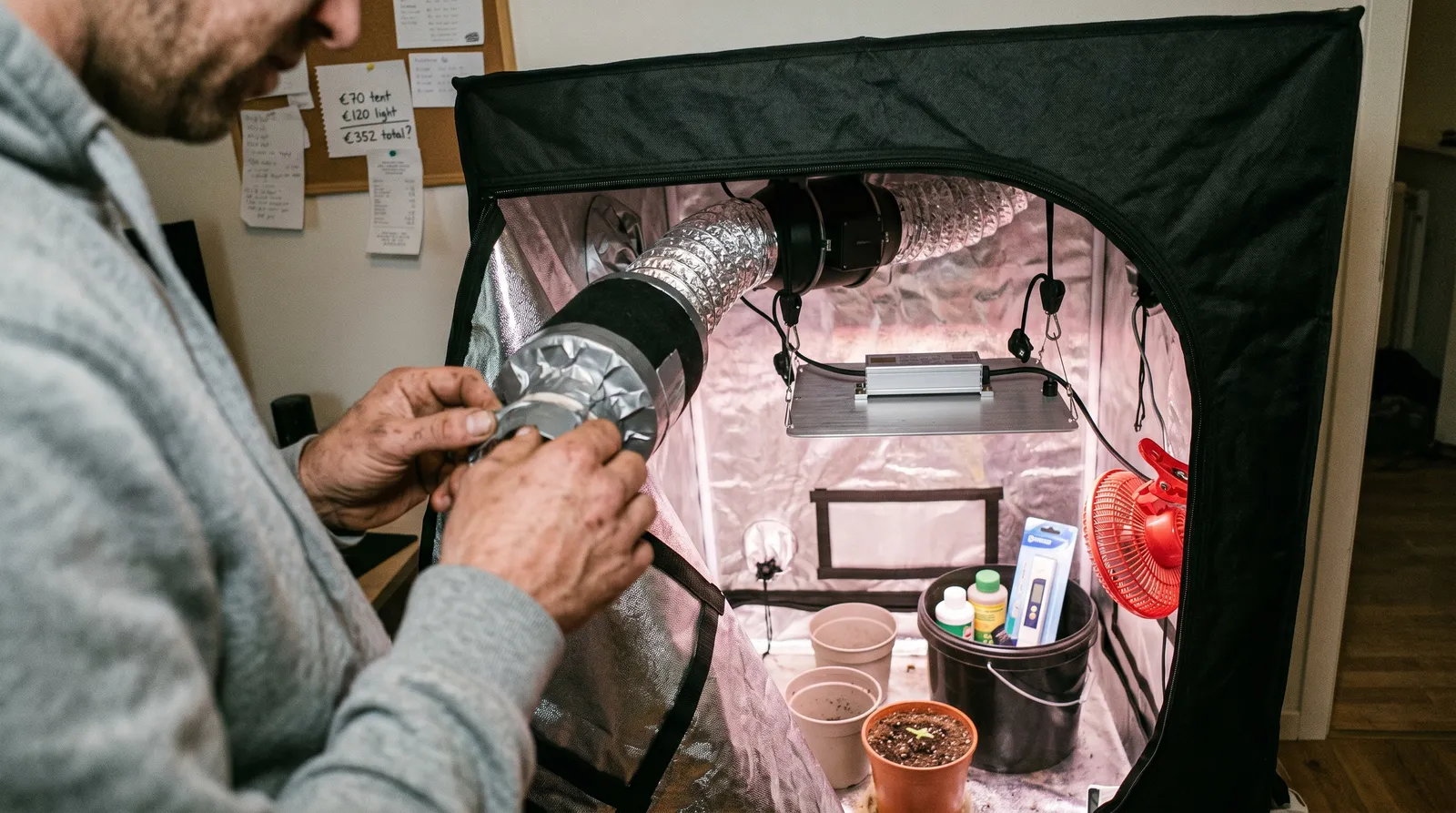
To hit a hard €300 cap, realistic compromises:
- Drop to a slightly cheaper tent (€55 no-name 600D)
- Skip the clip fan and rely on extraction alone for the first cycle (possible but increases mildew risk)
- Buy three seeds instead of five
- Use leftover plastic pots instead of fabric
What you should not cut: the pH meter, the carbon filter, or the light spec. Those are the three places where saving €20 costs you a crop.
Worth flagging inline: yield on a €300 first grow is hugely variable — growers commonly report 30–80g dried per autoflower plant in an 80×80 under ~150W LED, but that range depends on genetics, training, VPD control, and grower skill in ways that make any single number misleading. Treat cycle one as tuition, not production.
What to buy later, not now
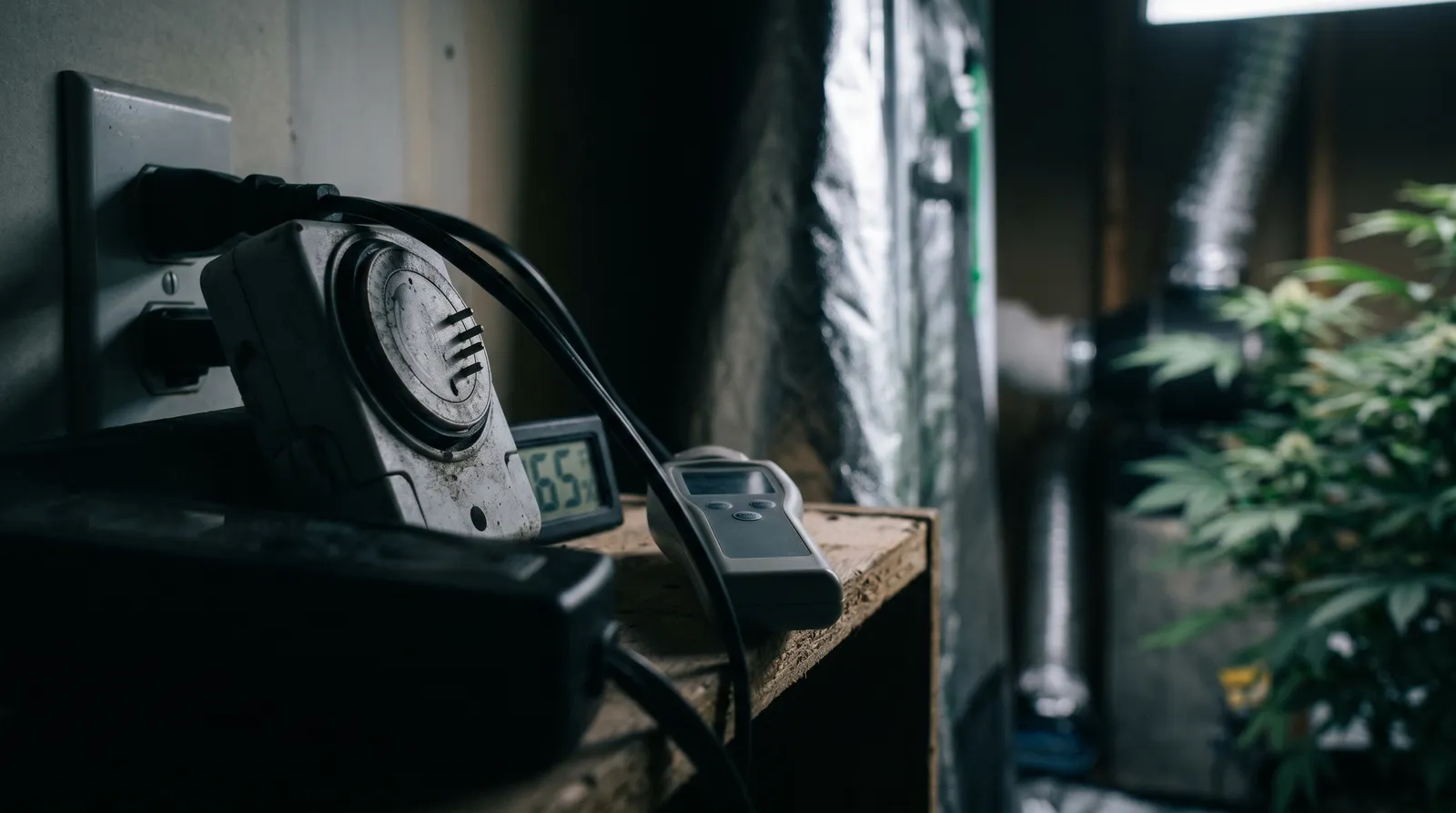
Once you've run one cycle and know what your setup actually does, the sensible upgrades you can get later are: an EC meter (€30), a small dehumidifier if your room sits above 65% RH (€60–90), a timer that handles both lights and fan in one unit (€20), and eventually a thermo-hygrometer with min/max memory so you can catch overnight RH spikes that cause bud rot. None of that needs to be on the day-one shopping list.
Legal notice: Cannabis cultivation laws vary by country and region and change frequently. This guide is educational. Before growing, verify current laws for your specific jurisdiction. Azarius does not provide legal advice.
Educational content for adult readers. Azarius does not provide medical advice; consult a qualified professional for health-related guidance.
Last updated: April 2026
Frequently Asked Questions
8 questionsIs €300 really enough to start growing cannabis indoors?
Should I buy autoflower or photoperiod seeds on a budget?
Can I skip the carbon filter to save money?
What's the cheapest light that will actually work for a first grow?
Do I need a pH meter if I'm using soil?
How much can I realistically harvest from a €300 setup?
What size grow tent should I get for a €300 budget setup?
Is 18/6 or 20/4 light schedule better for autoflowers on a budget?
About this article


Luke Sholl has been writing about cannabis, cannabinoids, and the broader benefits of nature since 2011, and has personally grown cannabis in home grow tents for more than a decade. That first-hand cultivation experience
This wiki article was drafted with AI assistance and reviewed by Luke Sholl, External contributor since 2026. Editorial oversight by Adam Parsons.
Medical disclaimer. This content is for informational purposes only and does not constitute medical advice. Consult a qualified healthcare provider before use of any substance.
Last reviewed April 24, 2026
References (7)
- [1]Eaves, J., Eaves, S., Morphy, C., & Murray, C. (2020). The relationship between light intensity, cannabis yields, and profitability. Agronomy Journal, 112(2), 1466-1470. DOI: 10.1002/agj2.20008
- [2]Caplan, D., Dixon, M., & Zheng, Y. (2017). Optimal rate of organic fertilizer during the vegetative-stage for cannabis grown in two coir-based substrates. HortScience, 52(9), 1307-1312. DOI: 10.21273/HORTSCI11903-17
- [3]Burgel, L., Hartung, J., Schibano, D., & Graeff-Hönninger, S. (2020). Impact of different phytohormones on morphology, yield and cannabinoid content of Cannabis sativa L.. Plants, 9(6), 725. DOI: 10.3390/plants9060725
- [4]Saloner, A. & Bernstein, N. (2020). Response of medical cannabis (Cannabis sativa L.) to nitrogen supply under long photoperiod. Frontiers in Plant Science, 11, 572293. DOI: 10.3389/fpls.2020.572293
- [5]Westmoreland, F.M., Bugbee, B., & Kusuma, P. (2021). Cannabis lighting: Decreasing blue photon fraction increases yield but efficacy is more important for cost effective production of cannabinoids. PLoS ONE, 16(3), e0248988. DOI: 10.1371/journal.pone.0248988
- [6]Punja, Z.K. (2021). Emerging diseases of Cannabis sativa and sustainable management. Pest Management Science, 77(9), 3857-3870. DOI: 10.1002/ps.6307
- [7]Desaulniers Brousseau, V., Wu, B.S., MacPherson, S., Morello, V., & Lefsrud, M. (2021). Cannabinoids and terpenes: How production of photo-protectants can be manipulated to enhance Cannabis sativa L. phytochemistry. Frontiers in Plant Science, 12, 620021. DOI: 10.3389/fpls.2021.620021
Related Articles
Cannabis Hermaphrodite: Identify, Prevent, Act
A cannabis hermaphrodite is a female plant that develops male pollen sacs or banana-shaped anthers (nanners), self-pollinating and seeding your harvest.
DIY Cannabis Fertilizer: Homemade Nutrient Guide
DIY cannabis fertilizer guide: compost, teas, banana ferments and feed schedules, with safety notes and cited research for home growers.
What To Do With Male Cannabis Plants: 6 Practical Uses
What to do with male cannabis plants: identify, isolate, breed, extract, or compost. A practical 6-step guide with sourcing and safety notes.
Mushroom Grow Kit Temperature & Humidity: Full Setup Guide
A temperature humidity control grow kit is the small set of climate tools — hygrometer, heat mat, humidifier or perlite tray — that keeps a mushroom fruiting…
When to Harvest Mushrooms: Veil Break Timing Explained
Harvest timing veil break is a cultivation technique that uses the tearing of the partial veil on maturing Psilocybe cubensis to mark peak alkaloid content.
First Grow Checklist: What You Need for Mushroom Kits
A first grow checklist is the short list of supplies and environmental conditions needed to run a home psilocybin mushroom kit from inoculated substrate to…
Sclerotia vs Fruit Bodies: Cultivation Comparison
Sclerotia and fruit bodies are two different life stages of Psilocybe fungi: sclerotia are hardened underground mycelial storage bodies (the 'magic…
Storing Dried Mushrooms Long Term: Full Guide
Storing dried mushrooms long term means keeping well-dried Psilocybe fruit bodies in airtight, opaque containers with desiccant, cool and dark, to slow…
Drying Mushrooms Air Desiccant Oven: Methods Compared
Drying mushrooms air desiccant oven refers to the three home methods for reducing fresh fruit bodies from ~90% water to cracker-dry (<5%). Gotvaldová et al.