
This article discusses psychoactive substances intended for adults (18+). If you have a health condition or take medication, consult a doctor before use. Our age policy
How CBN Is Formed: THC Oxidation Explained
Definition
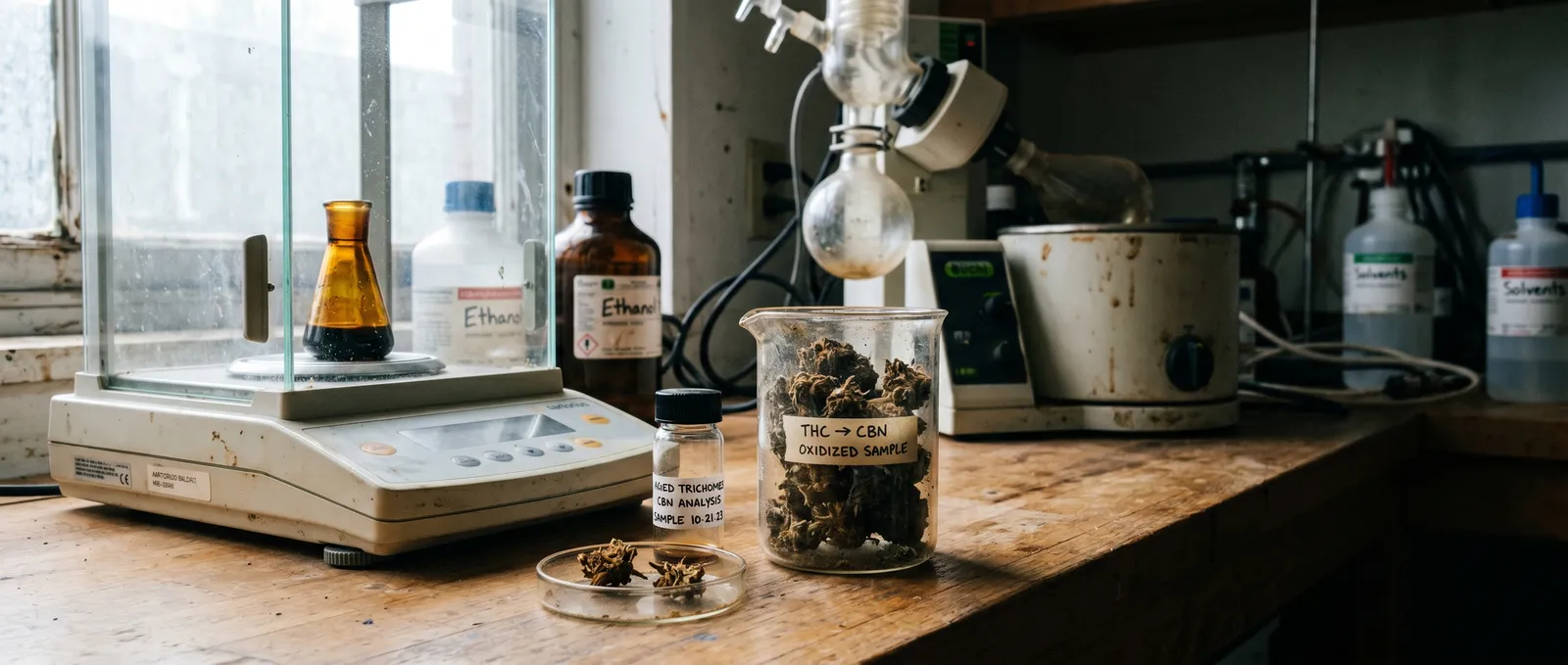
Cannabinol (CBN) forms when THC degrades through oxidative aromatisation — a process driven by oxygen, UV light, and heat over time. Fairbairn et al. (1976) demonstrated that cannabis stored in open air lost roughly 50% of its THC to CBN conversion over four years. Fresh cannabis contains almost no CBN; it is an ageing artefact, not a biosynthetic product.
18+ only — this article covers cannabinoid chemistry and applies to adult readers.
Disclaimer: This article is for educational purposes only. It does not constitute medical advice. Cannabinoid products may be subject to legal restrictions in your jurisdiction. Always consult a qualified healthcare professional before using cannabinoid-based products, and verify local regulations before purchasing or using any cannabinoid product.
CBN is a cannabinoid that forms when THC undergoes oxidation — a natural degradation process in which oxygen, light, and heat gradually convert psychoactive THC into the milder compound cannabinol. Understanding how CBN is formed through THC oxidation matters for anyone who stores cannabis, wants to buy CBN products, or simply wonders why aged flower feels different from fresh material. If you've ever cracked open a jar of old cannabis and noticed it felt more sedating and less heady, you've already met CBN. THC molecules lose hydrogen atoms and gain double bonds when exposed to environmental stressors, gradually converting into cannabinol. This transformation explains why storage matters, why old cannabis hits differently, and why CBN has become a cannabinoid of genuine scientific interest in its own right.
What actually happens to the THC molecule during oxidation?
THC undergoes aromatisation: its cyclohexene ring converts into a fully aromatic benzene ring through the loss of four hydrogen atoms and the gain of two additional double bonds. Specifically, Δ9-THC contains a carbon-carbon double bond within that cyclohexene ring, and when exposed to oxygen over time, this partially saturated ring becomes a flat, fully conjugated aromatic system (Elsohly & Slade, 2005).
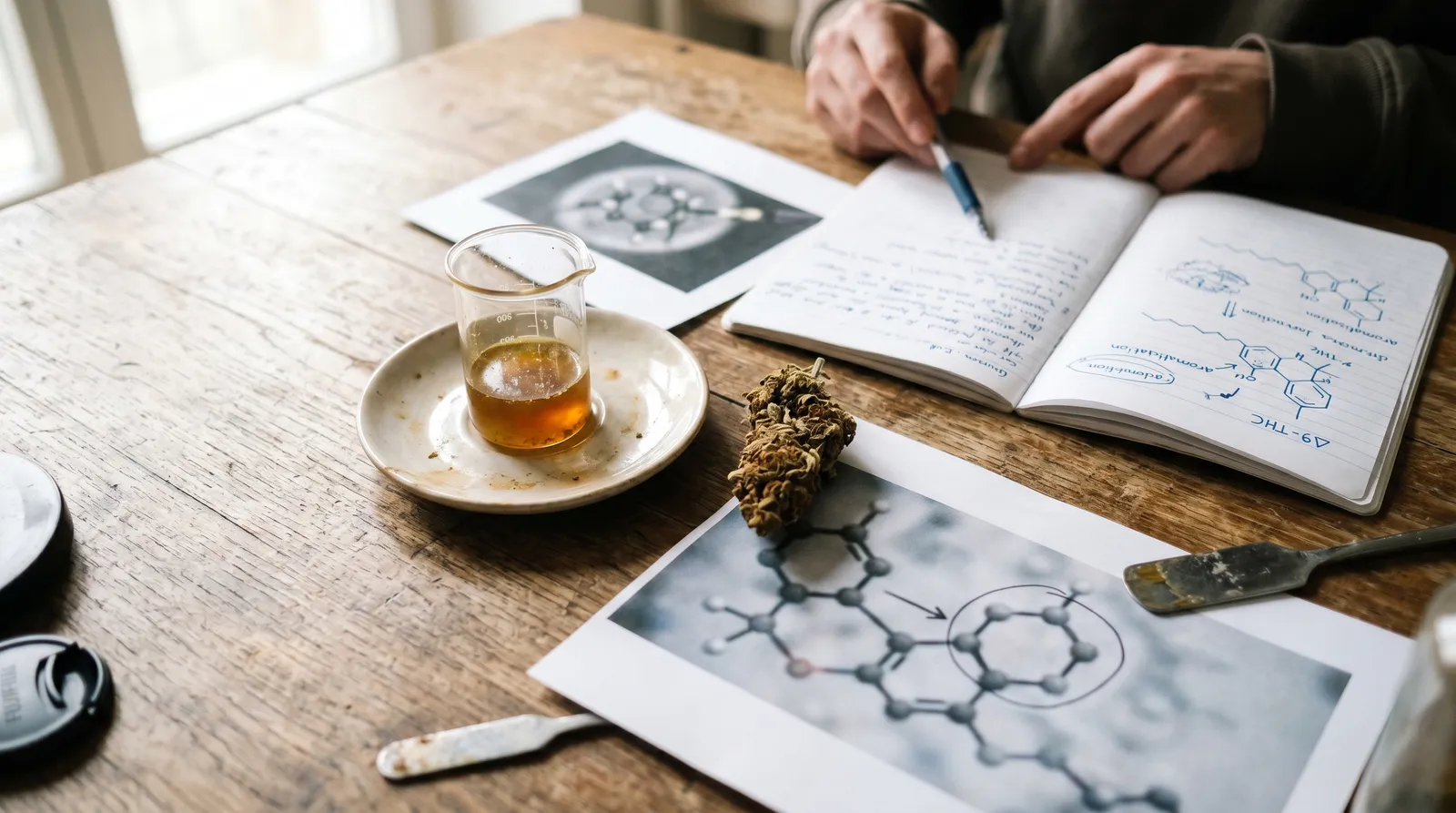
The result is cannabinol: a molecule that looks structurally similar to THC on paper but behaves quite differently at cannabinoid receptors. The full aromatisation of that ring changes how the molecule fits into CB1 and CB2 receptor binding pockets, which is why CBN has roughly one-tenth the psychoactive potency of THC (Mahadevan et al., 2000).
This isn't a single-step reaction. It's a gradual degradation. THC first oxidises to CBN through intermediates, and the rate depends entirely on environmental conditions. Under nitrogen atmosphere in a sealed, dark container, THC degrades extremely slowly. Expose that same material to air, UV light, and warmth, and the conversion accelerates dramatically.
What speeds up the conversion from THC to CBN?
Three environmental factors drive this oxidation, and they work multiplicatively rather than additively — meaning their combined effect is far greater than any single factor alone.
| Factor | Mechanism | Impact on THC-to-CBN conversion | Key finding |
|---|---|---|---|
| Oxygen | Reacts with THC, breaking C-H bonds and enabling ring aromatisation | Primary driver of degradation | ~50% THC lost over 4 years in open air (Fairbairn et al., 1976) |
| UV light | Provides activation energy to break otherwise stable bonds | Single most damaging storage variable | Clear glass jars degrade contents far faster than opaque containers (UNODC, 1999) |
| Heat | Increases molecular kinetic energy, making THC-oxygen collisions more frequent | Significant accelerator, but requires oxygen to produce CBN | Hot storage environments convert THC to CBN faster than cool ones |
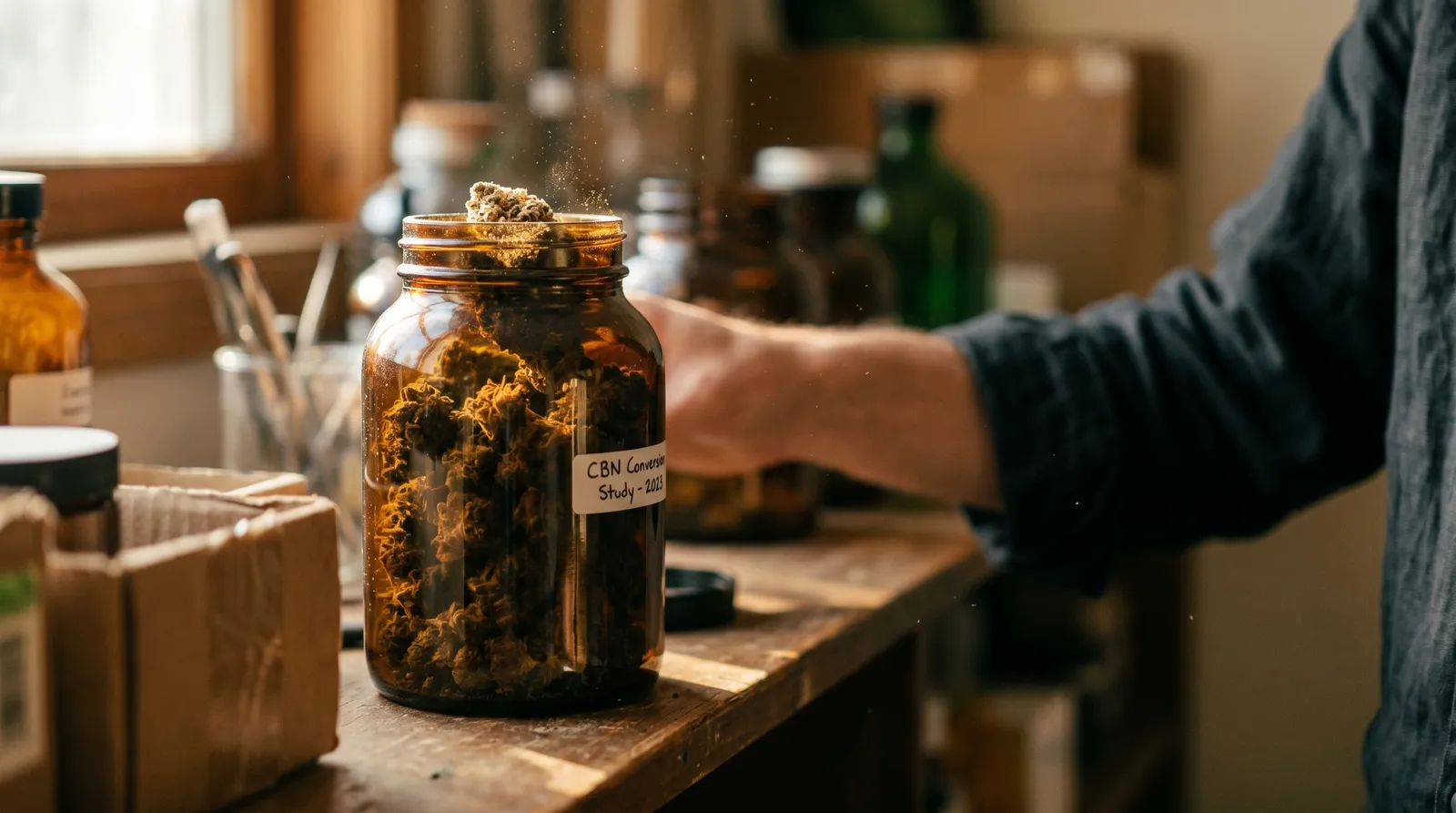
Oxygen. This is the primary driver. THC molecules react with atmospheric O₂, breaking C-H bonds and enabling the aromatisation of the cyclohexene ring. A study by Fairbairn et al. (1976) demonstrated that cannabis stored in open air lost approximately 50% of its THC content over four years, with CBN being the dominant degradation product.
Light. UV radiation accelerates the oxidation process significantly. Photons provide the activation energy needed to break bonds that would otherwise remain stable at room temperature. Cannabis stored in clear glass jars near a window degrades far faster than material kept in opaque containers. According to research published by the United Nations Office on Drugs and Crime (UNODC, 1999), light exposure was the single most damaging storage variable for THC stability. The EMCDDA has similarly noted the importance of controlled storage conditions in maintaining cannabinoid profiles in forensic and analytical contexts.
Heat. Elevated temperatures increase the kinetic energy of molecules, making collisions between THC and oxygen more frequent and more energetic. This is why cannabis stored in hot attics or near radiators converts to CBN faster than material kept cool. That said, heat alone — without oxygen — doesn't produce CBN efficiently. Decarboxylation (heating THCA to THC) is a different reaction entirely from oxidative degradation to CBN.
Cannabis left on a sunny windowsill in summer experiences all three simultaneously, which is why such material can test high in CBN and very low in THC within months rather than years.
Does CBN come directly from the living plant?
No — fresh, living cannabis produces almost no CBN. The plant biosynthesises CBGA (cannabigerolic acid) as its precursor molecule, which enzymatic pathways then convert into THCA, CBDA, or CBCA. There is no known enzyme in Cannabis sativa that produces CBN or CBNA directly (Russo, 2011).

CBN is, for all practical purposes, an artefact of ageing. Trace amounts of CBNA (cannabinolic acid) can appear in mature or improperly stored plant material, but these come from the oxidation of THCA before decarboxylation, not from any dedicated biosynthetic pathway. When that CBNA is then heated — by smoking, vaping, or cooking — it decarboxylates into CBN.
So the pathway looks like this: CBGA → THCA → (oxidation) → CBNA → (heat) → CBN. Or, if decarboxylation happens first: CBGA → THCA → (heat) → THC → (oxidation) → CBN. Either route, oxidation is the critical step that creates the cannabinol structure.
How much CBN actually forms, and how quickly?
Roughly 25–30% of THC converts to CBN within one year under normal room-temperature storage with air exposure (Fairbairn et al., 1976), and that figure reaches approximately 50% after four years.
Turner & Elsohly (1979) analysed confiscated cannabis samples of known age and found CBN concentrations ranging from less than 1% in fresh material to over 5% in samples several years old. For context, fresh high-potency cannabis might contain 15–25% THC and less than 0.5% CBN. After years of poor storage, that same material might test at 5–10% THC and 3–6% CBN.
Industrial CBN production doesn't wait around for years, though. Commercial manufacturers accelerate the process using controlled UV exposure and elevated temperatures under oxygen-rich conditions, or use chemical oxidation with reagents like iodine or DDQ (2,3-dichloro-5,6-dicyano-1,4-benzoquinone) to convert THC to CBN in hours rather than years. According to a process overview by Cayman Chemical (2023), refluxing THC with iodine in toluene achieves near-complete conversion to CBN, though this is strictly a laboratory technique.
Is the resulting CBN actually psychoactive?
Only mildly — CBN binds to CB1 receptors with roughly 10% of THC's affinity (Mahadevan et al., 2000). You'd notice it if you consumed enough, but it won't produce the characteristic THC experience. What CBN does seem to do — and the evidence here is still thin, mostly preclinical — is contribute to sedation. The common claim that "CBN is the sleepy cannabinoid" has some basis: Steep Hill Labs reported in 2017 that 5mg of CBN was as sedating as 10mg of diazepam, though this figure has been widely cited without peer-reviewed replication, so treat it as preliminary rather than established.
More robust evidence exists for CBN's anticonvulsant properties. A study by Karler & Turkanis (1979) found that CBN demonstrated anticonvulsant activity in animal models, with potency roughly comparable to phenytoin at equivalent doses. CBN also shows antibacterial activity against MRSA strains (Appendino et al., 2008), though this was an in-vitro finding and doesn't translate directly to clinical use.
We'll be honest about the limits here: the pharmacological profile of CBN is genuinely interesting but still underdeveloped compared to THC and CBD. Most of what circulates online about CBN's effects comes from either very old studies or preclinical work that hasn't been confirmed in human trials. Anyone who tells you CBN is a proven sleep aid is getting ahead of the science.
How CBN compares to other minor cannabinoids
CBN is the only major cannabinoid that exists purely as a degradation product of THC oxidation. While CBG is a direct biosynthetic precursor that the plant produces on purpose, and CBC comes from its own enzymatic pathway, CBN forms exclusively through the breakdown of THC after harvest. Nobody breeds for high-CBN strains the way growers select for high-THC or high-CBD genetics — you get CBN by letting THC break down.
| Cannabinoid | Origin | Psychoactivity | Primary interest |
|---|---|---|---|
| CBN | Degradation product of THC oxidation | Mild (~10% of THC) | Sedation research, antibacterial |
| CBG | Direct biosynthetic precursor (from CBGA) | Non-psychoactive | Anti-inflammatory, neuroprotection |
| CBC | Enzymatic pathway from CBGA via CBCA | Non-psychoactive | Anti-inflammatory, antidepressant potential |
| CBD | Enzymatic pathway from CBGA via CBDA | Non-psychoactive | Anxiolytic, anticonvulsant (Epidiolex) |
This distinction matters if you're looking to buy CBN products or order CBN isolates. Unlike CBD oils, which can be extracted directly from hemp, CBN products require either aged cannabis or deliberate chemical conversion from THC. That extra processing step is one reason CBN isolates and CBN sleep formulations tend to cost more per milligram than CBD equivalents. If you want to get CBN-containing products, look for brands that provide third-party lab reports confirming actual CBN content — the market is still young enough that label accuracy varies. The Azarius CBN oil range and the Azarius cannabinoid collection page are good starting points for verified products.
What does this mean for how you store cannabis?
Proper storage dramatically slows THC-to-CBN conversion and preserves the original cannabinoid profile of your material. If you want to preserve THC content and prevent unwanted CBN formation, the practical takeaways from the oxidation chemistry are straightforward:
- Store in airtight containers — minimise oxygen contact
- Use opaque or UV-blocking containers — amber glass jars work well
- Keep material cool — a dark cupboard at room temperature is fine; a fridge is better for long-term storage, though humidity control becomes important
- Avoid heat sources — don't store near radiators, ovens, or in attics
- Consider vacuum-sealing for very long-term storage
These steps won't stop degradation entirely, but they slow it from months to years.
Conversely, if you're specifically interested in CBN-rich material, you now know the recipe: air, light, heat, and patience. Some people deliberately age cannabis for this purpose, though the results are unpredictable compared to standardised CBN extracts or isolates you can buy from reputable suppliers.
For a broader look at cannabinoid chemistry and how THC, CBD, and CBN relate to each other, see the CBN pillar article elsewhere in this wiki. You may also find the Azarius cannabinoid comparison guide, the Azarius stash jar collection, and the cannabis storage tips page useful for practical context.
Last updated: April 2026
Frequently Asked Questions
8 questionsDoes CBN come directly from the hemp plant?
How long does it take for THC to convert to CBN?
Is CBN stronger than THC?
Can you speed up CBN formation deliberately?
Can CBN help with sleep?
What is the chemical difference between THC and CBN?
Does CBN still have any psychoactive effects?
How should you store cannabis to prevent THC from turning into CBN?
About this article


Joshua Askew serves as Editorial Director for Azarius wiki content. He is Managing Director at Yuqo, a content agency specialising in cannabis, psychedelics and ethnobotanical editorial work across multiple languages. Th
This wiki article was drafted with AI assistance and reviewed by Joshua Askew, Managing Director at Yuqo. Editorial oversight by Adam Parsons.
Medical disclaimer. This content is for informational purposes only and does not constitute medical advice. Consult a qualified healthcare provider before use of any substance.
Last reviewed April 24, 2026
References (10)
- [1]Appendino, G. et al. (2008). Antibacterial cannabinoids from Cannabis sativa: A structure-activity study. Journal of Natural Products, 71(8), 1427–1430.
- [2]Cayman Chemical (2023). Cannabinoid processing and isomerisation degradants: Technical overview.
- [3]Elsohly, M.A. & Slade, D. (2005). Chemical constituents of marijuana: The complex mixture of natural cannabinoids. Life Sciences, 78(5), 539–548.
- [4]EMCDDA (2023). Cannabis drug profile. European Monitoring Centre for Drugs and Drug Addiction.
- [5]Fairbairn, J.W., Liebmann, J.A. & Rowan, M.G. (1976). The stability of cannabis and its preparations on storage. Journal of Pharmacy and Pharmacology, 28(1), 1–7.
- [6]Karler, R. & Turkanis, S.A. (1979). Cannabis and epilepsy. Advances in Biosciences, 22–23, 619–641.
- [7]Mahadevan, A. et al. (2000). Novel cannabinol probes for CB1 and CB2 cannabinoid receptors. Journal of Medicinal Chemistry, 43(20), 3778–3785.
- [8]Russo, E.B. (2011). Taming THC: Potential cannabis combination and phytocannabinoid-terpenoid entourage effects. British Journal of Pharmacology, 163(7), 1344–1364.
- [9]Turner, C.E. & Elsohly, M.A. (1979). Constituents of Cannabis sativa L. XVI. A possible decomposition pathway of Δ9-tetrahydrocannabinol to cannabinol. Journal of Heterocyclic Chemistry, 16(8), 1667–1668.
- [10]UNODC (1999). Recommended methods for the identification and analysis of cannabis and cannabis products. United Nations, Vienna.
Related Articles
Pinene Alpha and Beta: Aroma, Chemistry & Vaporisation Guide
Pinene is a bicyclic monoterpene occurring as two isomers — α-pinene and β-pinene — and ranks as the most abundant terpene in the plant kingdom.

CBD and Recovery: What the Research Actually Shows
CBD and recovery is a research topic spanning exercise-induced muscle damage, sleep quality, and perceived soreness. As McCartney et al.
CBD Pet Dosing Vet Consultation: Prepare for Your Visit
Veterinary CBD dosing is not a scaled-down version of human dosing — dogs and cats metabolise cannabidiol through different enzymatic pathways and at…

CBD for Cats Veterinary Considerations: Feline Research, Safety and Guidance
Cats metabolise cannabinoids differently from dogs and humans, lacking key glucuronidation enzymes that affect CBD clearance. Deabold et al.
EU Novel Food Regulation CBD: Country Status, EFSA Safety & Guide
EU novel food regulation CBD is a policy framework under EU rule 2015/2283 that classifies cannabidiol extracts as a novel food, requiring safety assessment…
CBD Topical Creams Medical Grade: CE-Marked Class I Explained
CBD topical creams deliver cannabidiol directly to the skin rather than the bloodstream.
Humulene Effects and Aroma Profile | Terpene Guide
Humulene (α-humulene) is a monocyclic sesquiterpene named after Humulus lupulus — hops.
Terpene Entourage Effect: Current Evidence Reviewed
The terpene entourage effect proposes that cannabis terpenes modulate cannabinoid activity, producing different outcomes than isolated compounds alone.
CBD and Skin Conditions: What Research Shows
Cannabidiol (CBD) interacts with the endocannabinoid system expressed in human skin — including CB1 and CB2 receptors on keratinocytes, sebocytes, and…