
This article discusses psychoactive substances intended for adults (18+). If you have a health condition or take medication, consult a doctor before use. Our age policy
CBG Market Field
Definition
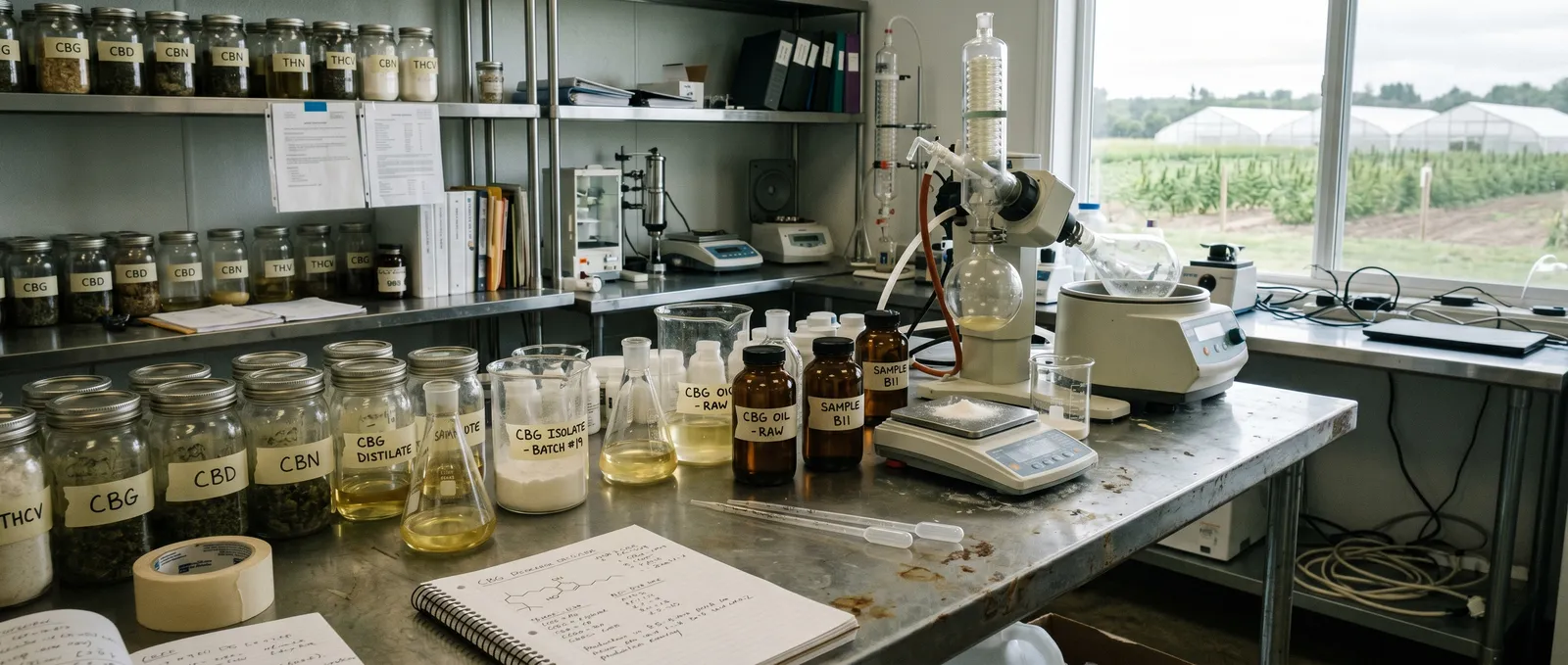
The CBG market landscape is a global commercial ecosystem that tracks the production, sale, and regulation of cannabigerol — the precursor cannabinoid from which THC and CBD are biosynthesised. Valued at approximately USD 150 million in 2023 (Fact.MR, 2024), the market spans pharmaceuticals, nutraceuticals, and cosmetics — growing at a projected 15.4% CAGR through 2036, though clinical evidence gaps and regulatory fragmentation remain significant constraints.
The CBG market field is a global commercial ecosystem that tracks the production, sale, and regulation of cannabigerol — the cannabinoid precursor from which THC, CBD, and other compounds are biosynthesised. 18+ only — the market data and product information below are relevant to adults navigating cannabinoid products. Once dismissed as a trace molecule too expensive to extract, CBG has carved out its own commercial niche within the broader CBG market field. According to Fact.MR (2024), the global cannabigerol market was valued at approximately USD 150 million in 2023 and is projected to grow at a compound annual growth rate (CAGR) of 15.4% through 2036. That growth is being driven by three sectors — pharmaceuticals, nutraceuticals, and cosmetics — each pulling the molecule in a slightly different commercial direction.
Why is CBG suddenly a commercial molecule?
Two developments made CBG commercially viable: high-CBG hemp cultivars and post-2018 regulatory frameworks. For decades, CBG sat in cannabis science textbooks as "the mother cannabinoid" — the acidic precursor (CBGA) that enzymatic pathways convert into THCA, CBDA, and CBCA. Most mature cannabis or hemp plants contain less than 1% CBG by dry weight, which made extraction economically painful. These shifts reshaped the CBG market field from a research curiosity into an investable category.
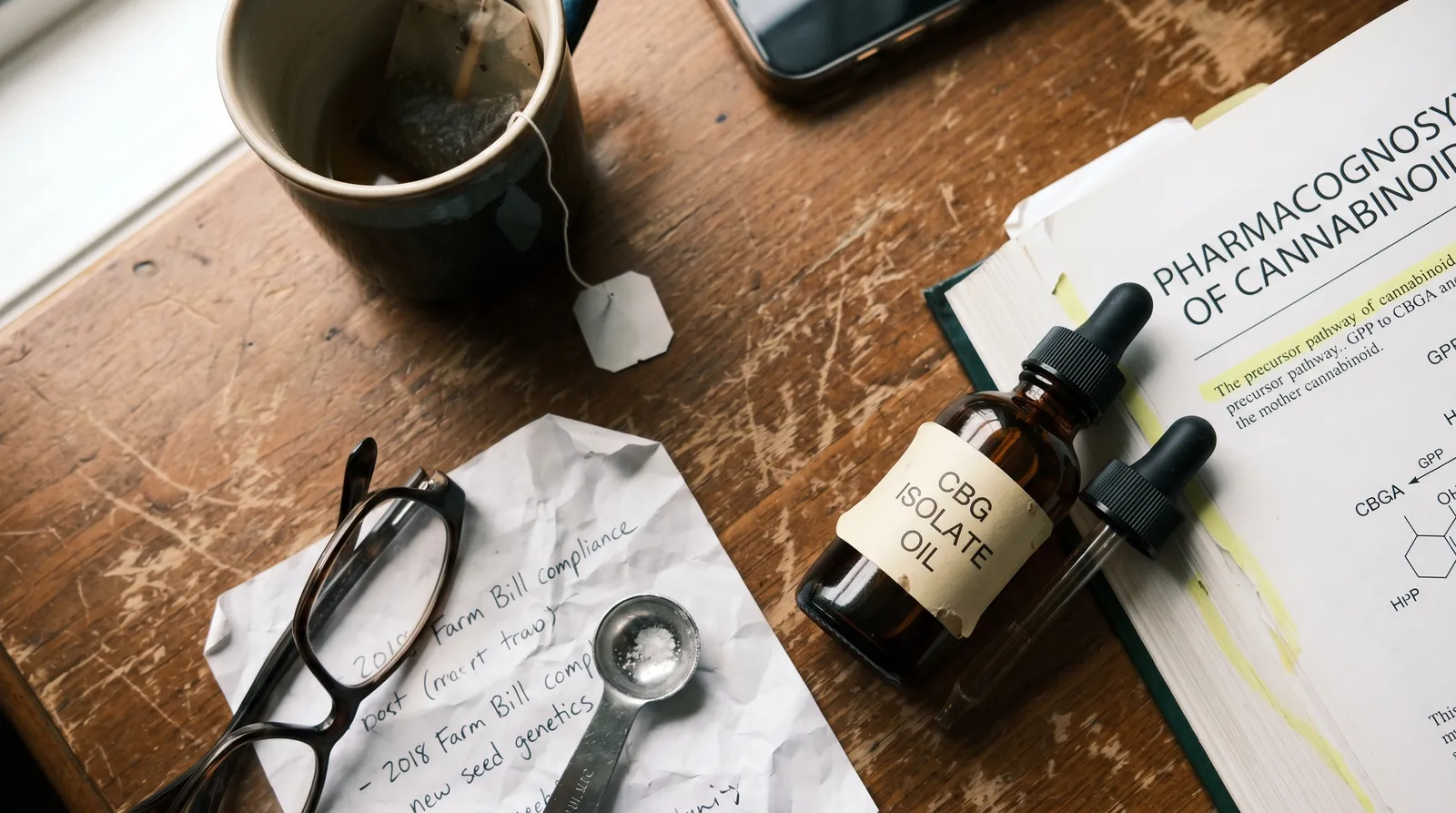
First, plant breeders developed high-CBG hemp cultivars. Researchers at the University of Kentucky and several European seed companies selectively bred strains harvested at an earlier growth stage, before CBGA converts downstream. Some cultivars now yield 12–15% CBG by weight (Tahir et al., 2021). Second, the 2018 US Farm Bill and the EU's Novel Food framework created pathways for hemp-derived cannabinoids, opening the door for CBG isolates and full-spectrum extracts to enter consumer markets in many jurisdictions.
The cost gap is still real, though. CBG isolate wholesale prices remain roughly 2–3 times higher than CBD isolate, largely because yields per hectare are lower and extraction requires more biomass. That premium is narrowing year on year as cultivation techniques improve, but it keeps CBG positioned as a mid-tier specialty ingredient rather than a mass-market commodity — at least for now. If you want to buy CBG products, understanding this price context helps set expectations.
Which sectors are driving demand?
Three application segments dominate the CBG market field: pharmaceuticals, nutraceuticals, and cosmetics — each with different growth trajectories.
| Sector | Market share (2023 est.) | Primary product types | Growth driver |
|---|---|---|---|
| Nutraceuticals | ~48% | Oils, capsules, tinctures | Consumer wellness interest in non-intoxicating cannabinoids |
| Pharmaceuticals | ~30% | Isolates for R&D pipelines | Preclinical data in IBD, antimicrobial, oncology |
| Cosmetics | ~22% | Serums, balms, creams | CB2 receptor interaction in skin tissue |
Pharmaceuticals represent the highest-value segment per unit within the CBG market field. Preclinical studies have shown that CBG may reduce inflammatory markers in mouse models of inflammatory bowel disease (Borrelli et al., 2013) and inhibit the growth of certain cancer cell lines in vitro (Baek et al., 2020). No CBG-specific pharmaceutical has reached Phase III clinical trials yet — the data remains early-stage — but the pipeline interest is enough to sustain R&D investment from mid-cap biotech firms, particularly in the US and Israel.
Nutraceuticals are where most consumer-facing CBG products live today. Oils, capsules, and tinctures marketed as wellness supplements account for the bulk of retail sales. According to Grand View Research (2023), the nutraceutical application segment held approximately 48% of the CBG product market share, driven by consumer interest in non-intoxicating cannabinoids. The typical retail product is a CBG oil (often blended with CBD) in concentrations of 500–1,500 mg per bottle. Many customers order CBG oils alongside their regular CBD products to experiment with the combination.
Cosmetics are the fastest-growing but smallest segment. CBG is being incorporated into topical formulations — serums, balms, and creams — where its interaction with CB2 receptors in skin tissue is the marketing hook. Peer-reviewed dermatological data specific to CBG topicals is thin; most claims extrapolate from broader cannabinoid research on skin inflammation. We should be honest: the cosmetics evidence base is the weakest of the three sectors, and much of what brands claim outpaces what the published science actually supports.
Where is the CBG market field growing fastest?
North America is the largest regional market, accounting for an estimated 42% of global CBG revenue in 2023 (Fact.MR, 2024). The US drives this, thanks to a mature hemp-derived cannabinoid retail infrastructure and relatively permissive state-level frameworks for non-intoxicating cannabinoids.

Europe is the second-largest market, though growth is more fragmented. The EU Novel Food Catalogue lists cannabinoids derived from Cannabis sativa as requiring authorisation before being sold as food supplements — a bottleneck that has slowed some product launches. The European Monitoring Centre for Drugs and Drug Addiction (EMCDDA) has noted the increasing presence of minor cannabinoids including CBG in European consumer markets, though complete sales data remains limited. The UK's Food Standards Agency has taken a similar approach, with a deadline-based authorisation process that remains partially unresolved. The Beckley Foundation has also contributed to broader cannabinoid policy discussions that indirectly affect how the CBG market field develops in Europe.
The Asia-Pacific region shows the steepest projected growth curve. China leads with a projected 9.0% CAGR through 2036 (Research Nester, 2024), driven by expansion in hemp-derived ingredient manufacturing for export rather than domestic consumption. South Korea and Japan are emerging as consumer markets for CBG-infused cosmetics.
Is CBG isolate or full-spectrum winning?
Full-spectrum extracts currently outsell isolates by a significant margin in the consumer market. The reason is partly scientific, partly marketing. A 2019 study published in Frontiers in Plant Science (Russo, 2019) reinforced the "entourage effect" hypothesis — the idea that cannabinoids, terpenes, and flavonoids work more effectively together than in isolation. Whether this holds specifically for CBG-dominant blends hasn't been rigorously tested in human trials, but the narrative is commercially powerful.
Isolate does have its niche. Pharmaceutical R&D prefers isolates for dosing precision. Some cosmetics formulators prefer isolate because it avoids the colour and odour variability of full-spectrum hemp extracts. And a subset of consumers specifically want THC-free products, which isolate guarantees.
The pricing split reflects this: CBG isolate commands a higher per-milligram price at wholesale, but full-spectrum CBG products generate more total revenue because they move in higher volumes at retail. For anyone looking to get their first CBG product, a full-spectrum blend is usually the more accessible entry point.
What are the real bottlenecks?
Three constraints are holding the CBG market field back from CBD-scale growth.
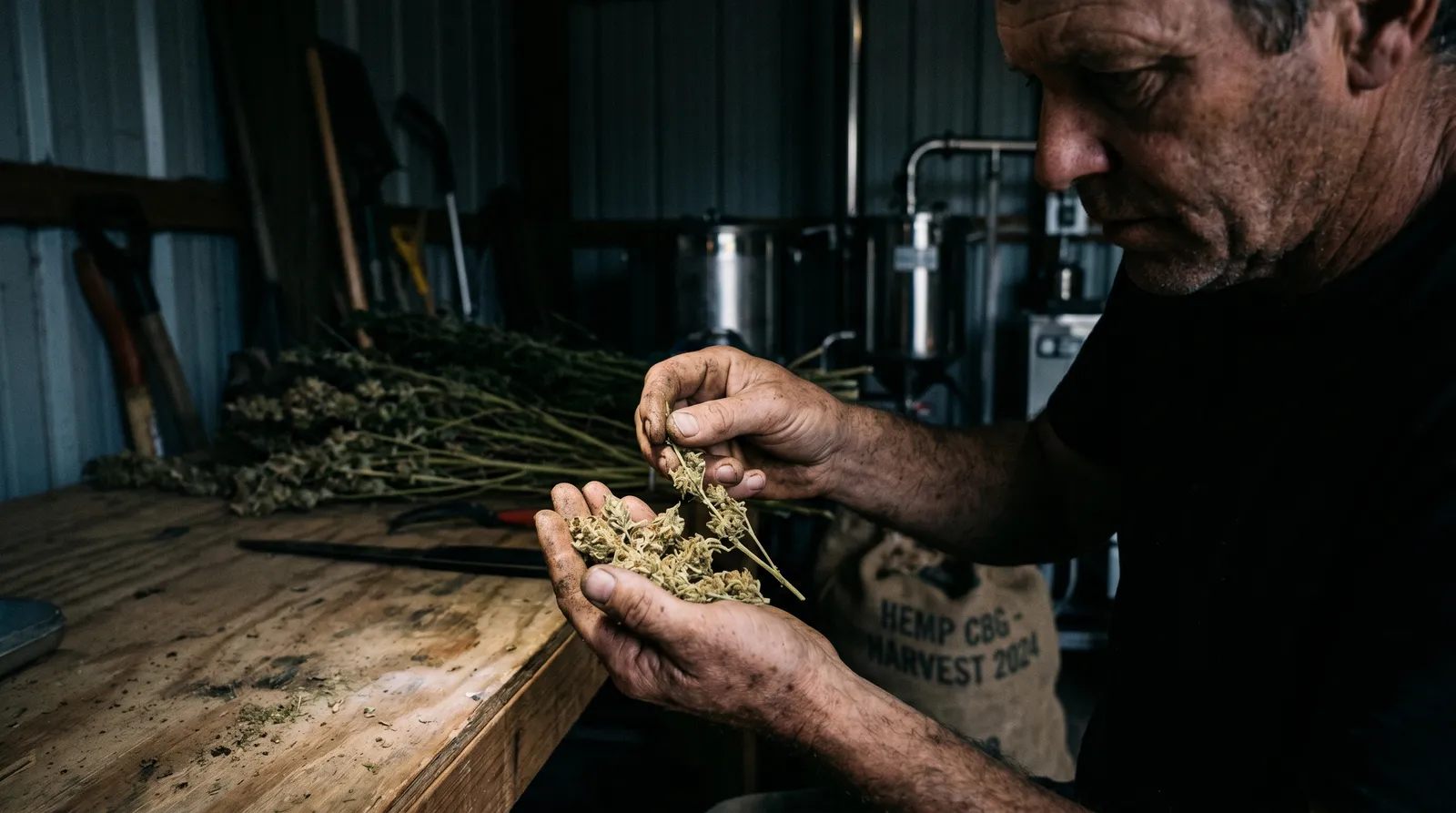
Yield economics. Even with improved cultivars, CBG-rich hemp produces less usable cannabinoid per hectare than CBD-rich hemp. Farmers need a price premium to justify switching acreage, and that premium depends on sustained demand growth.
Uncertainty in frameworks. The EU Novel Food process remains slow. In the US, the FDA has not issued clear guidance on CBG in food and supplements, creating a grey zone where companies operate under state-level rules. This patchwork discourages large CPG (consumer packaged goods) companies from entering the category aggressively.
Clinical evidence gaps. Most CBG research is preclinical — cell cultures and animal models. Human clinical trials are scarce. A 2021 survey published in Journal of Cannabis Research (Russo et al., 2021) found that self-reported CBG users described benefits for anxiety, chronic pain, and insomnia, but the authors noted the data was observational with no placebo control. Until randomised controlled trials validate specific therapeutic claims, the pharmaceutical pipeline will remain speculative and the nutraceutical segment will rely on general wellness positioning.
How does CBG compare to CBD commercially?
CBD's global market is roughly 50 times larger — estimated at USD 7.7 billion in 2023 (Fortune Business Insights, 2024) versus CBG's approximately USD 150 million. The comparison matters because it sets realistic expectations: CBG is not "the next CBD" in terms of near-term market scale. It is, more accurately, a complementary cannabinoid that adds value within the existing CBD product ecosystem — hence the popularity of CBD+CBG blends.
Where CBG may differentiate is in specific application niches. Its interaction with both CB1 and CB2 receptors, plus alpha-2 adrenergic receptors, gives it a pharmacological profile distinct from CBD (Cascio et al., 2010). If clinical trials confirm unique therapeutic applications — particularly in inflammatory bowel disease or antimicrobial resistance, where preclinical results are promising — CBG could develop standalone market segments that CBD doesn't serve.
For a broader look at CBG's pharmacology and how it fits among other cannabinoids, the CBG pillar article covers the science in more detail. If you're curious about how cannabinoids may interact with other substances, the dedicated CBG interactions and safety article is the right place to look — CBG can interact with blood-flow medications, antidepressants, and muscle relaxants, so checking there before combining anything is worth your time. Those looking to buy CBG products can browse the Azarius cannabinoid collection, and the Azarius blog regularly covers developments in the CBG market field.
CBG versus other minor cannabinoids
CBG is the most commercially advanced minor cannabinoid after CBD, with an estimated global market of USD 150 million in 2023. CBN (cannabinol) and CBC (cannabichromene) are also entering consumer products, though at even earlier stages of market development. Here is a practical comparison for anyone deciding which cannabinoid products to buy.
| Cannabinoid | Est. global market (2023) | Primary consumer use | Human clinical trial data |
|---|---|---|---|
| CBG | ~USD 150M | Wellness oils, blends, cosmetics | Very limited (survey-based) |
| CBN | ~USD 50M | Sleep-focused supplements | Minimal |
| CBC | ~USD 20M | Anti-inflammatory topicals | Almost none |
| CBD | ~USD 7.7B | Broad wellness, Epidiolex | Moderate (epilepsy, anxiety) |
The pattern is clear: CBD has a decade-long head start in both research and retail. CBG is the most commercially advanced of the remaining minor cannabinoids, but "most advanced" still means early-stage by pharmaceutical standards.
What we still do not know
Honest assessment requires acknowledging the gaps. The CBG market field is built on a foundation where consumer enthusiasm has outpaced clinical validation. We do not yet have published, peer-reviewed human RCTs confirming specific therapeutic doses for CBG in any condition. The EMCDDA's 2023 European Drug Report flagged minor cannabinoids as an area requiring better surveillance data — meaning even basic market-size estimates carry wide confidence intervals. Anyone following this space should treat projections, including the ones cited in this article, as directional rather than precise.
Last updated: April 2026
Frequently Asked Questions
8 questionsWhy is CBG more expensive than CBD?
Is the CBG market landscape bigger in North America or Europe?
What is driving CBG market growth in China?
Does full-spectrum or isolate CBG sell better?
Are there any approved CBG pharmaceuticals?
How does CBG compare to other minor cannabinoids commercially?
What are high-CBG hemp cultivars and why do they matter for the market?
Which regulations allow CBG products to be sold legally?
About this article


Joshua Askew serves as Editorial Director for Azarius wiki content. He is Managing Director at Yuqo, a content agency specialising in cannabis, psychedelics and ethnobotanical editorial work across multiple languages. Th
This wiki article was drafted with AI assistance and reviewed by Joshua Askew, Managing Director at Yuqo. Editorial oversight by Adam Parsons.
Medical disclaimer. This content is for informational purposes only and does not constitute medical advice. Consult a qualified healthcare provider before use of any substance.
Last reviewed April 24, 2026
References (11)
- [1]Baek, S.H. et al. (2020). Cannabigerol induces apoptosis in human colorectal cancer cells. Cannabis and Cannabinoid Research, 5(3), 259–267.
- [2]Borrelli, F. et al. (2013). Beneficial effect of the non-psychotropic plant cannabinoid cannabigerol on experimental inflammatory bowel disease. Biochemical Pharmacology, 85(9), 1306–1316.
- [3]Cascio, M.G. et al. (2010). Evidence that the plant cannabinoid cannabigerol is a highly potent α2-adrenoceptor agonist. British Journal of Pharmacology, 159(1), 129–141.
- [4]EMCDDA (2023). European Drug Report: Trends and Developments.
- [5]Fact.MR (2024). Cannabigerol Market — Global Industry Analysis 2024–2036.
- [6]Fortune Business Insights (2024). Cannabidiol (CBD) Market Size, Share & Industry Analysis, 2024–2032.
- [7]Grand View Research (2023). Cannabigerol (CBG) Market Size, Share & Trends Analysis Report.
- [8]Research Nester (2024). Cannabigerol Market — Global Market Analysis Report, 2024–2036.
- [9]Russo, E.B. (2019). The case for the entourage effect and conventional breeding of clinical cannabis. Frontiers in Plant Science, 9, 1969.
- [10]Russo, E.B. et al. (2021). Survey of patients employing cannabigerol-predominant cannabis preparations. Journal of Cannabis Research, 3(1), 2.
- [11]Tahir, M.N. et al. (2021). The biosynthesis of the cannabinoids. Journal of Cannabis Research, 3(1), 7.
Related Articles
Pinene Alpha and Beta: Aroma, Chemistry & Vaporisation Guide
Pinene is a bicyclic monoterpene occurring as two isomers — α-pinene and β-pinene — and ranks as the most abundant terpene in the plant kingdom.

CBD and Recovery: What the Research Actually Shows
CBD and recovery is a research topic spanning exercise-induced muscle damage, sleep quality, and perceived soreness. As McCartney et al.
CBD Pet Dosing Vet Consultation: Prepare for Your Visit
Veterinary CBD dosing is not a scaled-down version of human dosing — dogs and cats metabolise cannabidiol through different enzymatic pathways and at…

CBD for Cats Veterinary Considerations: Feline Research, Safety and Guidance
Cats metabolise cannabinoids differently from dogs and humans, lacking key glucuronidation enzymes that affect CBD clearance. Deabold et al.
EU Novel Food Regulation CBD: Country Status, EFSA Safety & Guide
EU novel food regulation CBD is a policy framework under EU rule 2015/2283 that classifies cannabidiol extracts as a novel food, requiring safety assessment…
CBD Topical Creams Medical Grade: CE-Marked Class I Explained
CBD topical creams deliver cannabidiol directly to the skin rather than the bloodstream.
Humulene Effects and Aroma Profile | Terpene Guide
Humulene (α-humulene) is a monocyclic sesquiterpene named after Humulus lupulus — hops.
Terpene Entourage Effect: Current Evidence Reviewed
The terpene entourage effect proposes that cannabis terpenes modulate cannabinoid activity, producing different outcomes than isolated compounds alone.
CBD and Skin Conditions: What Research Shows
Cannabidiol (CBD) interacts with the endocannabinoid system expressed in human skin — including CB1 and CB2 receptors on keratinocytes, sebocytes, and…