
This article discusses psychoactive substances intended for adults (18+). If you have a health condition or take medication, consult a doctor before use. Our age policy
Recognising Misleading CBD Claims
Definition
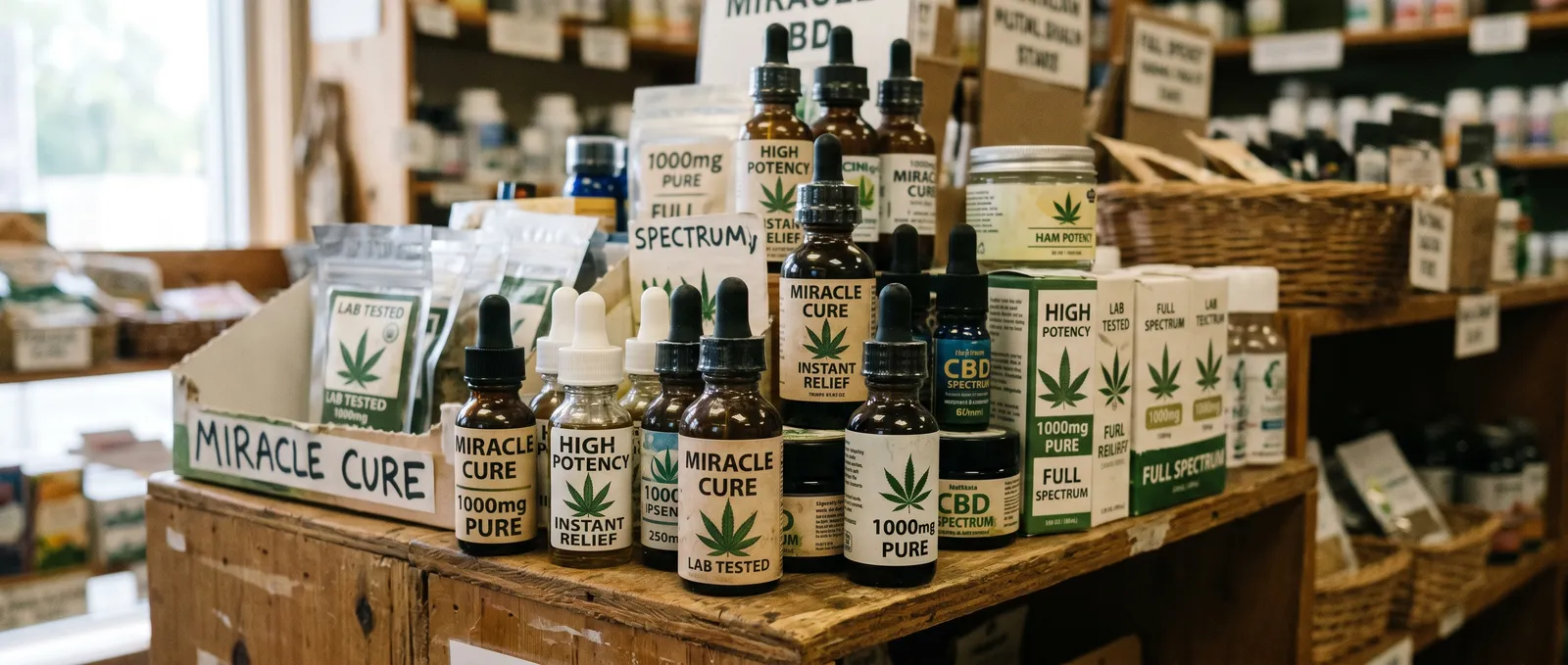
A misleading CBD claim is a health or potency statement made by a CBD brand that lacks adequate clinical evidence. A 2017 study in JAMA found only 31% of CBD products tested were accurately labelled (Bonn-Miller et al., 2017). Understanding common red flags helps you separate legitimate products from marketing fiction.
A misleading CBD claim is a health or potency statement made by a CBD brand that lacks adequate clinical evidence to support it. Recognising misleading CBD claims starts with a blunt fact: the gap between what CBD brands promise and what clinical evidence actually supports is enormous. A 2020 study published in Preventive Medicine Reports found that CBD retailers frequently made health claims unsupported by current evidence, particularly around pain, anxiety, and sleep (Wheeler et al., 2020). The CBD market has exploded across Europe and the US, but regulation hasn't kept pace — and that gap is where dodgy marketing thrives. This article breaks down the most common red flags so you can evaluate misleading CBD claims before you buy a product or spend your money.
What Actually Counts as a Misleading CBD Claim?
A misleading CBD claim is any statement that implies CBD will treat, cure, or prevent a specific medical condition without adequate clinical evidence backing it up. The US Food and Drug Administration issued warning letters to dozens of CBD companies between 2015 and 2023, specifically targeting misleading CBD claims like "treats cancer," "cures epilepsy," and "eliminates chronic pain" (FDA, 2023). The only CBD-based medication with regulatory approval for specific conditions is Epidiolex (prescription cannabidiol), approved for rare forms of epilepsy. Everything else — the oils, gummies, balms, and capsules sold online — sits in a regulatory grey zone.
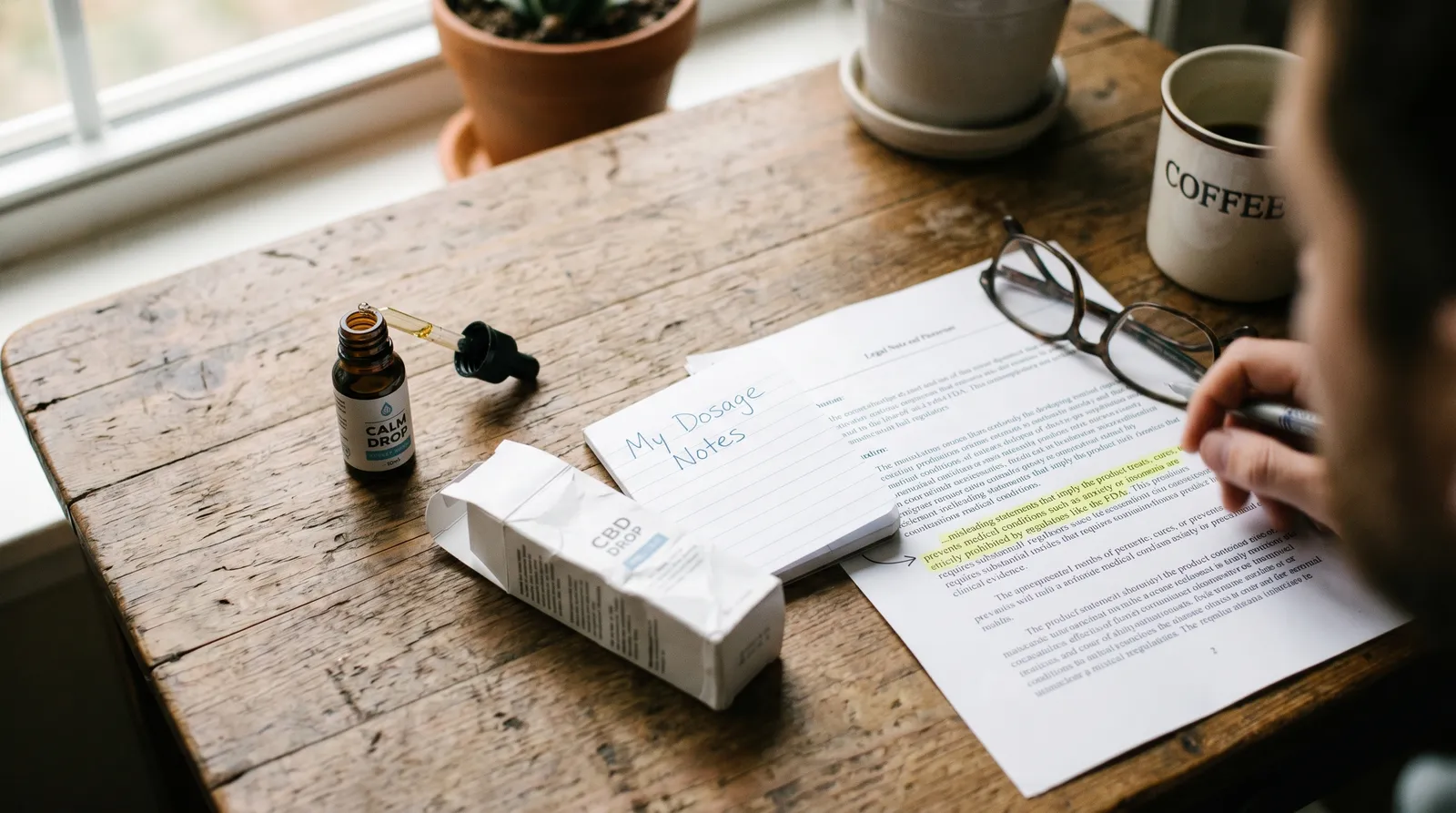
That doesn't mean CBD does nothing. It means the evidence base for most marketed uses is either preliminary, based on animal models, or drawn from studies using pharmaceutical-grade CBD at doses far higher than what commercial products deliver. When a brand selling 10mg gummies claims the same benefits observed in clinical trials using 300–600mg of purified CBD, that's a misleading CBD claim by omission.
Why Are CBD Labels So Often Wrong?
The main reason is that nobody is reliably checking them. A widely cited 2017 study in JAMA tested 84 CBD products purchased online and found that only 31% were accurately labelled — 43% contained more CBD than stated, and 26% contained less (Bonn-Miller et al., 2017). Some products contained detectable levels of THC not listed on the label at all.
This isn't just a quality-control problem. Inaccurate labels mean you can't reliably dose, can't compare products, and can't trust what you're putting in your body. A 2022 analysis by Evans in the Missouri Medicine journal confirmed ongoing issues with CBD mislabelling and contamination, noting that products tested by independent labs frequently deviated from label claims by more than 20% (Evans, 2022). The European Monitoring Centre for Drugs and Drug Addiction (EMCDDA) has similarly flagged inconsistencies in cannabinoid product labelling across EU member states.
The pattern is consistent: without mandatory third-party testing enforced by regulators, labels are essentially voluntary declarations. Some brands invest in proper testing. Many don't — and that's precisely what makes misleading CBD claims so persistent.
What Are the Biggest Red Flags on a CBD Product?
The biggest red flags are absent lab reports, disease-specific health claims, and pricing that doesn't match realistic production costs. Here's a short list of warning signs that should make you put the bottle back on the shelf — or close the browser tab:
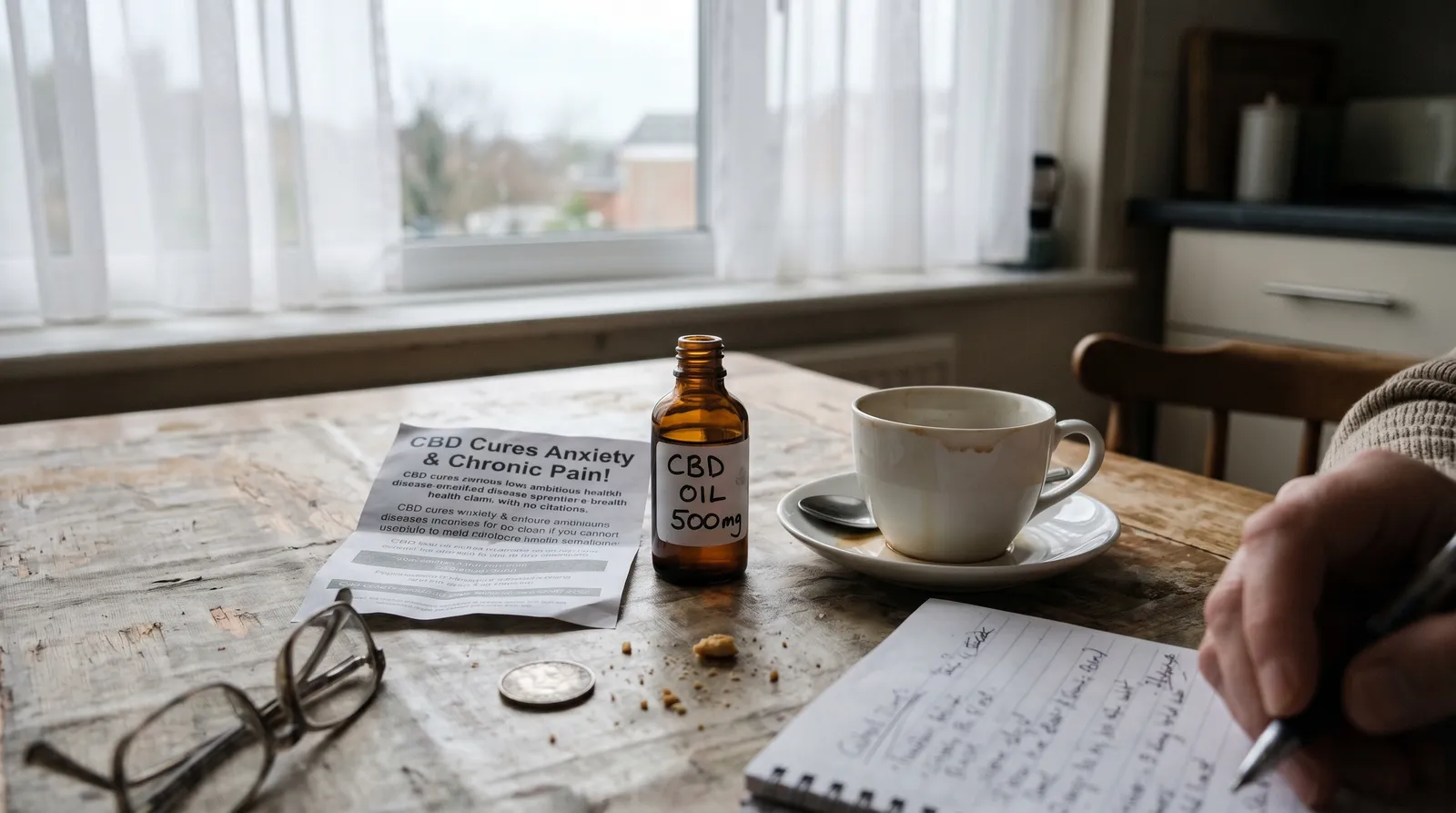
- No third-party lab report (Certificate of Analysis). If a brand doesn't publish batch-specific COAs from an independent lab, you have zero verification that the product contains what it claims. A COA should show cannabinoid content, heavy metals, pesticides, and microbial contamination results.
- Disease-specific claims. "Cures arthritis," "treats PTSD," "fights cancer" — these are misleading CBD claims that require clinical trial evidence and regulatory approval. No CBD supplement has either for these conditions.
- Unrealistically high CBD content at suspiciously low prices. A bottle claiming 5,000mg of CBD for a fraction of what reputable brands charge is almost certainly mislabelled. CBD extraction and purification cost real money. If the maths doesn't work, the label probably doesn't either.
- Transparent or clear bottles. CBD degrades under UV light. A reputable manufacturer uses amber or opaque packaging. Clear glass with a dropper looks pretty on Instagram but suggests the brand prioritises aesthetics over stability.
- Vague sourcing language. "Premium hemp" and "organic CBD" without specifying the hemp source, extraction method, or country of origin tell you nothing. Look for specifics: CO₂ extraction, EU-certified hemp cultivars, country of cultivation.
- Testimonials as evidence. "Sarah from Brighton says her anxiety disappeared!" is marketing, not data. Anecdotes are not clinical evidence, and brands that rely on them to support misleading CBD claims typically have nothing stronger to offer.
How Do I Tell Real Evidence from Cherry-Picked Science?
Real evidence comes from well-designed human clinical trials with adequate sample sizes, transparent methodology, and independent replication. CBD brands love citing "studies" without context. Here's how to evaluate what you're reading and spot misleading CBD claims dressed up as science:
Check the dose. Many positive CBD studies use doses of 150–600mg per day of pharmaceutical-grade cannabidiol. Most commercial products deliver 10–50mg per serving. A study showing anxiolytic effects at 300mg (Zuardi et al., 2017) doesn't validate a 25mg gummy making the same claim.
Check the model. "Studies show CBD kills cancer cells" almost always refers to in-vitro research — CBD applied directly to cells in a petri dish. That's a starting point for research, not evidence that swallowing a capsule will produce the same effect in a living human body. The jump from cell culture to clinical outcome is enormous, and most compounds that work in vitro fail in human trials.
Check the population. Epidiolex was approved for Dravet syndrome and Lennox-Gastaut syndrome — specific, severe forms of childhood epilepsy. Extrapolating from those trials to general anxiety, chronic pain, or insomnia in otherwise healthy adults is a stretch the data doesn't support.
Check who funded it. Industry-funded studies aren't automatically invalid, but they do tend to report more favourable outcomes. A 2020 review noted that CBD research funded by supplement companies was more likely to emphasise positive findings while downplaying limitations (Wheeler et al., 2020). Independent replication matters.
What About "Traditional Use" Claims?
Traditional use claims for isolated CBD are historically inaccurate because CBD as a purified compound is a modern product. Cannabis has a long ethnobotanical history, but claiming "centuries of traditional use" for a CO₂-extracted CBD isolate dissolved in MCT oil is a stretch. Traditional cannabis preparations contained the full spectrum of cannabinoids, terpenes, and other compounds — and were used in cultural contexts very different from dropping oil under your tongue before a work meeting.
"Traditional use" framing is technically less regulated than direct health claims, which is exactly why brands lean on it. It sounds authoritative without requiring evidence. Be sceptical when tradition is invoked to sell a product that didn't exist ten years ago — it's one of the subtler forms of misleading CBD claims.
How Misleading CBD Claims Compare Across Product Types
Not all CBD product formats carry the same risk of misleading CBD claims. The table below compares common product types by how frequently misleading CBD claims appear and how easy it is to verify what you're actually getting:
| Product Type | Common Misleading Claims | Ease of Verification | Typical Dose per Serving |
|---|---|---|---|
| CBD Oil / Tincture | "Cures anxiety," inflated mg counts | Moderate — COAs often available | 10–50mg |
| CBD Gummies | "Clinically proven," disease claims | Low — batch testing rare | 10–25mg |
| CBD Topicals / Balms | "Eliminates joint pain," "medical grade" | Very low — absorption data lacking | Variable / unclear |
| CBD Capsules | "Pharmaceutical strength," dosage claims | Moderate — easier to standardise | 15–50mg |
| CBD Vape Liquids | "Instant relief," purity claims | Low — contaminant risk higher | 5–30mg per puff |
As the table shows, topicals and gummies tend to carry the most unverifiable claims, while oils and capsules are somewhat easier to cross-check against COAs — though none are immune to misleading CBD claims.
How Misleading CBD Claims Compare to Other Supplement Markets
CBD is not the only supplement category plagued by exaggerated marketing, but the scale of mislabelling is notably worse. A comparison with other popular supplements puts the problem in perspective:
| Supplement Category | Label Accuracy Rate | Common Misleading Claims | Regulatory Oversight |
|---|---|---|---|
| CBD Products | ~31% (Bonn-Miller et al., 2017) | Disease cures, inflated potency | Minimal — varies by country |
| Herbal Supplements | ~50–70% (depending on category) | Weight loss, immune boosting | Moderate — EFSA health claims regulation |
| Vitamin/Mineral Supplements | ~80–90% | Megadose benefits, anti-ageing | Higher — established testing standards |
| Protein Powders | ~60–75% | Amino spiking, inflated protein counts | Moderate — third-party certifications common |
The 31% accuracy rate for CBD products is strikingly low compared to even loosely regulated supplement categories. This context matters: when you order a CBD product, you're entering a market where the majority of labels don't match the contents. That's not a reason to avoid CBD entirely, but it is a reason to be far more careful about where you get it.
Does Third-Party Testing Actually Solve the Problem?
Third-party testing is currently the single most reliable tool consumers have, but it is not a complete fix. Third-party testing means an independent laboratory has analysed the product and confirmed (or denied) that its contents match the label. A proper Certificate of Analysis will show cannabinoid concentrations, residual solvents, heavy metals, pesticides, and microbial counts.
The limitation: not all labs are equal, and COAs can be faked or recycled from old batches. Look for batch-specific reports with a date, the lab's name and accreditation number, and results that match the specific product you're buying. If the COA is a generic PDF with no batch number, it's not worth much. According to Harvard Health (2024), the absence of federal regulatory standards means consumers must do their own due diligence — third-party testing is currently the best available tool, imperfect as it is.
What This Guide Cannot Tell You
This guide can help you spot misleading CBD claims, but it cannot tell you whether CBD will work for your specific situation. We are a smartshop, not a medical practice. Individual responses to CBD vary enormously based on body weight, metabolism, existing medications, and the specific condition you're hoping to address. We've seen customers who swear by their CBD routine and others who noticed absolutely nothing — and we can't predict which group you'll fall into. If you're dealing with a serious health condition, talk to a doctor, not a product label.
How Can I Protect Myself as a Consumer?
The most effective protection is calibrating your expectations before you buy or order anything. Accept that no CBD product is going to cure a serious medical condition. Once you've done that, the practical steps are straightforward:
- Demand a batch-specific COA before buying. If the brand can't or won't provide one, walk away.
- Cross-reference the CBD content on the label with the COA. A deviation of more than 10% is a red flag.
- Be suspicious of any product making disease-specific misleading CBD claims. Reputable brands avoid this language precisely because they know it's unsupported.
- Compare price per milligram of CBD, not price per bottle. This is the only honest way to compare value across products.
- Check the Azarius CBD oil overview page for products that include published COAs and transparent sourcing information.
- Read the Azarius guide to CBD interactions if you're taking other medications — particularly immunosuppressants, blood thinners like warfarin, or anti-epileptics — as CBD can interact with cytochrome P450 enzymes and alter drug metabolism.
- Browse the Azarius blog for updated articles on EU Novel Food regulation changes affecting CBD products.
- Visit the Azarius CBD capsules category page if you prefer standardised dosing that's easier to verify against COAs.
The CBD market will likely get better as EU Novel Food regulations tighten and enforcement catches up with the industry. Until then, the burden of proof falls on you, the buyer. A healthy dose of scepticism is the most effective supplement available — and it's free. If you want to get started with a product you can actually verify, look for brands stocked by retailers who publish full COAs and don't hide behind vague marketing language. When you're ready to order, choose products with transparent lab results over flashy packaging.
Last updated: April 2026
Frequently Asked Questions
11 questionsHow can I verify if a CBD product's label is accurate?
Why do CBD companies make misleading CBD claims about treating diseases?
Are CBD products tested before they reach shelves in Europe?
Can a CBD gummy deliver the same effects as doses used in clinical trials?
What does 'full spectrum' actually mean on a CBD label?
How much CBD is actually in most commercial products compared to clinical trial doses?
Is CBD regulated differently in Europe than in the United States?
What should I look for in a third-party lab report for CBD products?
Does a Certificate of Analysis guarantee a CBD product is safe?
Why do some CBD products claim to be 'THC-free' when tests find traces of THC?
Is a higher milligram number on a CBD label always better?
About this article


Luke Sholl has been writing about cannabis, cannabinoids, and the broader benefits of nature since 2011, and has personally grown cannabis in home grow tents for more than a decade. That first-hand cultivation experience
This wiki article was drafted with AI assistance and reviewed by Luke Sholl, External contributor since 2026. Editorial oversight by Toine Verleijsdonk.
Medical disclaimer. This content is for informational purposes only and does not constitute medical advice. Consult a qualified healthcare provider before use of any substance.
Last reviewed April 19, 2026
References (7)
- [1]Bonn-Miller, M.O. et al. (2017). Labeling accuracy of cannabidiol extracts sold online. JAMA, 318(17), 1708–1709.
- [2]EMCDDA (2020). Low-THC cannabis products in Europe. European Monitoring Centre for Drugs and Drug Addiction.
- [3]Evans, D.G. (2022). The economic and health harms of CBD. Missouri Medicine, 119(3), 230–234.
- [4]FDA (2023). What you need to know (and what we're working to find out) about products containing cannabis or cannabis-derived compounds, including CBD. US Food and Drug Administration.
- [5]Harvard Health Publishing (2024). Cannabidiol (CBD) — what we know and what we don't. Harvard Medical School.
- [6]Wheeler, M. et al. (2020). CBD claims and misconceptions among online retailers. Preventive Medicine Reports, 20, 101230.
- [7]Zuardi, A.W. et al. (2017). Inverted U-shaped dose-response curve of the anxiolytic effect of cannabidiol during public speaking in real life. Frontiers in Pharmacology, 8, 259.
Related Articles

Pinene Alpha and Beta: Aroma, Chemistry & Vaporisation Guide
Pinene is a bicyclic monoterpene occurring as two isomers — α-pinene and β-pinene — and ranks as the most abundant terpene in the plant kingdom.

CBD and Recovery: What the Research Actually Shows
CBD and recovery is a research topic spanning exercise-induced muscle damage, sleep quality, and perceived soreness. As McCartney et al.
CBD Pet Dosing Vet Consultation: Prepare for Your Visit
Veterinary CBD dosing is not a scaled-down version of human dosing — dogs and cats metabolise cannabidiol through different enzymatic pathways and at…

CBD for Cats Veterinary Considerations: Feline Research, Safety and Guidance
Cats metabolise cannabinoids differently from dogs and humans, lacking key glucuronidation enzymes that affect CBD clearance. Deabold et al.
EU Novel Food Regulation CBD: Country Status, EFSA Safety & Guide
EU novel food regulation CBD is a policy framework under EU rule 2015/2283 that classifies cannabidiol extracts as a novel food, requiring safety assessment…
CBD Topical Creams Medical Grade: CE-Marked Class I Explained
CBD topical creams deliver cannabidiol directly to the skin rather than the bloodstream.
Humulene Effects and Aroma Profile | Terpene Guide
Humulene (α-humulene) is a monocyclic sesquiterpene named after Humulus lupulus — hops.
Terpene Entourage Effect: Current Evidence Reviewed
The terpene entourage effect proposes that cannabis terpenes modulate cannabinoid activity, producing different outcomes than isolated compounds alone.
CBD and Skin Conditions: What Research Shows
Cannabidiol (CBD) interacts with the endocannabinoid system expressed in human skin — including CB1 and CB2 receptors on keratinocytes, sebocytes, and…