
This article discusses psychoactive substances intended for adults (18+). If you have a health condition or take medication, consult a doctor before use. Our age policy
CBD Side Effects and Safety Profile

Definition
Cannabidiol (CBD) is generally well tolerated according to a WHO critical review (WHO, 2018), but clinical trials have documented dose-dependent side effects including drowsiness, diarrhoea, and appetite changes (Iffland & Grotenhermen, 2017). This article covers what research has actually measured — common adverse effects, drug-interaction risks, liver-enzyme data, and the populations who should consult a doctor before use.
What the Evidence Actually Says About CBD Side Effects
CBD side effects are a set of dose-dependent adverse reactions that clinical research has documented in trials of cannabidiol, the non-intoxicating phytocannabinoid from Cannabis sativa L. The World Health Organisation described CBD's safety profile in 2018 as "generally well tolerated with a good safety profile" (WHO Expert Committee on Drug Dependence, 2018). That sounds reassuring, and broadly it is — but "generally well tolerated" is not the same as "side-effect free," and the gap between the two matters if you are putting something into your body every day. This article lays out what clinical research has actually documented, covering the common CBD side effects, the rare but serious ones, the drug interactions, and the populations who should talk to a doctor first. If you are thinking about whether to buy a CBD oil or capsule, understanding the full safety picture helps you make an informed choice rather than relying on marketing claims alone.
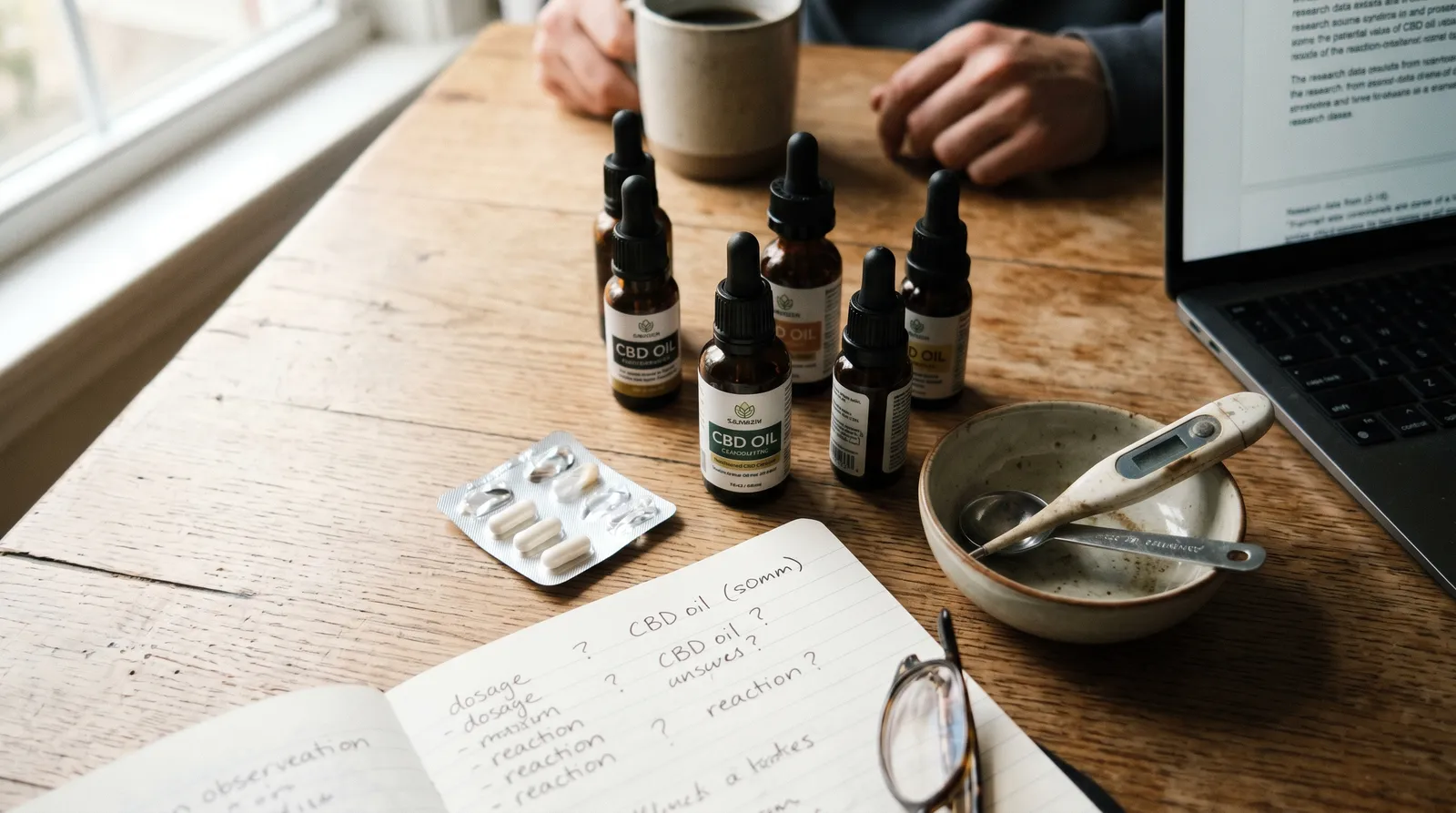
Most of the robust clinical data on CBD side effects comes from trials of pharmaceutical-grade CBD at doses far higher than any consumer oil delivers. A 2017 review in Cannabis and Cannabinoid Research examined the existing clinical literature and concluded that the most commonly reported adverse effects were tiredness, diarrhoea, and changes in appetite or weight (Iffland & Grotenhermen, 2017; DOI: 10.1089/can.2016.0034). That review is still the most-cited safety overview in the field, and it forms the backbone of what follows. The European Monitoring Centre for Drugs and Drug Addiction (EMCDDA) has also acknowledged CBD's relatively favourable safety profile compared to many other cannabinoids, while noting the need for further long-term research. Researchers at the Beckley Foundation have similarly called for more rigorous consumer-level studies to fill the gaps left by pharmaceutical-dose trials.
Common CBD Side Effects Reported in Clinical Trials
The most frequently reported CBD side effects in randomised controlled trials are drowsiness, diarrhoea, and appetite changes, all of which tend to be mild and dose-dependent. The table below summarises the key findings from published peer-reviewed studies, giving you a clear picture of what researchers have actually measured rather than what anecdotal reports suggest.

| Side Effect | Frequency in Trials | Typical Context | Citation |
|---|---|---|---|
| Tiredness / drowsiness | Common (reported in multiple RCTs) | Doses ≥ 150 mg/day in epilepsy trials | Iffland & Grotenhermen, 2017 (DOI: 10.1089/can.2016.0034) |
| Diarrhoea | Common | Doses ≥ 200 mg/day; may relate to carrier oil volume | Iffland & Grotenhermen, 2017 |
| Changes in appetite (increase or decrease) | Common | Bidirectional — some subjects ate more, others less | Iffland & Grotenhermen, 2017 |
| Weight change | Occasional | Usually modest; tracked over 12+ week trials | Iffland & Grotenhermen, 2017 |
| Dry mouth | Occasional | Likely mediated by cannabinoid receptors in salivary glands | Prestifilippo et al., 2006 (PMID: 16946411) |
| Reduced blood pressure (transient) | Observed in acute dosing studies | Single 600 mg dose in healthy volunteers | Jadoon et al., 2017 (DOI: 10.1172/jci.insight.93760) |
| Light-headedness | Occasional | Possibly secondary to blood-pressure drop | Jadoon et al., 2017 |
| Nausea | Occasional | More common at higher doses; may relate to carrier oil | Chesney et al., 2020 (DOI: 10.1038/s41386-020-0667-2) |
| Elevated liver enzymes (ALT) | Uncommon — seen at high pharmaceutical doses | Doses of 10–20 mg/kg/day, especially with concomitant valproate | Devinsky et al., 2018 (DOI: 10.1056/NEJMoa1714631) |
A few things jump out from that table when considering CBD side effects at consumer doses. First, most of these adverse reactions appeared at doses of 150–1,500 mg per day — well above what a consumer CBD oil delivers at manufacturer-label dosing. For context, a 10% Cibdol oil (1,000 mg CBD per 10 ml bottle, 250 drops) delivers roughly 12 mg per 3-drop dose at the manufacturer-label recommendation of 3 drops twice daily. That is 24 mg per day — roughly one-sixth of the lowest dose tier in most clinical trials. Second, the CBD side effects are generally dose-dependent: higher doses produce more reports. Third, the carrier oil itself (MCT, hemp-seed oil) can contribute to gastrointestinal discomfort at higher volumes, which muddies the picture when trying to attribute symptoms specifically to CBD.
Liver Enzyme Elevation — the One CBD Side Effect That Gets Flagged
Elevated alanine aminotransferase (ALT) is the most frequently cited serious concern among CBD side effects, but it has only been observed at pharmaceutical doses far above consumer-supplement levels. In the key trials for pharmaceutical-grade CBD used in paediatric epilepsy, ALT elevations above three times the upper limit of normal occurred in roughly 13% of patients receiving CBD — but the rate climbed sharply in patients who were also taking valproate, a known hepatotoxic anti-epileptic drug (Devinsky et al., 2018; DOI: 10.1056/NEJMoa1714631). In patients not on valproate, the rate was substantially lower, suggesting the interaction rather than CBD alone drove most of the liver signal.
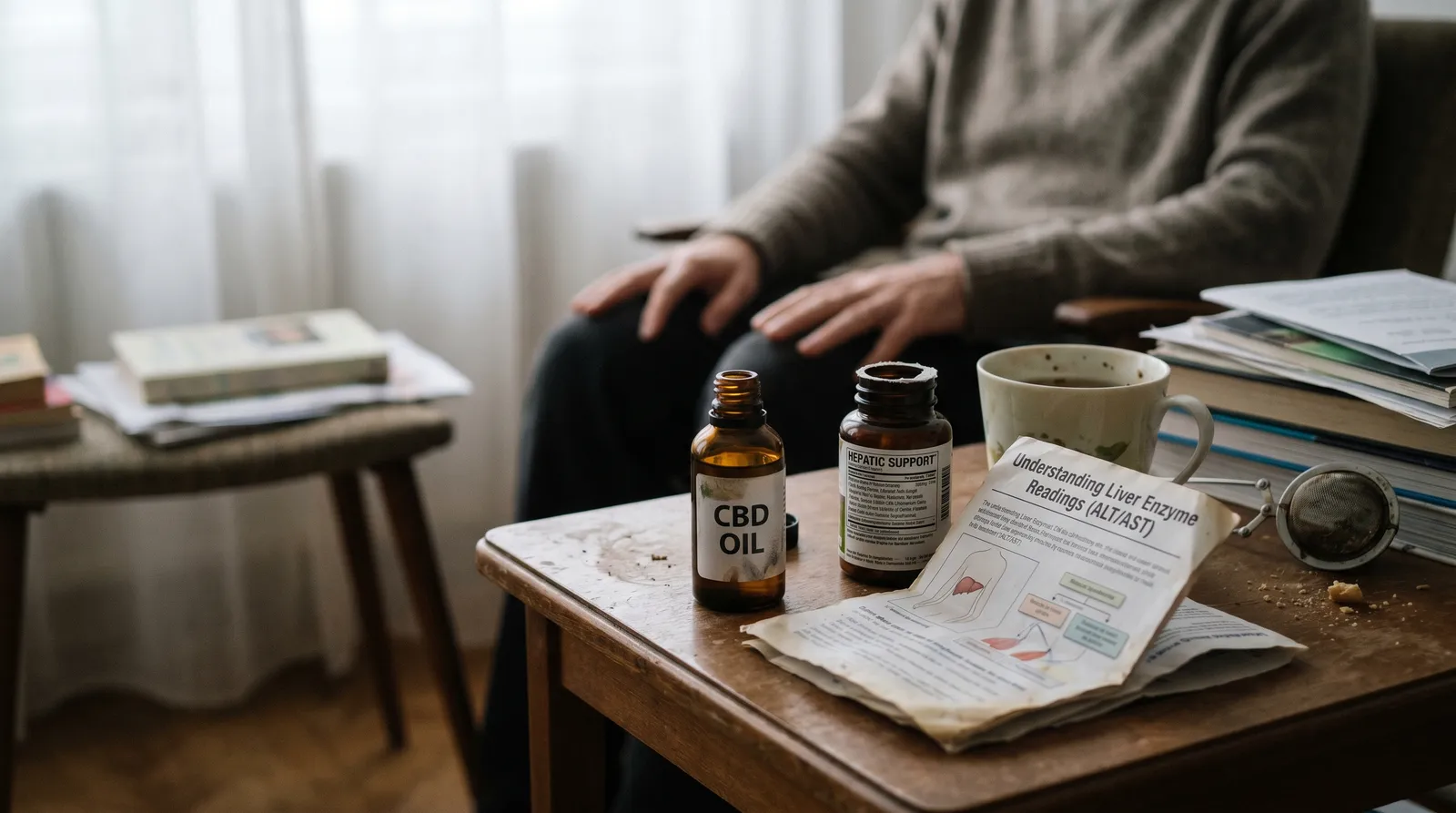
Those trials used doses of 10–20 mg/kg/day. For an 80 kg adult, that is 800–1,600 mg per day — a range that no consumer oil product is designed to deliver. The relevance of these CBD side effects to someone taking 24 mg per day from a food-supplement oil is unclear, and no published study has documented clinically significant ALT elevation at consumer-level doses. That said, the data simply does not exist for long-term daily use of consumer CBD in people with pre-existing liver conditions — the studies have not been done. If you have liver disease or take medication metabolised by the liver, talk to your doctor before adding CBD to your routine.
CBD Side Effects Extend to Drug Interactions — the Grapefruit Rule Explains Why
CBD inhibits the cytochrome P450 enzymes CYP3A4 and CYP2C19, which means it can slow the metabolism of other drugs that use the same pathway — exactly the way grapefruit juice does (Nasrin et al., 2021; DOI: 10.1124/dmd.120.000350). This creates a practical rule of thumb that anyone wanting to buy CBD should know: if your medication label says "do not take with grapefruit," CBD may interact with it too. The mechanism is competitive inhibition — CBD occupies the enzyme, slowing the metabolism of the other drug, which can raise its blood levels and potentially intensify both therapeutic effects and CBD side effects or drug side effects.
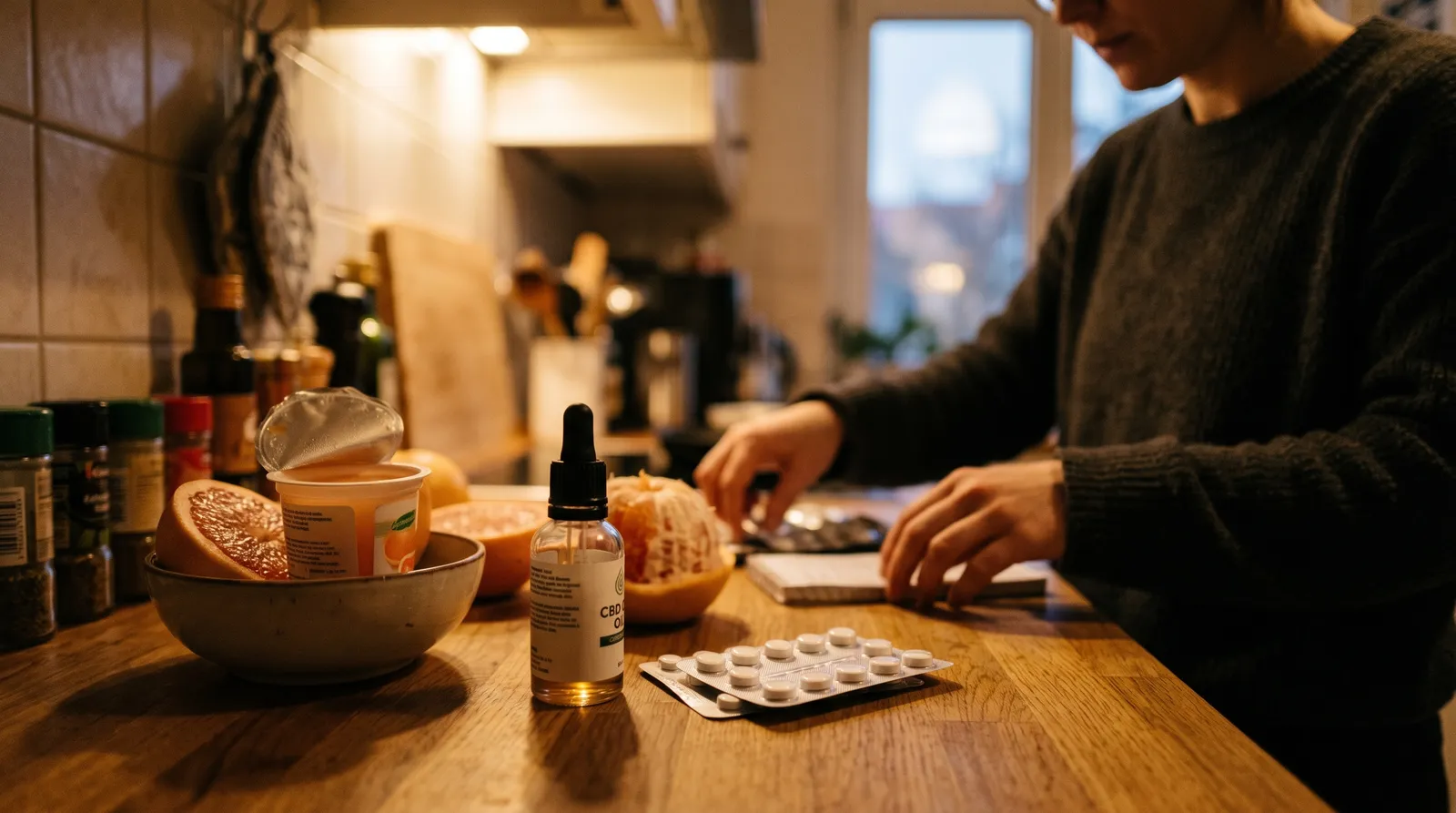
Research-documented interactions include:
- Clobazam — CBD increased clobazam's active metabolite (N-desmethylclobazam) by up to 500% in epilepsy patients (Geffrey et al., 2015; PMID: 26084099). This is the most clinically significant interaction in the published literature on CBD side effects.
- Warfarin — case reports document increased INR (a measure of blood-thinning effect) in patients who added CBD to a stable warfarin regimen (Grayson et al., 2018; DOI: 10.1002/jcph.1170).
- Valproate — the combination is associated with higher rates of liver enzyme elevation, as noted above (Devinsky et al., 2018).
- Certain SSRIs and statins — both drug classes include CYP3A4 substrates; in-vitro data suggests CBD could alter their metabolism, though clinical case data remains limited (Nasrin et al., 2021).
This is not a complete list — it cannot be, because interaction studies for consumer CBD products are sparse. The safe move is straightforward: if you take any prescription medication, talk to your doctor or pharmacist before using a CBD product. Do not adjust your medication dose based on anything you read online, including this article.
Certain Populations Face Higher Risk From CBD Side Effects and Should Always Consult a Healthcare Professional
Certain groups face higher risk from CBD side effects and should always consult a healthcare professional before use, because individual biology, existing conditions, and concurrent treatments can amplify adverse reactions that would otherwise be negligible.

Pregnancy and Breastfeeding
There is insufficient safety data on CBD use during pregnancy or breastfeeding. Animal studies have raised concerns about effects on foetal development at high doses (Fish et al., 2019; DOI: 10.1089/can.2019.0064), but human data is essentially absent. Until controlled human studies exist, the precautionary position is to avoid CBD during pregnancy and breastfeeding — and to discuss any supplement use with your midwife or obstetrician.
People With Liver Conditions
As covered above, high-dose pharmaceutical CBD has caused ALT elevations in clinical trials. If you have hepatitis, fatty liver disease, cirrhosis, or any condition affecting liver function, consult your doctor before use to minimise the risk of CBD side effects compounding existing hepatic stress.
People on Multiple Medications
Polypharmacy increases the probability of a CYP450-mediated interaction. The more drugs competing for the same metabolic enzymes, the harder it is to predict what adding CBD will do. A pharmacist can run an interaction check — most will do it for free, and it takes only a few minutes.
Driving and Heavy Machinery
Drowsiness is one of the most commonly reported CBD side effects in clinical literature. If you notice sedation — particularly with sleep-positioned formats like melatonin-containing gummies — do not drive or operate heavy machinery until you know how your body responds. A 2020 randomised crossover trial found that CBD alone (at 15 mg/kg — far above consumer doses) did not significantly impair driving in a simulator, but the authors noted individual variability and cautioned against generalising (Arkell et al., 2020; DOI: 10.1001/jama.2020.2594).
Drug-Test Considerations
Full-spectrum CBD products contain trace amounts of THC within the EU formal limit (≤ 0.2% or ≤ 0.3% depending on jurisdiction). These trace amounts may register on a sensitive workplace drug screening test. Broad-spectrum and isolate products are formulated to contain no detectable THC, but manufacturing tolerances vary. If workplace drug testing is a concern, be aware of which product type you are using and check the certificate of analysis (COA) for THC content before you buy any CBD product.
CBD Side Effects Look Relatively Mild When Compared to Common Over-the-Counter Supplements
CBD side effects look relatively mild when stacked against everyday over-the-counter options that most people never think twice about. Ibuprofen, for example, carries well-documented risks of gastric ulceration, kidney stress, and cardiovascular events at chronic doses — risks that led the EMCDDA and other health bodies to recommend the shortest possible treatment courses. Melatonin supplements, widely sold for sleep, can cause morning grogginess, headaches, and hormonal disruption in some users. Valerian root, another popular sleep aid, has been associated with headaches and gastrointestinal upset in clinical reports. By comparison, the CBD side effects documented in clinical trials — drowsiness, mild GI discomfort, appetite fluctuation — sit at the gentler end of the spectrum. That is not a reason to be cavalier, but it is useful context when weighing your options before deciding to buy a CBD supplement.

Another thing we are honest about: we do not know everything. The long-term safety picture for daily consumer CBD use is genuinely incomplete, and anyone who tells you otherwise is overstating the evidence. We sell CBD products because the existing research supports a favourable safety profile at consumer doses, but we would rather you make that decision with full awareness of what the science does and does not yet show. If you want to buy CBD oil and try it for yourself, start low, go slow, and pay attention to how your body responds.
Allergy and Sensitivity Considerations for CBD Side Effects
Allergic reactions to CBD itself are rare, but the other ingredients in a product can trigger sensitivities in susceptible individuals and produce CBD side effects unrelated to cannabidiol itself. CBD products are not just CBD — they include a carrier oil, and sometimes additional ingredients. Hemp-seed oil (used as the carrier in Cibdol 5%, 10%, 15%, and 20% oils) is a seed-derived oil; individuals with seed allergies should be cautious. MCT oil (coconut-derived, used in Cibdol 30% oil) may concern people with coconut allergy, though highly refined MCT typically contains minimal allergenic protein. For topical CBD products, a patch test on a small area of skin before full application is standard practice — apply a small amount to the inner forearm, wait 24 hours, and check for redness or irritation.

Inhaled CBD Carries a Distinct Risk Profile That Oral Formats Do Not Share
Inhaled CBD carries a distinct set of potential CBD side effects that oral formats do not share, primarily because the lungs are far more sensitive to contaminants than the digestive tract. If you use a CBD vape product, use only quality-tested vape devices and commercially manufactured CBD vape liquids. Never add CBD oil (meant for oral use) to a vape device — oral oils contain carrier fats that are dangerous when inhaled. Never use unverified cartridges or DIY mixtures. The 2019 EVALI (e-cigarette or vaping product use-associated lung injury) outbreak in the United States was linked primarily to vitamin E acetate in illicit THC cartridges (Blount et al., 2020; DOI: 10.1056/NEJMoa1916433), but the broader lesson applies: inhalation safety depends entirely on what is in the liquid and the device delivering it.

Long-Term Safety Data for CBD Beyond One Year Remains Scarce at Any Dose Level
Long-term safety data for CBD beyond one year remains scarce at any dose level — this is the single biggest gap in the current evidence base for understanding CBD side effects over time. Most published CBD safety data comes from trials lasting 12–16 weeks. A 2023 systematic review of CBD safety across multiple indications noted that "long-term safety data beyond 1 year remain scarce" and called for extended follow-up studies (Chesney et al., 2020, updated by Larsen & Shahinas, 2020; DOI: 10.1016/j.jpsychires.2020.01.001). The WHO's 2018 critical review did not identify a public-health risk from CBD, but it also acknowledged the limited duration of available evidence. For someone using a consumer CBD oil at manufacturer-label dosing (e.g. 3 drops twice daily), the exposure is orders of magnitude lower than in clinical trials — but the absence of long-term data at any dose level is a genuine unknown, not a reassurance.
Accidental Ingestion by Children Is a Documented Safety Concern With CBD Products
Accidental ingestion by children is a documented safety concern with CBD gummies and oils that every household should take seriously. CBD gummies look and taste like sweets. CBD oils come in small dropper bottles that a child could mistake for something else. Store all CBD products as you would any supplement or medication — out of reach of children. This is not a theoretical concern; poison-control centres in the US and EU have reported accidental paediatric ingestions of CBD products, with symptoms including excessive drowsiness (Huestis et al., 2019; DOI: 10.1016/j.ntt.2019.106661). If you order CBD gummies or buy CBD oils for your household, treat storage with the same care you would give to any medicine cabinet item.
The Dose Determines the Risk — Consumer CBD Products Deliver a Fraction of Clinical Trial Amounts
The dose determines the risk when it comes to CBD side effects — consumer CBD products deliver a fraction of what clinical trials administered. The 2017 Iffland & Grotenhermen review made a point worth repeating: compared to many common over-the-counter drugs, the side-effect profile of CBD at studied doses was relatively mild. That is context, not a safety guarantee. Consumer CBD products at manufacturer-label dosing deliver far less CBD than the doses used in clinical trials — typically 10–50 mg per day versus 150–1,500 mg per day in research settings. Whether this lower exposure translates to a proportionally lower risk of CBD side effects is a reasonable assumption, but it has not been rigorously tested in long-term studies of consumer products specifically.
The practical takeaway: most people using a CBD oil, capsule, or gummy at the dose printed on the label are unlikely to experience anything beyond mild drowsiness or a slightly upset stomach, if they notice anything at all. But "unlikely" is not "impossible," and individual variation — in body weight, liver enzyme activity, concurrent medications, and genetics — means your experience may differ from the average reported in a clinical trial. If you decide to buy a CBD product from Azarius, start with the lowest suggested serving, keep a simple journal of how you feel for the first two weeks, and adjust only gradually. Products worth considering include Cibdol CBD Oil 10%, Cibdol CBD Oil 5%, and CBN + CBD Sleep Gummies — all of which come with clear dosing guidance on the label.
---Important: This article is consumer education and is not medical advice. CBD products are food supplements, not medicines. Research on CBD is ongoing and evidence remains limited or mixed for many topics. Talk to your doctor before use if you are pregnant, breastfeeding, taking medication, scheduled for surgery, or living with a health condition. Keep CBD products out of reach of children.
This article has been reviewed for factual and editorial accuracy by Toine Verleijsdonk (Cibdol brand manager) and Joshua Askew (Editorial Director). It has NOT been reviewed by a licensed medical practitioner and does not constitute medical advice.
References
- Iffland, K. & Grotenhermen, F. (2017). An update on safety and side effects of cannabidiol: a review of clinical data and relevant animal studies. Cannabis and Cannabinoid Research, 2(1), 139–154. DOI: 10.1089/can.2016.0034
- Devinsky, O. et al. (2018). Trial of cannabidiol for drug-resistant seizures in the Dravet syndrome. New England Journal of Medicine, 378(25), 2011–2020. DOI: 10.1056/NEJMoa1714631
- Jadoon, K.A. et al. (2017). A single dose of cannabidiol reduces blood pressure variability and resting blood pressure in healthy volunteers. JCI Insight, 2(12), e93760. DOI: 10.1172/jci.insight.93760
- Nasrin, S. et al. (2021). Cannabinoid metabolites as inhibitors of major hepatic CYP450 enzymes. Drug Metabolism and Disposition, 49(12), 1070–1080. DOI: 10.1124/dmd.120.000350
- Geffrey, A.L. et al. (2015). Drug–drug interaction between clobazam and cannabidiol in children with refractory epilepsy. Epilepsia, 56(8), 1246–1251. PMID: 26084099
- Grayson, L. et al. (2018). An interaction between warfarin and cannabidiol, a case report. Epilepsy & Behavior Case Reports, 9, 10–11. DOI: 10.1002/jcph.1170
- Fish, E.W. et al. (2019). Cannabinoids exacerbate alcohol teratogenesis by a CB1-hedgehog interaction. Scientific Reports, 9, 16057. DOI: 10.1089/can.2019.0064
- Arkell, T.R. et al. (2020). Effect of cannabidiol and Δ9-tetrahydrocannabinol on driving performance. JAMA, 324(21), 2177–2186. DOI: 10.1001/jama.2020.2594
- Blount, B.C. et al. (2020). Vitamin E acetate in bronchoalveolar-lavage fluid associated with EVALI. New England Journal of Medicine, 382, 697–705. DOI: 10.1056/NEJMoa1916433
- Huestis, M.A. et al. (2019). Cannabidiol adverse effects and toxicity. Current Neuropharmacology, 17(10), 974–989. DOI: 10.1016/j.ntt.2019.106661
- Chesney, E. et al. (2020). Adverse effects of cannabidiol: a systematic review and meta-analysis of randomized clinical trials. Neuropsychopharmacology, 45, 1799–1806. DOI: 10.1038/s41386-020-0667-2
- Prestifilippo, J.P. et al. (2006). Inhibition of salivary secretion by activation of cannabinoid receptors. Experimental Biology and Medicine, 231(8), 1421–1428. PMID: 16946411
- World Health Organisation (2018). Cannabidiol (CBD) Critical Review Report. Expert Committee on Drug Dependence, 40th Meeting.
- Larsen, C. & Shahinas, J. (2020). Dosage, efficacy and safety of cannabidiol administration in adults. Journal of Psychiatric Research, 129, 210–218. DOI: 10.1016/j.jpsychires.2020.01.001
Last updated: April 2026
Frequently Asked Questions
7 questionsCan CBD cause liver damage at normal supplement doses?
Does CBD interact with blood pressure medication?
Why does CBD cause drowsiness in some people but not others?
Is it safe to take CBD every day long-term?
What is the grapefruit rule for CBD and medications?
Can CBD cause diarrhoea and how do I reduce it?
Does CBD cause dry mouth and why does it happen?
About this article


Luke Sholl has been writing about cannabis, cannabinoids, and the broader benefits of nature since 2011, and has personally grown cannabis in home grow tents for more than a decade. That first-hand cultivation experience
This wiki article was drafted with AI assistance and reviewed by Luke Sholl, External contributor since 2026. Editorial oversight by Toine Verleijsdonk.
Medical disclaimer. This content is for informational purposes only and does not constitute medical advice. Consult a qualified healthcare provider before use of any substance.
Last reviewed April 25, 2026
Related Articles

Pinene Alpha and Beta: Aroma, Chemistry & Vaporisation Guide
Pinene is a bicyclic monoterpene occurring as two isomers — α-pinene and β-pinene — and ranks as the most abundant terpene in the plant kingdom.

CBD and Recovery: What the Research Actually Shows
CBD and recovery is a research topic spanning exercise-induced muscle damage, sleep quality, and perceived soreness. As McCartney et al.

CBD Pet Dosing Vet Consultation: Prepare for Your Visit
Veterinary CBD dosing is not a scaled-down version of human dosing — dogs and cats metabolise cannabidiol through different enzymatic pathways and at…

CBD for Cats Veterinary Considerations: Feline Research, Safety and Guidance
Cats metabolise cannabinoids differently from dogs and humans, lacking key glucuronidation enzymes that affect CBD clearance. Deabold et al.

EU Novel Food Regulation CBD: Country Status, EFSA Safety & Guide
EU novel food regulation CBD is a policy framework under EU rule 2015/2283 that classifies cannabidiol extracts as a novel food, requiring safety assessment…
CBD Topical Creams Medical Grade: CE-Marked Class I Explained
CBD topical creams deliver cannabidiol directly to the skin rather than the bloodstream.
Humulene Effects and Aroma Profile | Terpene Guide
Humulene (α-humulene) is a monocyclic sesquiterpene named after Humulus lupulus — hops.

Terpene Entourage Effect: Current Evidence Reviewed
The terpene entourage effect proposes that cannabis terpenes modulate cannabinoid activity, producing different outcomes than isolated compounds alone.

CBD and Skin Conditions: What Research Shows
Cannabidiol (CBD) interacts with the endocannabinoid system expressed in human skin — including CB1 and CB2 receptors on keratinocytes, sebocytes, and…