
This article discusses psychoactive substances intended for adults (18+). If you have a health condition or take medication, consult a doctor before use. Our age policy
CBD Oil Percentages Explained: 5% vs 10% vs 20% vs 40%
Definition
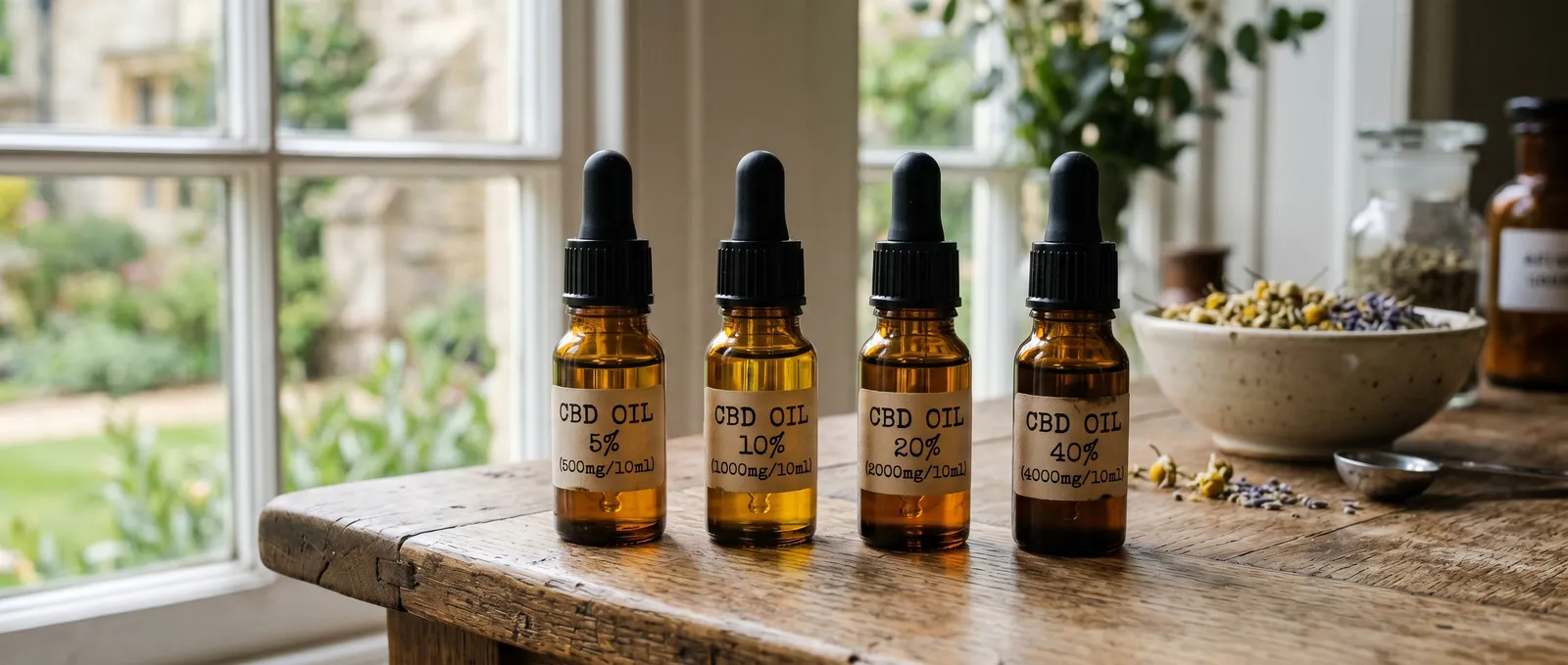
CBD oil percentage is a weight-by-volume concentration that determines how many milligrams of cannabidiol each drop delivers. A 10 ml bottle of 10% oil contains 1 000 mg of CBD across 250 drops — roughly 4 mg per drop. Millar et al. (2018) estimated oral CBD bioavailability at 6–19%, meaning labelled milligrams and absorbed milligrams are not the same figure.
CBD oil percentages explained is a consumer-education topic that helps readers understand how concentration determines the milligrams of cannabidiol delivered in every drop. A 10 ml bottle of 10% CBD oil contains 1 000 mg of CBD across 250 drops — roughly 4 mg per drop. Knowing this single conversion lets you compare any percentage on any label in seconds, and it is the foundation of every section that follows. If you want to buy a CBD oil and feel confident about what you are getting, this is the maths you need.
Percentage comparison at a glance
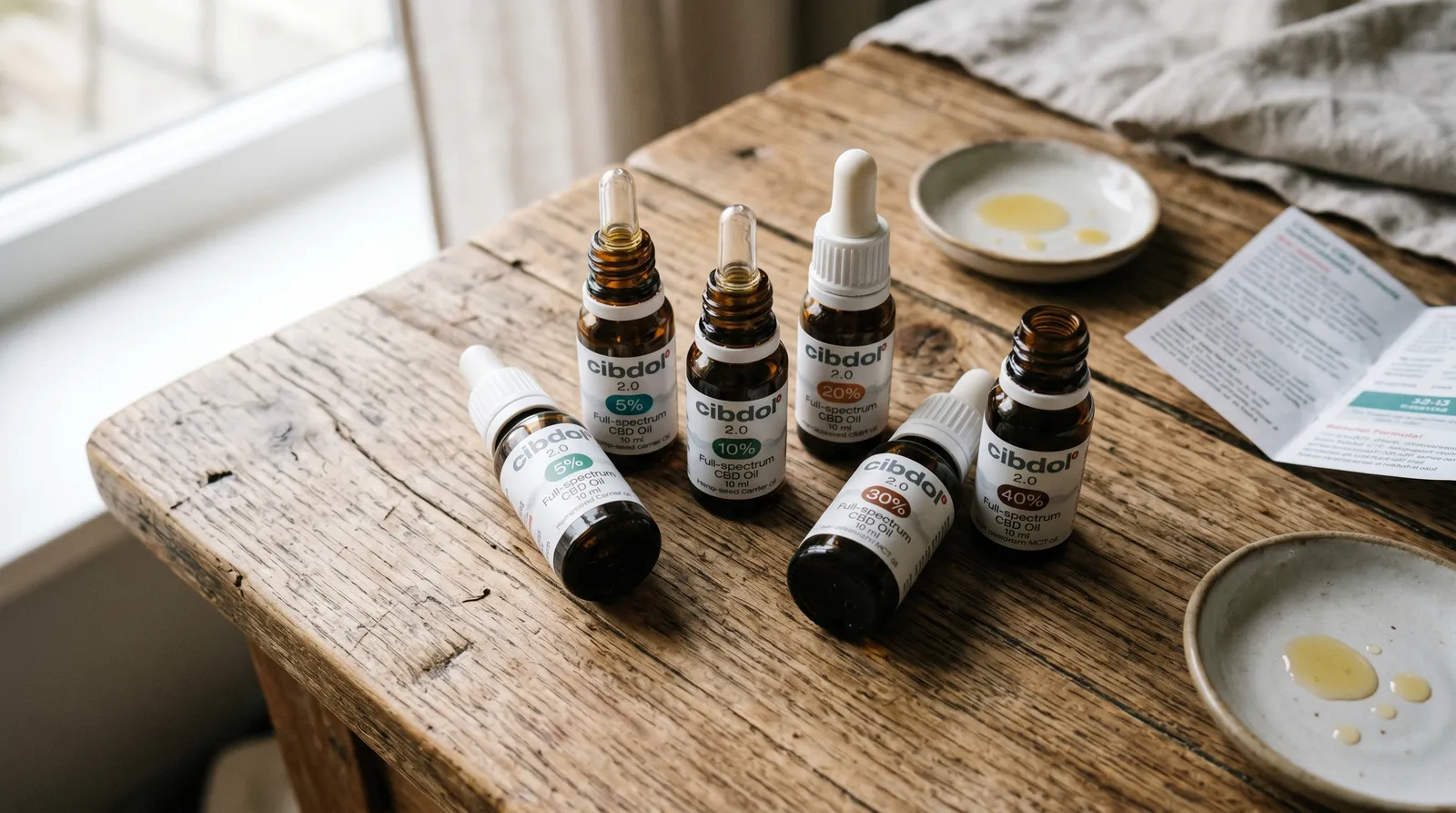
CBD oil percentages translate directly into milligrams per drop, and the table below lays out the arithmetic for every concentration discussed in this article.
| Percentage | mg CBD per 10 ml bottle | mg CBD per drop (÷ 250) | mg CBD per 3-drop dose (Cibdol 2.0 label) | Typical reader context |
|---|---|---|---|---|
| 5% | 500 mg | 2 mg | 6 mg | First-time format familiarisation; people who prefer a lower mg intake per dose |
| 10% | 1 000 mg | 4 mg | 12 mg | Moderate per-dose intake; common entry point for regular use |
| 20% | 2 000 mg | 8 mg | 24 mg | Higher per-dose intake without increasing drop count |
| 40% | 4 000 mg | 16 mg | 48 mg | Experienced format use; maximum concentration per drop available |
All figures above are arithmetic based on the Cibdol 2.0 formula: a 10 ml bottle contains 250 drops, and the manufacturer label recommends 3 drops twice daily across every percentage. A higher percentage does not mean you take fewer drops — it means each drop delivers more milligrams of cannabidiol (CBD). That single distinction is the entire point of this article, and it is the thing most first-time readers get wrong.
What "percentage" actually means
CBD oil percentage is a weight-by-volume concentration that tells you how many milligrams of CBD sit inside each millilitre of oil. A 10% oil contains 10 g of CBD per 100 ml of finished product — or, scaled down to a standard 10 ml bottle, 1 000 mg. The carrier oil (cold-pressed hemp-seed oil in Cibdol's 5%, 10%, 15%, and 20% formulations; MCT oil in the 30% formulation) makes up the rest of the volume. The CBD itself — extracted from Cannabis sativa L. — is dissolved into that carrier.
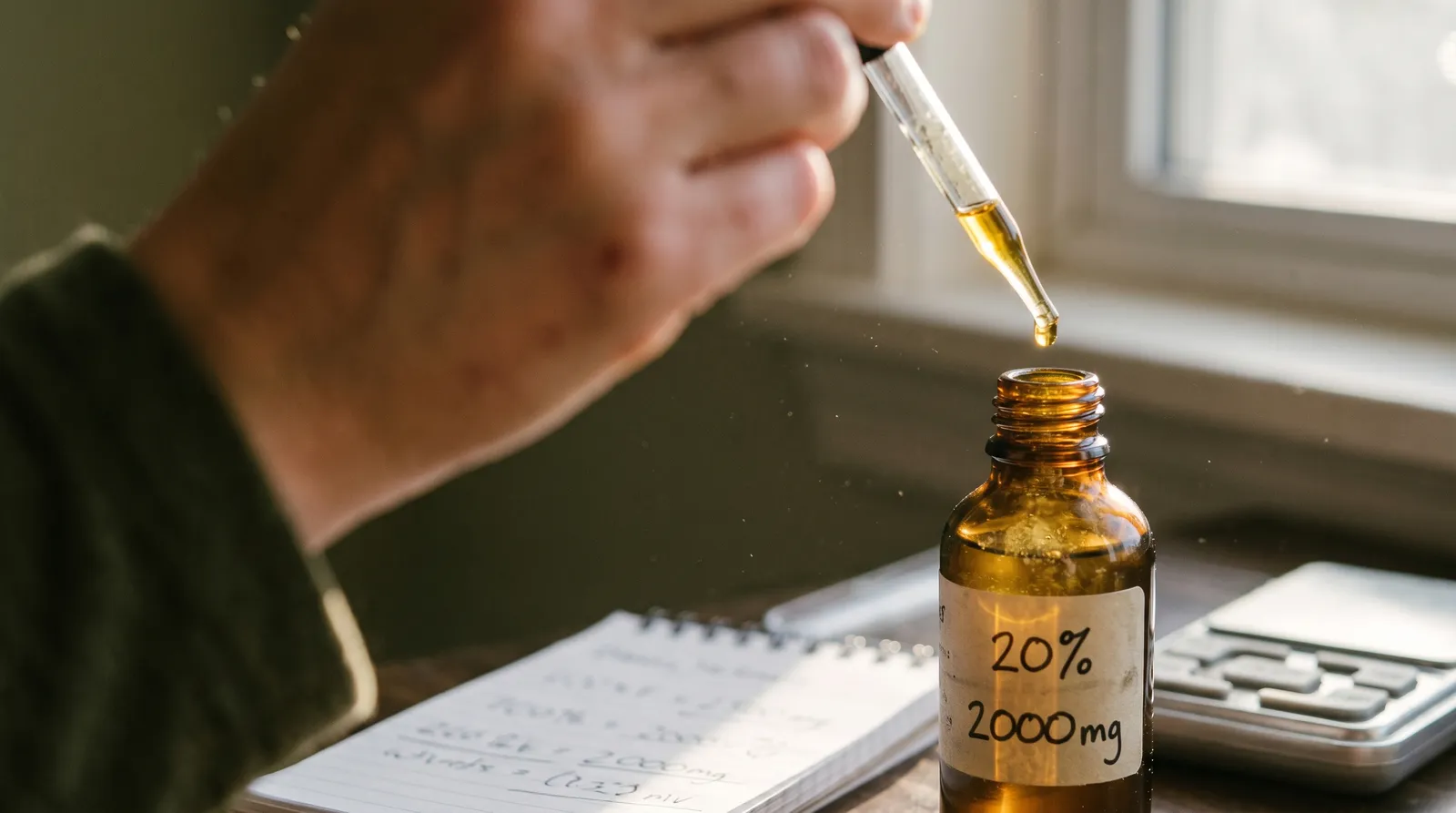
This is exactly the same principle as alcohol by volume (ABV) on a bottle of wine. A 5% oil is the equivalent of a light lager; a 40% oil is more like a spirit. You would not drink a pint of whisky, and you would not sip a thimble of lager expecting the same alcohol intake. The analogy breaks down at the pharmacology level — CBD is not ethanol — but the concentration logic is identical.
One thing worth noting: the percentage on the label tells you nothing about bioavailability. A 2018 review by Millar et al. in Frontiers in Pharmacology (DOI: 10.3389/fphar.2018.01365) estimated oral CBD bioavailability at roughly 6–19%, depending on formulation, fed/fasted state, and individual variation. So the 12 mg you measure from three drops of a 10% oil is not 12 mg circulating in your bloodstream — the actual absorbed amount is considerably lower and varies person to person. The bioavailability article in this wiki covers that research in detail.
The maths: how to convert percentage to milligrams
The formula converts any CBD oil percentage into a concrete milligram figure in two steps. Once you have it, you will never be confused by a CBD label again:
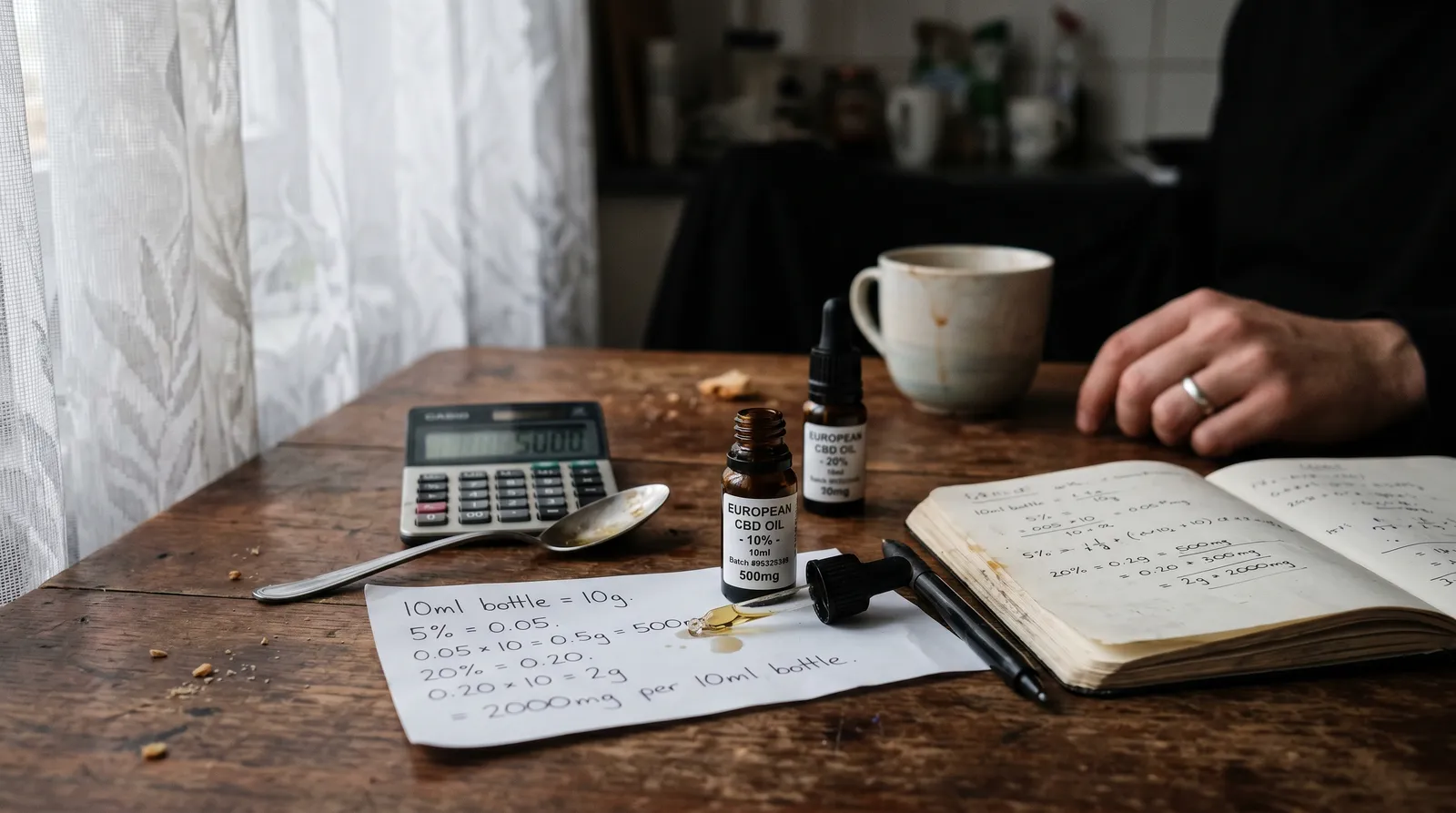
mg per bottle = percentage × 100 × (bottle volume in ml ÷ 10)
For a standard 10 ml bottle, that simplifies to:
mg per bottle = percentage × 100
So a 20% oil in a 10 ml bottle = 20 × 100 = 2 000 mg total. Divide by 250 drops (Cibdol 2.0 specification) and you get 8 mg per drop. Multiply by the 3-drop manufacturer-label dose and you land on 24 mg per serving.
If you encounter a 30 ml bottle from another brand, adjust accordingly: a 10% oil in a 30 ml bottle holds 3 000 mg total, not 1 000 mg. Always check the bottle volume — it is the second number you need after the percentage.
A 2020 analysis by Liebling et al. in the Journal of Cannabis Research (DOI: 10.1186/s42238-020-00052-8) tested 14 commercially available CBD oils and found that actual CBD content deviated from the labelled amount in several products, sometimes by more than 25%. Third-party Certificates of Analysis (COAs) are the only way to verify that the label maths matches reality. The reading-CBD-labels-COA article in this wiki explains how to interpret those documents.
5% oil: the entry-level concentration
A 5% CBD oil delivers 500 mg per 10 ml bottle and 2 mg per drop, giving 6 mg of CBD in a standard 3-drop dose. This is the lowest concentration in the Cibdol range (excluding the 2.5% oils used in cannabinoid-blend formulations like the CBG 5% + CBD 2.5% and CBN 5% + CBD 2.5% products).
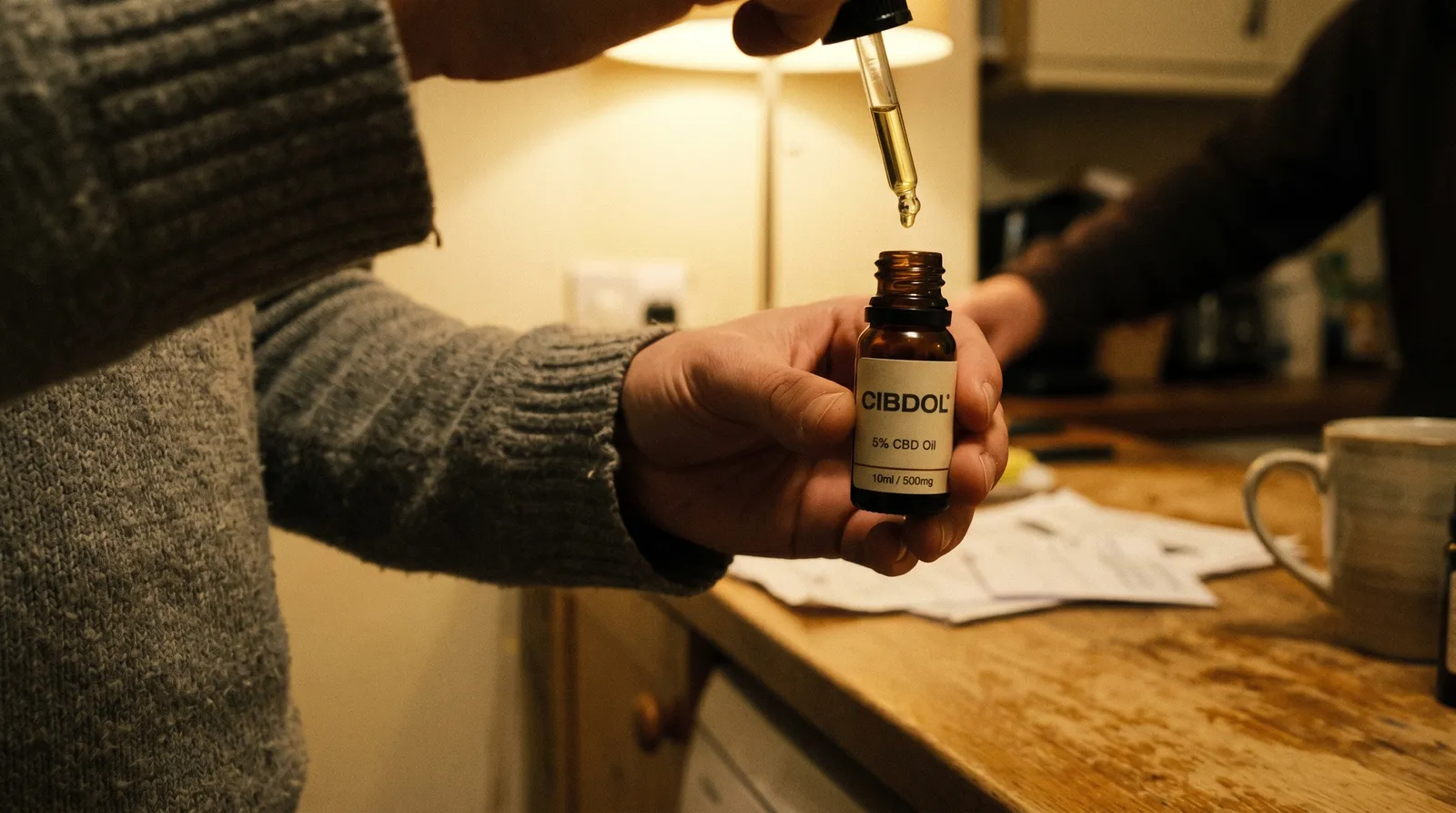
The 5% concentration is straightforward for people who have never taken CBD oil before and want to start with a modest milligram intake per dose. Because the drop count stays the same — 3 drops twice daily on the Cibdol label — the only variable is how many milligrams land under your tongue each time. Six milligrams is on the low end of doses used in published research; a 2019 cross-sectional survey by Corroon and Phillips in Cannabis and Cannabinoid Research (DOI: 10.1089/can.2018.0006) found that self-reported CBD users consumed a median of roughly 20–50 mg per day, though the study noted enormous variability and did not control for product accuracy.
The 5% oil also has a milder taste. Higher-concentration oils carry more hemp extract per millilitre, which intensifies the earthy, slightly bitter flavour profile. If taste sensitivity is a concern, the lower concentration is easier to hold under the tongue for the 60–90 seconds that sublingual absorption requires.
10% oil: the most common starting point
A 10% CBD oil holds 1 000 mg per bottle, 4 mg per drop, and 12 mg per 3-drop dose. Across the European CBD market, 10% is the concentration that shows up most frequently as a first purchase — not because of any pharmacological magic number, but because it sits in a middle ground between cost-per-milligram and per-dose intake.
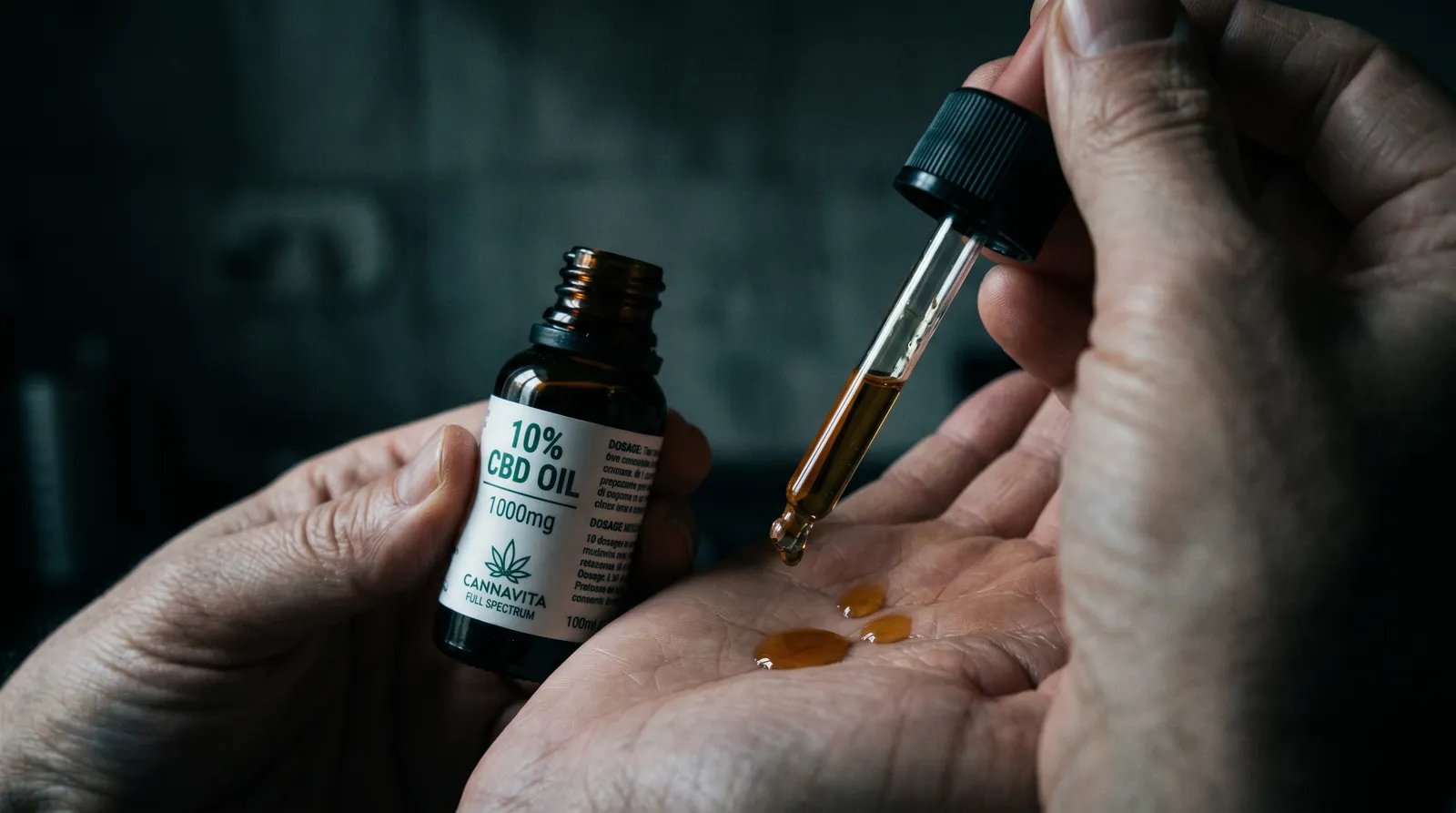
At 12 mg per serving taken twice daily, a reader following the Cibdol manufacturer label would consume 24 mg of CBD per day. That falls within the lower range of doses examined in published literature. Linares et al. (2019) in Frontiers in Pharmacology (DOI: 10.3389/fphar.2018.01050) used 150–600 mg doses in a simulated public-speaking study — orders of magnitude above what a 10% consumer oil delivers per dose. This is not a criticism of the 10% format; it is a reminder that consumer-product dosing and clinical-trial dosing are rarely comparable, and drawing direct parallels between the two is misleading.
20% oil: double the milligrams, same three drops
A 20% CBD oil delivers 2 000 mg per bottle, 8 mg per drop, and 24 mg per 3-drop dose — four times the milligrams of the 5% and double the 10%, all within the same 3-drop serving. For readers who have been using a 10% oil and want a higher milligram intake without increasing their drop count, this is the arithmetic step up.
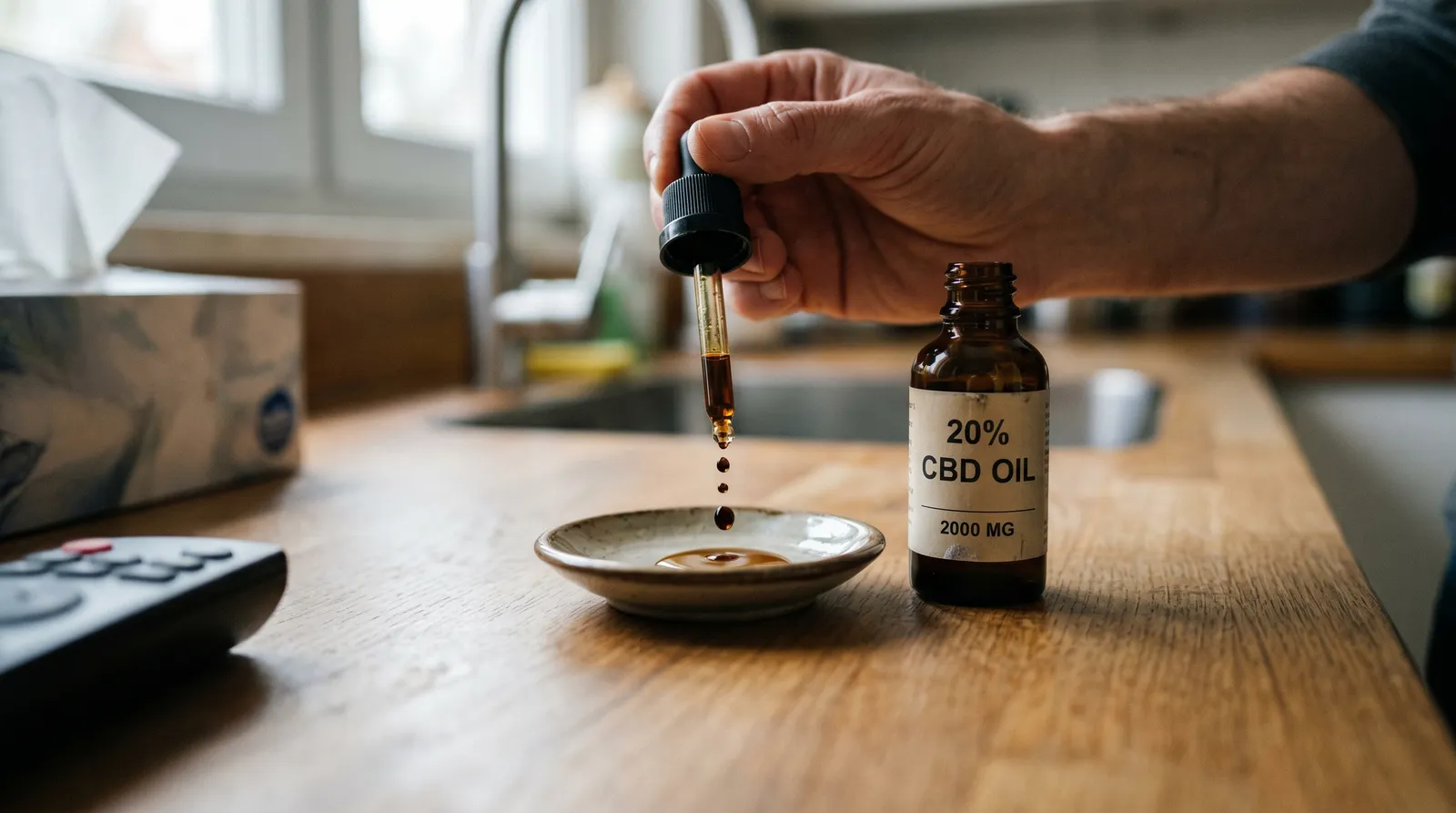
The carrier oil in Cibdol's 5%, 10%, 15%, and 20% formulations is cold-pressed hemp-seed oil. Hemp-seed oil contributes its own fatty-acid profile (omega-6 and omega-3 in roughly a 3:1 ratio), but at the volumes involved — three drops is approximately 0.12 ml — the nutritional contribution of the carrier is negligible. The carrier-oil education article in this wiki covers the differences between hemp-seed oil and MCT in more detail.
Cost per milligram typically decreases as the percentage rises. A 20% bottle contains twice the CBD of a 10% bottle but rarely costs twice the price. If you are comparing value, divide the bottle price by the total milligrams — that gives you a per-milligram figure you can use across any brand or bottle size.
40% oil: the highest concentration available
The 40% CBD oil is the ceiling of the Cibdol range: 4 000 mg per 10 ml bottle, 16 mg per drop, and 48 mg per 3-drop dose. At twice-daily label dosing, that is 96 mg of CBD per day from six total drops.
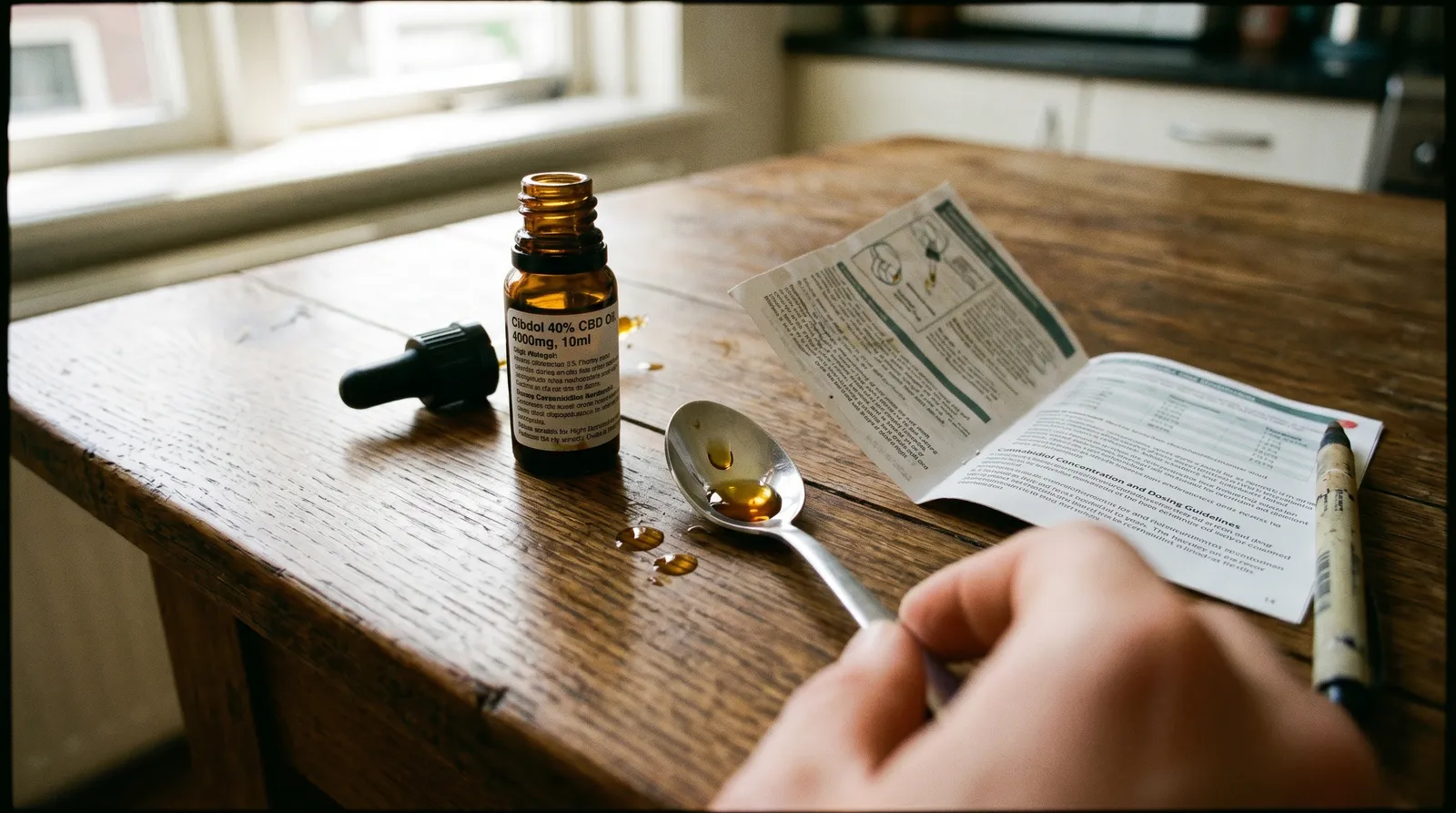
This concentration is dense. The oil is noticeably thicker and darker than a 5% or 10%, and the taste is correspondingly more intense — a pronounced earthy bitterness that some people find challenging to hold sublingually. Chasing it with water or a sip of juice after the 60–90-second hold time is a common practical workaround, though no published data suggests this affects absorption.
A 40% oil makes the most sense for readers who already know they want a high milligram intake per dose and prefer to get it in as few drops as possible. It is not "stronger" in the way that a double espresso is stronger than a single — the molecule is the same; the concentration per drop is higher. Whether a higher milligram intake produces a different subjective experience is an individual variable that published research has not resolved at consumer-product dose ranges.
Choosing between percentages: what actually matters
The decision comes down to three practical factors, not potency in any pharmacological sense:
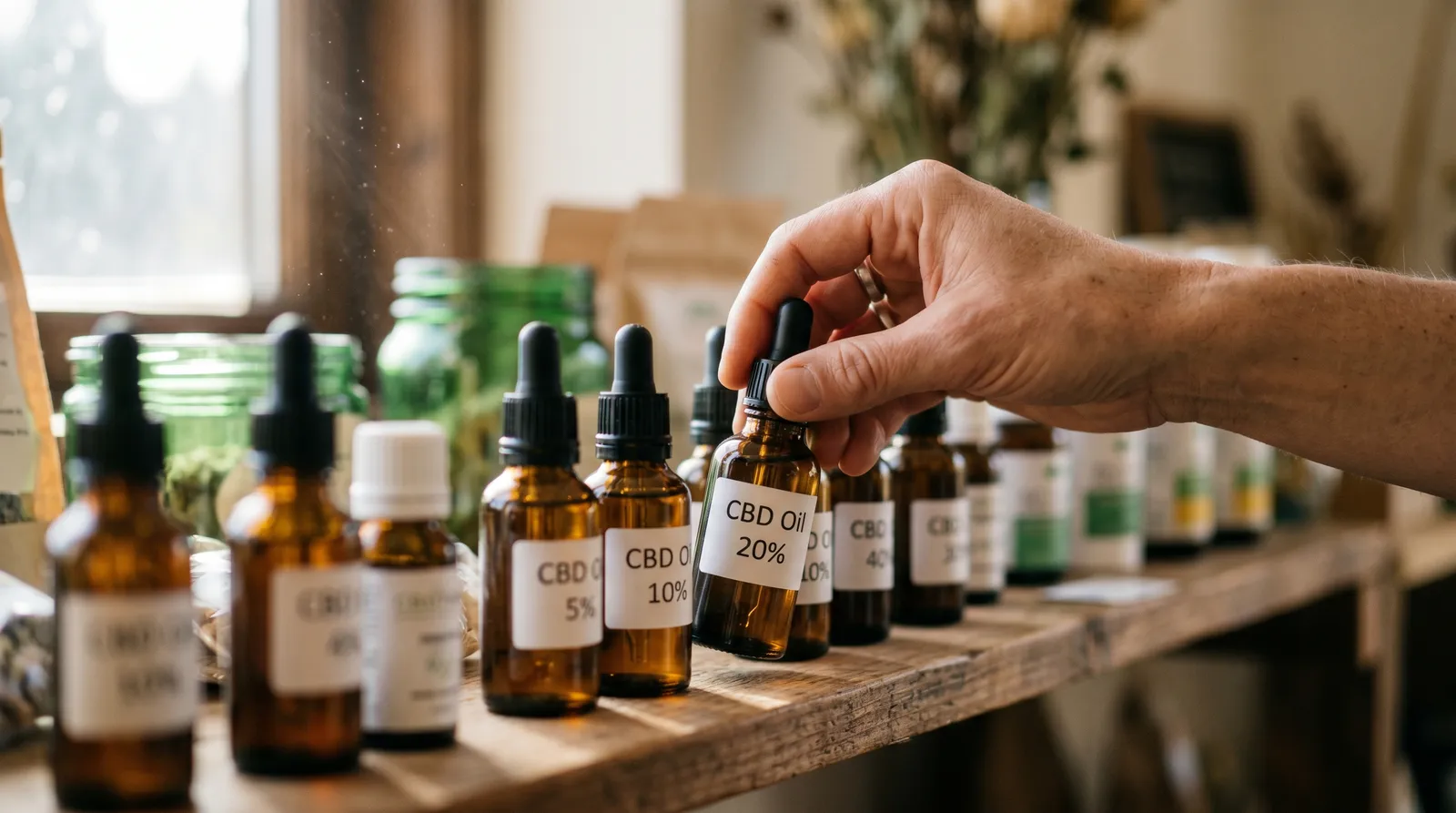
- Desired milligrams per dose. If you want 6 mg per serving, a 5% oil gets you there in three drops. If you want 48 mg, you either take three drops of a 40% oil or twenty-four drops of a 5% — and nobody wants to count out twenty-four drops twice a day.
- Cost per milligram. Higher-percentage bottles concentrate more CBD into the same 10 ml volume, and the price-per-milligram usually favours the higher concentrations. Do the division before you order.
- Taste tolerance. Concentrated oils taste more intensely of hemp extract. If you find the flavour difficult, a lower percentage in a hemp-seed carrier will be milder. Alternatively, the CBD-capsules and softgels format bypasses taste entirely — the CBD-oil-vs-capsules article in this wiki compares the two formats.
What does not matter: the idea that beginners "must" start at 5% and "graduate" to 40% as if building tolerance. CBD is not associated with classical pharmacological tolerance in the way that, say, caffeine or opioids are. A 2018 review by Machado Bergamaschi et al. noted that repeated CBD administration in human studies did not produce tolerance at the doses examined (DOI: 10.1007/s40263-018-0585-0), though the evidence base remains limited and most studies used pharmaceutical-grade CBD at doses far above consumer-product ranges.
Full-spectrum, broad-spectrum, and percentage
The percentage on the label refers to CBD content specifically, not to the total cannabinoid load. The extract inside the bottle may also contain other cannabinoids — cannabigerol (CBG), cannabinol (CBN), and trace amounts of tetrahydrocannabinol (THC) within formal EU limits. A full-spectrum extract retains these compounds plus terpenes and flavonoids; a broad-spectrum extract removes THC while keeping the rest; an isolate is pure CBD with nothing else.
The distinction matters for two reasons. First, full-spectrum products contain formal-limit trace THC, which may register on a sensitive workplace drug-screening test — a consideration covered in more detail in the full-spectrum-broad-spectrum-CBD-isolate article. Second, some researchers have proposed an "entourage effect" in which cannabinoids and terpenes interact synergistically, though a 2020 systematic review by Cogan (DOI: 10.1089/can.2020.0017) found that the clinical evidence for this effect remains preliminary and inconsistent.
The percentage figure itself does not tell you whether the product is full-spectrum, broad-spectrum, or isolate. You need to check the product description and, ideally, the COA.
How CBD oil percentages compare to other formats
CBD oil percentages explained in isolation can be misleading if you do not realise that oils are only one delivery format. Cibdol softgel capsules, for instance, state a fixed milligram amount per capsule rather than a percentage — a 10 mg softgel delivers 10 mg regardless of the carrier volume inside the shell. Capsules remove the drop-counting step entirely, which suits people who travel frequently or dislike the taste of sublingual oil. The trade-off is flexibility: with a dropper you can adjust by a single drop, while a capsule is a fixed unit.
Topical CBD products (creams, balms) also carry a percentage or mg figure, but the absorption route is transdermal rather than sublingual, so the bioavailability numbers from Millar et al. (2018) do not apply in the same way. Comparing a 5% oil to a 5% cream by percentage alone is like comparing apples to oranges — the number is the same, the pharmacokinetics are not.
European market context and quality checks
The European Industrial Hemp Association (EIHA) and the European Monitoring Centre for Drugs and Drug Addiction (EMCDDA) both publish guidance relevant to CBD products sold in the EU. The EMCDDA's cannabis and cannabinoid resource pages provide background on how member states classify hemp-derived extracts, while EIHA's self-regulatory framework sets quality benchmarks that reputable brands follow voluntarily.
For the consumer, the practical takeaway is straightforward: when you order a CBD oil, look for a batch-specific Certificate of Analysis from an independent laboratory. That COA should confirm the CBD percentage matches the label, that THC content falls within formal limits, and that the product has been screened for heavy metals, pesticides, and residual solvents. The reading-CBD-labels-COA article in this wiki walks through each section of a typical COA.
Safety and interactions
This article describes CBD oil percentages and the maths of mg per drop on a manufacturer label. It is consumer education and is not medical advice. CBD products are food supplements, not medicines. CBD inhibits liver enzymes (CYP3A4, CYP2C19) and may interact with prescription medication — the practical shorthand is the "grapefruit rule": if your medication label says "do not take with grapefruit," CBD may affect the same metabolic pathway. Anyone taking prescription medication, pregnant, breastfeeding, or living with a health condition should consult a qualified healthcare professional before use. Full-spectrum products contain formal-limit trace THC which may register on a sensitive workplace drug-screening test.
High-dose pharmaceutical CBD (as used in clinical trials) has been associated with elevated liver enzymes (ALT) in some participants. Consumer products at manufacturer-label dosing represent a substantially lower exposure, but anyone with existing liver concerns should speak to a doctor before use.
Important: This article is consumer education and is not medical advice. CBD products are food supplements, not medicines. Research on CBD is ongoing and evidence remains limited or mixed for many topics. Talk to your doctor before use if you are pregnant, breastfeeding, taking medication, scheduled for surgery, or living with a health condition. Keep CBD products out of reach of children and pets.
This article has been reviewed for factual and editorial accuracy by Toine Verleijsdonk (Cibdol brand manager) and Joshua Askew (Editorial Director). It has NOT been reviewed by a licensed medical practitioner and does not constitute medical advice.
Cibdol range overview
Cibdol's 2.0 formula oils are available at 5%, 10%, 15%, 20%, 30%, and 40% in 10 ml bottles (250 drops each). The 5–20% formulations use cold-pressed hemp-seed oil as the carrier; the 30% uses MCT (coconut-derived). Manufacturer-label dosing is 3 drops twice daily across all percentages. For readers who prefer to skip the dropper entirely, Cibdol also offers softgel capsules at matching percentages — a convenient option if you want to get a fixed milligram amount without counting drops.
Last updated: April 2026
Frequently Asked Questions
8 questionsHow do you convert a CBD oil percentage into milligrams per drop?
Does a higher CBD percentage mean you should take fewer drops?
Why does a 40% CBD oil taste stronger than a 5% oil?
Is a 5% CBD oil too weak to be worth buying?
Does CBD oil percentage affect bioavailability?
Which CBD oil percentage has the best cost per milligram?
Can I mix two different CBD oil percentages to get a custom strength?
Does the carrier oil in CBD oil change depending on the percentage?
About this article


Luke Sholl has been writing about cannabis, cannabinoids, and the broader benefits of nature since 2011, and has personally grown cannabis in home grow tents for more than a decade. That first-hand cultivation experience
This wiki article was drafted with AI assistance and reviewed by Luke Sholl, External contributor since 2026. Editorial oversight by Toine Verleijsdonk.
Medical disclaimer. This content is for informational purposes only and does not constitute medical advice. Consult a qualified healthcare provider before use of any substance.
Last reviewed April 25, 2026
Related Articles

Pinene Alpha and Beta: Aroma, Chemistry & Vaporisation Guide
Pinene is a bicyclic monoterpene occurring as two isomers — α-pinene and β-pinene — and ranks as the most abundant terpene in the plant kingdom.

CBD and Recovery: What the Research Actually Shows
CBD and recovery is a research topic spanning exercise-induced muscle damage, sleep quality, and perceived soreness. As McCartney et al.
CBD Pet Dosing Vet Consultation: Prepare for Your Visit
Veterinary CBD dosing is not a scaled-down version of human dosing — dogs and cats metabolise cannabidiol through different enzymatic pathways and at…

CBD for Cats Veterinary Considerations: Feline Research, Safety and Guidance
Cats metabolise cannabinoids differently from dogs and humans, lacking key glucuronidation enzymes that affect CBD clearance. Deabold et al.
EU Novel Food Regulation CBD: Country Status, EFSA Safety & Guide
EU novel food regulation CBD is a policy framework under EU rule 2015/2283 that classifies cannabidiol extracts as a novel food, requiring safety assessment…
CBD Topical Creams Medical Grade: CE-Marked Class I Explained
CBD topical creams deliver cannabidiol directly to the skin rather than the bloodstream.
Humulene Effects and Aroma Profile | Terpene Guide
Humulene (α-humulene) is a monocyclic sesquiterpene named after Humulus lupulus — hops.
Terpene Entourage Effect: Current Evidence Reviewed
The terpene entourage effect proposes that cannabis terpenes modulate cannabinoid activity, producing different outcomes than isolated compounds alone.
CBD and Skin Conditions: What Research Shows
Cannabidiol (CBD) interacts with the endocannabinoid system expressed in human skin — including CB1 and CB2 receptors on keratinocytes, sebocytes, and…