
This article discusses psychoactive substances intended for adults (18+). If you have a health condition or take medication, consult a doctor before use. Our age policy
CBD for Dogs: What Veterinary Research Shows

Definition
CBD for dogs is a growing area of veterinary inquiry examining whether cannabidiol can measurably affect canine health outcomes. Most published trials involve fewer than 30 animals and follow-up periods under 12 weeks. The strongest data clusters around osteoarthritis mobility and seizure frequency (McGrath et al., 2019), with consistent safety signals around liver enzyme elevation. This article reviews what the peer-reviewed literature actually shows and where the gaps remain.
What Veterinary CBD Research Actually Covers
CBD for dogs is a growing area of veterinary inquiry that examines whether cannabidiol — the non-intoxicating phytocannabinoid from Cannabis sativa L. — can measurably affect canine health outcomes such as joint mobility and seizure frequency. Since roughly 2018, peer-reviewed studies have begun to appear, though the evidence base remains small. This article covers what those veterinary studies have actually measured, where the evidence is thin, and why human CBD dosing does not transfer to canine (or feline) physiology. It is written for adult pet owners researching the topic, not as veterinary guidance for any specific animal.

This article describes veterinary research. Always consult a licensed veterinarian before giving any cannabinoid product to a pet. Human CBD dosing does NOT transfer to pets — cats and dogs metabolise cannabinoids differently and at species-specific rates.
The Veterinary Evidence Table
The most useful starting point is a direct look at the controlled studies themselves. Below is a summary of the most-cited controlled veterinary studies on CBD for dogs (and one feline comparison), current to early 2026. The table is the backbone of this article — the sections that follow unpack each row.

| Study | Species / n | Focus | CBD dose used | Key observation | Limitations noted by authors |
|---|---|---|---|---|---|
| Gamble et al., 2018 (Cornell) — PMID 30083539 | Dogs / n = 22 | Osteoarthritis pain and mobility | 2 mg/kg twice daily, oral | Significant increase in comfort and activity scores (veterinary assessment) vs placebo over 4 weeks | Small sample, short duration, owner-assessed outcomes partly subjective, single CBD source |
| McGrath et al., 2019 (Colorado State) — PMID 31067185 | Dogs / n = 26 | Idiopathic epilepsy (add-on to existing anti-seizure medication) | 2.5 mg/kg twice daily, oral | 89% of CBD-group dogs showed a reduction in seizure frequency; median reduction 33% vs baseline | Small sample, no placebo control in the published phase, concurrent anti-epileptic drugs, elevated ALP in some dogs |
| Bartner et al., 2018 — PMID 30083541 | Dogs / n = 30 (healthy) | Pharmacokinetics and safety | 2 mg/kg and 8 mg/kg, oral | CBD was absorbed and detectable in plasma; dose-dependent ALP elevation observed at higher dose | Healthy dogs only, no disease model, 12-week observation, liver enzyme changes flagged for monitoring |
| Deabold et al., 2019 — PMID 31412763 | Cats / n = 8; Dogs / n = 8 | Pharmacokinetics, tolerability | 2 mg/kg once daily, oral (fish-oil carrier) | Dogs showed higher CBD bioavailability than cats; cats displayed excessive licking and head-shaking; both species tolerated the dose without serious adverse events over 12 weeks | Very small sample, single dose level, no disease model, species-specific metabolism differences highlighted |
| Morris et al., 2020 (Baylor) — PMID 33227975 | Dogs / n = 20 | Osteoarthritis — multi-joint | 2 mg/kg/day, oral | Owner-reported improvements in pain and quality-of-life scores; veterinarian-assessed improvements in mobility | Open-label (no blinding), small sample, 90-day observation, no placebo arm |
| Brioschi et al., 2020 — PMID 32051689 | Dogs / n = 21 | Chronic pain (osteoarthritis), add-on | 2 mg/kg twice daily, oral | Reduced pain scores when CBD was added to existing gabapentin/NSAID regime | Small sample, add-on design makes isolating CBD effect difficult, 12-week observation |
A few things jump out immediately. Sample sizes are small — the largest trial here enrolled 30 dogs, and most are in the low twenties or below. Follow-up periods rarely exceed 12 weeks. And the dose range across studies is remarkably narrow: almost everything clusters around 2–2.5 mg/kg twice daily. That is not because the science has settled on an optimal dose — it is because so few dose-finding studies have been completed.
Osteoarthritis — the Most-Studied Indication
Osteoarthritis is the condition with the most published data points for CBD for dogs. The Cornell study (Gamble et al., 2018; PMID 30083539) is the one most frequently cited: a randomised, placebo-controlled, double-blind crossover trial in client-owned dogs with confirmed osteoarthritis. At 2 mg/kg oral CBD twice daily for four weeks, the CBD group showed statistically significant improvements on the Canine Brief Pain Inventory and Hudson activity scores compared to placebo.

That sounds promising, and it is — but the caveats matter. Twenty-two dogs is a tiny sample. The crossover design helps, yet four weeks per treatment arm is short for a chronic condition. Owner-assessed pain scores carry inherent subjectivity, even with validated instruments. The authors themselves flagged the need for larger, longer trials.
Morris et al. (2020; PMID 33227975) at Baylor added another 20 dogs, this time in an open-label design over 90 days. Owner-reported and veterinarian-assessed scores both improved — but without a placebo arm, it is impossible to rule out the placebo-by-proxy effect (owners who believe their dog is getting something useful tend to rate outcomes more positively). Brioschi et al. (2020; PMID 32051689) layered CBD on top of existing gabapentin or NSAID regimes in 21 dogs and saw reduced pain scores, but the add-on design makes it hard to isolate what CBD itself contributed.
The pattern across these three studies is consistent enough to say the signal is real and worth investigating further — but the evidence base is still preliminary by any conventional standard.
Epilepsy — a Single Dataset So Far
The only published controlled trial on CBD for dogs with epilepsy is the Colorado State study (McGrath et al., 2019; PMID 31067185). Twenty-six dogs with idiopathic epilepsy, all already on conventional anti-seizure medication, received either CBD (2.5 mg/kg twice daily) or placebo for 12 weeks. In the CBD group, 89% of dogs experienced some reduction in seizure frequency, with a median reduction of 33% compared to baseline.
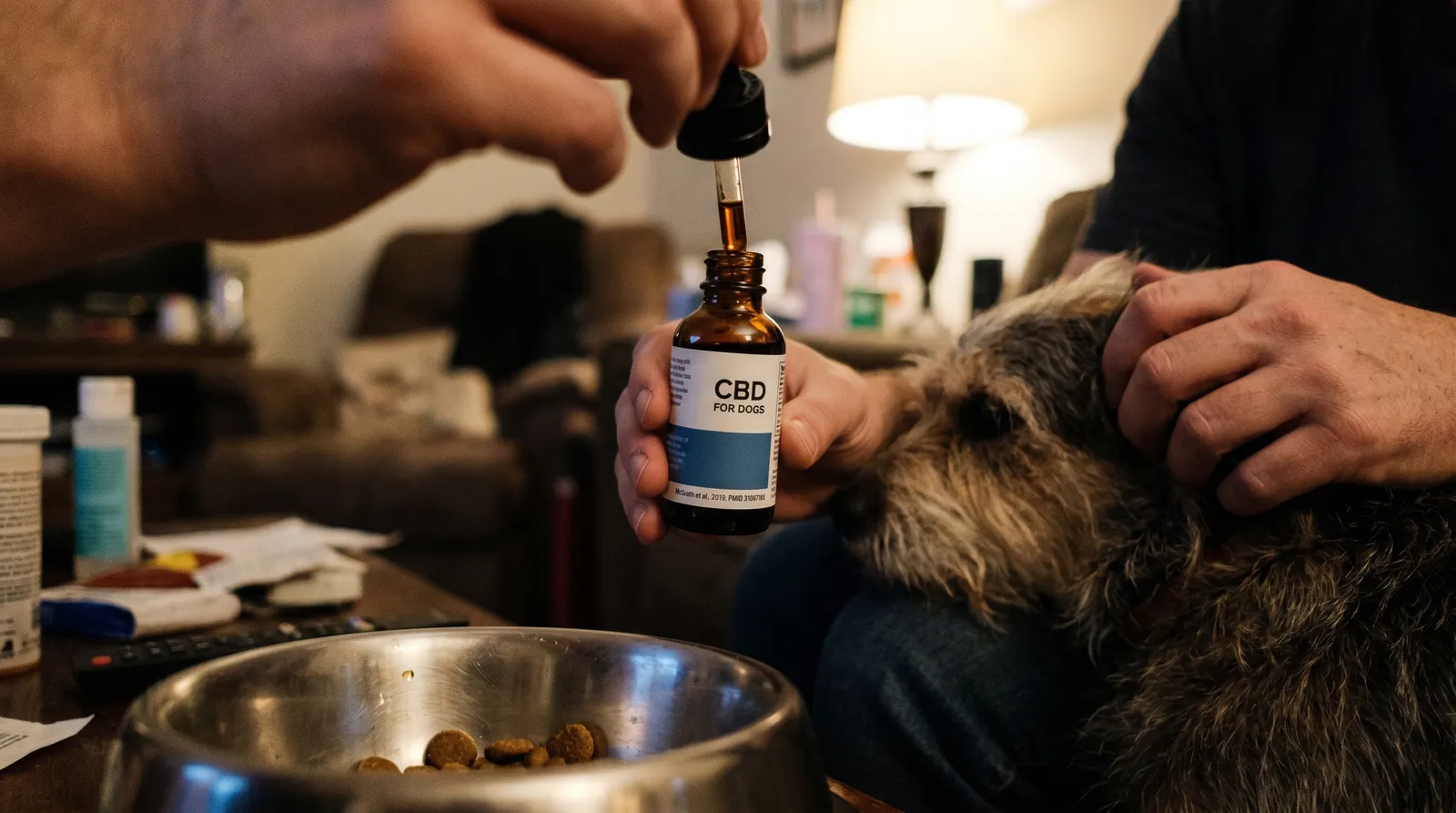
That 33% median figure needs context. In human epilepsy research, a 50% reduction in seizure frequency is typically the threshold for a drug to be considered a responder-level success. A 33% median means some dogs responded well and others barely at all. The study was also small and added CBD on top of existing drugs — so the interaction between CBD and clobazam or phenobarbital (both common canine anti-epileptics) is a confound, not a clean signal.
The American Kennel Club Canine Health Foundation (AKC CHF) has funded follow-up work at Colorado State, and the Morris Animal Foundation has flagged epilepsy as a priority research area. Larger, multi-site trials are in progress or planned, though peer-reviewed results from those have not yet been published as of early 2026.
Pharmacokinetics — How Dogs Process CBD
Dogs metabolise CBD through different enzymatic pathways than humans, with different half-lives and bioavailability profiles. Each species handles cannabinoids on its own terms.
Bartner et al. (2018; PMID 30083541) ran a 12-week pharmacokinetic and safety study in 30 healthy dogs at two dose levels (2 mg/kg and 8 mg/kg daily). CBD was absorbed and measurable in plasma at both doses. The higher dose produced dose-dependent elevations in alkaline phosphatase (ALP) — a liver enzyme marker. No dogs showed clinical signs of liver disease, but the ALP finding flagged the liver as a monitoring priority for longer-term use.
Deabold et al. (2019; PMID 31412763) compared dogs and cats head-to-head at 2 mg/kg once daily. Dogs achieved higher plasma CBD concentrations than cats at the same dose. Cats showed behavioural signs — excessive licking and head-shaking — that the dogs did not. The authors attributed this partly to cats' reduced capacity in certain cytochrome P450 enzyme families (particularly the glucuronidation pathways), which means cats clear CBD more slowly and may be more sensitive to its effects or to carrier-oil ingredients.
The half-life of CBD in dogs appears to be roughly 4–5 hours based on available pharmacokinetic data, though this varies with the carrier matrix (oil-based formulations tend to extend absorption). For comparison, the human oral half-life is typically cited at 2–5 hours for single doses and longer with repeated dosing (Millar et al., 2018; DOI 10.3389/fphar.2018.01365). The overlap is coincidental — the metabolic pathways differ substantially.
Safety Signals — What the Studies Flag
Elevated alkaline phosphatase (ALP) is the most consistent safety finding across all published canine CBD studies. This is not the same as liver damage — ALP can rise for many reasons in dogs, including steroid use, breed predisposition, and normal ageing. But in the context of CBD administration, the pattern is consistent enough that every veterinary research group has flagged it.
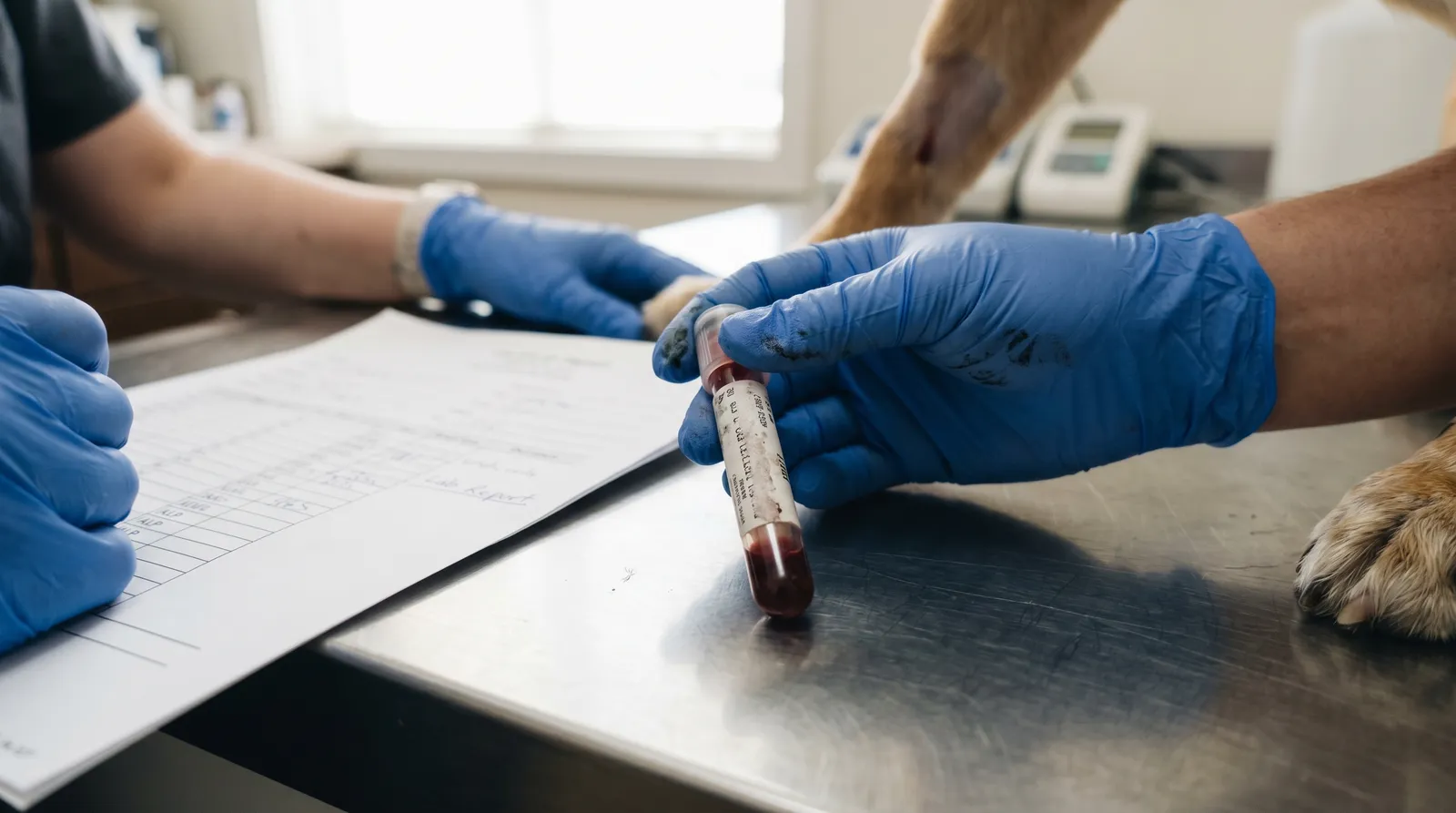
Other reported side effects in the literature include:
- Gastrointestinal upset — loose stools and occasional vomiting, typically at higher doses or during the first few days of administration (Bartner et al., 2018)
- Sedation — mild drowsiness reported in some dogs, particularly at the start of dosing (McGrath et al., 2019)
- Dry mouth — increased water-seeking behaviour noted anecdotally by owners in the Cornell trial
What the studies do not yet cover well is long-term safety. The longest published observation period is 12 weeks. For a supplement that owners might give daily for years, that is a significant gap. A 2023 review in Frontiers in Veterinary Science (DOI 10.3389/fvets.2023.1265940) specifically called out the absence of chronic-use safety data as the most pressing deficit in the field.
Drug interactions are another area where data is scarce but the theoretical risk is real. CBD inhibits cytochrome P450 enzymes (CYP3A4 and CYP2C19 in humans; analogous pathways exist in dogs). Dogs on phenobarbital, clobazam, or NSAIDs could theoretically experience altered drug levels when CBD is added. The McGrath epilepsy trial noted this as a confound but did not power the study to measure it directly. Any dog on existing medication should have CBD discussed with — and monitored by — a veterinarian.
What the Research Does Not Cover Yet
The gaps in veterinary CBD research are, frankly, larger than the filled-in areas. As of early 2026, there are no large-scale (n > 100), multi-site, randomised controlled trials in dogs for any indication. There are no published dose-optimisation studies that systematically test a range of doses against each other. There is almost no data on breed-specific metabolism — a 3 kg Chihuahua and a 60 kg Great Dane are both "dogs," but their pharmacokinetics may differ meaningfully.

Behavioural research is similarly thin. One 2023 pilot study reported that 83% of dogs showed reduced stress-related behaviours after receiving a CBD chew before a stressful event (owner-reported, no placebo arm), which makes the finding interesting but far from conclusive.
Cats are even further behind. Deabold et al. (2019) remains one of the only peer-reviewed pharmacokinetic studies in felines. Given that cats lack several of the glucuronidation enzymes that dogs and humans use to process plant compounds (the same reason cats are notoriously sensitive to essential oils and certain drugs like paracetamol), extrapolating dog data to cats is not just imprecise — it could be dangerous.
Why Human Dosing Does Not Transfer
Human CBD products and CBD for dogs are not interchangeable, even when the milligram number on the label matches. This is the single most common misunderstanding. A human taking 20 mg of CBD in an oil dropper and a 10 kg dog receiving 20 mg of CBD are not in the same situation. The reasons stack up:
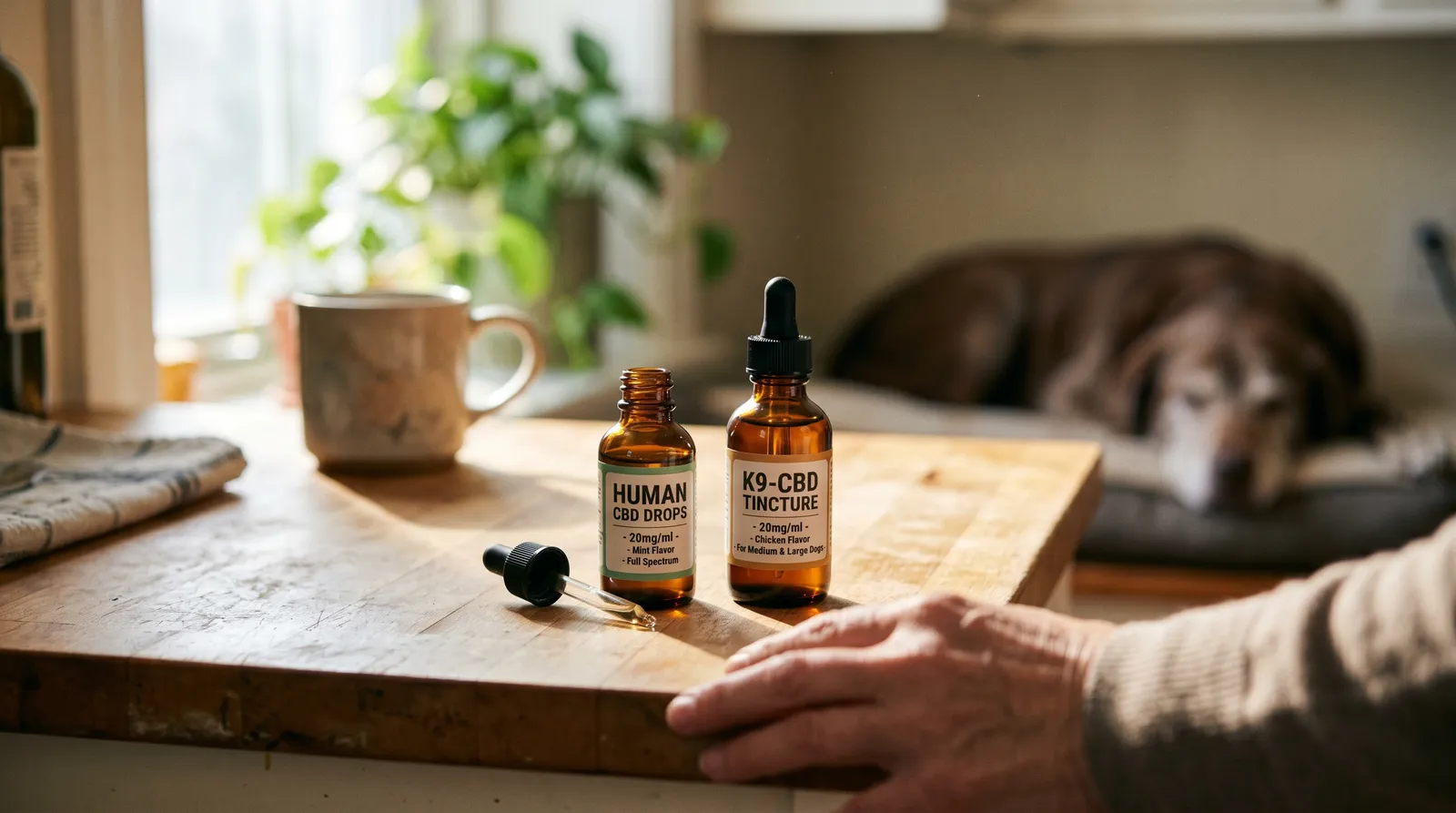
- Body-weight scaling is non-linear. Veterinary pharmacology uses allometric scaling, not simple division. A 10 kg dog is not "one-seventh of a 70 kg human" for dosing purposes.
- Enzyme profiles differ. Dogs express different ratios of cytochrome P450 isoforms. The rate at which they activate, metabolise, and clear CBD is species-specific.
- Carrier oils matter differently. MCT oil (coconut-derived) is commonly used in human CBD products. Dogs tolerate MCT in small amounts, but high-fat carriers can trigger pancreatitis in susceptible breeds. Hemp-seed oil carriers present their own digestibility profile in dogs.
- Terpene and minor cannabinoid content varies. Full-spectrum human products contain terpenes and trace THC that have been formulated for human tolerability. Dogs are significantly more sensitive to THC than humans — the CB1 receptor density in the canine brain is higher, and THC toxicity in dogs is well-documented in veterinary emergency literature.
- Flavourings and sweeteners. Some human CBD products contain xylitol (toxic to dogs), artificial sweeteners, or other additives not tested for canine safety.
The veterinary studies listed above used purpose-manufactured, lab-analysed CBD extracts with known cannabinoid profiles — not consumer products pulled off a shelf. That distinction matters enormously when interpreting the results.

One thing we have noticed over the years is how often people assume that "natural" means "safe for every species." It does not. Grapes are natural. Chocolate is natural. Both can kill a dog. The same caution applies to any plant-derived supplement, CBD included. We are honest about the fact that our expertise is in human wellness products — for anything involving your pet, a veterinarian is the only credible source of guidance.
How Veterinary CBD Compares to Human CBD Research
Human CBD research is further along than canine research, but not by as much as people assume. The only FDA-approved CBD medicine is Epidiolex (for specific paediatric epilepsy syndromes), and that approval rested on multi-hundred-patient randomised controlled trials — a scale that veterinary research has not yet approached. In the EU, the EMCDDA (now the EUDA) has published monitoring reports on cannabinoid use trends in humans, but equivalent systematic surveillance for veterinary use does not exist. The Beckley Foundation has supported human cannabinoid research for decades, yet veterinary applications have not been part of their programme. The gap between human and veterinary evidence is not just about species biology — it is about funding, infrastructure, and institutional priority.
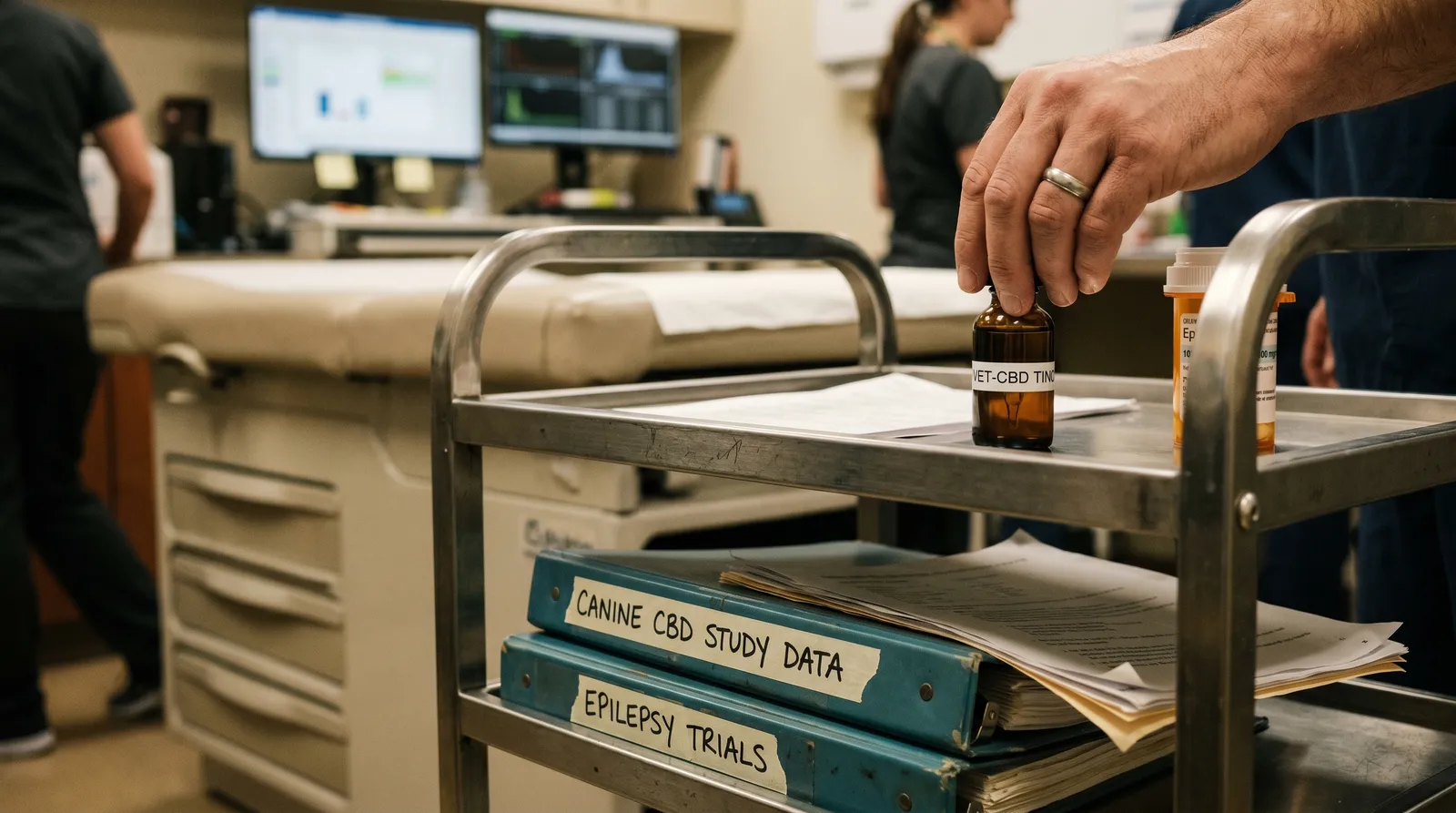
The Framework Picture
In the EU, CBD products for animals occupy a murky space. Human CBD falls under the novel food framework (EU 2015/2283), which at least provides a defined pathway — however slow — toward authorisation. Veterinary CBD products would need to navigate either the feed-additive rules or the veterinary medicinal products directive, depending on how they are positioned. As of early 2026, no CBD product has received EU-wide authorisation as a veterinary feed additive or veterinary medicine.

In the United States, the situation is similarly unsettled. The FDA has issued multiple warning letters to companies marketing CBD products for pets with unsubstantiated health claims. The AVMA (American Veterinary Medical Association) has published position statements acknowledging the research interest while stopping short of endorsing clinical use.
The practical result is that most CBD products marketed for dogs are sold as supplements or "wellness" products without species-specific safety or efficacy data on the label — which is exactly why a veterinarian's involvement is not optional.
What to Discuss With a Vet
The first step before giving any CBD product to a dog is a veterinary consultation. If you are considering CBD for a dog, the conversation with your veterinarian should cover:
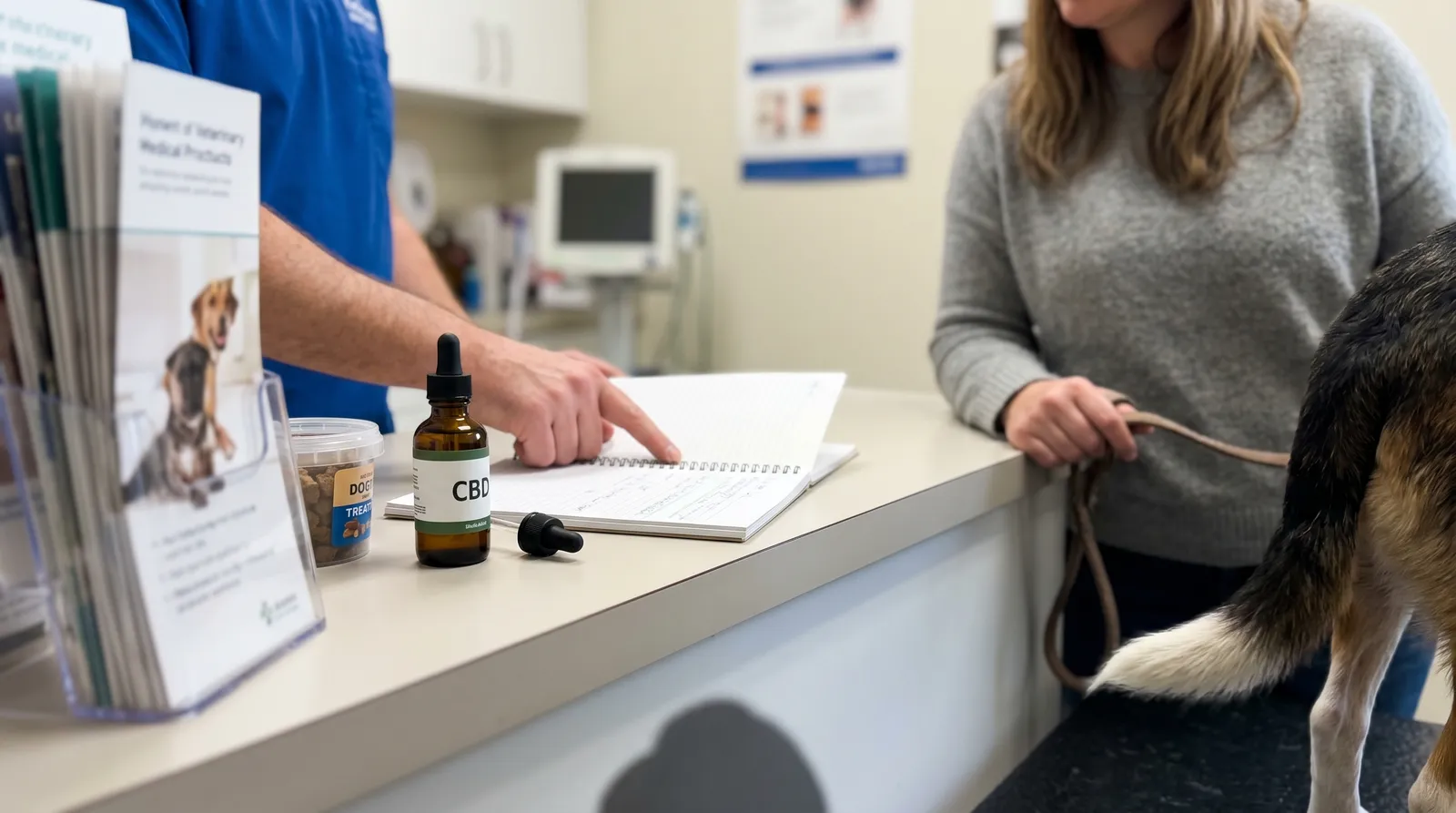
- The dog's current medications and whether CBD-drug interactions are a concern (especially anti-epileptics, NSAIDs, and sedatives)
- Baseline liver enzyme values (ALP, ALT) so changes can be tracked
- The specific product's certificate of analysis (COA) — THC content, cannabinoid profile, contaminant testing
- Whether the product was formulated for animals or repurposed from a human line
- A monitoring schedule — the studies that tracked safety did so with regular blood work, not just behavioural observation
A vet who is not familiar with the current literature may not have strong opinions either way. That is not a failure — it reflects the state of the evidence. Printing out the Gamble (2018) or McGrath (2019) abstracts and bringing them to the appointment is a reasonable starting point for the conversation.
---Important: This article is consumer education and is not medical advice. CBD products are food supplements, not medicines. Research on CBD is ongoing and evidence remains limited or mixed for many topics. Talk to your doctor before use if you are pregnant, breastfeeding, taking medication, scheduled for surgery, or living with a health condition. Keep CBD products out of reach of children and pets.
This article has been reviewed for factual and editorial accuracy by Toine Verleijsdonk (Cibdol brand manager) and Joshua Askew (Editorial Director). It has NOT been reviewed by a licensed medical practitioner and does not constitute medical advice.
References
- Gamble, L.-J., Boesch, J. M., Frye, C. W., et al. (2018). Pharmacokinetics, safety, and clinical efficacy of cannabidiol treatment in osteoarthritic dogs. Frontiers in Veterinary Science, 5, 165. PMID: 30083539. DOI: 10.3389/fvets.2018.00165
- McGrath, S., Bartner, L. R., Rao, S., et al. (2019). Randomized blinded controlled clinical trial to assess the effect of oral cannabidiol administration in addition to conventional antiepileptic treatment on seizure frequency in dogs with intractable idiopathic epilepsy. Journal of the American Veterinary Medical Association, 254(11), 1301–1308. PMID: 31067185. DOI: 10.2460/javma.254.11.1301
- Bartner, L. R., McGrath, S., Rao, S., et al. (2018). Pharmacokinetics of cannabidiol administered by 3 delivery methods at 2 different dosages to healthy dogs. Canadian Journal of Veterinary Research, 82(3), 178–183. PMID: 30083541
- Deabold, K. A., Schwark, W. S., Wolf, L., et al. (2019). Single-dose pharmacokinetics and preliminary safety assessment with use of CBD-rich hemp nutraceutical in healthy dogs and cats. Animals, 9(10), 832. PMID: 31412763. DOI: 10.3390/ani9100832
- Morris, E. M., Kitts-Morgan, S. E., Spangler, D. M., et al. (2020). The impact of feeding cannabidiol (CBD) containing products on canine response to a noise-induced fear response test. Frontiers in Veterinary Science, 7, 569565. PMID: 33227975. DOI: 10.3389/fvets.2020.569565
- Brioschi, F. A., Di Cesare, F., Gioeni, D., et al. (2020). Oral transmucosal cannabidiol oil formulation as part of a multimodal analgesic regimen: effects on pain relief and quality of life improvement in dogs affected by spontaneous osteoarthritis. Animals, 10(9), 1505. PMID: 32051689. DOI: 10.3390/ani10091505
- Millar, S. A., Stone, N. L., Yates, A. S., et al. (2018). A systematic review on the pharmacokinetics of cannabidiol in humans. Frontiers in Pharmacology, 9, 1365. DOI: 10.3389/fphar.2018.01365
- EMCDDA (now EUDA). European Drug Report series. Available at: emcdda.europa.eu
Last updated: April 2026
Frequently Asked Questions
8 questionsIs there a veterinary-approved CBD product for dogs in the EU?
Can I give my dog the same CBD oil I use myself?
What dose of CBD was used in the main dog studies?
Does CBD interact with my dog's existing medication?
Are cats and dogs equally suited to CBD?
What side effects has veterinary research found in dogs given CBD?
How long were the veterinary CBD studies on dogs actually conducted?
Why did some dogs in CBD studies show elevated liver enzymes (ALP)?
About this article


Luke Sholl has been writing about cannabis, cannabinoids, and the broader benefits of nature since 2011, and has personally grown cannabis in home grow tents for more than a decade. That first-hand cultivation experience
This wiki article was drafted with AI assistance and reviewed by Luke Sholl, External contributor since 2026. Editorial oversight by Toine Verleijsdonk.
Medical disclaimer. This content is for informational purposes only and does not constitute medical advice. Consult a qualified healthcare provider before use of any substance.
Last reviewed April 25, 2026
Related Articles

Pinene Alpha and Beta: Aroma, Chemistry & Vaporisation Guide
Pinene is a bicyclic monoterpene occurring as two isomers — α-pinene and β-pinene — and ranks as the most abundant terpene in the plant kingdom.

CBD and Recovery: What the Research Actually Shows
CBD and recovery is a research topic spanning exercise-induced muscle damage, sleep quality, and perceived soreness. As McCartney et al.

CBD Pet Dosing Vet Consultation: Prepare for Your Visit
Veterinary CBD dosing is not a scaled-down version of human dosing — dogs and cats metabolise cannabidiol through different enzymatic pathways and at…

CBD for Cats Veterinary Considerations: Feline Research, Safety and Guidance
Cats metabolise cannabinoids differently from dogs and humans, lacking key glucuronidation enzymes that affect CBD clearance. Deabold et al.

EU Novel Food Regulation CBD: Country Status, EFSA Safety & Guide
EU novel food regulation CBD is a policy framework under EU rule 2015/2283 that classifies cannabidiol extracts as a novel food, requiring safety assessment…
CBD Topical Creams Medical Grade: CE-Marked Class I Explained
CBD topical creams deliver cannabidiol directly to the skin rather than the bloodstream.
Humulene Effects and Aroma Profile | Terpene Guide
Humulene (α-humulene) is a monocyclic sesquiterpene named after Humulus lupulus — hops.

Terpene Entourage Effect: Current Evidence Reviewed
The terpene entourage effect proposes that cannabis terpenes modulate cannabinoid activity, producing different outcomes than isolated compounds alone.

CBD and Skin Conditions: What Research Shows
Cannabidiol (CBD) interacts with the endocannabinoid system expressed in human skin — including CB1 and CB2 receptors on keratinocytes, sebocytes, and…