Roll Seda Sustainable Tips — Biodegradable Filters with Amaranth Seeds
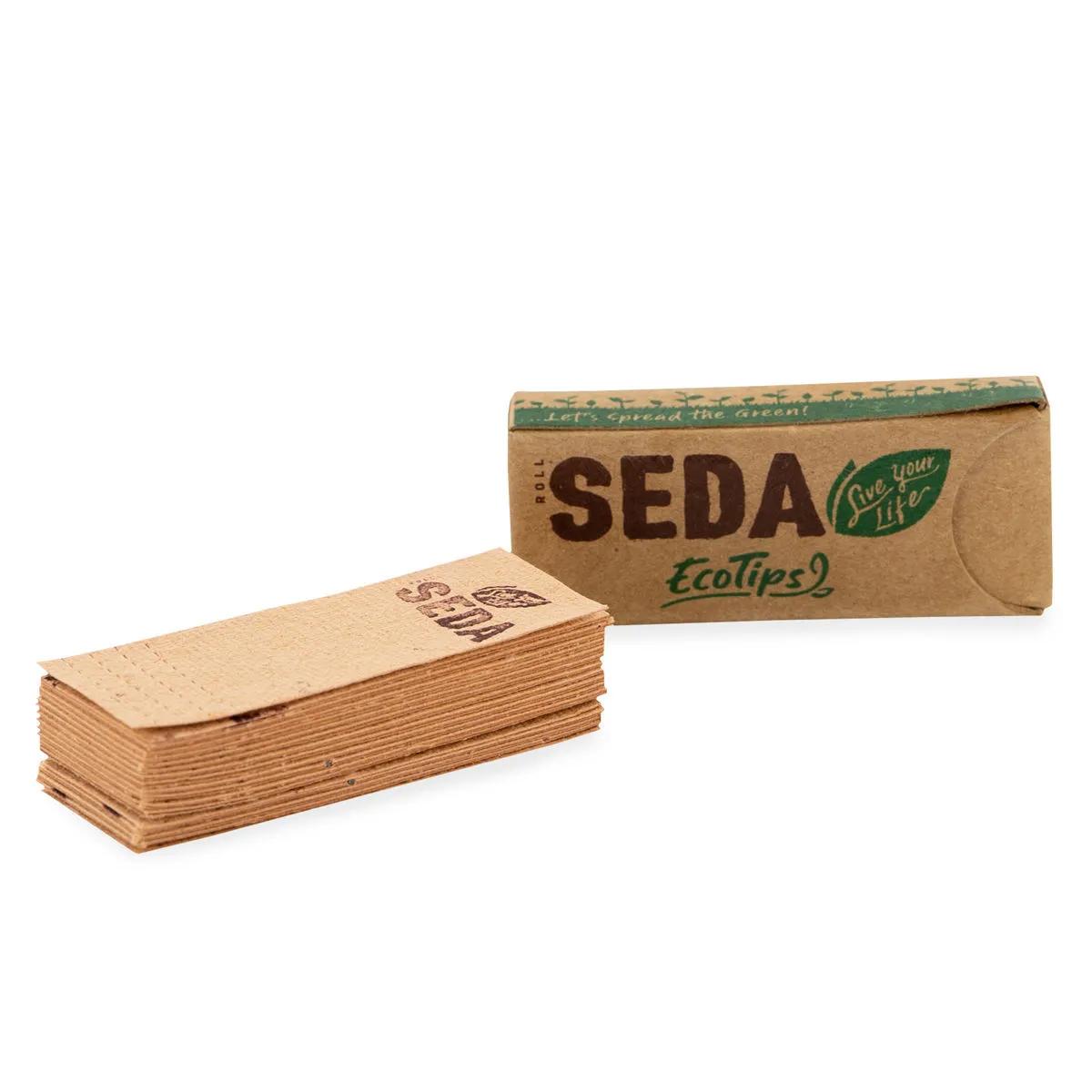
Roll Seda Sustainable Tips are biodegradable rolling filters made from fruit pulp and cotton fibres, with amaranth seeds tucked inside each tip. Toss your used filter into soil instead of a bin, and those seeds can actually sprout into a plant. It is a small, clever twist on something you use every day — a filter tip that gives something back once you are done with it.
| Spec | Value |
|---|---|
| Brand | Roll Seda |
| Product Type | Filter Tips (Roach) |
| Dimensions | 53 x 22 mm |
| Materials | Fruit pulp, cotton fibres, recycled paper |
| Special Feature | Embedded amaranth seeds |
| Bleaching | Unbleached |
| Chemical Additives | None |
| Perforation | Pre-perforated |
| Biodegradable | Yes — 100% |
| SKU | HS1208 |
Complete your rolling setup with Roll Seda's matching sustainable rolling papers — same fruit-pulp construction, same seed concept. Pair with a pocket-sized rolling tray to keep things tidy on the go.
Why These Sustainable Filter Tips Actually Matter
Most filter tips end up on the pavement, in a gutter, or wedged between sofa cushions. They sit there for months. Standard card tips are not the worst offenders — that honour goes to cellulose acetate cigarette filters — but they are still waste, and they still pile up. Roll Seda took a different approach: make the entire tip from fruit pulp, cotton fibres, and entirely recycled paper, skip the bleach and chemicals, and then hide amaranth seeds inside.
The result is a filter that breaks down naturally in soil. The amaranth seeds are the genuinely interesting part. Amaranth is a hardy, fast-growing plant — it has been cultivated for thousands of years across Central and South America. If your discarded tip lands in even half-decent soil with some moisture, there is a real chance you will see a sprout. We have had customers send us photos of amaranth plants growing from old tips tossed into garden beds. Does every single one germinate? No. But the ones that do are a proper conversation starter.
One honest limitation: these tips are fractionally softer than a standard card roach. The fruit pulp and cotton fibre blend has a different feel in your fingers — slightly more textile, less rigid. If you are used to stiff card tips, the first roll might feel a little different. After two or three, you will not notice. The pre-perforation helps enormously — it folds cleanly without cracking or going limp.
How to Use Roll Seda Sustainable Tips
- Tear one tip along the pre-perforated line. The 53 x 22 mm size is standard — it fits any regular rolling paper without trimming.
- Fold the first few millimetres into a concertina (zigzag) shape. Three or four folds gives you a good internal structure that blocks loose material without restricting airflow.
- Roll the remaining strip tightly around the folded section. The cotton-fibre blend grips well, so it holds its shape once rolled.
- Slot the finished tip into the end of your paper before rolling, or insert it after — whichever method you prefer. The unbleached material will not affect taste.
- After use, toss the filter into a plant pot, garden bed, or any patch of soil. Press it about 1 cm below the surface, give it a splash of water, and see what happens over the next couple of weeks.
What Makes Amaranth a Good Choice
Amaranth is not some delicate ornamental that needs a greenhouse and daily attention. It is a resilient grain plant that grows in poor soil, tolerates drought, and produces edible leaves and seeds. The genus includes around 60 species, and it has been a staple food crop in Mexico and Peru for over 8,000 years. Roll Seda chose it specifically because it germinates easily and survives in a wide range of climates across Europe. A discarded filter in a Spanish park has roughly the same chance of sprouting as one in a Dutch back garden.
The seeds inside each tip will not affect your smoke. They are tiny — amaranth seeds measure about 1 mm in diameter — and they are enclosed within the fibre matrix of the tip. No taste, no smell, no combustion issues. Roll Seda designed the tip so the seeds only activate when exposed to moisture and soil, not heat.
Frequently Asked Questions
Do the amaranth seeds affect the taste of my smoke?
No. The seeds are about 1 mm in diameter and embedded within the fruit pulp and cotton fibre layers. They do not release any flavour or aroma during use. The tip is also unbleached and free of chemicals, so the taste is neutral.
Will the seeds actually grow into a plant?
They can, yes. Amaranth is a hardy species that germinates readily in moist soil. Push the used tip about 1 cm below the surface, water it, and give it some light. Not every seed will sprout — germination depends on soil quality, temperature, and moisture — but many do.
How do Roll Seda Sustainable Tips compare to standard card roach tips?
They are slightly softer due to the fruit pulp and cotton fibre construction. The pre-perforation compensates by giving clean fold lines. Functionally, they work the same — 53 x 22 mm is a standard size. The difference is that these break down in soil within weeks instead of sitting around for months.
Are these tips really 100% biodegradable?
Yes. The materials are fruit pulp, cotton fibres, and recycled paper. No bleach, no synthetic coatings, no plastic. In compost or moist soil, they decompose fully. The amaranth seeds are a natural addition that simply germinates as the tip breaks down.
What size rolling papers work best with these tips?
At 53 x 22 mm, they fit standard king-size and 1 1/4 papers without any trimming. They also work with slim papers — just fold a tighter concertina for a narrower diameter. The pre-perforated lines make it easy to adjust.
Can I compost these tips instead of planting them?
Absolutely. They break down in a standard compost bin just like any other plant-based material. The amaranth seeds may sprout in your compost heap, which is not a bad thing — amaranth leaves are edible and the plant is easy to pull if you do not want it.
Last updated: April 2026