
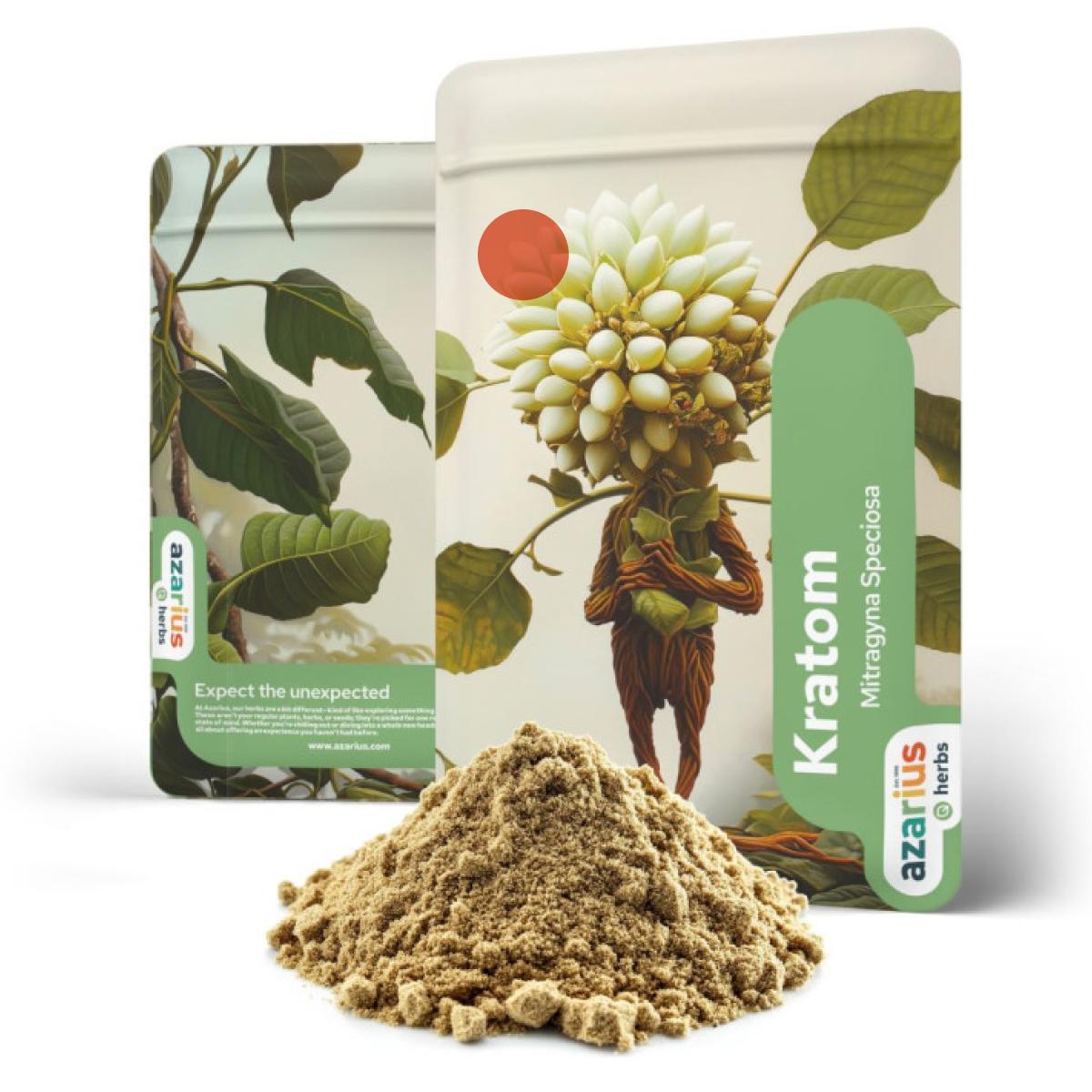
Kratom Powder
25g Maeng Da Powder
by Azarius
Buy more, pay less
Kratom Powder — Finely Ground Mitragyna Speciosa for Easy Dosing
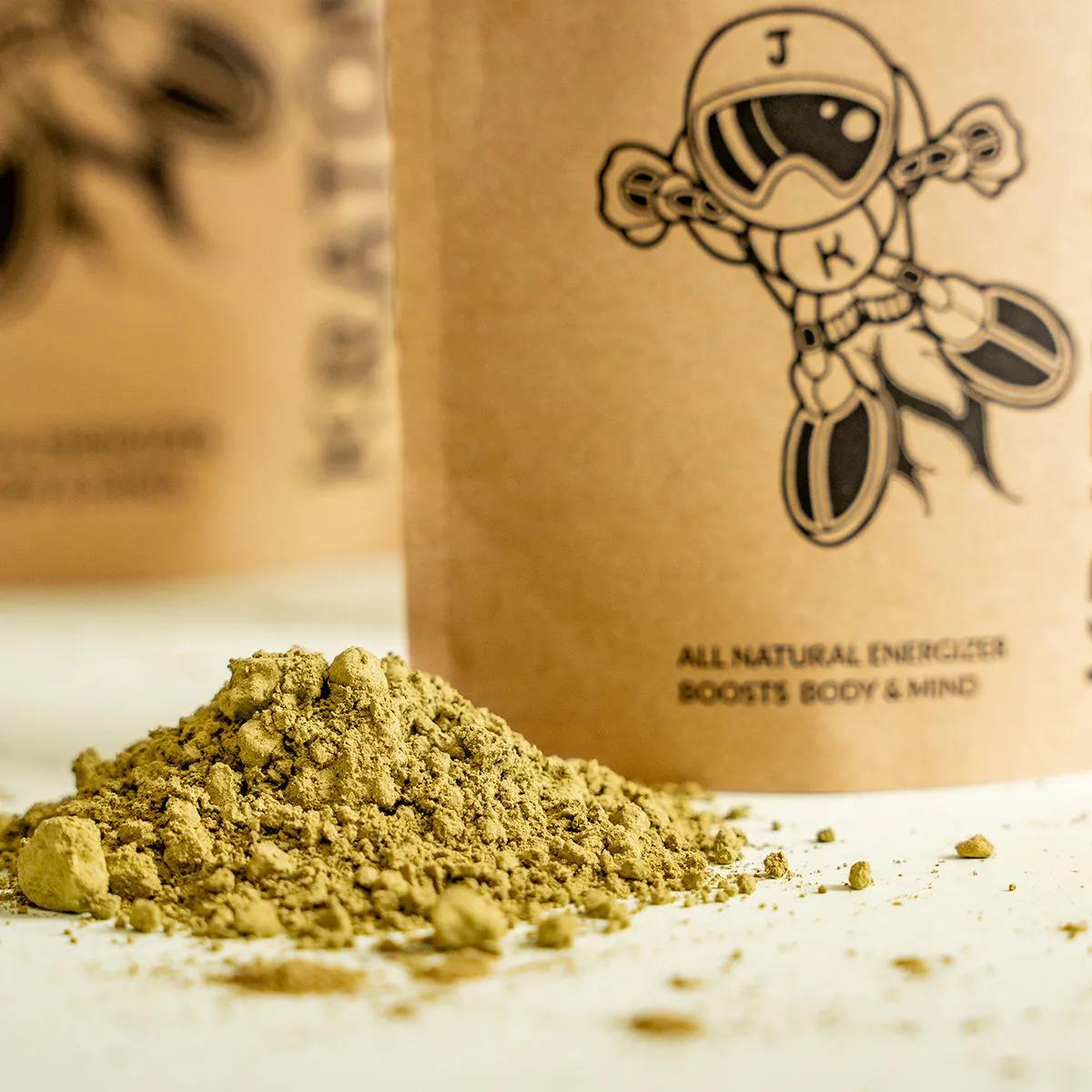
Kratom powder is a finely milled preparation of dried Mitragyna speciosa leaf that dissolves readily into liquids, making it the most versatile way to work with this Southeast Asian botanical. Our Azarius Herbs house blend is lab-tested for purity, ground to a consistent fine texture, and comes in a single 25g pouch across three vein colours — White, Green, and Red — so you can pick the one that matches what you're after.
Safety note: Kratom is contraindicated during pregnancy and breastfeeding — neonatal abstinence syndrome has been documented in case literature (Eldridge et al., 2018). Case reports also link kratom use, particularly higher doses and concentrated extracts, to hepatotoxicity (Kapp et al., 2011). Anyone with liver disease, on hepatotoxic medication, or who consumes alcohol regularly should discuss kratom use with a clinician before starting.
Which Colour Should You Pick?
All three come from the same finely ground Azarius Herbs batch — only the vein colour differs. White is the one people usually reach for earlier in the day; it's the colour most commonly described as more energising and focus-oriented. Red sits at the other end, more often picked for winding down in the evening. Green is the middle ground — a moderate, general-purpose option if you're not sure which way you lean. None of this is a guarantee: these are broad, user-reported tendencies rather than a strict pharmacological rule, and batch-to-batch variation is real. If you genuinely can't decide, picking up all three and comparing them side by side is the most reliable way to find your preference.
| Specification | Detail |
|---|---|
| Botanical name | Mitragyna speciosa |
| Brand | Azarius Herbs |
| Form | Finely ground powder |
| Pack size | 25g |
| Available colours | White, Green, Red vein |
| Key alkaloids | Mitragynine, 7-hydroxymitragynine |
| Origin | Southeast Asia |
| Lab tested | Yes — purity and contaminant screening |
| Storage | Cool, dry, away from direct sunlight |
| Shelf life | 12+ months when stored properly |
Oblate discs make kratom powder far more pleasant to take — wrap your dose in a thin starch film and swallow it whole, bypassing the bitter taste entirely. If you prefer a measured approach every time, a precision milligram scale takes the guesswork out of dosing.
Why Kratom Powder Is the Most Practical Format
Kratom powder gives you complete control over how much you take and how you take it. Capsules lock you into a fixed amount per cap — usually around 0.5g each — and you end up swallowing six or eight of them just to reach a moderate serving. With powder, you weigh out exactly what you want on a scale, tip it into a glass, and you're done in seconds.
The texture of this particular grind is genuinely fine. We're talking flour-consistency, not the gritty, half-ground leaf you sometimes get from less careful suppliers. That matters because coarser powder clumps in liquid, sticks to the sides of the glass, and generally makes the whole experience more annoying than it needs to be. This one disperses properly when you stir it into warm water or juice. It's not going to dissolve like sugar — kratom doesn't work that way — but it suspends evenly enough that you're not chewing through a sludgy layer at the bottom.
One honest note: kratom powder tastes bitter. Properly bitter. There's no getting around it. The flavour sits somewhere between very strong green tea and freshly cut grass, with an earthy, almost soil-like finish. Most people mix it with orange juice or grapefruit juice to mask the taste, and that works reasonably well. The oblate disc method (wrapping your dose in an edible starch film) sidesteps the flavour entirely. If taste is a dealbreaker for you, capsules might be a better fit — but you'll pay more per gram and lose the dosing flexibility.
How Kratom Powder Works — What Research Says About Mitragyna Speciosa
Kratom's primary active alkaloids are mitragynine and 7-hydroxymitragynine, which interact with opioid receptors in the brain. The ratio of these alkaloids varies depending on the source leaf, drying method, and growing conditions. Mitragynine typically makes up around 60–66% of the total alkaloid content in dried leaf material, with 7-hydroxymitragynine present in much smaller quantities — usually under 2%.
According to published research, kratom has been traditionally used in Southeast Asia for centuries, primarily by manual labourers who chewed the fresh leaves. The dried, powdered form is a more recent development tied to international availability. Research into Mitragyna speciosa suggests it may have dose-dependent properties — smaller amounts are associated with stimulating effects in traditional use, while larger amounts are traditionally associated with sedating effects. These observations come primarily from ethnobotanical surveys and preliminary pharmacological studies, not large-scale clinical trials.
We've been stocking kratom at the shop since the early 2000s, and the one thing we can tell you from two decades of customer conversations is that individual responses vary wildly. Two people can take the same amount from the same batch and report quite different experiences. That's not unusual for complex plant alkaloid profiles — there are over 40 identified alkaloids in Mitragyna speciosa leaf, and the interplay between them isn't fully understood yet.
How to Use Kratom Powder
- Weigh your dose. Use a digital scale accurate to 0.1g. Eyeballing with a teaspoon is unreliable — a loosely scooped teaspoon can hold anywhere from 1.5g to 3g depending on how finely the powder is ground and how tightly you pack it. Precision matters here.
- Choose your method. The three most common approaches: toss and wash (tip the powder into your mouth and chase with liquid — fast but unpleasant), stir into juice (orange or grapefruit juice masks the bitterness best), or wrap in an oblate disc (the cleanest option — zero taste, quick to swallow).
- Mix thoroughly if using liquid. Add your weighed powder to about 200ml of warm water or juice. Stir vigorously for 15–20 seconds. The powder won't dissolve fully, but it should form a reasonably even suspension. Drink promptly before it settles.
- Take on a light stomach. A heavy meal beforehand can delay onset significantly. A small snack 30–60 minutes before is fine and can reduce the chance of nausea.
- Wait at least 45 minutes before considering whether you feel anything. Onset with powder taken orally typically ranges from 20–45 minutes. Don't redose impatiently — that's the most common mistake we hear about behind the counter.
- Stay hydrated. Kratom can be dehydrating. Keep a bottle of water nearby and sip throughout. This is basic but makes a noticeable difference to how you feel afterwards.
From Our Counter: What 25 Years of Selling Kratom Has Taught Us
The single most common question we get in the Amsterdam shop is "which colour should I start with?" — and the honest answer is that vein-colour categories give you a rough starting direction, not a guarantee. Batch-to-batch variation within the same colour can be significant. This Azarius Herbs kratom powder now comes directly in all three — White, Green, and Red — so you don't have to hunt across separate listings to compare them. If you genuinely can't decide, our advice hasn't changed in 25 years: pick up a bag of each and see which one you reach for again.
The second most common mistake: people store their kratom in a clear jar on the kitchen windowsill. UV light degrades mitragynine over time. Keep it in the resealable pouch it arrives in, tucked away in a cupboard. Treated properly, this powder stays fresh for well over a year.
Kratom Powder vs. Capsules vs. Extracts — A Quick Comparison
| Format | Dosing flexibility | Taste | Onset speed | Cost per gram |
|---|---|---|---|---|
| Powder (this product) | Full control — weigh to 0.1g | Bitter, earthy | 20–45 minutes | Lowest |
| Capsules | Fixed per cap (~0.5g) | None | 30–60 minutes (capsule dissolves first) | Higher |
| Extracts | Concentrated — smaller amounts needed | Varies | 15–30 minutes | Highest per equivalent dose |
Powder is the best kratom format for people who want to dial in their dose precisely and don't mind the preparation ritual. Capsules are better if you can't stand the taste and don't need fine-grained control. Extracts are for experienced users who know exactly what they're after — they're more concentrated, which means less room for error.
White vs. Green vs. Red Kratom Powder — A Quick Comparison
| Vein colour | Commonly reported character | Typical time of use | Evidence level |
|---|---|---|---|
| White | More stimulating, described as energising and focus-oriented | Morning, daytime tasks | Anecdotal / user-reported |
| Green | Balanced, described as a middle ground | Daytime, general-purpose | Anecdotal / user-reported |
| Red | More sedating, described as calming | Evening, winding down | Anecdotal / user-reported |
White is the better starting pick if you're after something more energising for daytime use. Red is the one most people reach for in the evening. Green splits the difference if you'd rather not commit to either extreme on your first order. Treat this as a rough starting direction rather than a rule — the amount you take shapes the experience more reliably than the colour on the label, and no two batches behave identically.
Safety, Interactions, and What to Watch Out For
Kratom interacts with a number of medications. If you're taking anything that affects the central nervous system — antidepressants, benzodiazepines, opioid medications, or sedatives — combining them with kratom is a bad idea. The interaction profiles aren't fully mapped in clinical literature, but the risk of compounding sedative effects is real and well-documented in case reports.
Nausea is the most commonly reported side effect, particularly at higher amounts. Constipation is the second. Both are dose-dependent — the more you take, the more likely they become. Staying hydrated and keeping doses moderate significantly reduces the chance of either.
Do not combine kratom with alcohol. The combination increases nausea, dizziness, and sedation disproportionately. We've heard enough stories over the years to be blunt about this one: it's not worth it.
Frequently Asked Questions
How does kratom powder work?
The active alkaloids — primarily mitragynine and 7-hydroxymitragynine — are absorbed through the digestive tract and interact with opioid receptors. Onset is typically 20–45 minutes when taken orally as powder mixed into liquid. Effects and duration depend heavily on the amount taken and individual metabolism.
Does kratom powder expire?
Not quickly, but it does degrade. Stored in a sealed pouch away from light, heat, and moisture, kratom powder maintains its alkaloid profile for 12 months or more. Exposure to UV light and humidity accelerates breakdown. If it smells musty or looks discoloured, replace it.
What is the best way to take kratom powder?
Stirred into orange juice is the most popular method — the citric acid helps mask the bitterness and may aid alkaloid absorption. Oblate discs are the cleanest option: wrap your weighed dose in the edible film, dip in water, and swallow. Toss and wash works but takes some practice to avoid coughing.
How much kratom powder fits in a teaspoon?
Roughly 2–2.5g for a level teaspoon of finely ground powder, but this varies with grind consistency and how tightly you pack it. A digital scale accurate to 0.1g costs under ten euros and removes all guesswork. We'd always recommend weighing over scooping.
Can I make tea with kratom powder?
Yes. Simmer (don't boil) your dose in water for 15–20 minutes, strain through a fine mesh or coffee filter, and add honey or lemon to taste. Some alkaloid content may be lost to heat, so tea tends to feel slightly milder than the same amount taken directly. Many people prefer it for the gentler onset.
How should I store kratom powder?
Keep it in the resealable pouch, inside a cupboard or drawer — somewhere cool, dark, and dry. Avoid the fridge; condensation when you open and close the bag introduces moisture. A sealed glass jar in a dark spot works well for larger quantities.
Is kratom powder the same as kratom extract?
No. Powder is simply dried, ground leaf — the full spectrum of plant material. Extracts concentrate specific alkaloids through a solvent or water-based process, resulting in a much more potent product gram-for-gram. Powder is better suited to newcomers because it's easier to dose conservatively.
What's the difference between White, Green, and Red kratom powder?
The names refer to the colour of the leaf vein at harvest. White is generally reported as more stimulating, red as more calming, and green as a balance between the two — but this is based on user reports and vendor convention rather than confirmed lab differences in alkaloid content between colours. All three are made from the same Mitragyna speciosa leaf and ground to the same Azarius Herbs standard; only the vein colour and reported character differ.
Last updated: July 2026
Related products
You might also like
Medical disclaimer. This content is for informational purposes only and does not constitute medical advice. Consult a qualified healthcare provider before use of any substance.