
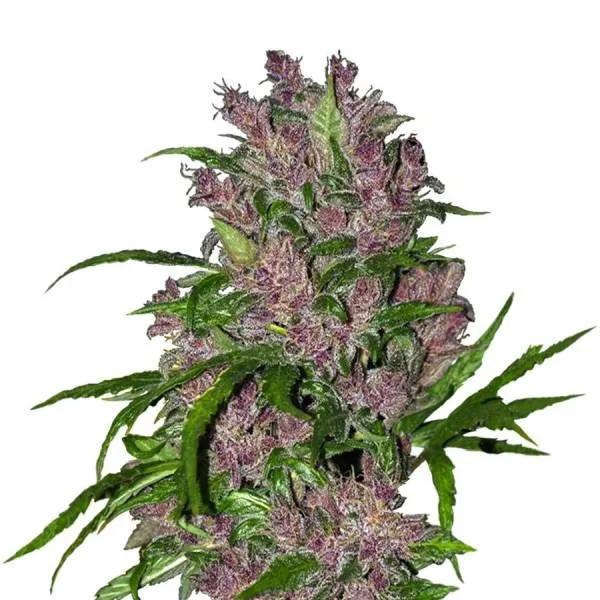
Purple Bud Autoflower Cannabis Seeds
Purple Bud Autoflower is a feminized autoflowering cannabis seed that blends Hindu Kush mountain genetics with Jamaican sativa and Californian medical Kush into one visually striking, indica-leaning hybrid. Bred by White Label — a seed bank with decades of stabilisation work behind them — this is the kind of seed that rewards patience with dense, trichome-frosted flowers and unmistakable purple hues. From seed to harvest in 13-14 weeks, no light cycle changes needed.
Pack Sizes
| Pack | Seeds | SKU |
|---|---|---|
| Standard | 3 feminized seeds | CSWL0025 |
| Value | 5 feminized seeds | CSWL0051 |
Go with the 5-pack if you want to run a few phenos side by side and pick your favourite. With autoflowers, you can stagger your starts and keep a rolling harvest going in the same tent.
Why Purple Bud Autoflower Seeds Stand Out
The breeding behind Purple Bud Autoflower is genuinely layered, and you can tell from the results. White Label started with an Afghanica-Jamaican sativa cross — already a potent combination of resinous indica structure and sativa stretch. Then they folded in a Dutch double Kush and a Californian medical Kush, followed by careful back-breeding to the original parents. The result is a stabilised offspring that grows with obvious indica structure — stocky, bushy, thick-stemmed — but carries enough sativa influence to push taller than your typical autoflower.
The purple colouration is the real head-turner. According to a 2023 study published by the NIH, cyanidin-3-rutinoside (keracyanin) has been identified as the major anthocyanin in Cannabis sativa vegetative and floral tissue (PMC, 2023). Those anthocyanins are what give the buds and leaves their deep violet and plum tones, especially when night temperatures drop during the final weeks of flowering. It is not just cosmetic either — anthocyanins are a class of flavonoids with antioxidant properties that contribute to the overall phytochemical profile of the plant.
We have stocked a lot of purple strains over the years. Most of them are either all show and no substance, or they only colour up if you stress the plant half to death. Purple Bud Autoflower is different: the genetics are stable enough that you will see colour expression under normal growing conditions. Not every single calyx will turn purple — genetics are genetics — but the tendency is strong and consistent across phenotypes.
Growing Purple Bud Autoflower: What to Expect
Purple Bud Autoflower runs from germination to harvest in 13-14 weeks total, with the first 4-6 weeks dedicated to vegetative growth before calyxes appear. The flowering phase takes 8-10 weeks. Because it is an autoflower, the plant transitions on its own internal clock — no need to switch your light schedule from 18/6 to 12/12.
Here is what the growth cycle actually looks like week by week:
- Weeks 1-2: Germination and seedling stage. Keep humidity around 65-70% and light intensity low. The ruderalis genetics mean she will be small but vigorous from the start.
- Weeks 3-4: Vegetative growth accelerates. You will see the indica structure emerging — broad fan leaves, tight internodal spacing, a thick central stem. The sativa influence shows in slightly more stretch than a pure Afghanica auto.
- Weeks 4-6: First calyxes appear at the internodes. This is the transition period. Do not top or heavily train after this point — autoflowers do not have time to recover from high-stress techniques during flower.
- Weeks 6-10: Bud sites cluster along the main stem and branch tips. Dense clumps form as calyxes stack. Trichome production ramps up noticeably. You will start to see purple pigmentation creeping in, especially on sugar leaves and calyxes exposed to cooler night air.
- Weeks 10-14: Final swell and ripening. The buds pack on weight, the trichomes shift from clear to milky to amber. Aromas intensify — expect earthy, sweet, Kush-forward notes with a hint of something tropical from the Jamaican parentage. Harvest when trichomes are mostly milky with around 10-20% amber, depending on your preference.
Most of the bud action concentrates on the main cola and the tops of side branches. If you want to maximise yield, low-stress training (LST) during the first 3-4 weeks helps open up the canopy and expose more bud sites to light. Tie down the main stem gently — do not snap it — and let the side branches catch up.
Aroma, Trichomes, and What Makes Purple Bud Special
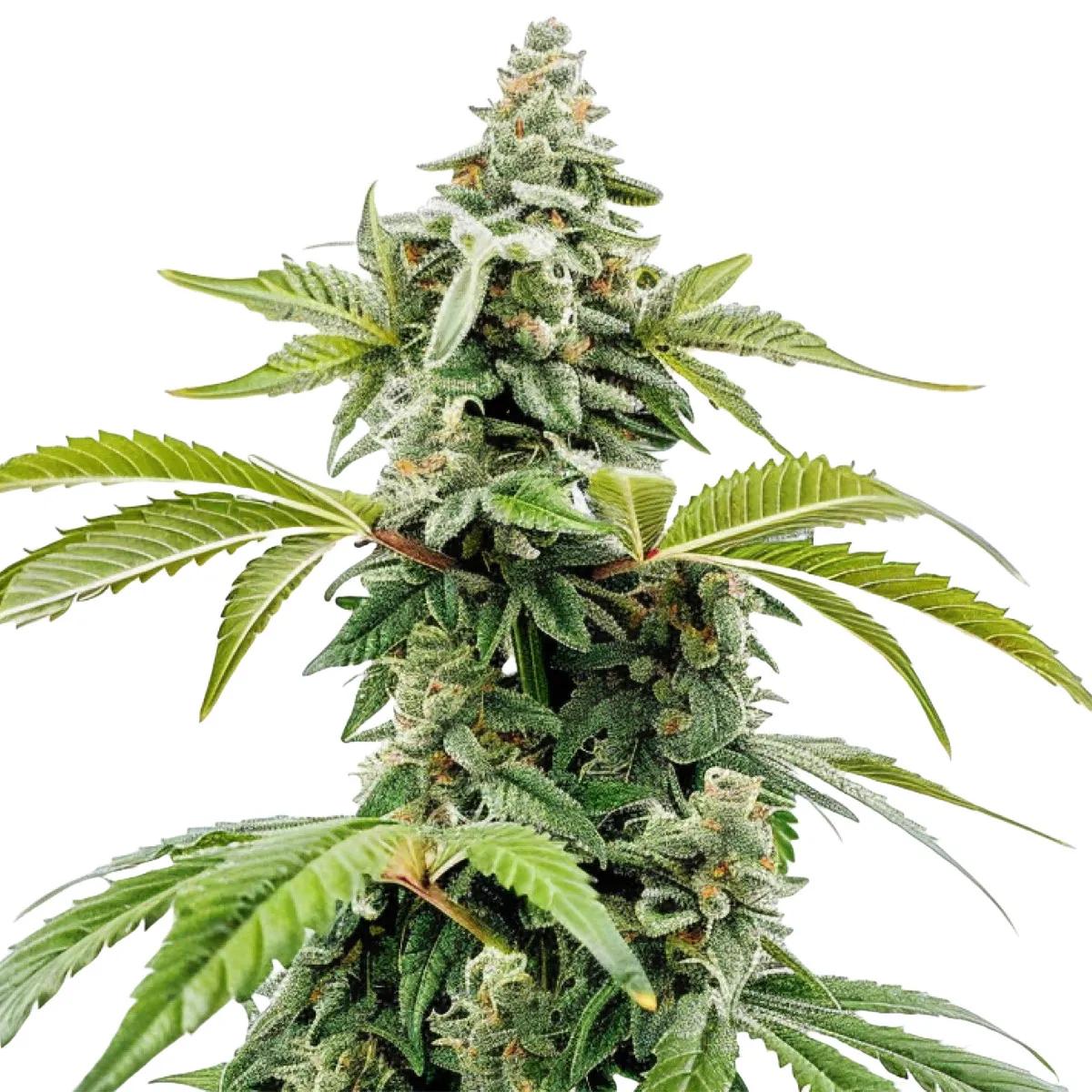
Pick up a mature Purple Bud Autoflower cola and the first thing you notice is the weight. These are not airy, loose flowers — the indica genetics pack the calyxes tight, and the generous trichome coverage gives the buds a sticky, almost crystalline feel between your fingers. Break one open and the aroma hits: deep, earthy Kush with sweet undertones and a faint spicy warmth that comes from the Afghani side. There is a subtle fruity note underneath, likely the Jamaican sativa contribution, that rounds out the overall nose.
The trichome density is worth mentioning specifically. According to research on cannabinomics in Cannabis sativa flowers, extraction and metabolomic analysis methodologies have gained relevance for obtaining and characterising the full range of compounds present in cannabis trichomes (PMC, 2025). What that means in practical terms: dense trichome coverage correlates with a richer cannabinoid and terpene profile. Purple Bud Autoflower delivers on that front.
The honest limitation? Autoflowers will never yield as much as a photoperiod version of the same genetics grown under a full vegetative cycle. If you are chasing maximum weight per plant, a photoperiod Purple Bud would be the way to go. But for speed, simplicity, and a plant that fits in a small tent or on a balcony without needing light schedule management, the autoflower version is hard to beat. We would pick this over most other purple autos on the market — the genetic stability is a genuine step above strains like Critical Purple Auto, which can be hit-or-miss on colour expression.
Purple Cannabis Genetics: The Science Behind the Colour
Purple cannabis strains get their colour from anthocyanins — water-soluble pigments that also give blueberries, red cabbage, and aubergines their characteristic hues. The specific anthocyanin identified in cannabis is cyanidin-3-rutinoside, according to research published via the NIH (PMC, 2023). This was the first formal identification of the specific anthocyanin compound in Cannabis sativa tissue.
Does purple colour mean stronger cannabis? No. The colour is a pigment expression, not a potency indicator. THC and CBD content are determined by the plant's cannabinoid synthesis pathways, which are genetically separate from anthocyanin production. A genome-wide association study on 174 drug-type cannabis accessions from the Canadian market identified major QTL (quantitative trait loci) associated with cannabinoid profiles (PMC, 2025), confirming that potency is driven by specific genetic markers rather than colour.
That said, the anthocyanins themselves are not inert. They belong to the flavonoid family, and research into cannabis phytochemistry — including nutrients and bioactive compounds from Cannabis sativa — has explored the broader nutritional and bioactive profile of the plant beyond just cannabinoids (PMC, 2025). The full picture of how these compounds interact is still being studied, but the presence of a diverse phytochemical profile is generally considered a positive trait in plant breeding.
| Specification | Detail |
|---|---|
| Seed Bank | White Label |
| Seed Type | Feminized Autoflower |
| Genetics | Afghanica x Jamaican Sativa x Dutch Double Kush x Californian Medical Kush x Ruderalis |
| Dominant Type | Indica-dominant hybrid |
| Total Grow Time | 13-14 weeks from seed |
| Vegetative Phase | 4-6 weeks (automatic transition) |
| Flowering Phase | 8-10 weeks |
| Light Schedule | No change required (autoflower) |
| Colour Expression | Purple/violet hues — anthocyanin-driven |
| Aroma Profile | Earthy Kush, sweet, spicy, subtle fruit |
| Bud Structure | Dense, heavy, trichome-rich |
| Available Packs | 3 seeds / 5 seeds |
Complete your grow setup: Purple Bud Autoflower thrives under consistent 18-20 hours of light throughout its entire lifecycle. Pair these seeds with a propagation kit to give your seedlings the best possible start, and consider a grow tent if you want to control temperature drops during late flowering — those cooler nights are what really bring out the purple pigmentation.
How to Grow Purple Bud Autoflower Seeds
- Germinate: Place seeds between damp paper towels on a plate, cover with a second plate, and keep at 22-25 degrees Celsius. Taproots typically emerge within 24-72 hours.
- Plant: Transfer germinated seeds taproot-down into small pots (0.5L) filled with light, airy soil or coco coir. Plant 1-2cm deep. Keep the medium moist but not waterlogged.
- Seedling care: Maintain 65-70% humidity and gentle light (CFL or LED at low intensity). Water sparingly — the root system is tiny at this stage.
- Transplant early: Move to the final container (7-15L) within the first 10-14 days. Autoflowers do not like root disturbance, so transplant before they become rootbound. Many growers skip this step entirely and start in the final pot.
- Vegetative phase: Run lights at 18-20 hours per day. Begin low-stress training once the plant has 4-5 nodes. Gently bend the main stem to open the canopy. No topping recommended for autoflowers.
- Flowering transition: Calyxes appear at internodes after 4-6 weeks. Continue the same light schedule — autoflowers do not need 12/12. Increase phosphorus and potassium in your feed as buds develop.
- Late flowering: In the final 2-3 weeks, drop night temperatures to 15-18 degrees Celsius to encourage purple pigmentation. Reduce humidity to 40-45% to prevent mould in the dense bud structure. Begin flushing with plain water 7-10 days before harvest.
- Harvest: Check trichomes with a jeweller's loupe or digital microscope. Harvest when most trichomes are milky-white with 10-20% amber. Cut, trim, and hang dry at 18-20 degrees Celsius and 55-60% humidity for 7-14 days.
Frequently Asked Questions
Is Purple Bud Autoflower an indica or sativa?
Indica-dominant hybrid. The Afghanica and Kush genetics give it a stocky, bushy structure with dense buds, but the Jamaican sativa parentage adds extra height and stretch compared to a pure indica autoflower. Expect a plant that grows taller than most indica autos while keeping that tight bud structure.
How long does Purple Bud Autoflower take from seed to harvest?
13-14 weeks total. The first 4-6 weeks are vegetative growth, with the remaining 8-10 weeks dedicated to flowering. Because it is an autoflower, the plant transitions automatically — no light schedule change required.
Will Purple Bud Autoflower actually turn purple?
The genetics are stable for purple colouration, and most phenotypes will show violet and plum tones, especially on calyxes and sugar leaves. Dropping night temperatures to 15-18 degrees Celsius during the final 2-3 weeks intensifies the colour. Not every plant will be uniformly purple, but the tendency is strong and consistent.
Does purple colour mean the cannabis is stronger?
No. Purple colouration comes from anthocyanin pigments, which are genetically separate from cannabinoid production. A 2025 genome-wide association study confirmed that cannabinoid profiles are driven by specific genetic markers, not colour expression. Purple buds can be potent, but the colour itself is not an indicator of strength.
What does Purple Bud Autoflower smell like?
Earthy and Kush-forward with sweet undertones and a subtle spicy warmth from the Afghani genetics. There is a faint fruity note underneath — likely the Jamaican sativa contribution — that adds complexity. The aroma intensifies significantly during the final weeks of flowering.
Can I grow Purple Bud Autoflower outdoors?
Yes. Autoflowers do well outdoors as long as they get plenty of direct sunlight. The ruderalis genetics make the plant hardy and adaptable. For the best purple colour expression outdoors, time your grow so the final flowering weeks coincide with cooler autumn nights.
Should I top Purple Bud Autoflower?
We would not recommend it. Autoflowers have a fixed lifecycle and limited recovery time. Topping removes the main growth tip and can stunt the plant during its short vegetative phase. Low-stress training — bending and tying down the main stem — is a safer way to improve light distribution and yield without risking stunted growth.
What size pot should I use for Purple Bud Autoflower?
7-15 litres is the sweet spot. Smaller pots restrict root development and limit final plant size. Larger pots (over 15L) are usually unnecessary for autoflowers since their lifecycle is too short to fill the extra root space. Many growers start directly in the final pot to avoid transplant stress.
Last updated: April 2026
Related products


You might also like
Medical disclaimer. This content is for informational purposes only and does not constitute medical advice. Consult a qualified healthcare provider before use of any substance.