
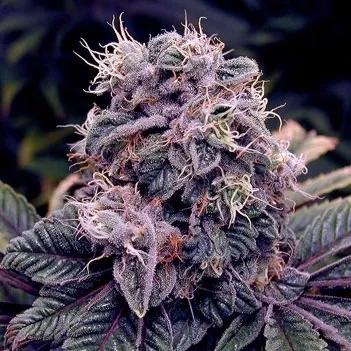
Pack: 5 seeds
Blue Berry Feminized Seeds by Spliff Seeds
Blue Berry feminized seeds are an Indica-dominant cannabis variety from Spliff Seeds that packs classic Blueberry genetics and Northern Lights Special into a compact plant topping out at just 50–80 cm indoors. You get three distinct phenotypes from a single pack of five feminized seeds — including one that throws proper purple leaves. Flowering wraps up in 8 weeks, and indoor yields sit between 450 and 550 g/m². If you want old-school blueberry flavour without old-school growing headaches, this is the one.
Why Blue Berry Seeds Deserve a Spot in Your Grow
Spliff Seeds didn't just slap "Blueberry" on a packet and call it a day. The genetics here trace back to the original Blueberry line — a three-way cross of Highland Oaxaca, Chocolate Thai, and Afghani #1 — pollinated by a Northern Lights Special male. That NL Special father is what keeps the plants short and the flowering time tight. The Blueberry mother brings the flavour, the resin, and those famous purple hues.
What makes Blue Berry genuinely interesting is the phenotype variation. From five feminized seeds, you can expect three distinct expressions: two lean Indica-dominant with dense, chunky bud structures, and one that shows more Sativa influence — slightly stretchier, a bit more open in the canopy. The showstopper is the pheno that develops deep purple leaves as flowering progresses. It's not just cosmetic either; that particular phenotype tends to carry the heaviest old-school Indica character.
The sweet blueberry taste is the headline act, backed by an earthy, fruity aroma that fills a room during the last weeks of flower. The buds come out heavy and coated in resin — the kind that sticks to your scissors and makes trimming a two-hour job. Worth it, though.
Blue Berry Seed Specifications
| Spec | Value |
|---|---|
| Seed Bank | Spliff Seeds |
| Seed Type | Feminized |
| Genetics | Blueberry (Highland Oaxaca x Chocolate Thai x Afghani #1) x Northern Lights Special |
| Dominant Type | Indica |
| Indoor Height | 50–80 cm |
| Outdoor Height | 1.5–2 m |
| Flowering Time | 8 weeks |
| Indoor Yield | 450–550 g/m² |
| Outdoor Yield | Up to 600 g per plant |
| Aroma | Earthy, fruity |
| Taste | Sweet blueberry |
| Phenotypes | 3 (two Indica-dominant, one Sativa-leaning) |
| Seeds per Pack | 5 feminized seeds |
Blue Berry Genetics: Three Phenotypes from One Pack
Most seed packs give you one expression. Blue Berry feminized seeds give you three. That's not marketing fluff — it's a direct result of the genetic distance between the Blueberry mother (landrace-derived, three distinct geographical origins) and the Northern Lights Special father. The offspring segregates into recognisably different plants.
Phenotype 1 — Classic Indica: Squat, bushy, stays around 50–60 cm. Dense golf-ball nugs stacked tight on short internodes. This one finishes fastest and packs the most resin per square centimetre. If you're growing in a small tent — say a 60x60 — this is the pheno you'll be happiest with.
Phenotype 2 — Purple Indica: Similar structure to Pheno 1 but develops striking purple colouration in the leaves during weeks 5–8 of flower. The purple comes from anthocyanin pigments triggered by cooler night temperatures, though this pheno will show colour even in warmer rooms. Old-school Indica effects at their heaviest. This is the one people photograph.
Phenotype 3 — Sativa-leaning: Slightly taller, more open branching, and a lighter bud structure. Still finishes in 8 weeks, but the extra stretch means you might want to top or train early if headroom is limited. The flavour profile on this one tends more toward the Thai and Oaxacan side — fruitier, less earthy.
You won't know which pheno you've got until around week 3 of flowering, when the bud structure and leaf shape start diverging. That's half the fun of running a full pack.
Growing Blue Berry Feminized Seeds Indoors
Blue Berry stays compact enough for small tents and cupboard grows, but it responds well to a proper setup. Here's how we'd run it:
- Germinate using the paper-towel method or directly in a small pot of lightly moistened seedling soil. Taproots typically emerge within 24–72 hours.
- Transplant into your final container once the seedling has two sets of true leaves. A 7–11 litre pot is plenty for a plant that tops out at 80 cm.
- Veg for 2–3 weeks under 18/6 lighting. These plants don't need a long vegetative phase — they're naturally compact and will fill out during the stretch.
- Flip to 12/12 when plants are 25–35 cm tall. Expect roughly double that height by harvest, depending on phenotype.
- Feed moderately during flower. Blue Berry isn't a heavy feeder, and overfeeding shows up fast as burnt tips on those broad Indica leaves. Back off nitrogen after week 2 of flower and increase phosphorus and potassium.
- Monitor humidity closely from week 5 onward. Dense Indica buds in a compact canopy are a recipe for bud rot if relative humidity creeps above 50%.
- Harvest at 8 weeks of 12/12. Trichomes should be mostly milky with a few turning amber. The Sativa-leaning pheno may benefit from an extra 3–5 days.
- Dry slowly in a dark room at 18–20°C and 55–60% humidity for 7–10 days, then cure in glass jars for at least two weeks. The blueberry flavour develops properly during the cure — rush it and you'll miss the best part.
Indoor vs Outdoor Blue Berry Yield Comparison
| Growing Environment | Height | Yield | Flowering Time |
|---|---|---|---|
| Indoor (controlled) | 50–80 cm | 450–550 g/m² | 8 weeks |
| Outdoor (full season) | 1.5–2 m | Up to 600 g per plant | Late September / early October |
Outdoors, Blue Berry stretches to 1.5–2 metres and can push up to 600 g per plant in a good season. The compact indoor structure opens up significantly with direct sunlight and unlimited root space. If you're growing outdoors in a northern European climate, the 8-week flowering time means you're harvesting before the worst of the autumn rain — a genuine advantage over 10- or 12-week varieties that leave you sweating through October.
Flavour and Aroma: What Blue Berry Actually Tastes Like
The name isn't decorative. Blue Berry genuinely tastes like sweet blueberries — not "vaguely fruity" or "berry-adjacent," but a clear, recognisable blueberry sweetness that coats your palate. It's the kind of flavour that makes people ask what you're smoking. Underneath the fruit, there's an earthy base note that grounds the sweetness and stops it becoming one-dimensional. Through a clean glass pipe or a decent vaporiser, the terpene profile really opens up — you get that initial burst of berry followed by a warm, almost baked-goods finish on the exhale.
The aroma during the last three weeks of flower is intense. Earthy and fruity, with the blueberry sweetness becoming more pronounced as trichomes mature. If you're growing without a carbon filter, your neighbours will know about it. Fair warning.
Honest Limitations
No seed is flawless, and we'd rather tell you upfront than have you find out the hard way. Blue Berry's compact, dense bud structure is great for yield-per-square-metre, but it does make the plants more susceptible to mould in humid conditions. If your grow space runs above 55% RH during late flower, invest in a dehumidifier or at least increase airflow through the canopy. The phenotype variation is a plus if you enjoy variety, but if you're after uniformity — say you're filling a SOG setup and want identical plants — the three-pheno spread can be a headache. You might get one Sativa-leaner towering over two squat Indicas. Plan your canopy management accordingly.
Compared to Dutch Passion's original Blueberry (the DJ Short lineage), Spliff Seeds' Blue Berry leans more heavily on the Northern Lights side. That means better yields and a shorter, sturdier plant, but slightly less of that legendary Blueberry complexity in the flavour. It's a trade-off, and honestly, for most growers the extra grams per square metre more than make up for it.
Running Blue Berry in a small tent? Pair it with a complete grow kit that includes lighting, ventilation, and a carbon filter — you'll need that filter by week 6 of flower. If you're after a complementary strain to run alongside Blue Berry, have a look at Northern Lights feminized seeds from the same Spliff Seeds catalogue — similar height, similar flowering time, and the two dry beautifully together in the same room.
Frequently Asked Questions
How tall does Blue Berry grow indoors?
Blue Berry feminized seeds produce plants that stay between 50 and 80 cm indoors, depending on phenotype and how long you veg. The two Indica-dominant phenos tend toward the shorter end; the Sativa-leaning one stretches closer to 80 cm.
Do all Blue Berry seeds produce purple plants?
No. Only one of the three phenotypes develops purple leaves, and it's more pronounced with cooler night temperatures (around 15–18°C during dark periods). You'll typically get one or two purple plants from a pack of five.
What yield can I expect from Blue Berry indoors?
Under a proper light with good airflow and feeding, Blue Berry produces 450–550 g/m² indoors. Outdoors in a full season, individual plants can reach up to 600 g. These numbers assume an 8-week flowering cycle under 12/12 lighting.
Is Blue Berry suitable for beginner growers?
Yes. The compact size, short flowering time, and feminized seeds make Blue Berry forgiving for first-time growers. The main thing to watch is humidity during late flower — those dense buds can trap moisture. Keep airflow moving and you'll be fine.
How does Blue Berry compare to Dutch Passion's Blueberry?
Spliff Seeds' Blue Berry adds Northern Lights Special genetics, which makes the plant shorter, sturdier, and higher-yielding than the original DJ Short Blueberry line. The trade-off is a slightly less complex flavour profile, though the sweet blueberry taste is still very much present.
What's the best way to bring out the blueberry flavour?
Slow drying (7–10 days at 18–20°C) followed by a minimum two-week cure in sealed glass jars. The blueberry terpenes develop during the cure — cut corners here and you'll end up with hay-scented buds instead of that signature sweetness.
Can I grow Blue Berry in a SOG setup?
You can, but the three-phenotype variation means you won't get a perfectly even canopy. If uniformity matters, run clones from your favourite pheno rather than popping seeds directly into a SOG grid.
Last updated: April 2026
Related products

You might also like
Medical disclaimer. This content is for informational purposes only and does not constitute medical advice. Consult a qualified healthcare provider before use of any substance.