
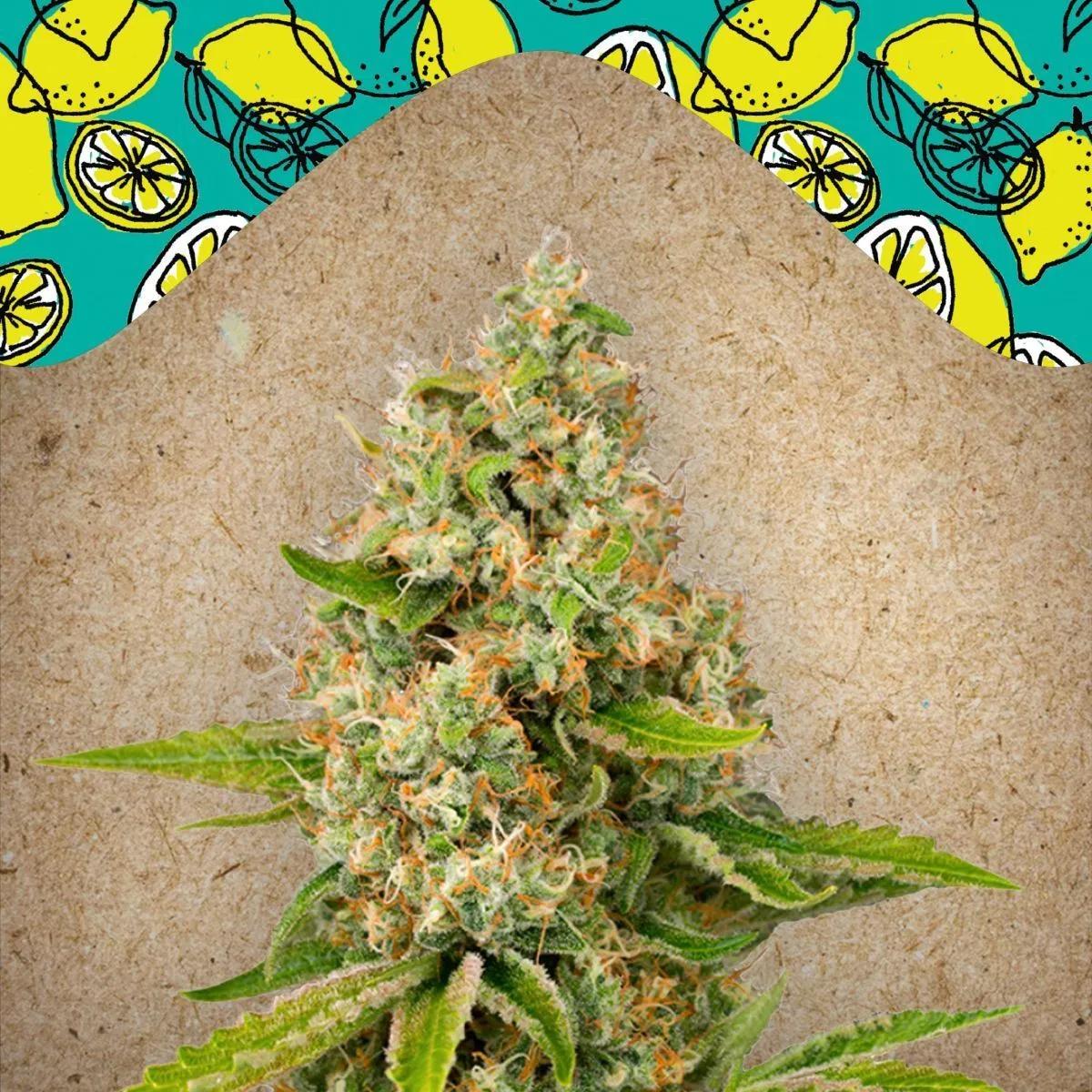
Pack: 4 seeds
Lemon Kush Feminized Seeds by Female Seeds
Lemon Kush is a feminized cannabis seed strain from Female Seeds that delivers indica-dominant genetics with a punchy citrus flavour profile rooted in the Hindu Kush mountain range. Bred from Chitral Kush lineage originating in Afghanistan and Pakistan, she balances a soothing body effect with a clear-headed sativa uplift — and she does it fast. With a 60-day flowering time and rock-hard, resin-caked buds, this is one of those strains that rewards you without making you wait.
Why Lemon Kush Feminized Seeds Deserve a Spot in Your Garden
We've carried Female Seeds for years, and Lemon Kush is one of those strains that keeps quietly selling because growers come back for more. The appeal is straightforward: she's fast, she's resilient, and the flavour is genuinely distinctive. Not "vaguely citrusy" — properly lemon. The kind of sharp, zesty stench that lingers on your fingers and fills the room long after you've finished. If you've grown generic Kush varieties and found them a bit one-note, this is the upgrade.
Her Chitral Kush heritage means she's built for tough conditions. Hindu Kush genetics have been shaped by high-altitude, harsh-climate growing for centuries, and that toughness translates directly to your tent or garden. She handles temperature swings, she doesn't stretch excessively, and she produces dense, compact buds absolutely dripping with trichomes. The resin production on this strain is notable — growers who make their own extracts will appreciate the raw material she provides.
The one honest limitation: 300g/m² indoors isn't going to win any yield competitions. She trades volume for quality, and that's a deliberate choice in the genetics. Every gram is dense, flavourful, and potent. If you're chasing maximum weight per watt, look at something like a Big Bud or Critical. But if flavour and resin quality matter more to you than filling jars to the ceiling, Lemon Kush is a better bet.
Lemon Kush Growing Specifications
| Specification | Detail |
|---|---|
| Seed Bank | Female Seeds |
| Seed Type | Feminized |
| Genetics | Chitral Kush (Hindu Kush region — Afghanistan/Pakistan) |
| Dominant Type | Indica-dominant |
| Flowering Time | Approximately 60 days |
| Indoor Yield | 300g/m² |
| Outdoor Harvest | Second half of September |
| Growing Environment | Indoor, outdoor, greenhouse |
| Climate Preference | Warmer climates preferred |
| Bud Structure | Small, rock-hard, heavy resin production |
| Seeds per Pack | 4 |
Lemon Kush Terpene Profile and Flavour
The terpene profile on Lemon Kush is dominated by limonene — no surprises there given the name — but there's more going on beneath the surface. You'll catch earthy, dank Kush undertones that ground the citrus sharpness and stop it from becoming one-dimensional. When you crack a bud open, the lemon hits immediately, almost like zesting a fresh fruit. It's not subtle.
According to research published in PMC on cannabis terpenes, beta-caryophyllene is the most available sesquiterpenoid in cannabis plants and extracts, and Kush varieties typically carry a good amount of it alongside their primary terpene signatures (PMC7763918). That peppery, spicy note from caryophyllene is what gives Lemon Kush her depth — the lemon draws you in, but the Kush backbone keeps it interesting.
When smoked, expect a slightly harsh initial hit — this is dense, resinous bud, and the smoke is thick. The lemon flavour coats your tongue and genuinely sticks around. We've had customers mention they can still taste it an hour later. That intensity is part of the charm, but if you've got a sensitive throat, running her through a vaporiser at around 180-190°C brings out the citrus terpenes beautifully without the harshness.
How to Grow Lemon Kush Feminized Seeds
- Germinate your Lemon Kush seeds using the paper towel method or directly in a starter plug. Keep temperatures between 22-25°C and maintain moisture without waterlogging. Taproots typically emerge within 48-72 hours.
- Transplant seedlings into their final container once the first set of true leaves appears. A 15-20 litre pot works well for indoor grows. She doesn't need massive root space given her compact stature.
- Provide 18 hours of light during vegetative growth. Lemon Kush stays relatively short and bushy thanks to her indica dominance — she won't stretch much, so you can keep lights closer than you would with a sativa-leaning strain.
- Switch to a 12/12 light cycle to trigger flowering. She'll begin showing pistils within the first week and develops quickly from there. The 60-day flowering window is genuinely accurate with this strain — we've seen growers report finishing even a few days earlier.
- Watch humidity levels during late flowering. Those rock-hard, dense buds are beautiful but they're also prime candidates for bud rot if relative humidity creeps above 50%. Good airflow is non-negotiable in the final two weeks.
- Harvest when trichomes shift from clear to milky-white with around 10-20% amber. For outdoor growers in warmer climates, expect to chop in the second half of September. Dry slowly at 18-20°C with 55-60% humidity for 10-14 days to preserve those lemon terpenes.
Lemon Kush Effects and Medicinal Background
Lemon Kush delivers a split effect: the sativa side hits the head first with clarity and a motivating uplift, while the indica body component settles in gradually. She leans more towards the cerebral side than you'd expect from an indica-dominant strain, which makes her versatile for different times of day. The body relaxation is present but not couch-locking — think unwinding rather than switching off.
This strain has a medicinal history dating back to the early 1990s. Traditionally used for managing discomfort, muscle tension, and inflammation, she's been a staple among growers who cultivate for therapeutic purposes. According to research on anti-neuroinflammatory bioactives in hemp varieties, cannabis cultivars show varied profiles of secondary metabolites that contribute to their therapeutic potential (PMC10706820). And a study on cannabis essential oils found antimicrobial properties across several Kush-type cultivars, with minimum inhibitory concentrations ranging from 1.25 to over 20 µg/mL against certain bacterial strains (PMC9406052).
According to research on anti-cancer potential of cannabinoids, terpenes, and flavonoids, clinical data supports the investigation of cannabis-based compounds across a variety of conditions, though the researchers emphasise that more controlled trials are needed (PMC7409346). Worth noting: individual responses vary widely depending on tolerance, consumption method, and the specific phenotype you grow from seed.
Indoor vs. Outdoor Growing: Which Suits Lemon Kush Best?
Lemon Kush feminized seeds perform well in both environments, but she has preferences. Indoors, she's a dream for small spaces — short, bushy, and manageable. A 60x60cm tent can comfortably hold two plants, and the 60-day flowering time means you can run multiple cycles per year. The 300g/m² yield is achievable under a decent 400W HPS or equivalent LED without pushing too hard.
Outdoors, she wants warmth. Mediterranean, Southern European, or greenhouse conditions are where she really shines. If you're growing in Northern Europe, a greenhouse is strongly recommended — she'll finish by late September, which is cutting it close for outdoor grows in the Netherlands or UK where autumn rains arrive early. Those dense buds and high humidity are not friends.
Greenhouse growing is arguably the sweet spot for Lemon Kush. You get the natural light spectrum and intensity, protection from rain during the critical final flowering weeks, and some control over airflow. If you've got a greenhouse setup and you're looking for a fast-finishing, flavour-forward strain, this is one of the best options from the Female Seeds catalogue.
Growing Lemon Kush indoors? Pair her with a quality carbon filter — those lemon terpenes are loud, and your neighbours will know about it. A pH meter is also worth having on hand; Kush genetics tend to be particular about root zone pH sitting between 6.0 and 6.5 in soil.
Related products

You might also like

Medical disclaimer. This content is for informational purposes only and does not constitute medical advice. Consult a qualified healthcare provider before use of any substance.