
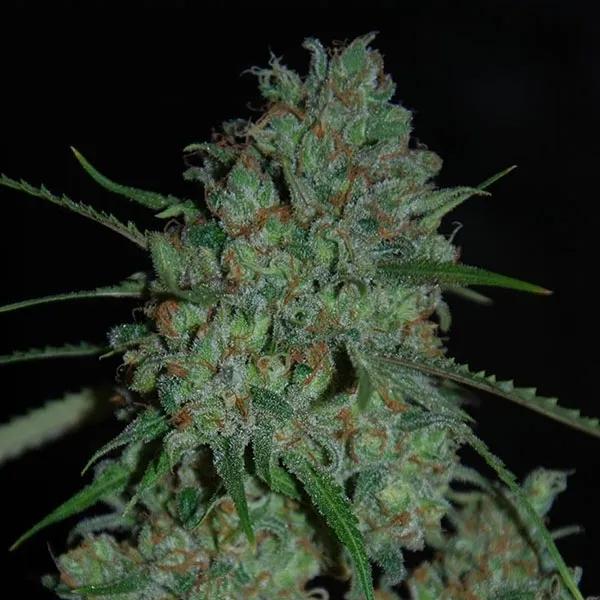
Afghan Skunk Cannabis Seeds by Expert Seeds
Afghan Skunk is a feminised cannabis seed from Expert Seeds that crosses a hardy Afghan landrace with the legendary Skunk #1, producing an 85% Indica / 15% Sativa hybrid built for serious yields. With 18% THC, a 55-day flowering time, and the potential for up to 1kg per plant outdoors, this is a grower's strain through and through — bred for bulk without sacrificing resin production.
Pack Sizes
| Pack | Seeds | SKU |
|---|---|---|
| Small | 3 feminised seeds | CSEX0050 |
| Standard | 5 feminised seeds | CSEX0081 |
Go with the 3-pack if you want to run a single pheno hunt or test the genetics in your setup first. The 5-pack gives you room to select the strongest plants and still have backup if germination isn't 100%.
Why Afghan Skunk Seeds Deserve a Spot in Your Garden
Some strains try to do everything and end up mediocre at all of it. Afghan Skunk doesn't have that problem. Expert Seeds took two of the most proven genetic lines in cannabis history — a pure Afghan indica known for resin-caked, dense flowers and Skunk #1, the backbone of half the hybrids on the market — and crossed them into something that just produces. We're talking 500–550g/m² indoors under standard conditions, and up to 1,000g per plant if you've got the outdoor space and climate to let it run.
The Afghan parentage shows up in the structure: stocky, thick-stemmed plants with broad fan leaves that soak up light. The Skunk side brings vigour and stretch during early flower, which is partly why the buds get so absurdly heavy. And they do get heavy. We've seen growers have branches snap in late flower because they underestimated how dense the colas would get. Support your plants — stakes, trellising, SCROG nets, whatever works. Don't skip this step after week 4 of flower.
The honest limitation? This strain is loud. The Skunk lineage means your grow room will smell. If you're running without a carbon filter, your neighbours will know what you're up to before you even flip to 12/12. Budget for proper odour control from day one.
Afghan Skunk Strain Profile and Specifications
Afghan Skunk feminised seeds produce a predictable, indica-dominant plant with genetics that have been stabilised by Expert Seeds for consistent phenotype expression. Here's what you're working with:
| Specification | Detail |
|---|---|
| Seed Bank | Expert Seeds |
| Genetics | Afghan Landrace x Skunk #1 |
| Type | Feminised photoperiod |
| Indica / Sativa | 85% Indica / 15% Sativa |
| THC Content | 18% |
| Flowering Time | Approximately 55 days |
| Indoor Yield | 500–550 g/m² |
| Outdoor Yield | Up to 1,000 g per plant |
| Resin Production | Excellent — bred from hashish-producing Afghan genetics |
| Available Packs | 3 seeds / 5 seeds |
According to research published in PMC, Afghan Kush-type cultivars are associated with terpene profiles featuring alpha-pinene and myrcene as dominant compounds, alongside green-leaf volatiles (PMC, 2024). That terpene combination tracks with what growers report from Afghan Skunk: an earthy, skunky base layered with sweet and fruity top notes and a spicy, almost peppery finish on the exhale.
Flavour, Aroma, and the Afghan Skunk Smoke
When you crack open a cured bud of Afghan Skunk, the first thing that hits you is that unmistakable skunk funk — sharp, pungent, and immediately recognisable. Underneath that initial wave sits something sweeter: a fruity, almost berry-like quality that comes through more clearly once the flower is ground up. The Afghan genetics bring an earthy, hashy depth that rounds out the nose.
The smoke itself is thick and expansive. Inhale and you get that sweet, fruity character up front, followed by fresh and spicy notes that linger on the palate. It's a flavour profile that feels old-school in the best way — no trendy terpene gimmicks, just solid, recognisable cannabis taste that Skunk enthusiasts have loved for decades.
The 18% THC content delivers a strong indica stone. This isn't a "maybe I feel something" strain. It's a sit-down, sink-into-the-sofa experience. The 85% indica dominance means the effect is predominantly physical — heavy limbs, deep relaxation, the kind of evening smoke that pairs well with food and a film rather than a hike.
How to Grow Afghan Skunk Seeds
Afghan Skunk is forgiving enough for less experienced growers while still rewarding those who dial in their environment. Expert Seeds bred this one for vigour, and it shows — these plants want to grow.
- Germinate your Afghan Skunk seeds using the paper towel method or directly in a starter plug. Maintain temperatures around 22–25°C and keep the medium moist but not waterlogged. Taproots typically emerge within 24–72 hours.
- Transplant seedlings into their final containers once the first true leaves appear. For indoor grows aiming at that 500–550g/m² target, 11–15 litre pots work well. Outdoors, go bigger — 30 litres or direct into the ground if your soil is decent.
- During vegetative growth, the Afghan genetics produce a compact, bushy structure. Consider topping or LST (low-stress training) to open up the canopy and encourage multiple bud sites. The 15% sativa influence means some stretch at the start of flower, so account for roughly 50% height increase after flipping.
- Flip to 12/12 when your plants have filled about 60–70% of your canopy space. Flowering takes approximately 55 days — relatively quick for the yields you'll get.
- From week 4 of flower onwards, install plant supports. This is not optional. The buds on Afghan Skunk get genuinely heavy, and branches will bend or snap without trellising, bamboo stakes, or a SCROG net. We've seen growers lose top colas to this — don't let it happen to you.
- Monitor humidity carefully in late flower. Those dense, chunky buds are susceptible to mould if relative humidity climbs above 50% during the final two weeks. Good airflow and a dehumidifier are your friends.
- Harvest when trichomes show mostly milky white with around 10–20% amber — this maximises the heavy indica effect. Dry slowly at 18–20°C and 55–60% humidity for 10–14 days, then cure in glass jars for at least two weeks.
Afghan Skunk Compared to Similar Indica Seeds
If you're weighing up Afghan Skunk against other indica-heavy options, here's how it stacks up against two popular alternatives we carry:
| Strain | Genetics | THC | Flowering Time | Indoor Yield | Best For |
|---|---|---|---|---|---|
| Afghan Skunk (Expert Seeds) | Afghan x Skunk #1 | 18% | ~55 days | 500–550 g/m² | Maximum yield with classic indica stone |
| Northern Lights | Afghan indica genetics | 16–18% | ~60 days | 400–500 g/m² | Stealth grows — less odour, compact plants |
| Critical Mass | Afghani x Skunk #1 | 19–22% | ~56 days | 500–600 g/m² | Higher THC, similar structure, slightly more stretch |
Afghan Skunk sits in a sweet spot: it yields like Critical Mass but finishes a touch faster, and it's far more productive than Northern Lights while sharing that same Afghan backbone. If odour control is your primary concern, Northern Lights is the quieter option. If you want the biggest possible harvest from proven genetics, Afghan Skunk is the one we'd pick.
Running Afghan Skunk indoors? Pair these seeds with a complete grow tent kit — tent, lighting, extraction, and carbon filter sorted in one go. The carbon filter is especially relevant here; Skunk genetics are not subtle. If you're growing outdoors, pick up some plant support stakes or netting before those colas start weighing down branches around week 5 of flower.
What the Research Says About Afghan Cannabis Genetics
Afghan landrace varieties are among the most historically significant cannabis cultivars on the planet. According to a 2020 classification study published in PMC, Afghan-type cannabis represents a critically endangered reservoir of germplasm — meaning these original genetics are becoming rarer in the wild even as they continue to underpin countless modern hybrids (PMC, 2020). When you grow Afghan Skunk, you're working with genetics that trace back to the Hindu Kush mountain range, where cannabis has been cultivated for hashish production for centuries.
According to research from a 2024 bioinformatics study published in PMC, Afghan Kush-type cultivars have been identified with terpene profiles rich in alpha-pinene and myrcene (PMC, 2024). Myrcene in particular is the most common terpene in cannabis and is associated with the earthy, musky aroma characteristic of indica-dominant strains. According to a review in PMC on cannabis terpenes, many recent studies have noted associations between terpene profiles and the varied subjective effects reported by users, though the mechanisms are still being explored (PMC, 2020).
The 18% THC content puts Afghan Skunk in a moderate-to-strong range. For context, according to data compiled by Medical News Today, the classic Afghani strain averages around 15.6% THC, while more modern hybrids like Skywalker OG push past 22% (Medical News Today). Afghan Skunk's 18% reflects the Skunk #1 influence boosting potency above the pure landrace baseline while keeping things manageable for most experienced users.
Frequently Asked Questions
How long does Afghan Skunk take to flower?
Afghan Skunk has a flowering time of approximately 55 days from the flip to 12/12. That's on the quicker side for an indica producing this much weight. Outdoor harvests typically land in mid to late October depending on your latitude.
Do Afghan Skunk plants need support during flowering?
Yes, absolutely. The buds get genuinely heavy — heavy enough to snap branches in late flower. Use bamboo stakes, a SCROG net, or plant yo-yos from week 4 of flowering onwards. This is the single most common mistake growers make with this strain.
What does Afghan Skunk smell like?
Strong. The Skunk #1 parentage means a pungent, sharp skunk aroma dominates, layered with sweet, fruity undertones and a spicy, earthy base from the Afghan genetics. A carbon filter is strongly recommended for indoor grows.
Is Afghan Skunk suitable for beginner growers?
It's a good choice for growers with at least one cycle under their belt. The Afghan genetics make it naturally vigorous and resistant to minor mistakes, but you'll need to manage plant support and humidity in late flower to avoid mould or snapped branches.
Can I use Afghan Skunk for making hash or extracts?
Afghan Skunk is excellent for extraction. The Afghan lineage was specifically bred for hashish production over centuries, and this hybrid inherits that resin-heavy trait. The 18% THC and dense trichome coverage make it well-suited for dry sift, bubble hash, or rosin pressing.
What yield can I expect from Afghan Skunk indoors?
Under standard indoor conditions with adequate lighting, expect 500–550g/m². Outdoors with a long growing season and plenty of root space, individual plants can produce up to 1kg. These aren't inflated marketing numbers — the genetics genuinely deliver when given proper light and nutrition.
How does Afghan Skunk compare to pure Afghani strains?
Pure Afghani strains tend to be more compact, slower to flower, and slightly lower in THC (around 15.6% on average according to Medical News Today). Afghan Skunk adds Skunk #1 vigour, faster flowering, and higher yields while keeping the dense bud structure and heavy resin production of the Afghan parent.
Last updated: April 2026
Related products



You might also like
Medical disclaimer. This content is for informational purposes only and does not constitute medical advice. Consult a qualified healthcare provider before use of any substance.