
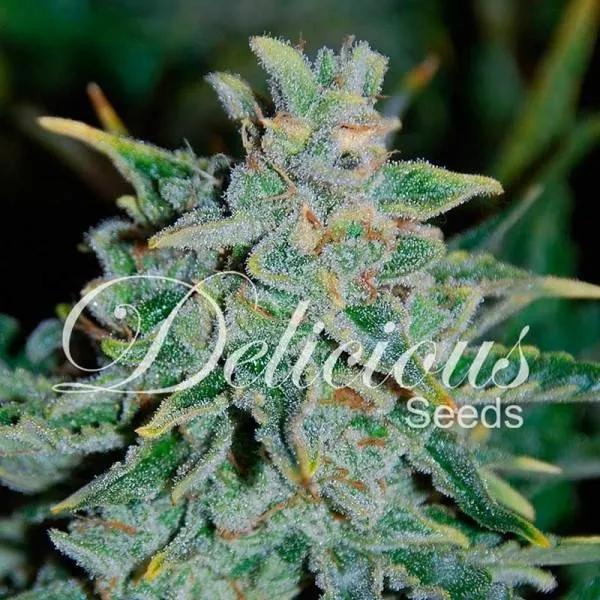
Pack: 3 seeds
Northern Light Blue Auto Cannabis Seeds
Northern Light Blue Auto is a feminized Indica-dominant autoflower by Delicious Seeds that goes from seed to harvest in 55–60 days flat. Built from a cross of Northern Light Blue Auto and Blueberry Auto, this 3rd generation autoflower packs 450–500 g/m² of yield potential into a plant that barely reaches 70 cm — compact enough for the smallest tent, productive enough to fill your jars.
This guide is written for adults aged 18 and over. The growing data and strain characteristics described below are intended for adult cultivators.
Why Northern Light Blue Auto Deserves Your Tent Space
Northern Light Blue Auto is the kind of autoflower that makes photoperiod loyalists raise an eyebrow. A 450–500 g/m² yield from a plant that finishes in under nine weeks? That's not a compromise — that's a proper harvest. Delicious Seeds have been refining their auto genetics for years, and this 3rd generation cross shows the results. You're getting the dense, resinous bud structure of a photoperiod strain with the speed and simplicity of an autoflower.
The genetics tell the story: Northern Light Blue Auto crossed with Blueberry Auto. The Northern Light lineage brings that reliable Indica growth pattern — tight internodes, sturdy branches, minimal stretch. The Blueberry side contributes the sweet, fruity terpene profile that fills the room when you crack open a jar. Think ripe berries with a sugary undertone. Not subtle — your carbon filter earns its keep from week four onwards.
At roughly 70 cm, these plants stay short and manageable. That's a genuine advantage if you're working with a 60x60 or 80x80 tent, or if you're tucking a few plants into a balcony grow. You won't need to worry about height management or aggressive training just to keep the canopy under control. The one thing to watch: because the plants are compact, good airflow around the lower branches matters. Don't let the canopy get too dense without some light defoliation — even with this strain's strong mould resistance, stagnant air invites trouble.
Northern Light Blue Auto Grow Specifications
Here are the numbers you need for planning your grow space, light schedule, and harvest window. Every seed in the pack is feminized — no males, no wasted pots.
| Specification | Detail |
|---|---|
| Seed Bank | Delicious Seeds |
| Genetics | Northern Light Blue Auto x Blueberry Auto |
| Type | Feminized Autoflower |
| Dominance | Indica |
| Generation | 3rd Generation Autoflower |
| Indoor Harvest Time | 55–60 days from seed |
| Plant Height | Approximately 70 cm |
| Average Yield | 450–500 g/m² |
| Resistance | High resistance to plagues and moulds |
| Suitable Environment | Indoor and outdoor |
| Flavour Profile | Sweet, fruity — strawberry and berry notes |
| Pack Size | 3 feminized seeds |
Indoor vs Outdoor Growing — Northern Light Blue Auto
Northern Light Blue Auto performs well in both environments, but the approach differs. Indoors, run your lights on 18/6 or 20/4 from seed to harvest — autoflowers don't need a light-cycle switch, which simplifies everything. At 55–60 days, you can realistically fit five or six runs per year in the same tent. That 450–500 g/m² figure is based on indoor growing under proper lighting, so give these plants decent light intensity and they'll reward you.
Outdoors is where it gets interesting. In warmer climates — southern Spain, Portugal, southern Italy — you can pull two or even three harvests per season because the 55–60 day cycle doesn't depend on daylight hours. Plant a batch in April, harvest in June, plant again immediately. The compact 70 cm height keeps plants discreet on a balcony or terrace. The strong mould resistance is a genuine advantage outdoors, where you can't control humidity the way you can in a tent.
The honest limitation: if you're growing outdoors in northern Europe — the Netherlands, the UK, Scandinavia — you'll get one solid summer run but don't expect the same yields as an indoor setup. Shorter days and cooler temperatures in spring and autumn limit what a 70 cm autoflower can produce. For northern outdoor grows, we'd lean towards starting seeds indoors under a lamp for the first two weeks, then moving them outside once temperatures stay above 15°C consistently.
How to Grow Northern Light Blue Auto
- Germinate your seeds using the paper towel method or directly in a small pot of moist, light soil. Taproots typically appear within 24–72 hours.
- Transplant seedlings into their final container early — 11 to 15 litre pots work well. Autoflowers don't like being transplanted once established, so move them before the second set of true leaves appears, or start them in the final pot.
- Set your indoor light cycle to 18 hours on, 6 hours off from day one. Some growers run 20/4 for extra growth — both work. Northern Light Blue Auto doesn't need a 12/12 flip.
- Feed lightly during the first two weeks. Autoflowers in their seedling stage are sensitive to overfeeding. Start at half the recommended nutrient strength and increase gradually once the plant enters vegetative growth.
- Watch for pre-flowers around day 20–25. Once you see pistils forming, switch to bloom nutrients. The transition from veg to flower happens automatically — that's the whole point.
- Maintain relative humidity around 45–55% during flowering. The compact canopy can trap moisture, so keep a small fan moving air across the plant even though this strain resists mould well.
- Check trichomes from day 50 onwards. When roughly 70–80% of trichomes have turned milky with a few amber ones appearing, you're in the harvest window. Most plants finish between day 55 and 60.
- Hang whole plants or individual branches in a dark, ventilated space at 18–20°C and 55–60% humidity. Dry for 7–10 days until stems snap rather than bend, then cure in sealed glass jars for at least two weeks.
Northern Light Blue Auto vs Other Compact Autoflowers
If you're comparing Northern Light Blue Auto against other short autoflowers, here's how it stacks up on the specs that actually matter.
| Strain | Seed Bank | Height | Harvest Time | Yield (Indoor) |
|---|---|---|---|---|
| Northern Light Blue Auto | Delicious Seeds | 70 cm | 55–60 days | 450–500 g/m² |
| Northern Lights Auto | Royal Queen Seeds | 80–120 cm | 70–75 days | 475–525 g/m² |
| Blueberry Auto | Dutch Passion | 60–100 cm | 63–70 days | 350–400 g/m² |
Northern Light Blue Auto sits in a sweet spot: faster than most Northern Lights autos, more productive than most Blueberry autos, and shorter than both. The 55–60 day turnaround is genuinely quick — you're saving two full weeks compared to a standard Northern Lights Auto, which adds up to an extra run per year. We'd pick this one over a standard Blueberry Auto purely on yield numbers. If you want the berry flavour profile but don't want to sacrifice grams per square metre, Northern Light Blue Auto is the better bet.
Running Northern Light Blue Auto in a small tent? Pair it with a complete grow kit that includes lighting, ventilation, and a carbon filter — the sweet berry terpenes on this strain are strong enough to announce themselves through closed doors. A pH meter is also worth grabbing if you don't already own one; autoflowers on a 55-day schedule have zero room for nutrient lockout.
What to Expect from Northern Light Blue Auto
The flavour profile is the standout feature here. Northern Light Blue Auto produces buds that smell like a punnet of ripe strawberries left in the sun — sweet, almost candy-like, with a deeper berry undertone from the Blueberry genetics. When you break open a dried bud, that sweetness intensifies. It's the kind of terp profile that makes your curing jars smell like a dessert shop. If you've grown standard Northern Lights before and found it a bit earthy and one-dimensional, this cross adds a whole new layer.
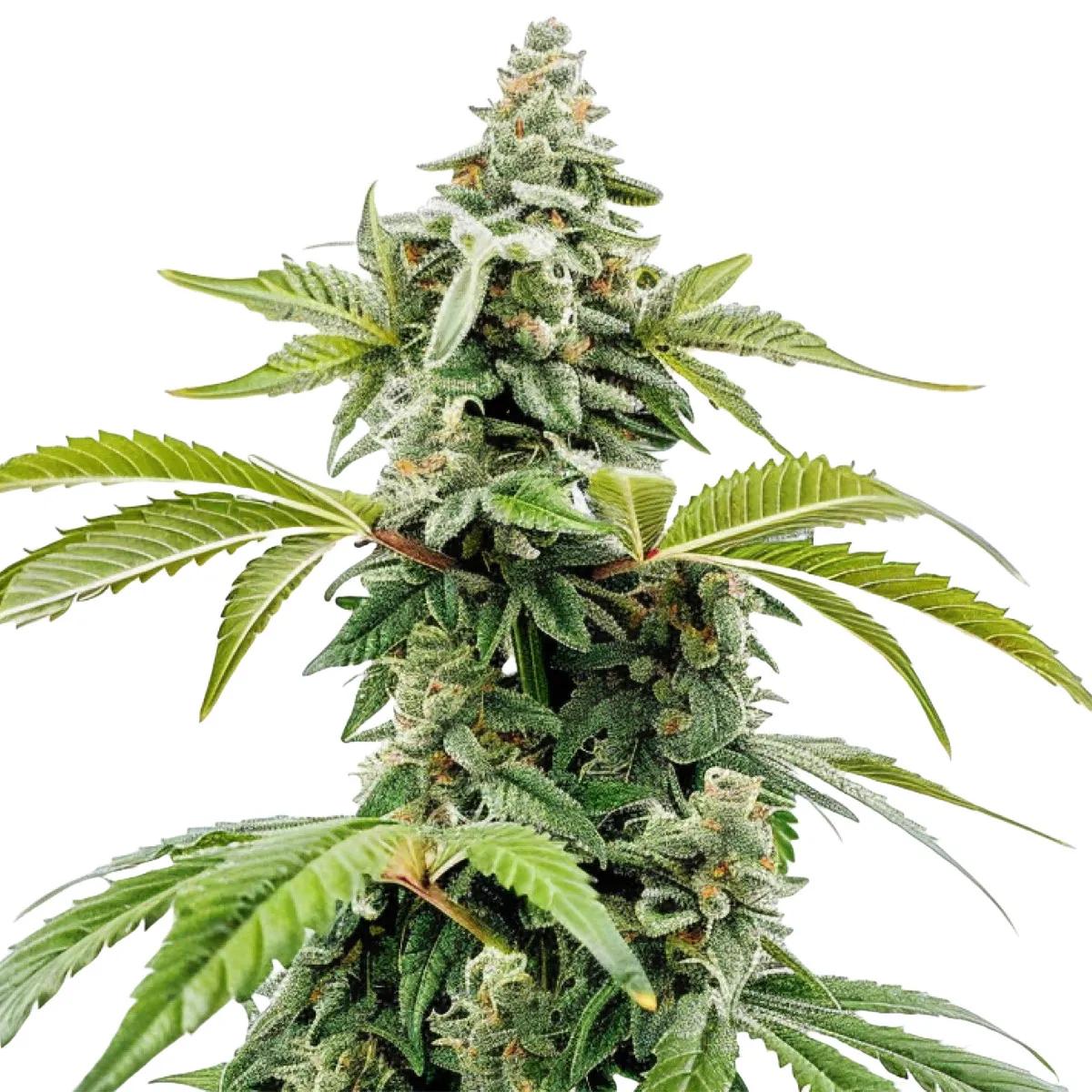
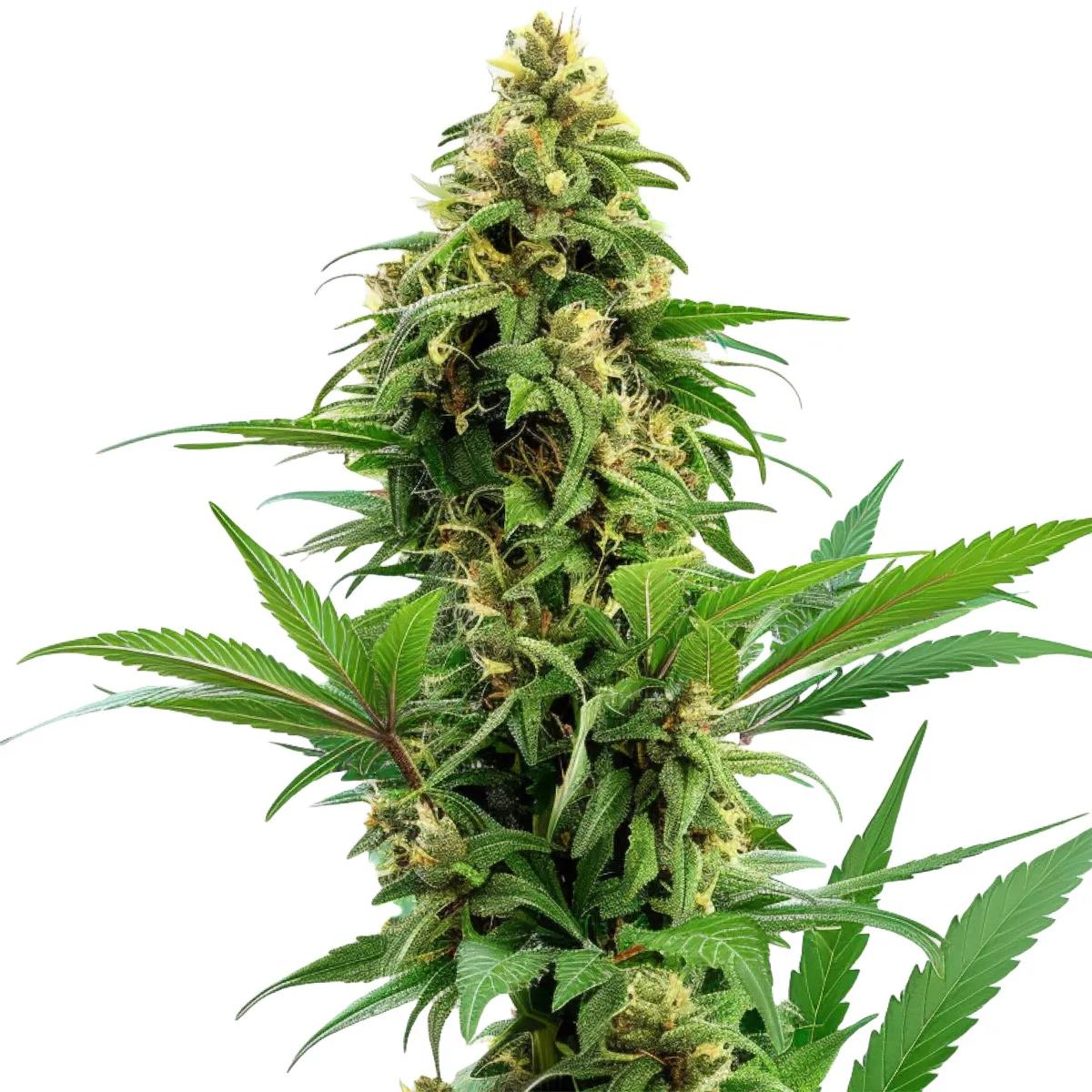
The buds themselves grow dense and compact, coated in a visible layer of resin. On a 70 cm plant, you'll see one main cola and several tight side branches — the classic Indica Christmas tree shape, just in miniature. The 3rd generation autoflower genetics from Delicious Seeds mean you're getting stable, predictable growth. We've seen older-generation autos throw out wildly different phenotypes from the same pack; that's much less of an issue with modern 3rd gen genetics like these.
One thing we'd flag: because the plant stays at 70 cm, the lower branches don't always get enough light penetration to develop fully. A bit of low-stress training (LST) in the first three weeks — gently bending the main stem to open up the canopy — can boost your final yield noticeably. Don't top autoflowers unless you're experienced with the technique; the recovery time eats into your limited vegetative window.
Frequently Asked Questions
How long does Northern Light Blue Auto take from seed to harvest?
55–60 days from the moment the seed germinates. That's the full cycle — vegetative growth and flowering included. Most plants are ready to chop around day 57–58, but always check trichome colour rather than counting days alone.
What yield can I expect from Northern Light Blue Auto indoors?
Delicious Seeds rates this strain at 450–500 g/m² under indoor lighting. Hitting the upper end of that range requires good light intensity (at least 400W equivalent), proper nutrition, and a 18/6 or 20/4 light schedule throughout the entire grow.
Can I grow Northern Light Blue Auto outdoors in northern Europe?
Yes, but time it right. Plant after mid-May when nighttime temperatures stay above 15°C. You'll get one full outdoor run over summer. In warmer southern climates, you can fit two or three successive harvests between April and October thanks to the 55–60 day cycle.
Do I need to change the light cycle to trigger flowering?
No. Northern Light Blue Auto is an autoflower — it switches to flowering automatically based on age, not light hours. Run 18/6 or 20/4 from seed to harvest. No 12/12 flip required.
Is Northern Light Blue Auto resistant to mould?
Delicious Seeds rates it as having high resistance to plagues and moulds. That's a genuine advantage for outdoor growers and anyone in a humid climate. Still, keep airflow moving around the canopy — resistance doesn't mean immunity, especially during late flowering when buds are at their densest.
Should I use LST or topping on Northern Light Blue Auto?
LST works well — gently bend the main stem during the first three weeks to expose lower branches to light. Avoid topping unless you're experienced with autoflowers. The 55–60 day lifecycle doesn't leave much recovery time, and a stressed auto can stall and yield less.
What size pot should I use for Northern Light Blue Auto?
11–15 litre pots are the sweet spot. Smaller pots restrict root growth and limit yield; larger pots are unnecessary for a 70 cm plant. Start seeds directly in the final pot or transplant very early to avoid root disturbance.
Last updated: April 2026
Related products

You might also like

Medical disclaimer. This content is for informational purposes only and does not constitute medical advice. Consult a qualified healthcare provider before use of any substance.