

Auto Jack
Cannabis seeds
by Paradise Seeds
Auto Jack Feminized Seeds — Jack Herer Genetics on Autoflower Time
Auto Jack is an autoflowering feminized cannabis seed from Paradise Seeds that delivers the uplifting, Sativa-dominant character of Jack Herer in a 65–70 day seed-to-harvest cycle. Bred from a Jack Herer mother crossed with a White Widow father and stabilised over five generations, this hybrid produces sweet, fruity buds coated in resin — without asking you to manage light schedules or wait four months. Up to 450 g/m² indoors from a plant that practically runs itself.
Why Auto Jack Feminized Seeds Stand Out
Five generations of selective breeding. That's what separates Auto Jack from the rushed autoflowers that flooded the market a few years back. Paradise Seeds crossed a Sativa-dominant Jack Herer mother with a White Widow father, then selected and stabilised over five successive generations until the autoflowering trait locked in without stripping out the things that made Jack Herer famous — the sweet, fruity terpene profile, the thick resin coverage, the uplifting Sativa-leaning character. The Ruderalis backbone handles the timing; everything else comes from proper cannabis genetics.
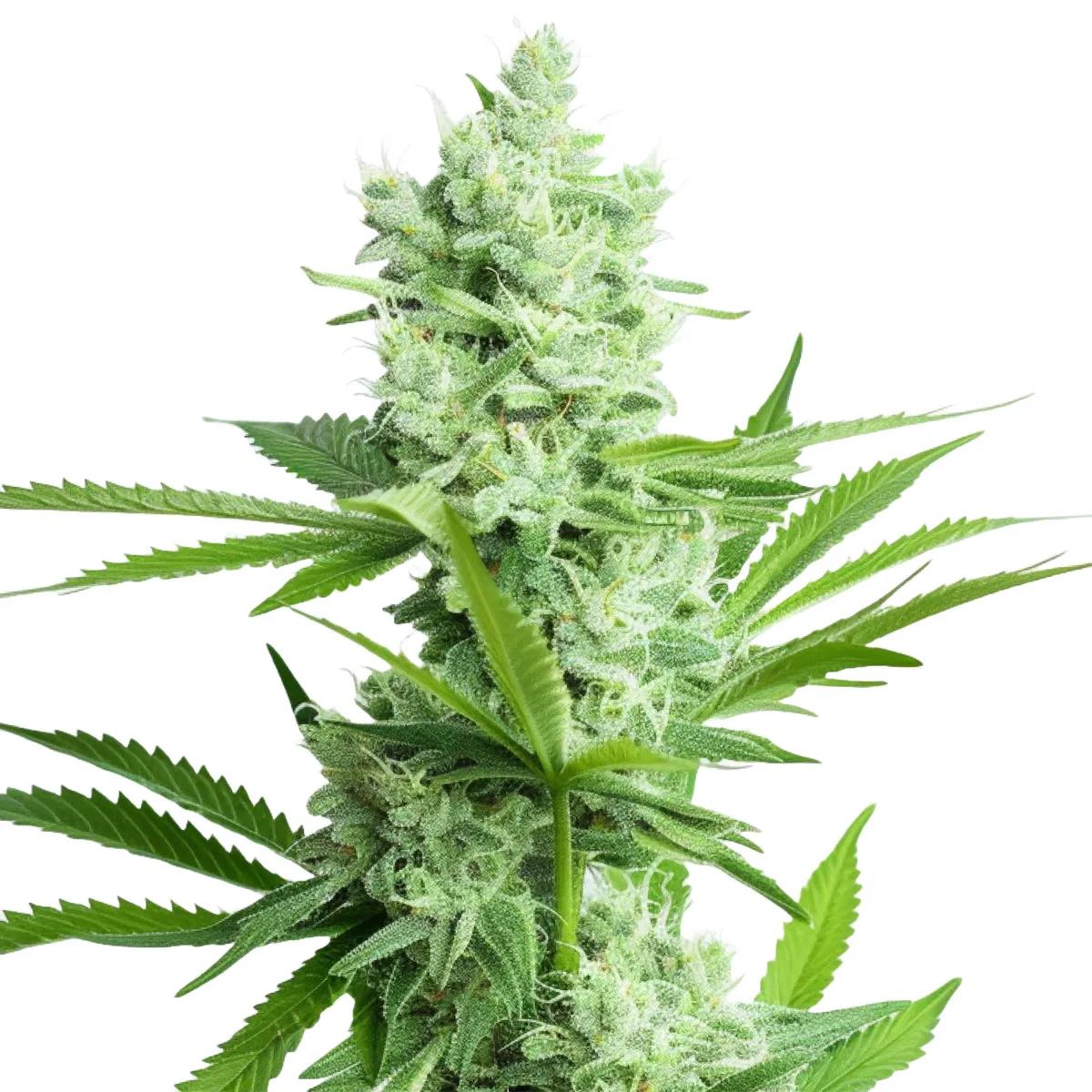
What you actually notice when growing Auto Jack: the buds stack up dense and absolutely caked in trichomes. Properly sparkling under grow lights. The White Widow father contributes serious resin production — we're talking buds that stick to your fingers during trimming. The aroma leans sweet and fruity with a slight sharpness underneath, the kind of smell that fills a tent quickly. If you've grown photoperiod Jack Herer before, you'll recognise the family resemblance in the bud structure and nose, just wrapped in a much faster, more compact plant.
The honest limitation? Like most autoflowers, you can't extend the vegetative phase to fill a larger canopy. What you get in those 65–70 days is what you get. But Paradise Seeds has bred this one to maximise that window — 450 g/m² indoors is a strong number for an auto, and it's achievable with decent light and nutrition. You're not sacrificing yield for speed here the way you would with lesser autoflower genetics.
Auto Jack Specifications
| Specification | Detail |
|---|---|
| Seed Bank | Paradise Seeds |
| Seed Type | Autoflowering Feminized |
| Genetics | Sativa/Indica/Ruderalis Hybrid |
| Parent Genetics | Jack Herer (Sativa-dominant mother) x White Widow (father) |
| Stabilisation | 5 generations of selective breeding |
| Seed to Harvest | 65–70 days indoors |
| Indoor Yield | Up to 450 g/m² |
| Pack Size | 3 feminized seeds |
| Sex | 100% female — no males to cull |
Growing Auto Jack Feminized Seeds — What to Expect
Auto Jack doesn't need a light schedule change to trigger flowering. That's the whole point of autoflowering genetics — the Ruderalis backbone contains an internal clock that flips the plant into bloom regardless of photoperiod. Most growers run 18/6 or 20/4 from germination to harvest and let the plant do its thing. No timer adjustments, no light leak paranoia, no separate veg and flower rooms.
Every seed in the pack is feminized, so you're not gambling on sex ratios. Three seeds, three female plants. No wasted pots, no anxious inspections at week four trying to spot pollen sacs. For a small indoor setup — say a 60x60 or 80x80 tent — three Auto Jack plants will fill the canopy nicely within that 65–70 day window.
The Sativa-dominant genetics mean the plant can stretch a bit more than a pure Indica auto, so give it some vertical headroom. Not as leggy as a full photoperiod Sativa, but taller than something like a Northern Lights auto. Training techniques like LST (low-stress training) work well if you want to open up the canopy and push light deeper into the lower bud sites. Just be gentle — autos don't recover from heavy stress the way photoperiod plants do because you can't extend veg to compensate.
How to Grow Auto Jack
- Germinate seeds using the paper towel method or directly in a small pot of moist, airy soil. Taproots typically emerge within 24–72 hours.
- Transplant (if needed) into the final container early — ideally within the first week. Autos don't like root disturbance mid-grow. An 11–15 litre pot works well for most indoor setups.
- Set your light schedule to 18 hours on, 6 hours off from day one. Some growers push to 20/4 for extra photosynthesis. Either works.
- Feed lightly during the first 2–3 weeks. Autoflowers are smaller plants with lower nutrient demands than photoperiods. Overfeeding early is the most common mistake we see.
- Watch for the transition to flower around weeks 3–4. You'll see pistils forming at the nodes without any change to your light schedule — that's the Ruderalis genetics doing their job.
- Increase bloom nutrients gradually once flowering is established. The White Widow parentage means heavy resin production, so adequate phosphorus and potassium matter here.
- Harvest at day 65–70 when trichomes shift from clear to milky-white. A jeweller's loupe or USB microscope makes this call much easier than guessing by eye.
Auto Jack vs Photoperiod Jack Herer — Which Suits You Better?
| Feature | Auto Jack (Autoflower) | Photoperiod Jack Herer |
|---|---|---|
| Seed to Harvest | 65–70 days total | 8–10 weeks flowering + 4–6 weeks veg |
| Light Schedule | 18/6 or 20/4 throughout | 18/6 veg, 12/12 flower |
| Indoor Yield | Up to 450 g/m² | Typically 500–600 g/m² with longer veg |
| Plant Size | Compact, suited to small spaces | Larger, needs more headroom |
| Training Flexibility | LST only — no time to recover from topping | Top, FIM, SCROG — full toolkit |
| Difficulty | Beginner-friendly | Intermediate — light schedule management required |
| Genetics | Jack Herer x White Widow x Ruderalis | Jack Herer (Sativa/Indica hybrid) |
If you've got a small tent, limited time, or you're on your first grow, Auto Jack is the better pick. You'll get the Jack Herer flavour profile and resin production without managing light schedules or waiting 14+ weeks. If you want maximum yield and full control over plant size through extended veg, a photoperiod Jack Herer gives you more room to push things. Both carry the same famous parent genetics — the difference is how much time and space you're willing to invest.
Flavour, Aroma, and What the Buds Look Like
The terpene profile on Auto Jack leans sweet and fruity — think ripe citrus with a slightly spicy, earthy undertone. It's recognisably Jack Herer in character: that distinctive sweetness that sits somewhere between tropical fruit and fresh pine. The White Widow influence shows up in the resin. These buds come out absolutely frosted, dense trichome coverage across the calyxes and sugar leaves. Under a loupe, the trichome heads are fat and clearly visible.
Dried and cured properly, the buds are dense but not rock-hard — they have a slight give when squeezed, with that sticky, resinous texture that tells you the White Widow genetics earned their keep. The bag appeal is strong. If you've ever trimmed White Widow crosses, you know what's coming: scissors gummed up within minutes and fingers coated in a thin layer of resin. Keep some isopropyl handy.
Growing Auto Jack indoors? A compact grow tent like the Dark Box 80x80 gives these plants the space they need without taking over the room. Pair with a carbon filter — the fruity terpene profile on this one gets loud by week five. For germination, a propagator tray keeps humidity and temperature consistent during those first critical days.
Related products



You might also like


Medical disclaimer. This content is for informational purposes only and does not constitute medical advice. Consult a qualified healthcare provider before use of any substance.