
ROOR Grace Glass Black Leaf Blaze Brand Comparison — Glass Bong Guide
Definition
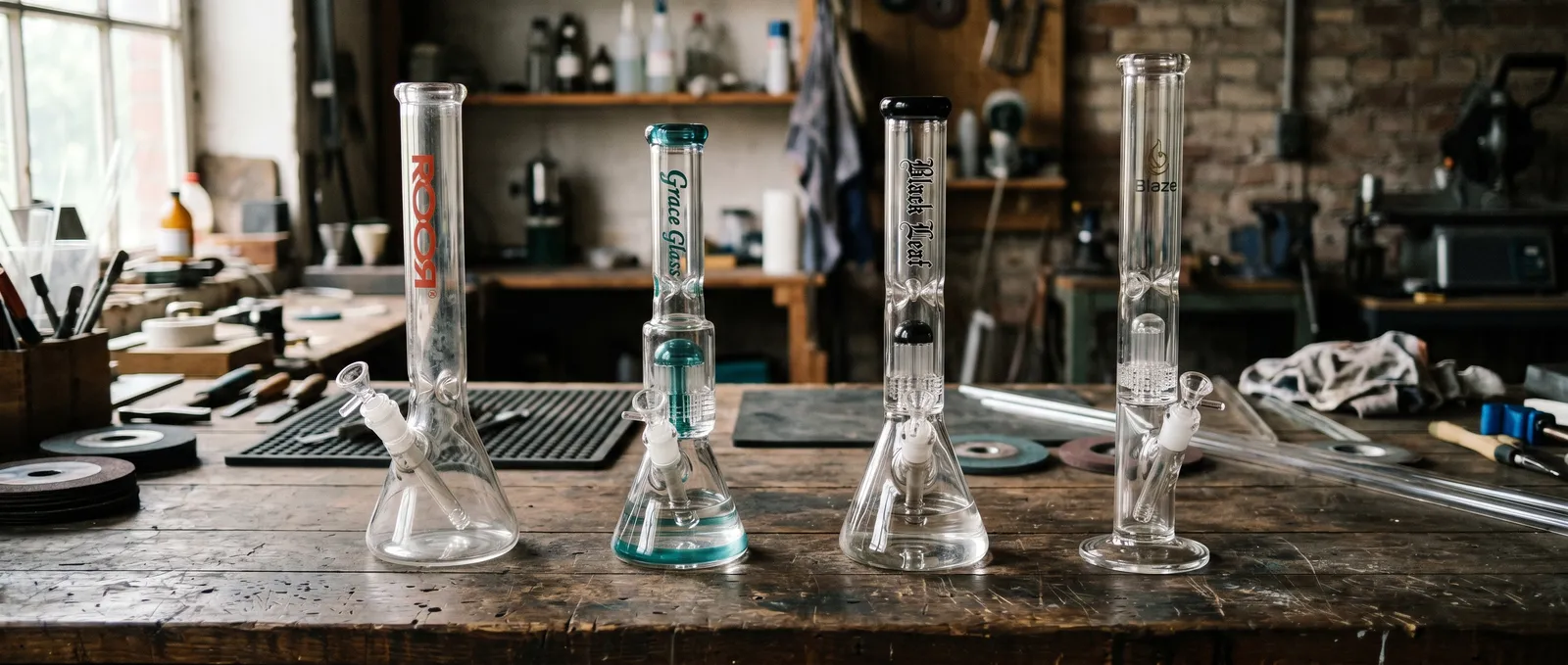
Four borosilicate glass bong brands — ROOR, Grace Glass, Black Leaf, and Blaze Glass — dominate the European market at different price points. According to the Corning Museum of Glass (2020), borosilicate grade and annealing quality are the primary factors separating durable glass from fragile glass. This guide compares all four across the specs that actually matter.
Brand Comparison at a Glance
ROOR Grace Glass Black Leaf Blaze brand comparison is a side-by-side evaluation that helps adult smokers choose the right borosilicate bong by weighing glass grade, wall thickness, percolation, and price tier. Picking a glass bong from four different brands can feel like choosing a wine when you don't read the label — they all look like glass tubes until you hold one and notice the weight, the joint grind, and whether the ice notches actually hold ice. This comparison breaks down ROOR, Grace Glass, Black Leaf, and Blaze Glass across the dimensions that matter for adults buying their first or fifth piece: glass quality, design range, durability, and where each brand sits on the price spectrum. If you want to order a bong and need clarity before you buy, start with the table below.
| Dimension | ROOR | Grace Glass | Black Leaf | Blaze Glass |
|---|---|---|---|---|
| Price tier | Premium | Mid-premium | Mid-range | Entry to mid-range |
| Origin / heritage | Mülheim an der Ruhr, Germany — handblown since 1995 | European-designed, borosilicate production | European brand, broad catalogue | European brand, stress-free borosilicate |
| Glass type | Schott Duran borosilicate (3.3) | Borosilicate 3.3 | Borosilicate (varies by model) | Borosilicate 3.1 (comparable to Duran) |
| Typical wall thickness | 3.5–7 mm (model-dependent) | 4–5 mm | 3–5 mm | 5 mm minimum stated |
| Joint sizes | 14.5 mm and 18.8 mm ground glass | 14.5 mm and 18.8 mm | 14.5 mm and 18.8 mm | 14.5 mm and 18.8 mm |
| Model range | Focused — beakers, straights, custom series | Moderate — percolator pieces, beakers, themed designs | Broad — mini bongs through large percolator rigs | Moderate — ice bongs, percolator models, beakers |
| Percolation options | Diffuser downstems; select percolator models | Tree percs, dome percs, honeycomb | Tree percs, inline, showerhead, honeycomb | Tree percs, spiral percs, multi-chamber |
| Best suited for | Buyers wanting a single piece that lasts years | Mid-budget buyers wanting design variety | Shoppers wanting the widest choice at a reasonable cost | Entry-level buyers wanting solid borosilicate without a steep outlay |
Glass Quality — What the Numbers Mean
Borosilicate grade is the single most important spec separating premium bong glass from budget glass. Every brand on this list uses borosilicate glass, but not all borosilicate is equal. The number after "borosilicate" (3.1 or 3.3) refers to the coefficient of thermal expansion — lower means the glass handles temperature swings better without cracking. Schott Duran 3.3, the grade ROOR uses, is the same glass found in laboratory beakers. Blaze Glass specifies 3.1, which is close but not identical; the practical difference for a water pipe is small, though 3.3 edges ahead if you're cycling between ice-cold water and hot smoke repeatedly.
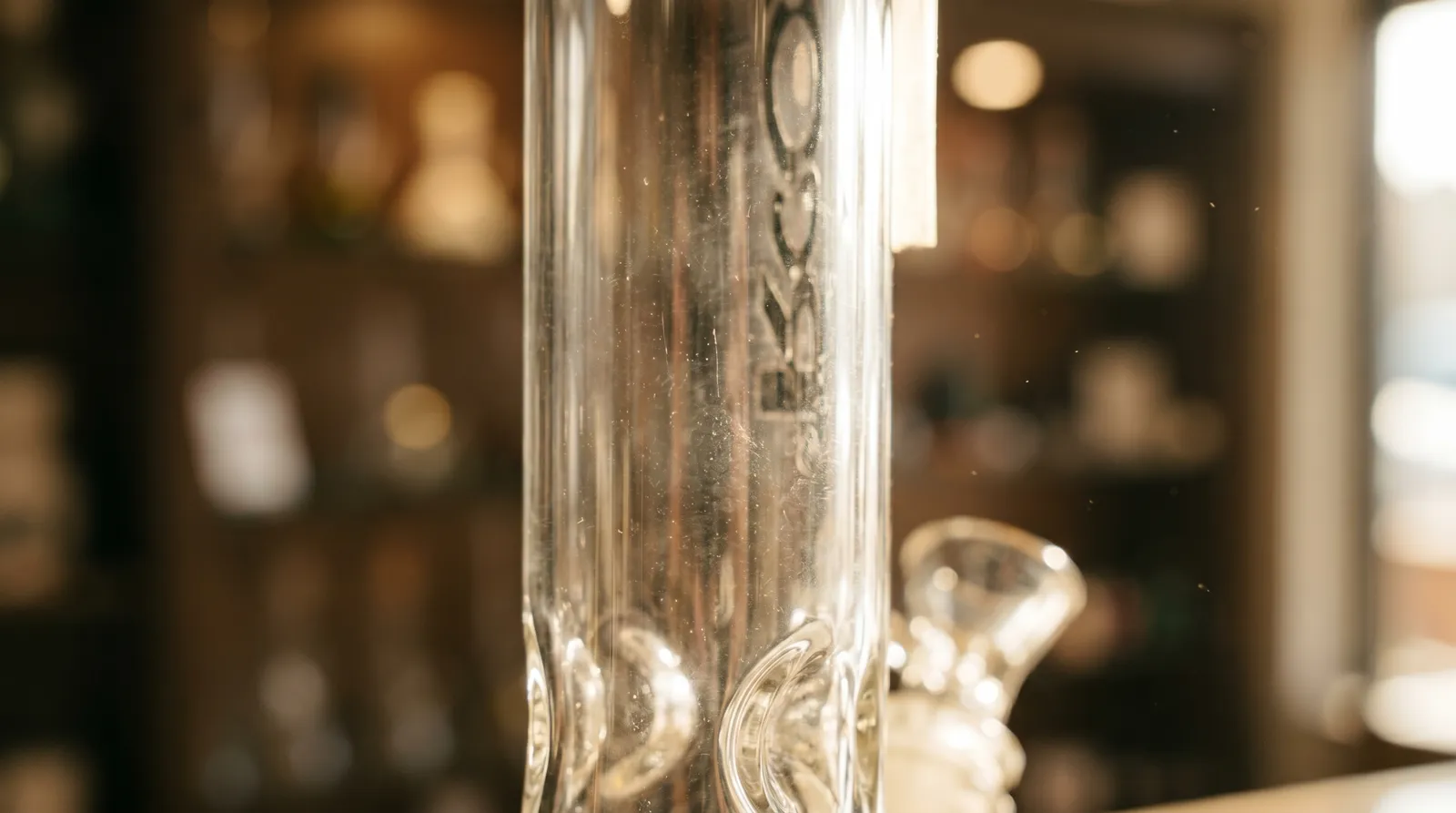
Wall thickness is the other half of the durability equation. A 5 mm wall absorbs more impact energy before fracturing than a 3 mm wall — obvious enough — but thicker glass also adds weight, which can be a drawback for smaller pieces that tip easily on a table. ROOR's range spans from relatively thin (3.5 mm on some straight tubes) to genuinely chunky (7 mm on beaker bases), while Blaze Glass commits to a 5 mm minimum across their line. Black Leaf is the most variable: their mini bongs tend toward 3 mm, while larger percolator models sit closer to 5 mm. Grace Glass generally lands around 4–5 mm.
One thing the specs don't capture is annealing — the controlled cooling process that relieves internal stress in the glass. According to the Corning Museum of Glass (2020), improperly annealed borosilicate can fracture from minor thermal shock even when wall thickness is adequate. All four brands use kiln-annealed glass, but ROOR's handblown German production and tighter quality control give it an edge in consistency here, though quantified reject-rate data across all four brands isn't publicly available. The EMCDDA's 2022 overview of European headshop product standards notes that borosilicate annealing consistency varies widely between manufacturers, reinforcing the value of established brands.
ROOR — The Case for Paying More
ROOR is the oldest and most premium brand in this comparison, with handblown German production dating to 1995. The brand's reputation rests on a few things: genuine Schott Duran glass, hand-finishing on joints and mouthpieces, and a deliberately narrow product line. You won't find twenty percolator variations — ROOR's catalogue centres on beaker-base and straight-tube designs with precision-ground 14.5 mm or 18.8 mm joints and optional diffuser downstems.
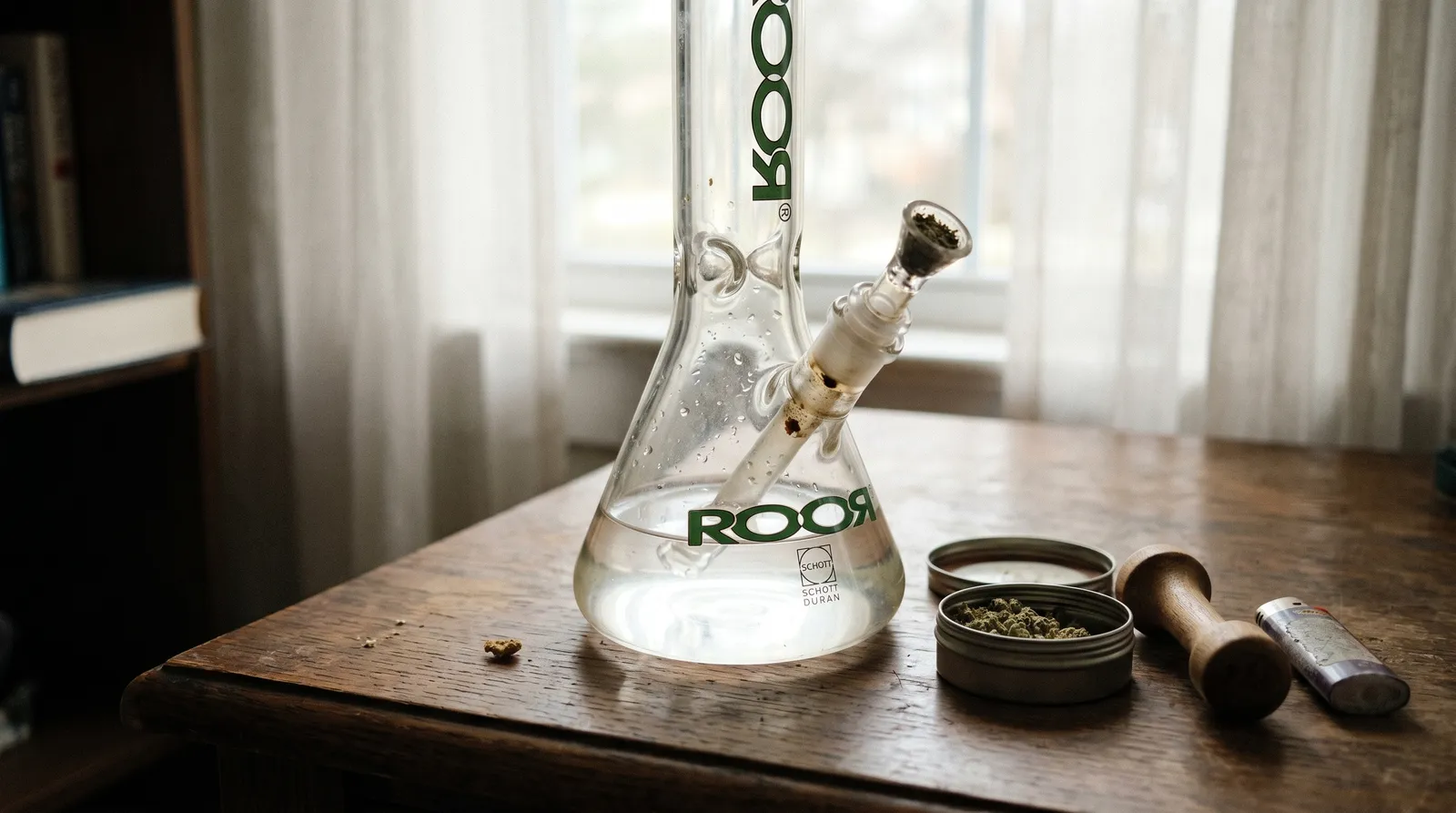
That focus is the point. A ROOR beaker is engineered so the joint seal is airtight without a rubber grommet, the base sits flat on any surface, and the ice notches hold cubes without restricting airflow. It's the kind of piece you buy once and keep for a decade — assuming you don't knock it off the coffee table. The premium price reflects material cost (Schott Duran isn't cheap), German labour, and a level of finish that cheaper brands approximate but rarely match.
The limitation? If you want a triple-honeycomb percolator rig with a splash guard and an ash catcher, ROOR's range may feel sparse. They make some percolator models, but elaborate filtration isn't their focus. That's an honest trade-off: you get fewer choices but higher consistency per piece.
Grace Glass — Design Variety at Mid-Premium
Grace Glass delivers the widest percolator variety in the mid-premium tier, bridging the gap between ROOR's stripped-back engineering and the broader catalogues below it. Their pieces tend to feature more visual flair — coloured accents, themed designs, and a wider percolator selection including tree percs and dome percs. The borosilicate is 3.3-grade, wall thickness is generally 4–5 mm, and joint grinding is clean.
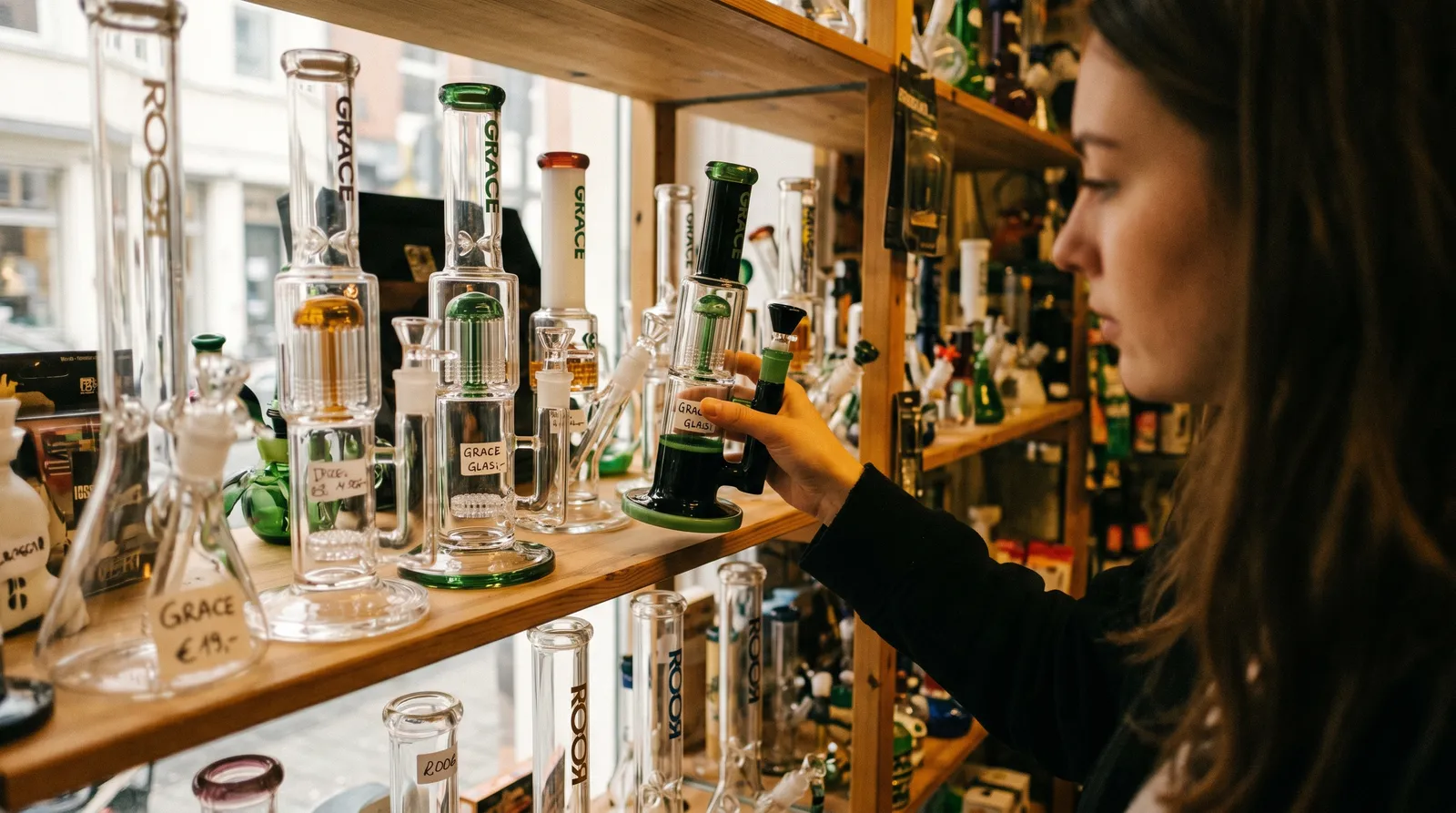
Where Grace Glass stands out is the middle ground between form and function. If you want a percolator bong that looks good on a shelf and filters smoothly, Grace Glass delivers without the ROOR price tag. The trade-off is that you're getting machine-assisted production rather than fully handblown work, which means marginally less consistency in glass distribution — some walls may be a fraction thinner at curves. For most users, this is invisible in practice.
Black Leaf — The Broadest Catalogue
Black Leaf offers the largest model range of the four brands, spanning pocket-sized mini bongs through to tall percolator rigs with multiple chambers. They also stock bubblers, dab rigs, and accessories. If you're browsing with a specific feature in mind — showerhead percolator, inline diffuser, bent-neck mouthpiece — Black Leaf probably has a model that ticks the box.
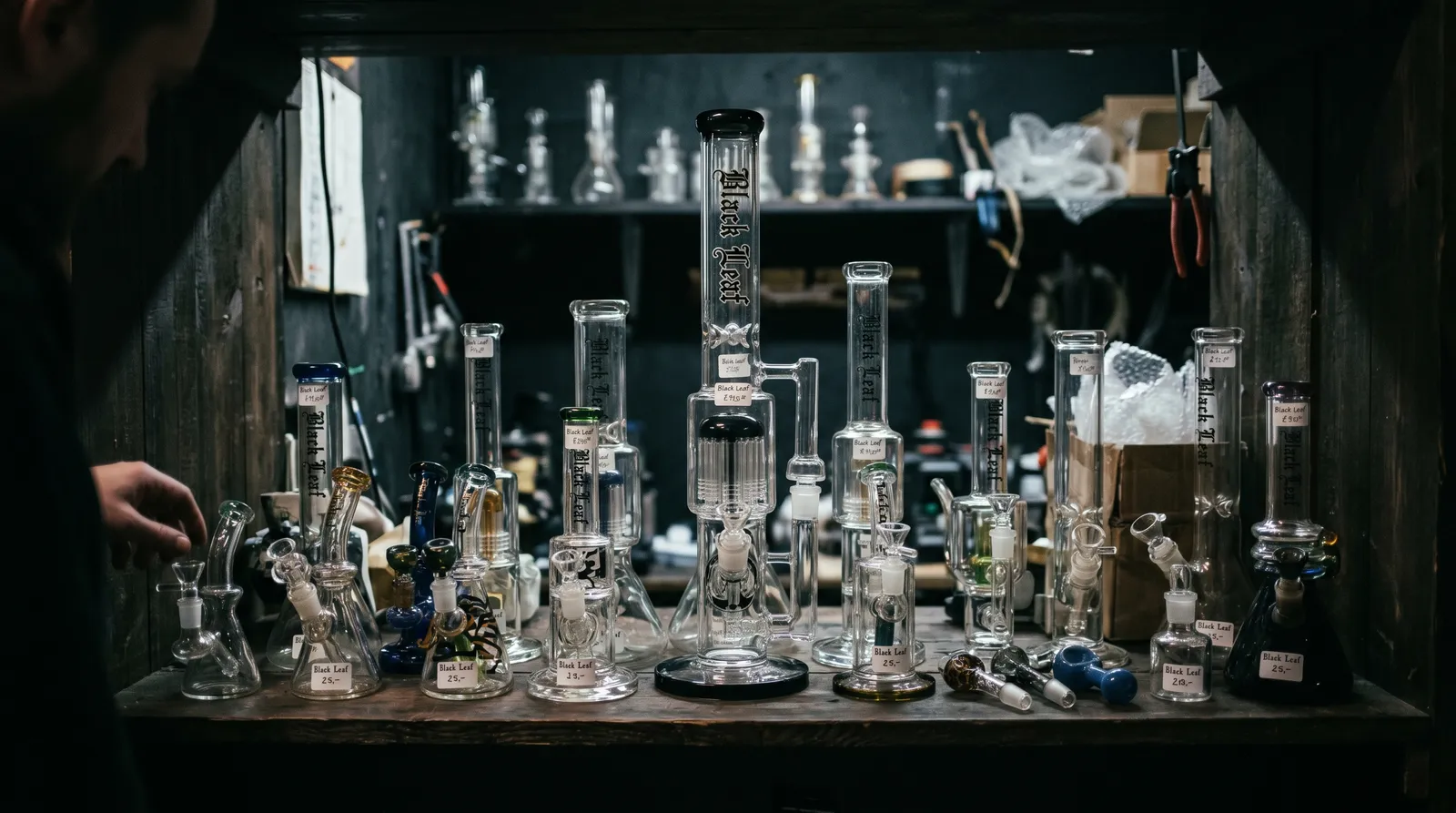
Glass quality is decent across the line, though it varies more than the other three brands. Their entry-level pieces use thinner glass (around 3 mm), which is fine for a bedroom piece that stays on a desk but less forgiving if it gets moved around. Step up to their mid-range percolator models and you'll find 4–5 mm walls and better joint finishing. The brand works well for buyers who want a specific configuration without spending ROOR money — just check the specs on the particular model rather than assuming uniform thickness across the range.
Blaze Glass — Entry Level Done Right
Blaze Glass provides the best thickness-to-price ratio of the four brands, making it the go-to for budget-conscious buyers who still want proper borosilicate. Their stated minimum wall thickness of 5 mm is actually thicker than some Grace Glass and Black Leaf models, and their use of stress-free 3.1 borosilicate means the glass is properly annealed. According to competitive product data, their Mechanic ice bong line at 45 cm demonstrates that Blaze can build tall pieces with solid construction at a lower cost point.
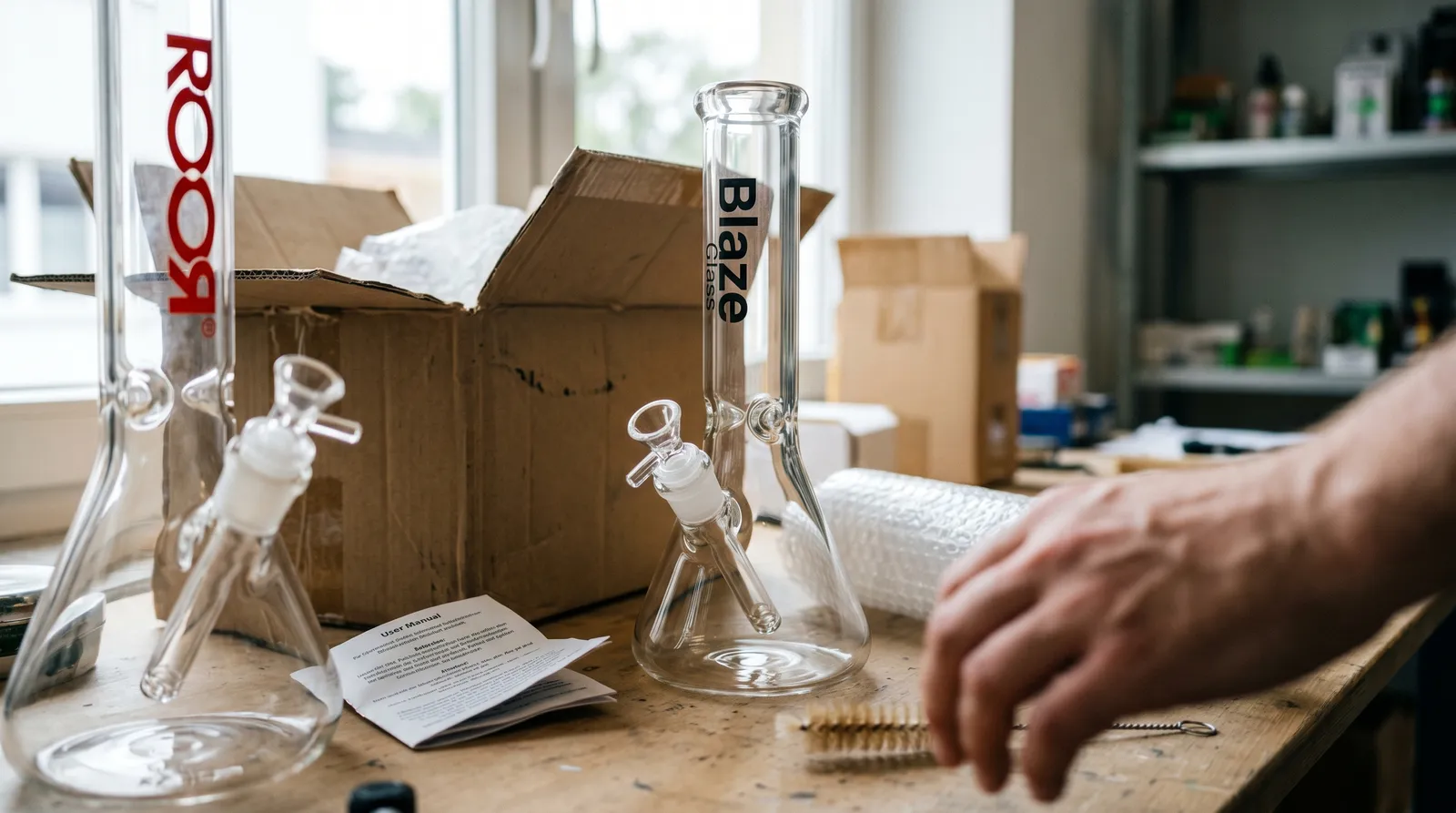
The percolation options are respectable — tree percs, spiral percs, and multi-chamber designs feature across the range. Where Blaze Glass makes its compromises is in finishing details: joint grinding may not be as silky as ROOR's, ice notches can be slightly less refined, and the aesthetic is more functional than decorative. None of that affects how the bong smokes. It affects how it feels in your hand and how it looks on a shelf — which matters to some buyers and not at all to others.
Percolation Types Across Brands
Tree percolators are the most common advanced filtration type across Grace Glass, Black Leaf, and Blaze Glass, while ROOR favours simpler diffuser downstems. Here's a quick orientation on what each type does:
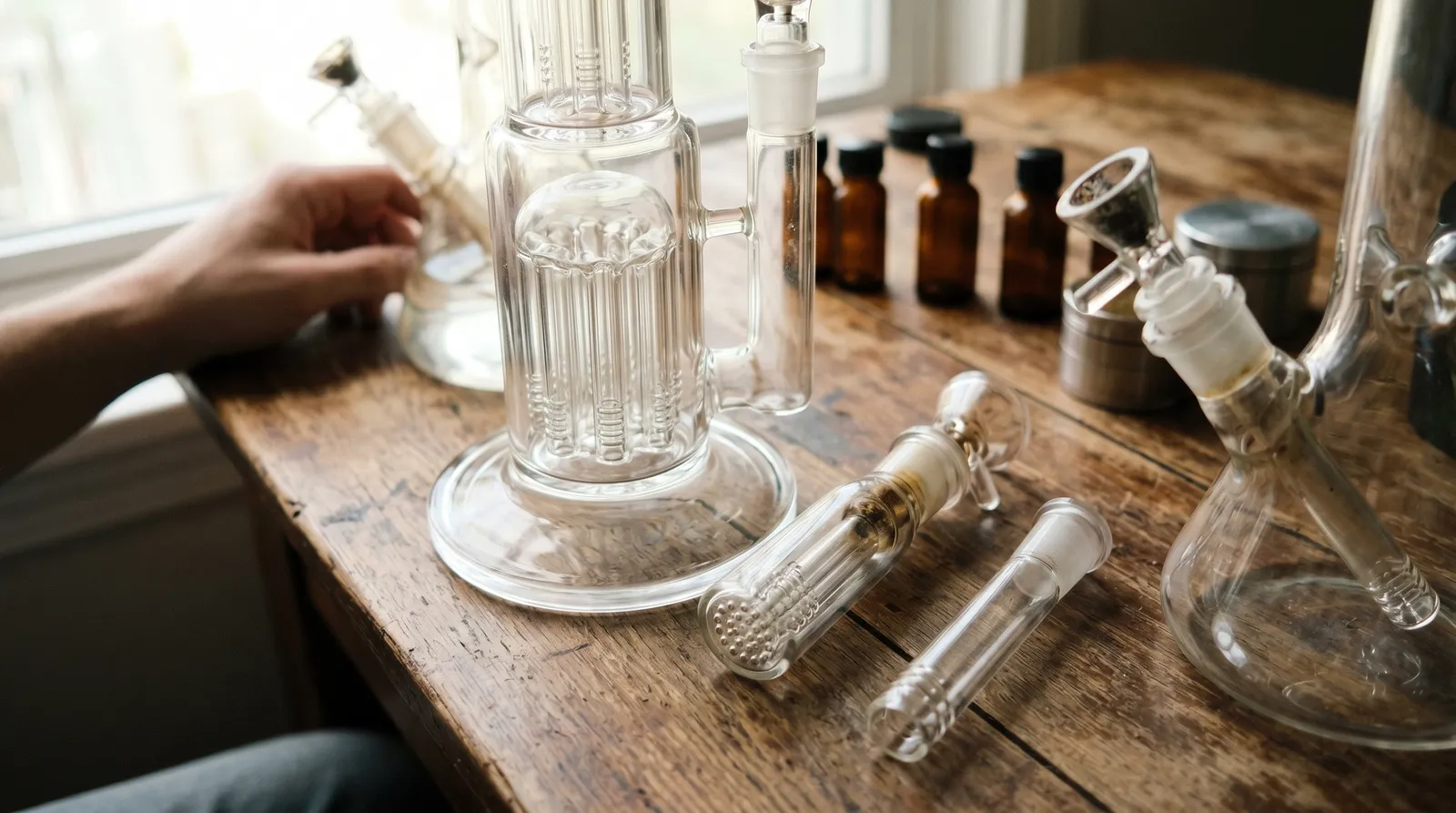
Tree percolators use multiple arms (typically 4–12) with slits at the base of each arm. More arms means more diffusion and smoother draws, but also more drag and more fragile internal structures. Grace Glass, Black Leaf, and Blaze Glass all offer tree-perc models.
Honeycomb percolators are flat discs with dozens of small holes. They provide excellent diffusion with minimal drag and are structurally robust because there are no protruding arms to snap. Black Leaf and Grace Glass both stock honeycomb models.
Inline diffusers sit horizontally in the base of the bong and act as the primary filtration stage. Black Leaf offers these in several configurations.
Diffuser downstems — ROOR's preferred approach — replace the standard open-ended downstem with one that has slits or holes at the submerged end. Less dramatic filtration than a tree perc, but cleaner airflow and far easier to clean. A 2018 analysis by the Corning Museum of Glass noted that simpler internal geometries in borosilicate vessels are significantly easier to maintain and less prone to residue buildup — relevant because a dirty percolator defeats its own purpose.
For a deeper look at how different percolator types affect draw resistance and filtration, see our percolator bongs guide. Our bongs and pipes wiki section covers additional terminology, and the Azarius headshop category page lists current models from all four brands.
Which Brand for Which Buyer?
The right brand depends entirely on your priorities — budget, feature set, and how long you want the piece to last. There's no single "best" brand here — there's a best fit for what you actually want.
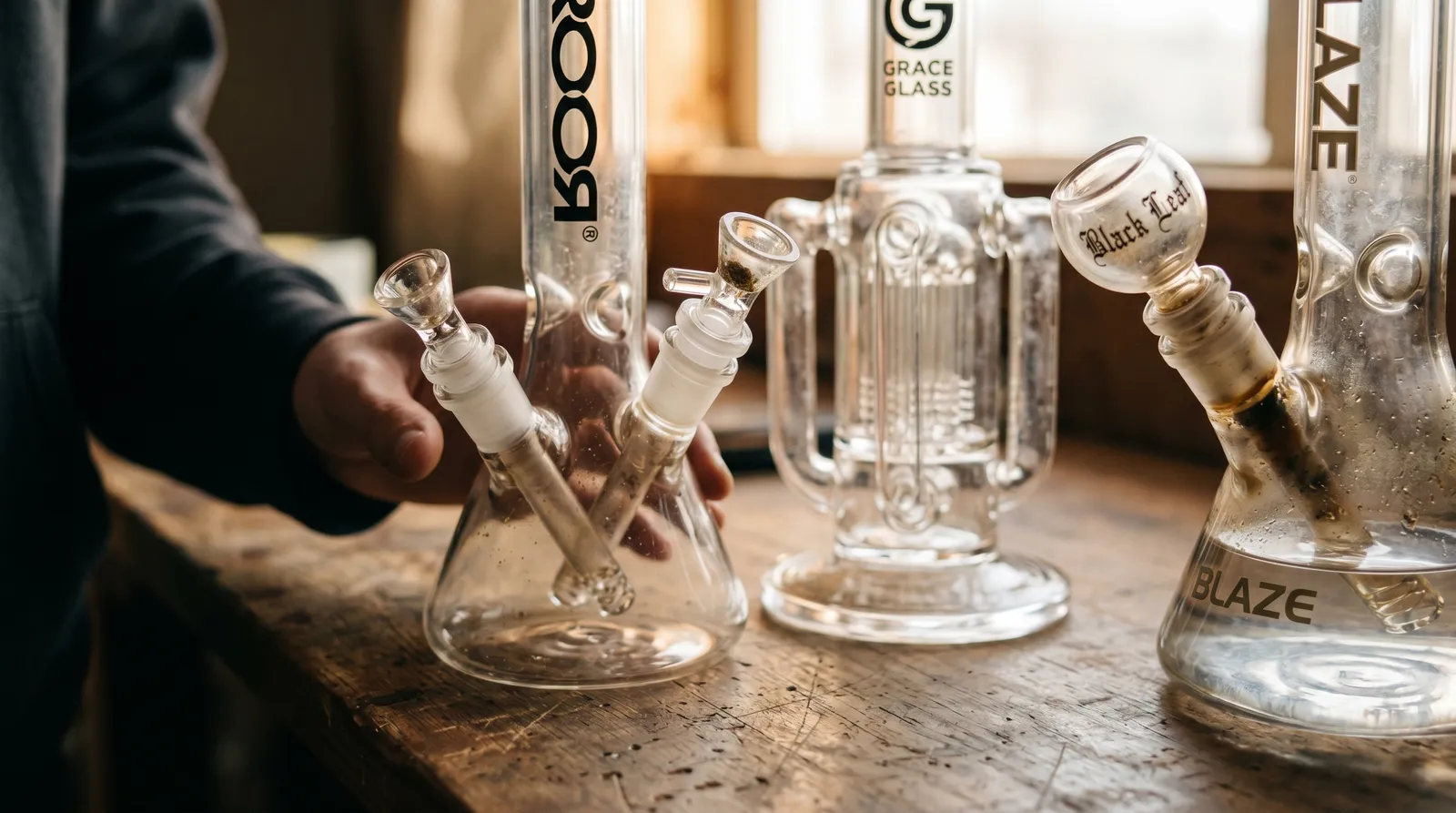
Buy ROOR if you want one bong that you'll still be using five years from now, you value material and build quality over feature count, and you're comfortable paying a premium for German-made Schott Duran glass. A ROOR beaker with a diffuser downstem is about as reliable as glass gets.
Buy Grace Glass if you want a step up from basic but don't need the ROOR price tag, and you're drawn to percolator designs with some visual character. Solid middle ground.
Buy Black Leaf if you have a specific feature list in mind — showerhead perc, particular height, bent neck — and want the widest selection to find exactly that. Just pay attention to individual model specs rather than assuming uniformity.
Get Blaze Glass if you're buying your first proper glass bong and want thick borosilicate without spending heavily, or if you want a second piece for travel or group sessions where you'd rather not risk a pricier tube.
All four brands use standard 14.5 mm and 18.8 mm joint sizes, so bowls, ash catchers, and downstems are interchangeable across them — you're not locked into an ecosystem. Our blog post on choosing your first bong covers additional buying considerations.
Cleaning and Maintenance — Same Rules, All Four Brands
Isopropyl alcohol and coarse salt is the universal cleaning method for all four brands. Borosilicate is borosilicate: the cleaning routine doesn't change by brand. Use isopropyl alcohol (90%+ concentration) and coarse salt, shaken through the chamber, to handle resin buildup. Rinse thoroughly with warm water afterwards. For percolator models with internal chambers that are hard to reach, soaking overnight in isopropyl works better than aggressive shaking — those tree-perc arms are the most fragile part of any bong, regardless of brand. Always clean in a well-ventilated space; isopropyl vapour is flammable and unpleasant to breathe.
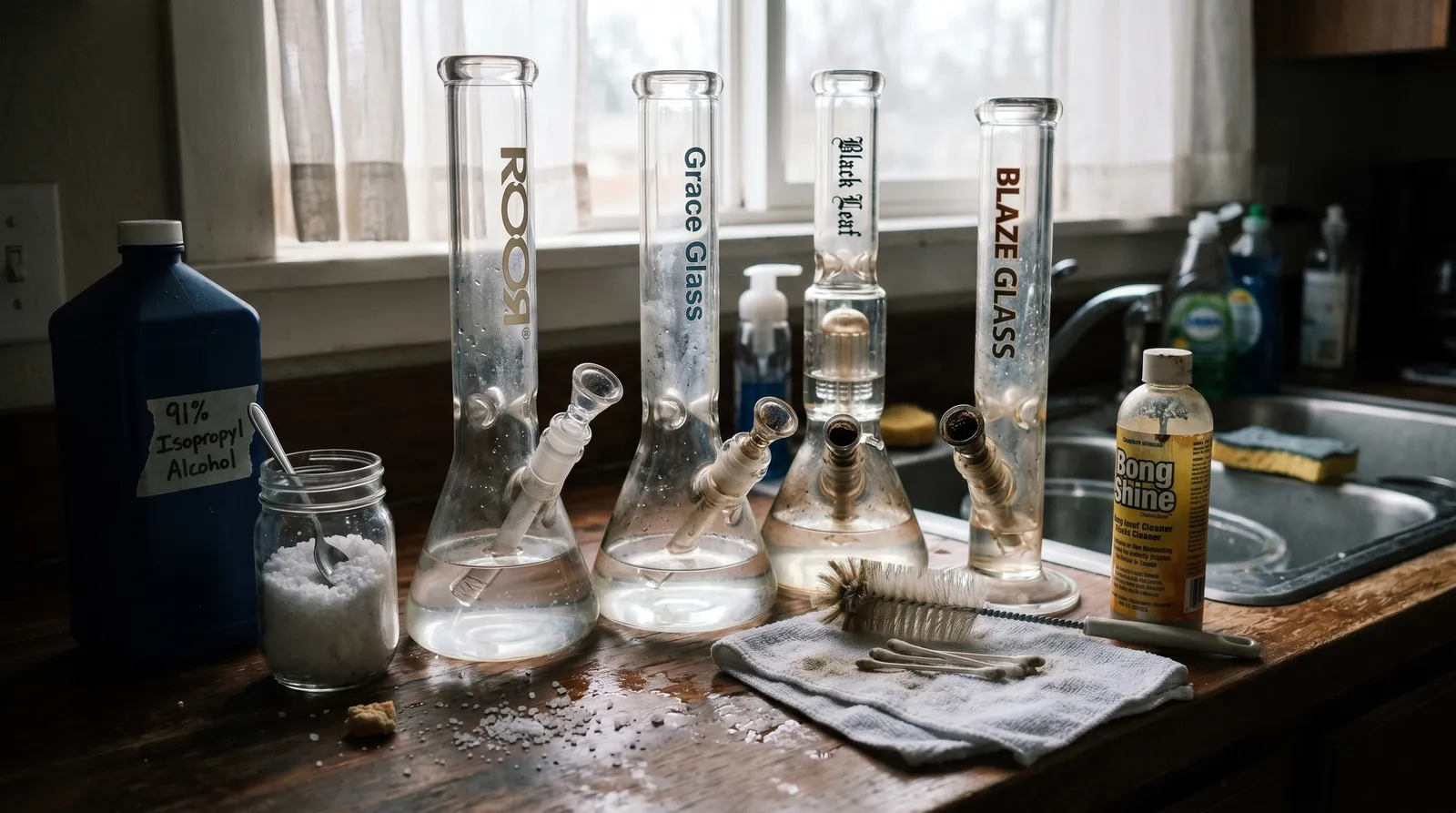
ROOR's simpler internal geometry makes cleaning faster. A straight tube with a diffuser downstem takes about two minutes. A Black Leaf triple-perc rig might take fifteen minutes and a bottle brush. Factor that into your purchase decision — the fanciest percolation system in the world doesn't help if it's caked in residue because you can't be bothered to clean it.
References
- Corning Museum of Glass. (2020). "Borosilicate Glass: Properties and Applications." info.cmog.org.
- Corning Museum of Glass. (2018). "Maintenance of Laboratory and Consumer Borosilicate Vessels." info.cmog.org.
- Schott AG. (2021). "DURAN Borosilicate Glass 3.3 — Technical Data Sheet." schott.com.
- EMCDDA. (2022). "European Headshop Product Standards Overview." emcdda.europa.eu.
Last updated: April 2026
Frequently Asked Questions
9 questionsIs ROOR glass really better than Black Leaf or Blaze Glass?
Are ROOR, Grace Glass, Black Leaf, and Blaze Glass bong parts interchangeable?
Which bong brand is best for a first-time buyer?
Do percolator bongs from these brands filter smoke better than simple tubes?
How do I clean a percolator bong without breaking the internal arms?
Does wall thickness matter more than glass grade for bong durability?
Can I use ice in all four brands of bongs?
What joint size should I choose for a ROOR, Grace Glass, Black Leaf, or Blaze Glass bong?
Is the ROOR Grace Glass Black Leaf Blaze brand comparison relevant outside Europe?
About this article


Adam Parsons is an external cannabis and psychedelics writer and editor who contributes to Azarius's wiki as both author and reviewer. On the writing side, he authors Azarius's kratom and kanna clusters, drawing on exten
This wiki article was drafted with AI assistance and reviewed by Adam Parsons, External contributor. Editorial oversight by Joshua Askew.
Medical disclaimer. This content is for informational purposes only and does not constitute medical advice. Consult a qualified healthcare provider before use of any substance.
Last reviewed April 26, 2026
Related Articles
Gravity Bongs Explained: How They Work and Why
A gravity bong uses water displacement to pull concentrated smoke into a chamber, then forces it into your lungs under positive pressure.
Storz Bickel Volcano Complete Guide: Setup, Temps & Cleaning
The Storz & Bickel Volcano is a convection desktop vaporizer that fills detachable balloons with vapour — a system clinically validated by Hazekamp et al.
TinyMight Boundless XMAX Premium Portables Compared
The TinyMight 2, Boundless CFX/CFC and XMAX V3/Starry/Ace represent three tiers of portable dry-herb vaporizer — from budget conduction to premium convection.
How To Clean a Vaporizer: Step-by-Step Guide
How to clean a vaporizer is a straightforward maintenance routine that keeps your device tasting fresh, drawing smoothly, and lasting years longer than a…
Joint Filters Crutches Glass Tips Activated Charcoal — Buyer's Guide
Joint filters range from simple card crutches that block loose herb to activated charcoal tubes that trap 40–60% of gas-phase toxicants like benzene and…
Quartz Banger Temperature and Care Guide
A quartz banger's performance depends almost entirely on temperature control and maintenance.
Arizer Portable Lineup Compared: Solo vs Solo 2 vs Solo 3 vs ArGo
Arizer's portable vaporizers all use borosilicate glass vapour paths and session-style heating, but differ meaningfully in battery architecture, heating…
Kief: What It Is and How to Collect It | Full Guide
Kief is the fine, powdery accumulation of trichome heads that detach from cannabis flower during grinding or handling.
Rolling Papers Compared: RAW vs OCB vs Elements vs Rizla
Rolling papers vary dramatically by material, thickness, burn rate, and adhesive — and those differences shape every session.