
Ice Bongs Guide: Setup, Use, Cleaning & Tips

Definition
An ice bong uses glass notches — called ice catchers — to hold ice cubes inside the tube, cooling smoke before inhalation. Water pipe filtration reduces certain volatile compounds but not particulate matter (Bloor et al., 2007). This guide walks through choosing, setting up, and maintaining an ice bong step by step.
What Is an Ice Bong, and Why Does It Exist?
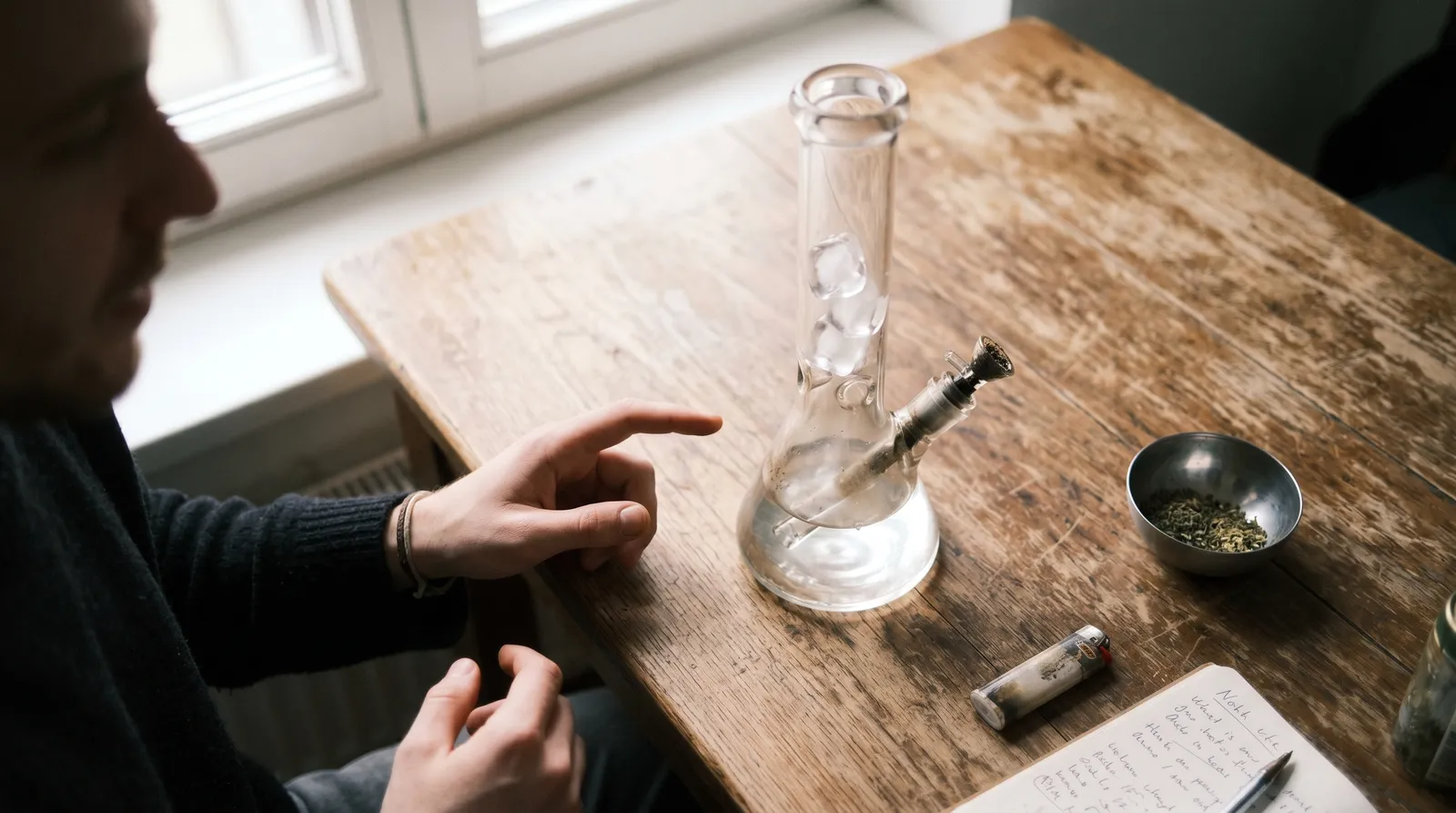
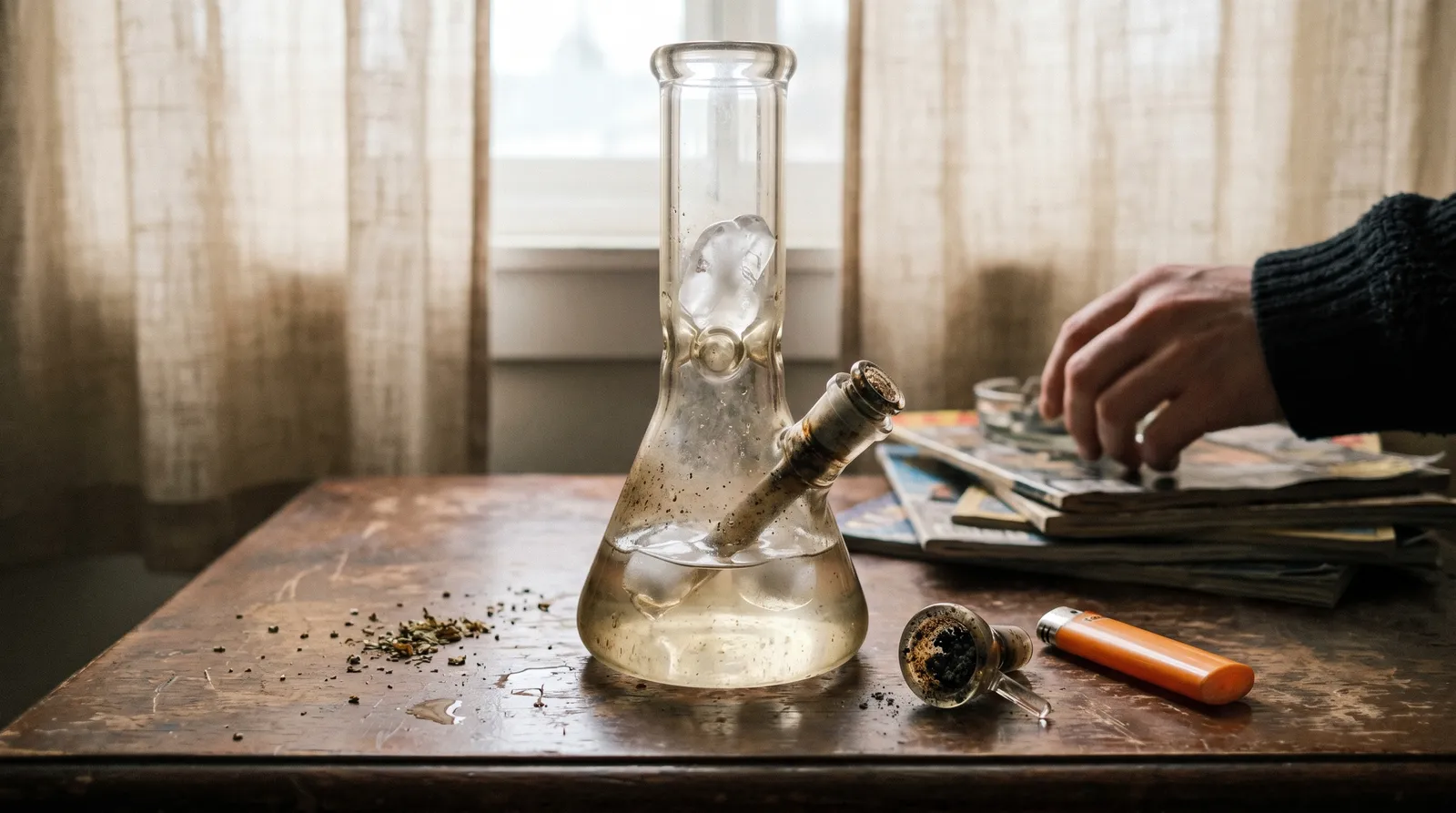
An ice bong is a water pipe fitted with an ice catcher — a set of glass pinches or notches inside the tube that hold ice cubes above the waterline. As smoke travels upward through the tube, it passes over and around the ice, dropping in temperature before it reaches your lips. The result: a noticeably cooler, smoother draw that's easier on the throat. This guide is written for adults (18+) and covers the hardware side — how to set one up, use it properly, and keep it clean.
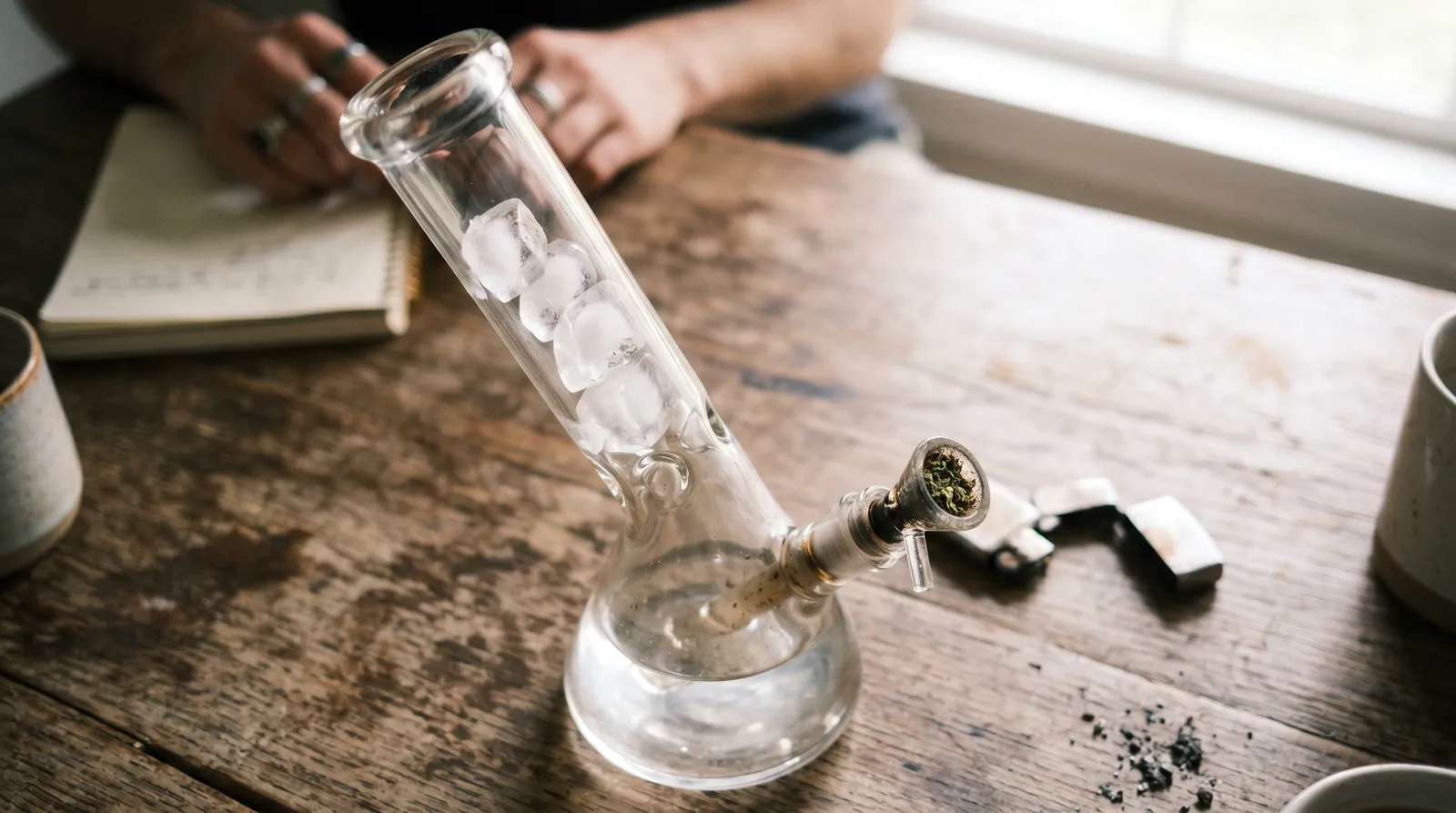
The concept is dead simple, but the execution matters. Poorly stacked ice, dirty water, or the wrong tube diameter can turn a pleasant session into a coughing fit or, worse, a cracked piece of glass. The steps below cover everything from choosing the right bong to cleaning up afterwards.
Step 1: Choose a Bong With a Proper Ice Catcher
Not every bong can hold ice. You need one with dedicated ice notches — small indentations or pinched glass sections inside the neck that create a shelf. Without them, ice drops straight into the water chamber, which still cools the smoke somewhat but misses the point of direct contact between smoke and ice surface area.
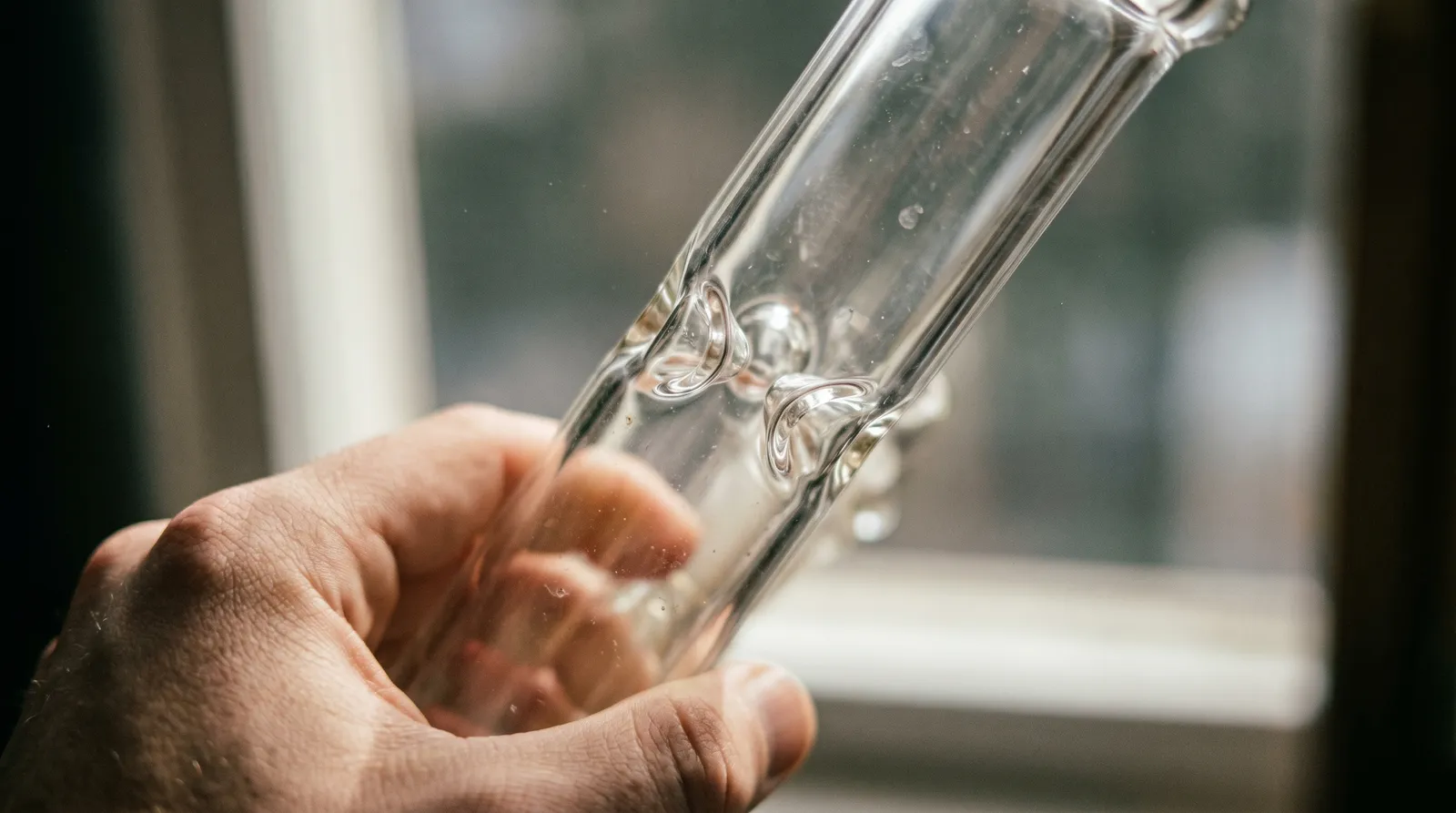
Glass ice bongs are the standard. Borosilicate glass (the same stuff lab beakers are made from) handles thermal shock far better than soda-lime glass. When you drop ice cubes into a tube that's been sitting at room temperature, the glass experiences a sudden temperature change. Borosilicate handles that without complaint; cheaper glass can crack. Brands like ROOR, Grace Glass, and Black Leaf produce borosilicate ice bongs in various sizes. Blaze Glass offers solid entry-level options if you're not ready to commit to a premium piece.
Acrylic bongs sometimes feature ice notches too, and they won't shatter from thermal shock — but they're harder to clean thoroughly and can retain odours over time. Silicone bongs are nearly indestructible but rarely come with integrated ice catchers. For the full ice-cooling experience, glass remains the go-to material.
Tube diameter matters. A wider tube (50 mm+) lets you stack more ice and gives smoke more surface area to cool against. Narrow tubes (under 40 mm) hold fewer cubes and can get blocked if the ice shifts as it melts. If you're buying specifically for ice use, lean toward a straight-tube or beaker-base design with a generous neck.
Step 2: Prepare the Bong
- Fill with fresh, cold water. Pour water into the base until the downstem is submerged by roughly 2–3 cm. Too much water and you'll get splashback; too little and the smoke bypasses the filtration entirely. Cold water from the tap is fine — you don't need filtered or distilled water, though some people prefer it for taste.
- Check the downstem and bowl. Make sure the downstem sits snugly and the bowl piece is clean. Residue from previous sessions affects flavour and airflow. A quick rinse with warm water removes loose debris; for a deeper clean, see Step 6 below.
- Optional: add a percolator layer. If your bong has an inline percolator (tree perc, honeycomb disc, showerhead — the design varies), the smoke gets broken into smaller bubbles before it even reaches the ice. This stacks the cooling effect. Percolator ice bongs produce some of the smoothest draws you'll get from combustion-based smoking.
Step 3: Stack the Ice Properly
This is where most people get it wrong. The instinct is to cram as many cubes as possible into the tube. More ice, colder smoke, better session — right? Not exactly.
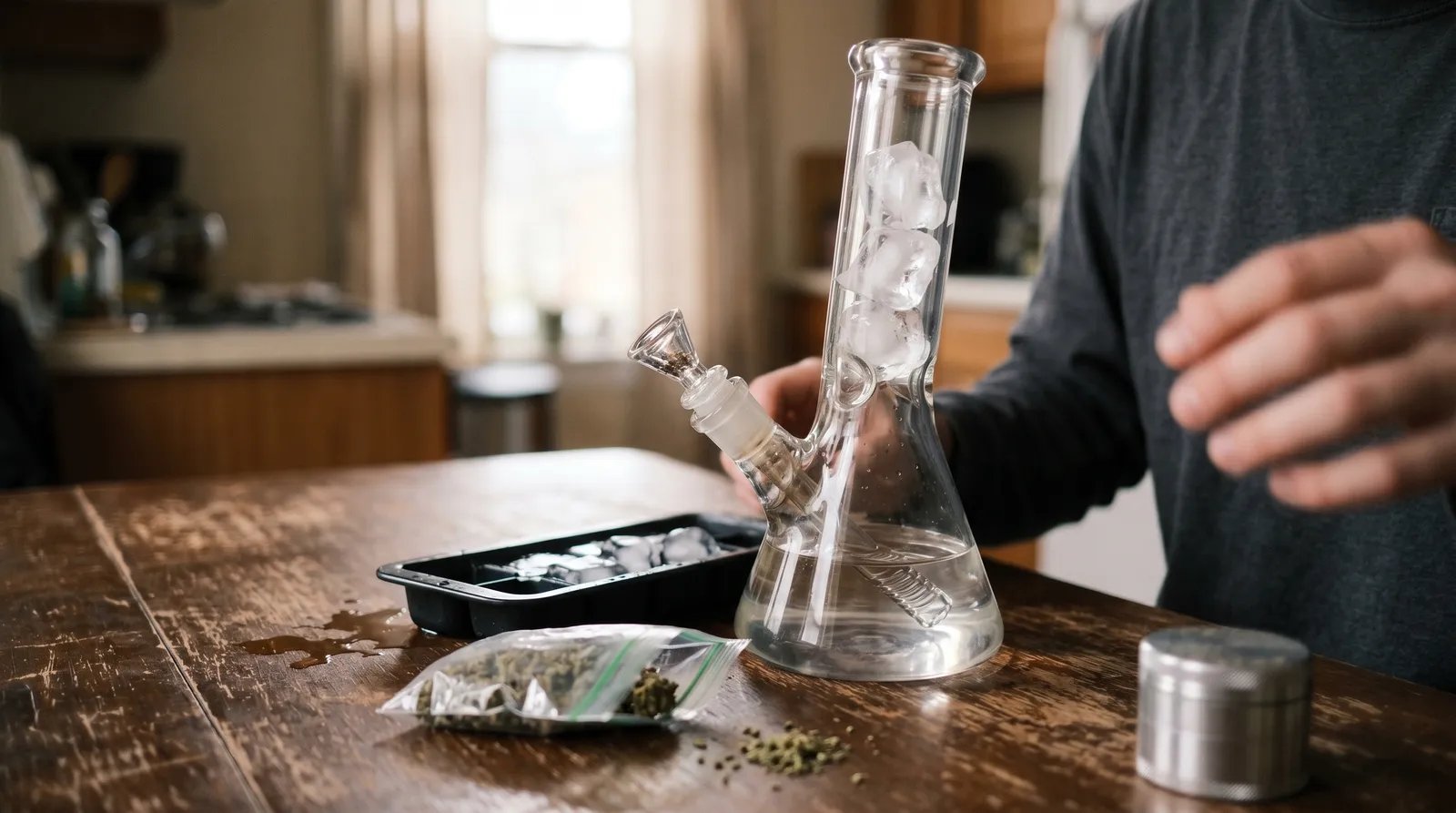
- Use standard-size cubes, not crushed ice. Crushed ice melts fast, raises the water level quickly, and can slip through the notches. Standard freezer-tray cubes (roughly 2.5–3 cm) sit on the pinches without falling through.
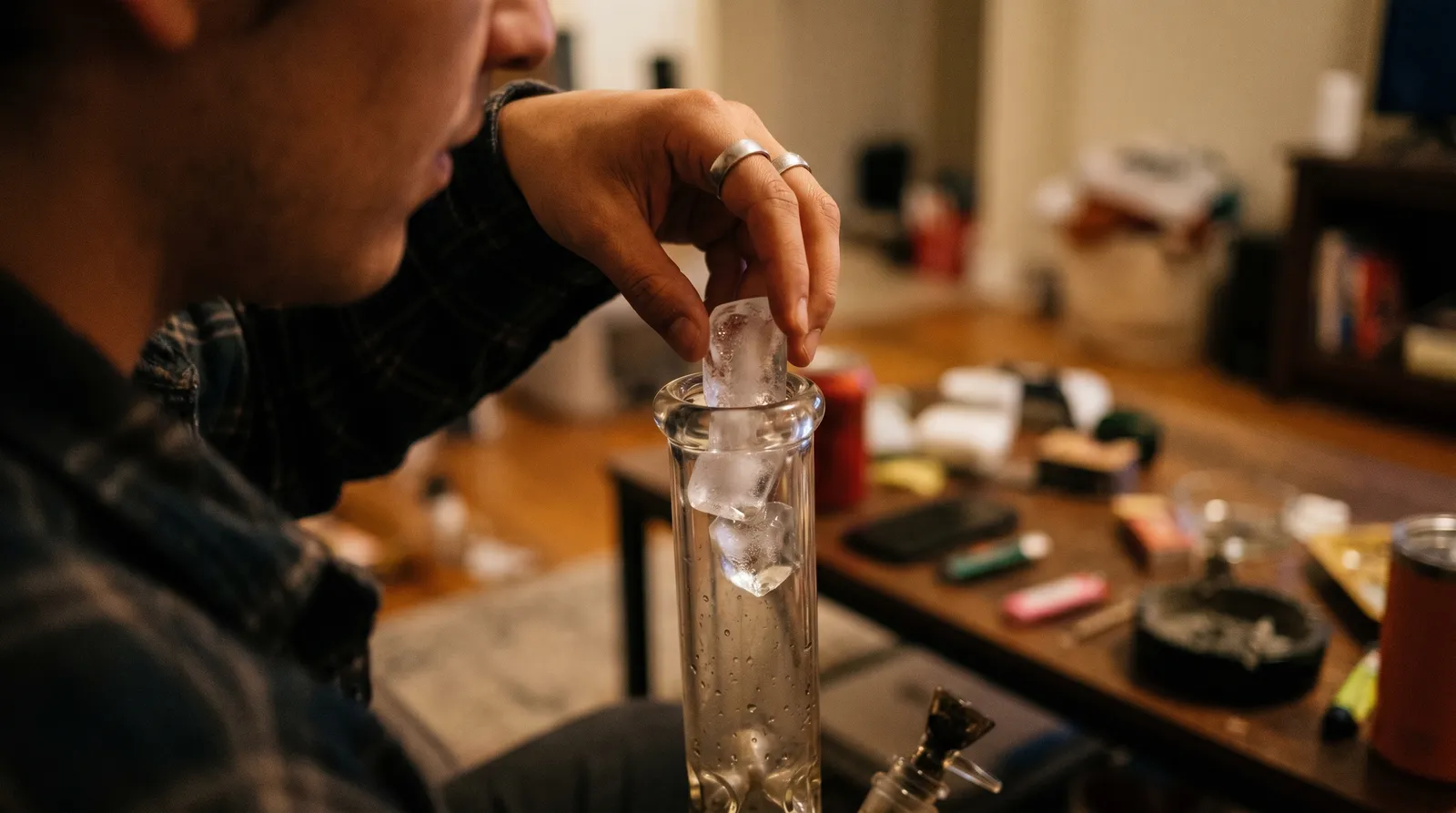
- Stack 3–5 cubes. That's typically enough for a 35–45 cm tube. You want gaps between the cubes so smoke can flow around them rather than being blocked. If the draw feels restricted, you've overpacked.
- Drop them in gently. Tilt the bong slightly and slide cubes in one at a time. Dropping a handful from height risks chipping the ice notches or cracking the glass at the joint where the notches meet the tube wall. Even borosilicate has its limits.
Step 4: Pack the Bowl and Take a Draw
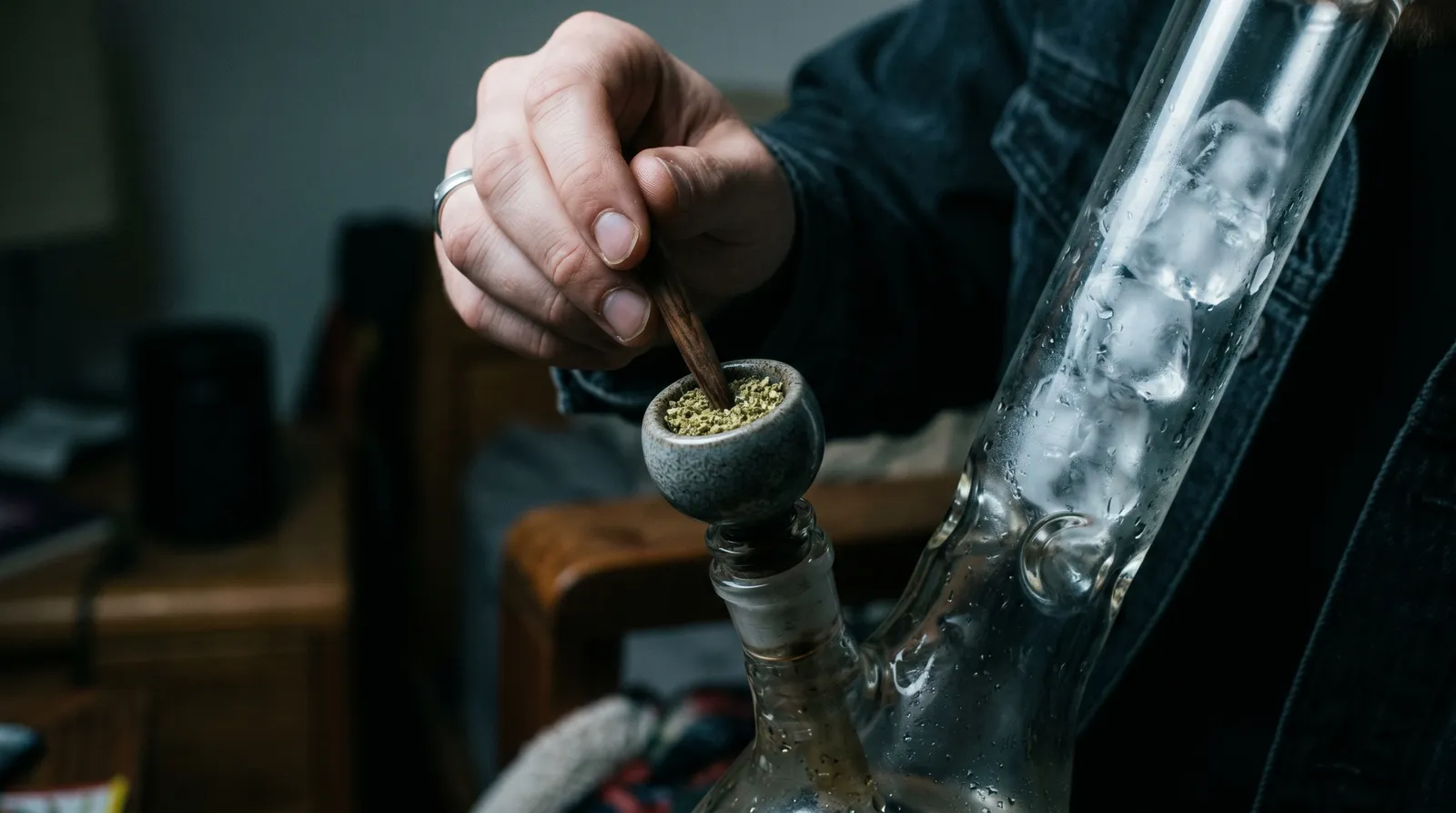
- Grind your herb to a medium consistency. Too fine and it pulls through the bowl hole; too coarse and it burns unevenly. A 4-part grinder from SLX or Santa Cruz Shredder gives you a consistent grind with minimal effort.
- Pack the bowl loosely. Finger-press gently — you want airflow through the herb, not a compressed plug. A packed-too-tight bowl forces you to inhale harder, which pulls more smoke than the ice can cool effectively.
- Light the edge, not the centre. "Cornering" the bowl — touching the flame to one edge of the herb — lets you get multiple green hits from a single pack instead of torching the whole surface in one go.
- Inhale slowly and steadily. The ice does its job when smoke moves past it at a moderate pace. A violent rip pulls smoke through too fast for meaningful cooling. Slow draws also reduce the chance of pulling water up through the mouthpiece as ice melts and raises the water level.
- Clear the chamber. Once you've drawn enough smoke, remove the bowl piece (or open the carb hole, if your bong has one) and inhale the remaining smoke. Stale smoke left sitting in the tube tastes harsh regardless of how cold it is.
Step 5: Manage the Meltwater
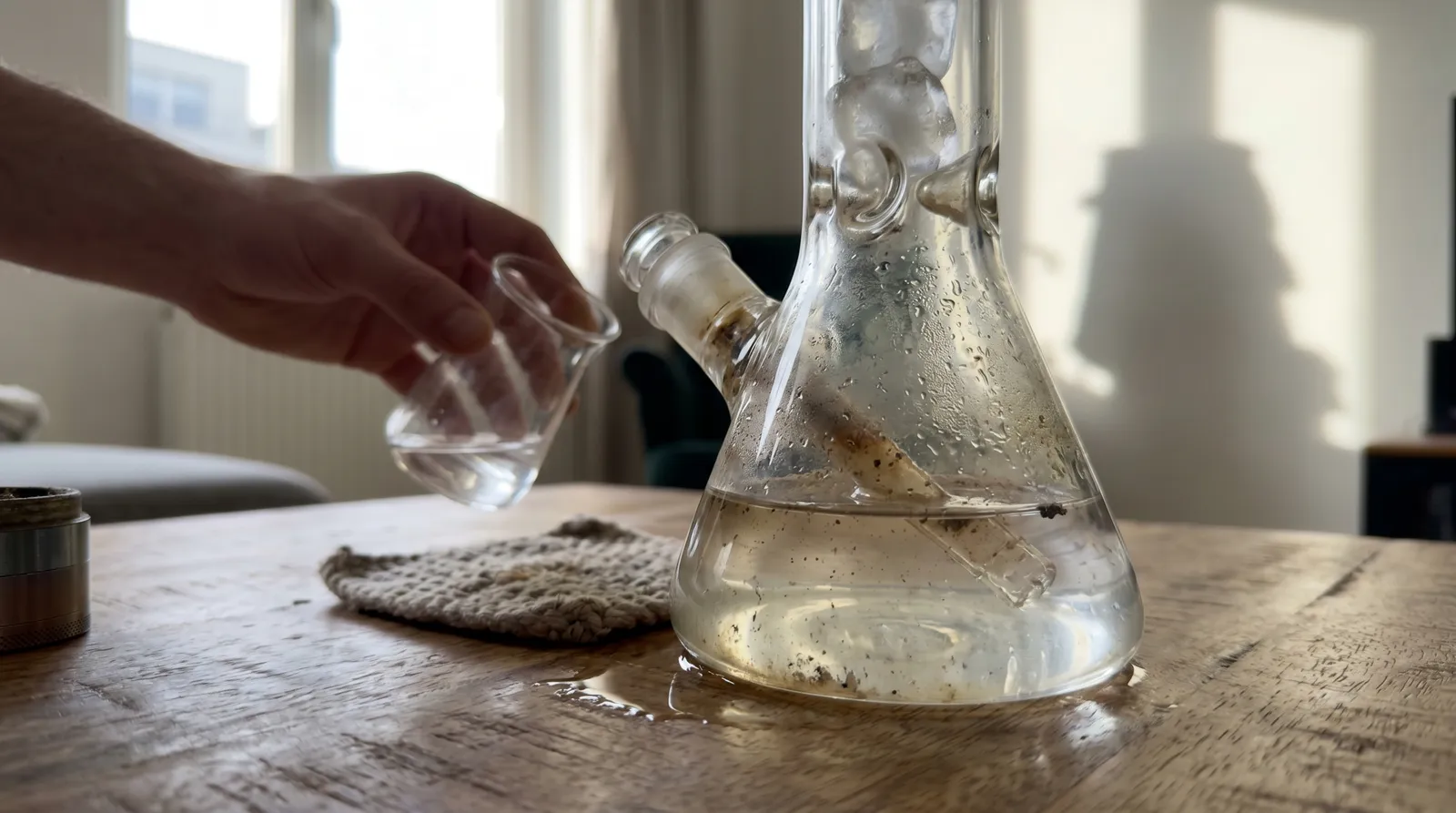
Here's the thing nobody mentions in most guides: ice melts. Continuously. Every draw sends warm smoke past the cubes, and the ambient temperature of the room does the rest. Within 15–20 minutes, your carefully measured water level is now 2–3 cm higher than when you started. That means:
- More drag on each pull — the smoke has to push through a taller water column.
- Splashback risk — water reaching the mouthpiece mid-draw is unpleasant and unhygienic.
- Diluted filtration — meltwater is clean, so it dilutes the resin-saturated bong water, but it also raises the overall volume past the optimal range.
The fix: Pour off excess water every few bowls. Tilt the bong and drain from the mouthpiece into a sink, or use the carb hole if the design allows it. Top up with fresh ice as needed. Some people start with slightly less water than usual to account for melt — about 1.5 cm of downstem submersion instead of 2–3 cm.
Step 6: Understand the Debate Around Ice and Your Lungs
You'll find forum threads and a few health articles claiming that bongs with ice cause "micro-icicles" or ice crystal formation in the lungs. The concern, broadly, is that inhaling very cold vapour introduces moisture at a temperature low enough to irritate bronchial tissue. A widely cited but informal discussion traces back to online cannabis communities in the early 2010s, not peer-reviewed research.
There's no robust clinical evidence that ice-cooled smoke causes unique lung damage compared to non-cooled smoke. A 2007 study by Bloor et al. published in Inhalation Toxicology examined water pipe filtration and found that water cooling reduced certain volatile compounds but did not eliminate particulate matter or tar (Bloor et al., 2007). The study didn't isolate ice cooling specifically, but it does confirm that water filtration — with or without ice — is not a substitute for harm reduction through vaporisation or abstinence.
The honest position: cooled smoke feels less harsh, which may encourage larger draws and deeper inhalation. Whether that offsets the comfort benefit is an open question — the specific research on ice-cooled bong smoke simply hasn't been done in a controlled clinical setting. If throat irritation is your main concern, a dry-herb vaporiser (see our vaporiser guides for options from Storz & Bickel, Arizer, or DynaVap) removes combustion from the equation entirely.
Step 7: Clean Your Ice Bong Regularly
Bong water gets dirty fast. According to a 2020 analysis by Moose Labs, stagnant bong water can harbour bacteria and fungi within 24 hours of use (Moose Labs, 2020). Bongs fitted with ice catchers are slightly more prone to this because meltwater constantly refreshes the volume, which sounds like it would help — but in practice, the extra moisture and temperature fluctuation create a friendlier environment for microbial growth.
- Change the water after every session. Not every day — every session. Fresh water, fresh ice, every time. It takes 30 seconds and makes a real difference to taste and hygiene.
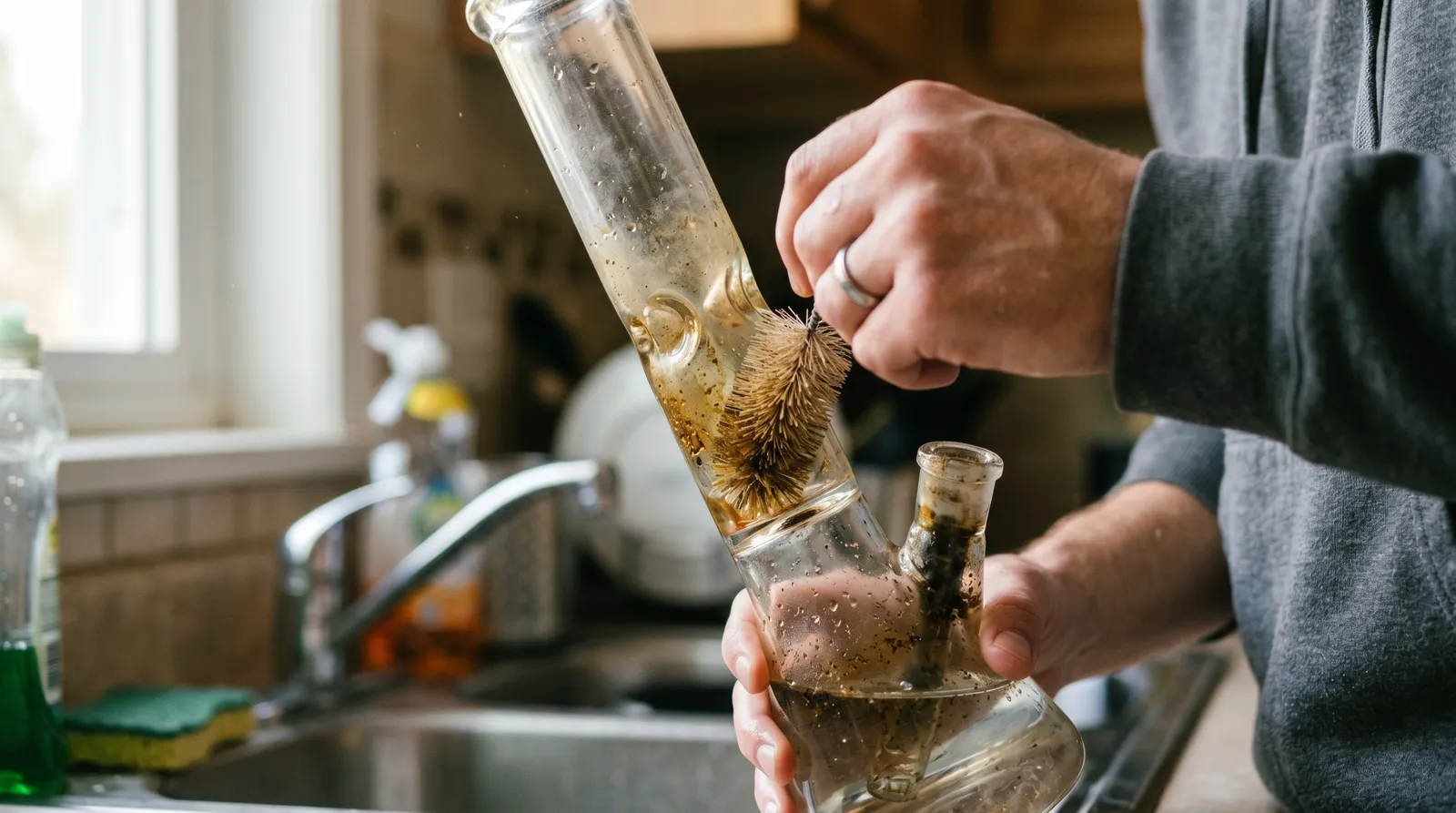
- Weekly deep clean. Pour roughly 100 ml of isopropyl alcohol (90%+ concentration) and a tablespoon of coarse salt into the bong. Plug the openings with your hands or silicone caps and shake vigorously for 60–90 seconds. The salt acts as an abrasive; the alcohol dissolves resin. Rinse thoroughly with warm water afterwards — you don't want alcohol residue in your next session.
- Clean the ice notches specifically. Resin collects on the notch surfaces because smoke slows down and condenses there. A pipe cleaner or small bottle brush reaches these spots. If the buildup is stubborn, soak the tube section in isopropyl for 30 minutes before scrubbing.
- Dry before storing. Standing water in a clean bong grows bacteria just as fast as dirty bong water. Tip it upside down on a towel and let it air-dry completely.
Safety note: isopropyl alcohol is flammable and produces irritating vapour. Clean in a well-ventilated area, away from open flames or heat sources. Never use a bong that still smells of alcohol — rinse until the smell is completely gone.
Common Mistakes and How to Avoid Them
| Mistake | What Happens | Fix |
|---|---|---|
| Overpacking ice | Restricted airflow, difficult draw | Use 3–5 standard cubes with gaps between them |
| Using crushed ice | Slips through notches, melts too fast, raises water level | Standard freezer-tray cubes only |
| Not accounting for melt | Splashback, increased drag | Start with slightly less water; drain excess every few bowls |
| Dropping cubes from height | Chipped notches or cracked glass | Tilt bong, slide cubes in one at a time |
| Reusing bong water across sessions | Bacterial growth, foul taste | Fresh water and fresh ice every session |
| Cleaning with hot water immediately after ice use | Thermal shock can crack glass | Let the glass return to room temperature first, then clean with warm (not hot) water |
Quick Note on Glycerine Coils and Freeze Pipes
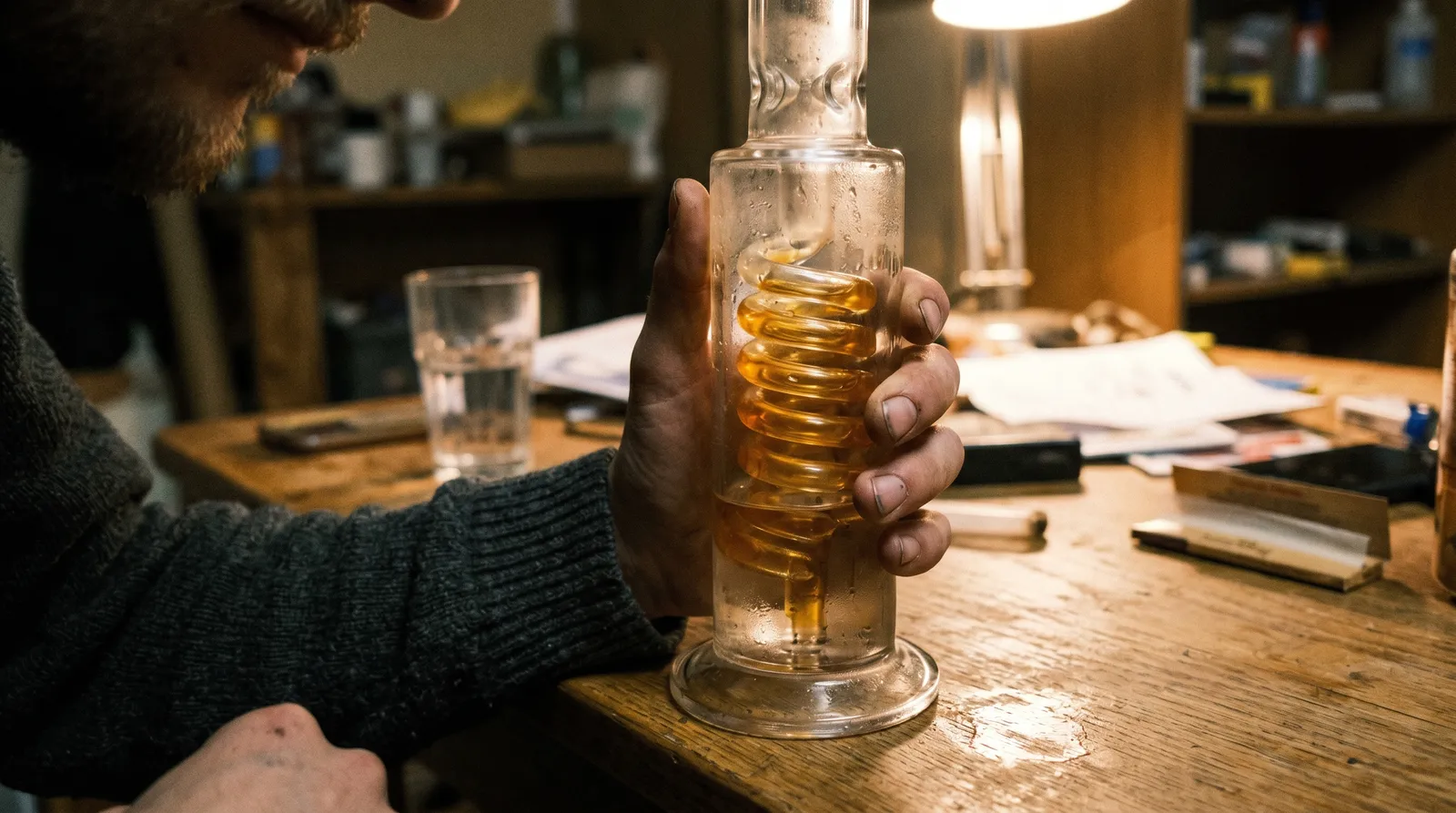
Some bongs replace ice catchers with a glycerine-filled coil that you store in the freezer. The coil stays cold longer than ice cubes and doesn't add meltwater to the equation. The trade-off: glycerine coils add cost, weight, and another component to clean. They're a solid option if meltwater management annoys you, but they're not strictly better — just different. Standard ice notches remain the most common and affordable cooling method.
This guide covers hardware for adults (18+). Use of vaporizers, bongs, pipes, dab rigs and rolling accessories is for adult use only. Verify your local laws on the substances you choose to use — Azarius does not provide legal advice. Consult a qualified professional if you have a health condition or take medication.
References
- Bloor, R.N., Wang, T.S., Spanel, P., & Smith, D. (2007). Ammonia release from heated street cannabis leaf and its potential toxic effects on cannabis users. Addiction, 103(10), 1671–1677. Also referenced in: Bloor et al. (2008), water pipe filtration analysis, Inhalation Toxicology.
- Moose Labs (2020). Bacteria and contaminant testing of shared smoking devices. Published at moose labs.com/bong-water-bacteria.
Last updated: April 2026
Frequently Asked Questions
7 questionsDoes putting ice in a bong make it smoother?
Can ice crack my glass bong?
How often should you change bong water when using ice?
Is crushed ice better than cubes in a bong?
Are ice bongs bad for your lungs?
What type of glass is best for an ice bong?
What tube diameter should an ice bong have?
About this article


Adam Parsons is an external cannabis and psychedelics writer and editor who contributes to Azarius's wiki as both author and reviewer. On the writing side, he authors Azarius's kratom and kanna clusters, drawing on exten
This wiki article was drafted with AI assistance and reviewed by Adam Parsons, External contributor. Editorial oversight by Joshua Askew.
Medical disclaimer. This content is for informational purposes only and does not constitute medical advice. Consult a qualified healthcare provider before use of any substance.
Last reviewed April 25, 2026
Related Articles
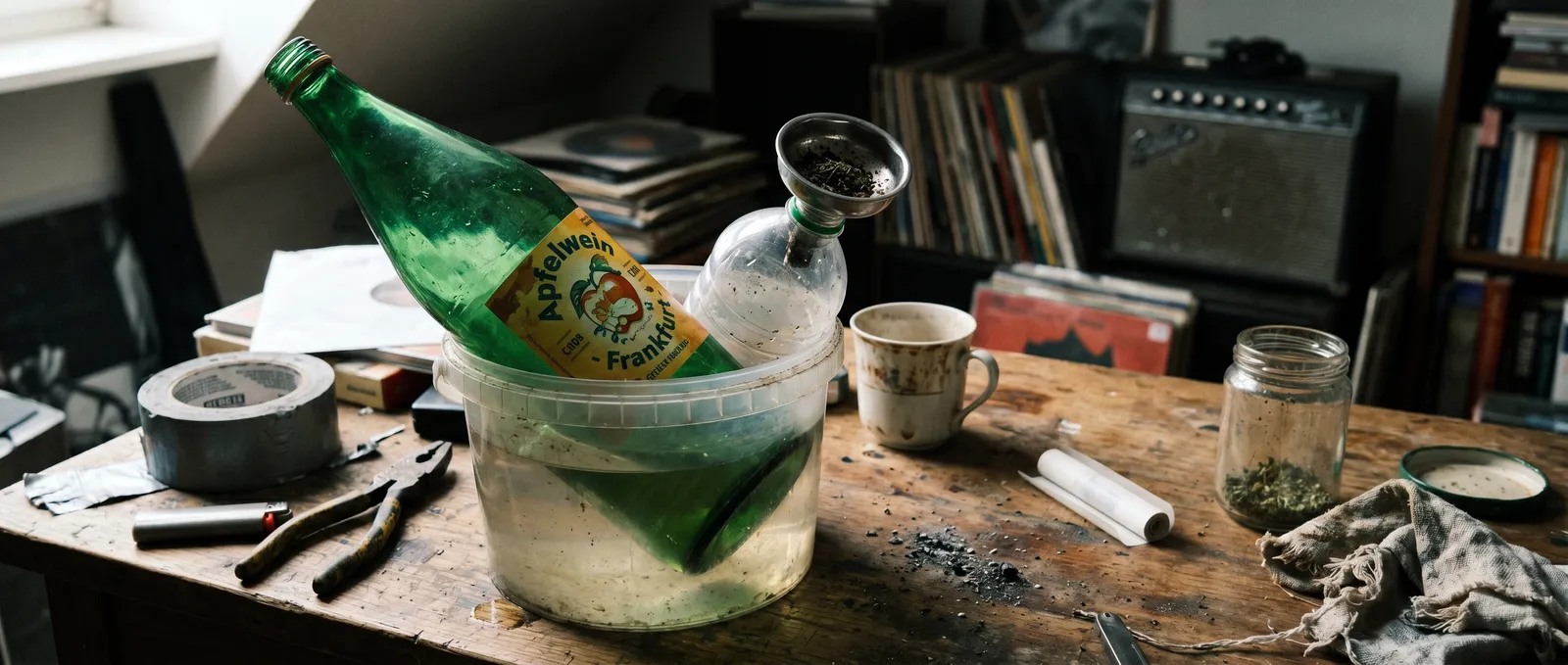
Gravity Bongs Explained: How They Work and Why
A gravity bong uses water displacement to pull concentrated smoke into a chamber, then forces it into your lungs under positive pressure.
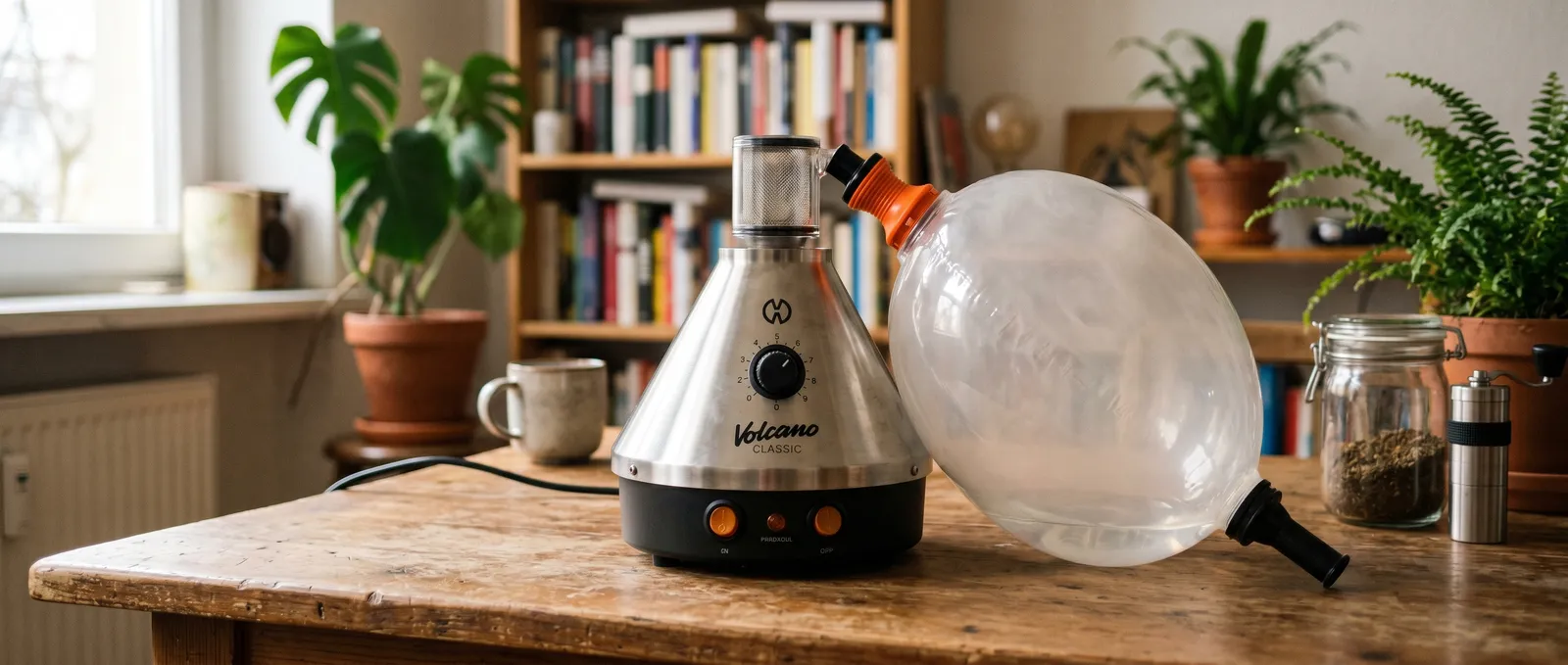
Storz Bickel Volcano Complete Guide: Setup, Temps & Cleaning
The Storz & Bickel Volcano is a convection desktop vaporizer that fills detachable balloons with vapour — a system clinically validated by Hazekamp et al.
TinyMight Boundless XMAX Premium Portables Compared
The TinyMight 2, Boundless CFX/CFC and XMAX V3/Starry/Ace represent three tiers of portable dry-herb vaporizer — from budget conduction to premium convection.
How To Clean a Vaporizer: Step-by-Step Guide
How to clean a vaporizer is a straightforward maintenance routine that keeps your device tasting fresh, drawing smoothly, and lasting years longer than a…
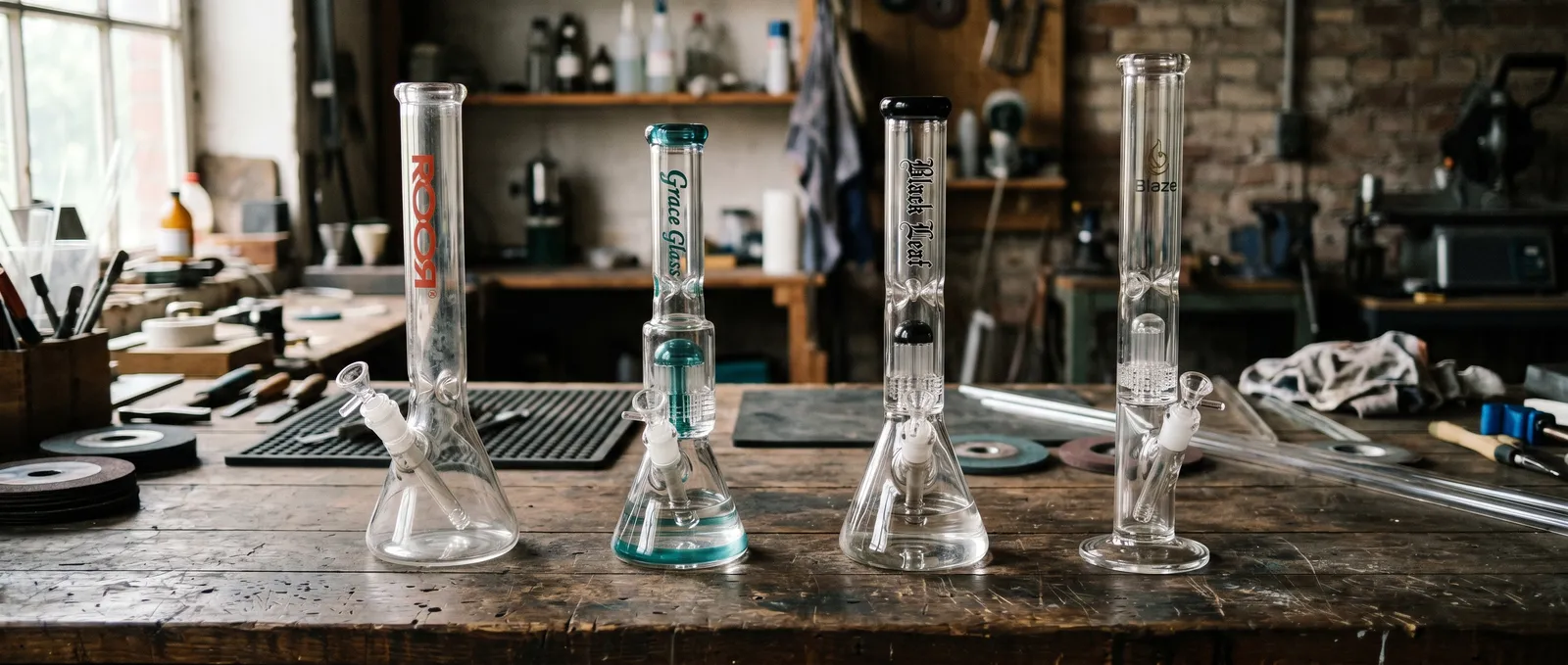
ROOR Grace Glass Black Leaf Blaze Brand Comparison — Glass Bong Guide
Four borosilicate glass bong brands — ROOR, Grace Glass, Black Leaf, and Blaze Glass — dominate the European market at different price points.
Joint Filters Crutches Glass Tips Activated Charcoal — Buyer's Guide
Joint filters range from simple card crutches that block loose herb to activated charcoal tubes that trap 40–60% of gas-phase toxicants like benzene and…
Quartz Banger Temperature and Care Guide
A quartz banger's performance depends almost entirely on temperature control and maintenance.
Arizer Portable Lineup Compared: Solo vs Solo 2 vs Solo 3 vs ArGo
Arizer's portable vaporizers all use borosilicate glass vapour paths and session-style heating, but differ meaningfully in battery architecture, heating…
Kief: What It Is and How to Collect It | Full Guide
Kief is the fine, powdery accumulation of trichome heads that detach from cannabis flower during grinding or handling.