
How To Clean a Bong and Pipe — Step-by-Step Guide
Definition
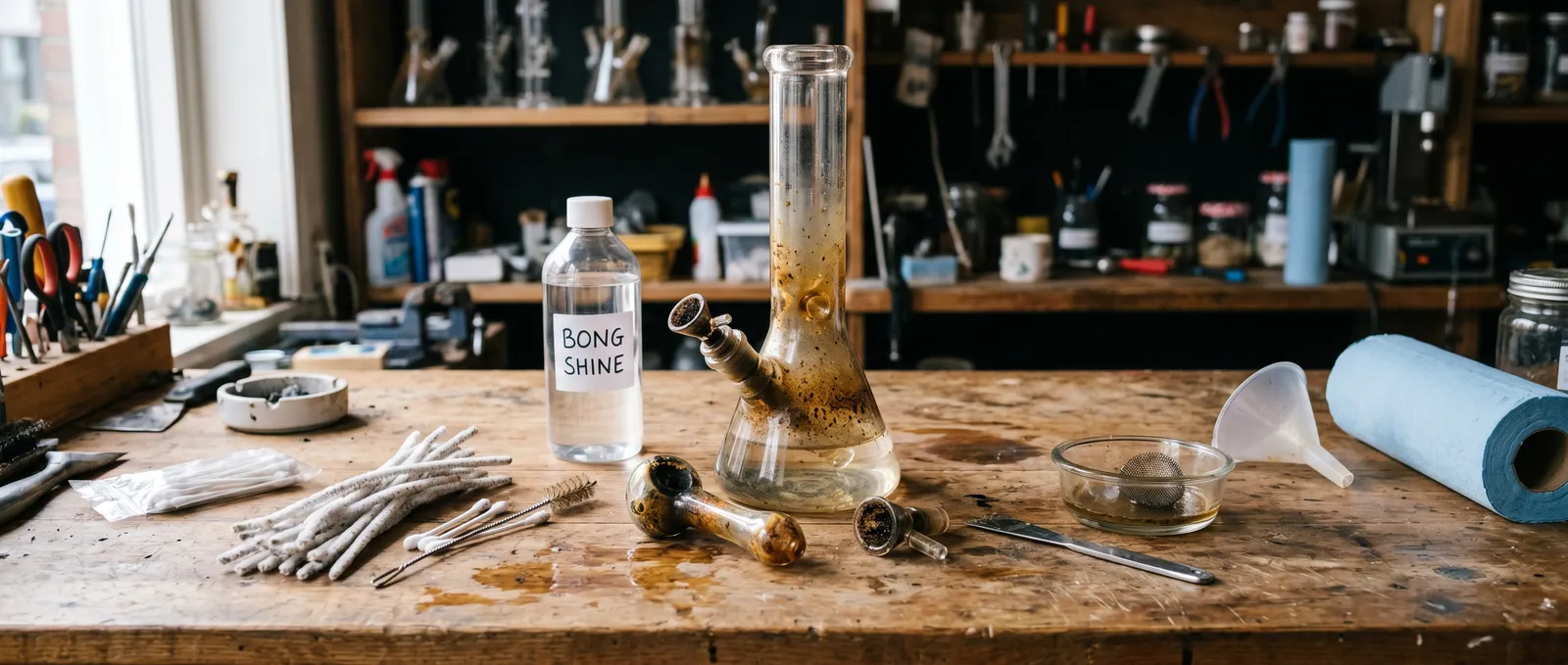
Resin, tar, and stagnant water turn a bong or pipe into a breeding ground for bacteria — including Pseudomonas and Flavobacterium species linked to respiratory infections (Morin et al., 2019). Regular cleaning with isopropyl alcohol and coarse salt restores airflow, flavour, and basic hygiene in under ten minutes.
Why Dirty Glass Matters More Than You Think
How to clean a bong and pipe is a core maintenance skill that every smoker benefits from learning — and the reason comes down to what you are actually inhaling. Every session leaves behind resin, tar, and moisture. That warm, wet environment inside a water pipe is exactly the kind of place where biofilms thrive. A 2019 study published in Environmental Health Insights found that stagnant water in smoking devices can harbour bacteria including Pseudomonas aeruginosa and Flavobacterium, organisms typically associated with respiratory infections (Morin et al., 2019). That brownish film clinging to your downstem? It's not just ugly — it's biologically active.
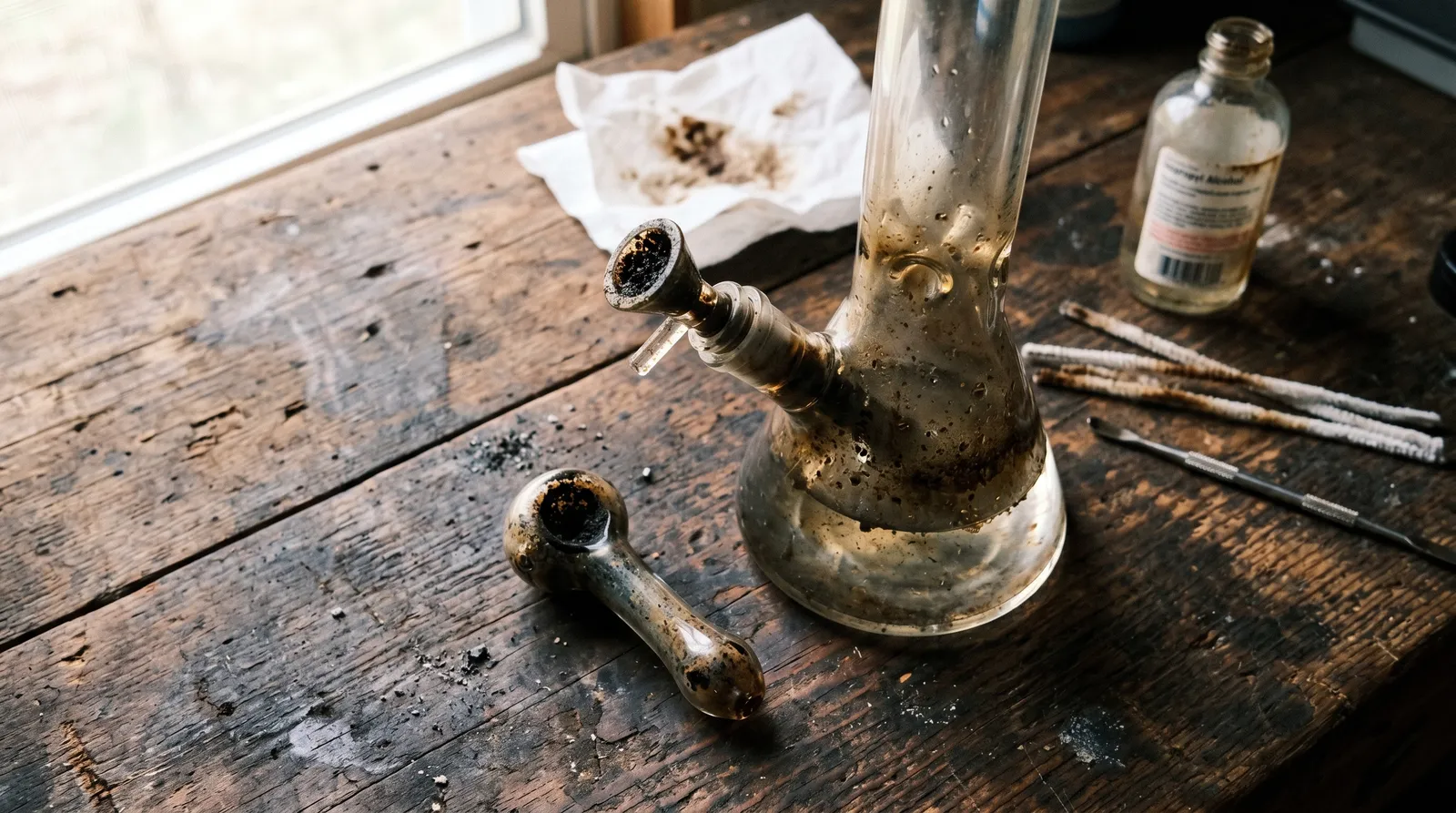
Beyond the microbiology, built-up resin restricts airflow, mutes flavour, and makes every hit harsher than it needs to be. If you've ever wondered why a brand-new piece tastes so much better than the one you've been using for three months straight, the answer is grime. This guide walks you through how to clean a bong and pipe properly — glass, acrylic, silicone, metal, and wood — so your hardware performs the way it was designed to.
A 2020 report from the European Monitoring Centre for Drugs and Drug Addiction (EMCDDA) noted a growing interest in harm-reduction accessories across Europe, including cleaning tools and filtration devices designed to reduce exposure to combustion byproducts.
What You Need Before You Start
Gather your supplies first. Nothing worse than disassembling a filthy bong and realising you're out of isopropyl alcohol.
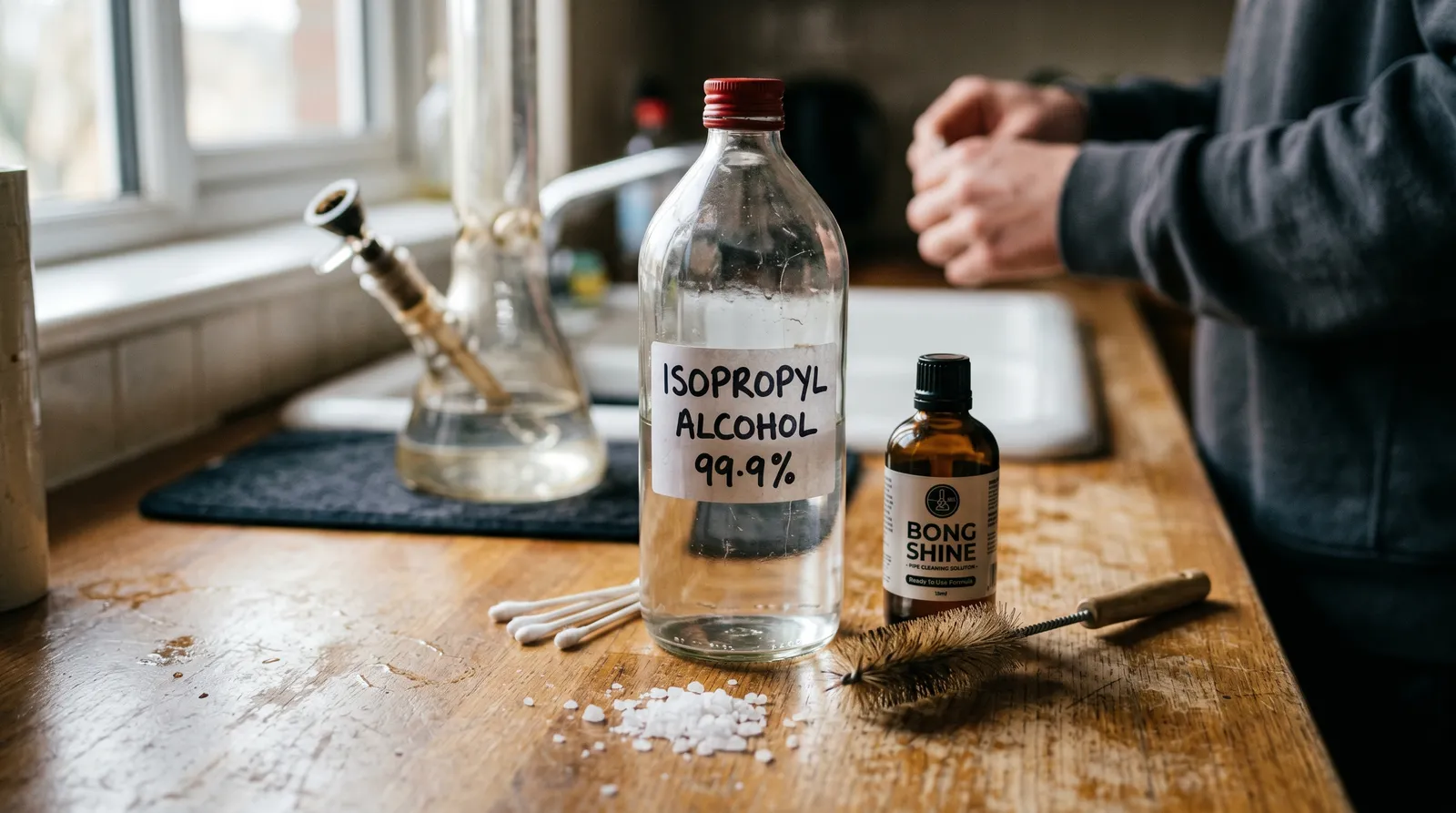
- Isopropyl alcohol (91% or higher) — the workhorse. Lower concentrations (70%) work but take longer because they contain more water. 99% is ideal for heavy resin.
- Coarse salt — rock salt, sea salt, or kosher salt. The grains act as a physical abrasive inside the glass where your hands can't reach. Table salt is too fine to be effective.
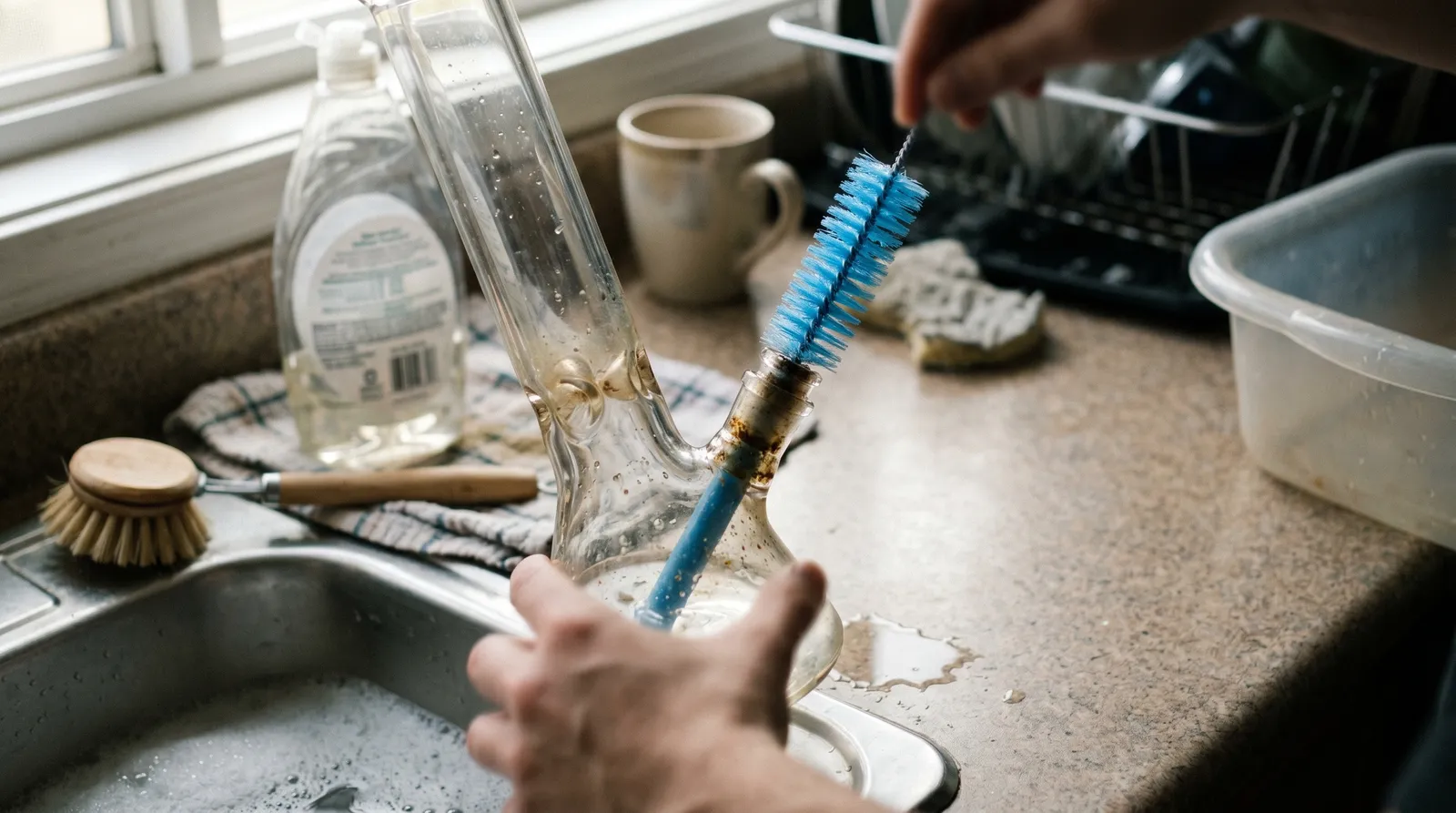
- Pipe cleaners and brushes — thin, flexible bristle cleaners for downstems, bowls, and narrow tubes. A bottle brush is useful for larger chambers.
- Resealable plastic bags — for soaking smaller parts like bowls, downstems, and one-hitters.
- Rubber stoppers or cling film + elastic bands — to plug openings when shaking.
- Warm water — for rinsing. Not boiling (thermal shock can crack glass).
- Paper towels or a drying rack — clean glass is slippery glass.
Optional but useful: a dedicated bong-cleaning solution (commercial formulas exist that skip the alcohol-and-salt method), cotton buds for tight spots, and rubber gloves if you'd rather not smell like resin for the rest of the day. If you want to buy cleaning accessories in one go, look for bundled kits that include brushes, screens, and iso-safe plugs — brands like Black Leaf and ROOR offer purpose-made sets.
Step 1 — Empty and Pre-Rinse
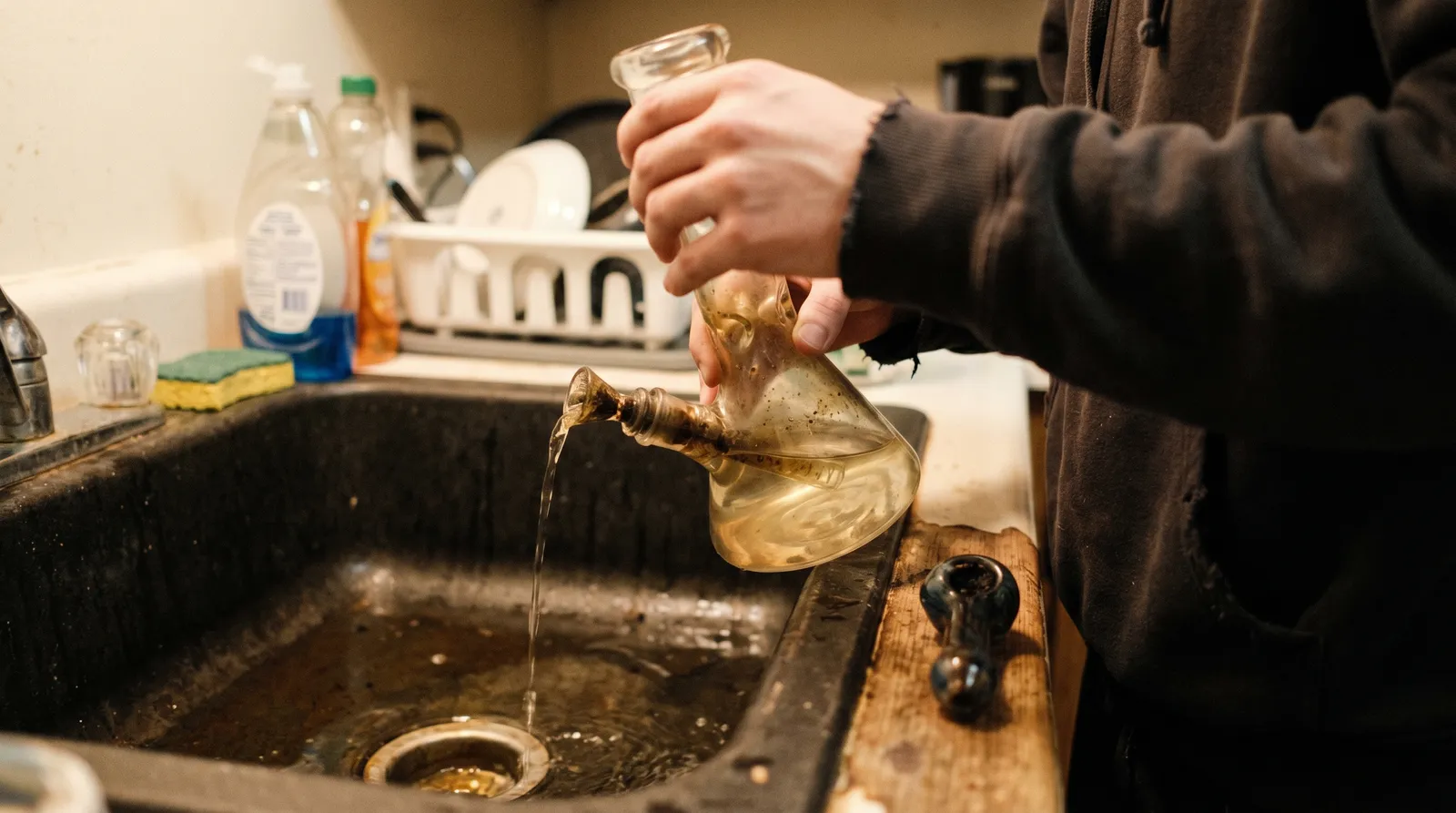
The first physical step is removing all old water and loose debris. Pour out all the bong water. If it's been sitting for more than a day, do this over the toilet or outside — old bong water smells genuinely terrible and can stain a porcelain sink brown. Rinse the chamber, downstem, and bowl piece under warm running water to loosen surface-level residue. This pre-rinse removes the easy stuff and lets the alcohol work on the stubborn resin underneath.
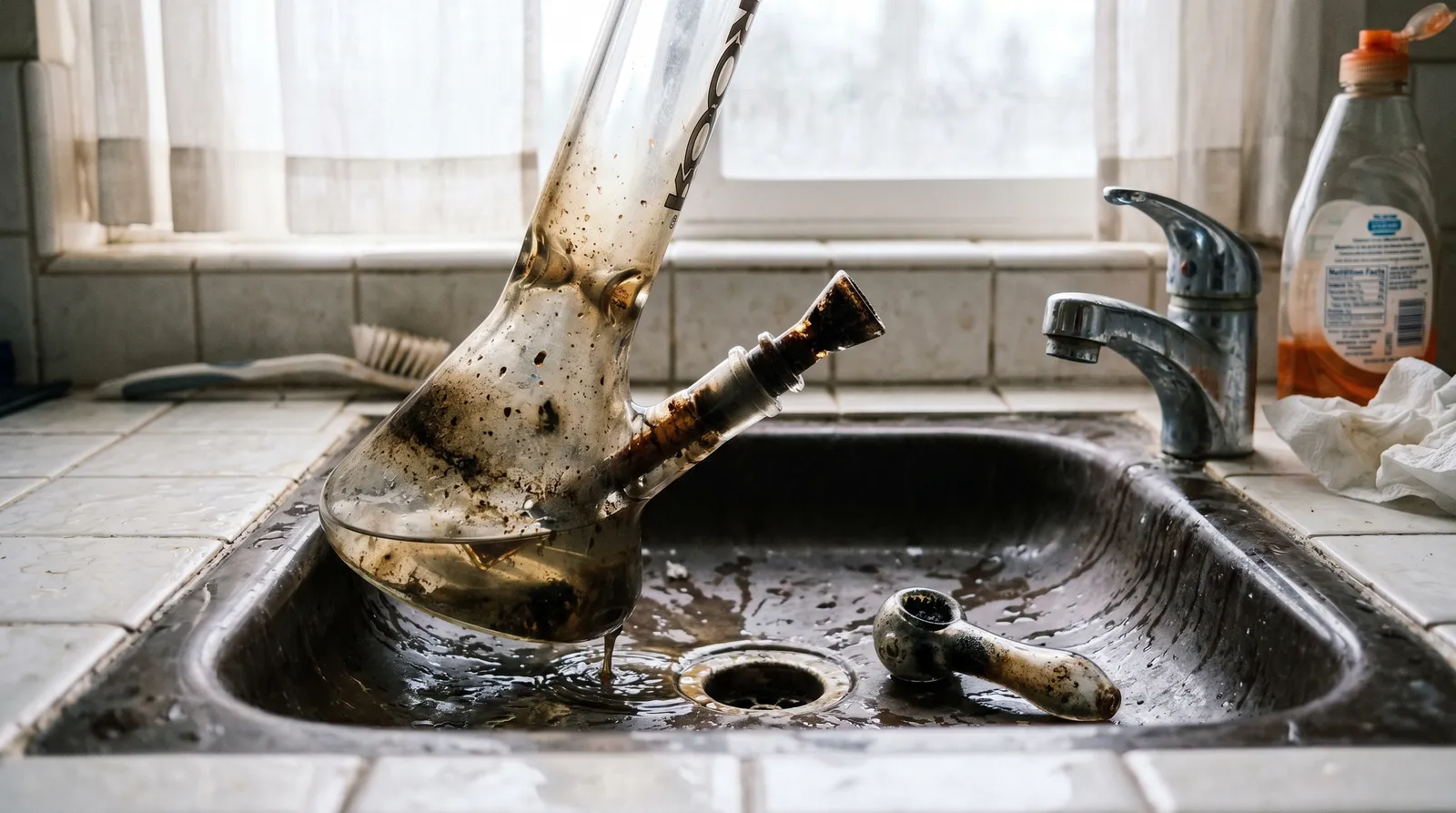
For pipes (glass, metal, or wooden), tap out any ash or loose debris. A paperclip or dab tool can dislodge packed residue from a bowl or carb hole without scratching glass.
Step 2 — Disassemble Everything
Every removable component should be separated before cleaning begins. Remove the bowl, downstem, any ash catcher, and percolator attachments if they're detachable. Each piece needs individual attention — resin loves to hide in joints, diffuser slits, and the narrow passages of tree or honeycomb percolators.
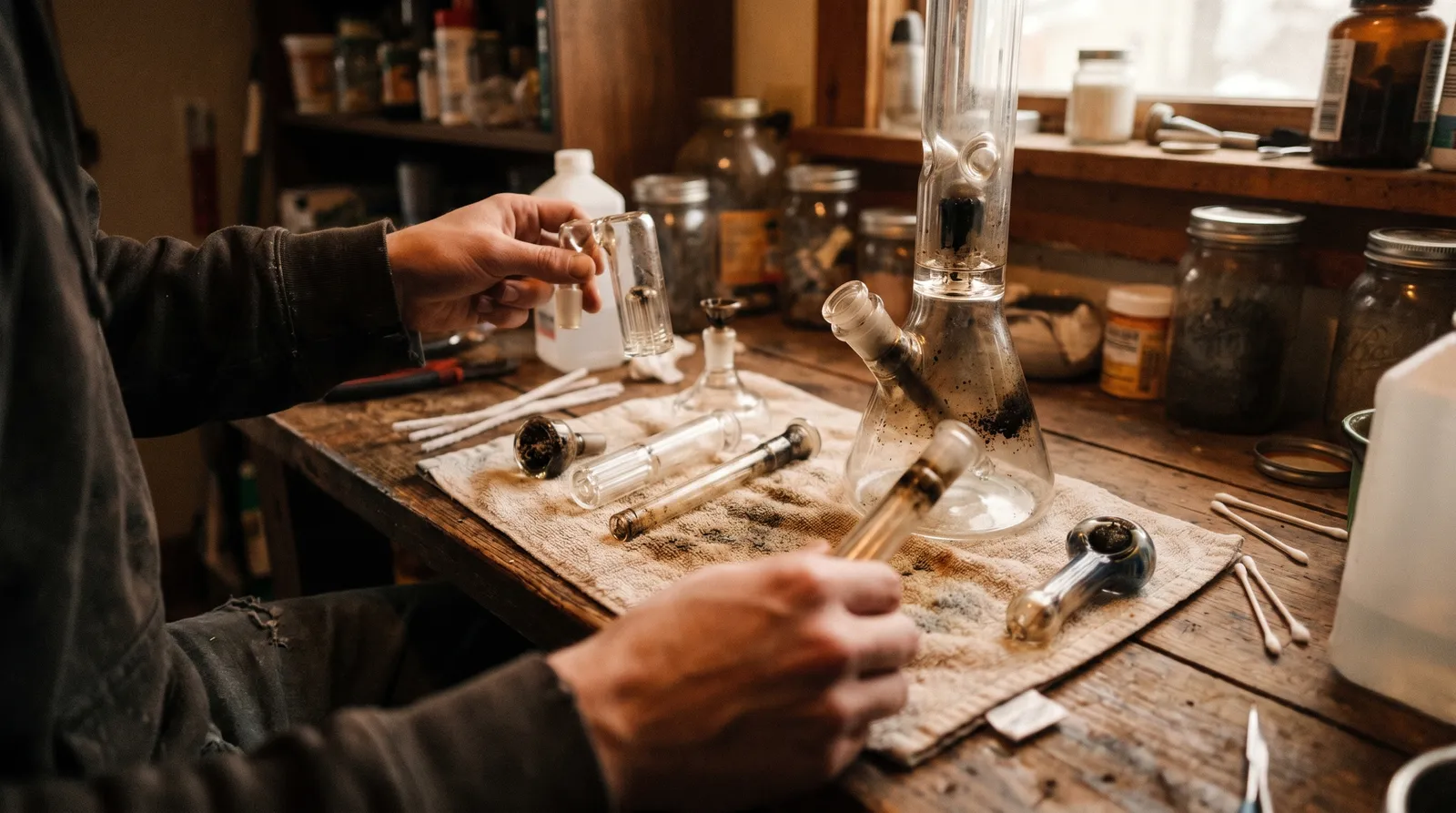
For pipes, there's usually nothing to disassemble. Metal pipes with threaded sections should be unscrewed into their component parts. Wooden pipes — if they have a removable stem or screen — pull those out too.
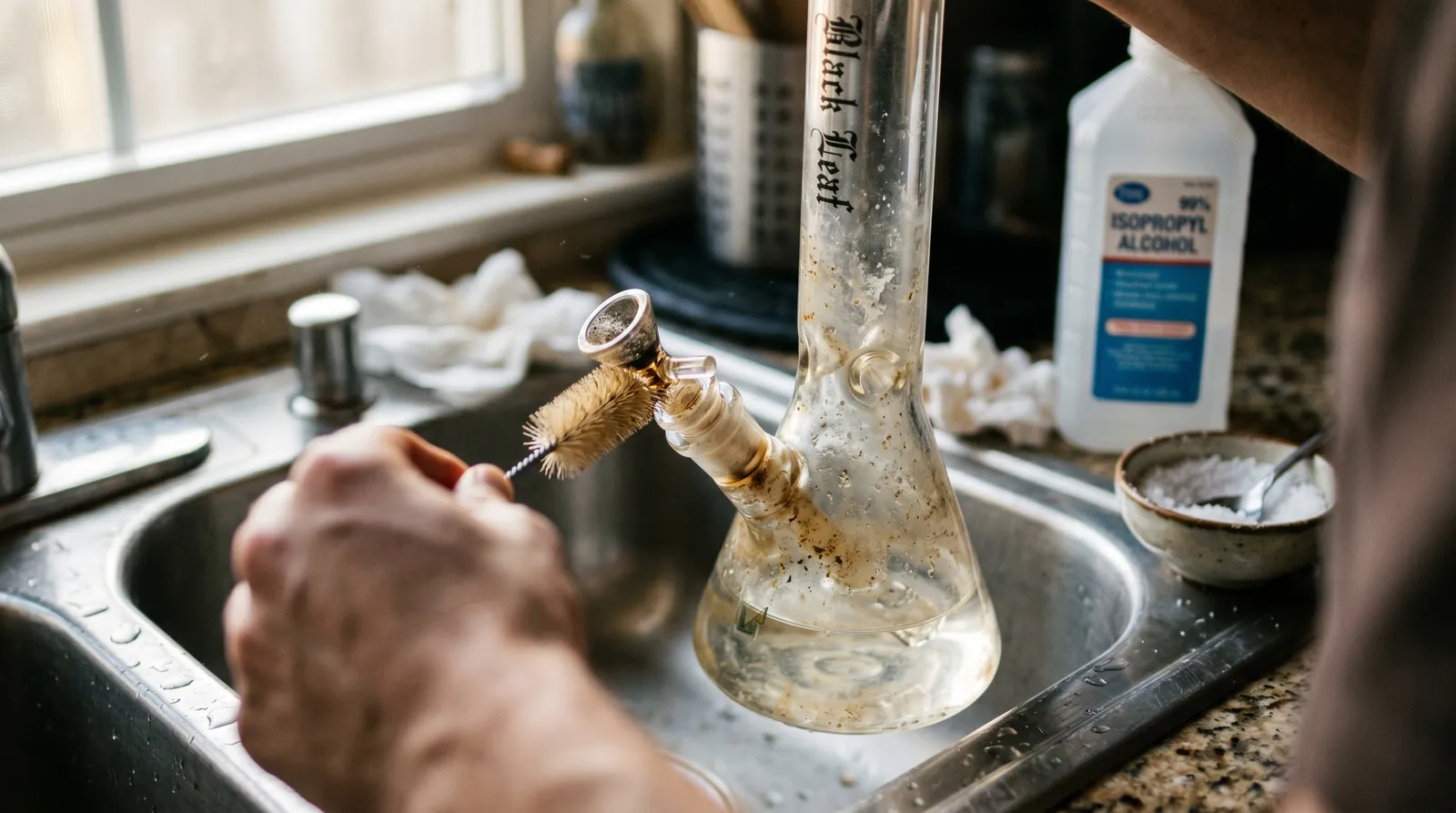
Step 3 — The Iso + Salt Method (Glass Pieces)
Isopropyl alcohol combined with coarse salt is the most effective method for cleaning glass bongs and pipes. It works because isopropyl alcohol dissolves the organic compounds in resin while coarse salt physically scrubs the interior surfaces.
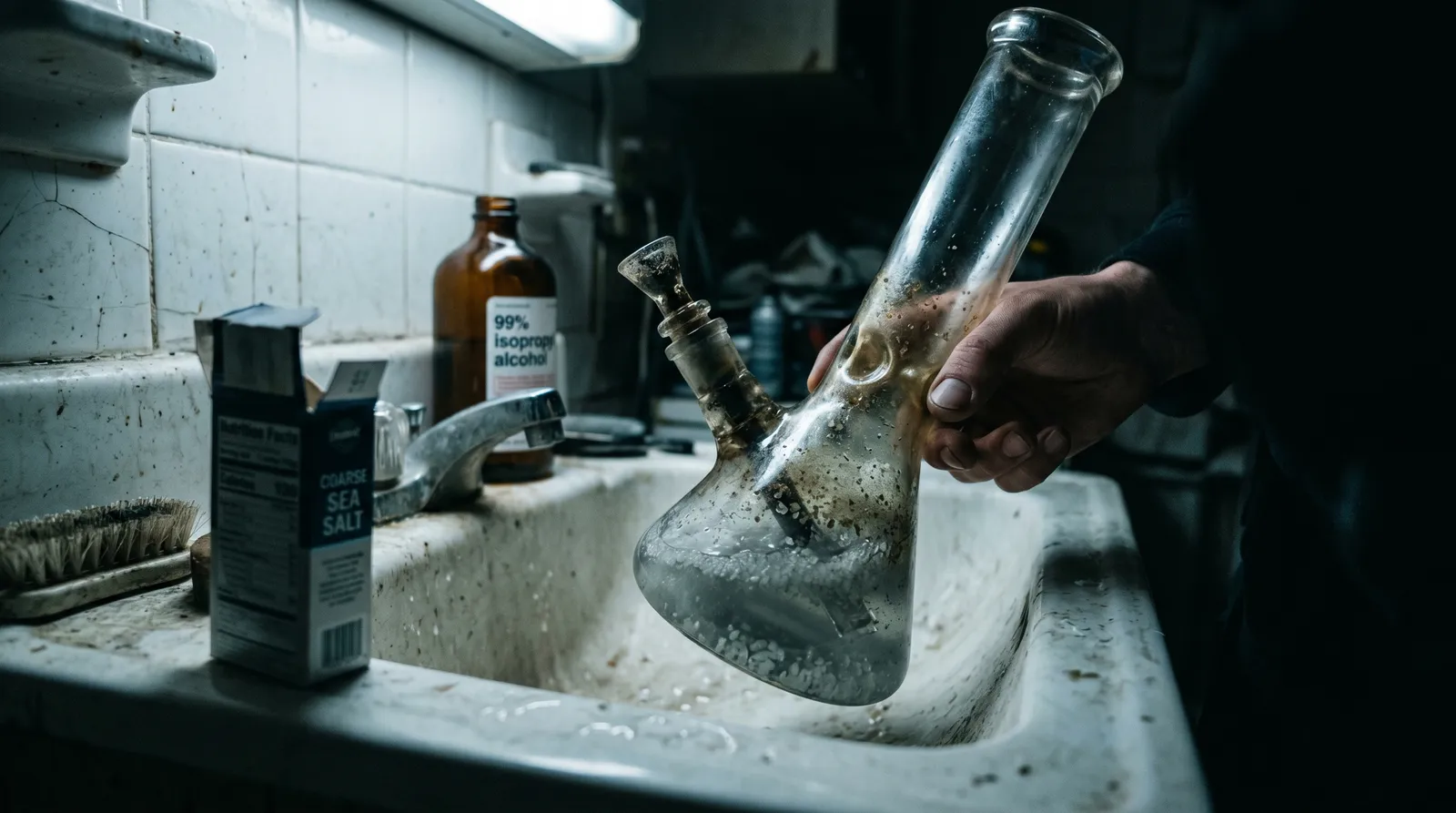
- Pour isopropyl alcohol into the bong chamber — enough to cover the dirtiest areas. For a standard beaker bong, that's roughly 150–250ml.
- Add 2–3 tablespoons of coarse salt. The salt doesn't dissolve in alcohol (unlike in water), so it stays granular and abrasive.
- Plug all openings — use rubber stoppers, or stretch cling film over the mouthpiece and downstem joint, secured with elastic bands.
- Shake vigorously for 2–5 minutes. Tilt the bong at different angles so the salt-alcohol slurry reaches every internal surface. You'll see the liquid turn dark brown or black — that's the resin dissolving.
- For small parts (bowls, downstems, one-hitters), drop them into resealable bags with enough alcohol and salt to submerge them. Seal the bag and shake for a minute or two.
If the resin is particularly stubborn — the kind that's been building for weeks or months — let the pieces soak in the alcohol for 30–60 minutes before shaking. Overnight soaking works for extreme cases, though it's rarely necessary with 91%+ iso.
Step 4 — Rinse Thoroughly
Rinsing removes all traces of alcohol and dissolved resin from the piece. Rinse every piece under warm running water for at least 60 seconds. Then rinse again. Isopropyl alcohol vapour is an irritant — inhaling it through a poorly rinsed bong is unpleasant at best and a genuine respiratory irritant at worst. You should smell absolutely nothing when you hold the clean piece to your nose.
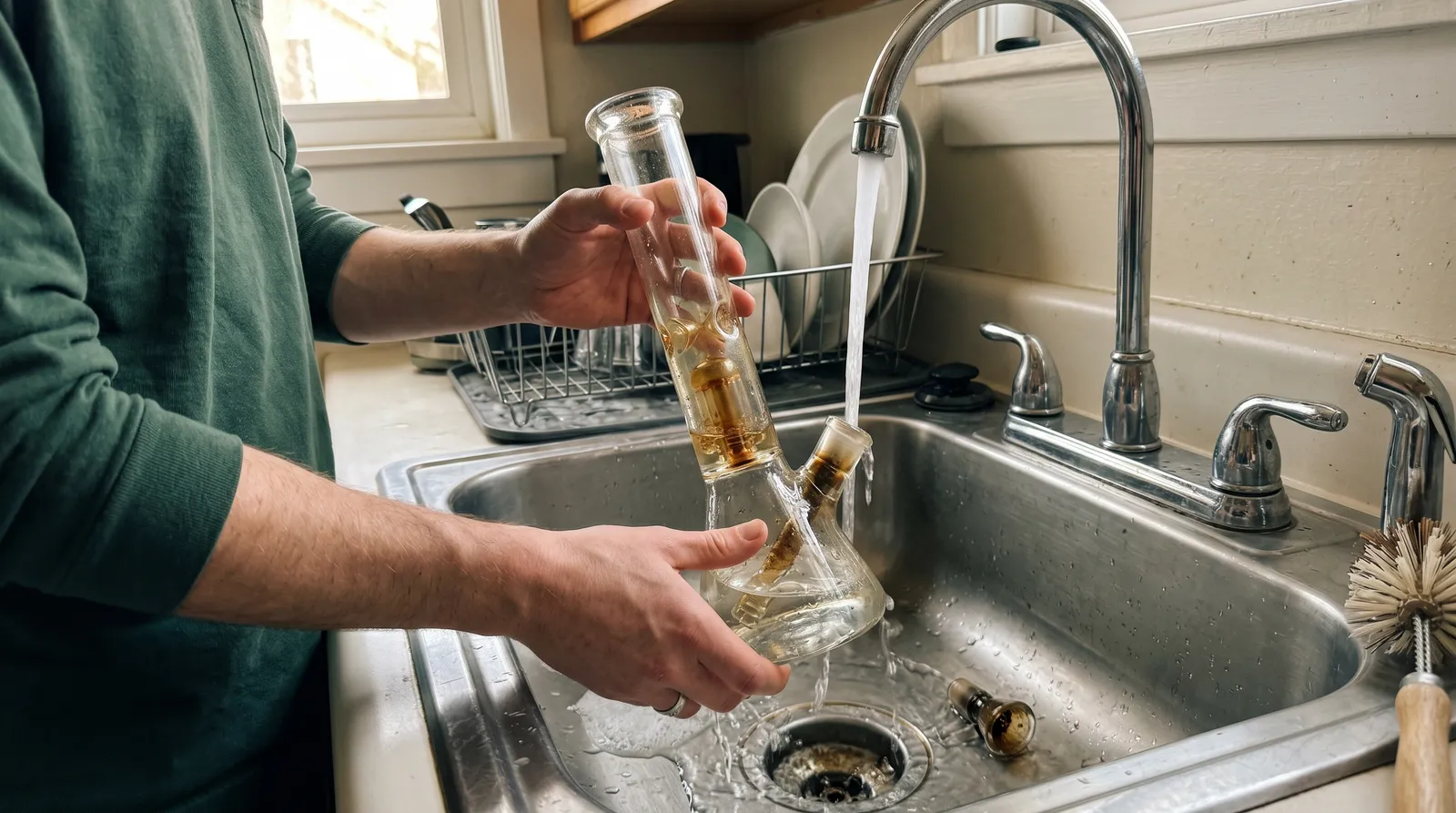
For percolator bongs, fill the chamber with clean warm water, shake gently, and pour it out. Repeat 3–4 times. Water trapped inside percolator chambers is the most common source of residual alcohol taste.
Safety note: isopropyl alcohol is flammable, and its vapour can ignite. Never clean near open flames, lit torches, or heat sources. Work in a ventilated space — open a window or turn on an extractor fan.
Step 5 — Dry Completely
Thorough drying prevents the microbial growth you just eliminated. Stand your bong upside down on a clean towel or drying rack and let it air-dry for at least an hour. Small pieces can be set on paper towels. Residual moisture inside a bong promotes exactly the kind of microbial growth you just cleaned away, so patience here pays off.
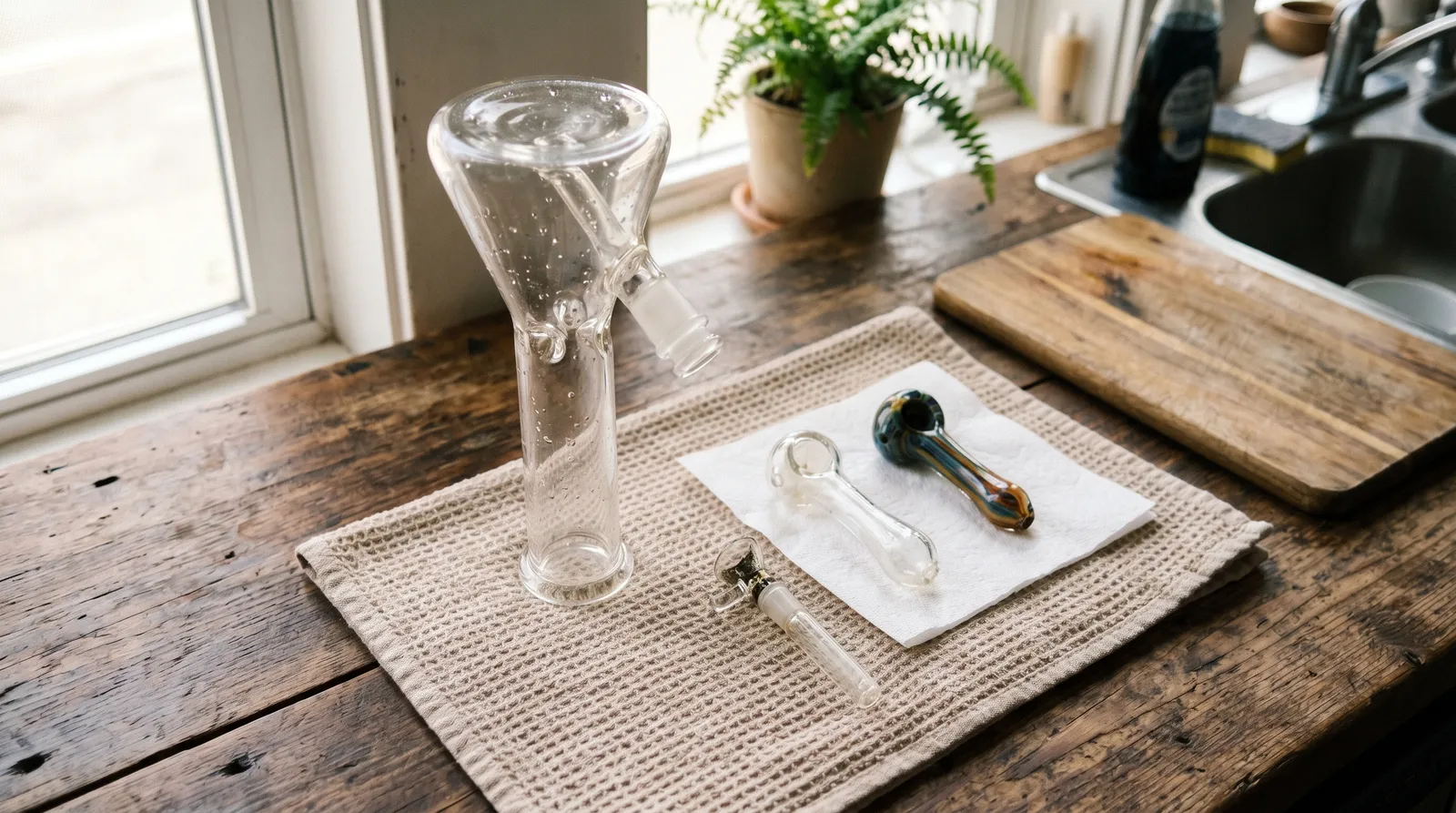
For pieces with internal chambers that trap water (percolator bongs, recyclers), gently blow through the mouthpiece to push water out of diffuser slits, then leave inverted to drain.
Cleaning Different Materials
The right cleaning method depends entirely on what your piece is made from. The iso-and-salt method is built for borosilicate glass — the material used by brands like ROOR, Grace Glass, Black Leaf, and Blaze Glass. Other materials need a different approach.
Acrylic Bongs
Do not use isopropyl alcohol on acrylic. Alcohol degrades acrylic plastic over time, causing clouding, micro-cracks, and eventually structural failure. Instead, use warm water with a few drops of dish soap and a bottle brush. For stubborn resin, a purpose-made bong cleaner labelled as acrylic-safe is worth the investment. Rinse thoroughly — soap residue tastes worse than resin.
Silicone Bongs and Pipes
Silicone is forgiving. You can use isopropyl alcohol without damage, or go the simple route: warm soapy water and a brush. Silicone bongs can even be placed in the freezer for an hour — the resin becomes brittle and peels away from the flexible walls. Some silicone pieces are dishwasher-safe (check the manufacturer's guidance), though putting a resin-caked bong in the same machine as your dinner plates is a bold choice.
Metal Pipes
Disassemble fully. Soak all parts in isopropyl alcohol for 15–30 minutes, then scrub with pipe cleaners and a small brush. Metal is durable, so you can be aggressive. Rinse under hot water and dry completely to prevent any corrosion on uncoated surfaces.
Wooden Pipes
Wood and alcohol don't mix well — the alcohol strips natural oils and can dry out the grain, leading to cracks. Use a pipe cleaner (dry, or very slightly dampened with warm water) to clear the airway. The bowl can be gently scraped with a pipe tool. Over time, wooden pipes develop a carbon "cake" inside the bowl that actually insulates the wood from heat — you want a thin layer of this, not a clean scrape down to bare wood. A light wipe with a damp cloth on the exterior is enough. Never submerge a wooden pipe.
The Alcohol-Free Alternative
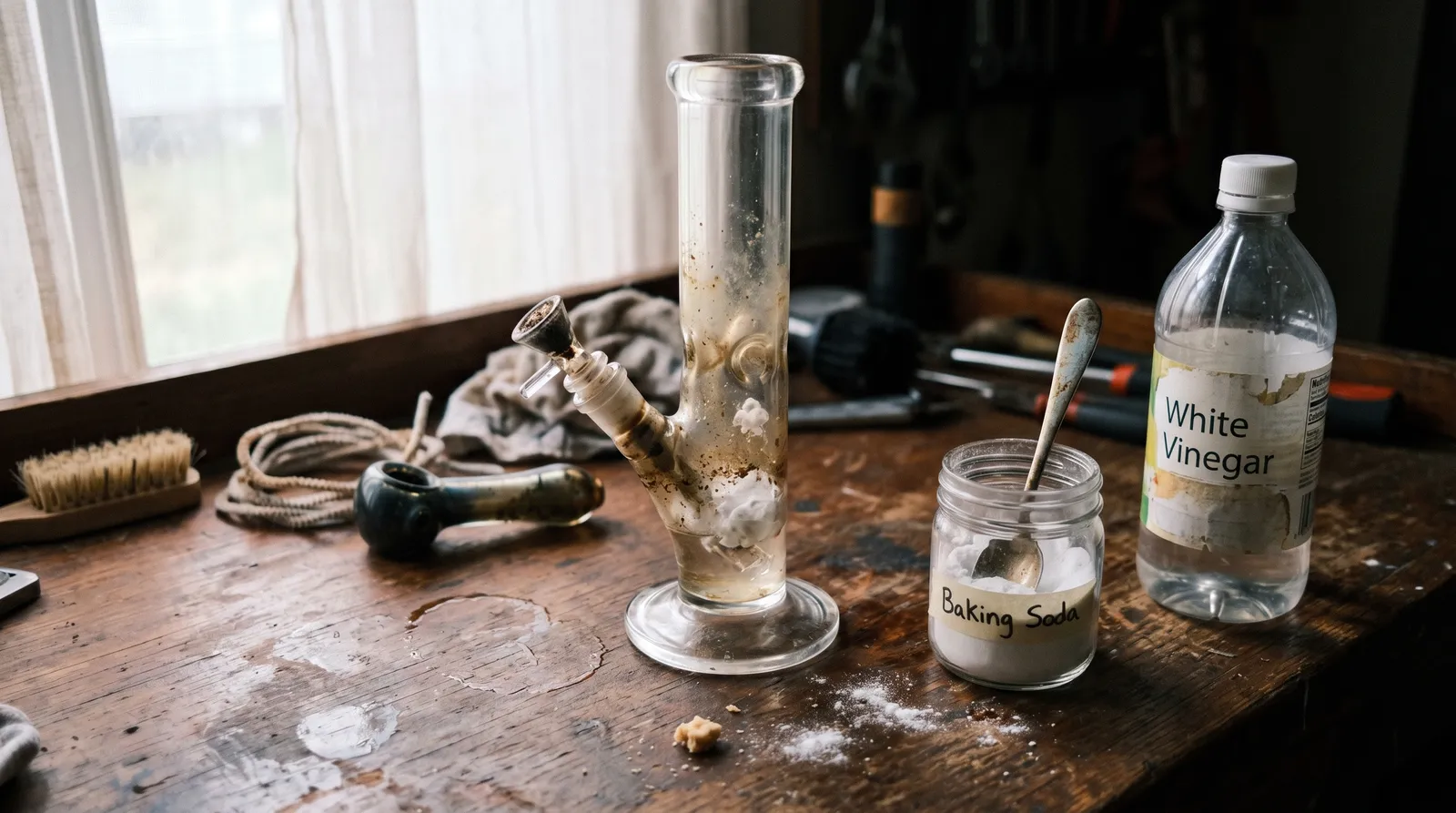
White vinegar and bicarbonate of soda offer a workable substitute when isopropyl alcohol is unavailable. Add 2 tablespoons of baking soda to the bong chamber, pour in enough white vinegar to create a fizzing reaction, and let it sit for 30–60 minutes. The effervescence loosens resin, though it's noticeably less effective on heavy build-up than alcohol. You'll likely need to follow up with a brush and some elbow grease. The exact effectiveness compared to isopropyl hasn't been formally studied — anecdotally, it takes roughly twice as long for the same result.
Commercial bong-cleaning solutions are another option. Most are biodegradable, non-toxic formulas designed to dissolve resin without the flammability risk of iso. They tend to cost more per clean but save time on heavy build-up. You can order dedicated cleaning solutions from headshop suppliers — they're a convenient option to get alongside replacement screens and brushes.
How Often Should You Clean?
Cleaning frequency depends on how often you use the piece and what material it is made from.
| Frequency | Task | Why |
|---|---|---|
| After every session | Empty bong water, rinse chamber with warm water | Stagnant water breeds bacteria within 24 hours (Morin et al., 2019) |
| Every 3–5 sessions | Quick iso rinse of bowl and downstem | Prevents resin from hardening into a stubborn layer |
| Weekly (daily users) | Full iso + salt clean of all glass components | Maintains airflow, flavour, and hygiene |
| Monthly (occasional users) | Full deep clean including soak | Even light use leaves residue that accumulates |
| Pipes (any material) | Clean every 5–10 sessions or when draw resistance increases | Resin restricts the narrow airway faster than in a bong |
The single best habit is the simplest: dump the water after every use. Fresh water every session prevents biofilm formation and makes deep cleans far easier when you do them. According to research on waterborne pathogens in enclosed environments, biofilm begins forming on submerged surfaces within 24–48 hours under room-temperature conditions (Donlan, 2002).
Common Mistakes to Avoid
Most cleaning failures come down to a handful of repeated errors.
- Using boiling water on cold glass. Thermal shock cracks borosilicate. Let the glass warm up gradually — start with warm water, not a kettle straight off the boil.
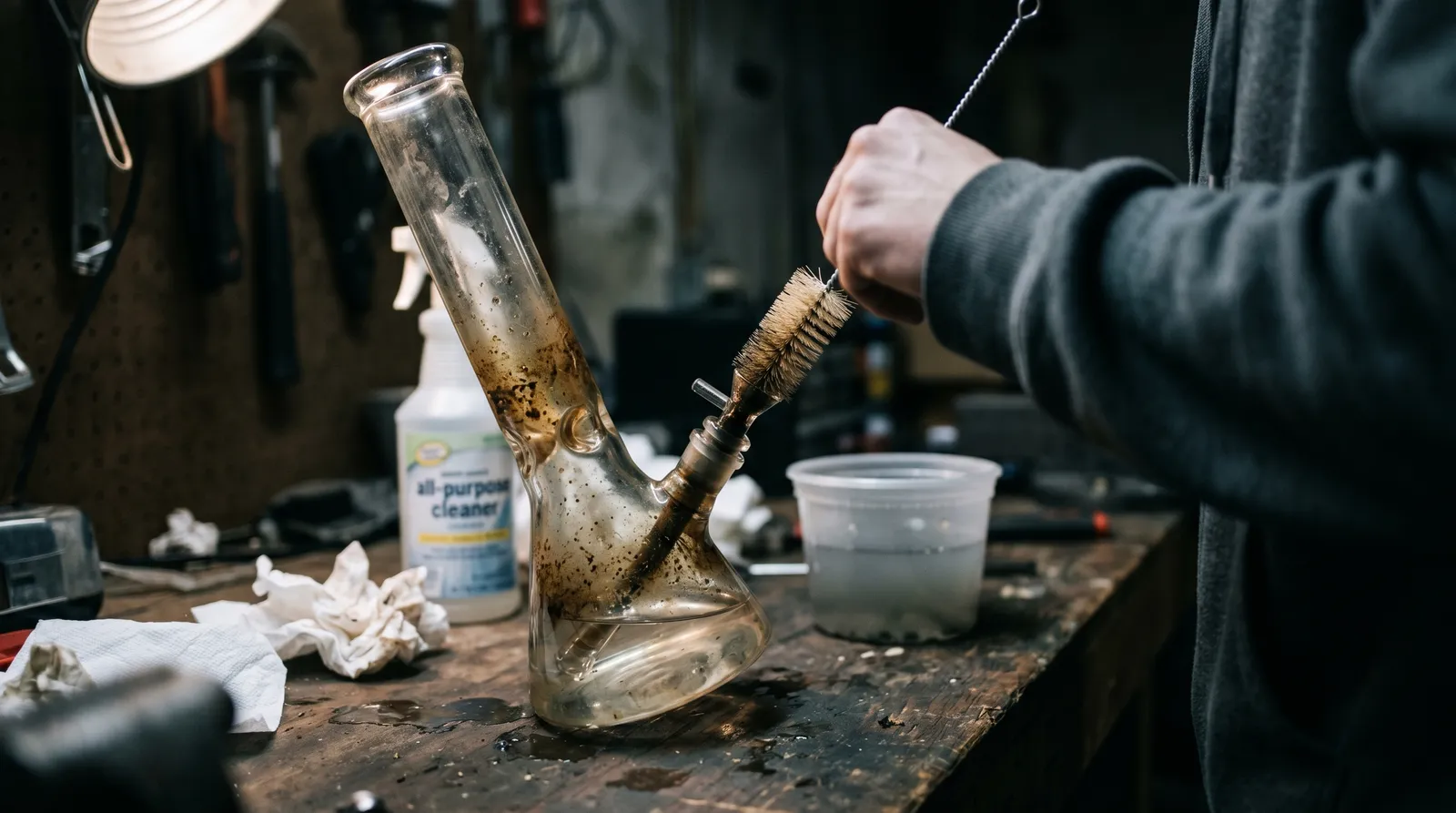
- Scrubbing with metal tools on glass. Steel wool, knives, and metal scrapers scratch glass permanently. Stick to brushes, pipe cleaners, and salt as your abrasive.
- Alcohol on acrylic. Mentioned above, but worth repeating: it will ruin the piece.
- Skipping the rinse. Residual isopropyl alcohol tastes vile and irritates airways. If you can smell anything after rinsing, rinse more.
- Cleaning near a flame. Isopropyl alcohol has a flash point of around 12°C (53°F). Keep it away from lighters, torches, stoves, and candles. Ventilate the room.
- Reusing bong water "because it still looks clear." Clarity doesn't mean sterility. Bacteria don't need visible turbidity to colonise standing water.
Keeping It Clean Longer
A few small habits extend the time between deep cleans significantly:
- Use an ash catcher. This accessory sits between the bowl and the downstem, trapping ash and resin before it reaches the main chamber. It's much easier to clean a small ash catcher than an entire percolator bong. Brands like Black Leaf and Grace Glass make affordable ash catchers you can buy separately.
- Change water every session. Seriously. It takes ten seconds and makes more difference than any other single habit.
- Use a screen in your bowl. Glass or metal screens prevent plant material from pulling through into the water, reducing residue build-up.
- Store your pipe in a stash can or smell-proof bag between uses. Keeping it enclosed reduces dust and debris settling on resin-sticky surfaces.
References
- Morin, A. et al. (2019). Microbial contamination of water pipes used for smoking. Environmental Health Insights, 13, 1–6.
- Donlan, R. M. (2002). Biofilms: microbial life on surfaces. Emerging Infectious Diseases, 8(9), 881–890.
- National Fire Protection Association (NFPA). (2021). Flash point data for common solvents. NFPA Technical Reference.
- European Monitoring Centre for Drugs and Drug Addiction (EMCDDA). (2020). European Drug Report: Trends and Developments. Publications Office of the European Union.
Last updated: April 2026
Frequently Asked Questions
8 questionsCan I clean a bong with just hot water?
Is isopropyl alcohol safe to use for cleaning bongs?
How do I clean a percolator bong without breaking it?
Can I use rubbing alcohol on an acrylic bong?
Why does my bong taste bad even after cleaning?
How often should I change bong water?
Can I use boiling water to clean a glass bong?
How do I clean a wooden or metal pipe without damaging it?
About this article


Adam Parsons is an external cannabis and psychedelics writer and editor who contributes to Azarius's wiki as both author and reviewer. On the writing side, he authors Azarius's kratom and kanna clusters, drawing on exten
This wiki article was drafted with AI assistance and reviewed by Adam Parsons, External contributor. Editorial oversight by Joshua Askew.
Medical disclaimer. This content is for informational purposes only and does not constitute medical advice. Consult a qualified healthcare provider before use of any substance.
Last reviewed April 25, 2026
Related Articles
Gravity Bongs Explained: How They Work and Why
A gravity bong uses water displacement to pull concentrated smoke into a chamber, then forces it into your lungs under positive pressure.
Storz Bickel Volcano Complete Guide: Setup, Temps & Cleaning
The Storz & Bickel Volcano is a convection desktop vaporizer that fills detachable balloons with vapour — a system clinically validated by Hazekamp et al.
TinyMight Boundless XMAX Premium Portables Compared
The TinyMight 2, Boundless CFX/CFC and XMAX V3/Starry/Ace represent three tiers of portable dry-herb vaporizer — from budget conduction to premium convection.
How To Clean a Vaporizer: Step-by-Step Guide
How to clean a vaporizer is a straightforward maintenance routine that keeps your device tasting fresh, drawing smoothly, and lasting years longer than a…
ROOR Grace Glass Black Leaf Blaze Brand Comparison — Glass Bong Guide
Four borosilicate glass bong brands — ROOR, Grace Glass, Black Leaf, and Blaze Glass — dominate the European market at different price points.
Joint Filters Crutches Glass Tips Activated Charcoal — Buyer's Guide
Joint filters range from simple card crutches that block loose herb to activated charcoal tubes that trap 40–60% of gas-phase toxicants like benzene and…
Quartz Banger Temperature and Care Guide
A quartz banger's performance depends almost entirely on temperature control and maintenance.
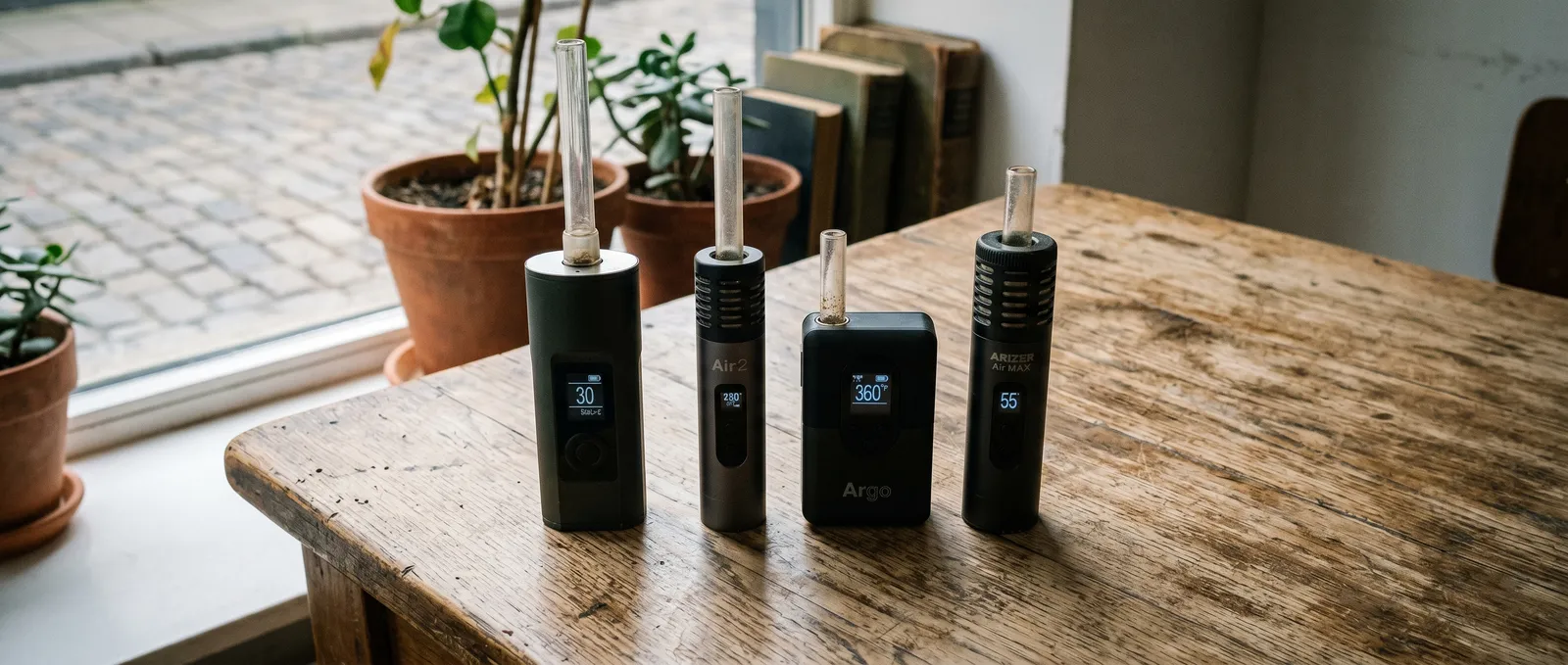
Arizer Portable Lineup Compared: Solo vs Solo 2 vs Solo 3 vs ArGo
Arizer's portable vaporizers all use borosilicate glass vapour paths and session-style heating, but differ meaningfully in battery architecture, heating…
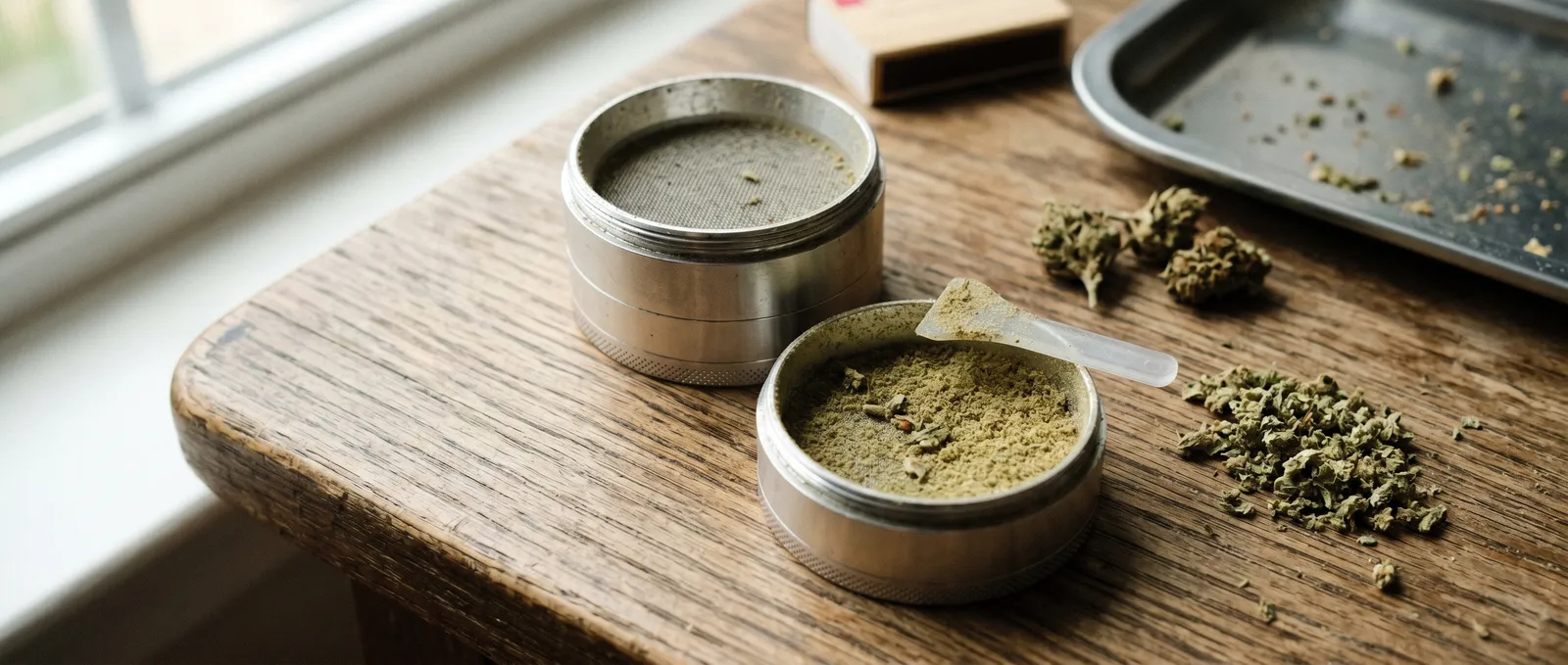
Kief: What It Is and How to Collect It | Full Guide
Kief is the fine, powdery accumulation of trichome heads that detach from cannabis flower during grinding or handling.