
Glass vs Silicone vs Acrylic Bongs Compared
Definition
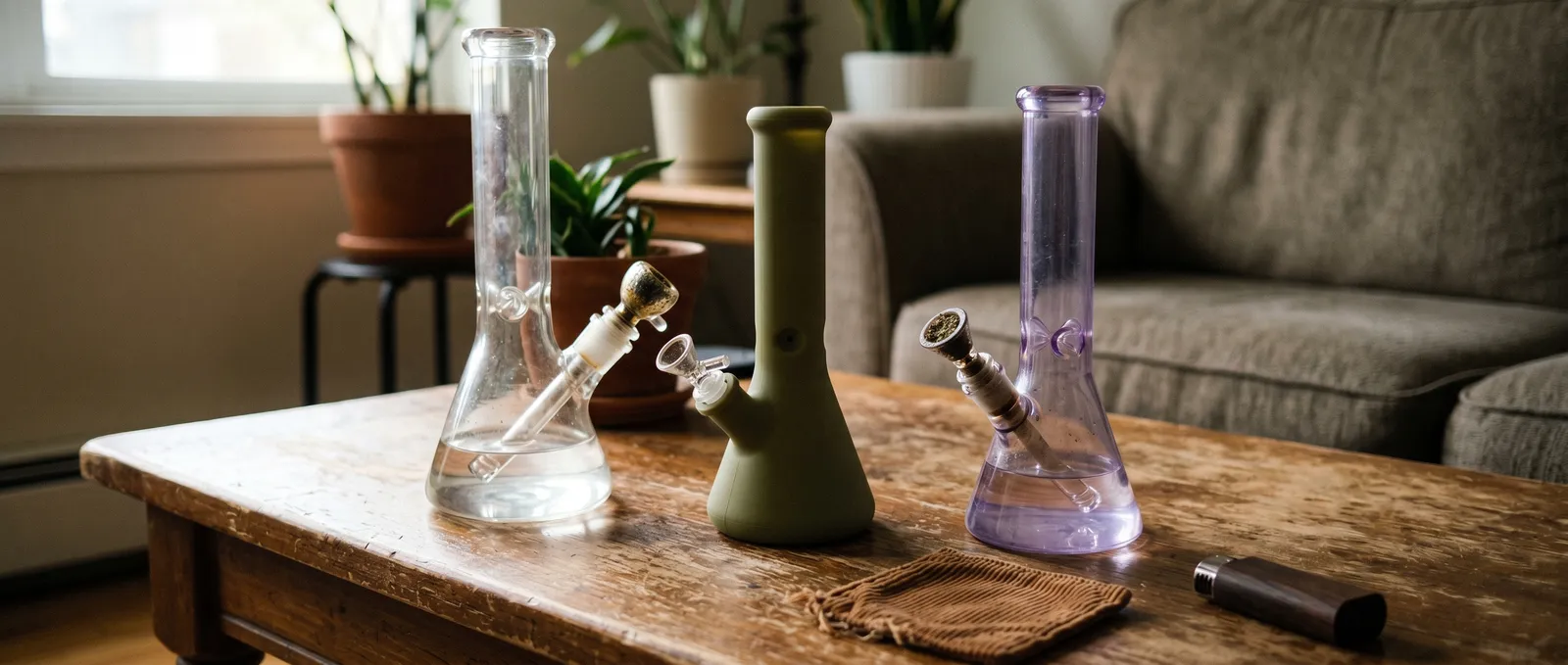
Glass, silicone, and acrylic are the three main bong materials, each with distinct trade-offs in flavour purity, durability, and filtration. Borosilicate glass remains the benchmark for inert, flavour-neutral smoking according to Schott AG materials data (2020), while silicone offers near-indestructible portability and acrylic serves as a budget entry point with a shorter practical lifespan.
Glass vs Silicone vs Acrylic Bongs: The Quick Comparison
| Dimension | Glass (Borosilicate) | Silicone (Food-Grade) | Acrylic |
|---|---|---|---|
| Flavour purity | Excellent — inert material, no off-tastes | Good — minimal flavour transfer when food-grade | Noticeable plastic taste, worsens with age |
| Durability | Fragile — one drop on tile and it's done | Near-indestructible — bend it, drop it, sit on it | Impact-resistant but scratches easily |
| Smoke smoothness | Best — supports percolators, ice notches, diffused downstems | Decent — limited percolation options | Basic — straight tube, minimal filtration |
| Ease of cleaning | Moderate — isopropyl + coarse salt, soak and shake | Easy — dishwasher-safe (most models), hot soapy water | Difficult — scratches trap residue, can't use strong solvents |
| Heat resistance | High — borosilicate handles thermal shock well | High — food-grade silicone rated to ~230 °C | Low — warps or releases fumes above ~90 °C |
| Weight | Heaviest — thick glass adds stability but not portability | Very light — folds or rolls for travel | Light — hollow tube construction |
| Design variety | Widest — beakers, straight tubes, recyclers, percolator stacks | Growing — mostly simple tube or beaker shapes | Limited — basic straight tubes, some colour options |
| Price tier | Mid to premium | Budget to mid | Budget |
| Longevity | Decades if unbroken | Several years before silicone degrades slightly | 1–2 years before taste and appearance deteriorate |
That table covers the headline differences. Below, we'll unpack each dimension so you can figure out which material actually suits the way you smoke — because the "best" bong is the one that doesn't annoy you six months in.
Flavour Purity: Why Material Matters More Than You'd Think
Glass bongs, specifically those made from borosilicate glass, are chemically inert. That means the material doesn't react with heat, smoke, or water — what goes in is what comes out. According to a materials analysis by Schott AG (2020), borosilicate glass withstands thermal shock up to approximately 170 °C differential without structural compromise, and it leaches nothing detectable into contents even under sustained heat cycling. For anyone who cares about tasting what they've packed in the bowl and nothing else, glass is the benchmark.
Silicone sits in a solid second place. Food-grade silicone (look for FDA or LFGB certification markings) is also largely inert, though some users report a faint rubbery note during the first few sessions with a brand-new piece. That typically fades after a couple of thorough washes. The critical thing: make sure you're buying food-grade, not industrial-grade silicone. Cheap, uncertified silicone can off-gas at high temperatures — and the bowl area of a bong gets hot.
Acrylic is where flavour takes a hit. The material itself isn't inert in the same way. Over repeated use, acrylic absorbs tar and resin into micro-scratches on its inner surface, and those deposits are nearly impossible to fully remove. The result is a gradually worsening stale taste that no amount of rinsing will fix. Multiple community guides and retailer comparisons note that acrylic's flavour degradation is the single biggest reason users upgrade to glass or silicone within the first year (ThickAssGlass, 2023).
Durability and Portability: The Festival vs Coffee Table Question
If you're the sort of person who keeps a bong on a shelf and treats it like glassware — which it literally is — glass works beautifully. A well-made borosilicate piece from a manufacturer like ROOR or Grace Glass can last decades. The catch is obvious: drop it on a hard floor and you're sweeping up shards. Thicker glass (5 mm+) helps, and beaker-base designs are more stable than straight tubes, but physics is physics.
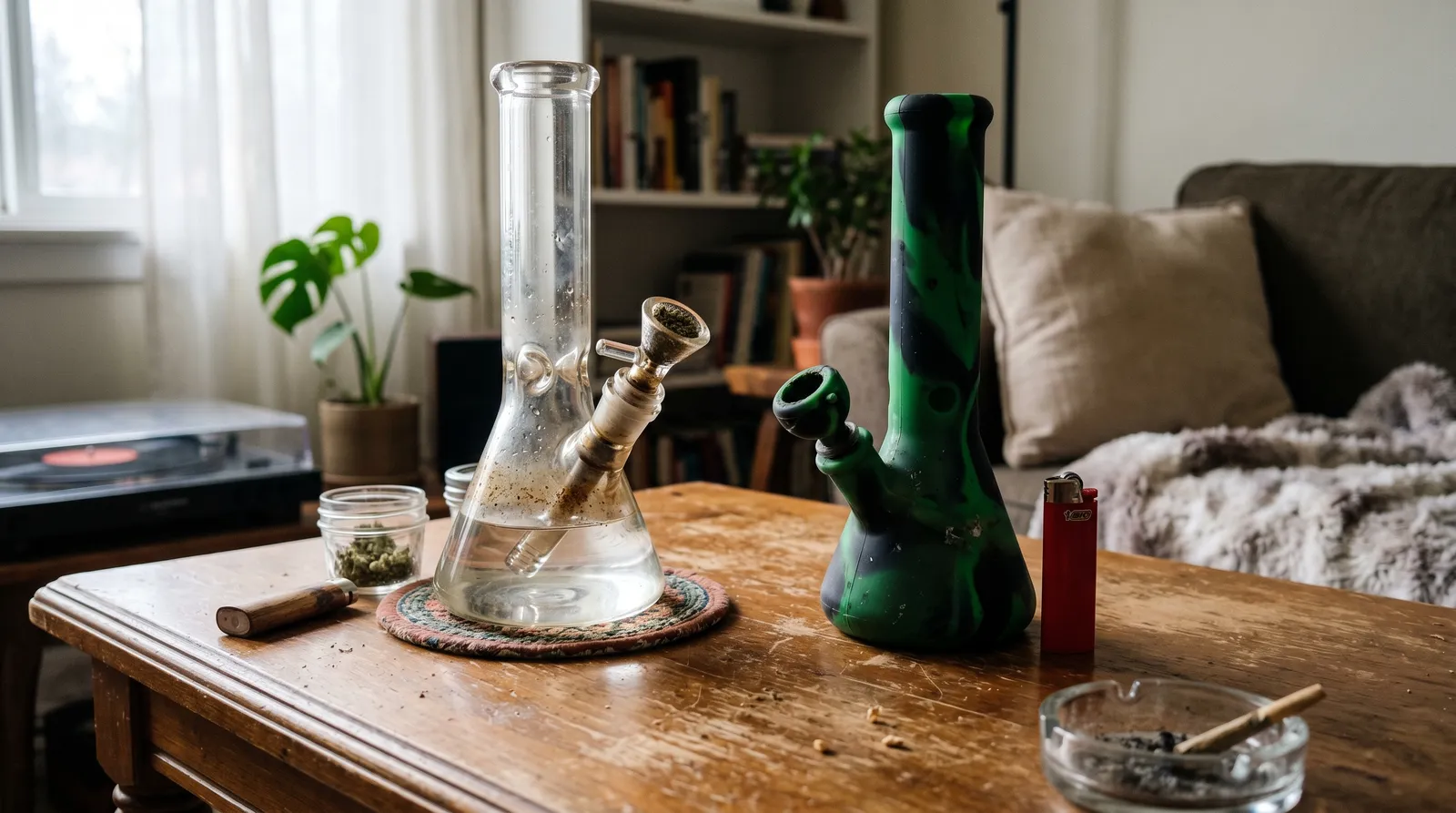
Silicone is the opposite end of the spectrum. You can genuinely fold most silicone bongs, stuff them in a backpack, and not worry. They bounce off concrete. They survive being sat on at a campsite. For travel, festivals, shared houses with clumsy housemates, or anywhere a glass piece would give you anxiety, silicone is the pragmatic choice. The trade-off is that silicone doesn't support complex internal structures — you won't find a silicone bong with a tree percolator or an inline diffuser.
Acrylic lands somewhere in between, though closer to silicone in practical terms. It won't shatter like glass, but it's not as forgiving as silicone either. Hard impacts can crack it, and the material scratches easily — those scratches aren't just cosmetic, they harbour bacteria and residue. Acrylic bongs are light enough to travel with, but they don't fold down like silicone, so they're still an awkward shape in a bag.
Smoke Smoothness and Filtration
Water filtration is the whole point of a bong: smoke passes through water, which cools it and traps some particulate matter. A 2000 study published in Harm Reduction Journal (Gieringer et al., 2000) found that water filtration removes some water-soluble toxins from smoke, though the efficiency varies with design. The more the smoke interacts with water — through percolators, diffused downstems, or recycler chambers — the cooler and smoother the hit.
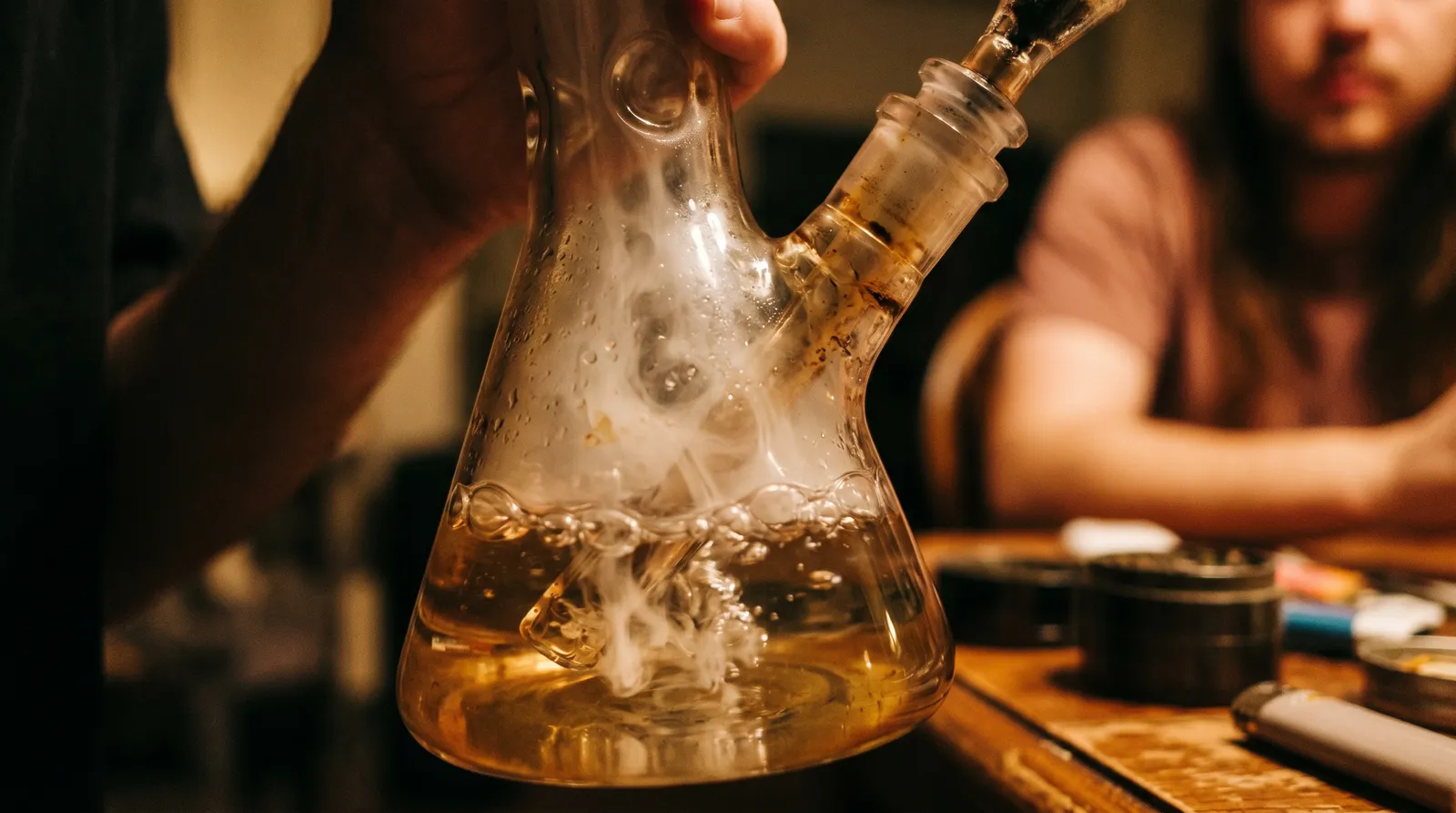
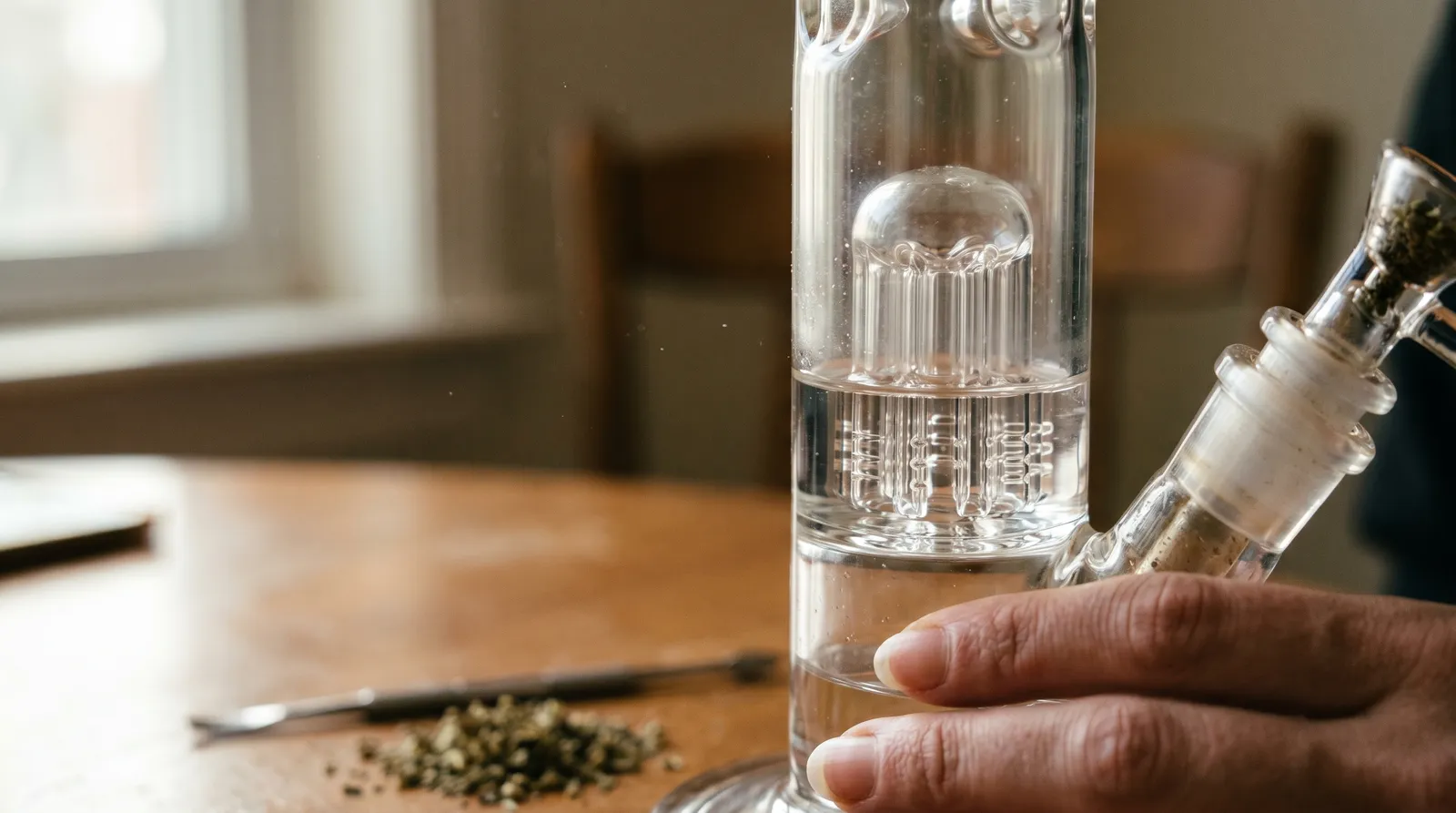
Glass bongs dominate here because glass is the only material that supports the full range of filtration designs. Percolator bongs (tree percs, honeycomb discs, showerhead percs), ice-notch bongs that let you stack ice cubes in the tube, diffused downstems with multiple slits — all of these are glass-only features in practical terms. A percolator bong from Black Leaf or Blaze Glass breaks smoke into dozens of tiny bubbles, massively increasing the water-contact surface area. The result is noticeably cooler, smoother smoke compared to a simple straight tube.
Silicone bongs typically use a basic downstem-and-water setup. Some models include a removable glass downstem (a hybrid approach that helps), but you won't find elaborate multi-chamber percolation. The smoke is still cooler than a dry pipe, but it's not in the same league as a well-designed glass percolator piece.
Acrylic bongs offer the most basic filtration: a straight tube, a rubber-grommet downstem, and water. That's it. No ice notches, no percolators, no diffusion. The smoke is cooler than hitting a joint, but harsher than either glass or silicone equivalents.
Cleaning and Maintenance
Every bong needs regular cleaning. Stagnant bong water develops biofilm within 24–48 hours — that slimy layer isn't just unpleasant, it's a bacterial colony. A 2022 microbiological survey by Moose Labs found that unreleased bong water harboured bacterial counts comparable to a public toilet seat within 22 hours of use (Moose Labs, 2022). Change your water after every session. Full stop.
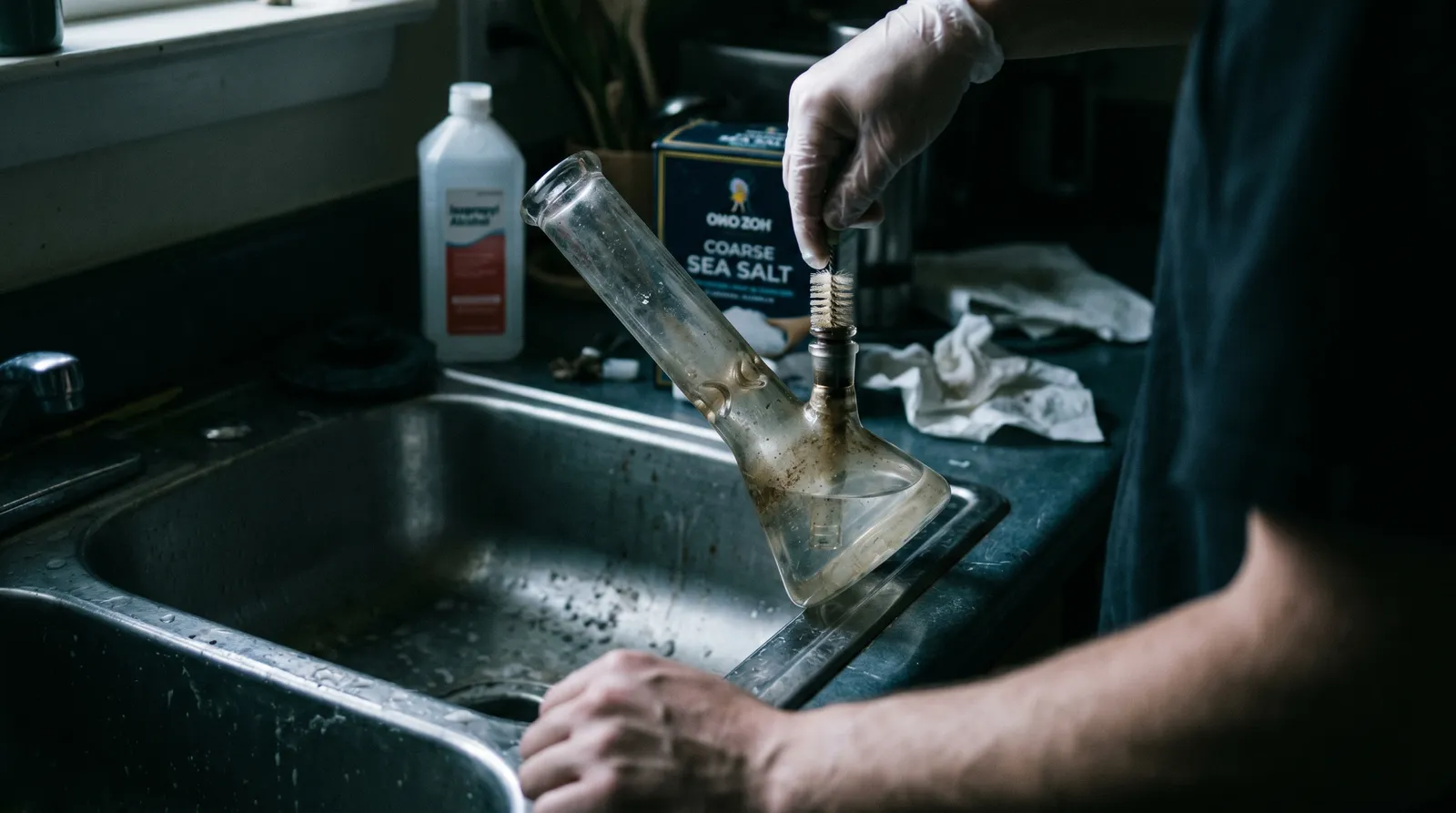
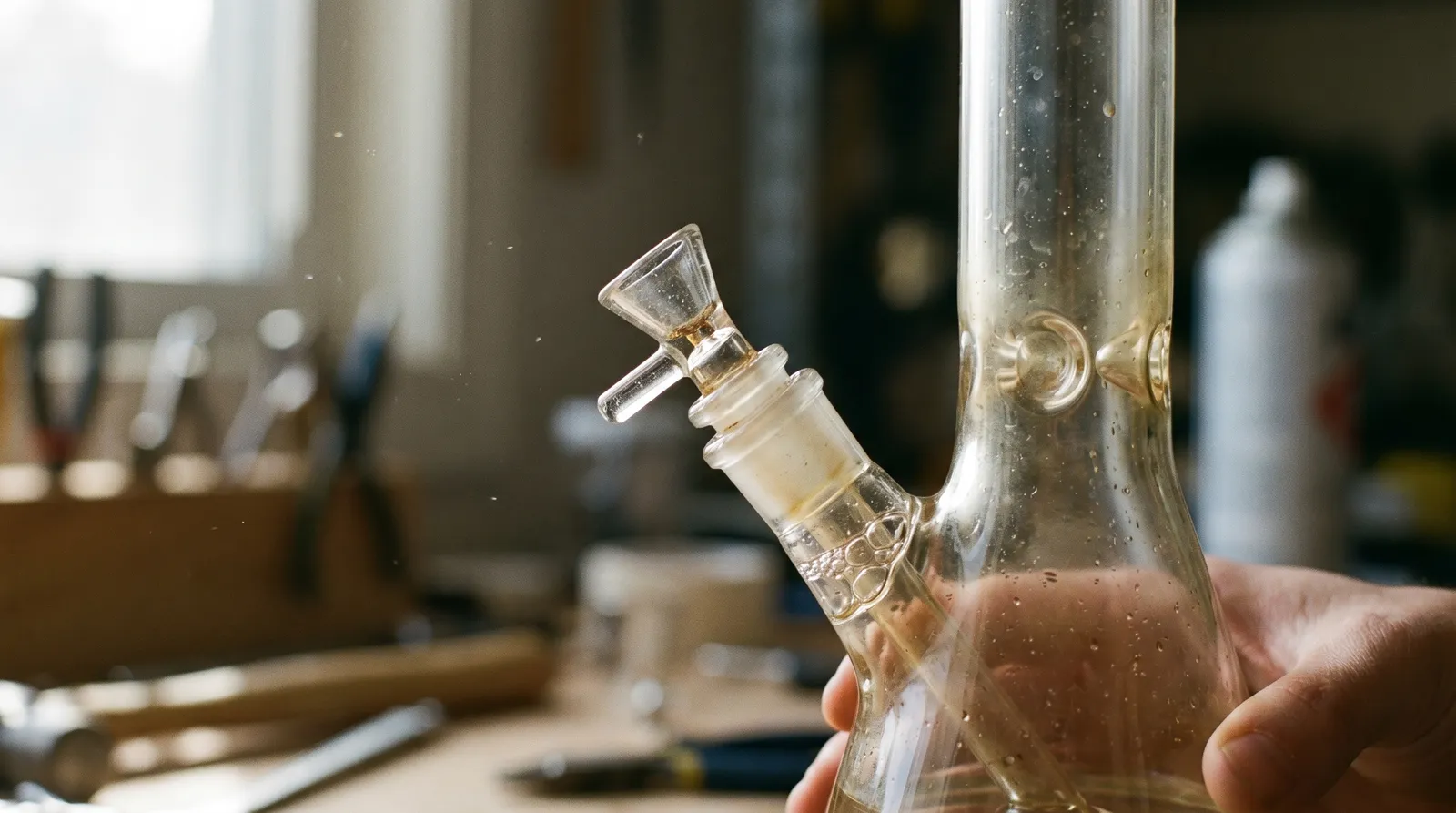
For glass, the standard protocol is coarse salt plus isopropyl alcohol (90%+ concentration). Pour both in, cover the openings, shake vigorously, let it soak for 30 minutes if the resin is stubborn, then rinse thoroughly with warm water. Glass handles this beautifully because the smooth, non-porous surface releases residue easily. Specialist cleaning solutions work too, but iso and salt are cheaper and just as effective. One note: ventilate the room when using isopropyl — the fumes are flammable and unpleasant in enclosed spaces.
Silicone is arguably the easiest to clean. Most food-grade silicone bongs are dishwasher-safe (check the manufacturer's instructions, but the majority are). For manual cleaning, hot soapy water does the job. You can also freeze a silicone bong — the resin becomes brittle and flakes off when you flex the material. Iso won't damage silicone the way it damages acrylic, but soap and water are usually sufficient.
Acrylic is the problem child. You can't use isopropyl alcohol — it cracks and clouds the material. You can't use abrasive brushes — they scratch the interior, creating grooves where resin accumulates permanently. You're limited to warm water, mild soap, and pipe cleaners. Over time, no matter how diligently you clean, acrylic bongs develop a residual smell and discolouration that won't shift. This is the main reason acrylic pieces have a shorter practical lifespan.
Heat Resistance and Safety
Borosilicate glass handles heat without issue — it's the same material used in laboratory beakers and high-end cookware. The bowl area, where a direct flame is applied, reaches temperatures that borosilicate manages comfortably.
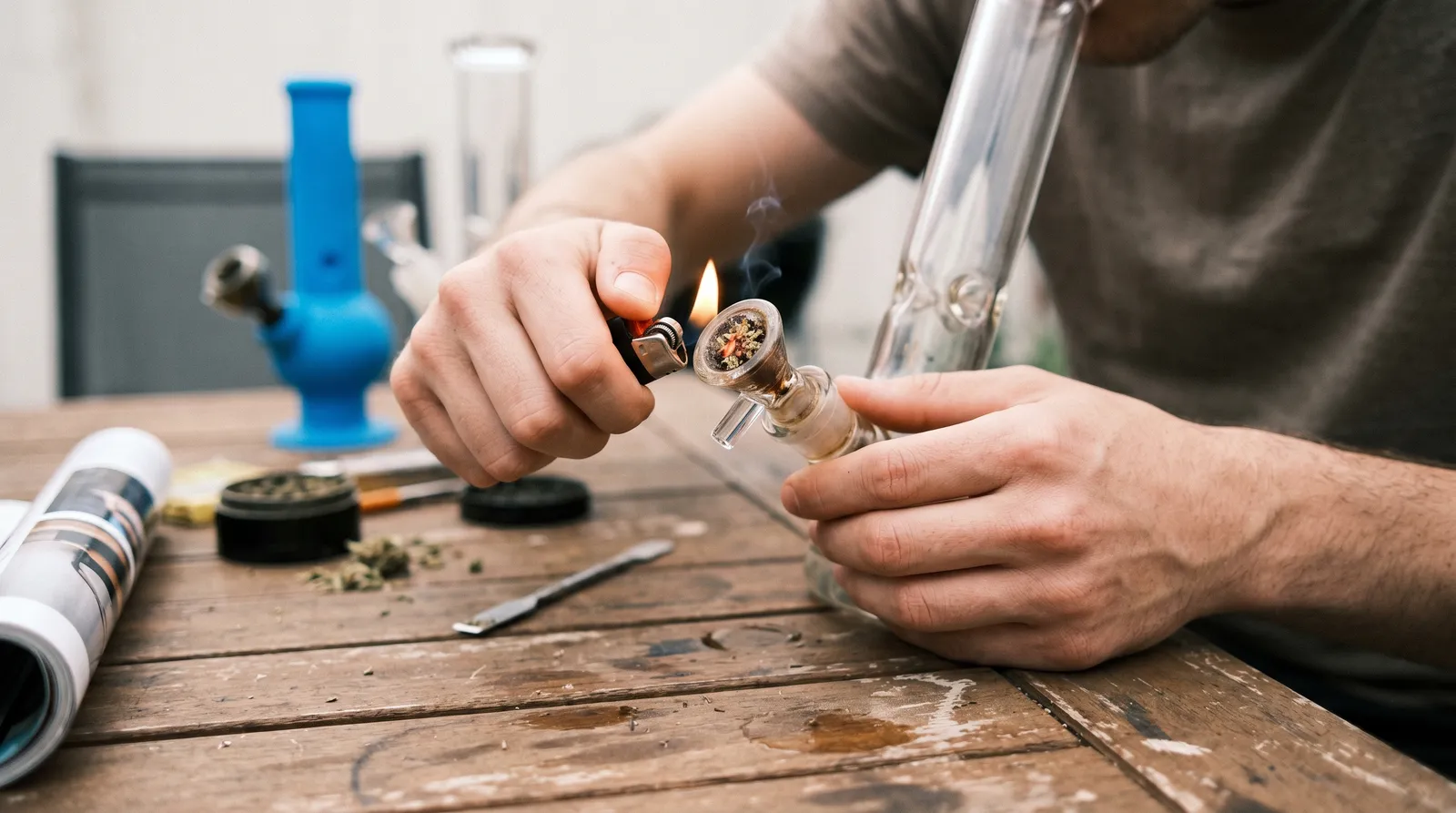
Food-grade silicone is rated to approximately 230 °C (some formulations higher), which is well above the temperatures the body of a bong reaches during normal use. The bowl and downstem are typically glass or metal inserts even on silicone bongs, so the silicone itself isn't exposed to direct flame. As long as you're not applying a torch directly to the silicone body — don't do that — heat isn't a concern.
Acrylic has the lowest heat tolerance of the three. It can warp or soften at temperatures above roughly 90 °C, and there are community reports of acrylic releasing unpleasant fumes when exposed to sustained heat near the bowl area. The bowl piece on an acrylic bong is usually metal, which helps, but the junction between metal bowl and acrylic tube is a weak point. This is one area where the data is thin — there aren't peer-reviewed studies specifically measuring off-gassing from acrylic bongs at typical use temperatures, so the risk is hard to quantify precisely. The precautionary approach: if you're using acrylic, don't hold the flame on the bowl for extended periods and replace the piece if you notice any warping or discolouration near the bowl seat.
Design and Aesthetics
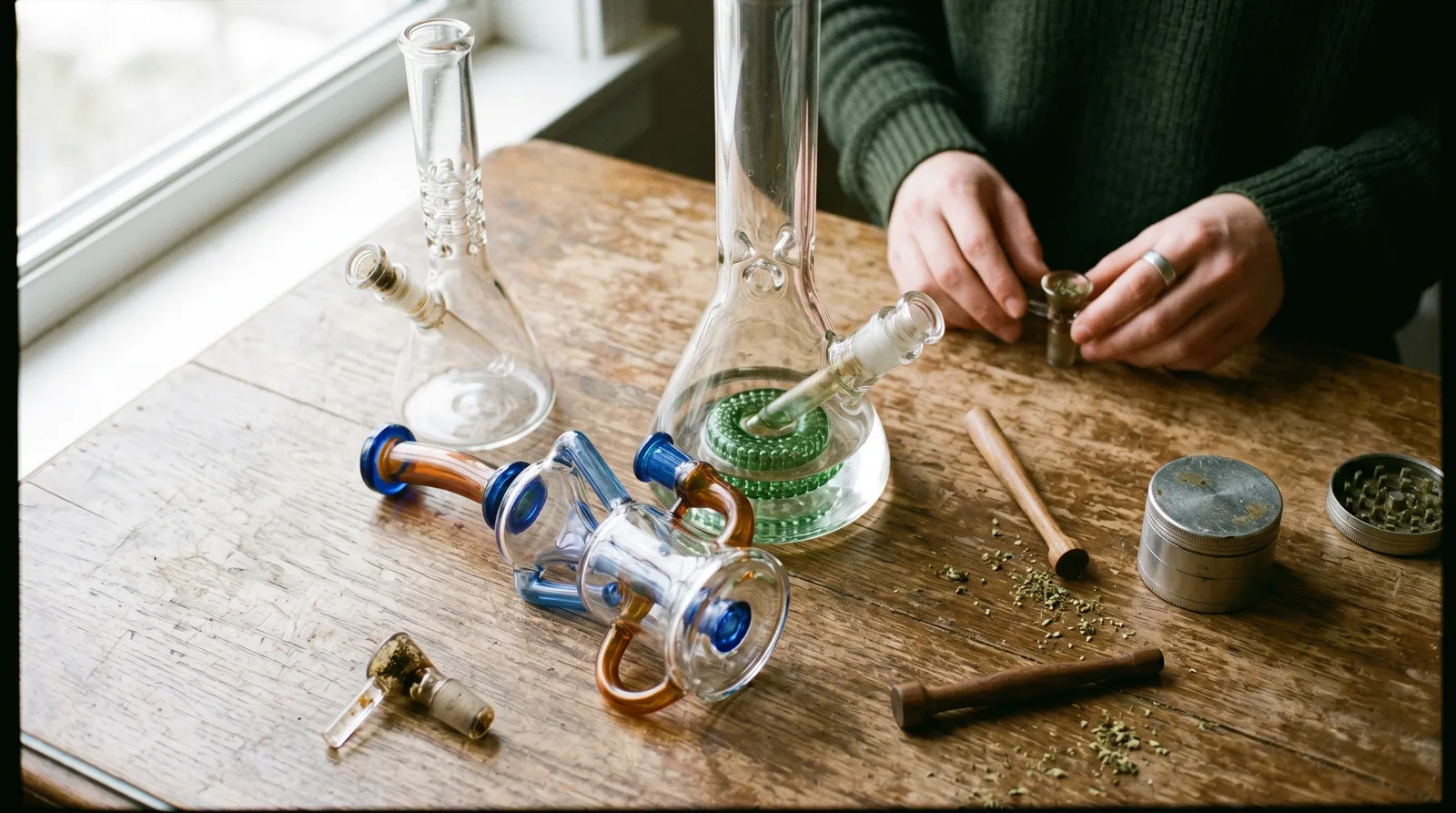
Glass is where the artistry lives. From scientific-style beakers to elaborate recycler rigs with coloured accents, glass bongs span a design range that neither silicone nor acrylic can match. Brands like ROOR produce clean, German-engineered pieces that look as good on a shelf as they function in use. Grace Glass offers mid-premium designs with interesting percolator configurations. Even at the entry level, Blaze Glass pieces have a visual clarity and finish that plastic simply can't replicate.
Silicone bongs tend toward bright colours and simple shapes — beakers, straight tubes, occasionally novelty designs. They're functional and cheerful, but nobody's displaying one in a cabinet. That said, the hybrid trend (silicone body with glass percolator inserts) is closing the gap somewhat.
Acrylic bongs come in a range of transparent colours, and they have a certain retro appeal — these were the standard entry-level bong for decades before silicone entered the market. But the material clouds over time, scratches accumulate, and they end up looking tired faster than either alternative.
Which Material Actually Suits You?
Pick glass if flavour and filtration matter to you, you have a stable spot to keep it, and you're willing to treat it with a bit of care. A percolator bong or ice bong in borosilicate is the gold standard for home use — there's a reason glass dominates the market above the entry-level price point.
Pick silicone if you need something portable, virtually unbreakable, and easy to clean. It's the right call for outdoor use, travel, or any situation where a glass piece would be a liability. You sacrifice some filtration sophistication and design variety, but you gain peace of mind.
Pick acrylic if budget is the primary constraint and you want something functional right now. An acrylic bong works — it filters smoke through water, it cools the hit, it does the basic job. Just know that it's a short-term solution. The flavour degrades, cleaning gets harder, and most people move on within a year or two.
There's no single "best" material — only the best material for how and where you actually smoke. A ROOR glass beaker sitting on a dedicated shelf at home and a silicone tube stuffed in a festival backpack are both doing exactly what they should.
References
- Schott AG (2020). Borosilicate glass 3.3 — material properties and chemical resistance data sheet. Schott Technical Documentation.
- Gieringer, D., St. Laurent, J., & Goodrich, S. (2004). Cannabis vaporizer combines efficient delivery of THC with effective suppression of pyrolytic compounds. Journal of Cannabis Therapeutics, 4(1), 7–27. (Water filtration findings referenced from earlier 2000 NORML/MAPS study by same authors.)
- Moose Labs (2022). Bacteria and biofilm formation in shared smoking devices. Moose Labs Research Summary.
- ThickAssGlass (2023). Smoking from glass vs. plastic — how it really feels. ThickAssGlass Blog.
This guide covers hardware for adults (18+). Use of vaporizers, bongs, pipes, dab rigs and rolling accessories is for adult use only. Verify your local laws on the substances you choose to use — Azarius does not provide legal advice. Consult a qualified professional if you have a health condition or take medication.
Last updated: April 2026
Frequently Asked Questions
7 questionsDoes acrylic affect the taste of bong smoke?
Can you put a silicone bong in the dishwasher?
Is it safe to clean an acrylic bong with isopropyl alcohol?
Why do glass bongs have smoother hits than silicone or acrylic?
How long does an acrylic bong last compared to glass?
Can silicone bongs handle the heat from a lighter or torch without melting?
Which bong material is best for travelling or taking to festivals?
About this article


Adam Parsons is an external cannabis and psychedelics writer and editor who contributes to Azarius's wiki as both author and reviewer. On the writing side, he authors Azarius's kratom and kanna clusters, drawing on exten
This wiki article was drafted with AI assistance and reviewed by Adam Parsons, External contributor. Editorial oversight by Joshua Askew.
Medical disclaimer. This content is for informational purposes only and does not constitute medical advice. Consult a qualified healthcare provider before use of any substance.
Last reviewed April 25, 2026
Related Articles
Gravity Bongs Explained: How They Work and Why
A gravity bong uses water displacement to pull concentrated smoke into a chamber, then forces it into your lungs under positive pressure.
Storz Bickel Volcano Complete Guide: Setup, Temps & Cleaning
The Storz & Bickel Volcano is a convection desktop vaporizer that fills detachable balloons with vapour — a system clinically validated by Hazekamp et al.
TinyMight Boundless XMAX Premium Portables Compared
The TinyMight 2, Boundless CFX/CFC and XMAX V3/Starry/Ace represent three tiers of portable dry-herb vaporizer — from budget conduction to premium convection.
How To Clean a Vaporizer: Step-by-Step Guide
How to clean a vaporizer is a straightforward maintenance routine that keeps your device tasting fresh, drawing smoothly, and lasting years longer than a…
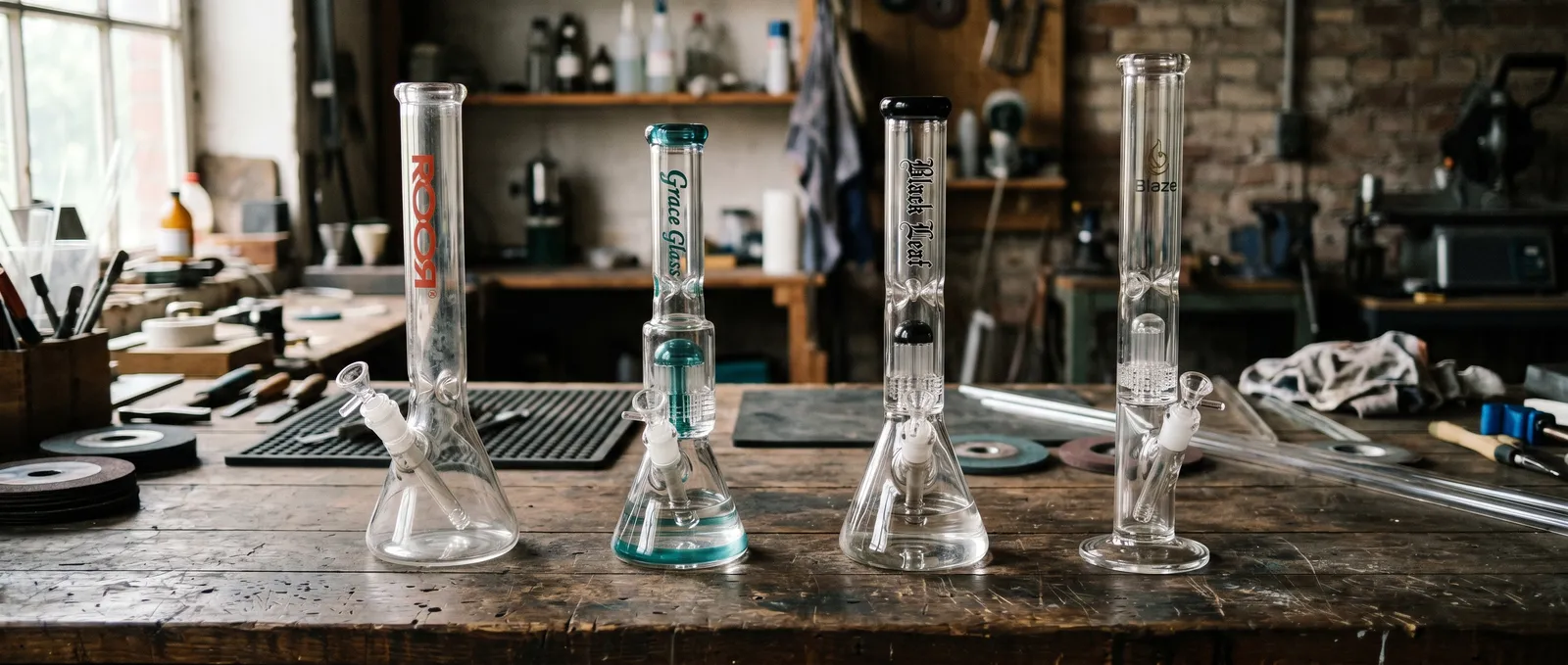
ROOR Grace Glass Black Leaf Blaze Brand Comparison — Glass Bong Guide
Four borosilicate glass bong brands — ROOR, Grace Glass, Black Leaf, and Blaze Glass — dominate the European market at different price points.
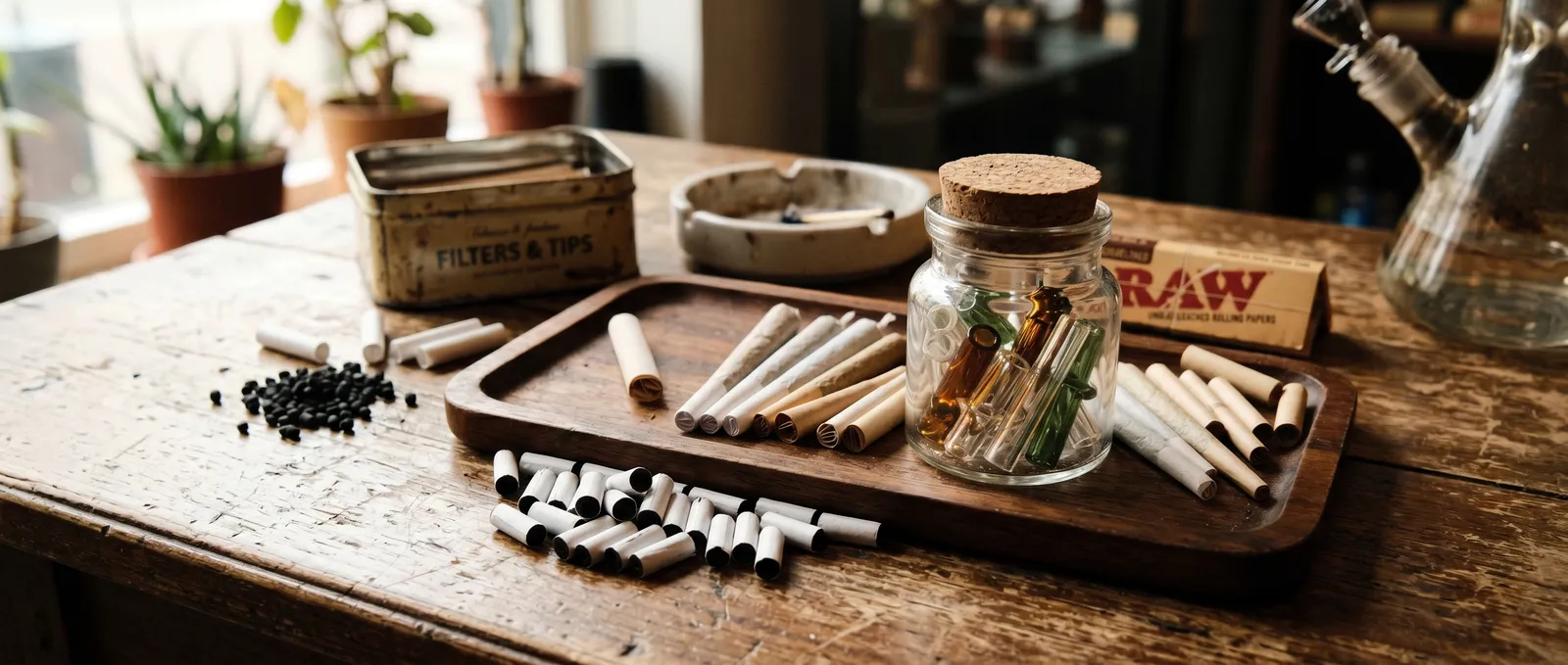
Joint Filters Crutches Glass Tips Activated Charcoal — Buyer's Guide
Joint filters range from simple card crutches that block loose herb to activated charcoal tubes that trap 40–60% of gas-phase toxicants like benzene and…
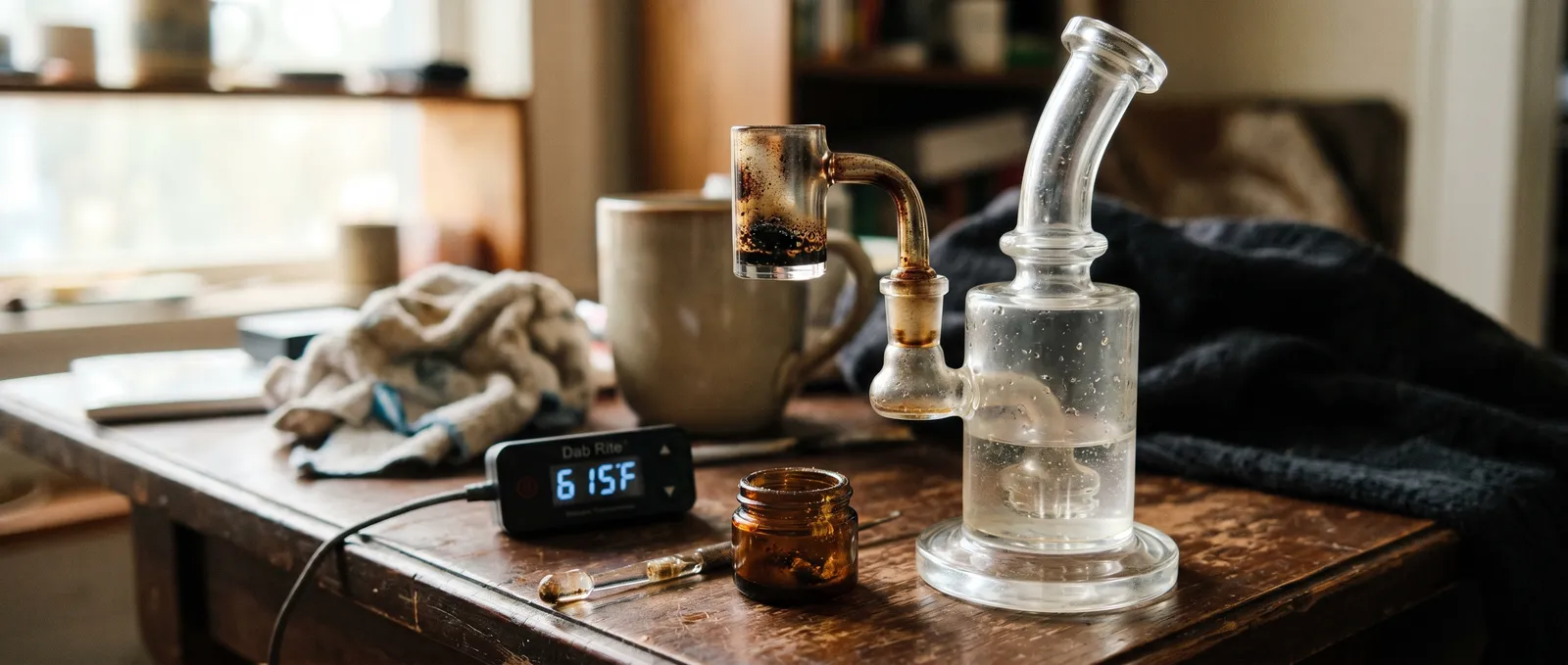
Quartz Banger Temperature and Care Guide
A quartz banger's performance depends almost entirely on temperature control and maintenance.
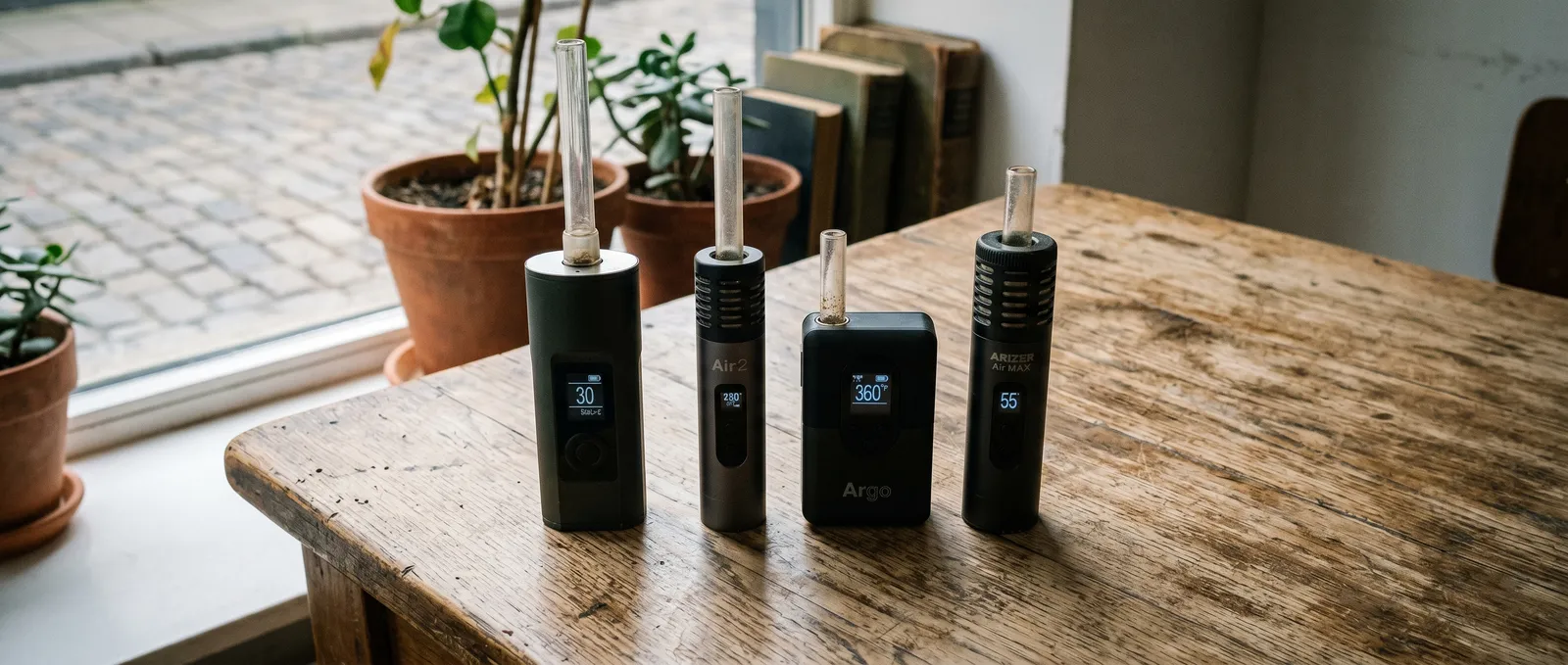
Arizer Portable Lineup Compared: Solo vs Solo 2 vs Solo 3 vs ArGo
Arizer's portable vaporizers all use borosilicate glass vapour paths and session-style heating, but differ meaningfully in battery architecture, heating…
Kief: What It Is and How to Collect It | Full Guide
Kief is the fine, powdery accumulation of trichome heads that detach from cannabis flower during grinding or handling.