
This article discusses psychoactive substances intended for adults (18+). If you have a health condition or take medication, consult a doctor before use. Our age policy
Why Is My Grow Kit Not Producing? Troubleshooting Guide
Definition
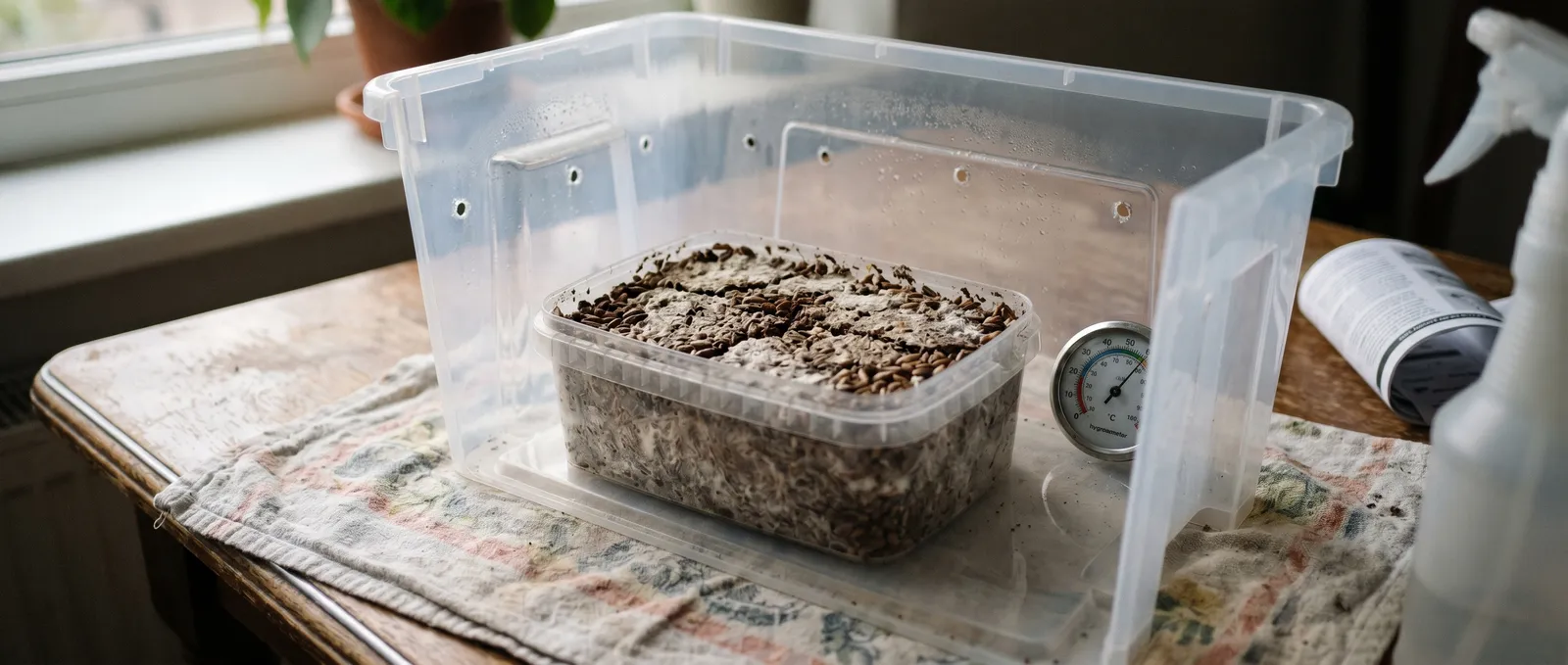
A grow kit not producing is a stalled fruiting chamber almost always caused by environmental drift — temperature below 20 °C, collapsed humidity, insufficient fresh air exchange, or a dehydrated cake between flushes — rather than a defective kit. Stamets (2000) documents cubensis fruiting parameters that most stalled kits simply aren't meeting.
Why your grow kit has gone quiet
A grow kit not producing is a stalled fruiting chamber that can almost always be revived by correcting temperature, humidity, fresh air exchange or substrate hydration before the mycelium is written off. This guide is written for adults. If your grow kit is not producing, the problem is almost always environmental — temperature drift, humidity collapse, stalled fresh air exchange, or a substrate that has dried out — rather than a dud kit you need to replace or buy again. Psilocybe cubensis mycelium is stubborn stuff; if the grains are white and the smell is earthy (not sour, not sweet), the kit is probably still alive and fixable. Work through the steps below in order before declaring it dead.
Step 1: Check the temperature properly
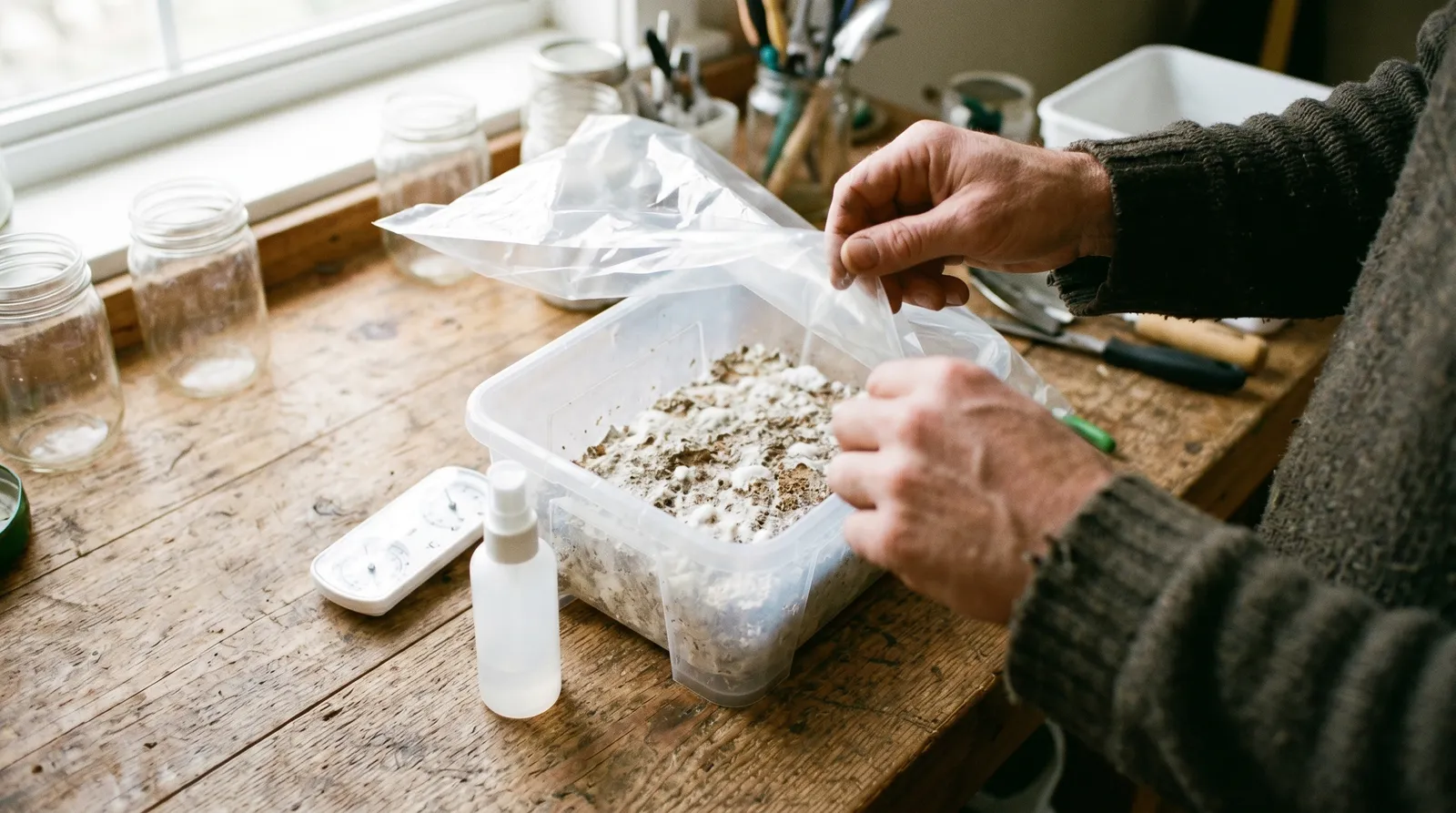
Substrate temperature is the single most common reason a grow kit is not producing. Fruiting cubensis wants a substrate temperature of 22–24 °C, with room temperature ideally sitting around 20–23 °C (Stamets, 2000). Most failed kits in northern European living rooms are simply too cold — a windowsill in March runs 16–18 °C at night, which is enough to stall pinning entirely.
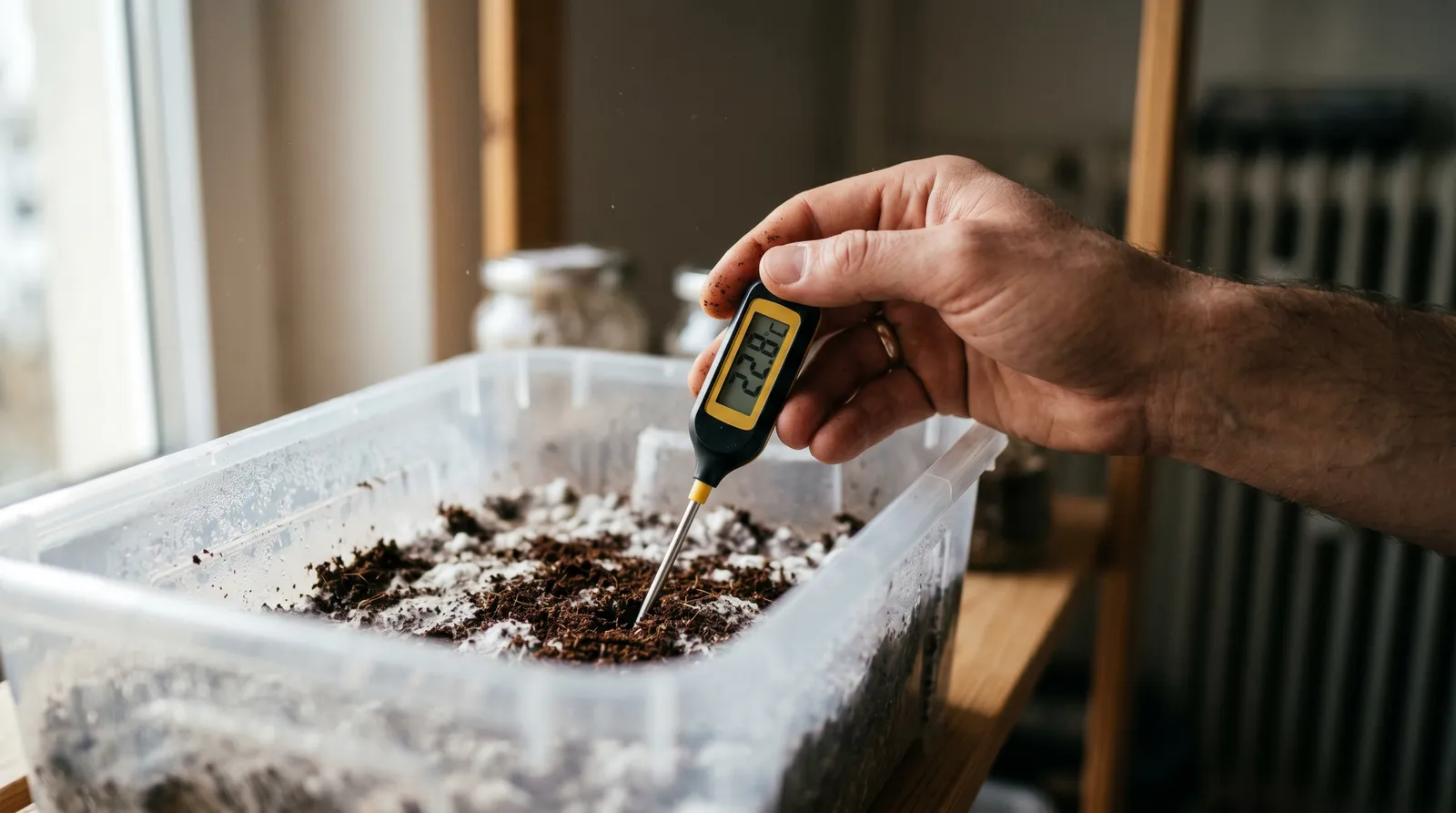
A cheap digital thermometer-hygrometer (the €8 kind you can order online) goes on top of the kit, not across the room. If you read below 20 °C, move the kit off the floor, off exterior walls, and away from windows. A seedling heat mat under a folded towel brings substrate temp up by 3–5 °C without cooking the grains. Above 28 °C is the danger zone — trichoderma (that bright green mould) colonises fast at those temperatures.
Step 2: Audit humidity and fresh air exchange together
Pinning needs 90–95% relative humidity inside the bag plus daily fresh air exchange, and the two requirements fight each other. Too little FAE and CO₂ builds up, which tells the mycelium to keep growing vegetatively instead of forming pins. Too much FAE and the casing layer dries out, which also kills pinning.
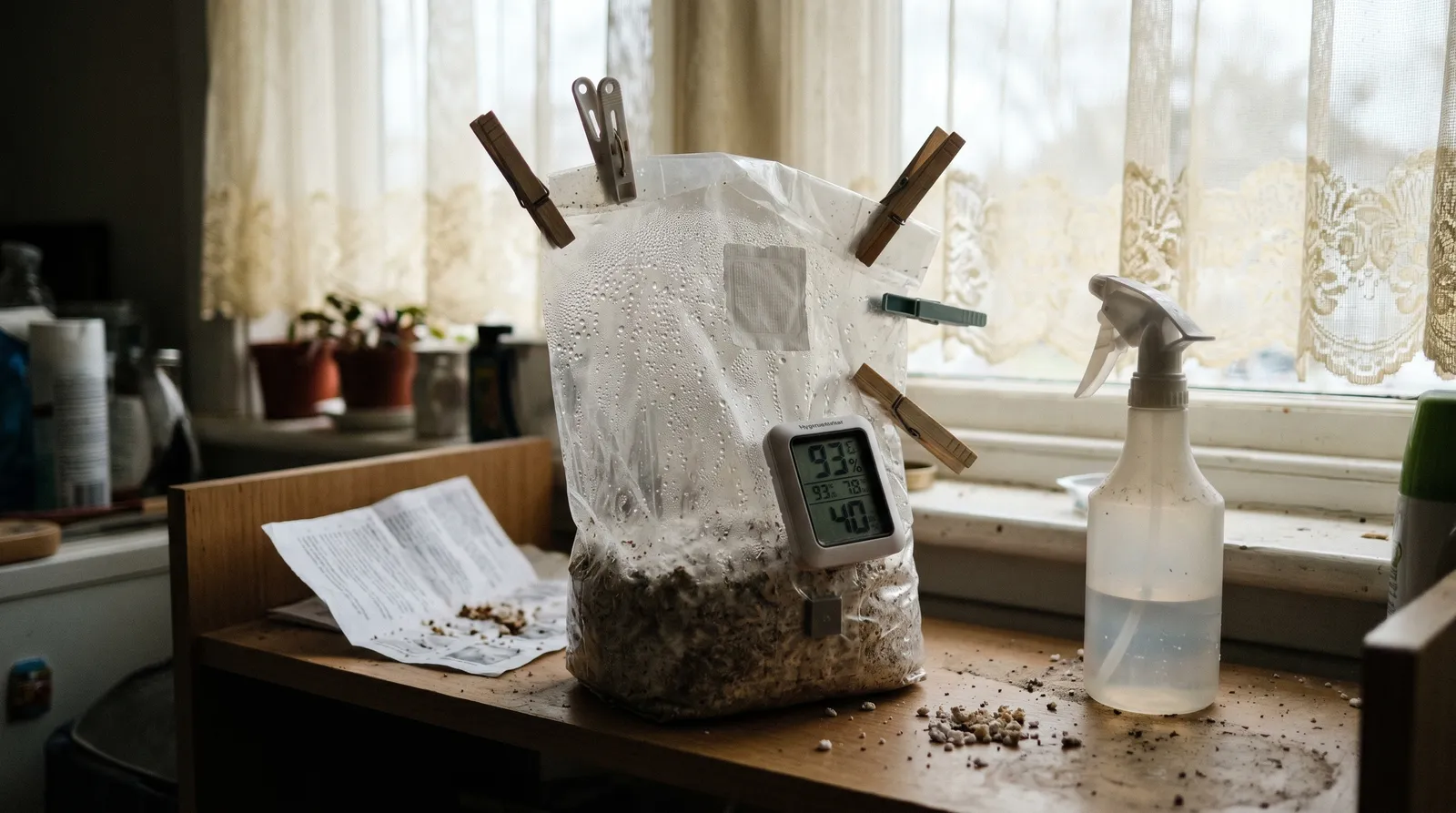
The standard routine: open the bag once or twice a day, fan fresh air in with the plastic sleeve or a bit of cardboard for 30 seconds, then mist the inside walls of the bag (never the cake itself) with a fine spray of clean water. Reseal loosely with the paperclips. If the perlite/vermiculite casing is visibly dry or cracking, you have been misting too lightly; if there's standing water pooling in the corners, you've drowned it.
Step 3: Look for pins before panicking
Most "failed" kits are simply early. A fully colonised Golden Teacher Grow Kit typically shows first pins 7–14 days after the bag goes on. McKennaii can be slower — 10–18 days is normal. If it has been less than two weeks and the cake is solid white with no green, blue-black or pink patches, you are probably just early.
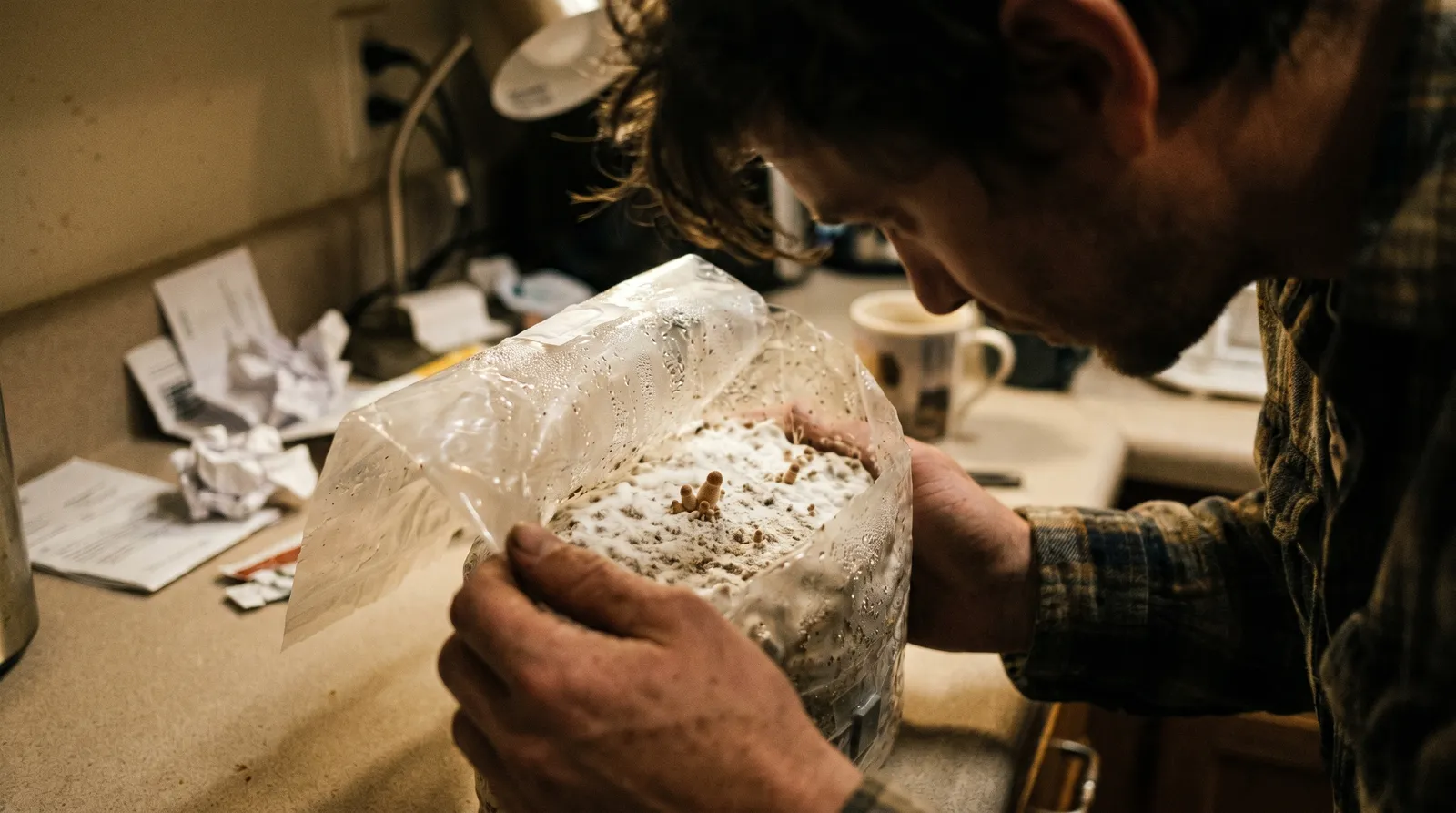
Look for tiny white bumps or pinhead-sized droplets on the casing surface. Brown "hyphal knots" that don't develop further for a week are a sign of stress — usually temperature swings or under-misting. They often restart once conditions stabilise.
Step 4: Try a cold shock if nothing is happening
A cold shock triggers primordia formation when a healthy kit refuses to pin. If you're past day 14 with zero pin activity and the cake still looks healthy, put the sealed kit (inside its bag) in the fridge at 2–5 °C for 12 hours, then return it to room temperature and mist as normal. The temperature drop mimics an autumn night and triggers primordia formation in cubensis (Stamets, 2000).
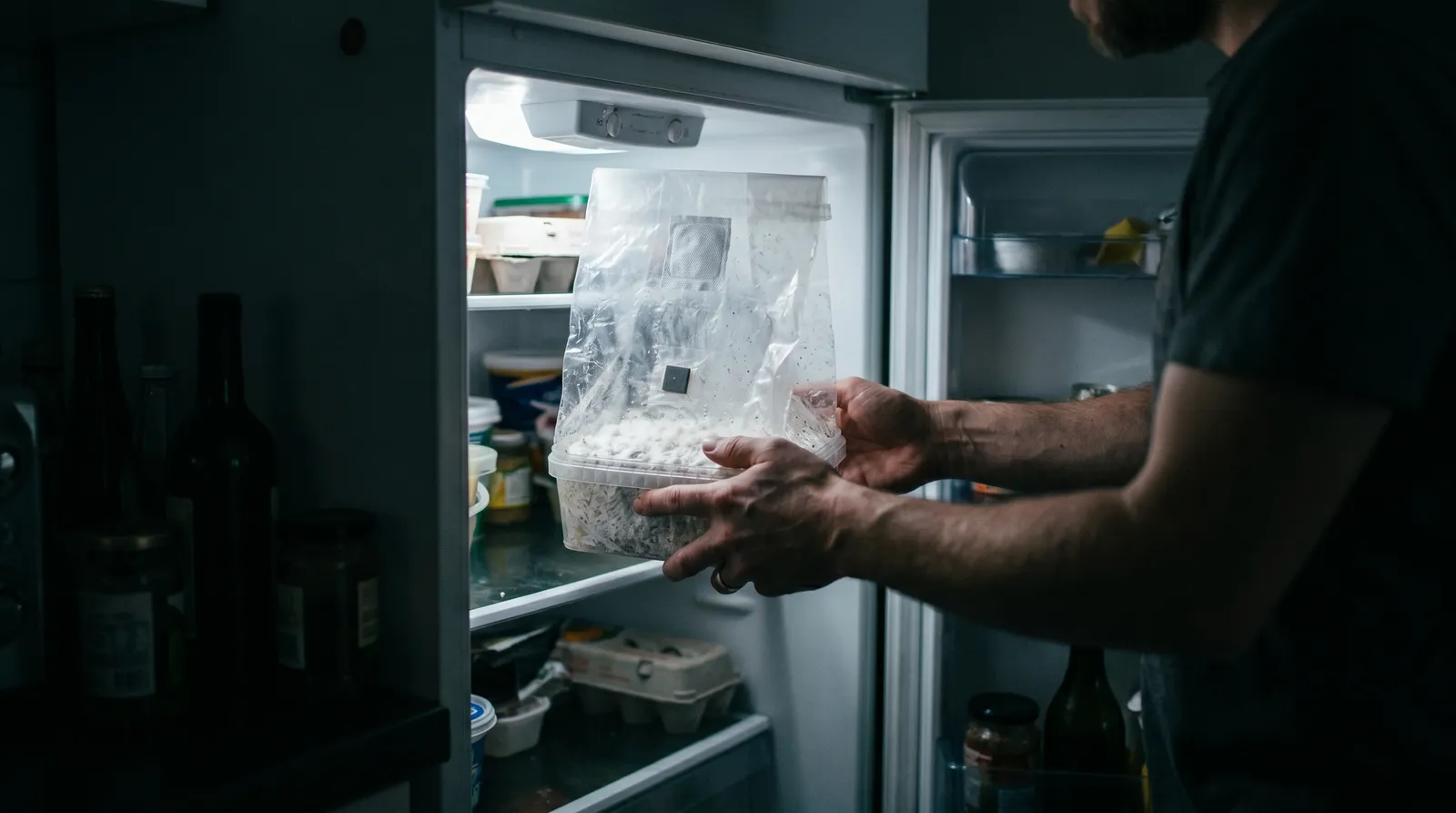
Honest limitation: this trick works roughly 60–70% of the time on stalled kits, in our counter experience. It does not work if the underlying problem is contamination or a dried-out cake — diagnose those first.
Step 5: Rehydrate between flushes
A first flush drains a surprising amount of water from the substrate. If your kit produced once and then went quiet, it almost certainly needs a dunk. Fill the bag with clean, cold (ideally filtered) tap water until the cake is fully submerged, place a clean weight on top so it doesn't float, and leave it 12 hours in the fridge. Drain thoroughly — no standing water in the bag — and restart misting and FAE.
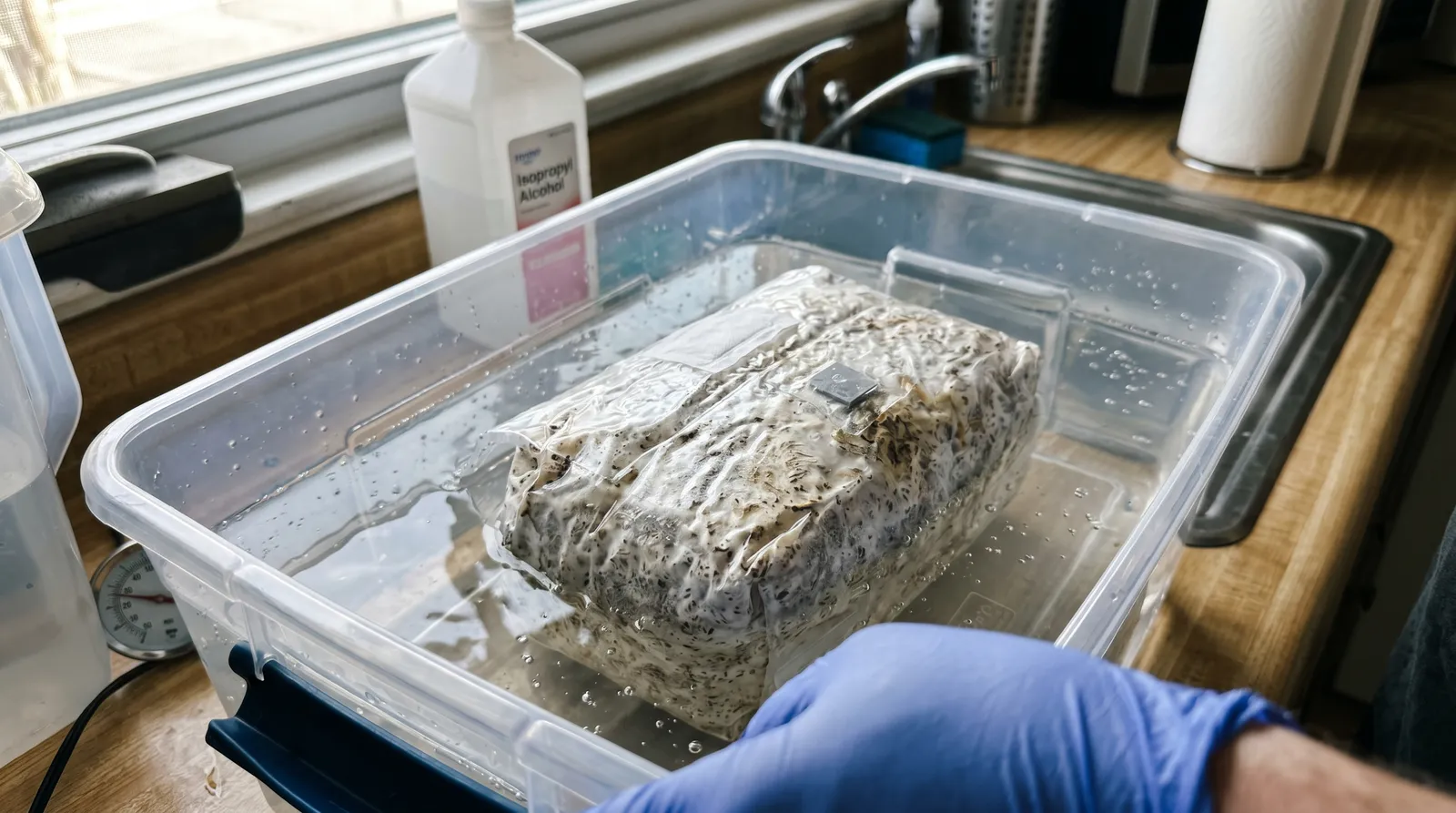
Expect second flushes to come in at 50–70% of first-flush wet weight. Third flushes drop again. A healthy Ready-2-Grow Bag 'Golden Teacher' might yield 400–600 g fresh on flush one, 200–350 g on flush two, and diminishing returns after that.
Step 6: Rule out contamination — and know when to stop
A kit that isn't producing because it's contaminated is not a kit you can fix. Look closely at the substrate:
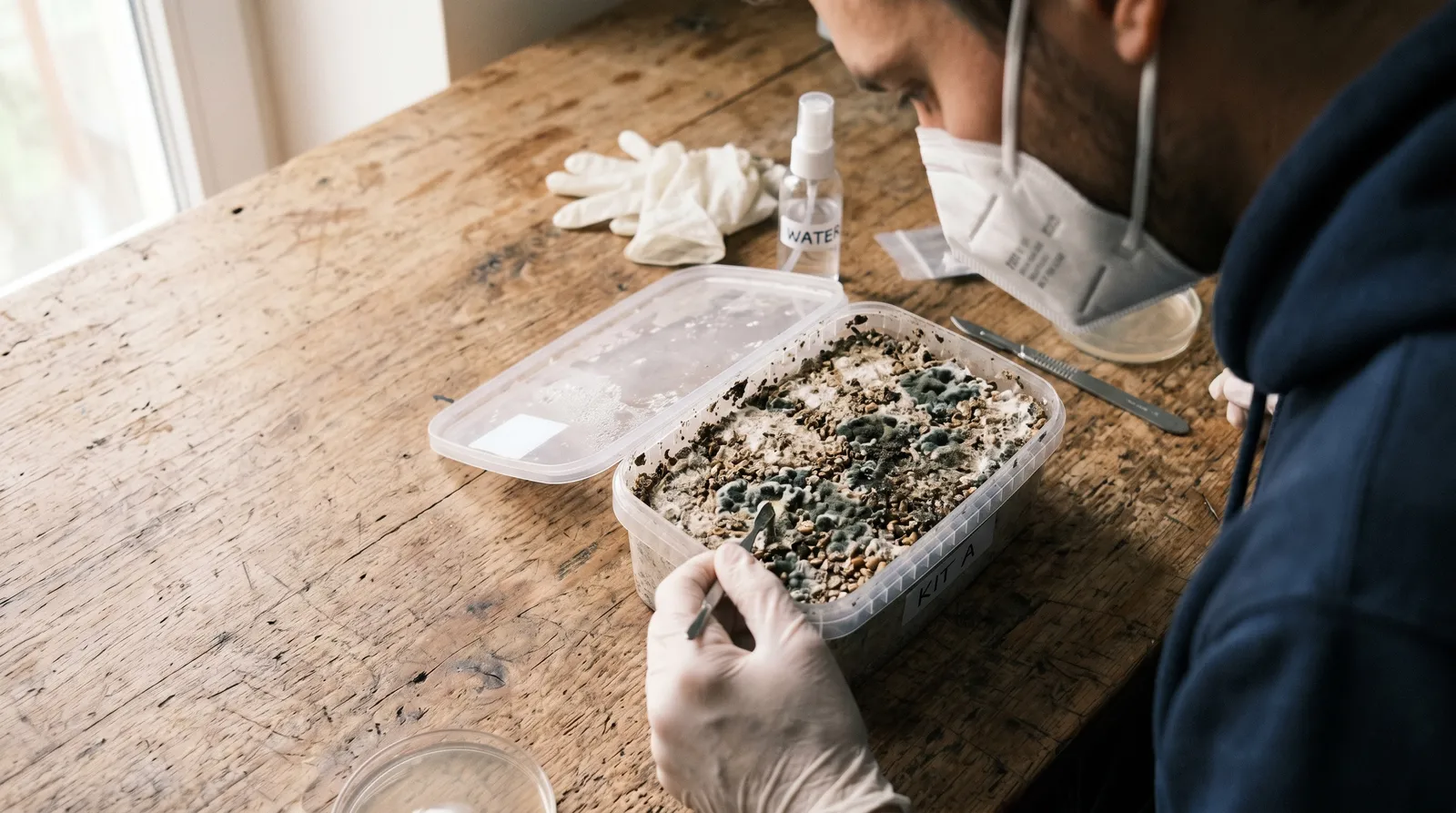
- Bright green patches on grains or casing — trichoderma. Bag it, bin it, don't open indoors.
- Grey fuzzy "spider web" growth spreading across the casing — cobweb mould. Occasionally saveable with a light mist of 3% hydrogen peroxide, but usually terminal.
- Wet, shiny, yellow-brown patches with a sour smell — bacterial wet rot (often Pseudomonas). Toss.
- Pink, orange or black slime — bin immediately.
- Blueish bruising on the cake or mushrooms — NOT contamination. That's oxidised psilocin, completely normal.
Mushroom dust and mould spores are genuine respiratory irritants; wear an FFP2 mask and disposable gloves when handling any suspect kit, and never compost a contaminated cake in your kitchen bin.
Step 7: Review your hygiene for next time
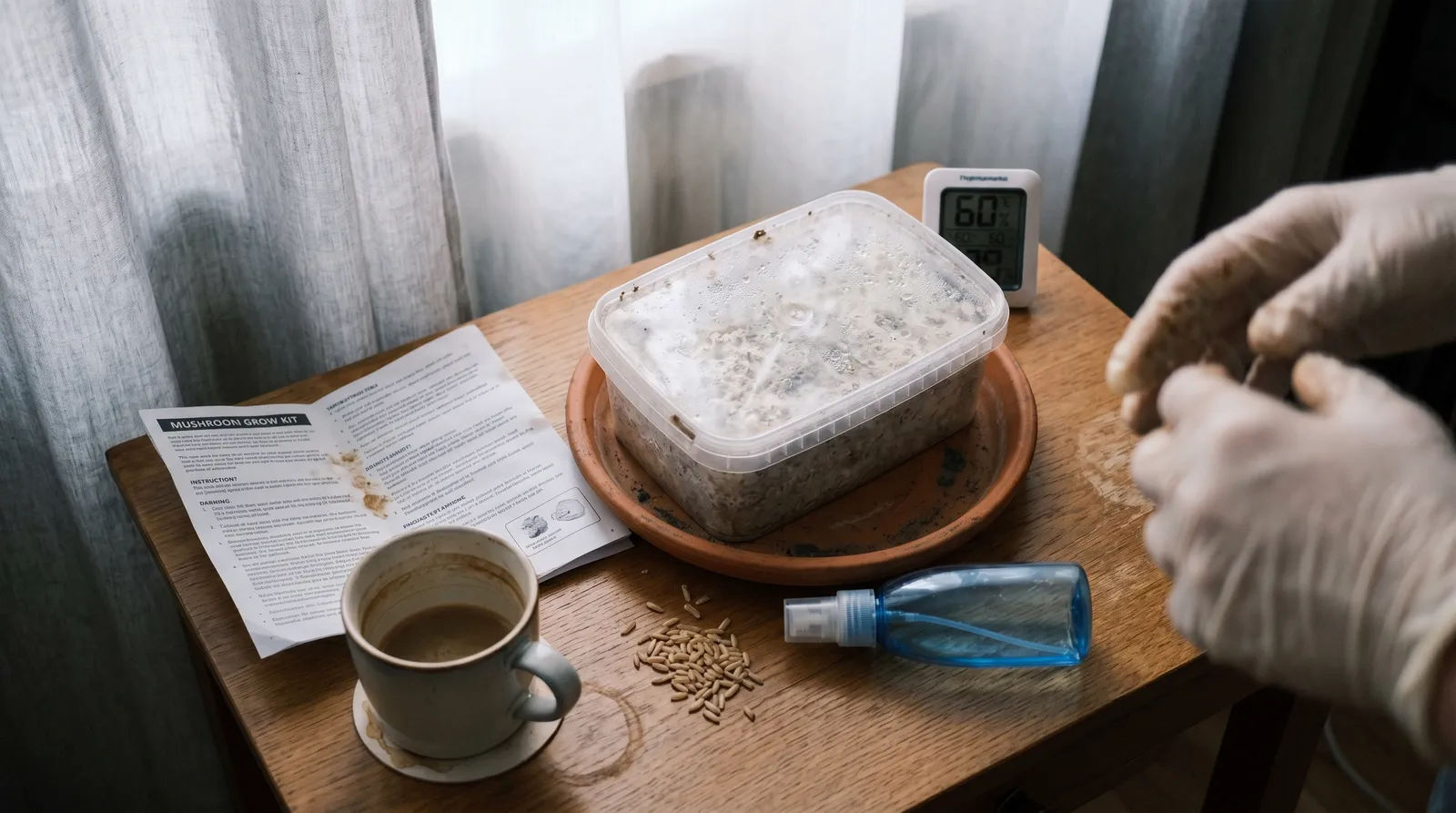
Handling is the hidden cause of most dead kits. If the kit is dead and you want to know why, run through the handling log. Ungloved hands touching the casing, misting with tap water that sat open for days, placing the kit next to a fruit bowl, or opening the bag in a kitchen during cooking — all classic cross-contamination routes. The Shroomery cultivation wiki (2023 revision) estimates that 70%+ of amateur contamination traces back to handling rather than kit defects.
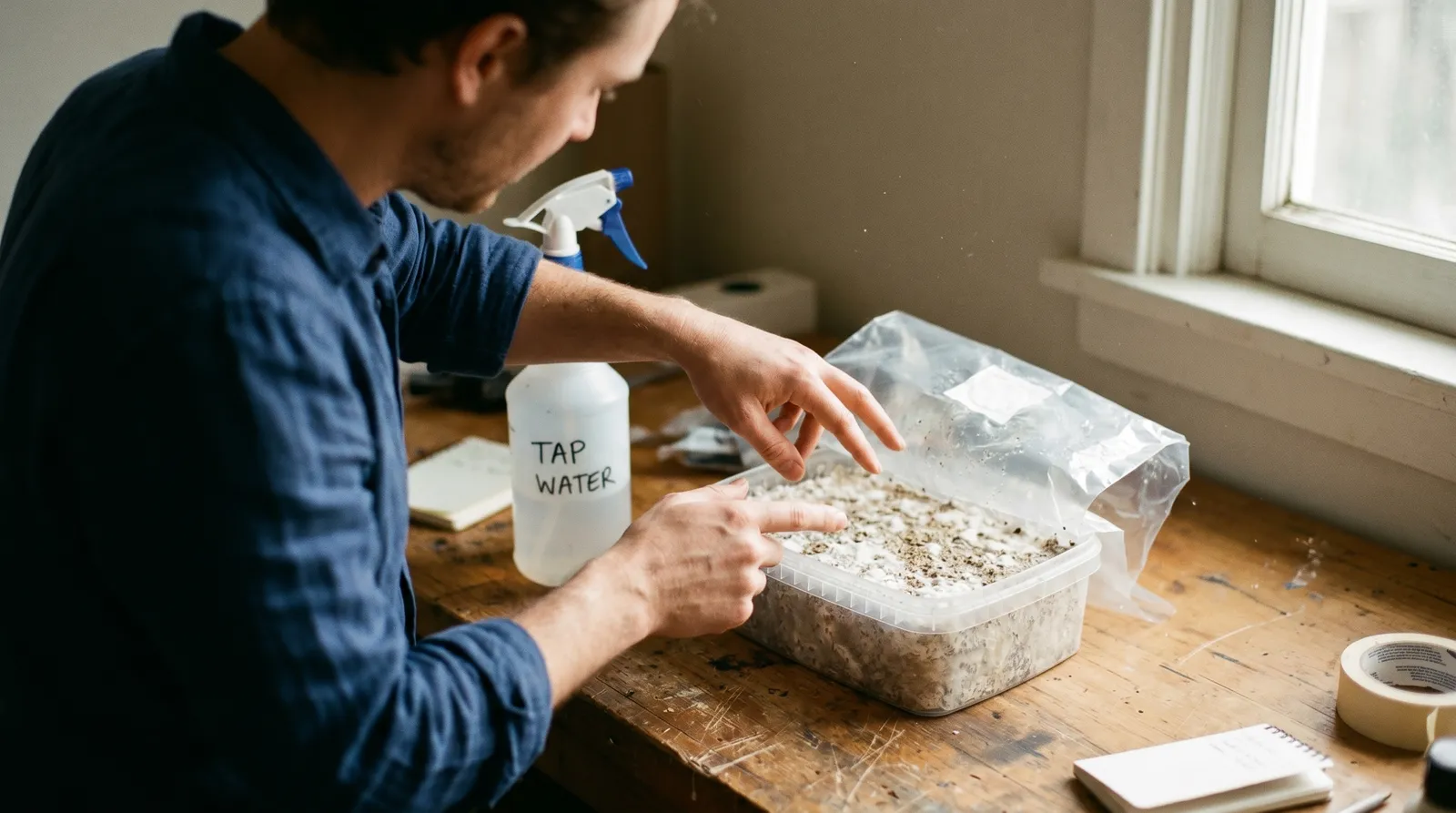
Common mistakes at a glance
Most reasons a grow kit is not producing cluster around six recurring patterns:
| Symptom | Likely cause | Fix |
|---|---|---|
| No pins after 14+ days, cake healthy | Temperature below 20 °C or no FAE | Heat mat, daily air exchange, cold shock |
| Tiny pins that go brown and abort | Humidity too low, cake drying | Mist bag walls more, not the cake |
| Green patches on grains | Trichoderma contamination | Discard — not recoverable |
| First flush fine, nothing after | Cake dehydrated | 12-hour cold water dunk + drain |
| Sour smell, wet yellow patches | Bacterial wet rot | Discard |
| Blue bruising on cake | Normal psilocin oxidation | Nothing — harmless |
One note on consumption: this guide covers cultivation only. Dosing, set and setting, and interactions (including the serious risks of combining psilocybin with MAOIs, SSRIs or lithium) live on the psilocybin hub's dedicated interactions article.
Information only. This article is educational and does not constitute medical advice. Cultivation, identification and consumption of fungi carry real risks — including respiratory irritation from spores, misidentification, allergic reaction, and serious interactions with prescribed medication. Consult a qualified healthcare professional before making decisions about your health. Harm reduction resources and the psilocybin hub cover dosing, interactions and set-and-setting in detail.
Last updated: April 2026
Frequently Asked Questions
7 questionsHow long should I wait before deciding my grow kit is not producing?
Can I save a kit that has stopped producing mid-grow?
Why did my first flush work but nothing after?
Is blue colour on my kit contamination?
Does a cold shock actually work on a stalled grow kit?
Can I reuse a grow kit that never produced anything?
How often should I mist my grow kit and how much is too much?
About this article


Adam Parsons is an external cannabis and psychedelics writer and editor who contributes to Azarius's wiki as both author and reviewer. On the writing side, he authors Azarius's kratom and kanna clusters, drawing on exten
This wiki article was drafted with AI assistance and reviewed by Adam Parsons, External contributor. Editorial oversight by Joshua Askew.
Medical disclaimer. This content is for informational purposes only and does not constitute medical advice. Consult a qualified healthcare provider before use of any substance.
Last reviewed April 25, 2026
References (1)
- [1]Stamets, P. (2000). Growing Gourmet and Medicinal Mushrooms (3rd ed.). Ten Speed Press, Berkeley, CA. Source
Related Articles
Cannabis Hermaphrodite: Identify, Prevent, Act
A cannabis hermaphrodite is a female plant that develops male pollen sacs or banana-shaped anthers (nanners), self-pollinating and seeding your harvest.
DIY Cannabis Fertilizer: Homemade Nutrient Guide
DIY cannabis fertilizer guide: compost, teas, banana ferments and feed schedules, with safety notes and cited research for home growers.
What To Do With Male Cannabis Plants: 6 Practical Uses
What to do with male cannabis plants: identify, isolate, breed, extract, or compost. A practical 6-step guide with sourcing and safety notes.
Mushroom Grow Kit Temperature & Humidity: Full Setup Guide
A temperature humidity control grow kit is the small set of climate tools — hygrometer, heat mat, humidifier or perlite tray — that keeps a mushroom fruiting…
When to Harvest Mushrooms: Veil Break Timing Explained
Harvest timing veil break is a cultivation technique that uses the tearing of the partial veil on maturing Psilocybe cubensis to mark peak alkaloid content.
First Grow Checklist: What You Need for Mushroom Kits
A first grow checklist is the short list of supplies and environmental conditions needed to run a home psilocybin mushroom kit from inoculated substrate to…
Sclerotia vs Fruit Bodies: Cultivation Comparison
Sclerotia and fruit bodies are two different life stages of Psilocybe fungi: sclerotia are hardened underground mycelial storage bodies (the 'magic…
Storing Dried Mushrooms Long Term: Full Guide
Storing dried mushrooms long term means keeping well-dried Psilocybe fruit bodies in airtight, opaque containers with desiccant, cool and dark, to slow…
Drying Mushrooms Air Desiccant Oven: Methods Compared
Drying mushrooms air desiccant oven refers to the three home methods for reducing fresh fruit bodies from ~90% water to cracker-dry (<5%). Gotvaldová et al.