
This article discusses psychoactive substances intended for adults (18+). If you have a health condition or take medication, consult a doctor before use. Our age policy
Defoliation and Schwazzing Cannabis: Techniques Explained
Definition
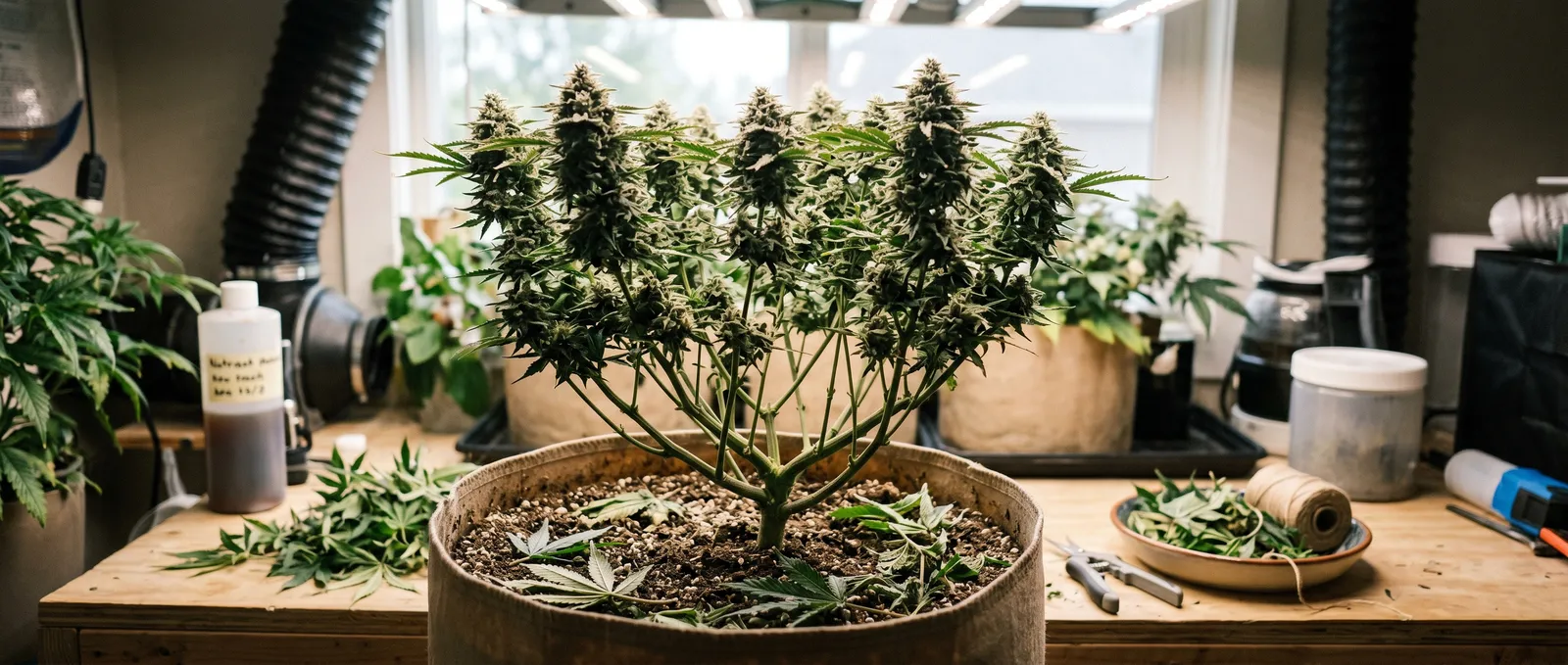
Defoliation and schwazzing cannabis are leaf-removal techniques that open the canopy for better light penetration and airflow. Defoliation is the selective, cautious version; schwazzing, popularised by Haupt (2015), strips nearly all fan leaves below the top nodes twice during flower. The two sit on the same spectrum but carry very different risk profiles.
This guide is written for adults. Cultivation techniques described below apply to formal home-grow contexts only.
Defoliation and schwazzing cannabis is a pair of plant-training techniques that improve light penetration and airflow by stripping fan leaves to push more energy into bud sites. Both sit on the same spectrum: defoliation is the cautious version (a handful of leaves, timed to stage), while schwazzing is the sledgehammer version (strip almost every fan leaf under the top couple of nodes, twice). One has decades of quiet grower consensus behind it. The other is loud, controversial, and the evidence is thinner than its evangelists suggest.
This article explains both defoliation and schwazzing cannabis techniques, where they overlap, where they diverge, and what the actual horticulture research and grower testing tell us about when either is worth the risk.
This guide is educational. Azarius does not provide formal advice on cultivation.
What defoliation actually does to a cannabis plant
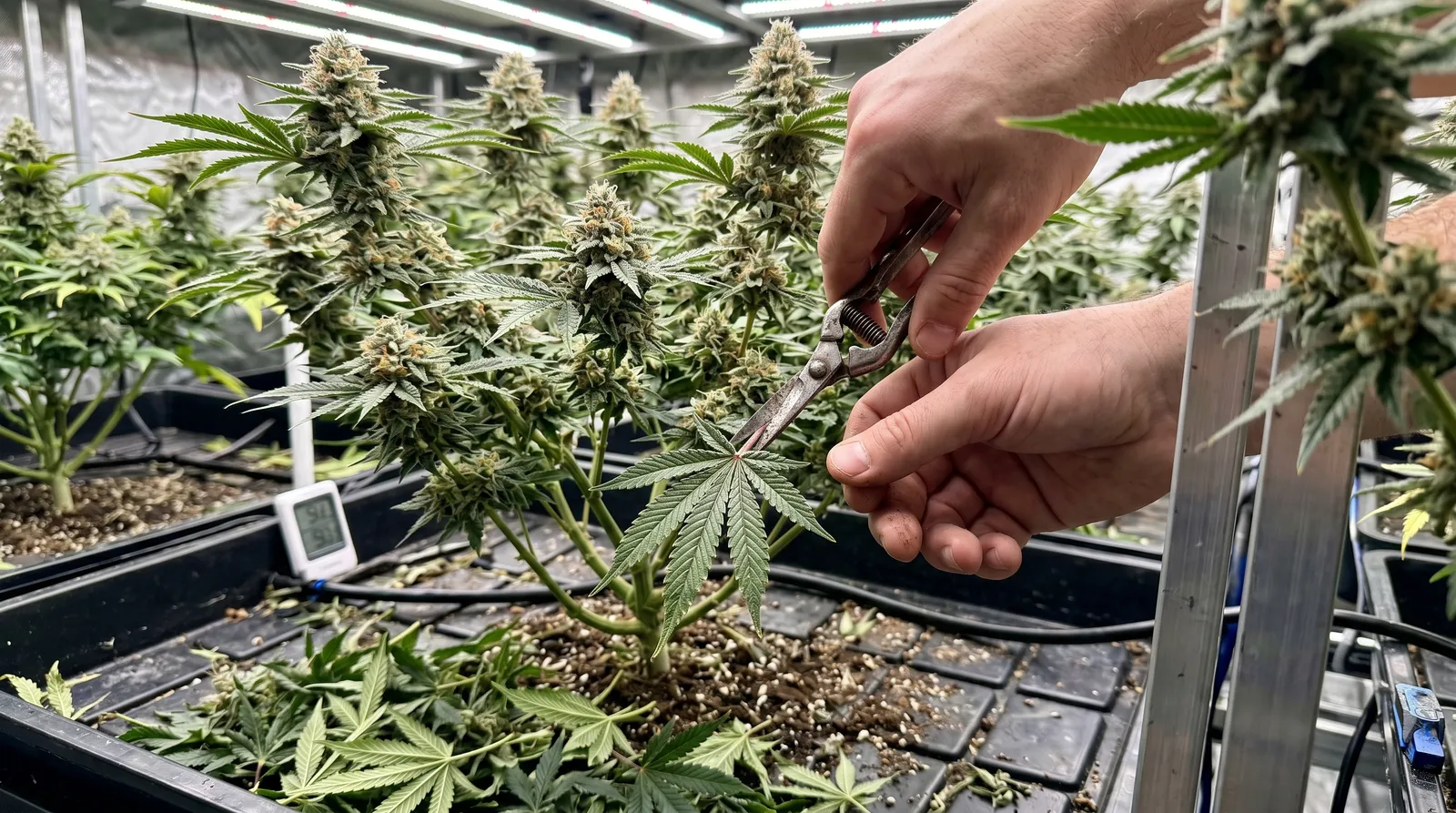
Defoliation is the selective removal of fan leaves — the big, five-to-nine-fingered leaves — to open up the canopy. The mechanism is straightforward: fan leaves shade the bud sites below them. In dense indica-dominant genetics under 600–1,000 PPFD in flower, the lower two-thirds of the plant can sit well below the ~200 PPFD threshold where photosynthesis barely pays its own bills (Rodriguez-Morrison et al., 2021). Pull the right leaves and light reaches shaded nodes; pull the wrong ones and you've amputated the plant's sugar factory for no gain.
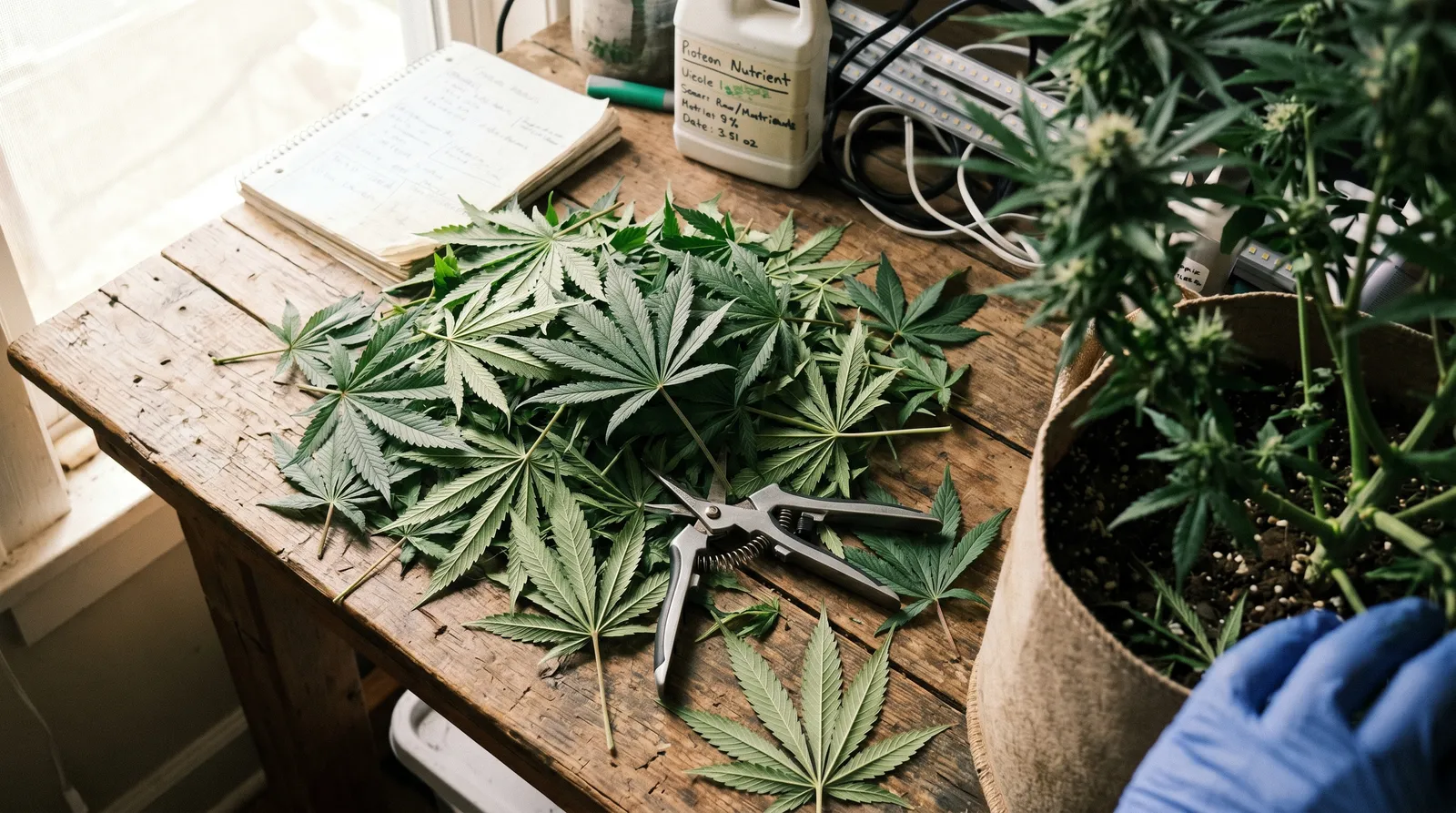
The trade-off is the whole story. Fan leaves aren't decorative — they're the plant's main source of photosynthate. Chandra et al. (2008) measured cannabis photosynthesis and confirmed what any grower who's killed a plant already knows: leaf area and light intensity together drive yield, and removing too much leaf area collapses the curve (Chandra et al., 2008). So defoliation only makes sense when the leaves you're removing are shading more productive tissue than they're contributing.
Two windows where this is genuinely true in most indoor grows:
- Late veg, 3–5 days before the flip: tidy the lowest node or two, remove any fan leaves obviously lying on top of bud sites, open up the interior.
- Day 21 of flower, roughly at the end of the stretch: the canopy has set its shape, bud sites are defined, and you can see which leaves are covering flowers versus which are feeding them.
What schwazzing is, and where it came from
Schwazzing is extreme defoliation with a brand name. The technique was popularised by Joshua Haupt in the book Three A Light (2015), which claimed you could produce three pounds of flower per light by — among other things — stripping essentially every fan leaf beneath the top two or three nodes, twice: once on the day you flip to 12/12, and again at day 21 of flower.
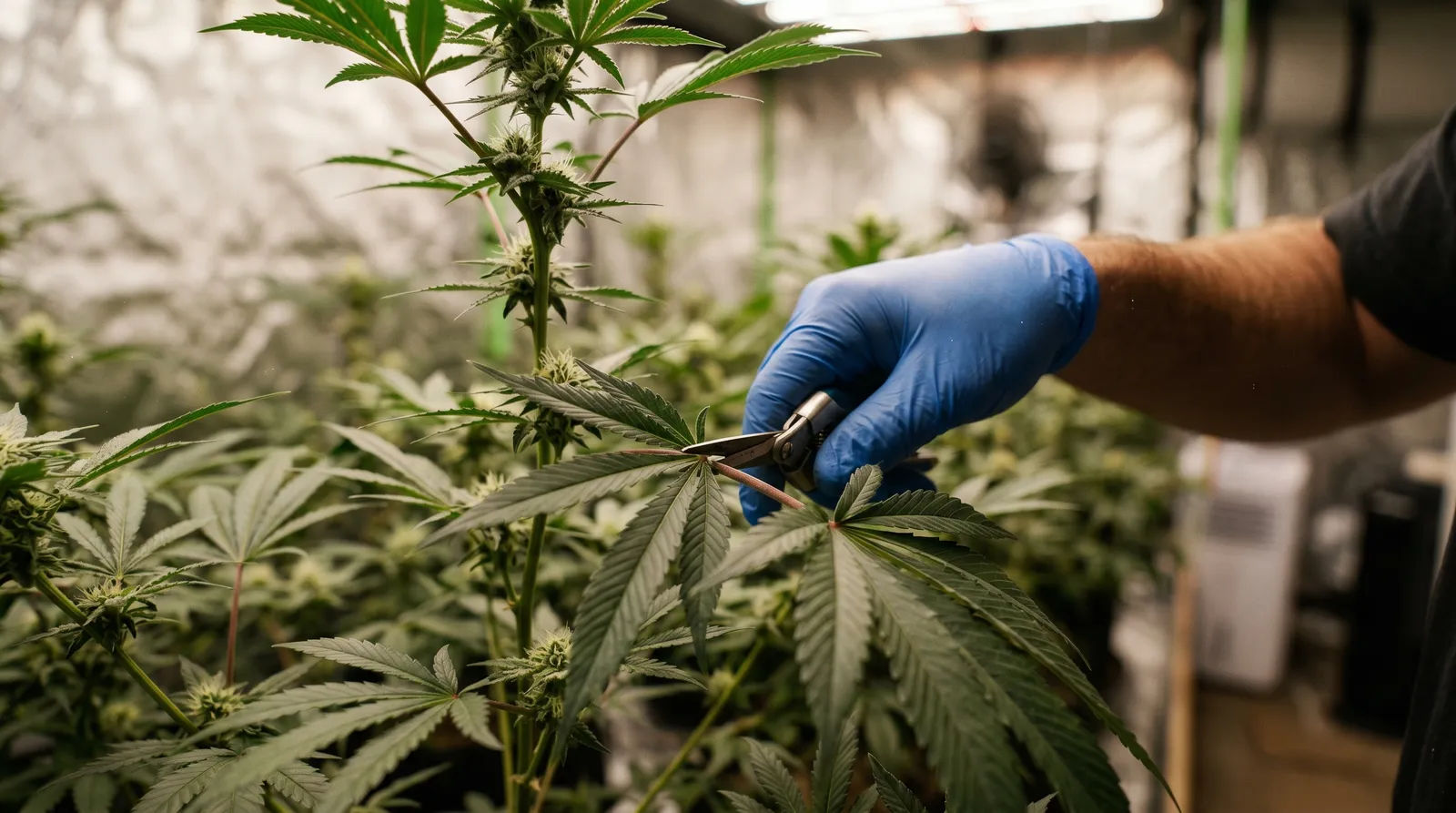
That's the whole technique. No half-measures — if the leaf is a fan leaf and it's below the top canopy, it comes off. Proponents argue this forces the plant to redirect energy into flower production, floods the lower bud sites with light, and massively improves airflow in dense commercial-style setups.
The contested part isn't whether it looks dramatic (it does — you'll stand there holding a bin bag of leaves wondering what you've done). The contested part is whether the yield uplift is real, repeatable, and bigger than what you'd get with gentler defoliation plus SCROG or lollipopping. Controlled, peer-reviewed trials on schwazzing specifically don't exist. What we have is commercial grower claims, forum reports, and a lot of confirmation bias in both directions. According to Hay & Walker (1989) on canopy light interception, published horticulture work on defoliation in other crops aligns with the general principle that canopy architecture matters — but "some defoliation helps" is not the same claim as "strip 80% of leaves twice."
When either technique actually makes sense
Defoliation earns its keep in specific conditions, not all grows. The biggest factor is genetics and plant density:
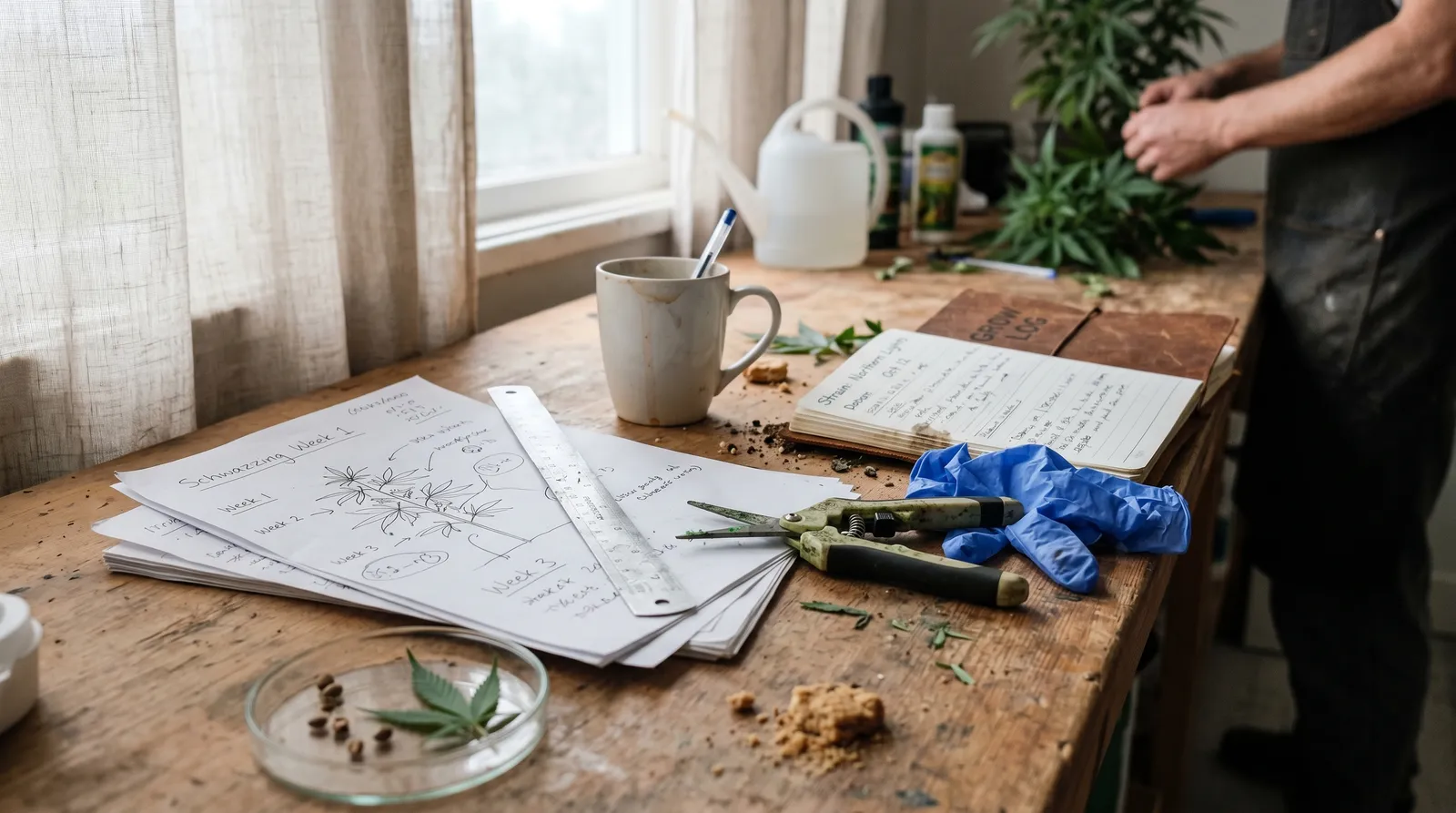
- Dense, leafy genetics. Indica-dominant cultivars like Critical Kush or Northern Lights pack fan leaves tight. Sativa-leaning plants with naturally open structure (Amnesia Haze types) often need almost none (Backer et al., 2019).
- High plant counts in limited space. SCROG grows with 4+ plants under a 120×120 tent benefit from defoliation because the canopy closes hard and humidity spikes under the leaf cover.
- Healthy, vigorous plants only. Never defoliate a plant that's already stressed, nutrient-deficient, or recovering from pests (Caplan et al., 2017). You're asking it to do more with less leaf surface — it needs the reserves.
- Photoperiod plants, primarily. Autoflowers flower on a fixed clock; they don't have time to recover from heavy defoliation. Light selective work (removing obviously shaded leaves) is fine. Schwazzing an autoflower is how you get a bonsai.
Schwazzing specifically narrows the window further. It tends to be attempted by growers running high-PPFD setups (800+ µmol/m²/s in flower) (Westmoreland et al., 2021), controlled VPD in the 1.0–1.3 kPa range (Magagnini et al., 2018), and genetics they've grown multiple times so they know the baseline yield. Trying schwazzing on an unknown cultivar in a wobbly tent environment is a good way to learn what plant stress looks like without learning whether the technique works.
How to defoliate without wrecking the plant
Defoliating safely comes down to six mechanics that apply whether you're doing gentle selective work or committing to the full schwazz:
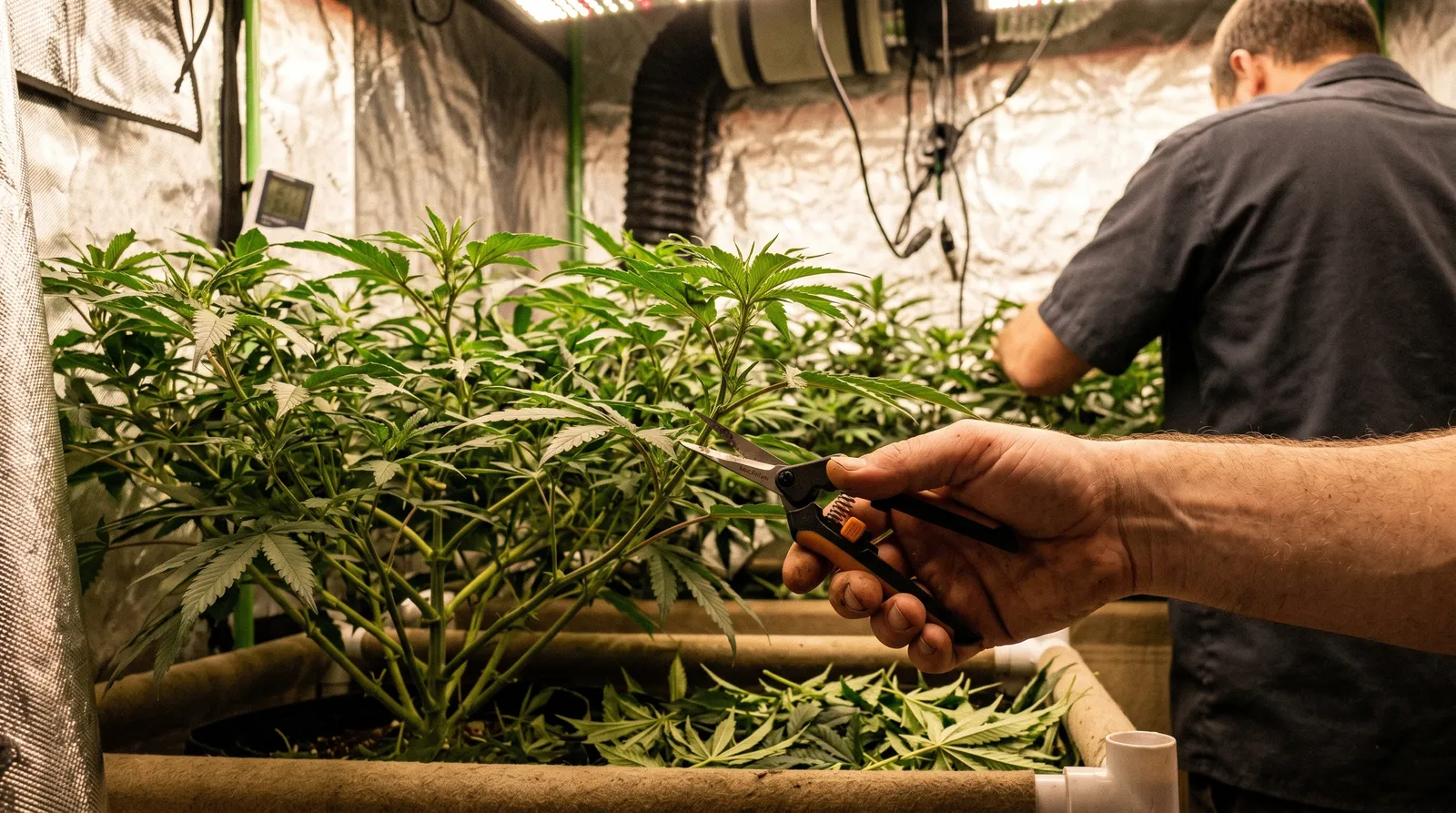
- Sterilise your scissors or just pinch cleanly at the petiole. Dirty tools spread pathogens between plants — we've seen botrytis travel a whole tent from one grower who trimmed a mouldy spot then moved to the next plant without wiping the blades (Punja, 2021).
- Work top-down, interior-out. Start with leaves obviously shading bud sites. Remove leaves that are yellowing or damaged first — those are the plant's lowest-value tissue anyway.
- Never remove more than ~30% of leaf mass in a single session for standard defoliation. Schwazzing breaks this rule deliberately; that's precisely why it's high-risk.
- Do it at lights-on, early in the photoperiod. The plant has the whole light cycle to begin compensating before night respiration kicks in.
- Don't defoliate and top/FIM in the same week. Stress stacks. Space interventions 5–7 days apart minimum.
- Watch the plant for 48 hours. Drooping, pale new growth, or stalled vertical growth after day 3 means you overdid it. Pull back next round.
Defoliation vs schwazzing at a glance
Here's how the two approaches to defoliation and schwazzing cannabis compare across the factors that matter most to a home grower:
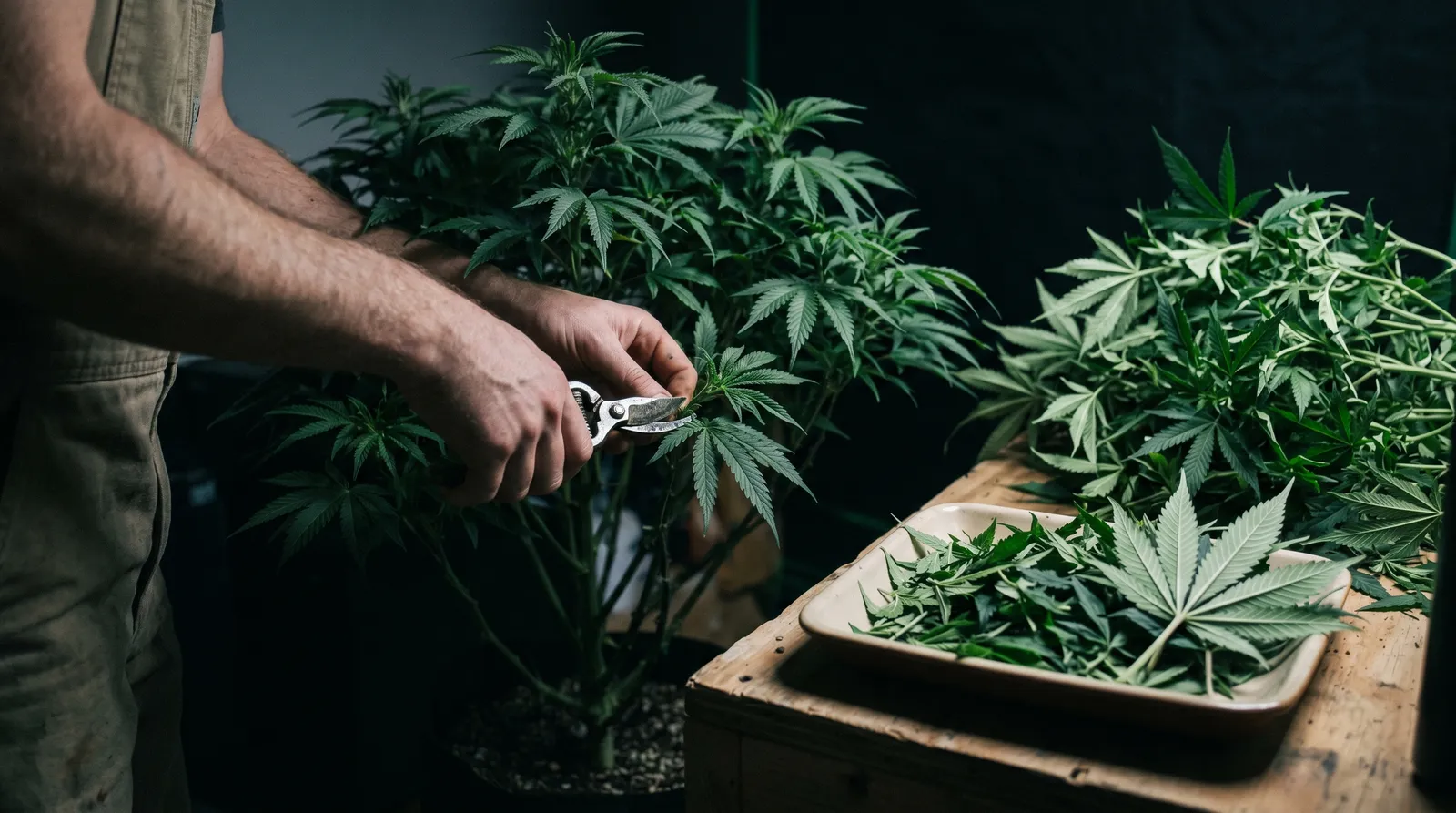
| Factor | Selective defoliation | Schwazzing |
|---|---|---|
| Leaves removed | ~10–30% per session | ~80%+ below top 2–3 nodes |
| Timing | Late veg + day 21 of flower | Day of flip + day 21 of flower |
| Evidence base | Widespread grower consensus + general canopy-light research | Commercial claims, no peer-reviewed trials |
| Autoflower suitability | Light work only | Not advised |
| Stress risk | Low if done correctly | High — potential yield loss if plant can't recover |
| Best for | Most indoor grows with leafy genetics | Experienced growers, known cultivars, dialled environments |
| Realistic yield impact | Modest uplift from better light penetration | Claimed large uplifts; real-world reports mixed |
The honest verdict
Selective defoliation is a genuinely useful tool that pays off when applied with judgement to the right plants. The biology is sound, the grower experience is consistent, and the downside of getting it slightly wrong is small. Schwazzing is the same idea with the volume dial welded to 11. For every commercial grower claiming huge uplifts, there's a forum full of home growers reporting flat or negative results — and no controlled study to resolve the argument. If you want to try it, do it on a clone of a plant you've grown before so you have a real comparison. Don't test it on your only plant.
Related cultivation techniques
Defoliation rarely stands alone — it usually lives alongside SCROG netting, lollipopping (removing lower growth that will never reach usable light), topping, or main-lining (Danziger & Bernstein, 2021). The Azarius Wiki covers each of those as separate articles. If you're about to buy seeds for a new run and order a SCROG net at the same time, pair defoliation with that net and you get the two best light-distribution tools on the same plant.
Disclaimer: This article is for educational purposes only and is not medical, horticultural, or professional advice. Cannabis cultivation affects yield, plant health, and outcomes differently for every grower and every cultivar. Consult a qualified professional for guidance on your specific situation.
Last updated: April 2026
Frequently Asked Questions
8 questionsCan you defoliate autoflowering cannabis plants?
When is the best time to defoliate during flowering?
Does schwazzing actually increase yields?
Can you schwazz and top the same plant?
How many fan leaves should you remove when defoliating?
What are the biggest risks of defoliation?
How long does a cannabis plant take to recover after schwazzing?
Is defoliation better suited to indica or sativa cannabis genetics?
About this article


Luke Sholl has been writing about cannabis, cannabinoids, and the broader benefits of nature since 2011, and has personally grown cannabis in home grow tents for more than a decade. That first-hand cultivation experience
This wiki article was drafted with AI assistance and reviewed by Luke Sholl, External contributor since 2026. Editorial oversight by Adam Parsons.
Medical disclaimer. This content is for informational purposes only and does not constitute medical advice. Consult a qualified healthcare provider before use of any substance.
Last reviewed April 24, 2026
References (8)
- [1]Chandra, S., Lata, H., Khan, I. A., & ElSohly, M. A. (2008). Photosynthetic response of Cannabis sativa L. to variations in photosynthetic photon flux densities, temperature and CO₂ conditions. Physiology and Molecular Biology of Plants, 14(4), 299-306. DOI: 10.1007/s12298-008-0027-x
- [2]Rodriguez-Morrison, V., Llewellyn, D., & Zheng, Y. (2021). Cannabis yield, potency, and leaf photosynthesis respond differently to increasing light levels in an indoor environment. Frontiers in Plant Science, 12, 646020. DOI: 10.3389/fpls.2021.646020
- [3]Westmoreland, F. M., Bugbee, B., & Kusuma, P. (2021). Cannabis lighting: Decreasing blue photon fraction increases yield but efficacy is more important for cost effective production of cannabinoids. PLoS ONE, 16(3), e0248988. DOI: 10.1371/journal.pone.0248988
- [4]Danziger, N., & Bernstein, N. (2021). Plant architecture manipulation increases cannabinoid standardization in 'drug-type' medical cannabis. Industrial Crops and Products, 167, 113528. DOI: 10.1016/j.indcrop.2021.113528
- [5]Caplan, D., Dixon, M., & Zheng, Y. (2017). Optimal rate of organic fertilizer during the vegetative-stage for cannabis grown in two coir-based substrates. HortScience, 52(9), 1307-1312. DOI: 10.21273/HORTSCI11903-17
- [6]Punja, Z. K. (2021). Emerging diseases of Cannabis sativa and sustainable management. Pest Management Science, 77(9), 3857-3870. DOI: 10.1002/ps.6307
- [7]Magagnini, G., Grassi, G., & Kotiranta, S. (2018). The effect of light spectrum on the morphology and cannabinoid content of Cannabis sativa L.. Medical Cannabis and Cannabinoids, 1(1), 19-27. DOI: 10.1159/000489030
- [8]Backer, R., Schwinghamer, T., Rosenbaum, P., McCarty, V., Eichhorn Bilodeau, S., Lyu, D., Ahmed, M. B., Robinson, G., Lefsrud, M., Wilkins, O., & Smith, D. L. (2019). Closing the yield gap for cannabis: A meta-analysis of factors determining cannabis yield. Frontiers in Plant Science, 10, 495. DOI: 10.3389/fpls.2019.00495
Related Articles
Cannabis Hermaphrodite: Identify, Prevent, Act
A cannabis hermaphrodite is a female plant that develops male pollen sacs or banana-shaped anthers (nanners), self-pollinating and seeding your harvest.
DIY Cannabis Fertilizer: Homemade Nutrient Guide
DIY cannabis fertilizer guide: compost, teas, banana ferments and feed schedules, with safety notes and cited research for home growers.
What To Do With Male Cannabis Plants: 6 Practical Uses
What to do with male cannabis plants: identify, isolate, breed, extract, or compost. A practical 6-step guide with sourcing and safety notes.
Mushroom Grow Kit Temperature & Humidity: Full Setup Guide
A temperature humidity control grow kit is the small set of climate tools — hygrometer, heat mat, humidifier or perlite tray — that keeps a mushroom fruiting…
When to Harvest Mushrooms: Veil Break Timing Explained
Harvest timing veil break is a cultivation technique that uses the tearing of the partial veil on maturing Psilocybe cubensis to mark peak alkaloid content.
First Grow Checklist: What You Need for Mushroom Kits
A first grow checklist is the short list of supplies and environmental conditions needed to run a home psilocybin mushroom kit from inoculated substrate to…
Sclerotia vs Fruit Bodies: Cultivation Comparison
Sclerotia and fruit bodies are two different life stages of Psilocybe fungi: sclerotia are hardened underground mycelial storage bodies (the 'magic…
Storing Dried Mushrooms Long Term: Full Guide
Storing dried mushrooms long term means keeping well-dried Psilocybe fruit bodies in airtight, opaque containers with desiccant, cool and dark, to slow…
Drying Mushrooms Air Desiccant Oven: Methods Compared
Drying mushrooms air desiccant oven refers to the three home methods for reducing fresh fruit bodies from ~90% water to cracker-dry (<5%). Gotvaldová et al.