
This article discusses psychoactive substances intended for adults (18+). If you have a health condition or take medication, consult a doctor before use. Our age policy
Cannabis pH Targets Per Medium: Soil, Coco & Hydro
Definition
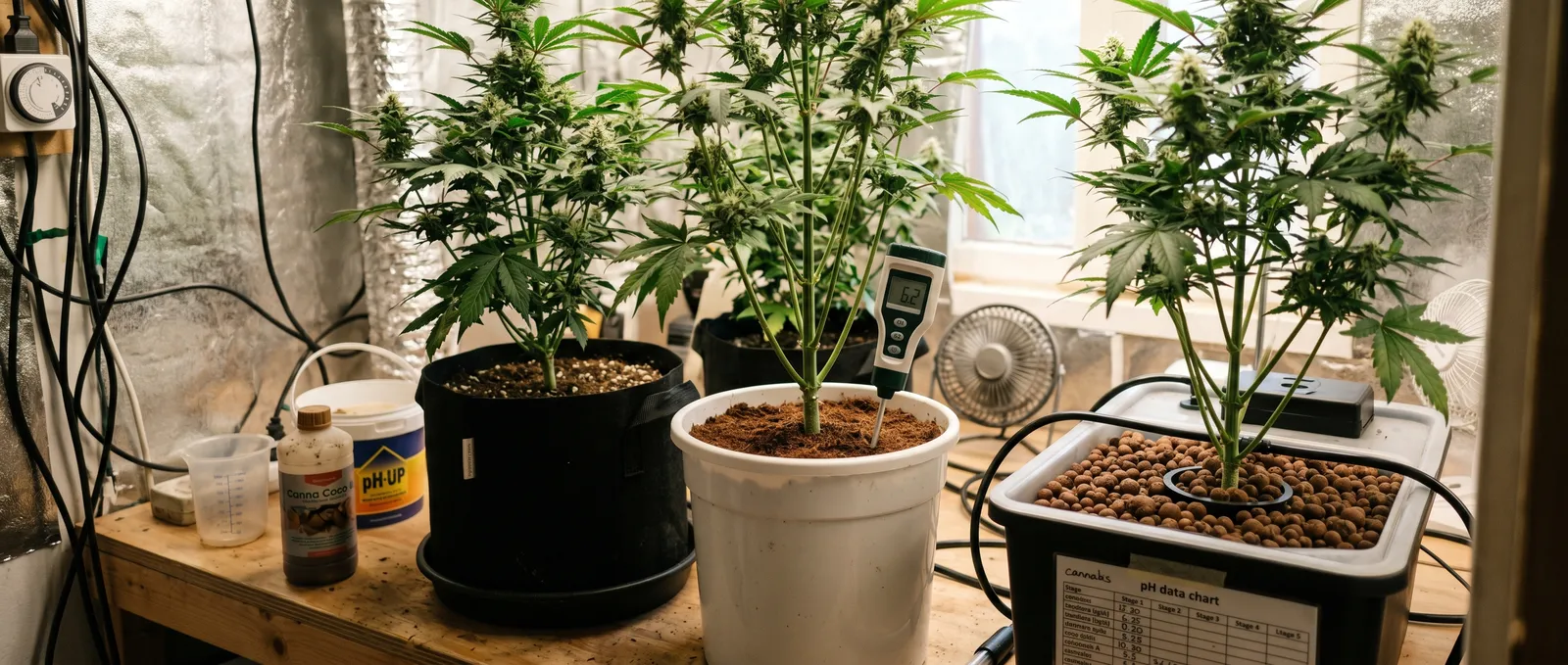
Cannabis pH targets per medium are the root-zone acidity ranges that keep nutrients available to the plant: roughly 6.2–6.8 in soil, 5.8–6.2 in coco coir, and 5.5–6.1 in hydroponics. Caschetto et al. (2021) found cannabis tolerates a wide band, but lockouts outside these windows cause most apparent deficiencies.
This guide is written for adults. Home cultivation rules vary by country and region — verify current requirements for your jurisdiction before growing.
Cannabis pH targets per medium are a root-zone acidity framework that keeps nutrients available to the plant across different substrates, spanning soil, coco, hydro, rockwool, and living soil. Get these cannabis pH targets per medium right and the plant can actually eat what you feed it; get them wrong and you will chase phantom deficiencies for weeks on end, wasting nutrients and time. This reference covers the working ranges you need to know, along with the measurement routine and adjustment workflow behind each one, so you can buy the right pen, order the correct buffer solutions, and get consistent results across every grow cycle.
pH targets at a glance
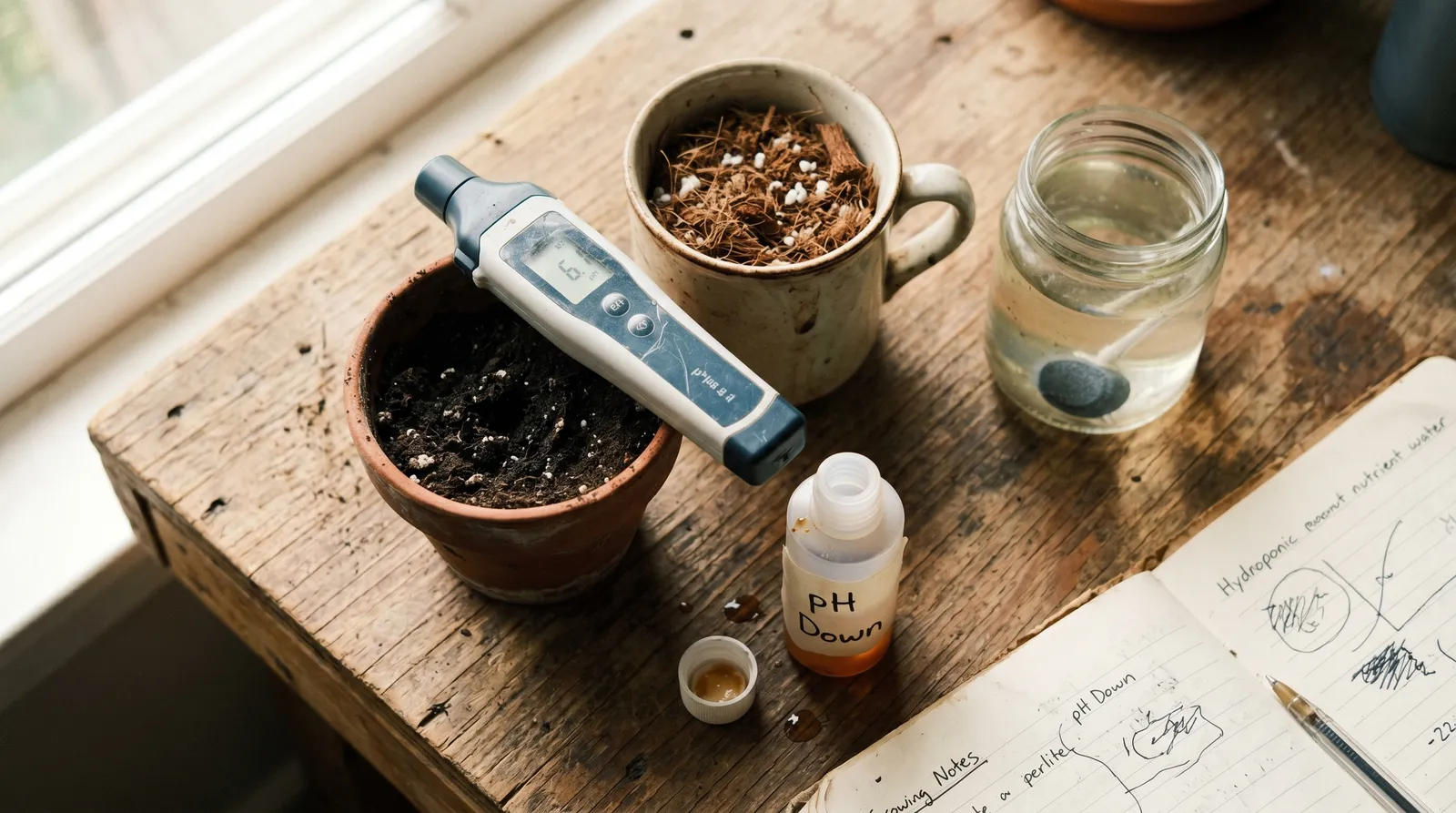
Cannabis pH targets depend on the growing medium because root uptake of nutrients happens through chemistry that behaves differently across soil, coco coir, and hydroponic water. The numbers below reflect the working ranges used in commercial horticulture research and breeder documentation. They reflect how nutrient salts dissociate and how roots absorb ions at specific acidity levels, and they hold true across indica, sativa, and hybrid cultivars grown for flower production.
| Medium | Input pH (feed) | Root-zone / runoff pH | EC range (mS/cm) | Why this range |
|---|---|---|---|---|
| Soil (peat/compost) | 6.2–6.8 | 6.0–7.0 | 1.0–2.0 | Microbial activity buffers pH, giving a wider workable band than inert media because organic matter and clay particles resist rapid swings. |
| Coco coir | 5.8–6.2 | 5.8–6.3 | 1.2–2.2 | Cation exchange holds potassium and calcium, and a slightly lower target keeps calcium and iron available to the root hairs. |
| Hydroponics (DWC, NFT, drip-to-waste) | 5.5–6.1 | 5.5–6.1 (same) | 1.2–2.0 | With no buffering medium in play, nutrients must stay soluble across the full window or the plant will show lockout within days. |
| Rockwool / stonewool | 5.5–6.0 | 5.5–6.0 | 1.5–2.4 | Alkaline by default from manufacture, so growers pre-soak the cubes to 5.5 before transplant to avoid an immediate pH spike. |
| Living / super soil | Water only (6.3–6.8) | 6.2–7.0 | Not EC-managed | The microbial food web handles nutrient cycling on its own, so chasing specific runoff numbers will work against the biology you built. |
EC ranges scale with plant stage, running lower for seedlings and early veg, and reaching the upper end for mid-flower production (Saloner & Bernstein, 2020). Vegetative growth typically sits mid-band, and late flower usually comes down again if you are finishing cleanly with a flush or reduced feed schedule (Fluence, 2021).
Why the medium changes the number
The medium changes the pH target because each substrate has a different buffering capacity and ion-exchange behaviour that directly shapes nutrient availability. Iron, manganese, zinc, and boron drop out of solution above pH 6.5, while calcium, magnesium, and phosphorus lock up below pH 5.5 (Bernstein et al., 2019). The famous Mulder's chart from soil science maps this interaction clearly, and cannabis behaves the same as most C3 crops within that framework.
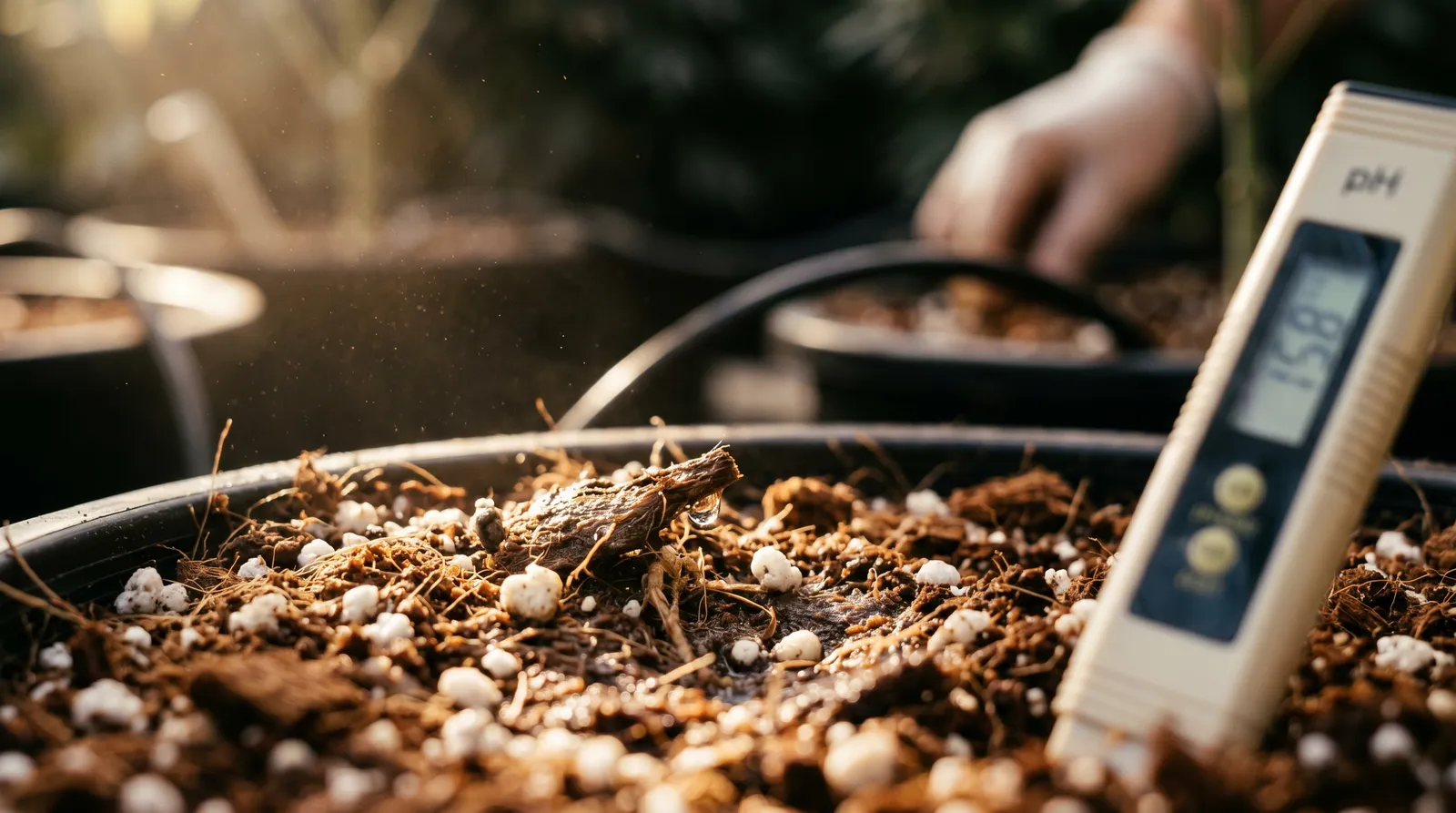
What differs between media is buffering capacity. Soil is a living, chemically complex mix of clay particles, organic matter, and microbial populations that collectively resist pH swings across a grow cycle. You can feed at 6.5 and the rhizosphere will stay roughly there for days on end. Coco coir is inert but cation-exchange-active: it binds potassium and releases calcium and magnesium, which is why coco-specific nutrients like Canna Coco A+B and House & Garden Cocos are reformulated with higher calcium content to compensate. Hydro water has zero buffering — whatever you pour in is exactly what the roots see, and it will drift steadily as the plant drinks through the reservoir (Bugbee, 2004).
Gianmaria Caschetto and collaborators working with North Carolina State University reported in 2021 that cannabis stock plants tolerated a surprisingly wide substrate pH band of roughly 5.5–7.0 in soilless peat without any measurable yield loss (Caschetto et al., 2021), which matches what careful growers have seen for many years. The honest takeaway is that these cannabis pH targets are working ranges, not hard cliffs that will ruin a crop overnight. Drifting 0.2 off the target is rarely a crisis and seldom shows up in the plant at all. Drifting 0.8 off for a full week absolutely will, and you will see lockout symptoms develop in new growth within days.
How to measure correctly
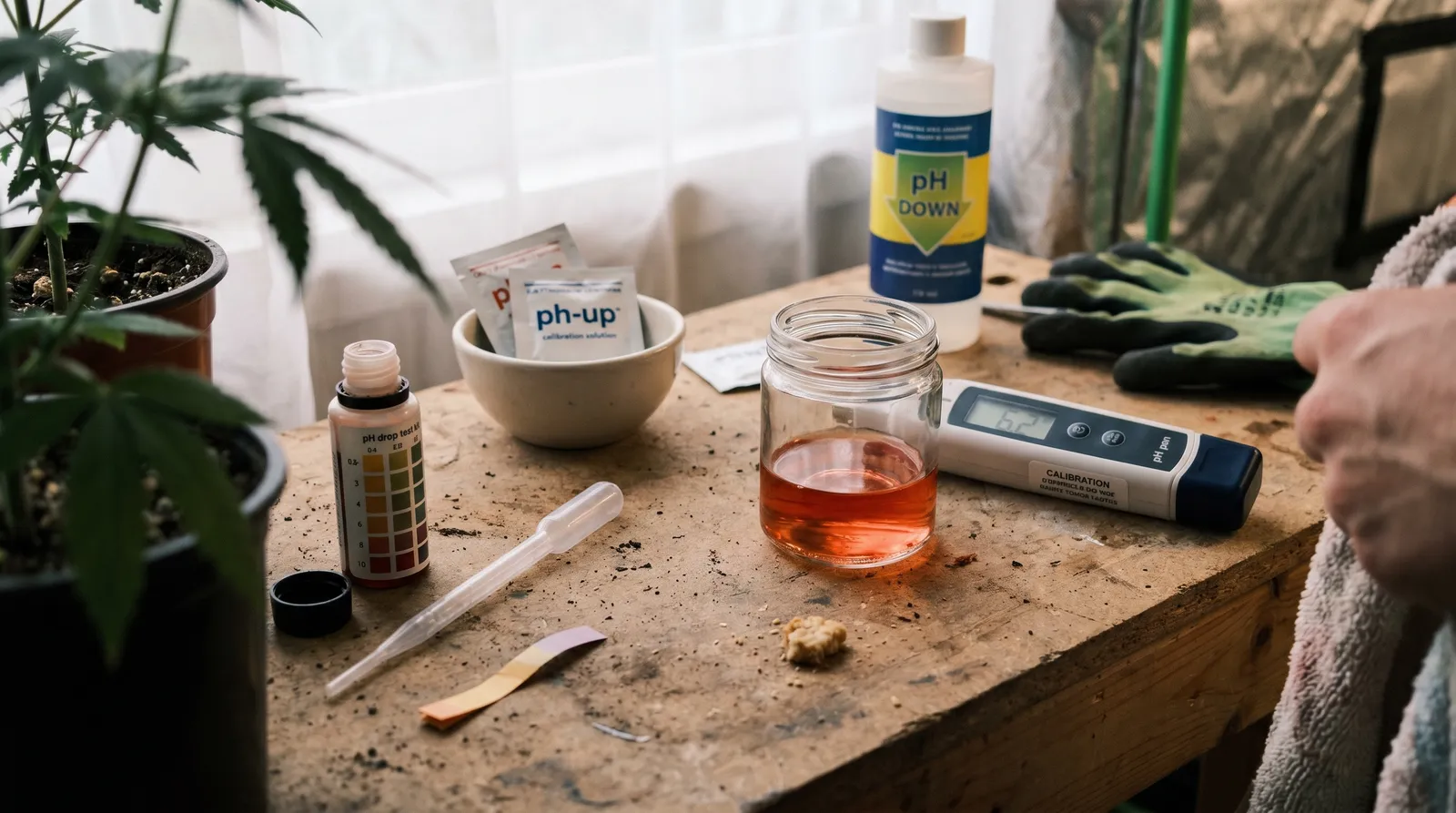
Accurate pH measurement requires a calibrated digital pen, not drop tests or paper strips that give ambiguous colour readings. Drop-test kits give you a colour somewhere between yellow and orange and a headache to match. A decent pH pen from Bluelab, Hanna, or Apera, all of which you can buy from any serious hydro shop, pays for itself inside one grow cycle.
Measure three things, not just one reading at the start of the week:
- Input (feed) pH — what you pour in, after nutrients are mixed into the reservoir. Always add nutrients first, then adjust pH, because nutrient salts shift the reading significantly once dissolved.
- Runoff pH (soil and coco) — what comes out the bottom of the pot during feeding. This tells you what is actually happening in the root zone. If you feed at 6.3 and runoff reads 5.4, the medium has acidified and something is locking out.
- Reservoir pH (hydro) — check daily during active flower. It drifts up as plants drink water faster than nutrients, and down as they consume nitrate-heavy feeds over time.
Calibrate with 4.01 and 7.01 reference solutions weekly during flower to catch drift before it becomes a problem in the root zone. Store the electrode in KCl storage solution, never in distilled water — distilled water kills the glass membrane faster than anything else a grower can do to a pen in the drawer.
Adjusting pH safely
Safe pH adjustment starts with dedicated pH Up (potassium hydroxide) and pH Down (phosphoric acid) solutions from established grow nutrient lines such as General Hydroponics, Canna, or Advanced Nutrients. Order these together with your buffer sachets so you have everything on hand before the first feed. Household vinegar or lemon juice works in emergencies but introduces organic acids that feed unwanted microbes in a reservoir environment. Sulphuric or nitric acid is used commercially but is unforgiving at home-tent scale and not worth the risk.
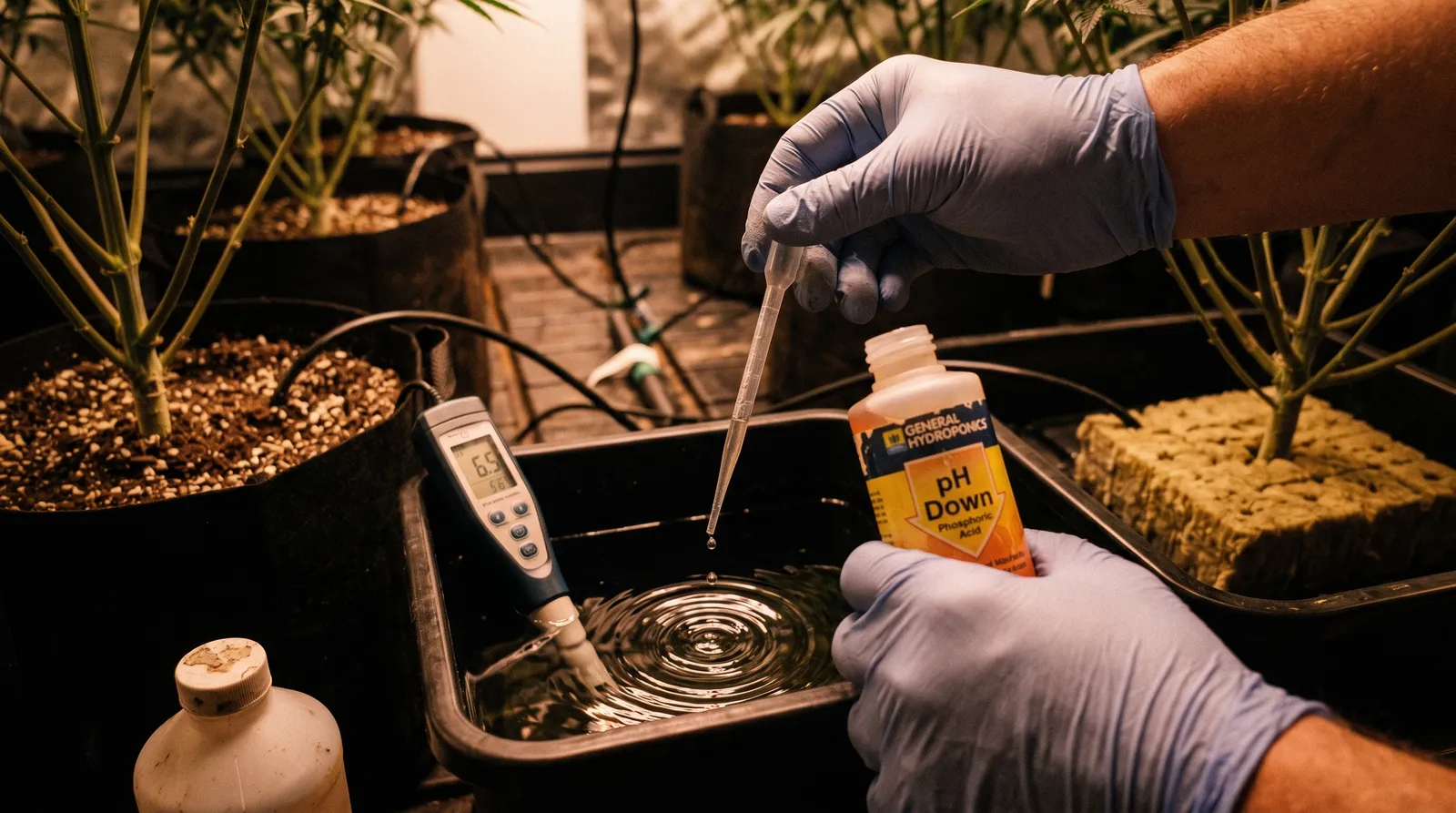
Add in small increments of around 0.5 ml per 10 L of water at a time, then stir, wait 30 seconds, and re-test before adding any more solution. Overshooting and ping-ponging the pH stresses roots more than being slightly off in the first place would. If you are consistently adding large volumes of Down to hydro, your source water is alkaline and you are better off running it through a small RO filter than dosing acid every single day.
Symptoms of pH drift by medium
Most apparent nutrient deficiencies in cannabis are pH lockouts rather than missing nutrients in the feed schedule. The plant is surrounded by food it cannot access because the chemistry of the root zone has drifted outside the window where those specific ions stay soluble. Before adding anything to the reservoir, check your pH reading against your target.
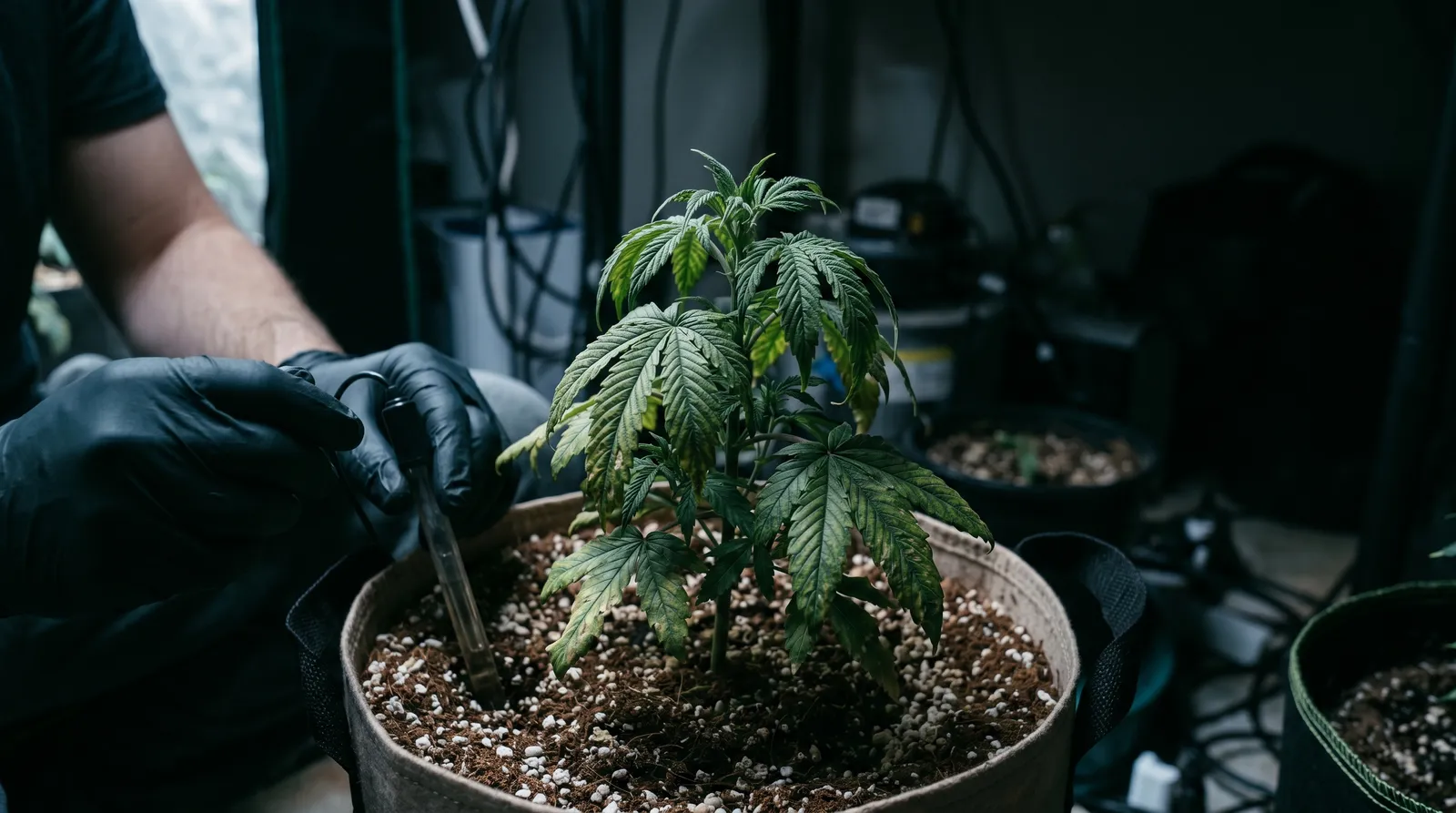
- Interveinal yellowing on young leaves (iron, manganese, zinc): pH too high for micronutrient uptake. Common in hard tap-water soil grows that drifted to 7.0 or above.
- Purple stems, slow growth, dark leaves (phosphorus): pH too low, often below 5.3 in hydro or coco systems (Cockson et al., 2020).
- Calcium/magnesium deficiency (brown spots, curling tips): In coco, almost always a pH issue — coco pulls Ca/Mg out of the medium before the plant can get it (Shiponi & Bernstein, 2021), and low pH makes it noticeably worse.
- Rust-coloured root tips in DWC: pH above 6.3 for too long, or oxygen starvation combined with steady pH drift across the week (Zheng et al., 2007).
The living soil exception
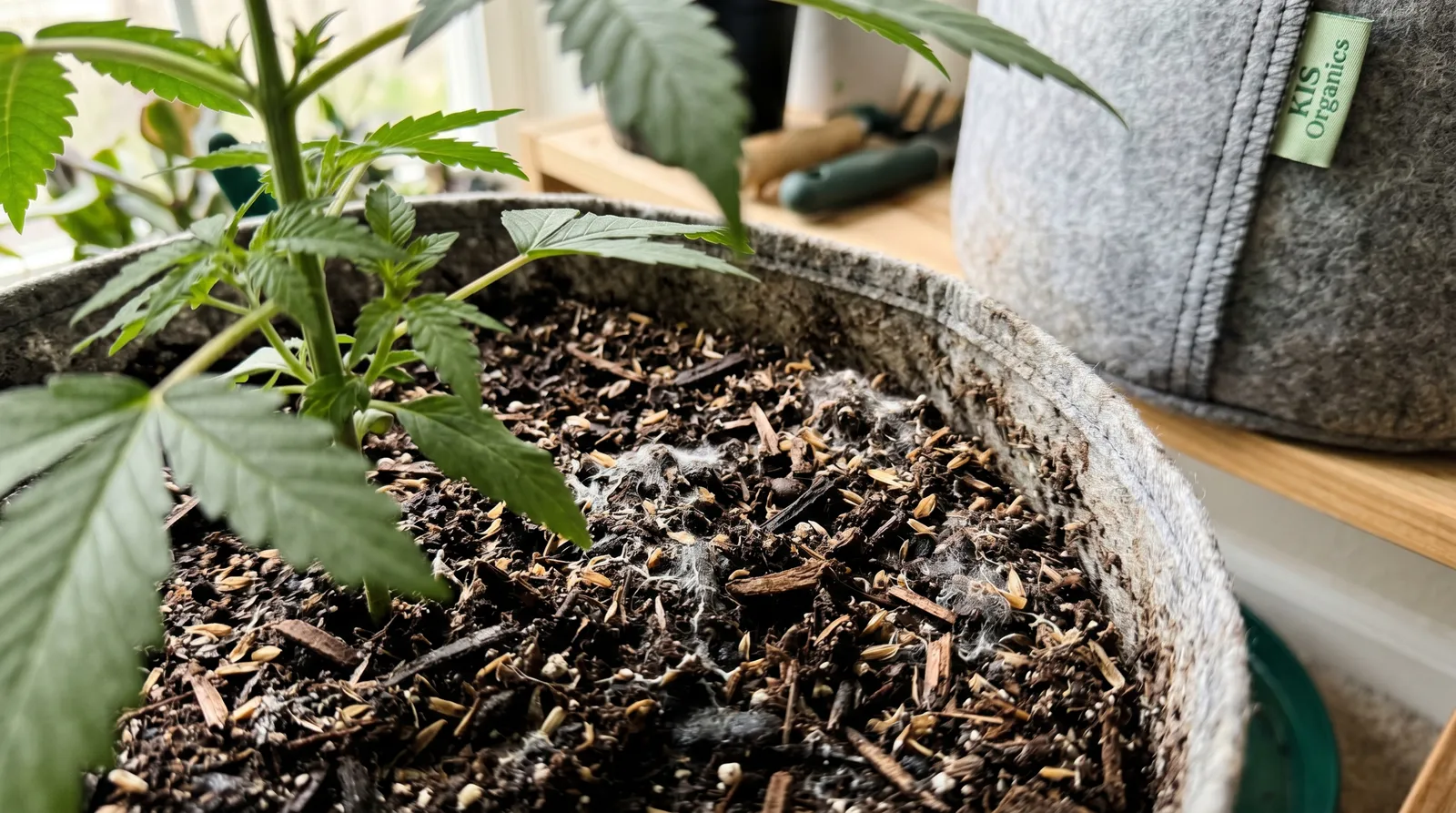
Living soil does not need pH monitoring because the microbial biology regulates the rhizosphere on its own without grower intervention. If you are running a properly built living soil from KIS Organics, BuildASoil, or a homemade super-soil with amendments like worm castings, kelp, neem meal, and crab meal, you can stop measuring pH in runoff entirely. The rhizosphere pH sits where the biology wants it, and chasing a 6.3 runoff number in living soil is like adjusting the thermostat on a compost heap. Feed plain dechlorinated water, brew the occasional compost tea, and leave the pen in the drawer until the next hydro run.
Legal notice: Cannabis cultivation laws vary by country and region and change frequently. This guide is educational. Before growing, verify current laws for your specific jurisdiction. Azarius does not provide legal advice.
Last updated: April 2026
Frequently Asked Questions
8 questionsWhat pH should cannabis be in soil versus hydro?
Why is coco coir pH lower than soil pH?
Do I need to check pH in living soil?
What's the fastest way to fix pH lockout?
Can I use vinegar or lemon juice to lower pH?
How often should I calibrate my pH pen?
What happens if pH is too high or too low for cannabis?
Do I need to pre-soak rockwool before planting cannabis?
About this article


Luke Sholl has been writing about cannabis, cannabinoids, and the broader benefits of nature since 2011, and has personally grown cannabis in home grow tents for more than a decade. That first-hand cultivation experience
This wiki article was drafted with AI assistance and reviewed by Luke Sholl, External contributor since 2026. Editorial oversight by Adam Parsons.
Medical disclaimer. This content is for informational purposes only and does not constitute medical advice. Consult a qualified healthcare provider before use of any substance.
Last reviewed April 24, 2026
References (8)
- [1]Caschetto, G.M., Veazie, P., Whipker, B.E., Cockson, P., & Henry, J. (2021). Substrate pH Impacts on Growth and Nutrition of Cannabis sativa 'BaOx' and 'Suver Haze'. HortScience, 56(9), S1-S2. DOI: 10.21273/HORTSCI.56.9S.S1
- [2]Bernstein, N., Gorelick, J., & Koch, S. (2019). Interplay between chemistry and morphology in medical cannabis (Cannabis sativa L.). Industrial Crops and Products, 129, 185-194. DOI: 10.1016/j.indcrop.2018.11.039
- [3]Bugbee, B. (2004). Nutrient management in recirculating hydroponic culture. Acta Horticulturae, 648, 99-112. DOI: 10.17660/ActaHortic.2004.648.12
- [4]Saloner, A. & Bernstein, N. (2020). Response of Medical Cannabis (Cannabis sativa L.) to Nitrogen Supply Under Long Photoperiod. Frontiers in Plant Science, 11, 572293. DOI: 10.3389/fpls.2020.572293
- [5]Shiponi, S. & Bernstein, N. (2021). Response of medical cannabis (Cannabis sativa L.) genotypes to K supply under long photoperiod. Frontiers in Plant Science, 12, 657323. DOI: 10.3389/fpls.2021.657323
- [6]Cockson, P., Schroeder-Moreno, M., Veazie, P., Barajas, G., Logan, D., Davis, M., & Whipker, B.E. (2020). Impact of Phosphorus on Cannabis sativa Reproduction, Cannabinoids, and Terpenes. Applied Sciences, 10(21), 7875. DOI: 10.3390/app10217875
- [7]Fluence Bioengineering (2021). Cannabis Cultivation Guide: Best Practices for Growing Cannabis with LED Technology. Fluence Technical White Paper, pp. 12-15. Source
- [8]Zheng, Y., Wang, L., & Dixon, M. (2007). An upper limit for elevated root zone dissolved oxygen concentration for tomato. Scientia Horticulturae, 113(2), 162-165. DOI: 10.1016/j.scienta.2007.03.011
Related Articles
Cannabis Hermaphrodite: Identify, Prevent, Act
A cannabis hermaphrodite is a female plant that develops male pollen sacs or banana-shaped anthers (nanners), self-pollinating and seeding your harvest.
DIY Cannabis Fertilizer: Homemade Nutrient Guide
DIY cannabis fertilizer guide: compost, teas, banana ferments and feed schedules, with safety notes and cited research for home growers.
What To Do With Male Cannabis Plants: 6 Practical Uses
What to do with male cannabis plants: identify, isolate, breed, extract, or compost. A practical 6-step guide with sourcing and safety notes.
Mushroom Grow Kit Temperature & Humidity: Full Setup Guide
A temperature humidity control grow kit is the small set of climate tools — hygrometer, heat mat, humidifier or perlite tray — that keeps a mushroom fruiting…
When to Harvest Mushrooms: Veil Break Timing Explained
Harvest timing veil break is a cultivation technique that uses the tearing of the partial veil on maturing Psilocybe cubensis to mark peak alkaloid content.

First Grow Checklist: What You Need for Mushroom Kits
A first grow checklist is the short list of supplies and environmental conditions needed to run a home psilocybin mushroom kit from inoculated substrate to…
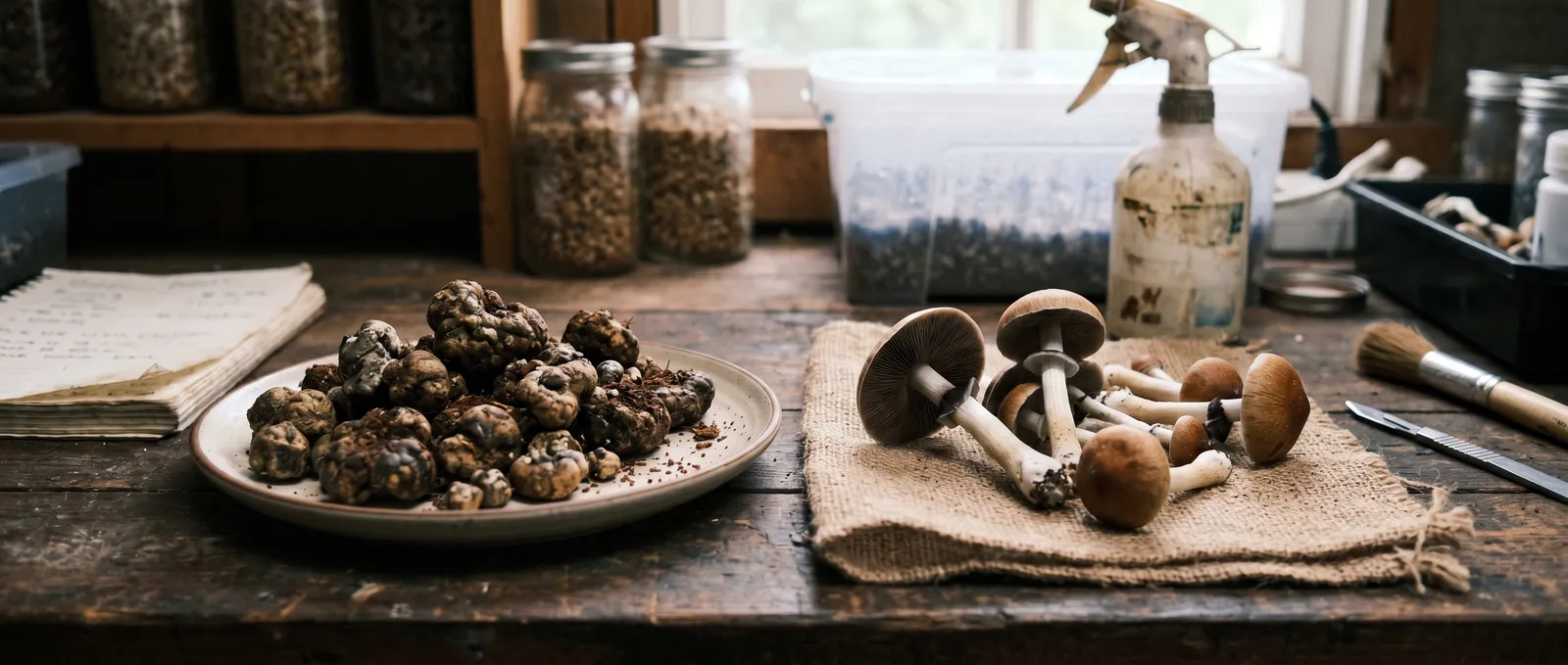
Sclerotia vs Fruit Bodies: Cultivation Comparison
Sclerotia and fruit bodies are two different life stages of Psilocybe fungi: sclerotia are hardened underground mycelial storage bodies (the 'magic…
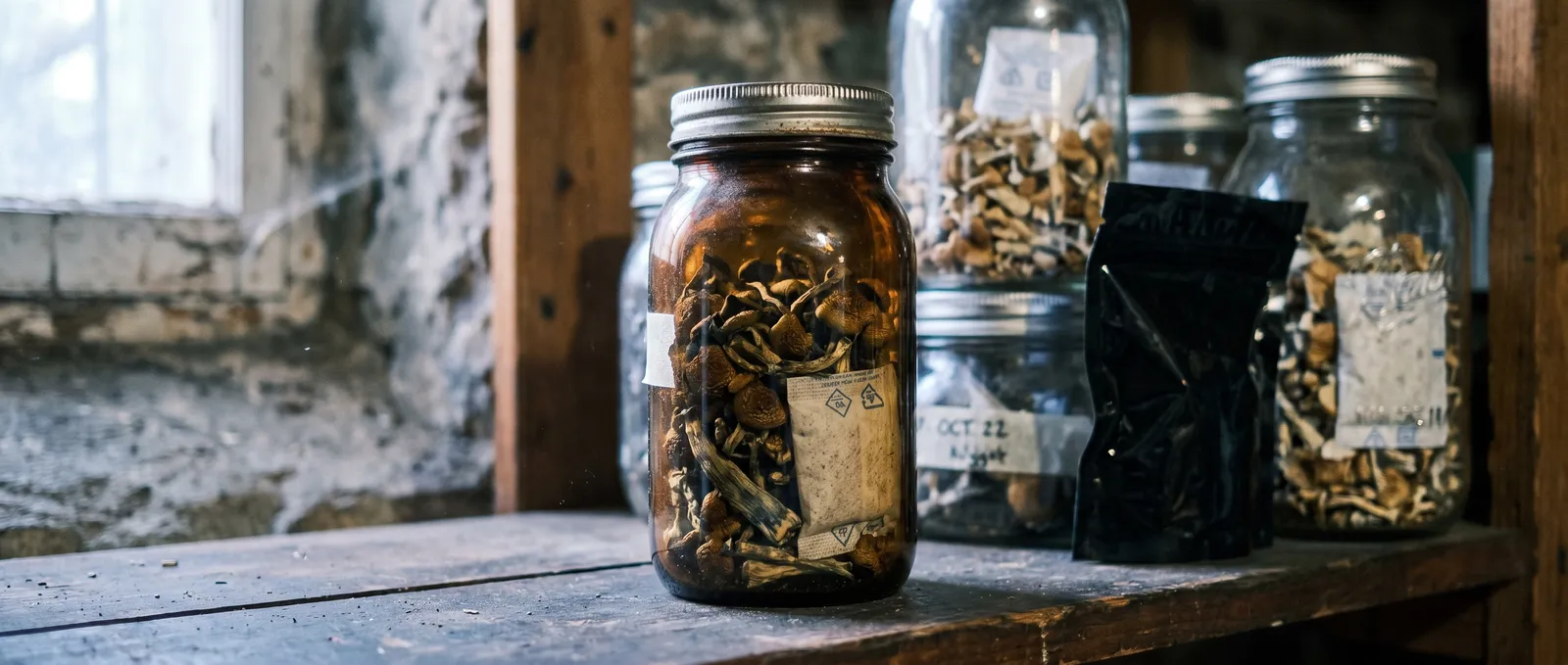
Storing Dried Mushrooms Long Term: Full Guide
Storing dried mushrooms long term means keeping well-dried Psilocybe fruit bodies in airtight, opaque containers with desiccant, cool and dark, to slow…
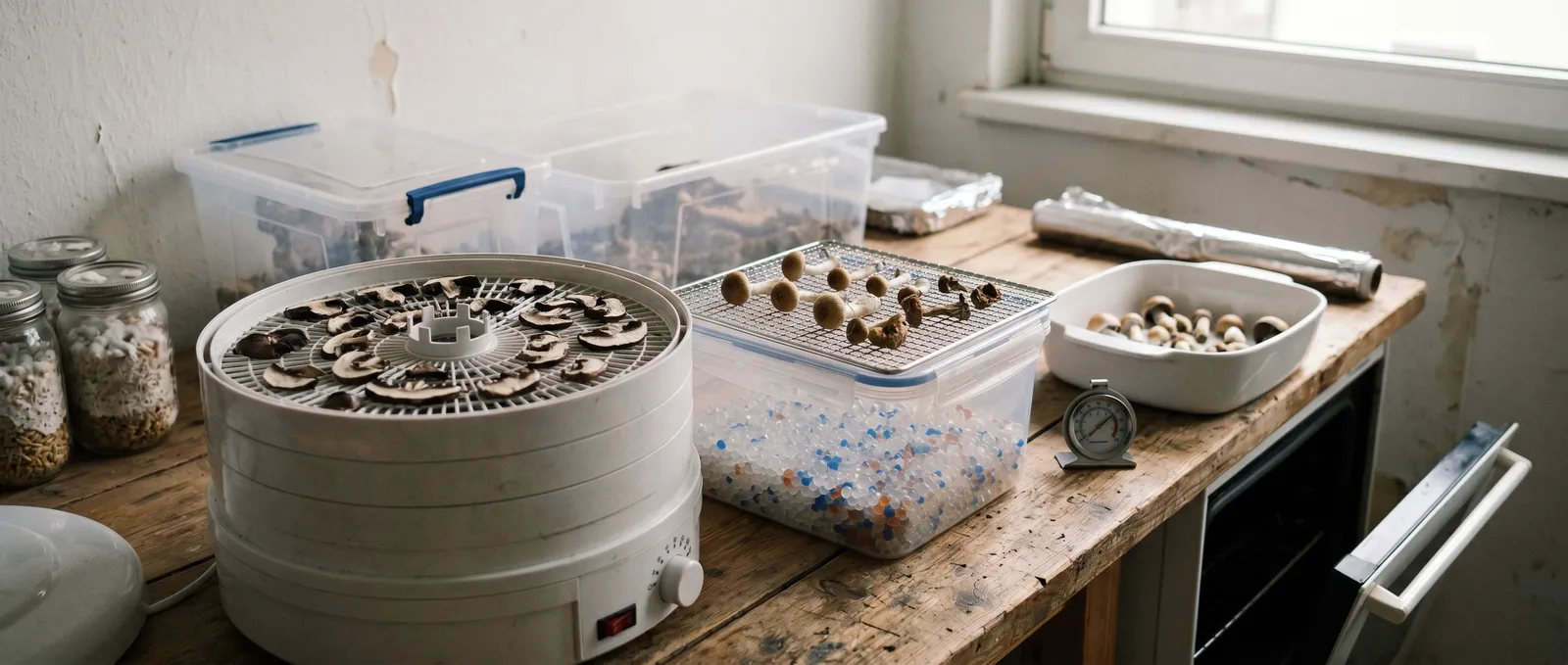
Drying Mushrooms Air Desiccant Oven: Methods Compared
Drying mushrooms air desiccant oven refers to the three home methods for reducing fresh fruit bodies from ~90% water to cracker-dry (<5%). Gotvaldová et al.