
Buy more, pay less
We'll only email you about this product — no marketing.
Ginger Chai Tea
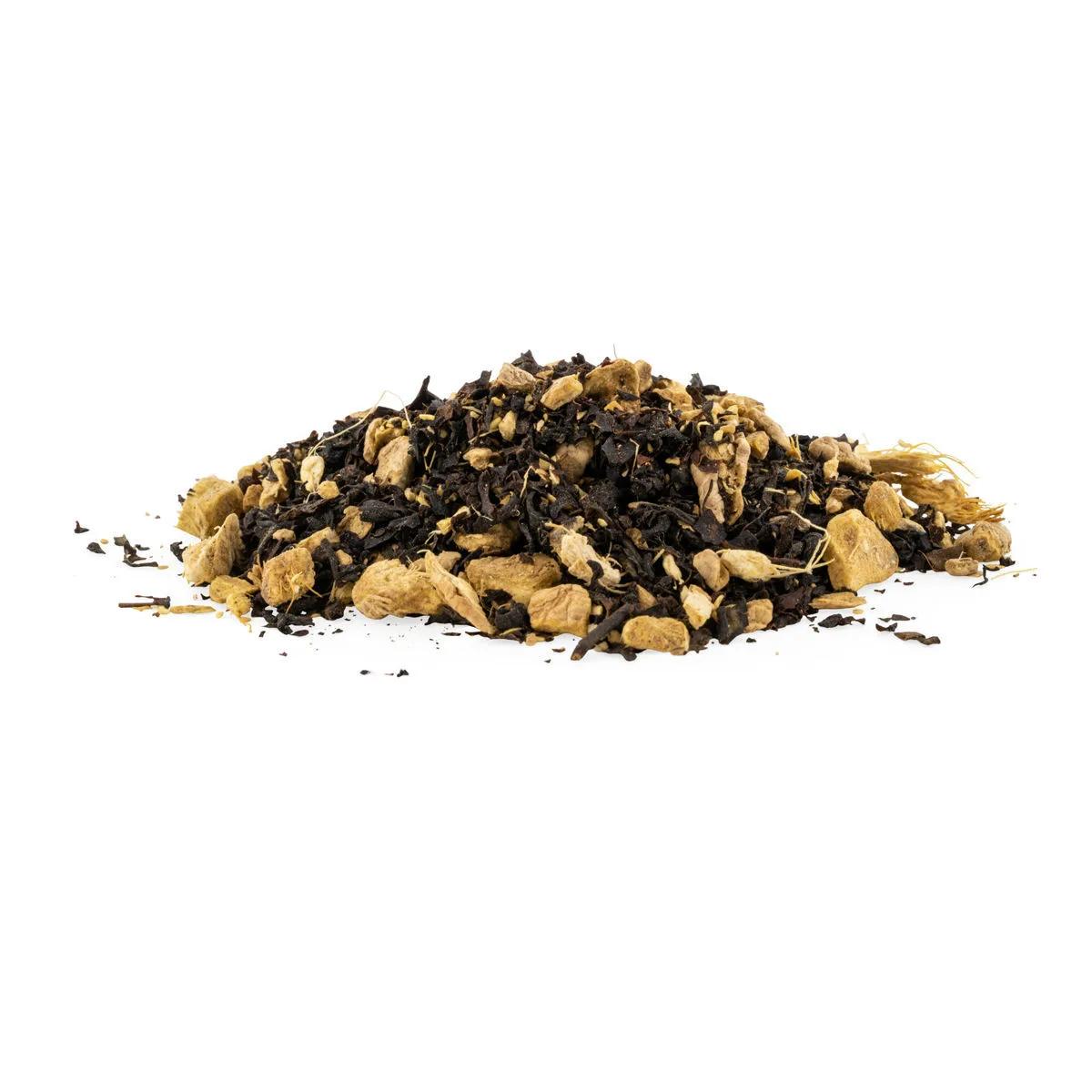
Ginger chai tea is a black tea blend with real ginger root that delivers a peppery warmth, a touch of natural sweetness, and a light amber colour in the cup. Just two ingredients — black tea and ginger — and nothing else getting in the way. If you want a straightforward morning brew with a proper ginger kick and enough caffeine to get your eyes open, this is the one.
What Does Ginger Chai Tea Taste Like?
The flavour is clean and direct — no cardamom, no cinnamon, no cloves competing for attention. You get the malty body of black tea up front, then the ginger rolls in with a warm, peppery bite that lingers at the back of the throat. There's a slight natural sweetness to it, but this is not a dessert tea. It's brisk. The aroma when you open the bag is sharp and fresh, unmistakably ginger, with that earthy black tea base underneath. The brew itself pours a beautiful light amber — not murky, not pale, just right.
Compared to a masala chai, which throws five or six spices at you, this ginger chai keeps things stripped back. That makes it a better daily drinker in our experience — you don't get flavour fatigue after the third cup. If you want the full spice-bazaar experience, look at our other chai blends. But if ginger is your thing, this one doesn't dilute it with anything unnecessary.
Why Ginger Chai Works as a Morning Brew
Black tea contains roughly 40–70 mg of caffeine per cup, depending on how long you steep it. That puts it in the sweet spot between coffee (which can hit 95 mg or more) and green tea (around 25–30 mg). You get a genuine lift without the jitters. Pair that with the warming sensation of ginger on an empty stomach and you've got a morning ritual that actually feels good going down.
We've sold a lot of herbal teas over the years, and the one honest limitation with any ginger-forward blend is this: on a completely empty stomach, some people find the ginger a bit intense. If that's you, have a biscuit alongside it or brew it slightly lighter. Problem solved.
What Research Says About Ginger Tea
Ginger has been used in traditional medicine for centuries, and modern research is catching up. According to Medical News Today, ginger's anti-inflammatory effects may explain its traditional use for cold symptoms, and research suggests it may also support liver health in the context of nonalcoholic fatty liver disease. According to Healthline, test-tube studies have shown that ginger may affect several different types of cancer cells, though human clinical trials are a different matter entirely. According to WebMD, ginger seems to support digestive comfort and may help with nausea caused by vertigo, though evidence for motion sickness is mixed.
A 2013 study published in PubMed found that fresh ginger showed anti-viral activity against HRSV (human respiratory syncytial virus) in laboratory settings. And according to a 2023 review in PMC, compounds in ginger may help decrease peripheral vascular resistance, which could have implications for blood pressure — though the authors note more human trials are needed.
None of this means your morning cuppa is medicine. But it does mean the ingredient list here — black tea and ginger — has more going for it than just flavour.
| Specification | Detail |
|---|---|
| Ingredients | Black tea, ginger |
| Net weight | 100 g |
| SKU | SM0514 |
| Format | Loose leaf |
| Caffeine | Yes (from black tea, approx. 40–70 mg per cup) |
| Brew colour | Light amber |
| Flavour profile | Peppery, slightly sweet, malty |
Complete your tea shelf: our Turmeric Chai Tea makes a solid caffeine-free alternative for evenings, and a stainless steel tea infuser gives loose leaf blends the room they need to expand properly — paper bags just don't cut it.
How to Brew Ginger Chai Tea
Loose leaf tea needs a bit more attention than a teabag, but the payoff in flavour is worth the extra 30 seconds. Here's how we'd make it:
- Boil fresh water and let it cool for about 30 seconds — you want it around 95–100 degrees Celsius. Rolling boil works fine for black tea; you're not going to scorch it like you would a green tea.
- Add 1 heaped teaspoon (roughly 2–3 g) of ginger chai tea per cup into your infuser, teapot, or directly into the mug if you don't mind fishing out leaves later.
- Pour the hot water over the tea and steep for 3–5 minutes. Three minutes gives you a lighter, more ginger-forward cup. Five minutes pulls more tannins from the black tea and gives a fuller, slightly more astringent brew.
- Remove the leaves. Unlike herbal tisanes, black tea gets properly bitter if you leave it sitting — don't walk away and forget about it.
- Drink it straight, or add a splash of milk and honey if you want to round off the ginger's bite. A squeeze of lemon works well too — it brightens the whole cup.
Clinical studies referenced by The Ultimate Guide to Ginger Tea suggest that 2–4 cups a day is a safe and reasonable amount for most people. Some sources note an upper limit of around 1,000 mg of ginger daily, though in a blended tea like this, you're getting well under that per cup. According to Swasthi's Recipes, using up to 5 g of ginger per serving is common in chai preparations, but going heavy on ginger regularly may have a mild dehydrating effect — so keep water nearby.
Safety and Interactions
Ginger is generally well-tolerated, but it's not completely without caveats. According to Healthline, the most commonly reported side effects from ginger consumption are gas, bloating, nausea, and heartburn or reflux — usually at higher doses. According to research on ginger interactions, ginger can affect heart rhythms and might interact with cardiac glycosides such as digoxin. If you're on heart medication or blood thinners, have a conversation with your doctor before making ginger tea a daily habit.
| Consideration | Detail |
|---|---|
| Common side effects | Gas, bloating, heartburn (usually at high intake) |
| Suggested daily limit | 2–4 cups; up to 1,000 mg ginger daily (research range) |
| Interaction risk | Cardiac glycosides (e.g. digoxin), blood thinners |
| Pregnancy | Consult a healthcare professional before regular use |
| Caffeine content | Present — not suitable as a late-evening drink |
Frequently Asked Questions
Does ginger chai tea contain caffeine?
Yes. The black tea base provides roughly 40–70 mg of caffeine per cup depending on steep time. That's less than coffee but enough to give you a proper morning lift.
What are the side effects of ginger chai tea?
According to Healthline, the most common side effects are gas, bloating, and heartburn — typically when consumed in large amounts. Sticking to 2–4 cups daily keeps most people well within comfortable territory.
Is ginger chai tea good for a sore throat?
The warmth of ginger tea can feel soothing on a sore throat. According to WebMD, the polyphenols in black tea — specifically theaflavins — are associated with protective effects against illness, though this isn't a cure.
How much loose ginger chai tea should I use per cup?
One heaped teaspoon, roughly 2–3 g, per 200–250 ml of water. Steep for 3–5 minutes. Shorter for a lighter, ginger-forward cup; longer for a stronger, maltier brew.
Can I drink ginger chai tea on an empty stomach?
You can, but some people find the ginger intensity a bit much first thing. If it causes any discomfort, brew it lighter or have a small bite to eat alongside it. The caffeine and ginger together hit harder on an empty stomach.
What makes this ginger chai different from masala chai?
This blend contains only black tea and ginger — no cardamom, cinnamon, cloves, or pepper. It's a stripped-back, ginger-focused chai rather than a multi-spice blend, which makes it better for daily drinking without flavour fatigue.
Can ginger chai tea interact with medications?
According to research on ginger interactions, ginger can affect heart rhythms and may interact with cardiac glycosides like digoxin and with blood-thinning medications. If you take any of these, speak with your doctor first.
Last updated: April 2026
Related products
Medical disclaimer. This content is for informational purposes only and does not constitute medical advice. Consult a qualified healthcare provider before use of any substance.