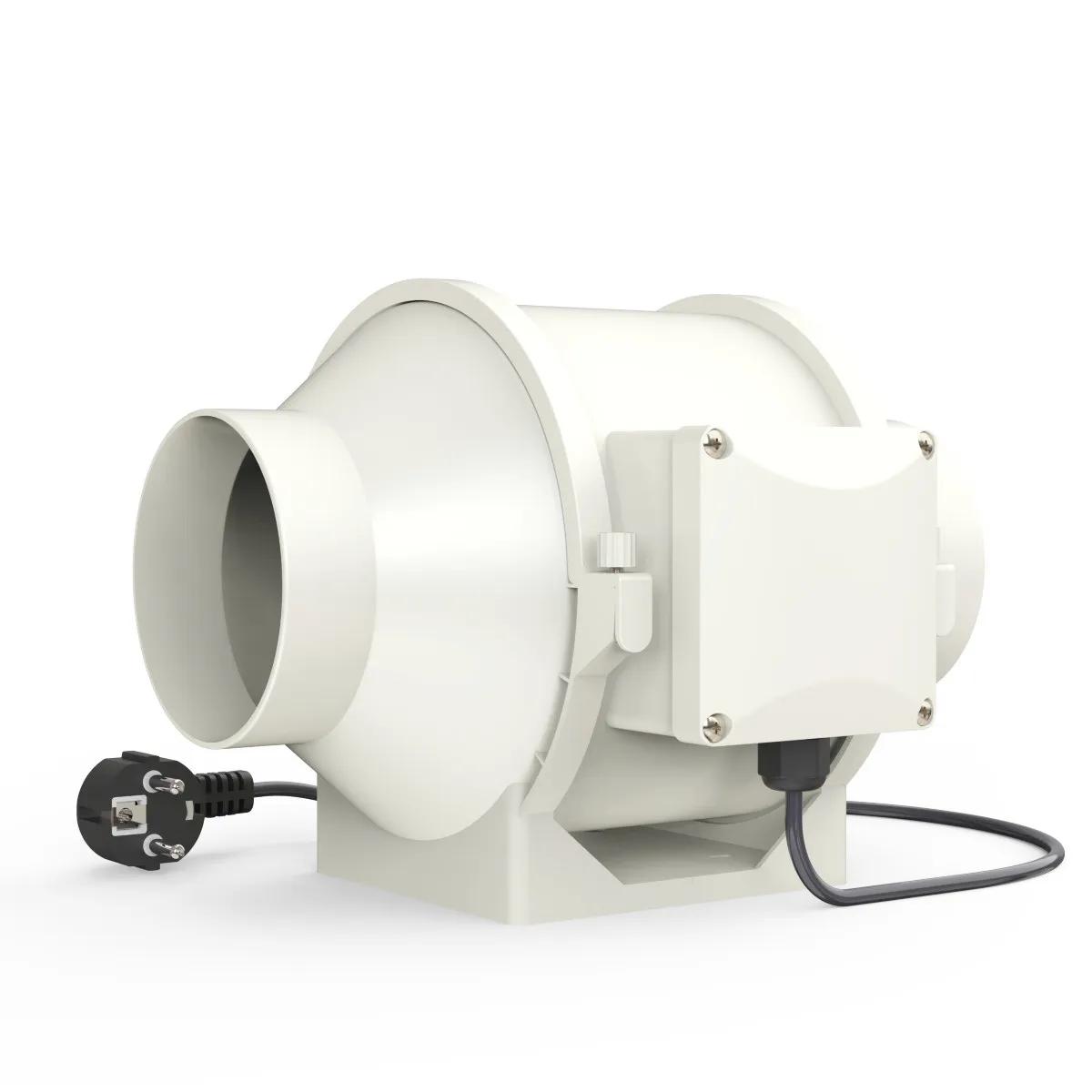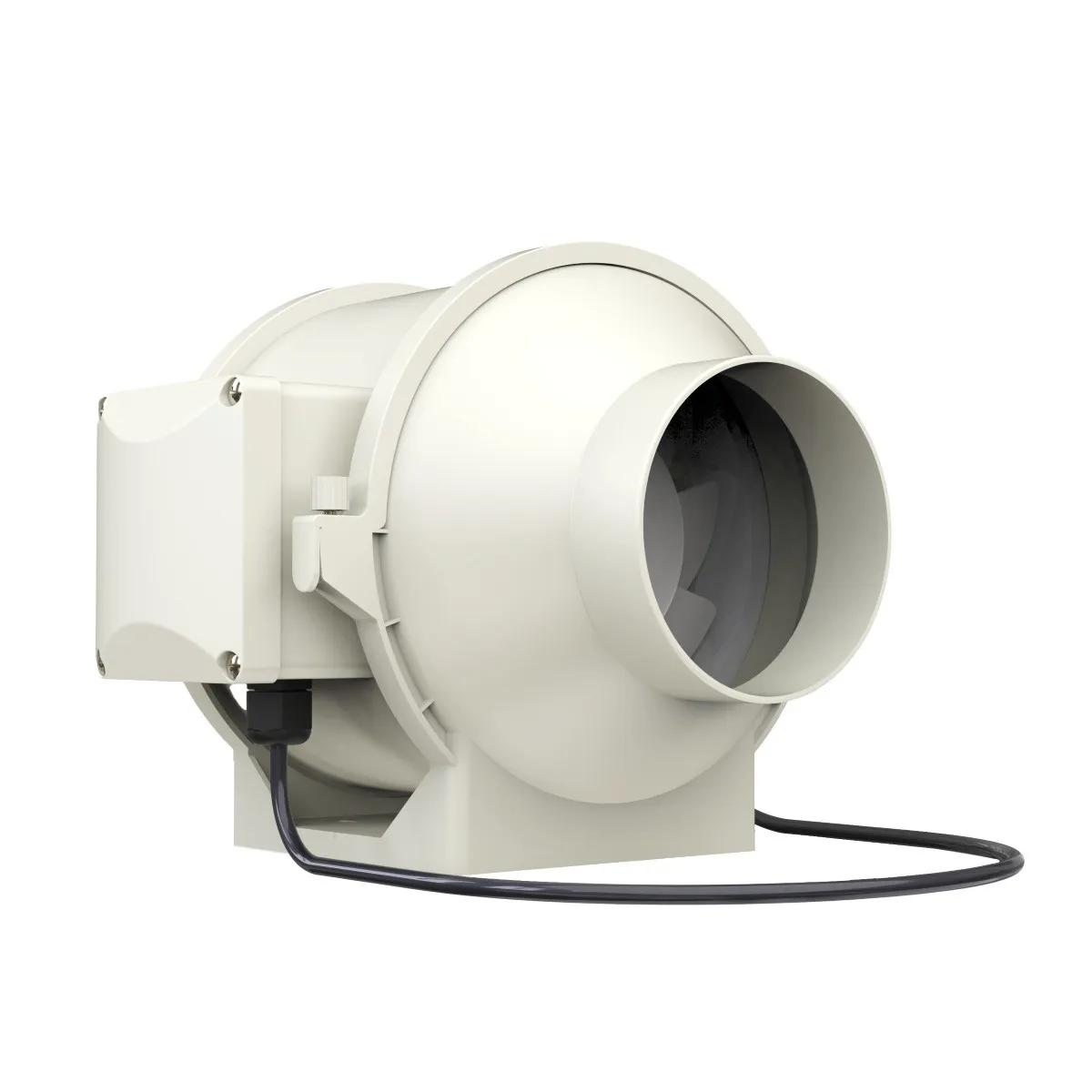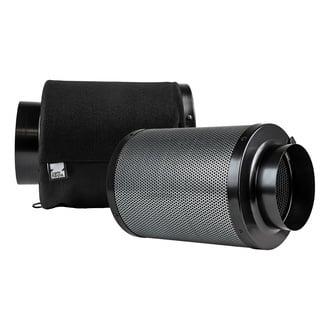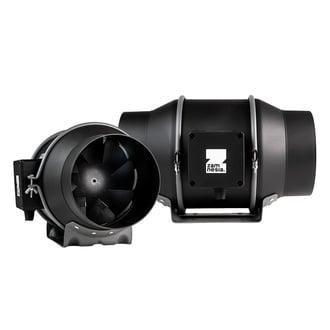
The Zamnesia Inline Duct Fan is an extractor fan for grow tent ventilation that pushes 364 m³/h (100 mm) or 689 m³/h (150 mm) at 3000 RPM, keeping air moving, temperatures sane, and odours under control. Two sizes, one job: shift air through your tent and carbon filter without rattling the walls.
Why a Zamnesia Inline Duct Fan belongs in your tent
A grow tent without active extraction is a sweat lodge. Heat from your LED stacks up, humidity climbs after lights-out, CO₂ runs out, and your carbon filter sits there doing nothing because nothing's pulling air through it. The Zamnesia Inline Duct Fan solves all four problems with a single 30 W or 60 W motor.
What we like about this one: the housing is genuinely low-vibration. A lot of cheap inline fans turn your tent frame into a tuning fork — you can hear them through the wall. This one hums rather than rattles. The airflow direction is marked on the housing, which sounds obvious until you've installed a fan backwards at 11pm and wondered why your tent is hotter than before.
It runs on AC 100–240 V, so it's happy on any EU socket and won't sulk if your voltage wobbles. At 3000 RPM it's tuned for steady extraction rather than max-power screaming — which is exactly what you want for a fan that's running 18 hours a day for three months.
Which size duct fan for your grow tent
Match the fan to the tent. Undersize it and your carbon filter chokes the airflow; oversize it and you're burning watts and making noise for no reason.
| Size | Airflow | Power | Tent fit |
|---|---|---|---|
| 100 mm | 364 m³/h (214 CFM) | 30 W | 60×60 and 80×80 cm |
| 150 mm | 689 m³/h (405 CFM) | 60 W | 100×100 and 120×120 cm |
The 100 mm is the right call for a 60×60 or 80×80 setup paired with a 100 mm carbon filter. Yes, the 100 mm technically fits a 60×60. So does a hamster in a shoebox — point is, you've got headroom. Step up to the 150 mm once your footprint hits 100×100 or larger, because a 364 m³/h fan in a 120×120 tent will leave you with hot spots in the canopy.
Specifications for the Zamnesia Inline Duct Fan
| Brand | Zamnesia (own-brand growshop) |
| Type | Inline duct / extractor fan |
| Sizes | 100 mm and 150 mm |
| 100 mm airflow | 364 m³/h (214 CFM) |
| 100 mm power draw | 30 W |
| 150 mm airflow | 689 m³/h (405 CFM) |
| 150 mm power draw | 60 W |
| Speed | 3000 RPM |
| Voltage | AC 100–240 V |
| Housing | Low-vibration, direction-marked |
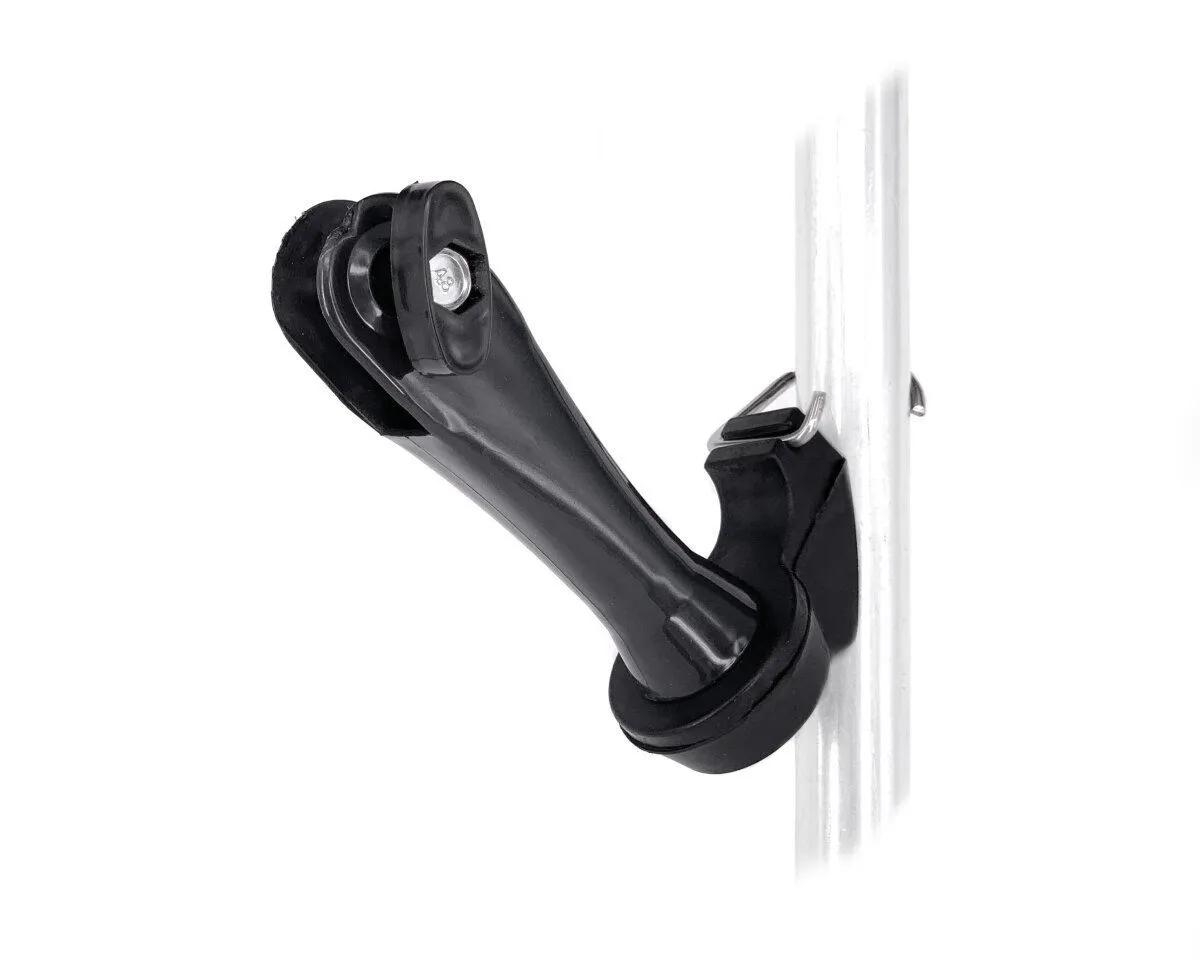
| In the box | Fan unit, rope ratchet hangers |
How to install the inline duct fan in a grow tent
- Check the airflow arrow on the housing — that's the direction air moves. You want it pulling air out of the tent, not pushing it in.
- Hang the fan from the top bars of the tent using the included rope ratchets. Suspending it (rather than bolting it to a hard surface) is what kills the last bit of vibration noise.
- Connect the intake side to your carbon filter with a length of ducting and two clamps. Filter inside the tent → fan → ducting → out the top port.
- Run the exhaust ducting out of the tent's upper duct port and seal the gap around it.
- Plug into AC mains. If you want speed control, add an inline fan speed controller — the fan itself runs at a fixed 3000 RPM out of the box.
- Open a lower passive intake on the tent so fresh air can enter as the fan pulls air out. Negative pressure = no odour leaks.
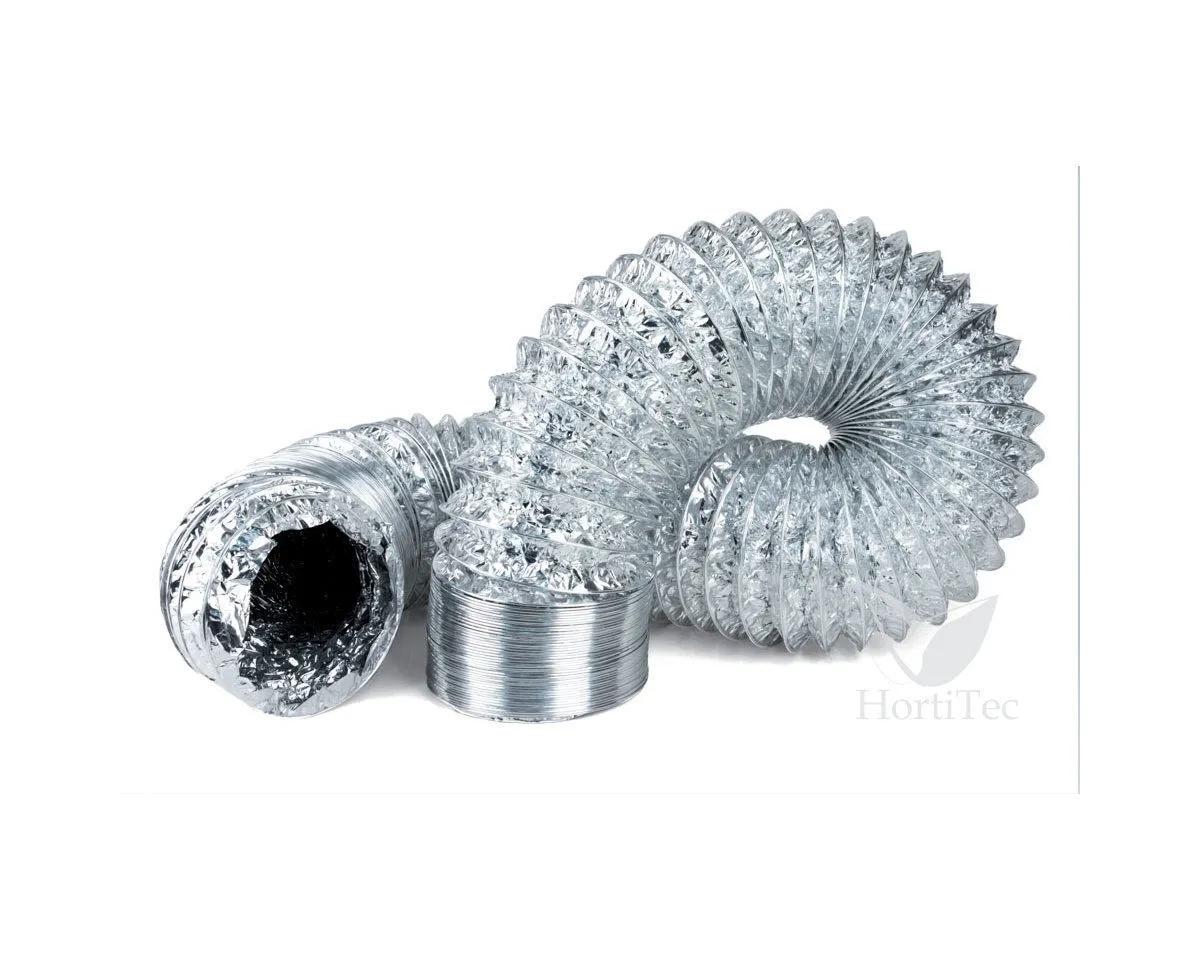
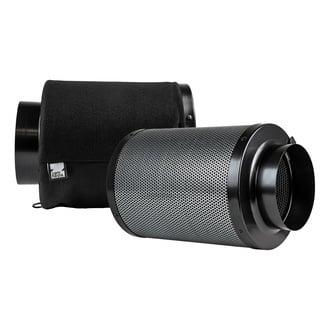
Complete the loop with a matching Zamnesia Carbon Filter (100 mm or 150 mm — pick the size that matches your fan) so odours get scrubbed before they leave the tent. A length of aluminium ducting and two clamps gets you from fan to filter to exhaust port. If you're starting from scratch, the Zamnesia Grow Tent Ecosystem bundles tent, fan, filter and light into one box.
Zamnesia Inline Duct Fan vs other Zamnesia growshop ventilation
Within the Zamnesia growshop range, this is the workhorse extractor — single-speed, fixed RPM, focused on doing one job reliably. If you need variable speed, pair it with a separate fan speed controller. If you want a complete ventilation loop without thinking about it, the Zamnesia Grow Tent Ecosystem includes the matching fan and filter already sized for the tent.
| Setup | Best for |
|---|---|
| Inline Duct Fan 100 mm + 100 mm carbon filter | 60×60 and 80×80 tents — small footprint, single light |
| Inline Duct Fan 150 mm + 150 mm carbon filter | 100×100 and 120×120 tents — multi-plant, higher heat load |
| Grow Tent Ecosystem bundle | First-time growers who want one box, no decisions |
Frequently Asked Questions
How loud is the Zamnesia Inline Duct Fan?
The housing is built for low vibration, so the noise is a steady hum rather than a rattle. Hanging it from rope ratchets (included) rather than bolting it to a hard surface keeps it quietest. It's not silent — no 3000 RPM extractor is — but it's noticeably calmer than budget metal-cased fans.
Do I need the 100 mm or the 150 mm version?
Tent size decides. The 100 mm (364 m³/h) is sized for 60×60 and 80×80 cm tents. The 150 mm (689 m³/h) is sized for 100×100 and 120×120 cm tents. Match your fan diameter to your carbon filter diameter — mixing sizes means adapters and lost airflow.
Can I run it with a speed controller?
Yes. The fan runs at a fixed 3000 RPM out of the box, but it accepts a standard inline AC fan speed controller if you want to dial it back during lights-off or in a quiet phase of the grow. The AC 100–240 V motor is compatible with common EU speed controllers.
Does it come with ducting and clamps?
No — the box includes the fan and rope ratchet hangers only. You'll need aluminium ducting and two hose clamps to connect it to your carbon filter and exhaust port. These are cheap and sold separately in the Zamnesia growshop range.
Will it pull air through a carbon filter without losing too much performance?
Yes, as long as you size-match. A 100 mm fan paired with a 100 mm carbon filter handles a 60×60 or 80×80 tent comfortably; a 150 mm fan with a 150 mm filter handles 100×100 or 120×120. Carbon filters always cause some static pressure loss, which is why the fan is rated 364/689 m³/h before the filter.
Can I use it for intake instead of extraction?
Technically yes — the airflow arrow on the housing tells you which way it pushes. Most growers use it as an extractor (pulling air out through a carbon filter) and let a passive lower vent handle intake. Active intake is only worth setting up on larger tents with longer duct runs.
Frequently Asked Questions
Last updated: April 2026