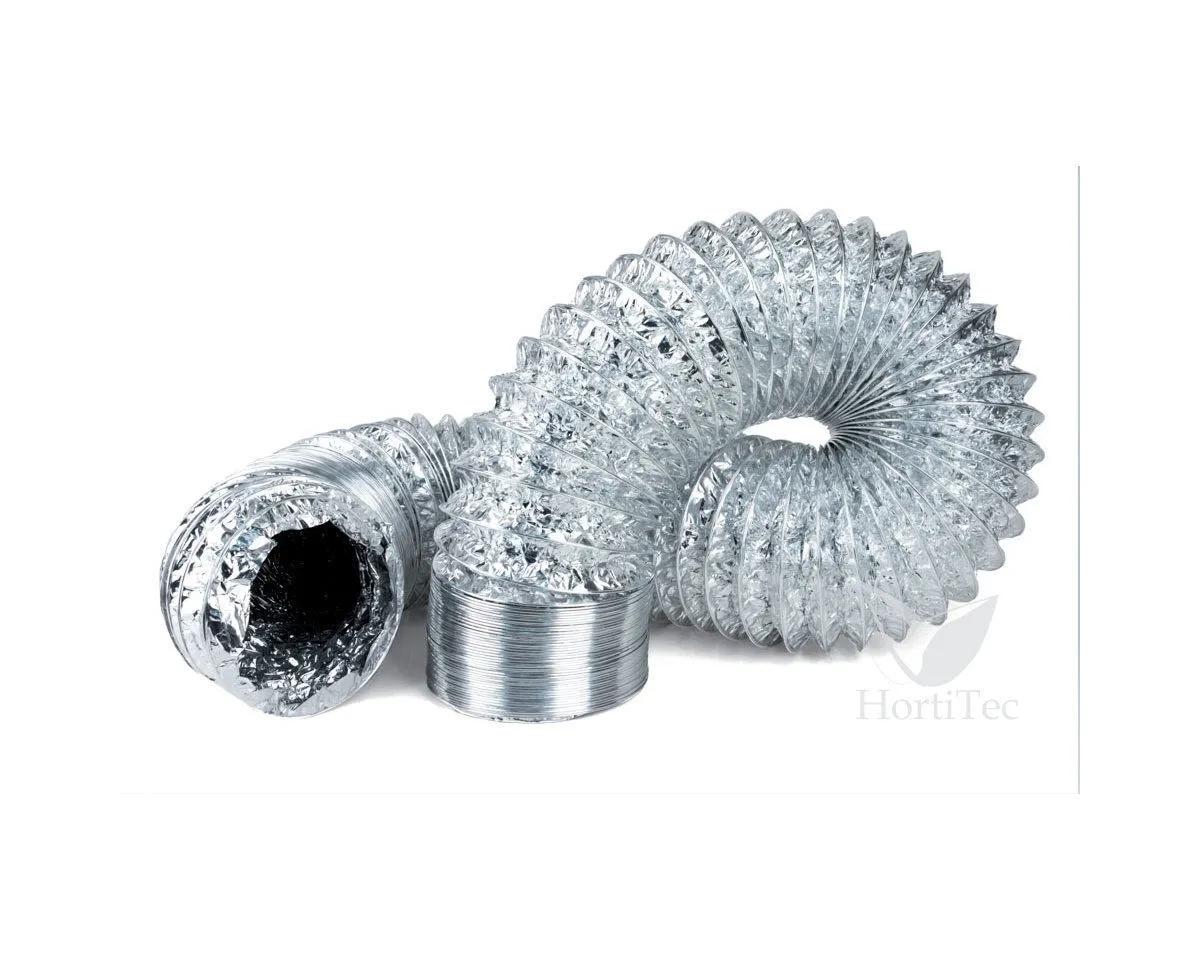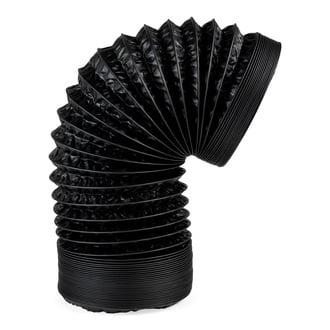
The Zamnesia Flexible Ducting 2 m is a ventilation hose that connects your inline fan, carbon filter and exit port into one sealed airflow loop. Aluminium inner layer holds the shape, PVC outer keeps it tough, and the included duct clamp gets you started without an extra errand to the shop. Pick 100 mm or 150 mm to match the collar size of your fan and filter — that's the only decision you need to make.
Which diameter: 100 mm or 150 mm?
Match the ducting diameter to the collar on your fan and carbon filter — mismatched sizes leak air and kill extraction performance. The 100 mm version pairs with smaller inline fans typically used in 60×60 cm and 80×80 cm tents, moving roughly 180–280 m³/h. The 150 mm version is for larger setups (100×100 cm and up) where you're shifting 400–600 m³/h. If your fan flange measures 100 mm, buy 100 mm ducting. If it measures 150 mm, order 150 mm. No adapters, no compromises.
Why this ducting matters in your grow tent setup
Flexible ducting is the link between your fan, your filter and the outside world — without it, your carbon filter scrubs nothing and your inline fan moves air around the room instead of out of it. Smell escapes through the tent zippers, heat builds up by 5–8°C above ambient, and humidity climbs past 70% — the three things that wreck a grow.
We've seen growers try to bodge this with bin bags, dryer hose from the hardware store, or kinked offcuts left over from a previous setup. It works for about a week. Then the thin foil tears at the first clamp tightening, or the wall collapses on itself when the fan ramps up to 100%, and you're rebuilding the whole airflow path at lights-out. The aluminium inner layer on this Zamnesia ducting gives it the structural memory to hold its shape under suction, and the PVC outer layer takes the abuse of being bent around tent corners without splitting.
At 2 m, you've got enough length to run from a fan mounted inside the tent, up through a duct port, and out to a window or extraction point. Trim it shorter with scissors if you need less — never try to stretch it longer.
Specifications: Zamnesia Flexible Ducting 2 m
| Length | 2 m |
| Diameter options | 100 mm or 150 mm |
| Inner layer | Aluminium |
| Outer layer | PVC |
| Construction | Flexible, compressible, trimmable |
| Clamps included | 1 duct clamp per pack |
| Brand | Zamnesia (own-brand growshop) |
| Use | Connecting inline fans, carbon filters, ventilation ports |
Flexible vs acoustic ducting at a glance
Two formats dominate grow tent ventilation, and the right pick depends on where your tent lives and how much fan noise you can tolerate. Here's how this flexible aluminium-PVC ducting compares to insulated acoustic ducting on the metrics that matter.
| Feature | Flexible (this product) | Acoustic insulated |
| Wall thickness | ~0.5 mm | ~25 mm (foam sandwich) |
| Noise reduction | Minimal | 5–10 dB lower |
| Bend radius | Tight (~15 cm) | Wider (~30 cm) |
| Weight per 2 m | Light (~300 g) | Heavy (~1.5 kg) |
| Best for | Garage, spare room, attic | Bedroom, shared flat |
What's in the box
- 1× Zamnesia Flexible Ducting, 2 m length (in your chosen 100 mm or 150 mm diameter)
- 1× duct clamp for one connection
Honest heads-up: one clamp covers one end of the duct. A complete fan-to-filter run uses two connection points (fan side and filter side), so most growers get a second clamp separately. Not a dealbreaker — clamps are a couple of euros — but worth knowing before you start the install.
How to install your flexible ducting
Installation takes about 10 minutes per end once you have both clamps in hand. Follow these seven steps for a sealed, leak-free airflow loop.
- Measure the run between your inline fan and carbon filter (or fan and exit port). Cut the ducting to length with scissors or tin snips — don't stretch it.
- Slide a duct clamp loosely over one end of the ducting before fitting it to the fan or filter flange.
- Push the ducting over the flange so it overlaps by at least 3–4 cm. Twist gently to seat it.
- Slide the clamp into position over the overlap and tighten with a screwdriver until the PVC outer compresses against the flange. Don't overtighten — you'll cut through the aluminium.
- Repeat at the other end (with a second clamp you've sourced separately).
- Keep bends gentle. Sharp 90-degree kinks restrict airflow by up to 30% and create whistling noise. A wide curve is always better than a tight elbow.
- Power on the fan and check for leaks by holding a hand near each joint. If you feel air escaping at the clamp, tighten another quarter-turn.
How it sits in the Zamnesia ventilation range
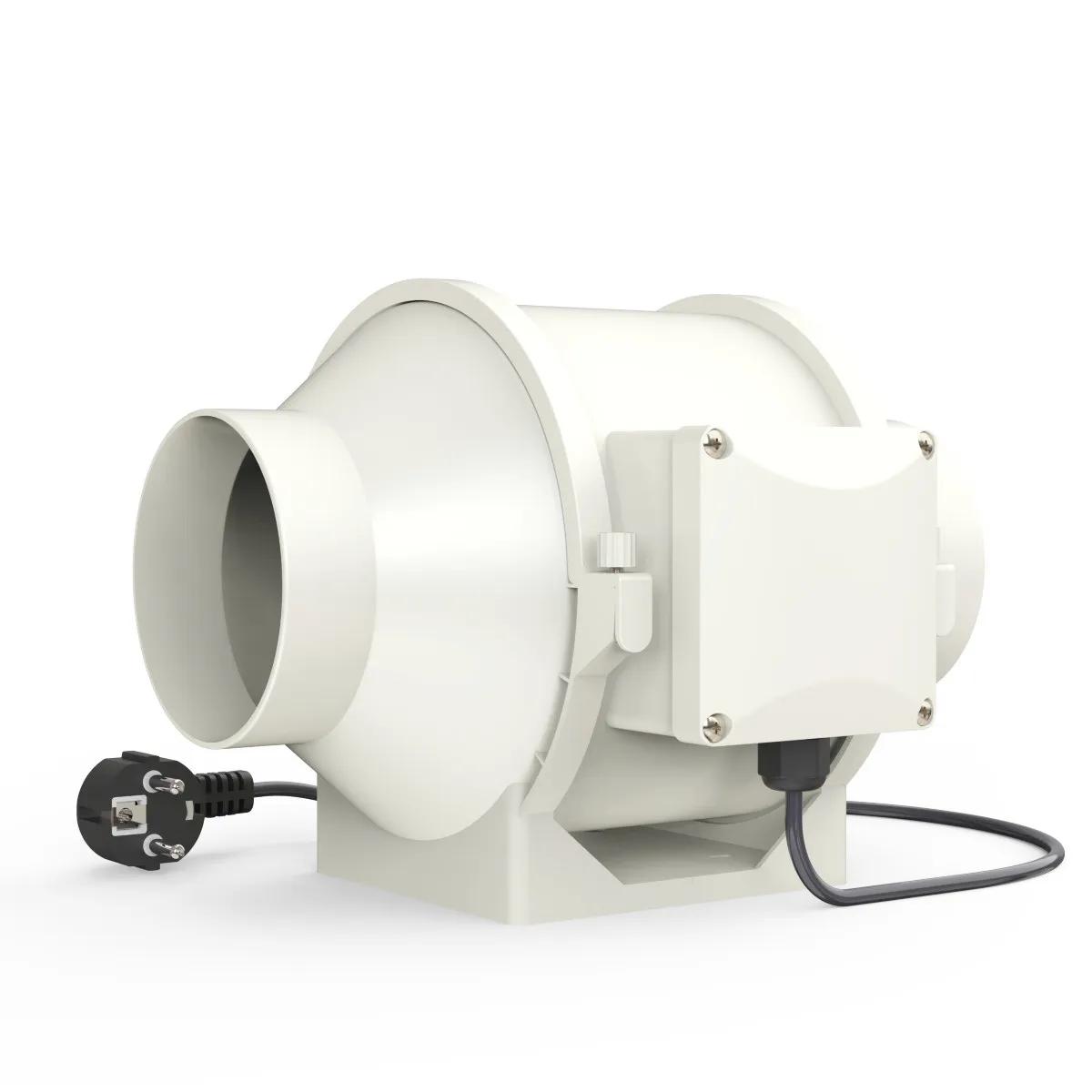
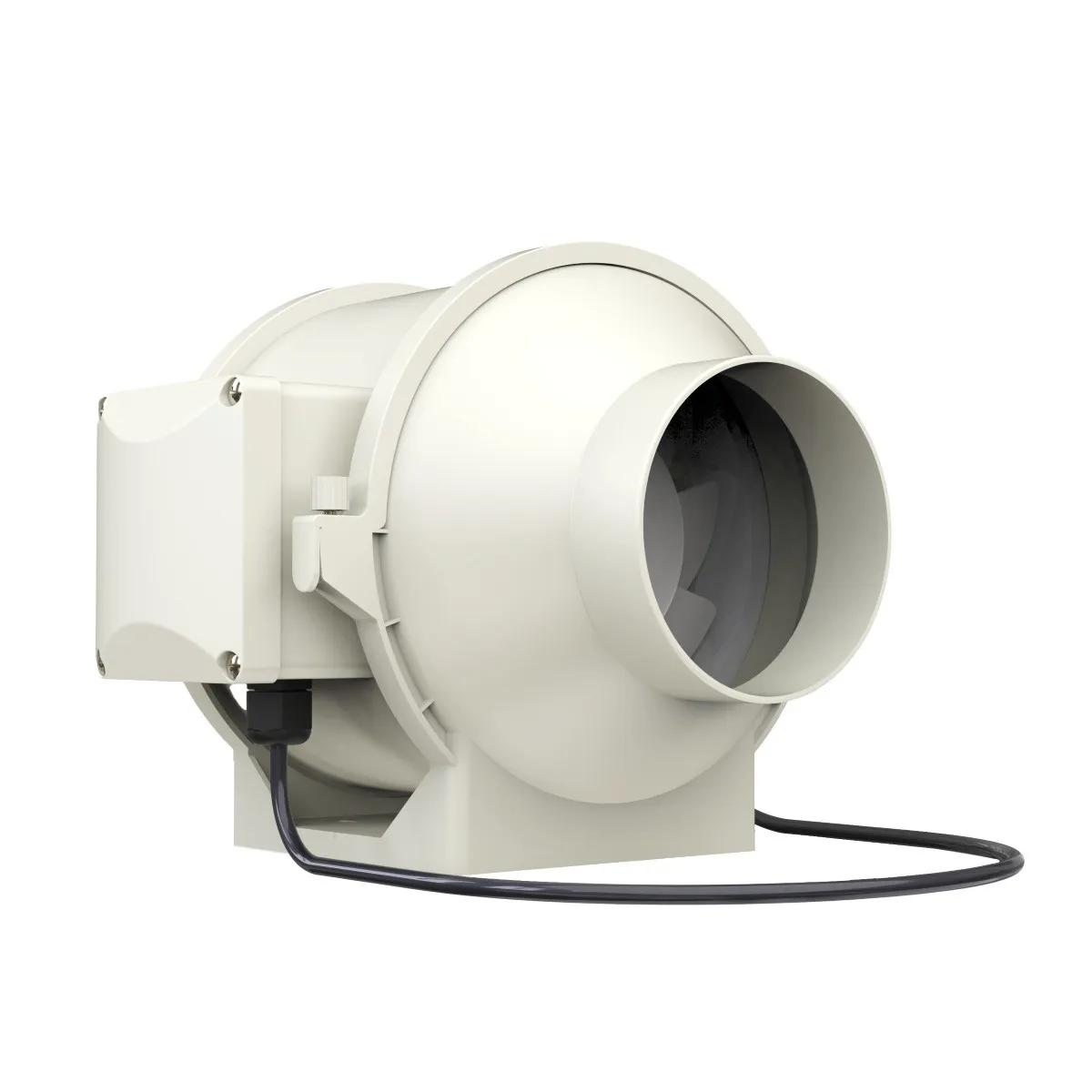
This is the standard ducting you reach for when you've already chosen your inline fan and filter and just need to connect them. It pairs directly with the Zamnesia Inline Duct Fan and any Zamnesia carbon filter with matching 100 mm or 150 mm collars. If you're building a tent from scratch, the Zamnesia Grow Tent Ecosystem bundles the whole airflow loop into one box — easier than sourcing parts individually, but you pay for the convenience.
Compared to insulated/acoustic ducting (the chunky stuff with a foam sandwich layer), this flexible aluminium-PVC version is lighter, cheaper and easier to route through tight tent ports. The trade-off: it transmits more fan noise than insulated ducting. If silence matters and you're growing in a bedroom or shared flat, acoustic ducting is the upgrade. For most setups in a spare room or garage, this is the format growers actually use.
Complete your airflow loop with a Zamnesia Inline Duct Fan in the matching diameter and a carbon filter sized for your tent volume. Get a second duct clamp while you're at it — you'll need one for each end of the run, and the pack only includes one.
Frequently Asked Questions
Do I need 100 mm or 150 mm ducting?
Match the diameter to the collar on your inline fan and carbon filter. Smaller tents (60×60 cm, 80×80 cm) typically run 100 mm; larger tents (100×100 cm and up) usually run 150 mm. Check the flange measurement before you order.
How many clamps come with the pack?
One duct clamp per pack. A standard fan-to-filter run needs two connection points, so most growers buy an additional clamp separately. They cost a couple of euros and tighten with any flat-head screwdriver.
Can I cut the 2 m ducting shorter?
Yes. Use scissors or tin snips to trim it to your run length. Don't try to stretch it longer than 2 m — buy a second length instead, or step up to a longer ducting if your supplier stocks one.
Will this ducting reduce fan noise?
Slightly, compared to rigid metal duct, but not much — expect maybe 1–2 dB of damping. The aluminium-PVC build transmits fan hum and airflow noise. If quiet operation matters, look at insulated acoustic ducting — the foam-sandwich version dampens noise by 5–10 dB more.
Does the ducting get damaged by sharp bends?
Tight kinks can crease the aluminium inner layer and restrict airflow permanently — up to 30% loss at a hard 90-degree corner. Route the duct in gentle curves and avoid sharp corners where possible. A wide arc keeps your fan working at full capacity.
Can I use this for intake as well as extraction?
Yes, the ducting is directional-agnostic. Run it as passive intake from outside the tent to a lower vent, or as active intake with a second inline fan. Same install method either way.
Is the ducting fire-safe?
The aluminium inner layer is non-combustible and the PVC outer is rated to standard household tolerances. Keep ducting at least 30 cm clear of HID lamp housings and avoid running it directly over hot ballasts.
Last updated: April 2026