We'll only email you about this product — no marketing.
Clip-on Fan 15W by Cyclone
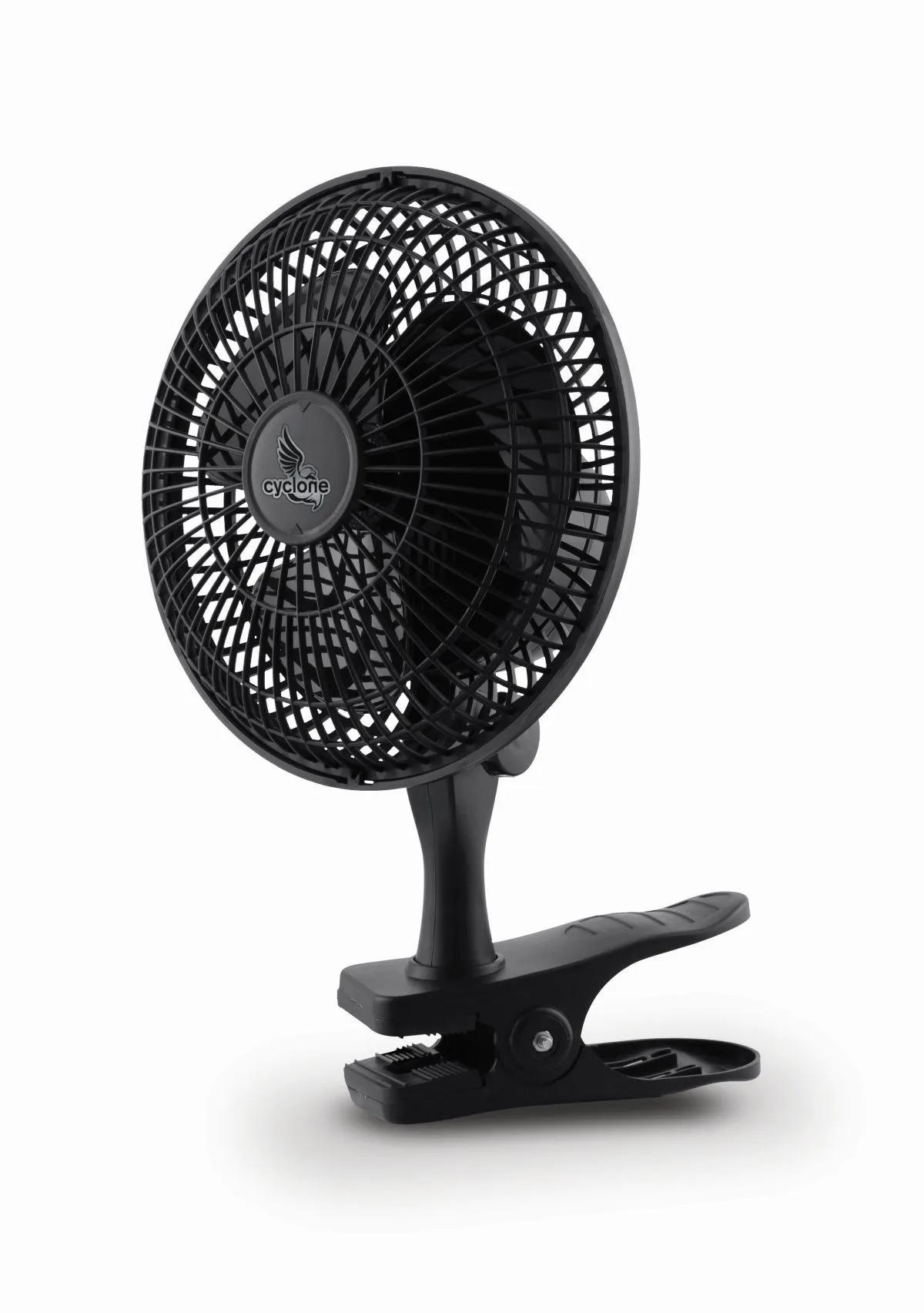
The Cyclone Clip-on Fan is a compact 15W circulation fan that clamps directly onto tent poles, shelving, or any edge up to around 4 cm thick. With a 15 cm blade diameter and a tilt-adjustable head, it keeps air moving across your canopy — reducing hot spots, discouraging mould, and giving your plants the gentle breeze they actually need. Small, quiet, and dead simple to set up.
Why a Clip-on Fan Matters in Your Grow Space
Stagnant air is the silent killer of indoor grows. Without circulation, moisture pools around your canopy, temperatures spike near your light, and the microclimate between your leaves becomes a breeding ground for mould and mildew. We've seen growers lose entire harvests to botrytis that started in a single corner where the air wasn't moving. A clip-on fan won't replace your extraction setup, but it fills the gap between your intake and exhaust — the bit that actually touches your plants.
The Cyclone 15W is the fan we'd point you towards if your tent is 60x60 or 80x80. It draws just 15 watts, so it barely registers on your electricity bill even running 18 hours a day. The clamp is properly spring-loaded — not the flimsy plastic type that slides off a tent pole at 3 AM and lands on your seedlings. We've had that happen with cheaper fans. This one grips and stays put.
One honest limitation: it's a single-speed fan with no oscillation. For a small tent, that's fine — you angle the head, point it where you need it, and the 15 cm blades push enough air to create movement across a 60x60 canopy without battering your plants. If you're running a 120x120 or larger, you'll want two of these on opposite corners, or step up to an oscillating wall-mount fan.
Specifications for the Cyclone Clip-on Fan
| Spec | Value |
|---|---|
| Brand | Cyclone |
| Power | 15W |
| Blade Diameter | 15 cm |
| Mounting | Spring-loaded clip clamp + flat base |
| Tilt | Adjustable head angle |
| Speed Settings | Single speed |
| Oscillation | No |
| SKU | GS0023 |
| Best Tent Size | 60x60 to 80x80 cm (1 fan); 100x100+ (use 2) |
Complete your climate control setup: pair this clip-on fan with a carbon filter and extraction fan kit for full air management. If you're running a larger tent, grab a second Cyclone and mount them on opposite corners — two small fans beat one big one for even coverage across the canopy.
How to Set Up Your Cyclone Clip-on Fan
- Unpack the fan and check the clamp mechanism opens and closes smoothly. Give the spring a few squeezes — it should feel firm, not loose.
- Choose your mounting position. For most small tents, clamp it to a vertical tent pole at canopy height or slightly above. You want airflow across the tops of your plants, not blasting directly down onto them.
- Open the clamp wide, slide it over the pole or shelf edge, and release. The spring-loaded jaw should grip tightly without slipping. Give it a gentle tug to confirm.
- Adjust the fan head angle. Tilt it so the airflow sweeps across your canopy at a slight downward angle — you're aiming for a gentle rustle of leaves, not a wind tunnel.
- Plug in and switch on. The fan runs at a single speed, so there's nothing else to configure. If you can see your plant leaves gently swaying, you've nailed the positioning.
- Alternatively, skip the clamp entirely and stand the fan on its flat base on a shelf or the floor of your tent. The base is stable enough for flat surfaces, though clamp-mounting keeps your floor space clear.
Cyclone Clip-on Fan vs Other Circulation Options
| Feature | Cyclone 15W Clip-on | Typical Budget Clip Fan | Oscillating Wall Fan |
|---|---|---|---|
| Power | 15W | 5-10W | 30-50W |
| Blade Diameter | 15 cm | 10-15 cm | 25-40 cm |
| Oscillation | No | No | Yes |
| Mounting | Spring clamp + base | Plastic clip | Wall bracket |
| Noise Level | Low | Varies (often rattles) | Moderate |
| Best For | 60x60 to 80x80 tents | Seedling trays, small spaces | 100x100+ tents, open rooms |
Frequently Asked Questions
Is 15W enough for a grow tent?
For a 60x60 or 80x80 tent, yes — 15W moves enough air to break up stagnant pockets and create visible leaf movement. For tents 100x100 cm or larger, use two Cyclone clip-on fans on opposite sides for even coverage.
Can I use the Cyclone clip-on fan without clamping it?
Yes. It comes with a stable flat base, so you can stand it on a shelf, table, or the floor of your tent. Clamp mounting is better for saving floor space, but the base works well on any flat surface.
Does this clip-on fan oscillate?
No, the Cyclone 15W is a fixed-direction fan with an adjustable tilt head. You point it where you need it and it stays there. For oscillation, you'd need to step up to a wall-mounted fan.
How noisy is the Cyclone clip-on fan?
Quiet enough to run overnight without bothering you in the next room. It produces a low, consistent hum — nothing like the rattle you get from cheaper plastic clip fans that vibrate against tent poles.
Will the clamp fit on standard grow tent poles?
The spring-loaded clamp opens wide enough for most standard tent poles, which are typically 16-19 mm diameter. It also grips shelf edges and horizontal bars up to roughly 4 cm thick.
Should I run the fan 24 hours a day?
Most growers run circulation fans during the entire light cycle and often during dark periods too, since humidity tends to spike when lights go off. At 15W, the electricity cost of running it round the clock is negligible.
How many clip-on fans do I need?
One Cyclone 15W handles a 60x60 or 80x80 tent. For a 100x100 tent, we'd grab two and mount them diagonally opposite each other. For a 120x120, two is the minimum — three is better if your canopy is dense.
Last updated: April 2026