Phytonaut LED Grow Light 320W — Full-Spectrum Power for 80×80 Tents
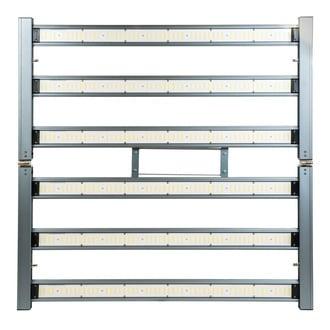
The Phytonaut LED Grow Light 320W is a Zamnesia own-brand full-spectrum LED panel that pushes 928–940 µmol/s of PPF at 2.83 µmol/J across an 80×80 cm footprint. It's the middle-heavyweight of the Phytonaut range — bigger than the 120W and 240W, gentler on your wallet than the 480W — and it's built around Sanan and Osram diodes in a passively cooled, IP65-rated housing that's 7.2 cm thin and 5.9 kg light.
Why the Phytonaut 320W Sits in the Sweet Spot
If you're running an 80×80 or 90×90 tent, this is the Phytonaut we'd reach for. The 240W starts to thin out at the canopy edges in an 80×80, and the 480W is honestly overkill unless you're in a 100×100 or larger. At 320W pulling roughly 935 µmol/s, you're hitting the PPFD numbers most photoperiod strains want through flower — without scorching the tops or cooking the room.
The 2.83 µmol/J efficacy is where the running cost lives. That's not the absolute peak of what's on the market — top-end horticultural fixtures push 3.0+ — but it's well into the modern, efficient bracket, and it's a country mile ahead of the HPS gear it replaces. Over a 12/12 flower cycle, the difference adds up to real money on your electricity bill.
The 120° beam angle spreads light evenly across the 80×80 footprint instead of dumping a hot column in the centre. Combined with the 80×80×7.2 cm panel format (the fixture matches the tent footprint), you get edge-to-edge coverage with minimal hotspots — assuming you hang it at the right height (see below).
Specifications
| Power draw | 320 W |
| PPF output | 928–940 µmol/s |
| Efficacy | 2.83 µmol/J |
| Spectrum | Full-spectrum (white + red) |
| Beam angle | 120° |
| Fixture dimensions | 80 × 80 × 7.2 cm |
| Weight | 5.9 kg |
| LED chips | Sanan + Osram |
| Cooling | Passive (fanless) |
| Dimming | Manual knob + 0–10V controller |
| Ingress protection | IP65 |
| Lifespan | ≥54,000 hours |
| Recommended footprint | 80×80 to 90×90 cm tent |
Phytonaut 320W vs the Rest of the Range
The Phytonaut family scales linearly with tent size. Picking the right wattage is mostly a question of how big your space is — going too big creates heat and bleaching, going too small leaves you with stretchy, underlit lower branches.
| Model | Power | PPF | Best for |
|---|---|---|---|
| Phytonaut 120W | 120 W | ~340 µmol/s | 60×60 tents, seedlings, micro grows |
| Phytonaut 240W | 240 W | ~697 µmol/s | 60×60 to 80×80 tents |
| Phytonaut 320W | 320 W | ~935 µmol/s | 80×80 to 90×90 tents |
| Phytonaut 480W | 480 W | ~1,360 µmol/s | 100×100 to 120×120 tents |
Passive Cooling and IP65 — Why It Matters
Passive cooling means no fans, which means no noise and nothing to fail. We've seen growers go through three sets of LED cooling fans in two years on cheaper panels — bearing wear, dust, the lot. The Phytonaut 320W dumps heat through its 80×80 cm aluminium body instead. Silent operation, fewer moving parts, less stuff to break.
IP65 means the housing is dust-tight and protected against water jets. For a grow tent at 60–70% humidity in flower, with the occasional foliar spray going everywhere, that rating is the difference between a panel that lasts its rated 54,000+ hours and one that corrodes from the inside. At 12/12, 54,000 hours works out to roughly 25 years of flowering cycles — you'll replace the tent first.
Dimming: Manual Knob and 0–10V Controller
Two dimming options, both useful. The manual knob on the driver lets you dial intensity by hand — handy for seedlings and clones, where you want maybe 30–40% intensity to avoid frying them. The 0–10V input lets you plug into a grow controller (Trolmaster, Niwa, AC Infinity, etc.) for automated sunrise/sunset ramps, or to drop intensity during the hottest part of the day if your room's running warm.
For a single-tent grower, the knob does the job. If you're running multiple panels and want them all to ramp together, the 0–10V is what you want.
Mounting Height — Get This Right
Hang height is the most common thing new LED growers get wrong. With 935 µmol/s coming off the Phytonaut 320W, too close and you'll bleach the tops; too far and you'll get stretchy plants reaching for the canopy.
- Seedlings / clones (week 1–2): Hang 60–70 cm above the canopy, dim to 25–40%.
- Veg (week 3 onward): Drop to 45–55 cm, ramp up to 60–80%.
- Early flower: 35–45 cm above the canopy, 80–100%.
- Mid to late flower: 30–40 cm, full power. Watch the top leaves — if they cup or bleach, raise it 5 cm.
- Always measure from the panel face to the canopy top, not to the floor. Adjust as plants grow.
Pairs well with an 80×80 grow tent (the fixture matches the footprint exactly), a carbon filter and clip fan for airflow, and a basic PAR meter if you want to dial in PPFD properly. If you're starting from scratch, look at our complete 80×80 grow tent kits — they bundle the tent, ventilation and timer in one go.
Build Quality and What's in the Box
The fixture is a 7.2 cm thick aluminium panel with the diodes mounted on a passive heatsink back. At 5.9 kg it hangs comfortably off two adjustable rope ratchets — no need for the heavy-duty steel hangers you'd want on a 480W or HPS rig. Sanan handles most of the white spectrum LEDs, Osram covers the red diodes that flower-stage plants love. Both are tier-one manufacturers; this isn't a no-name chip panel.
The driver is integrated into the panel body with a flying lead for power and a separate input for the 0–10V controller. Standard EU power cord, hangs out of the box and ready to go.
Honest Limitations
Two things to know. First: passive cooling works, but it only works if the room around the panel can shed heat. In a sealed tent without proper extraction, even a passively cooled LED will heat the air up. You still need a fan and ventilation — the panel doesn't replace airflow. Second: at 80×80 cm the fixture takes up the entire ceiling of an 80×80 tent. That's by design, but it means hanging-height adjustment matters more than on a smaller panel — you can't shift it sideways to dodge a tall plant. Plan your training.
Frequently Asked Questions
What tent size is the Phytonaut 320W designed for?
An 80×80 cm tent is the sweet spot — the fixture matches the footprint and the 120° beam covers it edge to edge. It also works well in a 90×90 cm tent. For 100×100 or larger, step up to the Phytonaut 480W.
How does 2.83 µmol/J efficacy compare to other LEDs?
It's solidly in the modern, efficient LED bracket. Top-end horticultural fixtures push past 3.0 µmol/J, and budget panels often sit at 2.0–2.5. At 2.83 µmol/J, the Phytonaut 320W runs noticeably cheaper than HPS and most older LEDs over a full flower cycle.
Does the Phytonaut 320W need a separate controller for dimming?
No. The driver has a built-in manual dimming knob, so you can adjust intensity by hand without any extra gear. If you want automated ramping or to sync multiple panels, you can connect a 0–10V grow controller separately.
Is passive cooling enough at 320W?
Yes, provided your tent has proper extraction. The 80×80 aluminium body acts as the heatsink, dumping heat silently with no fans to fail. You still need an extraction fan to move warm air out of the tent — the panel handles its own thermal load, not the room's.
How far above the canopy should I hang it?
Start around 60–70 cm above seedlings at 25–40% dim. Drop to 45–55 cm during veg, and 30–40 cm in flower at full power. If the top leaves cup or bleach white, raise it 5 cm. Always measure to the canopy top, not the floor.
What's the difference between the Phytonaut 320W and the Pure LED Q320?
Both are 320W full-spectrum panels in a similar price bracket. The Phytonaut uses Sanan and Osram chips in an 80×80 cm format with IP65 and 0–10V dimming; the Pure LED Q320 from Pure Factory is a different fixture format from a different brand. Pick by the size that matches your tent.
Last updated: April 2026