
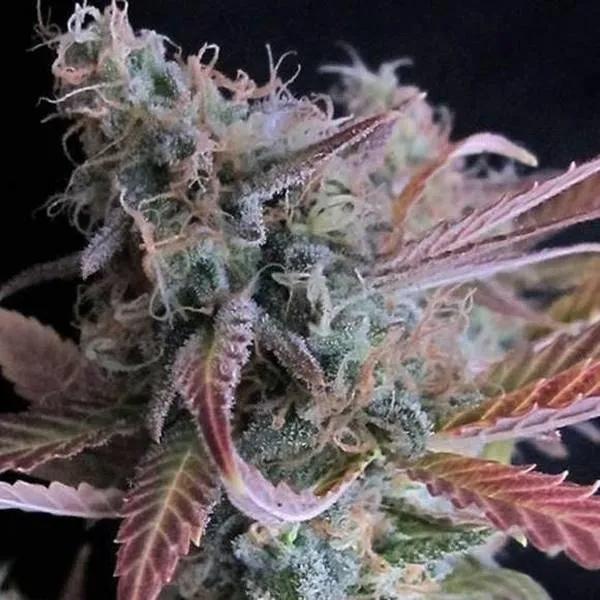
Pack: 5 seeds
Raspberry Cough Seeds — The Sativa That Actually Fits Your Tent
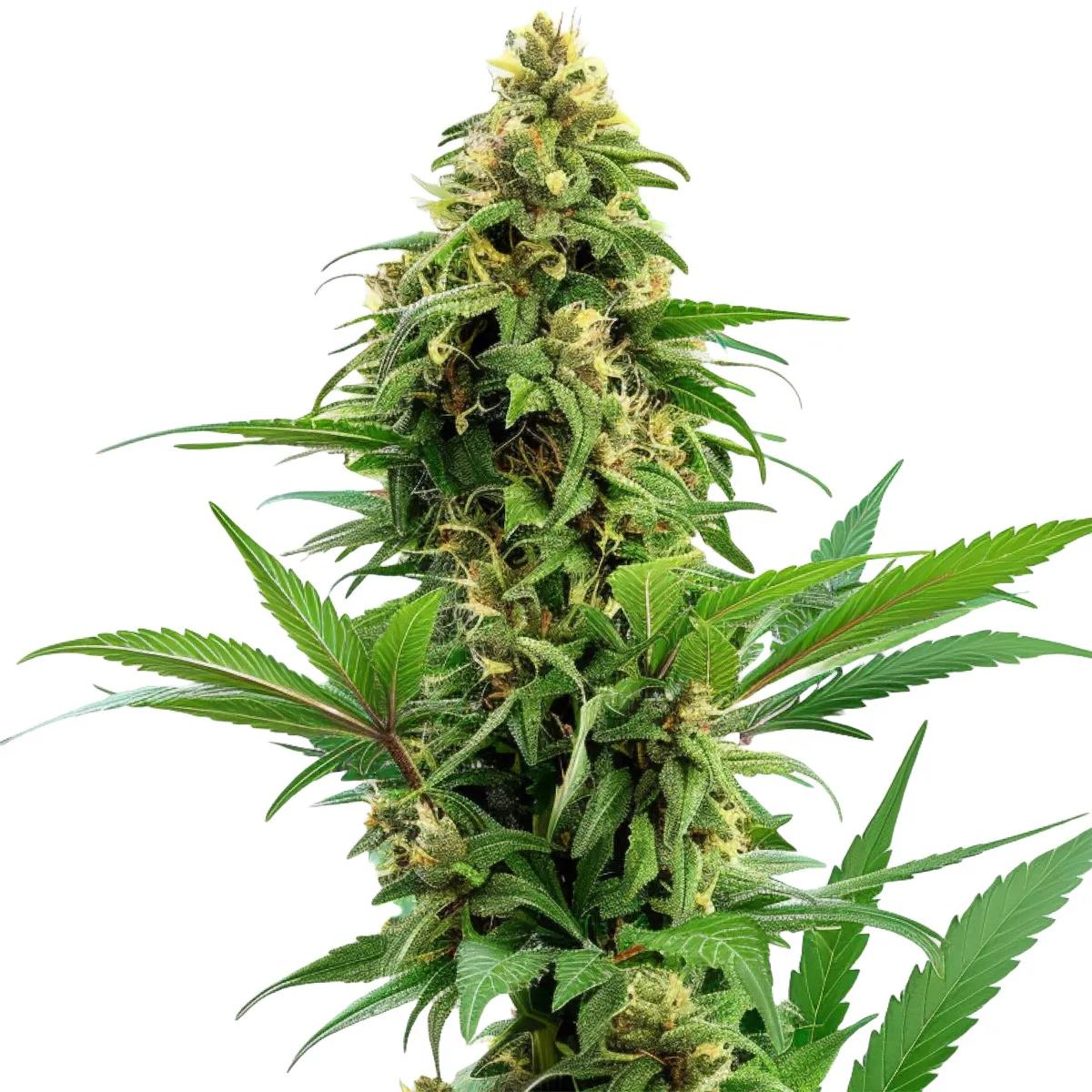
Raspberry Cough is a Sativa-dominant feminised cannabis seed from Nirvana Seeds that grows as a single columnar cola instead of branching out like most Sativas. Bred from a Cambodian landrace female crossed with Ice — a proven member of the White family — this strain was essentially engineered for Sea of Green setups and tight indoor spaces where every centimetre counts. Five feminised Raspberry Cough seeds per pack, 15–24% THC, and a fruity pungent flavour profile that has nothing to do with the cookie crosses dominating every other seed catalogue right now.
Why Raspberry Cough Seeds Work in Small Grow Spaces
Most Sativa-dominant genetics are a headache indoors. They stretch, they branch sideways, they fight each other for light, and before you know it your 60x60 tent looks like a jungle that hasn't been maintained since the rainy season. Raspberry Cough does none of that. The plants barely develop side branches at all — instead, they channel energy into one towering central bud. That columnar growth habit is directly inherited from the Cambodian landrace parent, and it means you can pack significantly more plants per square metre than you'd ever manage with a typical branchy Sativa.
In a SOG configuration, expect 400–500 g/m² — serious weight from a strain you can genuinely squeeze into a small tent if space is all you've got. The Cambodian genetics also bring vigour and resilience, so you're not babysitting fragile seedlings through the first few weeks. She grows with purpose and doesn't waste your time.
Raspberry Cough Genetics and Lineage
The cross is straightforward: a Cambodian landrace female paired with Ice, Nirvana's award-winning hybrid from the White family. The Cambodian side brings the upright growth structure, the vigour, and that distinctly tropical Sativa character — energetic, focused, and clear-headed. Ice contributes resin production, density, and the kind of frost that makes buds look like they've been dipped in sugar. The combination produces a plant that looks like a Sativa but behaves far more predictably than most landrace-derived strains.
THC sits between 15% and 24%, which is a wide range — and honestly, where you land depends heavily on your growing environment, lighting, and how well you dial in nutrients during flower. Growers who push the upper end tend to be running proper SOG setups with consistent light coverage across a flat canopy of single colas.
| Specification | Detail |
|---|---|
| Seed Bank | Nirvana Seeds |
| Genetics | Cambodian Landrace x Ice (White family) |
| Type | Sativa-Dominant Feminised |
| THC | 15–24% |
| Flowering Time | 9–11 weeks |
| Indoor Yield (SOG) | 400–500 g/m² |
| Growth Habit | Columnar — minimal branching |
| Seeds Per Pack | 5 feminised |
| SKU | CSNI0031 |
Raspberry Cough Aroma, Flavour, and Those Red Pistils
The name isn't just marketing — there's a genuine berry sweetness on the nose when you crack open a cured bud, layered over something sharper and more pungent underneath. It's fruity without being candy-like, and it stands apart from the doughy, dessert-heavy terp profiles that have taken over the market. Think ripe raspberries left in the sun with a hint of earth and spice. The exhale has a slight tickle to it — the "cough" part of the name is earned, not invented.
But the real showstopper is visual. During flower, Raspberry Cough throws out vivid red pistils that catch the eye immediately. Drop your night temperatures a few degrees — somewhere around 15–18°C during dark periods in late flower — and those pistils shift from red into blue-purple territory. At harvest, the contrast between frosty white trichomes and those coloured hairs is genuinely stunning. We've seen growers run this strain purely for bag appeal, and it delivers every time.
Growing Raspberry Cough Seeds — SOG Setup Guide
This strain was built for SOG, and that's where it performs best. The idea is simple: instead of growing a few large plants and training them to fill the canopy, you grow many small plants close together and let each one produce a single fat cola. Raspberry Cough's natural growth habit does 90% of the work for you — she barely branches, so there's almost no pruning or training required.
- Germinate your Raspberry Cough seeds using your preferred method — paper towel, jiffy pellets, or direct into a small pot of light soil mix. Feminised seeds mean no males to cull, so every seed counts.
- Veg for 10–14 days under 18/6 light. You don't need a long vegetative phase — the goal is short, uniform plants. Once they've got 3–4 nodes, they're ready to flip.
- Transplant into final containers. For SOG, 3–5 litre pots work well. Pack them in at roughly 9–16 plants per square metre, depending on pot size and tent dimensions.
- Flip to 12/12 lighting. The Sativa genetics will give you a stretch during the first 2–3 weeks of flower — expect the plants to roughly double in height. Keep your light distance in mind.
- Feed a standard bloom nutrient schedule. The Cambodian genetics make her fairly resilient, but watch for calcium and magnesium needs under LED lighting — she drinks more than you'd expect.
- Monitor temperatures during late flower. If you want those blue-purple pistils, drop night temps to 15–18°C in the final 2–3 weeks. This is cosmetic, not required — the buds finish fine at standard temperatures.
- Harvest at 9–11 weeks of flower. The lower end of that range tends to produce a more energetic effect; letting her run to 11 weeks adds density and a slightly heavier character.
Raspberry Cough vs Other SOG-Friendly Sativa Seeds
If you're shopping specifically for a Sativa that works in tight spaces, your options are more limited than you'd think. Most seed banks sell Sativa-dominant hybrids that still branch heavily — they'll tell you it's "manageable" indoors, and then you're defoliating every three days trying to keep the canopy under control.
Raspberry Cough genuinely doesn't do this. The columnar habit is consistent across phenotypes, which matters when you're filling a SOG with 12+ plants and can't afford one rogue bushy pheno throwing the whole canopy off. The Cambodian landrace parent locks in that upright structure in a way that most hybrid crosses can't match.
The honest limitation: flowering at 9–11 weeks is on the longer side compared to Indica-dominant SOG strains that finish in 7–8 weeks. If speed is your priority above everything else, a Northern Lights or similar Indica-heavy variety will get you to harvest faster. But the yield and quality from Raspberry Cough justify the extra wait — 400–500 g/m² from a Sativa in SOG is not something you see every day.
| Feature | Raspberry Cough | Typical Indica SOG Strain |
|---|---|---|
| Dominance | Sativa | Indica |
| Branching | Minimal — single cola | Moderate — needs some pruning |
| Flowering Time | 9–11 weeks | 7–8 weeks |
| SOG Yield | 400–500 g/m² | 350–450 g/m² |
| THC Range | 15–24% | 18–22% (typical) |
| Character | Energetic, clear, fruity | Heavy, sedating, earthy |
Running a SOG setup? Pair your Raspberry Cough seeds with a complete grow tent kit — tent, lighting, ventilation, and carbon filter in one package. A 80x80 tent fits 9–12 Raspberry Cough plants comfortably and keeps the canopy uniform. Also worth grabbing: small 3–5 litre fabric pots and a reliable pH meter, because getting the root zone right from day one saves you weeks of troubleshooting later.
What to Expect from Raspberry Cough Seeds — Honest Take
We've seen a lot of Sativa-dominant strains marketed as "indoor-friendly" that absolutely are not. Raspberry Cough is the exception. The columnar growth is real, the yields in SOG are legitimate, and the Cambodian landrace backbone gives her a resilience that makes the grow relatively straightforward — even if you're not running a dialled-in commercial setup.
The flavour is the other reason to grow this one. The cannabis market is drowning in cookie and gelato crosses right now, and everything tastes like baked goods and petrol. Raspberry Cough tastes like fruit. Actual fruit. It's a welcome change, and it's the kind of strain that gets comments when you pass a jar around.
Where she's less impressive: if you're growing outdoors in a cold, wet climate, the 9–11 week flowering time can push you into late autumn and increase the risk of mould. The Cambodian genetics give her some fungal resistance, but she's still a Sativa at heart and prefers warmth. Indoors under controlled conditions is where she thrives — which is exactly what she was bred for.
Frequently Asked Questions
How many Raspberry Cough seeds come in a pack?
Each pack contains 5 feminised Raspberry Cough seeds from Nirvana Seeds. All seeds are female, so there are no males to identify and remove during flowering.
What yield can I expect from Raspberry Cough in a SOG setup?
In a properly run Sea of Green configuration, Raspberry Cough produces 400–500 g/m². That's at the high end for a Sativa-dominant strain and reflects the efficient columnar growth habit — each plant is essentially one dense cola.
How do I get the blue-purple pistils on Raspberry Cough?
Drop your night temperatures to around 15–18°C during the final 2–3 weeks of flower. The red pistils shift to a blue-purple hue in response to the cooler conditions. It's purely cosmetic — potency and yield aren't affected either way.
Is Raspberry Cough hard to grow indoors?
No — it's one of the easier Sativa-dominant strains for indoor growing. The minimal branching means almost no training or pruning is needed. The Cambodian landrace genetics bring vigour and decent fungal resistance. Main thing to watch: she'll stretch during early flower, so leave headroom above your canopy.
How long does Raspberry Cough take to flower?
Flowering takes 9–11 weeks. The shorter end produces a more energetic character; running to 11 weeks adds bud density. For SOG, most growers harvest around week 10 as a good middle ground between speed and weight.
Can I grow Raspberry Cough outdoors?
You can, but she performs best indoors or in a greenhouse. The 9–11 week flowering period means outdoor harvests fall in late October in the Northern Hemisphere, which is risky in cold, wet climates. Warm Mediterranean-type conditions work well; anything north of that and you're gambling with mould.
What does Raspberry Cough smell and taste like?
Fruity and pungent — genuine berry sweetness with an earthy, spicy undertone. The flavour is distinctly different from the cookie and gelato crosses that dominate the market. The "cough" in the name comes from a slight throat tickle on the exhale.
Last updated: April 2026
Related products



You might also like

Medical disclaimer. This content is for informational purposes only and does not constitute medical advice. Consult a qualified healthcare provider before use of any substance.