

Big Bang Autoflowering Cannabis Seeds
Big Bang Autoflowering is a feminised autoflowering cannabis seed from Greenhouse Seeds that crosses the original Big Bang (Skunk x Northern Light x El Nino) with Ruderalis genetics for a fast, forgiving grow cycle. Built for speed and resilience, she finishes flowering in just 5-6 weeks and handles cooler climates better than most autos on the market. If you want dense, trichome-coated buds without babysitting your plants through a strict light schedule, this is where you start.
Which Pack Size of Big Bang Autoflowering Seeds?
Big Bang Autoflowering seeds come in packs of 3, 5, or 10. If you're running your first autoflower grow, grab the 3-pack to test the genetics without overcommitting. For a proper SOG setup filling a 1m2 canopy, the 10-pack gives you enough plants to maximise that 700-800g/m2 yield potential while keeping a couple of spares in reserve. The 5-pack sits in the middle ground — enough for a small indoor run or a couple of outdoor pots on the balcony.
| Pack Size | SKU | Best For |
|---|---|---|
| 3 seeds | CSGH0127 | First-time growers, test runs |
| 5 seeds | CSGH0128 | Small indoor or balcony grows |
| 10 seeds | CSGH0129 | Full SOG setups, multiple harvests |
Specifications for Big Bang Autoflowering Seeds
Here are the hard numbers. Everything below comes straight from Greenhouse Seeds' breeding data for Big Bang Autoflowering.
| Specification | Detail |
|---|---|
| Seed Bank | Greenhouse Seeds |
| Seed Type | Autoflowering, Feminised |
| Genetics | Big Bang (Skunk x Northern Light x El Nino) x Ruderalis |
| Flowering Time | 5-6 weeks |
| Indoor Yield | Up to 700-800g/m2 |
| Outdoor Yield | Approximately 45g per plant |
| Plant Structure | Short, wide, bushy |
| Minimum Outdoor Temperature | 10C |
| Recommended Setup | SOG (Sea of Green) |
| Available Pack Sizes | 3, 5, or 10 seeds |
Running Big Bang Autoflowering in a tent? Pair her with a complete grow kit that includes lighting, ventilation, and a carbon filter — you'll absolutely need that carbon filter once the Skunk genetics kick in. If you're growing outdoors, a set of fabric pots and quality organic soil will keep her root zone happy through those cooler autumn nights.
Why Big Bang Autoflowering Seeds Belong in Your Grow
We've sold a lot of autoflowering seeds over the years, and the question we hear most from first-time growers is some version of: "What if I mess up the light schedule?" With Big Bang Autoflowering, you can't. She flowers based on age, not photoperiod, which removes the single biggest source of beginner anxiety. Set your lights to 18/6 or 20/4 from seed to harvest and she'll do her thing regardless.
The genetics here tell the whole story. Skunk gives her that unmistakable pungent resin production. Northern Light contributes the dense bud structure and indoor-friendly stature. El Nino adds vigour and yield potential. And the Ruderalis parent is what makes the autoflowering trait possible while also lending genuine cold tolerance — she'll keep flowering as long as temperatures stay above 10C. For growers in northern Europe, the UK, or anywhere with a short summer, that's not a minor detail. It means you can realistically pull off 2 or even 3 outdoor harvests in a single season if you stagger your planting.
One thing to be completely honest about: the outdoor yield of around 45g per plant won't blow anyone's mind on paper. Indoors under a SOG setup, though, the numbers change dramatically — Greenhouse Seeds rates her at 700-800g/m2, which is seriously competitive for an auto with a 5-6 week flower period. The short, bushy structure means you can pack more plants per square metre than you could with a lanky sativa-dominant strain. Compared to something like a photoperiod Northern Light, you're trading a bit of per-plant yield for dramatically faster turnaround and zero light-schedule fuss.
How the Buds Look, Smell, and Smoke
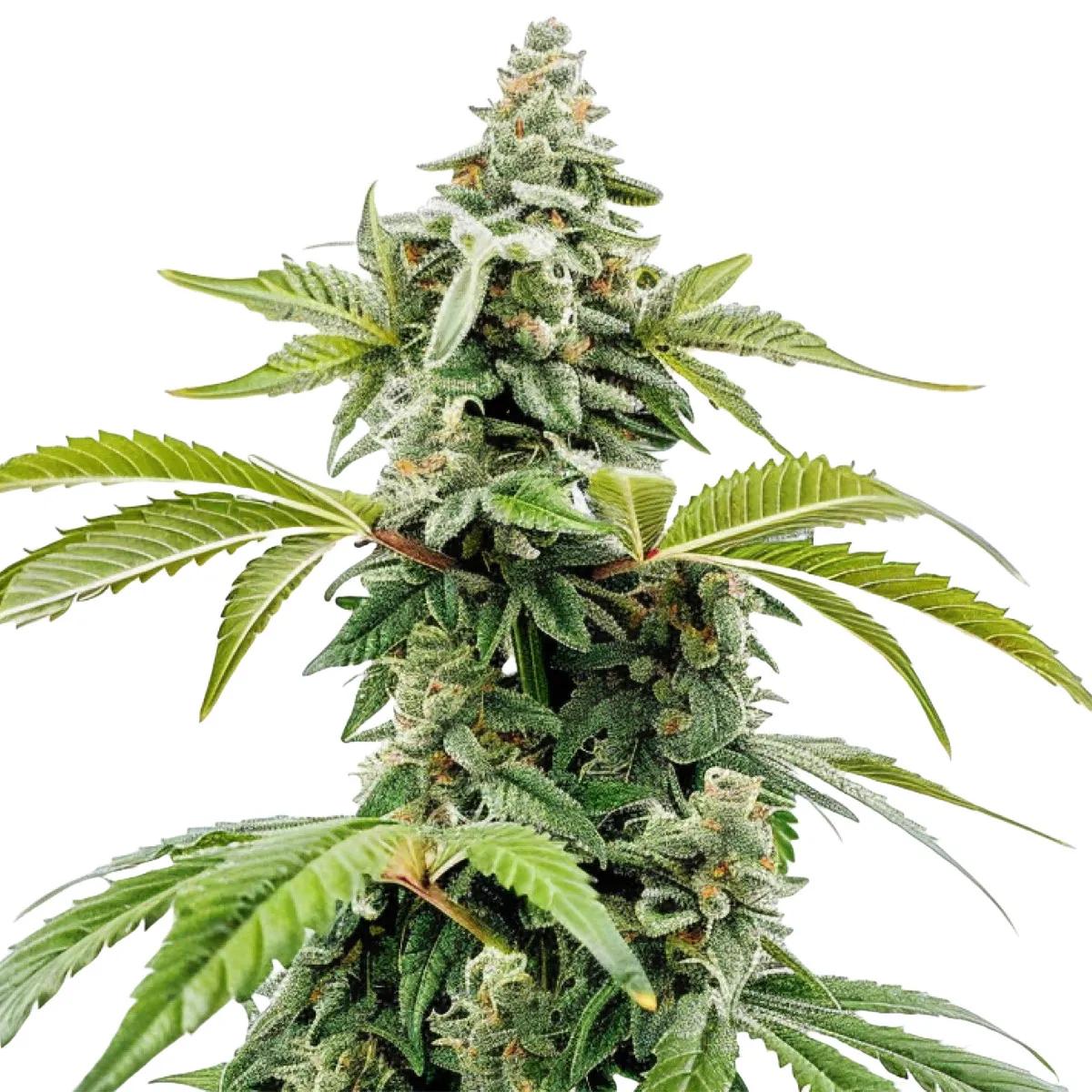
Big Bang Autoflowering develops thick, candle-shaped buds that are absolutely riddled with orange stigmas (pistils) and coated in a dense layer of trichomes. When you hold a dried bud up to the light, the resin glands catch it like frost on glass. The structure is tight and compact — not airy or loose, which makes trimming relatively straightforward.
Now, the honest limitation you need to hear: this strain stinks. The Skunk heritage is not subtle. Once she enters flower, the smell will fill your entire grow space and then some. We're not talking about a pleasant background aroma — we're talking about the kind of smell that seeps through doors and into hallways. Check your carbon filter is properly seated and your extraction fan is pulling enough air before she hits week 2 of flower. If you're growing in a shared building, take this seriously.
The cured flower produces a smoke that expands noticeably in the lungs. Take a gentle first draw rather than a full rip, or you'll be coughing for a solid minute. That expansion is actually a sign of well-developed trichome coverage and resin content — it's a quality indicator, not a flaw. But it does catch people off guard the first time.
How to Grow Big Bang Autoflowering Seeds
- Germinate your Big Bang Autoflowering seeds using the paper towel method or directly in a small pot of moist, light soil mix. Taproots typically emerge within 24-72 hours.
- Transplant seedlings into their final container as early as possible — autoflowers don't love being repotted, so moving them once into a 7-11 litre pot minimises root stress. Fabric pots work well for the bushy structure.
- Set your indoor light schedule to 18 hours on, 6 hours off from day one. Some growers run 20/4 for extra growth. Big Bang Autoflowering doesn't need a light-cycle change to trigger flowering — she'll begin on her own around weeks 3-4 from seed.
- Keep feeding light during the vegetative stage. These are compact plants that don't need heavy nitrogen doses. Switch to a bloom nutrient once you see the first pistils forming.
- Monitor humidity closely during weeks 3-5 of flower. The dense, candle-shaped bud structure can trap moisture, so aim for 40-50% relative humidity to avoid mould.
- Install or check your carbon filter before flowering begins. The Skunk-dominant terpene profile produces an intense, penetrating smell that standard ventilation won't contain.
- For outdoor grows, plant after the last frost and keep an eye on overnight temperatures. Big Bang Autoflowering tolerates cool conditions but will stop flowering if temperatures drop below 10C.
- Harvest when approximately 70-80% of trichomes have turned milky white under a jeweller's loupe. With a 5-6 week flowering period, expect to harvest around 8-10 weeks from seed in total.
SOG Setup Tips for Big Bang Autoflowering
Big Bang Autoflowering was practically designed for Sea of Green. Her short, bushy growth pattern means you can fit 9-16 plants per square metre without them competing aggressively for light. In a SOG configuration, each plant stays small but contributes its share to that 700-800g/m2 total yield. The key is uniformity — because these are feminised autoflowering seeds, every plant follows roughly the same timeline, so your canopy stays even.
Use identical pot sizes (7-litre is the sweet spot for SOG), start all seeds at the same time, and keep your light height consistent. The bushy lateral growth means minimal training is needed — you can let Big Bang Autoflowering do her thing naturally and still end up with a flat, productive canopy. Low-stress training (LST) with gentle tie-downs can help if any individual plant stretches taller than the rest, but avoid topping or high-stress techniques on autoflowers. The short life cycle doesn't leave enough recovery time.
Frequently Asked Questions
How long does Big Bang Autoflowering take from seed to harvest?
Around 8-10 weeks total. The vegetative phase lasts roughly 3-4 weeks before she begins flowering automatically, and the flowering period itself is 5-6 weeks. No light schedule change needed.
Can I grow Big Bang Autoflowering outdoors in the UK or northern Europe?
Yes, and she's one of the better choices for it. Big Bang Autoflowering tolerates temperatures down to 10C and her fast life cycle means you can harvest before autumn weather turns nasty. Some growers manage 2 outdoor runs per season by starting the first batch in late April.
What yield can I expect from Big Bang Autoflowering?
Indoors in a SOG setup: up to 700-800g/m2. Outdoors: approximately 45g per plant. Indoor yields depend heavily on lighting quality and plant density — 9-16 plants per square metre is the target range for SOG.
Does Big Bang Autoflowering smell a lot during flowering?
Absolutely. The Skunk genetics make this one of the more pungent autoflowers you can grow. A properly fitted carbon filter and adequate extraction are not optional — she will fill your entire space with a strong, unmistakable Skunk aroma from about week 2 of flower onwards.
Is Big Bang Autoflowering good for beginner growers?
She's one of the best beginner autoflowers available. No light schedule management, strong resistance to temperature fluctuations, and a forgiving bushy structure that doesn't need training. The only thing beginners need to plan for is smell control.
Do I need to change the light cycle to trigger flowering?
No. Big Bang Autoflowering flowers based on age, not light cycle. Keep her on 18/6 or 20/4 from seed to harvest. She'll begin flowering automatically around weeks 3-4.
Can I top or train Big Bang Autoflowering plants?
Stick to low-stress training (LST) only. Topping or other high-stress techniques aren't recommended for autoflowers because the short life cycle doesn't allow enough recovery time. Her natural bushy shape is already well-suited for an even canopy.
Last updated: April 2026
Related products




You might also like


Medical disclaimer. This content is for informational purposes only and does not constitute medical advice. Consult a qualified healthcare provider before use of any substance.