
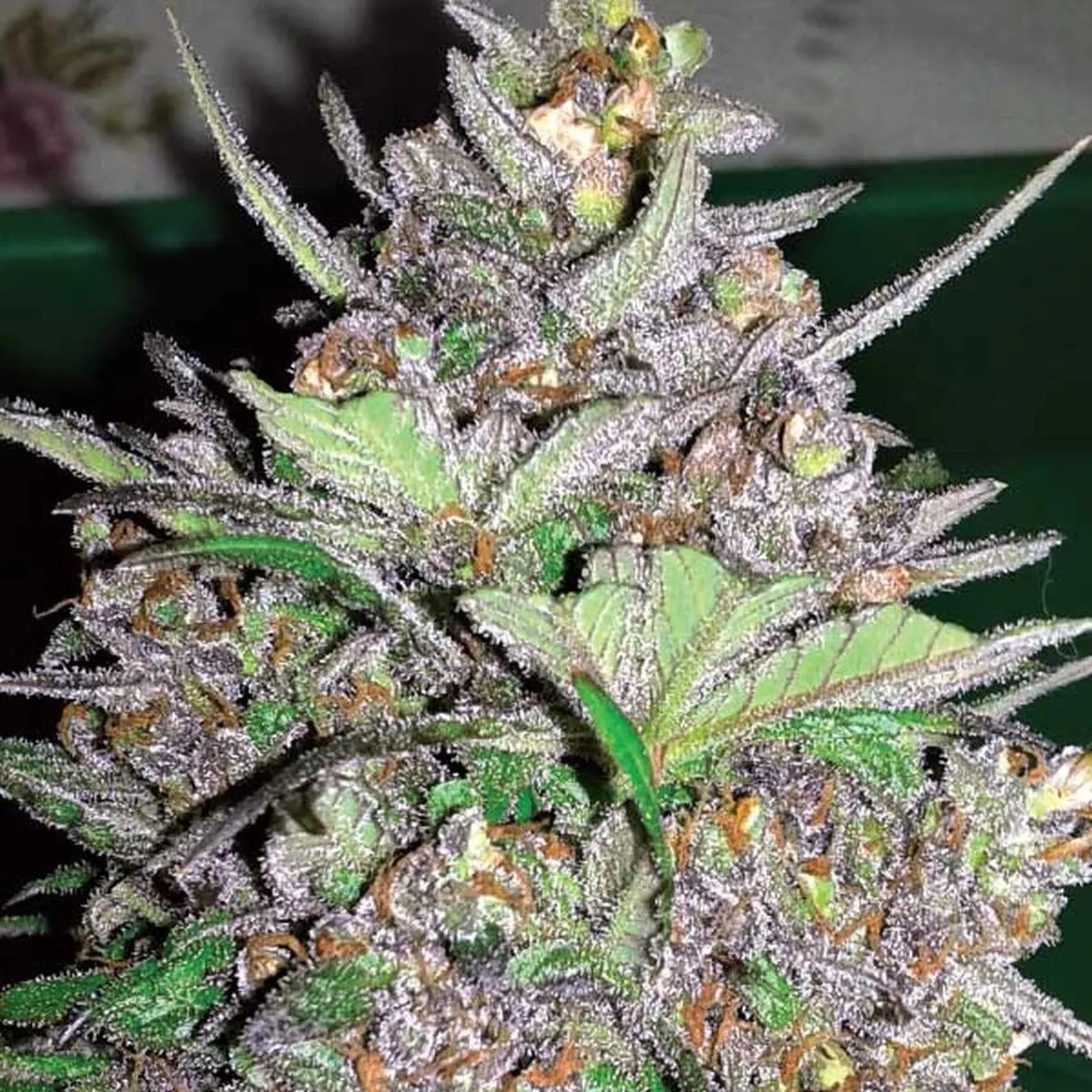
Violet Kush Auto Cannabis Seeds by Garden of Green
Violet Kush Auto is an indica-dominant autoflowering cannabis seed that delivers stunning purple buds in just 9 weeks from germination. Bred by Garden of Green from Hindu Kush, Purple Afghani, and ruderalis genetics, this strain combines knockout bag appeal with a sweet grape-and-earth flavour profile and 17–20% THC. If you want a low-maintenance grow that looks as good as it smokes, this is the one.
Pack Sizes
| Pack | Seeds | SKU |
|---|---|---|
| 3-pack | 3 feminised autoflower seeds | CSGG0081 |
| 5-pack | 5 feminised autoflower seeds | CSGG0082 |
Go with the 5-pack if you want to pick the best phenotypes — you'll likely see some variation in purple intensity between plants, and having a few extras gives you room to select your favourite.
Violet Kush Auto Strain Genetics and Lineage
Violet Kush Auto descends from three parent lines that each bring something specific to the table. Hindu Kush provides the classic indica structure — compact, sturdy, resin-heavy. Purple Afghani introduces the purple pigmentation and that grape-forward sweetness. Ruderalis adds the autoflowering trait, stripping away photoperiod dependence so the plant flowers on its own internal clock regardless of light schedule.
The result is an indica-heavy hybrid that stays short and manageable. We'd compare it loosely to a Purple Kush auto, but the Afghan parentage gives Violet Kush Auto a noticeably earthier, more complex nose. If you've grown Hindu Kush crosses before, you'll recognise the tight node spacing and chunky calyx structure — just with a violet colour wash that makes your grow space look like a boutique dispensary.
| Specification | Detail |
|---|---|
| Seed bank | Garden of Green |
| Genetics | Hindu Kush x Purple Afghani x Ruderalis |
| Type | Feminised autoflower |
| Indica / Sativa | Indica-dominant |
| THC | 17–20% |
| Seed to harvest | Approximately 9 weeks |
| Indoor yield | 350–400 g/m² |
| Outdoor yield | Up to 225 g/plant |
| Suitable environments | Indoor, outdoor, greenhouse |
Growing Violet Kush Auto Seeds — What to Expect
Violet Kush Auto is one of the most forgiving autoflowers we carry. The ruderalis backbone means it doesn't need a light-cycle switch to start flowering — just plant, water, feed, and wait roughly 9 weeks. That simplicity makes it a strong pick if you're running your first autoflower grow or you want a quick turnaround between harvests.
Indoors, expect yields of 350–400 g/m² under a standard 18/6 or 20/4 light schedule. The plants stay compact enough for a small tent — an 80x80 cm setup handles 2–4 plants comfortably. Outdoors, you're looking at up to 225 g per plant, and because it's an auto, you can start seeds in spring and harvest well before autumn weather becomes a problem. Greenhouse growers get the best of both worlds: natural light plus climate protection.
The purple colouring typically shows up during the flowering phase. Cooler night temperatures (around 15–18°C) tend to bring out more intense violet and purple hues, though the genetics are strong enough that most phenotypes will show at least some colour regardless. According to research on far-red light treatments in cannabis cultivation, end-of-day far-red exposure can also influence yield and quality in high-THC lines (PMC12092679) — worth experimenting with if you're running LEDs that offer far-red spectrum control.
One honest limitation: the 9-week timeline is tight, and autos don't give you recovery time if you stress them early. Overwatering in the first two weeks or transplanting too late can stunt growth permanently. We'd recommend starting seeds directly in their final pot — 11–15 litres is the sweet spot — and keeping watering light until the roots establish. Soaking seeds for 12–24 hours before planting can improve germination rates, particularly with older stock.
Violet Kush Auto Flavour, Aroma, and Effects
Crack open a cured jar of Violet Kush Auto and you'll get a rich, sweet earthiness that fills the room. The dominant notes are sweet grape with a subtle sour undertone and a base of damp soil — think overripe fruit in a forest clearing. When smoked or vaped, the grape flavour comes forward more, with the earthiness settling into the exhale. It's an intensely flavourful smoke that doesn't need a lot of terp-chasing to appreciate.
At 17–20% THC, Violet Kush Auto sits in a moderate-to-strong range. It won't flatten experienced users, but it delivers a full-bodied effect that starts with a gentle mental warmth before settling into a deep, soothing body sensation. The indica dominance is obvious here — after a few hits, you'll feel the weight in your limbs and the pull towards the sofa. Later in the session, that heaviness tends to drift into sleepiness. This is an evening strain through and through.
Many users and reviewers describe the effects as well-suited to winding down before bed. According to a review in Cannabis sativa research trends, challenges, and new perspectives (PMC8605354), cannabis research continues to explore the varied aspects of traditional herbal use alongside modern applications — and indica-heavy cultivars like Violet Kush Auto have a long history of being selected specifically for their relaxing properties. Traditionally, Hindu Kush and Afghan landrace genetics have been prized for exactly this kind of calming body effect.
The one thing to flag: the sedation can creep up on you. If you're planning a social evening, keep the dose light. A hit or two works for a mellow hangout; three or four and you're cancelling plans.
Violet Kush Auto vs Other Purple Autoflowers
If you're specifically chasing purple genetics in auto form, you've got options. Here's how Violet Kush Auto stacks up against two other popular choices we carry.
| Strain | THC | Seed to harvest | Indoor yield | Dominant effect |
|---|---|---|---|---|
| Violet Kush Auto (Garden of Green) | 17–20% | ~9 weeks | 350–400 g/m² | Relaxing body high, sleepy |
| Purple Punch Auto | 18–22% | 9–10 weeks | 400–500 g/m² | Heavy sedation, dessert flavour |
| Gorilla Cookies Auto | 22–27% | 10–11 weeks | 500–600 g/m² | Potent hybrid, less colour |
Violet Kush Auto wins on speed and simplicity. It's the quickest of the three to finish, the most compact, and arguably the easiest to grow. Purple Punch Auto yields more and hits slightly harder, but takes an extra week. Gorilla Cookies Auto is a different beast entirely — much higher THC, bigger plants, but you're trading the purple aesthetics for raw potency. We'd pick Violet Kush Auto for a first-time autoflower grow or a quick winter run where space and time are limited.
Complete your setup with a propagation kit for faster, more reliable germination. If you're growing indoors, pair these seeds with a carbon filter and extraction fan — Violet Kush Auto's grape-and-earth aroma is lovely in a jar, less lovely leaking into your hallway. A basic NPK nutrient set designed for autoflowers will also help you hit that 350–400 g/m² target without overfeeding.
How to Grow Violet Kush Auto Seeds
- Soak seeds in room-temperature water for 12–24 hours until they sink. This softens the shell and speeds up germination.
- Plant each seed directly into its final container — 11 to 15 litres of light, airy soil or coco-perlite mix. Autoflowers don't recover well from transplant shock, so skip the seedling pots.
- Keep soil moist but not waterlogged during the seedling stage. A spray bottle works better than a watering can for the first 10 days.
- Run lights at 18/6 or 20/4 from seed to harvest. Violet Kush Auto doesn't need a light-cycle change to trigger flowering — it'll start on its own around week 3–4.
- Feed lightly with an autoflower-specific nutrient schedule. Start at half the recommended dose and increase only if the plant looks hungry. Burnt leaf tips mean you've gone too far.
- Watch for purple colouring to develop during flowering. Dropping night temperatures to 15–18°C can intensify the hues, but don't go below 12°C or you'll stress the plant.
- Harvest around week 9 from germination when trichomes are mostly milky with some amber. Use a jeweller's loupe or USB microscope to check — don't guess by eye.
- Dry in a dark room at 18–21°C and 55–60% humidity for 7–10 days, then cure in airtight jars for at least 2 weeks. The grape flavour deepens significantly with proper curing.
Frequently Asked Questions
Does Violet Kush Auto always turn purple?
Most phenotypes show at least some purple colouring during flowering, but intensity varies. Cooler night temperatures (15–18°C) encourage deeper violet hues. In consistently warm environments, you may see more green with purple-tinged calyxes rather than full-plant colour.
How much does Violet Kush Auto yield indoors?
Expect 350–400 g/m² indoors under an 18/6 or 20/4 light schedule. Hitting the upper end of that range requires good light intensity, proper feeding, and avoiding stress during the first two weeks of growth.
Is Violet Kush Auto good for beginners?
Yes — it's one of the more forgiving autos we carry. Low maintenance, compact size, and a 9-week seed-to-harvest timeline make it straightforward. Just plant directly in the final pot and avoid overwatering early on.
What does Violet Kush Auto taste like?
Sweet grape is the dominant note, backed by earthy undertones and a slight sourness on the exhale. The flavour is richer after a proper 2-week cure in glass jars. Vaped at lower temperatures, the grape comes through even more clearly.
Can I grow Violet Kush Auto outdoors?
Absolutely. Outdoor plants can yield up to 225 g each. Because it's an autoflower, you can start seeds in spring and harvest before autumn. It also does well in greenhouses, where you get natural light with weather protection.
How potent is Violet Kush Auto?
THC sits at 17–20%. It's not the strongest strain on paper, but the indica-heavy effects are pronounced — a full body relaxation that builds into sleepiness. Experienced users may want to pair it with a more stimulating strain for daytime use.
Should I buy the 3-pack or 5-pack?
The 5-pack gives you room to select the best phenotypes — purple intensity and structure can vary between plants. If you're just running a single plant to test the genetics, the 3-pack is fine.
Last updated: April 2026
Related products


You might also like
Medical disclaimer. This content is for informational purposes only and does not constitute medical advice. Consult a qualified healthcare provider before use of any substance.