

Marmalate
Cannabis seeds
by Delicious Seeds
Marmalate Feminized Seeds — Critical Mass x Lavender by Delicious Seeds
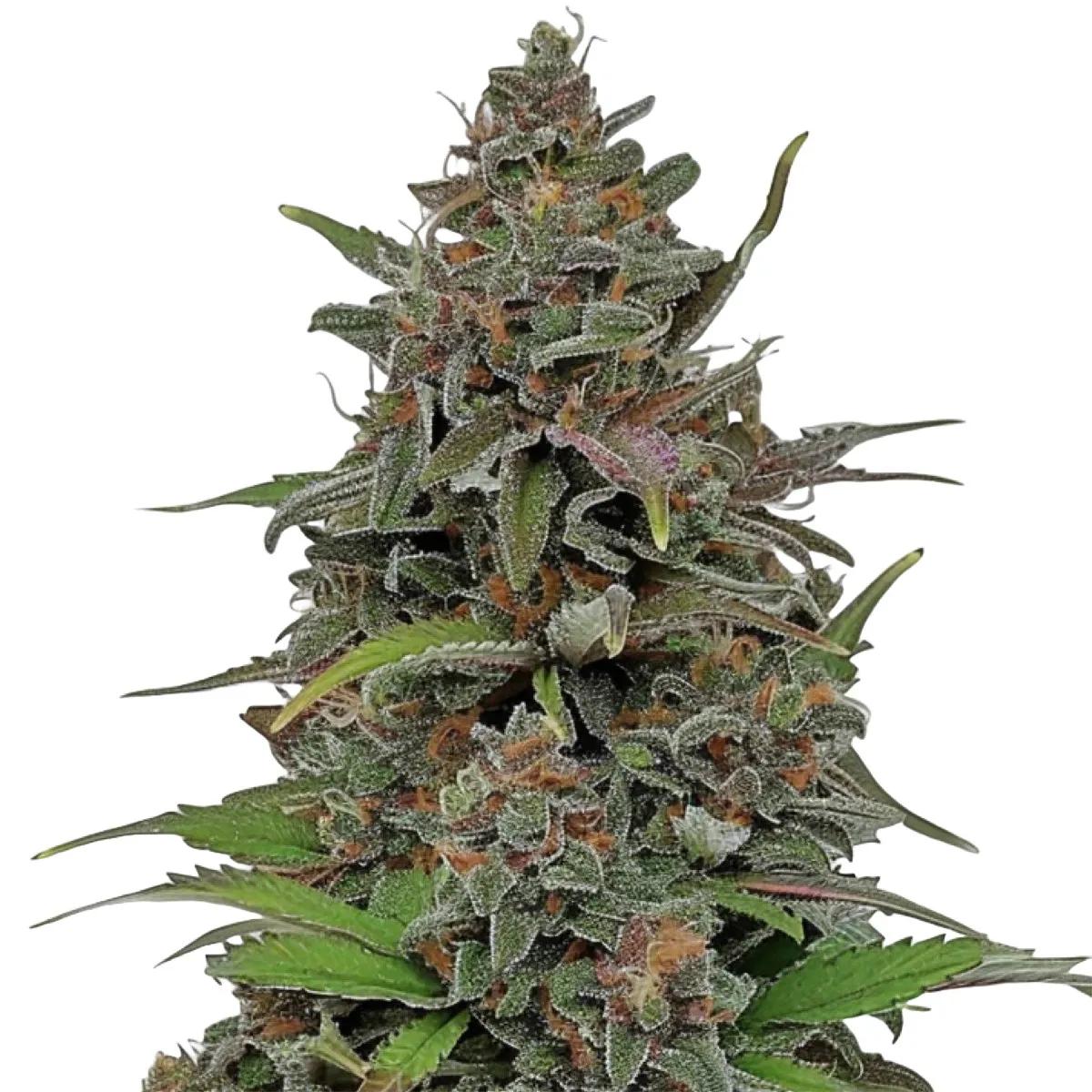
Marmalate is a feminized cannabis seed from Delicious Seeds that crosses Critical Mass with Lavender to produce a 70% Indica / 30% Sativa hybrid built for speed, bulk, and flavour. With a flowering window of just 50–55 days and indoor yields pushing 350–500g/m², this strain does the rare thing of finishing fast without sacrificing weight. The 21% THC content and blueberry-forward terpene profile round it out — dense, frosty buds that smell like a punnet of berries left in the sun.
Pack Size
Marmalate feminized seeds come in a pack of 3 seeds. You may see two listings — both contain the same 3-seed pack. One may be a promotional SKU, but the contents are identical. Three feminized Marmalate seeds per order, either way.
Why Marmalate Feminized Seeds Deserve a Spot in Your Grow Room
There are strains that yield well, strains that finish fast, and strains that taste brilliant. Marmalate manages all three without asking you to compromise. That's the advantage of crossing two proven parents — Critical Mass brings the sheer weight (this is one of the heaviest-yielding Indica-dominant plants around), and Lavender contributes the complex terpene profile with those distinctive blueberry and floral notes that hit you the moment you open the jar.
We've seen growers chase exotic genetics and end up with plants that need babysitting through every stage. Marmalate goes the other way. The 70/30 Indica-Sativa split keeps plants compact and manageable — no wild stretching, no support nightmares. Solid mould and pest resistance means you're not spraying and praying every other day. If you've grown a photoperiod strain before and want something that actually rewards the effort, this is a strong pick. And if you haven't grown before, the forgiving nature of this cross makes it a genuinely good first run.
The one honest limitation: 350–500g/m² is the indoor range, and hitting the upper end requires proper lighting, nutrition, and environment control. Don't expect 500g under a single CFL in a cupboard. Give it a decent LED or HPS setup in an 80x80 tent or larger, feed it properly, and the plant will do its part. Outdoors, growers have reported yields up to 600g/m² in warm, dry climates — but that's weather-dependent, obviously.
Flavour and Aroma of Marmalate Feminized Seeds
The terpene profile on Marmalate is where Lavender's genetics really shine. Expect a dominant blueberry sweetness on the nose — not artificial, more like fresh berries with a floral undertone that deepens as the buds cure. There's a subtle earthiness underneath, courtesy of the Critical Mass side, that stops it from being one-note. When you break a bud open, the room fills up. Your carbon filter earns its keep with this one.
The flavour follows the nose: sweet, fruity, with that distinctive berry-jam character that gives the strain its name. If you've grown Lavender-cross strains before, you'll recognise the profile immediately. If you haven't, you're in for a treat — this is the kind of bud that people comment on before you've even told them what it is.
Growing Marmalate Feminized Seeds — What to Expect
Marmalate feminized seeds produce compact, Indica-dominant plants that stay manageable in smaller indoor spaces. The 50–55 day flowering time is genuinely quick for a photoperiod strain — most comparable Indica hybrids sit closer to 60–65 days, so you're shaving a full week or more off your cycle. That adds up over multiple runs.
The plant structure is typical of a heavy Indica cross: short internodes, thick stems, and dense bud sites that stack up along the main cola and side branches. LST (low-stress training) works well here if you want to open up the canopy and push light deeper. SOG setups also suit Marmalate — the compact growth pattern means you can pack more plants per square metre without them fighting for space.
Compared to something like Northern Lights (another classic fast-finishing Indica), Marmalate trades a touch of simplicity for a more interesting terpene profile. Northern Lights is the reliable workhorse; Marmalate is the reliable workhorse that also smells fantastic. If flavour matters to you as much as yield, Marmalate is the better pick.
| Specification | Detail |
|---|---|
| Seed Bank | Delicious Seeds |
| Genetics | Critical Mass x Lavender |
| Type | Feminized Photoperiod |
| Indica / Sativa | 70% Indica / 30% Sativa |
| THC Content | 21% |
| Flowering Time | 50–55 days |
| Indoor Yield | 350–500g/m² |
| Outdoor Yield | Up to 600g/m² |
| Mould Resistance | Good |
| Pest Resistance | Good |
| Seeds Per Pack | 3 feminized seeds |
Marmalate Feminized Seeds — Indoor vs. Outdoor Growing
Indoors, Marmalate is straightforward. The compact structure suits tents from 80x80cm upward, and the 50–55 day flowering period means you can run more cycles per year than with slower-finishing strains. Keep humidity below 50% during late flower — those dense buds can trap moisture if airflow isn't dialled in. A decent extraction fan and oscillating clip fan handle this easily.
| Environment | Yield Range | Flowering Time | Key Consideration |
|---|---|---|---|
| Indoor (tent/room) | 350–500g/m² | 50–55 days | Humidity control in late flower |
| Outdoor (warm climate) | Up to 600g/m² | Late September harvest | Needs dry autumn weather |
| Greenhouse | 400–550g/m² (estimated) | 50–55 days from flip | Best of both — light + protection |
Outdoors, the mould resistance is a genuine advantage. Critical Mass on its own can be a mould magnet because of the sheer bud density — Lavender's genetics seem to tighten up the calyx structure just enough to let air through. That said, if you're growing in a damp northern European autumn, don't push your luck. Harvest when the trichomes say so, not when you're hoping for an extra 10g.
Running Marmalate in a tent? A complete grow kit with LED lighting, carbon filter, and extraction fan gives you the environment this strain needs to hit the upper yield range. Pair with fabric pots and a quality organic soil mix for the best expression of that blueberry terpene profile.
How to Grow Marmalate Feminized Seeds
- Germinate your Marmalate feminized seeds using the paper towel method or directly in a starter plug. Keep the temperature around 22–25°C and the medium moist but not waterlogged. Taproots typically appear within 24–72 hours.
- Transplant seedlings into their final containers once the first set of true leaves has developed. Fabric pots (11–15 litre) work well for indoor grows — they promote air pruning and prevent root circling.
- Veg for 3–4 weeks under 18/6 light. Marmalate stays compact, so you can veg a bit longer if you want bigger plants without worrying about them outgrowing a standard tent. Apply LST during this stage to open up the canopy.
- Flip to 12/12 to trigger flowering. You'll see pistils within the first week. From here, the 50–55 day countdown begins.
- During weeks 3–5 of flower, increase phosphorus and potassium in your feed. This is when bud density really builds. Watch for signs of overfeeding — Marmalate isn't a particularly heavy feeder compared to some Indica hybrids.
- In the final 10 days, flush with plain water to clear residual nutrients. This sharpens the blueberry flavour and smooths out the smoke.
- Harvest when 70–80% of trichomes are milky with 10–20% amber. Dry in a dark room at 18–20°C and 55–60% humidity for 7–10 days, then cure in glass jars for a minimum of two weeks. The terpene profile improves noticeably with a proper cure.
Frequently Asked Questions
How long does Marmalate take to flower?
Marmalate feminized seeds flower in 50–55 days from the light flip to 12/12. That's roughly a week faster than most Indica-dominant hybrids in the same yield bracket.
What yield can I expect from Marmalate indoors?
Indoor yields range from 350–500g/m² depending on your setup. Hitting the upper end requires good lighting (LED or HPS), proper nutrition, and adequate airflow. Outdoors, yields can reach 600g/m² in favourable conditions.
Is Marmalate suitable for first-time growers?
Yes. The compact growth pattern, solid mould and pest resistance, and short flowering time make Marmalate one of the more forgiving photoperiod strains. You don't need advanced techniques to get a decent harvest.
What does Marmalate smell and taste like?
Dominant blueberry sweetness with floral undertones from the Lavender parent. There's a subtle earthiness underneath from Critical Mass. The flavour intensifies with a proper two-week cure in glass jars.
How does Marmalate compare to Northern Lights?
Both are fast-finishing, compact Indica-dominant strains. Northern Lights is simpler to grow and more uniform, but Marmalate offers a more complex terpene profile and comparable yields. If flavour is a priority, Marmalate has the edge.
How many seeds come in a pack of Marmalate?
Each pack contains 3 feminized seeds. Both SKU variants listed are identical 3-seed packs — one may be a promotional listing, but the contents are the same.
Does Marmalate need a lot of vertical space?
No. The 70/30 Indica-Sativa split keeps plants short and bushy. Marmalate rarely stretches beyond 100–120cm indoors, making it well suited to tents with limited headroom.
Last updated: April 2026
Related products







You might also like




Medical disclaimer. This content is for informational purposes only and does not constitute medical advice. Consult a qualified healthcare provider before use of any substance.