
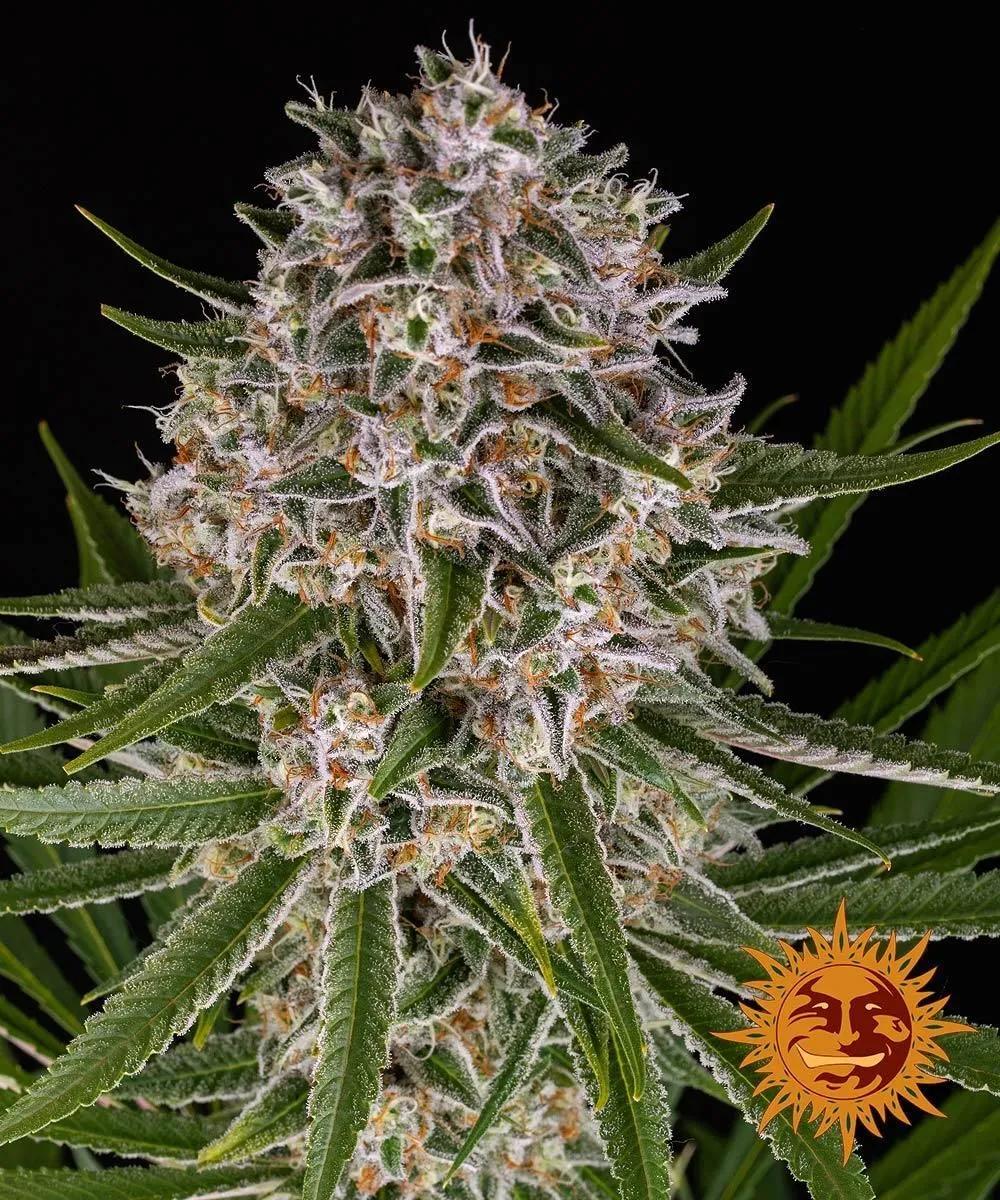
Lemon Haze
Cannabis seeds
by Barney's Farm
Lemon Haze Auto Cannabis Seeds by Barney's Farm
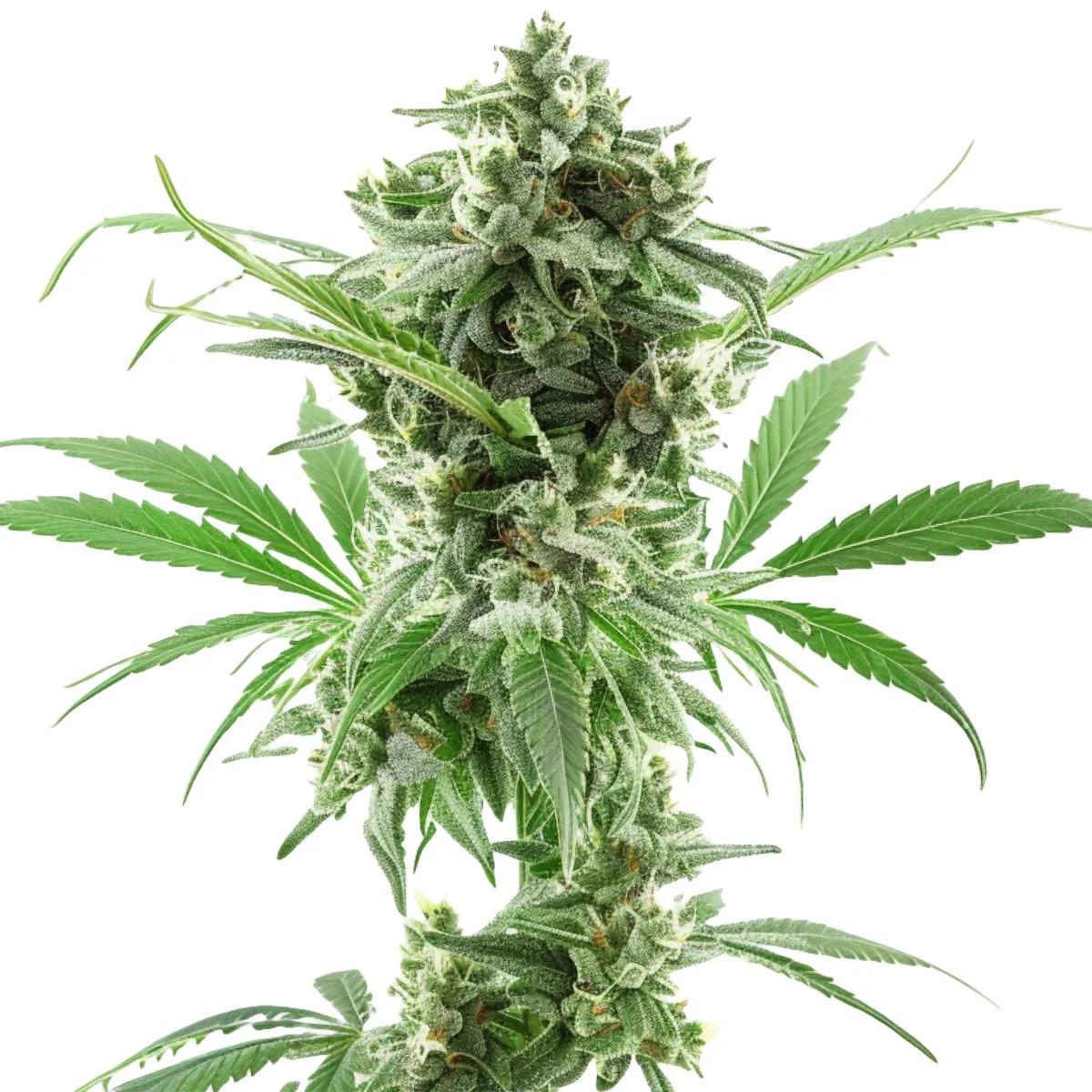
Lemon Haze Auto is an autoflowering cannabis seed from Barney's Farm that delivers genuine Haze quality — bold citrus aromas, uplifting sativa effects, and up to 22% THC — without the 14-week flowering marathon that photoperiod Haze strains demand. Built from a cross of original Lemon Haze and Barney's proprietary Super Auto #1, this 70% sativa hybrid goes from germination to harvest in roughly 65–70 days. That's proper Haze buds in express time, from a seed bank that's been winning Cannabis Cups for over two decades.
Which Lemon Haze Auto Pack Size Should You Pick?
| Pack | Seeds | Best For |
|---|---|---|
| 3-pack | 3 feminised autoflower seeds | A single tent run or a first grow with this strain — enough to find a good phenotype without overcommitting |
| 5-pack | 5 feminised autoflower seeds | Better value per seed, and gives you room to select the best performers or run a full 1m² canopy |
Both packs contain feminised autoflower seeds, so every seed should produce a flowering female plant. No sexing, no light-schedule changes. If you're running a 60x60 or 80x80 tent, the 3-pack fills the space nicely. Got a 100x100 or larger? Go with the 5-pack.
Lemon Haze Auto Grow Specifications
| Specification | Detail |
|---|---|
| Seed Bank | Barney's Farm |
| Seed Type | Feminised Autoflower |
| Genetics | Lemon Haze x Super Auto #1 |
| Sativa / Indica | 70% Sativa / 30% Indica |
| THC | Up to 22% |
| Seed to Harvest | 65–70 days from germination |
| Indoor Height | 90–110 cm |
| Outdoor Height | Up to 120 cm |
| Indoor Yield | Up to 550 g/m² |
| Outdoor Yield | Up to 250 g/plant |
| Available Packs | 3 seeds / 5 seeds |
Complete your setup: pair these Lemon Haze Auto seeds with a propagation kit and a quality grow tent to give seedlings the best possible start. If you're growing indoors, a carbon filter is non-optional once these plants start flowering — the citrus terpenes are loud.
Why Grow Lemon Haze Auto Seeds?
Classic Haze strains are legendary for a reason — those soaring, cerebral, citrus-drenched effects are hard to beat. The problem? Most photoperiod Haze varieties flower for 12–14 weeks, stretch to 2 metres indoors, and demand experienced light-schedule management. That's a serious commitment, especially if you're working with a small tent or a balcony.
Lemon Haze Auto solves every one of those issues. Barney's Farm crossed their original Lemon Haze mother — the same genetics behind multiple Cannabis Cup wins — with Super Auto #1, an in-house ruderalis hybrid bred specifically for vigour and resin production. The result is a plant that stays between 90 and 110 cm indoors, flowers automatically regardless of light cycle, and still pushes up to 550 g/m² under good conditions. That yield figure isn't a typo. Modern autos have come a long way from the wispy, low-THC plants of ten years ago.
The one honest limitation: autoflowers don't give you the luxury of an extended vegetative phase. If you stress a plant early — overwater it, let the pH drift, or transplant roughly — you can't just add an extra week of veg to recover. Get the environment dialled in from day one. Use light, airy soil or coco, keep humidity around 60–70% for seedlings, and don't overfeed. Lemon Haze Auto is forgiving by auto standards, but she rewards growers who pay attention during the first two weeks.
Aroma, Flavour, and Effects of Lemon Haze Auto
Crack open a cured jar of Lemon Haze Auto and the first thing that hits you is ripe lemon zest — sharp, sweet, and unmistakably Haze. Underneath, there's a subtle earthy base that grounds the citrus and adds depth. If you've ever smelled a proper Lemon Haze photoperiod, you'll recognise the profile immediately. Barney's Farm haven't diluted it.
The flavour follows the nose. On inhale, it's sweet citrus with a slight tang; on exhale, you get those earthy, almost herbal undertones. It's the kind of smoke that makes you want to take another hit just for the taste.
With up to 22% THC and a 70/30 sativa-dominant genetic split, Lemon Haze Auto leans heavily toward uplifting, energising effects. According to Healthline's strain guide, sativa-dominant varieties like Lemon Haze are traditionally associated with mood-boosting and energising qualities (Healthline, "12 Sativa Strains for Energy, Focus, Creativity"). According to research published in PMC, the terpene profile of cannabis — including limonene, commonly found in citrus-forward strains — may contribute to the overall character of effects through the entourage effect (PMC, "The Cannabis Terpenes," 2020). This is a daytime strain through and through.
One thing to watch: at 22% THC, this isn't a mild smoke. If you're newer to cannabis or have a lower tolerance, take it slow. The sativa lean means the onset can feel quite heady before you've gauged the full intensity.
How to Grow Lemon Haze Auto Seeds
- Germinate your seeds. Place seeds between damp paper towels on a plate, cover with a second plate, and keep in a warm spot (20–25°C). Taproots typically emerge within 24–72 hours. Alternatively, sow directly into a small pot of moist, light soil or a jiffy pellet — autos prefer minimal transplanting.
- Plant into final containers early. Once the taproot is 1–2 cm long, plant it 1 cm deep in your final pot. For autos, 11–15 litre fabric pots work well. Going straight to the final container avoids transplant shock, which matters more with autoflowers since you can't extend veg to compensate.
- Provide 18–20 hours of light daily. Autoflowers don't need a 12/12 flip. Most growers run 18/6 or 20/4 from seed to harvest. Use a full-spectrum LED — Lemon Haze Auto responds well to strong light throughout her cycle.
- Keep feeding light during early veg. Seedlings need very little nutrition. Start with quarter-strength nutrients around week 2, building to full strength by week 4. Lemon Haze Auto is a vigorous grower with strong branching, but she'll show nutrient burn quickly if you push too hard too early.
- Watch for the stretch. Around weeks 3–4, plants transition to flower automatically. Expect a noticeable stretch — sativa-dominant autos can double in height during this phase. If headroom is tight, consider low-stress training (LST) early on to keep the canopy even and maximise light penetration.
- Increase airflow during flowering. As buds develop, Lemon Haze Auto plants get heavy with elongated, resinous flowers. Good air circulation prevents mould and helps those terpenes develop fully. A small oscillating fan inside the tent does the job.
- Harvest around day 65–70. Check trichomes with a jeweller's loupe — mostly milky with a few amber heads is the sweet spot for a balanced, uplifting effect. Chop, dry slowly at 18–20°C and 55–60% humidity for 7–10 days, then cure in glass jars for at least two weeks. The lemon terps really pop after a proper cure.
Lemon Haze Auto vs Photoperiod Lemon Haze — What's the Difference?
The obvious difference is time. Photoperiod Lemon Haze takes roughly 9–10 weeks of flowering alone, plus 4–6 weeks of veg — that's 13–16 weeks total. Lemon Haze Auto does the lot in 65–70 days from seed. If you're running multiple cycles per year indoors, the auto version lets you fit in an extra harvest or two.
Height is the other big factor. Photoperiod Lemon Haze can easily reach 150–180 cm indoors, demanding tall tents and heavy training. Lemon Haze Auto tops out at 90–110 cm indoors — manageable in an 80x80 tent without breaking out the scrog net (though LST still helps).
Where the photoperiod version wins is in maximum yield potential and the ability to control plant size through veg length. If you've got the space, the time, and the experience, a photoperiod Haze can be a monster producer. But for most home growers — especially those working with limited space or growing outdoors where stealth matters — Lemon Haze Auto is the smarter pick. We'd choose this auto over a photoperiod Haze in any tent under 120 cm tall.
Best Climate and Growing Medium for Lemon Haze Auto
Lemon Haze Auto thrives in a warm, Mediterranean-style climate outdoors — think 20–28°C during the day with moderate humidity. In northern Europe, she'll do well outdoors from late May through August, finishing before autumn rains set in. That short 65–70-day cycle is a genuine advantage for growers in the UK, Netherlands, or Scandinavia where late-season weather turns fast.
Indoors, any well-managed grow room works. Keep daytime temps at 22–26°C, drop a few degrees at night, and maintain relative humidity around 40–50% during late flower to protect those dense buds from mould.
For growing medium, you've got options. Soil with perlite (70/30 mix) is the most forgiving route — good for first-time growers. Coco coir with perlite gives faster growth and bigger yields but demands more attention to watering frequency and nutrient EC. Hydro is possible but overkill for most auto grows. Honestly, a quality organic soil in a 15-litre fabric pot is the path of least resistance with Lemon Haze Auto, and the terps tend to taste better in organic media.
Frequently Asked Questions
How long does Lemon Haze Auto take from seed to harvest?
Roughly 65–70 days from germination. That's the full cycle — no separate veg and flower phases to manage. Under strong light with good nutrition, some phenotypes finish closer to day 65.
What yield can I expect from Lemon Haze Auto indoors?
Barney's Farm rates indoor yields at up to 550 g/m². Realistically, a well-managed 80x80 tent with 3–4 plants under a decent LED should pull 300–400 g/m². Outdoors, expect up to 250 g per plant in a good climate.
Is Lemon Haze Auto good for beginner growers?
Yes — autoflowers remove the complexity of light-schedule management, and Lemon Haze Auto is vigorous with strong branching. The main beginner pitfall is overwatering or overfeeding in the first two weeks. Keep it simple early on and she's very manageable.
How strong is Lemon Haze Auto?
Up to 22% THC with a 70% sativa-dominant profile. That's potent by any standard. The effects lean cerebral and uplifting rather than heavy and sedating. Start with a small amount if your tolerance is low.
What does Lemon Haze Auto smell and taste like?
Sweet, ripe lemon zest dominates, with subtle earthy undertones. The citrus really comes through after a two-week cure in glass jars. During flowering, the plants are aromatic enough to need a carbon filter indoors.
Do I need to change the light cycle for Lemon Haze Auto?
No. Autoflowers flower based on age, not light schedule. Most growers run 18 hours on and 6 hours off from seed to harvest. Some push to 20/4 for extra growth — both work fine.
Can I grow Lemon Haze Auto outdoors in northern Europe?
Absolutely. The 65–70-day cycle means you can germinate in late May and harvest by early August, well before autumn rains. Plants stay under 120 cm outdoors — discreet enough for a balcony or small garden.
What's the best pot size for Lemon Haze Auto?
11–15 litre fabric pots are the sweet spot. Larger pots (20L+) can boost yields slightly but aren't necessary. Plant directly into the final container to avoid transplant shock — autoflowers don't recover from stress as easily as photoperiods.
Last updated: April 2026
Related products



You might also like


Medical disclaimer. This content is for informational purposes only and does not constitute medical advice. Consult a qualified healthcare provider before use of any substance.