
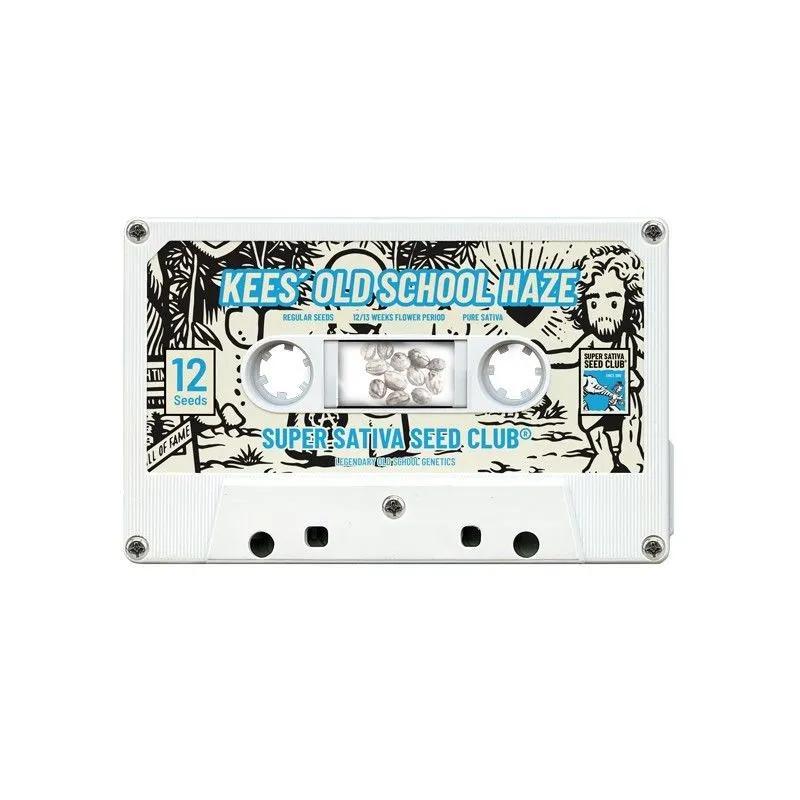
Kees’ Old School Haze
Cannabis seeds
by Super Sativa Seed Club
Kees' Old School Haze Cannabis Seeds — Pure Sativa From a 35-Year Haze Bloodline
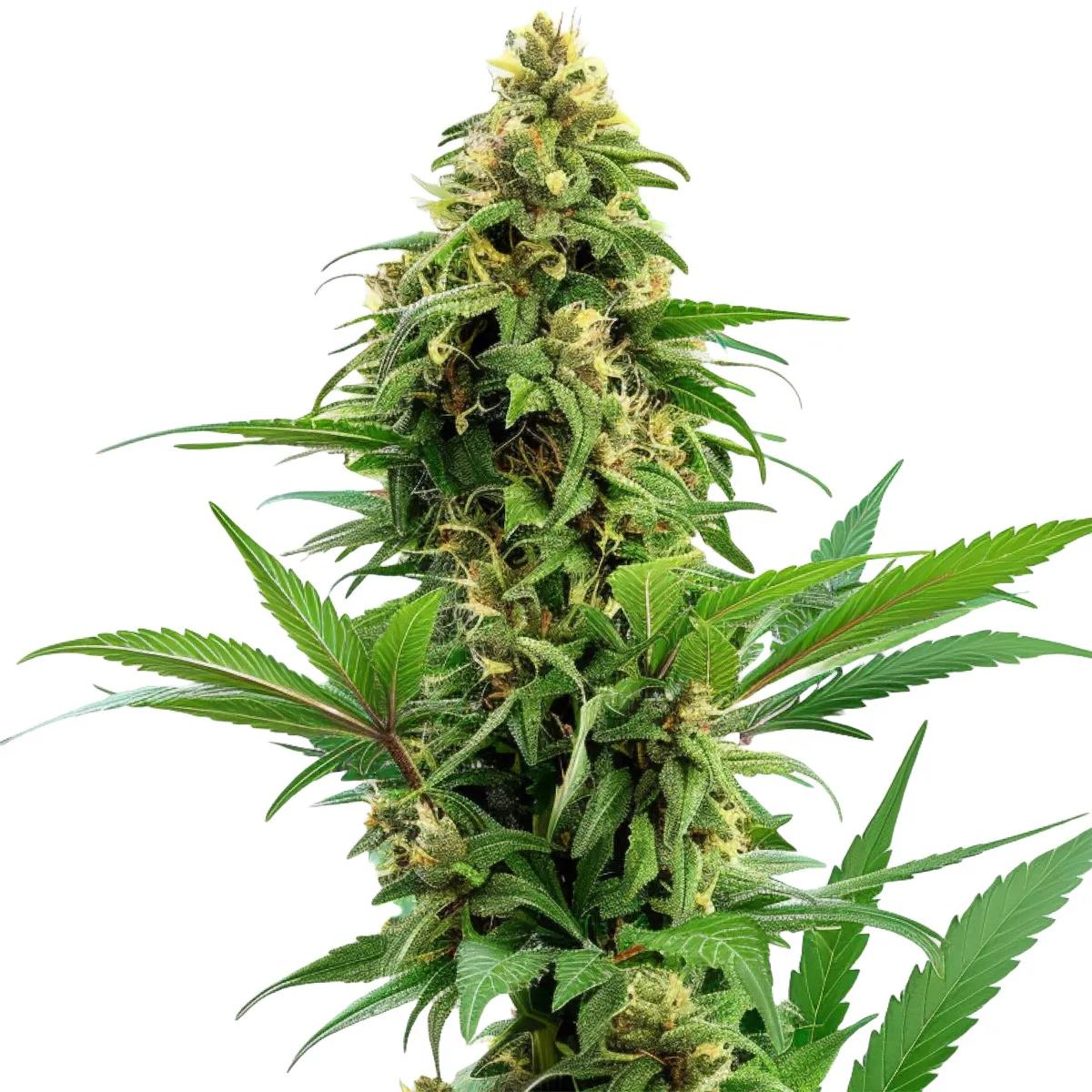
Kees' Old School Haze is a 100% pure sativa cannabis seed variety from Super Sativa Seed Club (SSSC) that preserves the original Haze genetics from the late 1980s. This regular seed pack of 12 delivers an uncut, undiluted Haze experience — no hybridisation, no shortcuts, no modern compromises. If you've been chasing that authentic old-school Haze character and wondered where it went, SSSC bottled it right here.
Why Kees' Old School Haze Seeds Stand Out
Most modern Haze crosses have been bred for speed — shorter flowering, quicker turnaround, easier to manage. That's fine if convenience is your priority. But something gets lost in the process. Kees' Old School Haze goes the opposite direction entirely: SSSC maintained this Haze line for over 35 years without crossing it into indica or autoflower genetics. The result is a thoroughbred sativa that grows tall, stretches hard, and demands your attention for 12–13 weeks of flowering before she's done.
We'd pick this over any modern Haze hybrid if authentic sativa character is what you're after. The trade-off is patience and a bit of growing skill — but the yields are genuinely massive when you get the environment dialled in. This isn't a weekend project strain. It's a commitment. And for growers who appreciate what Haze was before the market watered it down, it's worth every extra week.
Kees' Old School Haze Growing Specifications
| Specification | Detail |
|---|---|
| Seed Bank | Super Sativa Seed Club (SSSC) |
| Seed Type | Regular (non-feminised) |
| Seeds Per Pack | 12 |
| Genetics | 100% Sativa |
| Lineage | 35-year preserved Haze bloodline |
| Flowering Time | 12–13 weeks |
| Ideal Temperature | 25–26°C (77–78°F) constant |
| Yield Potential | Very high (under optimised conditions) |
| Growth Pattern | Tall with heavy lateral branching |
| Flavour Profile | Citrus, dark musk, ammonia undertones |
| SKU | CSSC0015 |
What Kees' Old School Haze Smells and Tastes Like
Open the jar after a proper cure and the first thing that hits you is a dark, musky funk — not sweet, not fruity, but deep and almost acrid in the way that old-school Dutch coffeeshop Haze used to be. There's a citrus sharpness underneath, like lemon peel left in the sun, and then this ammonia-like edge that tells you immediately this isn't some polite modern hybrid. It's pungent. Your carbon filter earns its keep with this one.
When combusted, that musk carries through with the citrus notes becoming more pronounced. If you've smoked original Haze from the late '80s or early '90s Amsterdam scene, this is the closest thing we've come across to that specific flavour profile. It's not for everyone — some growers prefer sweeter, fruitier strains — but for Haze purists, this is exactly the terp profile you've been missing.
How to Grow Kees' Old School Haze Seeds
This is where honesty matters: Kees' Old School Haze is not a forgiving strain. She's a pure sativa with 35 years of uncut genetics, and she behaves like one. SSSC themselves describe her as "a touch sensitive," which is a polite way of saying she'll punish environmental fluctuations that a Northern Lights or Skunk would shrug off. Here's what to expect and how to handle it.
- Germinate using your preferred method. These are regular seeds, so expect roughly a 50/50 male-to-female ratio. With 12 seeds in the pack, you should get 5–7 females on average. Identify and remove males early once pre-flowers show.
- Lock your temperature at 25–26°C (77–78°F). This is the critical number. Not a range of 22–28°C — a constant 25–26°C. Fluctuations stress this strain more than most. Invest in a decent climate controller if you haven't already.
- Prepare for vertical stretch. Pure sativas grow tall. Kees' Old School Haze develops long, heavy lateral branches that SSSC describes as "Herculean arms." You'll need support — bamboo stakes, a SCROG net, or trellis netting. Without it, branches snap under their own bud weight in late flower.
- Flip to 12/12 earlier than you think. With a 12–13 week flowering period and significant stretch during the first 3–4 weeks of flower, flipping early prevents ceiling issues indoors. A short veg of 3–4 weeks is usually enough.
- Be patient through weeks 10–13. The buds fatten dramatically in the final weeks. Chopping early to save time defeats the entire purpose of growing this strain. Watch the trichomes — you're waiting for milky with minimal amber for that classic sativa character.
- Cure for at least 2–3 weeks. That dark musky, citrus, ammonia terp profile develops properly only with a decent cure. Rush it and you lose what makes this strain special.
The Honest Limitation — What to Watch Out For
The 12–13 week flowering time is the obvious one, but the real challenge is environmental sensitivity. We've seen growers who run perpetual harvests with mixed strains struggle with Kees' Old School Haze because their room is optimised for 8–9 week hybrids, not a 13-week sativa that wants rock-steady temps. If your grow space fluctuates by more than 2–3°C between day and night, you'll see it in the final product — reduced resin production, airy buds, and muted flavour.
The other thing worth knowing: these are regular seeds. If you've only grown feminised before, you'll need to sex the plants. It's not difficult — just watch for pollen sacs versus pistils around week 2–3 of flower — but it does mean you're planting more seeds than you need females. With 12 seeds, you've got enough margin. Still, if you've never worked with regulars before, read up on sexing before you start.
Compared to something like SSSC's Karel's Haze (which has some indica influence for easier growing), Kees' Old School Haze is the purist's choice. More demanding, longer flowering, but the payoff in flavour and effect authenticity is on another level.
Kees' Old School Haze Yield and Harvest Expectations
Under stable, optimised conditions, the yield potential on this strain is genuinely impressive. SSSC describes it as "inconceivable yields" — and while that's breeder marketing, the plant structure backs it up. Those long lateral branches develop dense bud sites along their entire length, and with 12–13 weeks of flowering, there's simply more time for buds to stack and swell than with a typical 8–9 week hybrid.
| Growing Factor | Recommendation |
|---|---|
| Environment | Indoor preferred (temperature control is critical) |
| Temperature | 25–26°C constant — minimal fluctuation |
| Humidity (flower) | 40–50% RH to prevent mould on dense colas |
| Training | SCROG net or trellis — mandatory for branch support |
| Veg Period | 3–4 weeks (she stretches significantly in early flower) |
| Harvest Window | Weeks 12–13 of flower — watch trichomes, don't rush |
| Expected Ratio (Regular Seeds) | Approximately 50% female from 12 seeds |
Growing a sensitive sativa like Kees' Old School Haze indoors? A proper grow tent with climate control makes all the difference. Pair these seeds with a complete indoor grow setup — tent, carbon filter, and extraction fan — to maintain that critical 25–26°C sweet spot. SCROG nets are practically mandatory here to support those heavy lateral branches during the final weeks of flower.
Why Regular Seeds Still Matter in 2026
Most growers default to feminised seeds these days, and that makes sense for convenience. But regular seeds like Kees' Old School Haze serve a specific purpose: they preserve the full genetic expression of the original Haze line. Feminised seeds are created through chemical or stress-induced processes that can narrow genetic diversity over generations. Regular seeds give you males and females as nature intended, which matters if you're interested in breeding, selecting phenotypes, or simply experiencing the strain the way it was originally grown.
SSSC has maintained this particular Haze bloodline for 35 years. That's not a marketing number — it's three and a half decades of careful selection and preservation. The regular seed format is part of what keeps that lineage intact. For growers who treat cannabis cultivation as a craft rather than a production line, that distinction matters.
Frequently Asked Questions
How long does Kees' Old School Haze take to flower?
12–13 weeks from the flip to 12/12 lighting. This is standard for a pure sativa with uncut Haze genetics. Chopping before week 12 significantly reduces both yield and the characteristic terp profile.
Is Kees' Old School Haze suitable for beginner growers?
Honestly, no. The environmental sensitivity — particularly the need for a constant 25–26°C — and the 12–13 week flowering period make this a strain for growers with at least one or two successful indoor runs under their belt. Start with something more forgiving if this is your first grow.
What's the difference between Kees' Old School Haze and modern Haze hybrids?
Modern Haze crosses typically blend in indica genetics to shorten flowering time and increase resilience. Kees' Old School Haze is 100% sativa with no hybridisation — it's slower to finish, taller, more sensitive to environment, but delivers the authentic Haze flavour and effect profile that hybrids dilute.
How tall does Kees' Old School Haze grow indoors?
Very tall. Pure sativas stretch significantly, especially during the first 3–4 weeks of flower. Use a short veg period (3–4 weeks) and SCROG or LST training to manage height. Without training, she'll outgrow most standard tents.
Are these feminised or regular cannabis seeds?
Regular. You'll get both male and female plants — roughly 50/50. With 12 seeds per pack, expect around 5–7 females. You'll need to identify and remove males once pre-flowers appear, typically around week 2–3 of the flowering cycle.
What does Kees' Old School Haze smell like?
Dark musk, sharp citrus, and a distinctive ammonia-like edge. It's the classic old-school Haze scent that dominated Amsterdam coffeeshops in the late '80s and early '90s. A carbon filter is strongly recommended — this strain is not subtle.
What temperature does Kees' Old School Haze need?
A constant 25–26°C (77–78°F) is the target. This strain is more sensitive to temperature fluctuation than most — even a 3–4°C swing between day and night can affect resin production and bud density. A climate controller is a worthwhile investment here.
Last updated: April 2026
Related products



You might also like

Medical disclaimer. This content is for informational purposes only and does not constitute medical advice. Consult a qualified healthcare provider before use of any substance.