
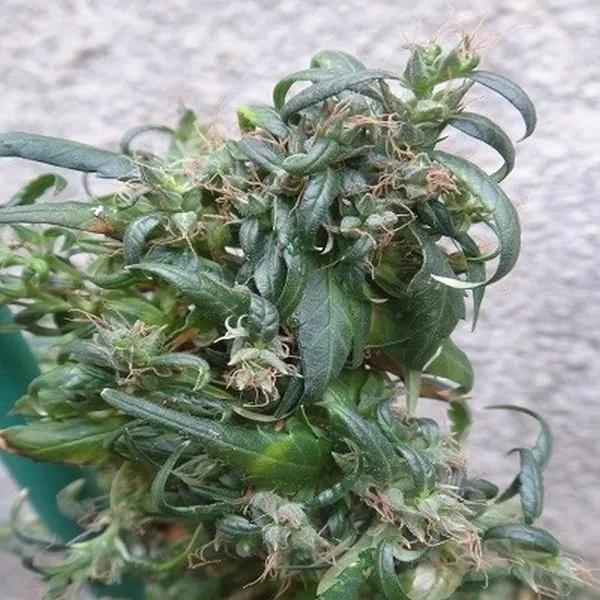
Hokkaido Japan Hemp
Cannabis seeds
by ACE Seeds
We'll only email you about this product — no marketing.
Hokkaido Japan Hemp — A Feral Landrace From Japan's Northern Frontier
Hokkaido Japan Hemp is a rare regular hemp landrace from ACE Seeds, collected from feral populations on Japan's second-largest island. Unlike the Afghan and Indian landraces that dominate seed catalogues, this one developed in isolation on Hokkaido — cold winters, humid summers, minimal human interference for generations. The result is a genotype that sits apart from European hemp varieties entirely. Laboratory analysis shows THC at 0.3%, THCA at 0.4%, and CBD at just 0.03%. You're not growing this for potency. You're growing it because it's a living piece of cannabis history, and it's increasingly under threat in its native habitat.
ACE Seeds specialises in preserving exactly these kinds of genetics before they disappear. This landrace is one of their conservation-focused releases — five regular seeds per pack, no feminisation, no hybridisation. What you get is the raw, unaltered plant as it exists in the wild. For breeders, collectors, and anyone fascinated by the sheer diversity of Cannabis sativa, this is the kind of seed you put in the vault.
Why Grow These Seeds?
This strain serves breeders and collectors rather than growers chasing fat colas and high THC numbers. If that's you, look at something like ACE Seeds' Panama x PCK or their Malawi instead. This Japanese landrace serves a different purpose entirely, and it does that job brilliantly.
First: breeding stock. The Hokkaido genotype carries traits you simply won't find in European or North American hemp lines. Her resistance profile alone is worth the price of admission — strong natural defence against powdery mildew, botrytis, spider mites, whiteflies, and temperature extremes on both ends. If you're working on outdoor breeding projects in northern climates, crossing these genetics into your lines could save you entire harvests down the road.
Second: the semi-autoflowering behaviour. This landrace begins flowering shortly after the summer solstice without needing a strict 12/12 light schedule. Indoor flowering wraps up in 6–8 weeks. That's fast for any cannabis plant, let alone a landrace. For breeders looking to introduce early-finish traits without reaching for ruderalis genetics, this is a genuinely interesting alternative.
Third: conservation. Cannabis restrictions in Japan have pushed feral hemp populations to the brink. Growing and preserving these seeds keeps the genetics alive outside their increasingly threatened native range. ACE Seeds has done the hard work of collection and stabilisation — your job is just to pop them and keep the line going.
Growing Characteristics and Specifications
She's one of the easier landraces you'll encounter. Moderate nutrient requirements throughout the cycle — don't overfeed, as these plants evolved in relatively poor soils and will show nutrient burn before most commercial hybrids would. Think of her like a wild herb rather than a pampered indoor cultivar.
| Specification | Detail |
|---|---|
| Seed Bank | ACE Seeds |
| Seed Type | Regular (non-feminised) |
| Seeds Per Pack | 5 |
| Genetics | Hokkaido Japan landrace hemp |
| THC | 0.3% |
| THCA | 0.4% |
| CBD | 0.03% |
| Dominant Terpene | Alpha-pinene (avg. 405 ppm) |
| Flowering Type | Semi-autoflowering |
| Indoor Flowering Time | 6–8 weeks |
| Yield | Average (indoor and outdoor) |
| Nutrient Requirements | Moderate — avoid overfeeding |
| Pest Resistance | Powdery mildew, botrytis, spider mites, whiteflies |
| Climate Resistance | Cold and heat tolerant |
| Trait | Comparison to Commercial Hybrids |
|---|---|
| THC Content | Far below modern hybrids (0.3% vs 15–30%) |
| Flowering Speed | Comparable or faster (6–8 weeks) |
| Cold Tolerance | Significantly higher — survives near-freezing nights |
| Mould Resistance | Excellent — outperforms most indoor cultivars outdoors |
| Nutrient Demand | Lower — half-strength feeding recommended |
| Genetic Diversity | Unmatched — wild landrace vs stabilised hybrid lines |
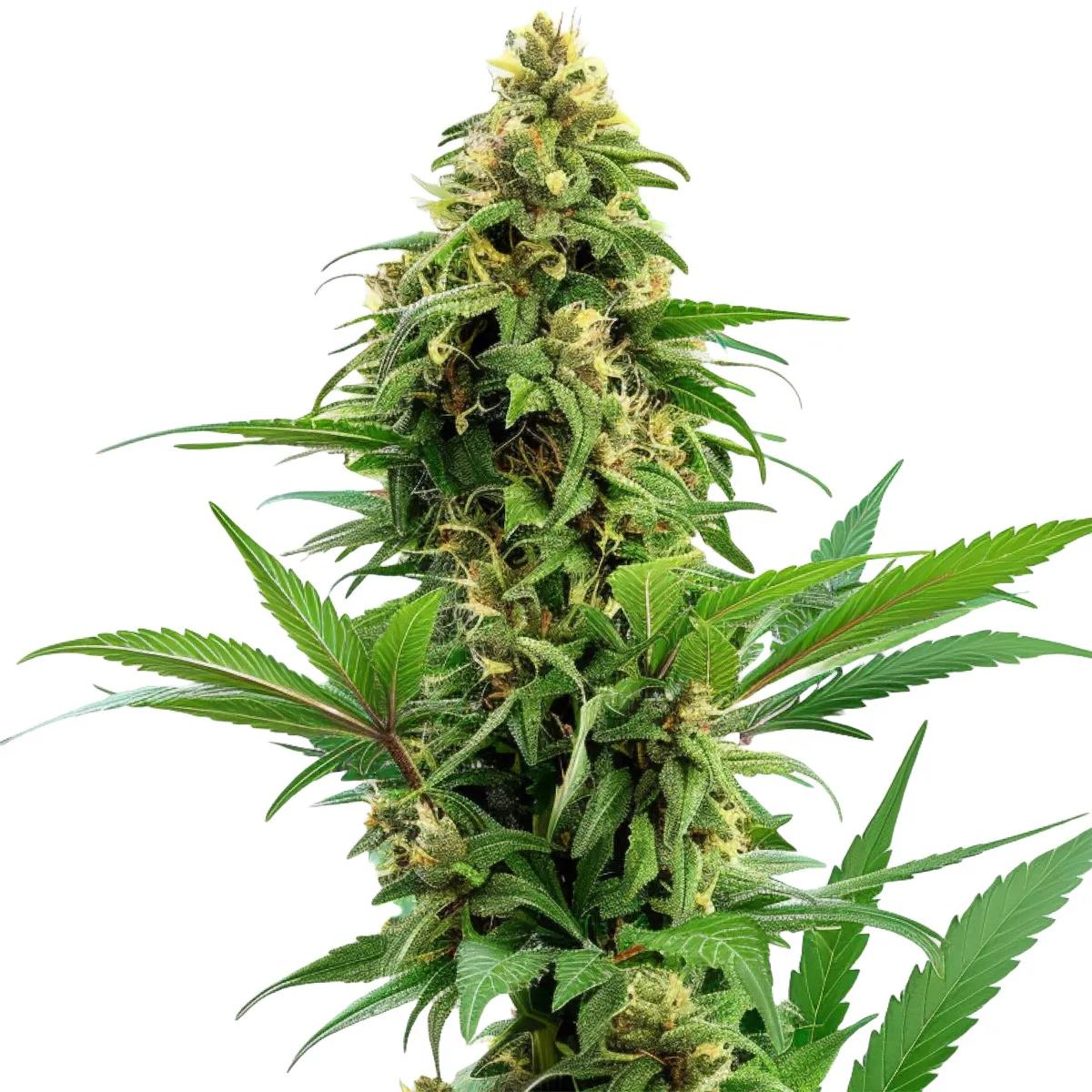
The plant structure leans indica — compact, sturdy — but the flowers themselves show sativa characteristics: small, airy, and spread along the branches rather than stacking into dense nugs. This makes sense given the low cannabinoid production; the plant simply hasn't been selected for resin output over its history. Outdoors, she'll handle northern European climates without complaint, which is more than you can say for most tropical landraces.
Aroma and Terpene Profile
The dominant scent is geranium and wild mountain spices, driven primarily by alpha-pinene at an average of 405 ppm. Don't expect the dank, nose-filling resin stink of a modern hybrid. It's closer to rubbing a sprig of rosemary between your fingers than opening a jar of OG Kush. Minor terpene levels overall, which tracks with the low cannabinoid content. If you've ever walked through a Japanese mountain forest in summer, you'll recognise something in the scent. It's green, clean, and quietly aromatic rather than loud.
For breeders, that alpha-pinene dominance is interesting. Crossing this landrace with terpinolene- or myrcene-heavy strains could produce offspring with varied and unexpected aromatic profiles — another reason these genetics have value well beyond their own flowers.
Honest Limitations — What This Strain Won't Do
Let's be direct: this strain won't produce noticeable psychoactive effects. At 0.3% THC and 0.4% THCA, the cannabinoid content is negligible from a consumption standpoint. CBD sits at just 0.03%, so there's no meaningful cannabinoid profile for wellness purposes either. According to research on hemp seed compounds published in PubMed (PMID: 39795183), interest in hemp as a source of plant-based protein and natural food ingredients is growing — but that's about the seeds as a nutritional product, not about the flowers of a low-cannabinoid landrace like this one.
If you're buying this strain expecting to fill your stash jar, you'll be disappointed. Buy it because you want to preserve rare genetics, because you're a breeder looking for unusual traits, or because you're genuinely fascinated by the global diversity of cannabis. Those are the right reasons, and for those purposes, this is a brilliant seed to have. You can order it alongside higher-THC cultivars and use it purely as breeding stock — that's exactly what most of our customers do.
Japanese Cannabis History and Conservation Context
Cannabis has been cultivated in Japan for over 2,000 years — primarily for fibre, rope, and Shinto ceremonial use. The plant features in some of the oldest Japanese archaeological records. Hokkaido's feral hemp populations are remnants of that long agricultural history, left to naturalise and adapt to the island's harsh northern climate after cultivation declined sharply in the post-war period.
According to research published in PMC (PMC9307968), hemp cultivation and possession are now tightly restricted in Japan under the Cannabis Control framework, which has pushed wild populations toward extinction. Data from the EMCDDA confirms that Japan maintains some of the strictest cannabis-related frameworks in the developed world, making in-situ conservation nearly impossible. ACE Seeds' work in collecting and stabilising these genetics is one of the few efforts keeping the Hokkaido genotype accessible to growers and researchers worldwide. Every pack of five seeds is a small act of preservation.
How to Grow This Japanese Landrace
- Germinate seeds using the paper towel method or directly in a light, well-draining seedling mix. Regular seeds will produce both male and female plants — expect roughly a 50/50 split.
- Transplant seedlings once they've developed 2–3 sets of true leaves. A standard potting mix with perlite works well. Avoid heavy, nutrient-rich soils at this stage.
- Provide 18–20 hours of light during the vegetative phase if growing indoors. The semi-autoflowering trait means she'll begin flowering after the summer solstice outdoors, or when light hours naturally decrease.
- Feed moderately throughout the cycle. These plants evolved in relatively lean soils — half-strength nutrients compared to what you'd give a modern hybrid is a good starting point. Watch for tip burn as your signal to back off.
- Identify and separate males early if you're not intentionally breeding. Males will show pre-flowers (small pollen sacs at the nodes) before females do.
- Harvest females after 6–8 weeks of flowering indoors. Outdoor harvest in northern Europe typically falls in late August to mid-September, depending on your latitude and the solstice trigger.
- If breeding, isolate your best male and female specimens. Collect pollen carefully and store in a cool, dry place for controlled pollination.
Building a landrace seed collection? ACE Seeds' Malawi and Ethiopia x Malawi bring African sativa genetics that complement this Japanese landrace's northern-adapted traits. For breeders working with semi-autoflowering lines, having both tropical and cold-climate landraces in your library opens up serious possibilities. You can get all of these through the Azarius seed catalogue.
Frequently Asked Questions
Does this strain produce psychoactive effects?
No. With THC at 0.3% and CBD at 0.03%, there are no meaningful psychoactive or cannabinoid effects from this strain. It's a hemp landrace shaped by nature for fibre and survival, not resin production.
What does semi-autoflowering mean for this landrace?
She begins flowering shortly after the summer solstice without needing a strict 12/12 light change. Indoors, reducing light hours will trigger bloom, but she's less dependent on photoperiod manipulation than typical photoperiod strains. Indoor flowering takes 6–8 weeks.
Are these feminised seeds?
No. This strain comes as regular seeds — you'll get both male and female plants. Expect roughly half of each. This is intentional; regular seeds preserve the full genetic diversity of the landrace and are critical for breeding work.
Can I grow this strain outdoors in northern Europe?
Yes, and she'll do well there. This strain developed on Hokkaido, which shares a similar latitude and climate profile to parts of northern Europe. Strong resistance to cold, mildew, and botrytis makes her one of the more forgiving outdoor options for cooler regions.
Why is this strain considered rare and under threat?
Feral hemp populations on Hokkaido have declined sharply due to strict cannabis restrictions in Japan. Wild stands are disappearing, and very few seed banks have collected and stabilised these genetics. ACE Seeds is one of the only sources keeping the Hokkaido genotype available.
What's the best use for these seeds?
Breeding projects and genetic preservation. Her pest resistance, cold tolerance, and semi-autoflowering traits are valuable for crossing into other lines. Collectors who want to maintain rare landrace genetics in their seed vaults will also find this pack worth holding onto.
How does this compare to European industrial hemp varieties?
European hemp cultivars have been selected for fibre yield and uniform growth under agricultural conditions. This Japanese landrace, by contrast, is a wild-adapted genotype with far greater genetic diversity, stronger pest resistance, and semi-autoflowering behaviour. It's less productive in a monoculture setting but far more interesting for breeding and conservation purposes.
Can I use this strain to breed autoflowering hybrids?
Yes. The semi-autoflowering trait makes this landrace a compelling alternative to Cannabis ruderalis for introducing early-flowering behaviour into crosses. Because it carries no ruderalis genetics, offspring may retain more desirable growth characteristics from the other parent while still gaining photoperiod independence.
How should I store seeds I'm not planting immediately?
Keep them in a cool, dark, dry place — ideally in an airtight container with a desiccant packet, stored in a refrigerator at around 4–8°C. Properly stored cannabis seeds can remain viable for years, making this an excellent candidate for long-term vault storage.
Last updated: April 2026
Related products
You might also like
Medical disclaimer. This content is for informational purposes only and does not constitute medical advice. Consult a qualified healthcare provider before use of any substance.