
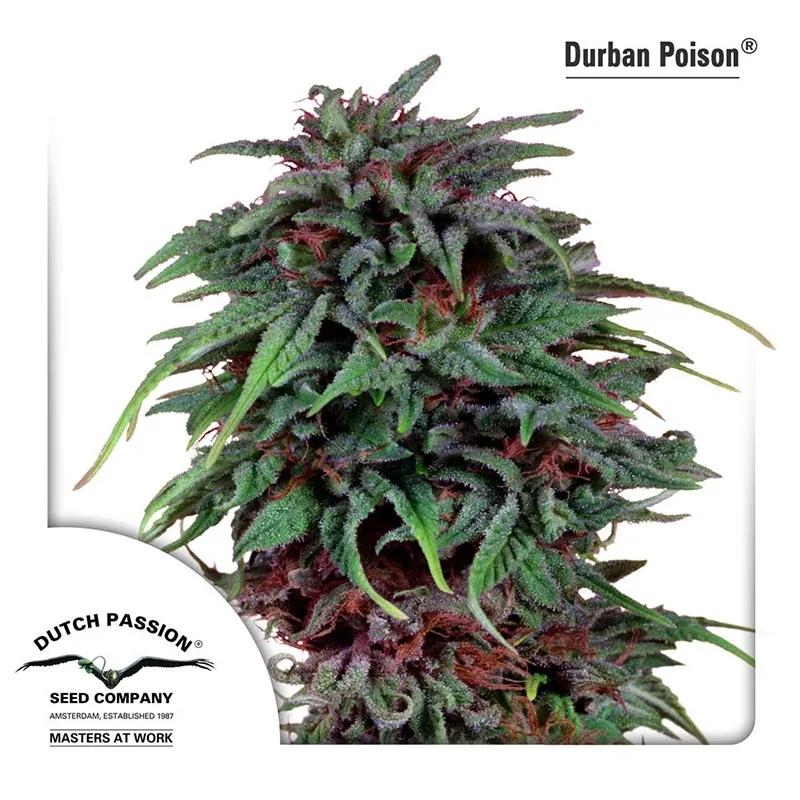
Durban Poison
Cannabis seeds
by Dutch Passion
Durban Poison Cannabis Seeds by Dutch Passion
Durban Poison is a pure, 100% unhybridised South African sativa — one of the last landrace strains you can still grow from seed. Dutch Passion has kept this genetic line intact through selective inbreeding of original Durban sativa genetics, so what you're getting is about as close to wild-grown African cannabis as a seed bank can deliver. No crosses, no hybrid vigour tricks — just the real thing.
Choose Your Pack
| Pack Size | SKU | Best For |
|---|---|---|
| 3 seeds | CSDP0016 | Single-plant growers or a first run with the strain |
| 5 seeds | CSDP0146 | Outdoor plots or selecting the best phenotype from a small batch |
If you've never grown a pure sativa before, the 3-pack lets you test the waters without committing a full tent. If you're growing outdoors or in a greenhouse — where this strain truly shines — go with the 5-pack so you can pick your favourite plant and let her run.
What Makes Durban Poison Sativa Seeds Special
Most "sativa" seeds on the market are hybrids with a bit of indica bred in to shorten flowering time or boost THC. Durban Poison is the exception. Dutch Passion sources this line directly from South African landrace genetics and has maintained it through careful inbreeding — no outcrossing to indica or ruderalis. The result is a strain that behaves, tastes, and feels like cannabis did before the hybrid era took over.
The flavour is distinctive and immediately recognisable: liquorice and anise candy, sweet and slightly spicy. It's not a terpene profile you'll find in any OG Kush cross. When you open a jar of properly cured Durban Poison, the anise note hits you before anything else — sharp, almost herbal, with a sweetness underneath. We'd compare it to a Dutch drop (the liquorice kind, not the coffee shop kind).
At around 14% THC, this isn't going to flatten you. The effect is cheerful, uplifting, and clear-headed — Dutch Passion themselves compare it to Thai sativa genetics, and that tracks. You stay functional. You stay sociable. It's the kind of smoke that makes a Saturday afternoon in the park better, not the kind that glues you to the sofa. For growers who've only ever tried modern 25%+ hybrids, 14% might sound modest on paper, but the quality of the effect tells a different story. There's a reason this strain has a loyal following of dedicated growers who come back to it year after year.
Growing Durban Poison Seeds: What to Expect
Durban Poison grows tall. Properly tall. This is a full sativa, and she stretches accordingly — outdoors, you're looking at plants that can reach well above 2 metres in good conditions. That makes her a natural fit for outdoor plots and greenhouses where vertical space isn't a problem. Outdoor growers in decent climates can expect large yields, with some reports of 450 to 550 grams per plant under optimal conditions.
The honest limitation: indoors, you'll need to train her. Left to her own devices in a 1.2m tent, she'll hit the light before you know it. Low-stress training (LST), topping, or a ScrOG net will keep her manageable. If you've only grown compact indicas, budget extra headroom or start training early — week 2 or 3 of veg at the latest.
The good news is that flowering time sits at 8 to 9 weeks, which is remarkably short for a pure sativa. Most landrace sativas run 12 weeks or more, so Dutch Passion's selective breeding has genuinely paid off here. You also get solid mould resistance — a real advantage for greenhouse growers in northern European climates where late-season humidity can wreck a harvest overnight.
| Specification | Detail |
|---|---|
| Seed Bank | Dutch Passion |
| Genetics | 100% Sativa (South African landrace) |
| Seed Type | Feminised |
| THC Content | ~14% |
| Flowering Period | 8-9 weeks |
| Outdoor Yield | Up to 450-550g per plant |
| Plant Height | Tall (sativa stretch — train indoors) |
| Mould Resistance | High |
| Best Environment | Outdoor / greenhouse; indoor with training |
| Available Packs | 3 seeds or 5 seeds |
Growing indoors? You'll want to train this sativa early. A ScrOG net or plant ties make all the difference with tall genetics like Durban Poison. If you're setting up a greenhouse grow, pair these seeds with a reliable pH meter — landrace sativas can be fussier about root zone pH than modern hybrids.
Why Grow a Landrace Sativa in 2025
The cannabis seed market is saturated with polyhybrids — crosses of crosses of crosses, bred for maximum THC and minimum flowering time. That's fine, and some of those strains are genuinely excellent. But something gets lost in the process. Flavour profiles flatten out. Effects start to blur together. Every other strain tastes like "gas" or "cookies" because the same parent genetics keep showing up.
Durban Poison is the antidote to all of that. Growing a landrace sativa connects you to cannabis genetics that evolved naturally over centuries in the KwaZulu-Natal region of South Africa. These aren't lab-optimised traits — they're the result of natural selection in a specific climate, refined by Dutch Passion's selective inbreeding to stabilise the best phenotypes without diluting the gene pool.
The one thing to keep in mind: if you're after a couch-lock body stone, this isn't your strain. Durban Poison is all head — uplifting, energetic, cheerful. Compared to something like Dutch Passion's Blueberry (an indica-dominant classic from the same seed bank), the effect couldn't be more different. Blueberry relaxes; Durban Poison activates. Pick based on what you actually want from your smoke, not just the genetics on paper.
How to Grow Durban Poison Seeds
- Germinate your feminised seeds using the paper towel method or directly in a starter plug. Keep temperatures between 22-26°C and expect taproots within 48-72 hours.
- Transplant seedlings into their final containers once the first true leaves appear. For indoor grows, use at least 15-litre pots — this plant develops a substantial root system.
- Begin low-stress training early if growing indoors. Bend and tie the main stem during weeks 2-3 of vegetative growth to control the sativa stretch. A ScrOG net at canopy height works well for an even light distribution.
- Switch to a 12/12 light cycle to trigger flowering when the plant has filled roughly 60-70% of your available canopy space. She'll stretch further during the first 2-3 weeks of flower.
- For outdoor and greenhouse grows, plant after the last frost. Durban Poison thrives in warm, sunny climates but her mould resistance means she handles northern European autumns better than most sativas.
- Harvest after 8-9 weeks of flowering. Look for mostly cloudy trichomes with a few amber ones — harvesting too early will give you a racier, less rounded effect.
- Dry slowly in a dark room at 18-20°C with 55-60% humidity for 10-14 days, then cure in glass jars for at least 2 weeks. The liquorice and anise terpenes develop beautifully during a proper cure.
Frequently Asked Questions
How much THC does Durban Poison contain?
Dutch Passion's Durban Poison averages around 14% THC. That's moderate by modern standards, but the pure sativa genetics deliver a clear, uplifting effect that punches above its weight compared to many higher-THC hybrids.
Is Durban Poison good for beginner growers?
It's straightforward to grow outdoors or in a greenhouse — mould resistant, reliable, and not fussy about feeding. Indoors it needs training due to its height, so complete beginners might find a compact indica easier for their first run. If you've done one grow already, you'll manage fine.
Can I grow Durban Poison indoors?
Yes, but plan for the stretch. This pure sativa grows tall, so you'll need to top or use LST to keep her under control. A ScrOG setup in a tent with at least 1.8m of vertical space is the best approach for indoor Durban Poison grows.
What does Durban Poison taste like?
Liquorice and anise candy — it's unmistakable. There's a sweet, slightly spicy herbal quality underneath that you won't find in any modern hybrid. The terpene profile develops best with a slow dry and a 2-week minimum cure in glass jars.
How long does Durban Poison take to flower?
Between 8 and 9 weeks, which is remarkably fast for a 100% sativa. Most pure sativa landraces need 12 weeks or more. Dutch Passion's selective breeding has shortened the flowering period without compromising the genetics.
What's the yield like on Durban Poison?
Outdoor plants can produce 450-550 grams each under good conditions. Indoor yields depend on training and light, but expect generous harvests — she's a vigorous grower with large colas once the stretch settles down.
Is Durban Poison a real landrace strain?
Yes. Dutch Passion's Durban Poison is bred exclusively from pure South African sativa genetics through selective inbreeding. No indica or ruderalis has been crossed in — it's as close to natural, wild-grown cannabis as you'll find in seed form.
Last updated: April 2026
Related products

You might also like
Medical disclaimer. This content is for informational purposes only and does not constitute medical advice. Consult a qualified healthcare provider before use of any substance.