
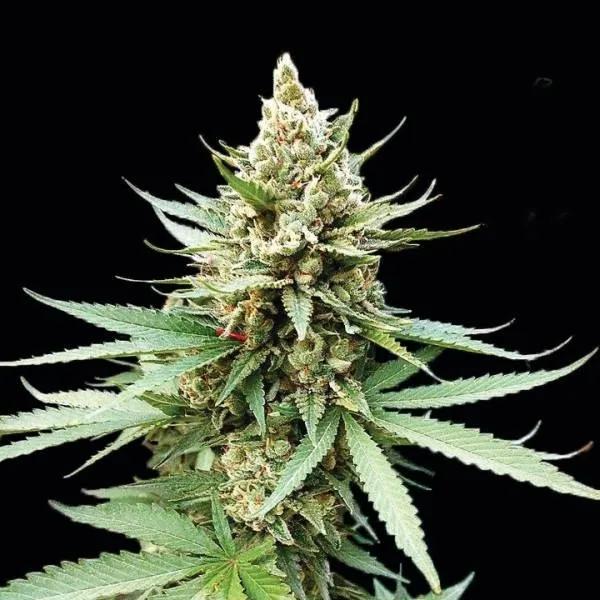
Blue OG
Cannabis seeds
by G13 Labs
Blue OG Feminized Cannabis Seeds by G13 Labs
Blue OG is a feminized indica-dominant hybrid from G13 Labs that pairs OG Kush potency with Blueberry sweetness — thick resin, dense buds, and a flavour profile that actually delivers on its name. Bred from a lineage stretching back through Thai sativa, Afghan indica, F3 Blueberry, and Blue Moonshine, this cultivar carries serious West Coast genetics in a compact, manageable plant. Five feminized seeds per pack, 8–10 weeks of flowering, and yields that reward patience.
Blue OG Seeds: Genetics and Lineage
Blue OG traces its roots through some of the most respected cultivars in cannabis breeding. G13 Labs crossed OG Kush — the backbone of countless West Coast hybrids — with an F3 Blueberry and Blue Moonshine line. Dig deeper and you'll find Thai sativa and Afghan indica genetics at the foundation. That's not a marketing story; it's a breeding programme that shows in the plant's structure, resin production, and terpene expression.
The OG Kush parentage brings vigour and that unmistakable earthy-pine backbone. The Blueberry side contributes anthocyanins — the same pigment compounds found in blueberries, blackberries, and red cabbage — which can turn the buds purple under cooler night temperatures. More than cosmetic: anthocyanins are associated with anti-inflammatory and antioxidant properties in botanical research. The combination of these two genetic lines gives Blue OG a complexity that single-strain seeds simply can't match.
Flavour and Aroma Profile of Blue OG
The blueberry flavour is the first thing you'll notice — sweet, ripe, and surprisingly authentic for a cannabis cultivar. It's not a subtle hint; it dominates the palate from the first draw. Behind it, the OG Kush genetics push through with earthy pine and a spicy wood note that sits on the back of the tongue. We've seen growers report additional layers of forest fruit, lime citrus, and even sweet diesel, though those secondary notes tend to come out more strongly in well-cured, late-harvested buds.
The honest note here: if you harvest at 8 weeks instead of pushing to 10, you'll get a cleaner blueberry flavour but less of that complex OG Kush undertone. The extra two weeks of maturation develop the terpene profile significantly. Patience pays off with this one.
Growing Blue OG Seeds
Blue OG feminized seeds flower in 8–10 weeks and produce dense, resin-coated buds that lean heavy on the indica side in terms of structure. Plants stay relatively short — good news if you're working with a tent rather than a spare room. Indoor yields can reach up to 450 grams per square metre when conditions are dialled in.
| Specification | Detail |
|---|---|
| Seed Bank | G13 Labs |
| Seed Type | Feminized |
| Strain Type | Indica-Dominant Hybrid |
| Lineage | OG Kush x F3 Blueberry / Blue Moonshine |
| Ancestral Genetics | Thai Sativa, Afghan Indica |
| Flowering Time | 8–10 weeks |
| Indoor Yield | Up to 450 g/m² |
| Plant Height | Short to medium |
| Seeds Per Pack | 5 |
The compact stature makes Blue OG forgiving for growers who don't have a lot of vertical space. These plants respond well to low-stress training and can handle cooler nighttime temperatures — in fact, dropping temps during late flowering can bring out those purple anthocyanin hues in the buds. The one thing to watch: humidity in the final weeks. Those dense, resinous colas can trap moisture, so airflow and a decent extraction setup are non-negotiable if you want to avoid bud rot.
Blue OG Grow Tips: From Seed to Harvest
- Germinate your feminized seeds using the paper towel method or directly in a propagation plug. Tap roots typically appear within 24–72 hours.
- Transplant seedlings into their final containers once the first true leaves appear. A 10–15 litre pot works well for indoor grows; larger containers suit outdoor setups.
- Maintain vegetative lighting (18/6) until plants reach your desired height. Blue OG stays compact, so you can flip to 12/12 earlier than you might with a stretchy sativa.
- During flowering, consider dropping nighttime temperatures to 15–18°C in the final 2–3 weeks to encourage purple colouration from anthocyanin expression.
- Monitor humidity closely once buds start fattening — keep relative humidity below 50% in the last 3 weeks. A carbon filter and inline fan are critical for both odour control and airflow.
- Harvest at 8 weeks for a cleaner blueberry flavour, or push to 10 weeks for fuller terpene complexity and heavier yields. Check trichomes with a loupe — milky with 10–20% amber is the sweet spot for this strain.
- Dry slowly in a dark room at 18–20°C and 55–60% humidity for 10–14 days, then cure in glass jars for at least 2 weeks. Blue OG rewards a proper cure more than most strains.
Effects and Traditional Use of Blue OG
Blue OG lends itself to a soothing, body-heavy experience. The indica dominance means physical relaxation is the primary characteristic, with the Blueberry genetics adding a mellow, calming quality. Appetite stimulation is the most commonly reported effect — and it's not subtle. According to a review published in The Health Effects of Cannabis and Cannabinoids (National Academies of Sciences, 2017), clinical trials have observed that cannabinoids can stimulate appetite, particularly in the context of AIDS wasting and cancer-associated anorexia-cachexia (Foltin et al., 1988; NBK425767).
Blue OG has traditionally been associated with relief from nausea, stomach cramps, and general lack of appetite. Growers and users also report that the strain's terpene and cannabinoid profile may offer soothing qualities relevant to muscle tension, headaches, and chronic discomfort — though as with any cultivar, individual results vary with phenotype, growing conditions, and consumption method. According to WebMD's overview of cannabis strains, indica-dominant varieties are traditionally associated with physical relaxation and sedation (WebMD).
The anthocyanins present in Blue OG's Blueberry genetics are worth noting beyond their visual appeal. These flavonoid compounds are well-documented in botanical literature for their antioxidant and anti-inflammatory properties — the same reason nutritionists recommend eating actual blueberries.
Why Blue OG Deserves a Spot in Your Grow
We've carried G13 Labs seeds for a long time, and Blue OG is one of those strains that keeps coming back into conversation. The reason is straightforward: it delivers on multiple fronts without demanding expert-level growing skills. The compact size means it fits in a 60x60 tent without complaint. The 8–10 week flowering window gives you flexibility — harvest early for speed, or let it ride for density and flavour. And the genetics are proven, not experimental.
If you're comparing Blue OG to other indica-dominant seeds in the catalogue, the key differentiator is that blueberry terpene profile combined with OG Kush structure. You get the flavour complexity of a Blueberry cross without sacrificing the resin production and potency that OG Kush parentage guarantees. For growers who want a strain that looks impressive, smells incredible in the jar, and produces dense, frosty buds — Blue OG is hard to beat at this price point.
The honest limitation: if you're after a cerebral, energising daytime strain, this isn't it. Blue OG is an evening cultivar. It's heavy, it's relaxing, and it will absolutely raid your fridge. That's the trade-off, and for most growers, it's exactly what they want.
Growing Blue OG indoors? Pair these seeds with a complete grow tent kit for the best results — proper ventilation and carbon filtration are critical for those dense, aromatic buds. A jeweller's loupe is also worth picking up for checking trichome maturity during the 8–10 week flowering window.
Frequently Asked Questions
What does Blue OG taste like?
Sweet, ripe blueberry dominates, backed by earthy pine and spicy wood from the OG Kush genetics. Some phenotypes also express forest fruit, lime citrus, and sweet diesel notes, especially when cured for 2+ weeks in glass jars.
How long does Blue OG take to flower?
8–10 weeks from the flip to 12/12 lighting. Harvesting at 8 weeks gives a cleaner blueberry flavour; pushing to 10 weeks develops fuller terpene complexity and increases yield density.
Can a beginner grow Blue OG feminized seeds?
Yes. The compact size, cold tolerance, and feminized genetics make Blue OG manageable for first-time growers. The main thing to watch is humidity in late flowering — those dense buds can trap moisture if airflow isn't adequate.
What are the common side effects of Blue OG?
Dry mouth and dry eyes are the most frequently reported side effects, consistent with most indica-dominant strains. Staying hydrated and keeping eye drops nearby sorts both issues. The strong appetite stimulation can also catch you off guard if you're not prepared.
How much does Blue OG yield indoors?
Up to 450 grams per square metre under optimised conditions. Actual yield depends on pot size, lighting, training technique, and whether you harvest at 8 or 10 weeks. Low-stress training tends to maximise canopy coverage with this compact plant.
Is Blue OG indica or sativa?
Indica-dominant hybrid. The Afghan indica and Blueberry genetics drive the physical structure and relaxing character, while Thai sativa ancestry adds a touch of complexity to the terpene profile. Expect a body-focused experience rather than a cerebral one.
Why do Blue OG buds turn purple?
Anthocyanins — pigment compounds inherited from the Blueberry parent — respond to cooler nighttime temperatures during late flowering. Dropping to 15–18°C at night in the final 2–3 weeks encourages purple and blue colouration without affecting potency.
Last updated: April 2026
Related products

You might also like
Medical disclaimer. This content is for informational purposes only and does not constitute medical advice. Consult a qualified healthcare provider before use of any substance.