

Free Autoflowering Seeds
Cannabis seeds
by Azarius
We'll only email you about this product — no marketing.
Free Autoflowering Seeds — A Bonus With Every Order
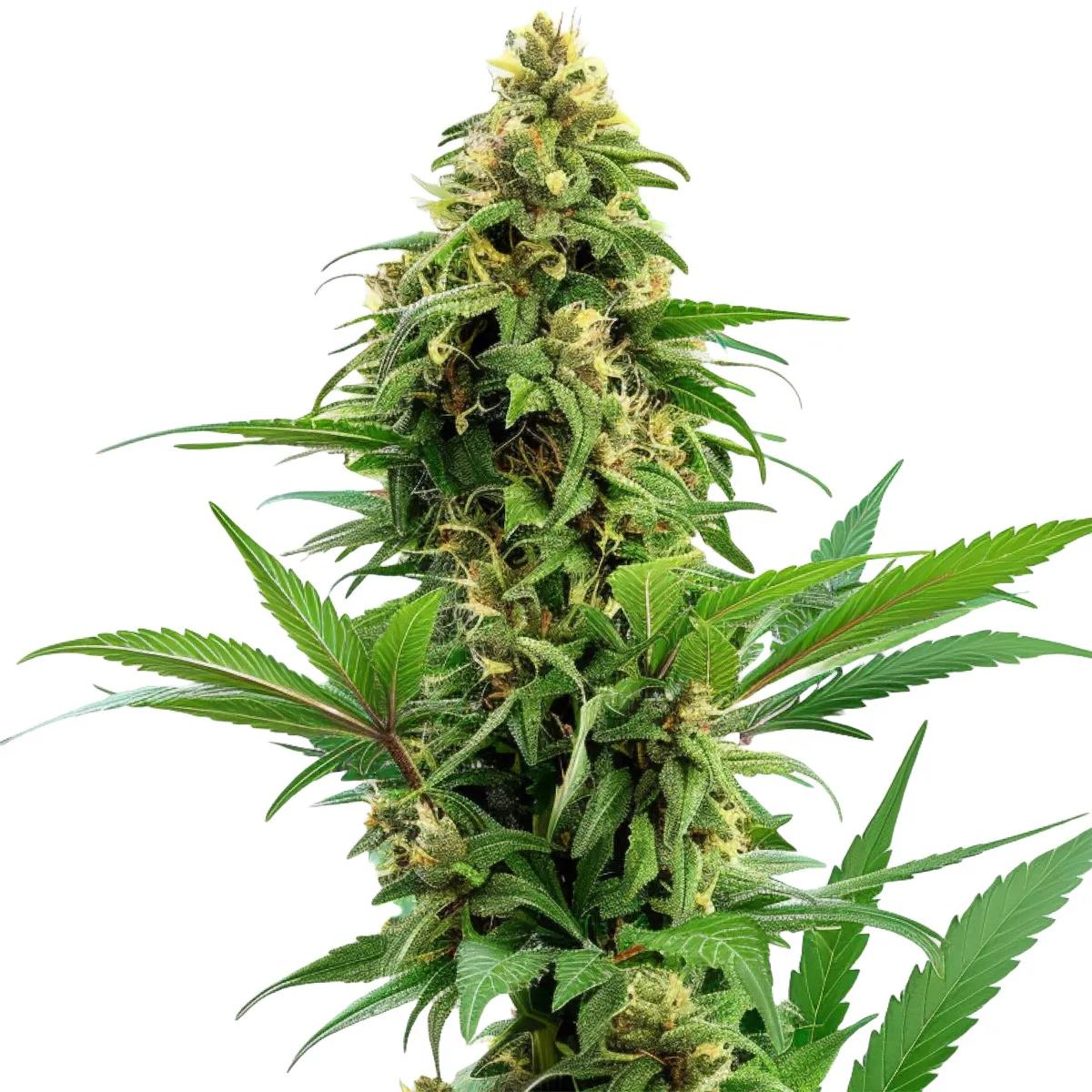
Free autoflowering seeds are complimentary cannabis seeds that flower based on age rather than light cycle, making them the easiest way to start growing without spending a penny extra. Pick your quantity — 1, 3, 5, or 10 seeds — and we'll toss them into your order as a thank-you for shopping with us. We've been doing this since 1999, and honestly, free seeds are one of the best perks we can offer.
How Many Free Autoflowering Seeds Should You Grab?
| Variant | Seeds | Best for |
|---|---|---|
| 1 | 1 seed | Testing the waters — one plant on a windowsill or balcony |
| 3 | 3 seeds | A small personal grow with some variety in phenotypes |
| 5 | 5 seeds | Filling a 60x60 or 80x80 tent comfortably |
| 10 | 10 seeds | Stocking up for the season or running multiple cycles |
Our recommendation? Go for 3 or 5. Even if one seed doesn't pop — and germination rates on autoflowering seeds are generally solid — you've still got backups. Ten is the move if you're planning successive harvests every few weeks.
What Are Autoflowering Cannabis Seeds?
Autoflowering cannabis seeds are genetics that transition from vegetative growth to flowering automatically, triggered by the plant's age rather than changes in the light cycle. This trait traces back to Cannabis ruderalis — according to research published in Cannabis Systematics at the Levels of Family, Genus, and Species, ruderalis-type plants exhibit early flowering behaviour alongside a roughly balanced CBD-to-THC ratio and wild-type morphology (PMC6225593). Modern breeders have crossed those ruderalis genetics with potent photoperiod strains, keeping the auto-flowering trait while dramatically improving cannabinoid profiles and yields.
According to research on flowering-time genetics in hemp, flowering time is a critical trait affecting yields and quality across all major market classes of Cannabis sativa (PMC9533707). That's the science behind why autoflowers finish so fast — they're genetically programmed to flower early, regardless of how many hours of light they receive. Seed to harvest in 8–12 weeks is standard. Photoperiod strains? You're looking at 4–6 months minimum.
Why Autoflowering Seeds Are the Best Pick for New Growers
Autoflowering seeds are the single best starting point if you've never grown cannabis before. No timers, no light-proofing your tent, no stressing about light leaks causing hermaphrodites. You plant them, give them light (18–20 hours a day works brilliantly), feed them modestly, and they do their thing.
Here's what makes them stand out compared to photoperiod feminised seeds:
| Feature | Autoflowering seeds | Photoperiod feminised seeds |
|---|---|---|
| Seed-to-harvest time | 8–12 weeks | 14–26 weeks |
| Light schedule | 18/6 or 20/4 throughout | 18/6 veg, then 12/12 to trigger flower |
| Plant height | 40–100 cm typically | 80–200+ cm |
| Nutrient demand | Lower — roughly half of photoperiod doses | Full-strength feeding schedules |
| Stealth factor | Compact, easy to hide | Can get tall and bushy |
| Multiple harvests per season | Yes — stagger plantings | One cycle per season outdoors |
| Yield potential | Moderate (30–150g per plant) | Higher (100–500g+ per plant) |
The honest limitation? Yield. Autoflowers won't match a well-trained photoperiod plant in output. That's the trade-off for speed and simplicity. But if you're growing for personal use and you value quick turnarounds, autoflowering seeds are hard to beat.
How to Grow Your Free Autoflowering Seeds
Autoflowering seeds are forgiving, but they're not indestructible. The number one mistake we see — and we've been fielding grow questions at Azarius for over 25 years — is overfeeding. Autoflowers have a shorter life cycle and smaller root systems than photoperiod plants, so they simply can't process the same nutrient load.
- Germinate your seeds. Drop them into a glass of room-temperature water for 12–24 hours until they sink, then transfer to damp kitchen paper between two plates. Within 24–72 hours, you should see a white taproot emerge. If you're planting 5 seeds, expect 4–5 to pop.
- Plant into the final container. This is critical — autoflowers don't like being transplanted. Their short vegetative phase means any root stress costs you growth time you can't get back. Use an 11–15 litre fabric pot filled with light, airy soil. Coco-perlite mixes work brilliantly too.
- Set your light schedule. 18 hours on, 6 hours off is the sweet spot for most growers. Some run 20/4 for extra growth. Unlike photoperiod strains, you never need to switch to 12/12.
- Feed at half strength. Start with roughly 50% of the manufacturer's recommended dose for photoperiod plants. Autoflowering strains have different growth patterns and a compressed feeding window — overfeeding causes nutrient burn and stunting faster than you'd expect.
- Watch for preflowers around week 3–4. Autoflowers show sex early. You'll see small white pistils at the nodes. From here, flowering ramps up quickly — this is when you switch to bloom nutrients (still at reduced strength).
- Harvest when trichomes turn milky. Grab a jeweller's loupe or a cheap USB microscope. Clear trichomes mean too early. Milky white means peak potency. Amber means more sedative compounds are developing. Most autoflowers are ready 8–10 weeks from sprout.
Feeding Your Autoflowering Plants — Less Is More
Autoflowering cannabis plants need nutrients to stay alive and grow, but they need fewer nutrients than photoperiod plants — that's worth repeating because it's the most common source of problems. Start with half the recommended dose on the bottle and only increase if the plant looks hungry (pale lower leaves, slow growth). Nutrient burn shows up as brown, crispy leaf tips and it's much harder to fix than a slight deficiency.
A basic feeding schedule for autoflowering seeds in soil looks something like this: plain water for the first 2 weeks (the soil has enough), light veg nutrients at quarter to half strength from weeks 2–4, then bloom nutrients from week 4 onwards until you begin flushing 1–2 weeks before harvest. In coco, you'll feed from day one, but again — half strength is your friend.
What the Science Says About Cannabis Compounds
Cannabis has been reported to contain over 560 different compounds, out of which 120 are cannabinoids, according to research on cannabis propagation for clinical use (PMC7333344). That's a staggering chemical profile — THC and CBD get the headlines, but there are dozens of minor cannabinoids like CBG, CBC, and CBN, each contributing to what researchers call the entourage effect.
According to a review in Cannabis sativa L. as a Natural Drug, clinical and preclinical studies suggest that cannabinoids derived from Cannabis sativa may be used to help manage chronic pain and spasticity (PMC7830475). Research also suggests that adults using cannabis for medical symptoms did not show significant neural effects in the areas of working memory, reward, and inhibitory control over a year-long period, according to a 2024 study (PMC11092687).
Recent pangenome research has mapped the genetic architecture of cannabinoid synthesis, constructing reference-based and reference-free Cannabis pangenomes to better understand how different strains produce different compound profiles (PMC12286863). The genetics in your free autoflowering seeds carry their own unique cannabinoid blueprint — that's part of what makes growing from seed so interesting.
Growing your free autoflowering seeds? You'll want a proper setup. Our complete grow tent kits include everything from tent to light to ventilation — no guesswork, no forgotten parts. If you're keeping it simple with a windowsill grow, grab some fabric pots and a bottle of organic bloom nutrients to give your plants the best shot.
Specifications
| Spec | Value |
|---|---|
| Seed type | Autoflowering |
| Flowering trigger | Age-based (not light-dependent) |
| Seed-to-harvest | 8–12 weeks typical |
| Recommended light schedule | 18/6 or 20/4 |
| Average plant height | 40–100 cm |
| Nutrient requirement | Approximately 50% of photoperiod doses |
| Available quantities | 1, 3, 5, or 10 seeds |
| Growing difficulty | Beginner-friendly |
| Suitable environments | Indoor, outdoor, balcony, windowsill |
Frequently Asked Questions
What are autoflowering seeds and how do they work?
Autoflowering seeds carry genetics from Cannabis ruderalis that trigger flowering based on the plant's age, not changes in light. You don't need to switch to a 12/12 light cycle. Just plant them, keep the lights on 18–20 hours a day, and they'll start flowering on their own around week 3–4.
Can you grow autoflowering seeds on a windowsill?
Yes. Autoflowers stay compact — most finish under 80 cm — and they don't need intense light to flower. A south-facing window with 5+ hours of direct sunlight can produce a small but satisfying harvest. You won't get tent-quality yields, but it works. Use an 11-litre fabric pot and light soil.
Why did my autoflower produce seeds?
Stress. Autoflowers can hermaphrodite if they experience extreme temperature swings, light stress, or root damage — producing pollen sacs alongside flowers, which then self-pollinate. Keep conditions stable, avoid transplanting, and don't over-prune during flowering to minimise the risk.
How much should I feed autoflowering plants?
Start at half the dose recommended for photoperiod strains. Autoflowers have smaller root systems and a shorter life cycle, so they process nutrients more slowly. Overfeeding is the most common mistake we see — nutrient burn shows as crispy brown leaf tips and stunted growth.
Are free autoflowering seeds lower quality than paid seeds?
No. These come from the same breeder stock we sell individually. We rotate varieties based on availability, so you won't know the exact strain in advance, but germination rates and genetic quality are the same. We've been including free seeds with orders for years — we wouldn't risk our reputation on duds.
How many harvests can I get from autoflowering seeds per year?
Indoors, you can run 4–5 cycles per year since autoflowers finish in 8–12 weeks and don't need a light-cycle change. Outdoors in a European climate, you can stagger 2–3 plantings from spring through summer. That's a major advantage over photoperiod strains, which give you one harvest per season.
Do autoflowering seeds produce less THC than photoperiod strains?
Not necessarily — not anymore. Early autoflowers were weaker, but modern breeding has closed the gap significantly. Many autoflowering strains now test above 20% THC. The real difference is yield per plant, not potency. If you want the strongest possible harvest from a single plant, photoperiod feminised seeds still have the edge.
Last updated: April 2026
Related products


You might also like

Medical disclaimer. This content is for informational purposes only and does not constitute medical advice. Consult a qualified healthcare provider before use of any substance.