Cannabis seeds
by Azarius
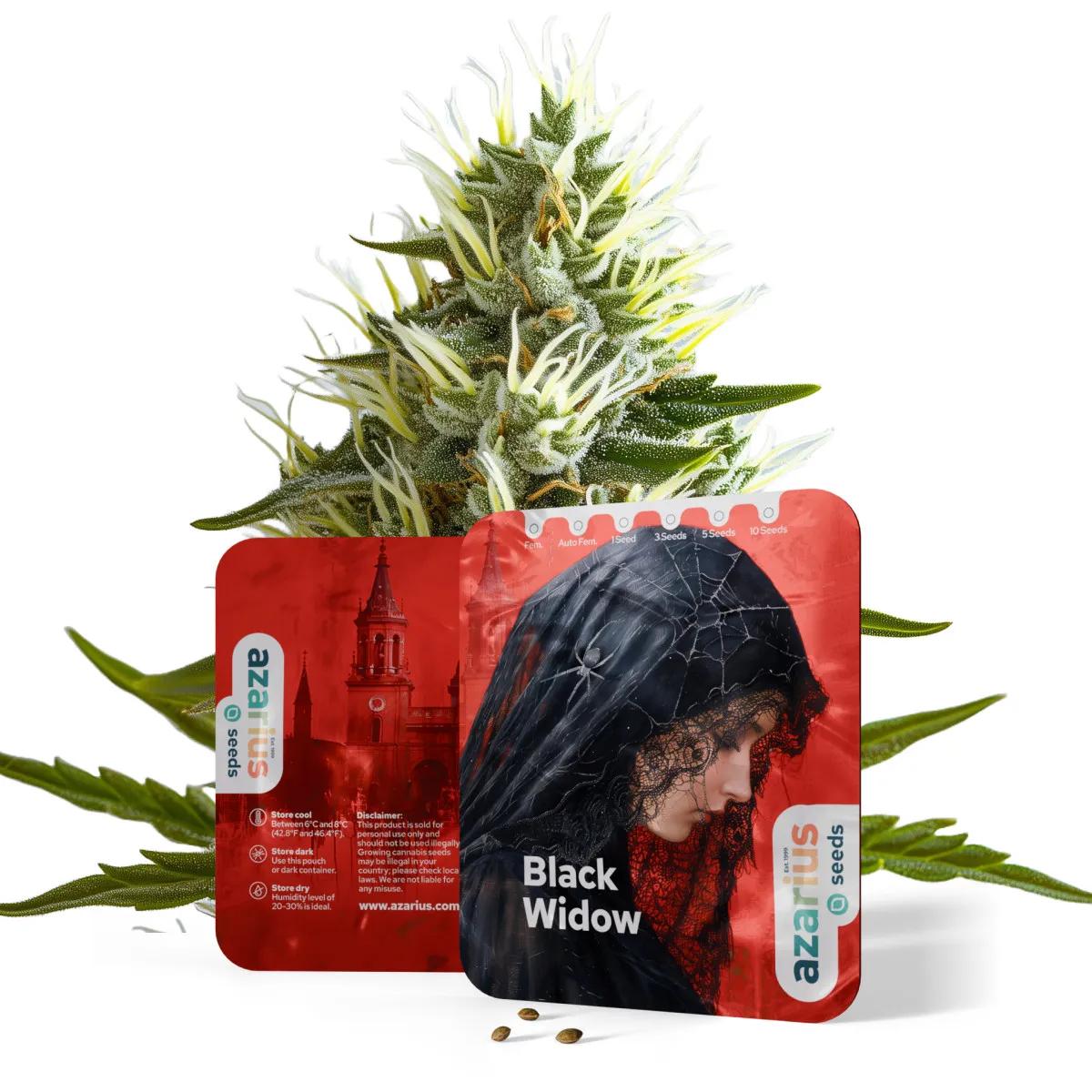
Black Widow Auto is an autoflowering cannabis seed strain bred by crossing the legendary Black Widow with Ruderalis genetics, producing a 60% Indica / 40% Sativa hybrid that finishes in roughly 11 weeks from seedling to harvest. If the name sounds familiar but slightly off, there's a good reason — Black Widow is the original White Widow, renamed by its creator Shantibaba after he left the original seedbank. Same genetic lineage, but Black Widow Auto leans harder into relaxation and body effects than the more uplifting White Widow phenotypes most people know. With THC levels reaching up to 26%, this one doesn't mess about.
Black Widow Auto seeds come in packs of 1, 3, 5, or 10. Growing in a small tent with 2–3 plants? The 3-pack gives you a spare in case one seed doesn't pop. Filling an 80x80 or larger setup? Go for the 10-pack — you'll get better value per seed, and having extras means you can run a second cycle without reordering. If you've never grown autos before and just want to test the waters, even a single seed will give you a full plant in under three months.
| Specification | Detail |
|---|---|
| Genetics | Black Widow x Ruderalis |
| Strain Type | Hybrid (60% Indica / 40% Sativa) |
| Flowering Type | Autoflowering |
| Seedling Phase | 2 weeks |
| Vegetative Phase | 3 weeks |
| Flowering Phase | 6 weeks |
| Total Grow Time | 11 weeks |
| THC Content | Up to 26% |
| CBD Content | Less than 2% |
| Dominant Terpene | Myrcene (40%) |
| Secondary Terpenes | Caryophyllene (20%), Pinene (15%) |
| Flavour Profile | Earthy, pine, spicy, sweet, fruity |
| Seed Type | Feminised autoflower |
| Available Packs | 1, 3, 5, or 10 seeds |
Running Black Widow Auto indoors? Pair these seeds with a complete grow tent kit — tent, light, ventilation, and carbon filter sorted in one go. If you're growing in soil, a quality organic nutrient set will carry these plants from seedling through harvest without overcomplicating the feed schedule.
The autoflowering format is what makes Black Widow Auto genuinely practical. You don't need to fiddle with light schedules — the Ruderalis genetics trigger flowering automatically after about 5 weeks of growth, regardless of photoperiod. That means 18/6 or 20/4 light from start to finish, no timer swaps, no light leaks to stress about. For growers running a small indoor setup, that simplicity is worth its weight.
What sets this apart from a standard White Widow auto is the potency ceiling. Up to 26% THC is serious territory for an autoflower — most autos top out around 18–22%. The Indica-dominant genetics (60/40 split) push the effects toward deep physical relaxation rather than the cerebral, racy high you might associate with classic White Widow. The terpene profile backs that up: 40% myrcene is the dominant player, and myrcene is the terpene most associated with that heavy, sinking body sensation. Caryophyllene at 20% adds a peppery, spicy edge, while pinene at 15% keeps things from feeling completely sedative with a fresh, resinous note on the inhale.
The honest limitation? Autos generally produce less per plant than their photoperiod cousins. You're trading yield for speed and simplicity. If you're chasing maximum grams per square metre and don't mind a longer grow cycle, a photoperiod Black Widow will outproduce this auto version. But if you want a finished harvest in 11 weeks with minimal fuss, Black Widow Auto is the better pick.
Black Widow Auto delivers a layered sensory experience built on three key terpenes. The first thing you'll notice on the inhale is pine — clean, sharp, almost like cracking a fresh rosemary sprig between your fingers. That's the pinene (15%) doing its work. It smooths out quickly into something sweeter and earthier as the myrcene (40%) comes through, giving the smoke a dense, almost musky quality that coats the palate. On the exhale, the caryophyllene (20%) shows up as a warm, peppery spice that lingers at the back of the throat.
The aroma when growing is similarly complex — earthy and resinous during veg, developing sweeter, fruitier notes as the buds fatten up during the final weeks of flower. If you're growing indoors without a carbon filter, your neighbours will know about it by week 7. The terpene combination here is noticeably richer than most autoflower strains we carry, which tend to lean one-dimensional on the flavour front. Black Widow Auto actually tastes like something.
This is the question we get most often, and the answer is genuinely interesting. Black Widow and White Widow share the same original genetics — both descend from the Brazilian Sativa x South Indian Indica cross created by Shantibaba in the early 1990s. When Shantibaba left the Green House Seed Company and founded Mr. Nice Seeds, he took the original parent genetics with him and renamed the strain Black Widow to distinguish it from the versions still being sold under the White Widow name.
| Trait | Black Widow Auto | White Widow (Photoperiod) |
|---|---|---|
| Genetics | Black Widow x Ruderalis | Brazilian Sativa x South Indian Indica |
| Indica/Sativa | 60% Indica / 40% Sativa | Approx. 50/50 or slightly Sativa-leaning |
| THC | Up to 26% | 18–22% typically |
| Flowering Type | Autoflowering | Photoperiod |
| Total Grow Time | 11 weeks | 16–20 weeks |
| Effect Character | Heavy body relaxation, deep calm | More uplifting, cerebral |
| Flavour | Sweet pine, fruity spice, earthy | Earthy, woody, less sweet |
The practical takeaway: if you want the classic, energetic White Widow experience, go photoperiod. If you want something that hits harder physically, finishes faster, and doesn't need light schedule management, Black Widow Auto is the one. Same bloodline, different personality.
We've been selling cannabis seeds since the early 2000s, and the Widow family has been a constant the entire time. Black Widow Auto is one of those strains that surprises people — they expect a standard auto experience and get something noticeably more potent. The 26% THC ceiling isn't marketing fluff; this strain consistently tests higher than most autos in its class. The one thing we always tell first-time auto growers: don't overfeed. Autos have a shorter life cycle, which means they're less forgiving of nutrient burn. Start at half the recommended dose on your nutrient schedule and work up. You'll get better results than the grower who dumps a full feed from week one.
The smell during late flower is intense — sweet, piney, with that unmistakable earthy Widow funk underneath. If discretion matters, invest in proper carbon filtration. A tent alone won't contain this one.
Not exactly. Black Widow is the original White Widow genetics, renamed by creator Shantibaba after he moved to Mr. Nice Seeds. Black Widow Auto tends to be more potent (up to 26% THC) and more Indica-dominant than most White Widow autos on the market, which lean more Sativa and uplifting.
Roughly 11 weeks total — 2 weeks seedling, 3 weeks vegetative, and 6 weeks flowering. That's about 77 days from germination to chop, making it one of the faster autoflower strains to finish.
Earthy and piney with sweet, fruity undertones and a peppery spice on the finish. The dominant myrcene (40%) gives it a dense, musky base, while pinene (15%) adds that fresh resinous sharpness. Expect strong aromas from mid-flower onward.
Yes. Autoflowers don't depend on light cycle changes to trigger flowering, so they'll flower outdoors regardless of season. Black Widow Auto's compact Indica-dominant structure handles outdoor conditions well, though it performs best in warm, dry climates where mould risk is low.
Yields vary by setup, but expect moderate returns typical of autoflowers. Indoor growers with good light and proper training can push yields higher. The trade-off with any auto is speed over maximum weight — you're harvesting in 11 weeks rather than 16–20.
No. Topping autoflowers is risky because they don't have enough vegetative time to recover. Use low-stress training (LST) instead — gently bend and tie down branches to open up the canopy. This maximises light exposure without stressing the plant.
11–15 litres is the sweet spot for indoor grows. Go smaller and you'll limit root development; go larger and the plant may not fill the pot before flowering kicks in. Plant directly into the final container — transplanting stresses autos and costs you growth time.
Last updated: April 2026
Medical disclaimer. This content is for informational purposes only and does not constitute medical advice. Consult a qualified healthcare provider before use of any substance.